
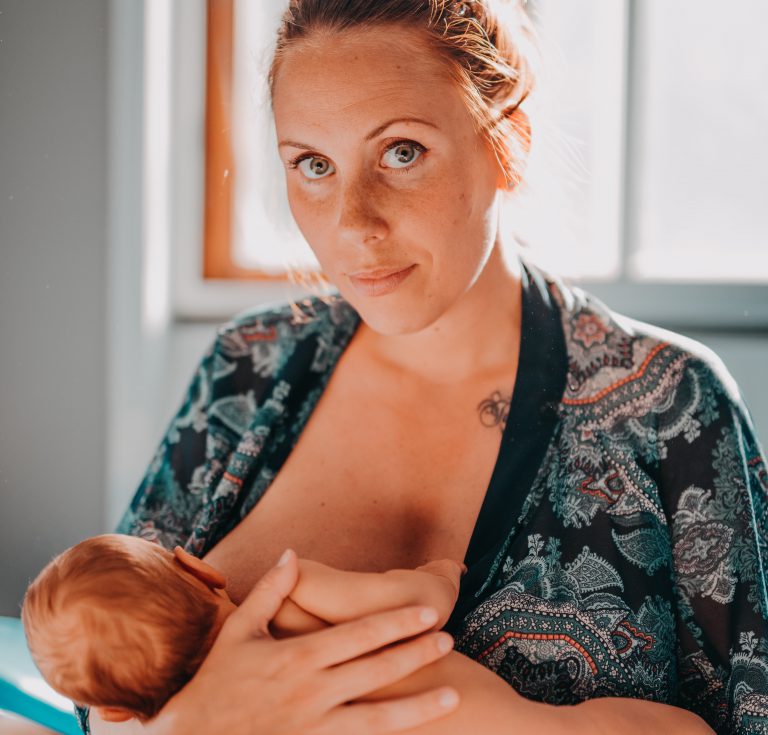

Islamic states have the highest infant mortality rate in the world thanks in large part to a decline in breastfeeding. The good news: more women want to breastfeed.
What is a “milk mother” according to Islamic law? Do nursing mothers and pregnant women need to fast during the holy month of Ramadan? And how is it that only 37% of women in Saudi Arabia, “the heart of the Moslem world,” are still breastfeeding at six months, when the Koran requires two years?
I found the answers to these questions and more in A Fading Art: Understanding Breast-Feeding in the Middle East by Dr. Modia Batterjee.
60% of Moslem children died before their first birthday
Batterjee owes her interest in the subject to her mother Anne, a breastfeeding advocate in Saudi Arabia since the late 70’s. In the introduction to her daughter’s book, Anne Batterjee describes the shocking conditions of infants in the Islamic world, including a 20% breastfeeding rate in some parts of Saudi Arabia, that led her to be trained as a Baby Friendly Hospital Initiative breastfeeding counselor and trainer.
Islamic states suffer from the world’s highest rate of infant mortality: According to a 2005 UNICEF report, 60% of Moslem children died before their first birthday, 4.3 million Moslem children die before turning 5 each year, and 1/3 suffer from persistent malnutrition.
UNICEF works to reduce these numbers by supporting breastfeeding. Anne Batterjee lays much of the blame on infant formula companies, who heavily market their products to new mothers and use medical events to promote infant formula to health care professionals.
Saudi women feel pressure to supplement
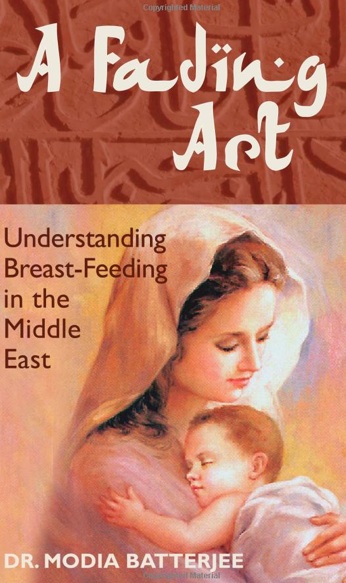 A Fading Art opens the book with a fictionalized account of a “typical” Saudi couple expecting their first baby. Both husband and wife are committed to breastfeeding, as required by the Koran.
But they know little about it, and the nurse, doctor, and grandmother recommend a bottle of formula at every turn. Batterjee’s account highlights the frustration felt by mothers around the world, who badly want to nurse. “Sarah” senses that she is being given wrong advice, but she is not sure where to go to get correct information. And it is hard for the young withstand the pressure to supplement.
The bulk of the book reports on a study Dr. Modia Batterjee conducted to understand the complex reasons that Saudi women rarely breastfeed exclusively despite recommendations by the World Health Organization to do so for the first six months.
The reasons are similar to those in the western world–employment out of the home, lack of ability to observe other nursing mothers as the extended family structure dissolves, marketing by formula manufacturers, and lack of knowledge by health care professionals. In addition, older Saudi women, who generally do not breastfeed their own children, have a great deal of influence on their daughters’ feeding choices.

What is a milk mother in Islam?
According to Islamic law, a woman can adopt a baby by becoming his or her “milk mother.” This is defined by giving five satisfying feeds of mother’s milk to a child under two.
Dr. Modia Batterjee helped induce lactation in two young women who had never given birth. With judicious use of Domperidone and Fenugreek to increase supply, along with copious pumping, the women produced enough milk to make 250 cc. of milk, or about 5 feedings.
I found it sad that these women let their milk dry up after going to so much trouble. Perhaps this also tells us something about the status of breastfeeding in Saudi culture.
In western countries, a growing number of adoptive mothers have induced lactation with varying degrees of success.
Batterjee doesn’t mention the controversial fatwas in Saudi Arabia that extended the concept of a “milk mother” to adult males. A woman who breastfeeds a male non-relative of any age would become like his mother and could be alone with her, say for work purposes, without transgressing Islamic law.
Read Part II of Understanding Breastfeeding in the Middle East
Read more on breastfeeding:
World Breastfeeding Week Focuses on Baby-Friendly Policies
Breastfeed Your Baby in a Hijab: Public Breastfeeding in the Middle East
Ten Tips for Breastfeeding Your Baby in Public in the Middle East

 We thought we knew plenty about







 Before and after: For 365 days, and only 365 dollars,
 It’s a tent, it’s a tunnel, and it funnels the year-round cool Shamal wind.





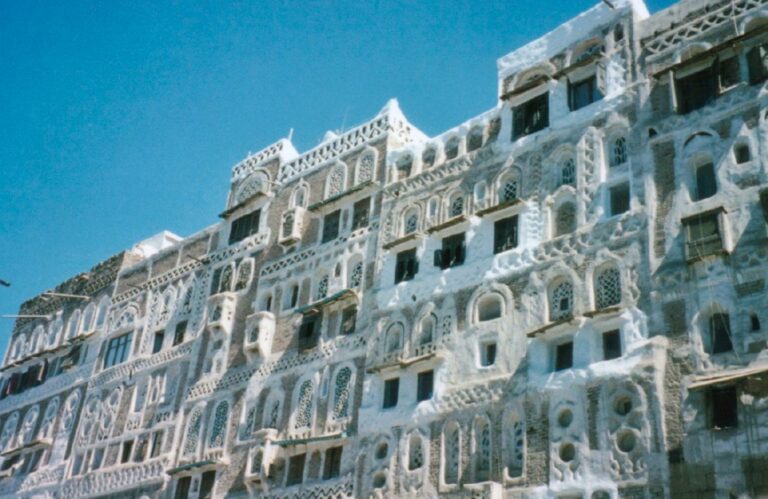
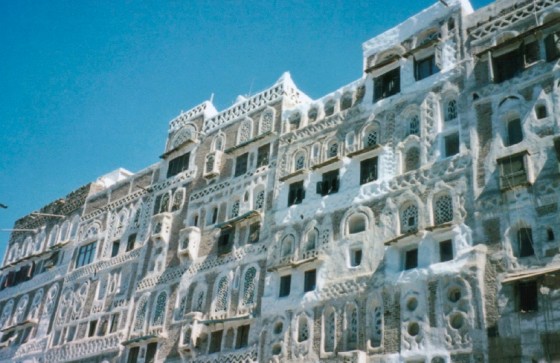 Yemen’s capital city is expected to be the world’s first waterless one by 2017. A skyrocketing population, lack of government planning, and the bad-habit of gat, are to blame.