Fenugreek seeds linked to E. coli Outbreak

egypt, agriculture, E. coliThe EU has banned 10% of Egyptian agricultural products after linking that country to the devastating E. coli outbreak that killed 49 people earlier this year.

The European Union has linked the May/June E. coli outbreak that killed 49 people to produce grown in Egypt. Following a dedicated probe, officials concluded that a shipment of fenugreek seeds used to grow sprouts imported by a German company was the “most likely common link” to the outbreak.

Following this announcement, the EU has established an official ban on 10% of Egyptian agricultural products. The ban, which will be in place until 31 October, 2011, is the latest in a chain of economic woes that imperil Egypt’s smooth recovery – including a significant drop in tourism and the third explosion of a natural gas pipeline.

Homegrown food sold for export

The Media Line points out that during the E. coli outbreak in Europe earlier this year, the United Arab Emirates, Qatar, and Kuwait banned imports and the sale of cucumbers from Germany, Spain, Denmark, and the Netherlands, suspecting those countries of selling contaminated produce.

Instead, the produce was “home grown” in Egypt, where agricultural standards are relatively relaxed since most farmers produce food for a local, less demanding market.

Even so, since 2009 Egypt has been working to improve its standards in order to meet the demands of the European market and the Agriculture Export Council even boasted just one month before it was linked to the deadly E. coli outbreak that it was increasing its continental exports.

This is what Egypt stands to lose as a result of the ban, according to the Media Line:

The EU ban will cause a big dent in exports. In 2010, the EU says it imported from Egypt about 49,000 tons of the types of seeds affected by Tuesday’s decision valued at over 56 million Euros ($80 million). That’s about 11% of Egypt’s total. The impact, however, may be considerably bigger as European importers, distributors, and shoppers shun Egyptian products not covered by the ban.

Although it would be nice to think that this hard knock will encourage the authorities to develop higher standards, the reality is that the country is receiving hard financial knocks in every sector – from energy to tourism – and will battle to provide even the bare necessities for its citizens this year.

:: The Media Line

More on Agriculture in Egypt:

Egypt to Get 3% of Africa’s Slow Food Gardens

Climate Change Poses Threat To Egypt’s Farming, Tourism, and Water Supply

Egypt Could be on the Brink of Famine

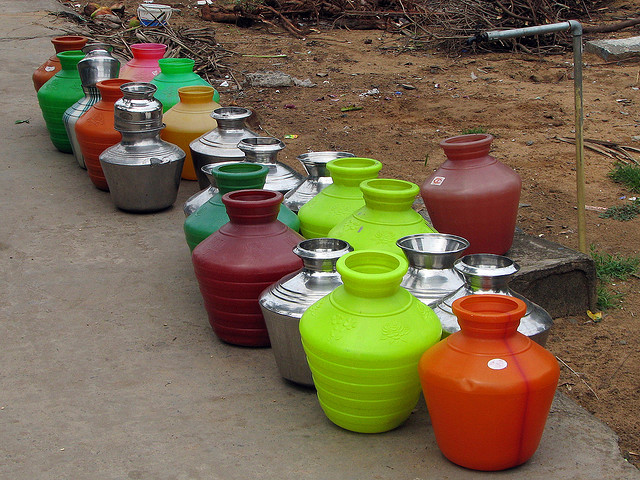
image via Dan Zen
Tafline Laylin
Tafline Laylinhttp://www.greenprophet.com
As a tour leader who led “eco-friendly” camping trips throughout North America, Tafline soon realized that she was instead leaving behind a trail of gas fumes, plastic bottles and Pringles. In fact, wherever she traveled – whether it was Viet Nam or South Africa or England – it became clear how inefficiently the mandate to re-think our consumer culture is reaching the general public. Born in Iran, raised in South Africa and the United States, she currently splits her time between Africa and the Middle East. Tafline can be reached at tafline (at) greenprophet (dot) com.

Read More

1 COMMENT
  1. How convenient for the EU that their new ISO9001 food tracking system didn’t need to be put to the test and the food originated outside the EU.

    A little odd isn’t it that an antibiotic resistant superbug originated in a country where it’s unlikely antibiotics are given to animals much, if at all…..

TRENDING

Who Owns the Farm Robot? A State of Jefferson Startup Takes on Carbon Robotics

In California's self-proclaimed State of Jefferson, a small agricultural technology company is challenging the dominant laser-weeding business model. Laudando & Associates believes farmers should own and repair their AI-powered weeding tools rather than pay ongoing subscription fees. The approach has put the company on a collision course with industry leader Carbon Robotics, sparking a patent dispute that has pushed the Jefferson startup toward overseas markets while raising broader questions about ownership, right-to-repair, and the future of farm automation.

Regenerative Wool or Greenwashing? Zentera Responds to Critics

Zentera responds to questions about ZQ wool, animal welfare, regenerative farming, ethical fashion and the fallout from PETA's New Zealand investigation.

Tanner Winterhof on the Custom Harvesters Quietly Holding American Agriculture Together

In late January, in a Des Moines hotel ballroom that smelled faintly of diesel and convention coffee, Tanner Winterhof spent three days hosting the members and attendees of the  U.S. Custom Harvesters Inc. annual convention on his podcast as Farm4Profit’s official media partner for the show.

Jujube, the sidr tree of medicine and magic

A magic holy sidr bath to deflect the evil eye? It needs 7 powdered sidr leaves stirred into a bucket of warm water. The hadith of the Prophet Muhammad allows to repeat healing prayers and verses from the Koran to increase the water’s potency. 5 grams, or 1 tablespoon of sidr powder equals 7 leaves.

Farm To Table Israel Connects People To The Land

Farm To Table Israel is transforming the traditional dining experience into a hands-on journey.

Yerukim Forms a New Green Economy Where the Money is Really Green

The Yerukim members who pick up the recyclables get to keep the monetary reward, the public earns "green" bills that can be used in shops, and business owners get to be associated with environmentalism.

Choosing Riyadh over Dubai? What Investors Should Know

Saudi Arabia is deploying capital at unmatched scale to catalyze tourism and advanced industry while rewiring its power-and-water backbone. The investable frontier is widening—especially in renewables, grid storage, water efficiency/desal retrofits, and hospitality operating platforms. Prudent investors will insist on phased delivery, enforceable KPIs (energy, water, biodiversity), and RHQ/zone compliance—while pricing political-economy and reputational risks alongside growth upside.

Sell your cooking oil for biodiesel money

Want to make money on old french fry oil? Sell it.

Qatar Alternative Energy Summit Pairs Investors And Innovators

Alternative energy investors and innovators can meet n' greet in Doha, Qatar March 16 and 17.

Here’s How To Implement The Four Pillars Of Employee Engagement

If you throw a party for your work team and they are vegans, don't make it a barbecue. Know the sustainability values of your team to boost moral and retain good people.

Locals From Rishon Fight IKEA

Big Box stores are a pretty new concept in Israel, and thank God that not every Israeli city wants them in their backyard. A word from someone who has see the beautiful farmland around her hometown Newmarket, Ontario stripped and converted into vulgar strip malls of big box shops: they have no place in a healthy and sustainable town or city.

The Jewish National Fund Meets An Inconvenient Truth

According to the JNF, it has transformed thousands of acres of barren land into green forests in Israel. They state that each person emits about 23 tons of carbon per year, estimating that each tree planted can absorb one ton of carbon in its lifetime. That's a whole lot of trees you'd need to be planting. Could so many fit in Israel?

How to quiet noise from construction in your office

Streets need to be resurfaced in New York but the humming and grinding noise is unsettling. Noise is environmental pollution. 

Popular Categories