
Home Blog Page 541

10 Ways to Eat Lentils

1

image-lentil-sweet-potato

What’s tasty and vegetarian today? Why, lentils. Of course.

I once saw a weight-loss article that began with one word: “Lentils.” I had to smile, but must say I agree. At 230 calories (cooked) per cup, full of protein and dietary fiber, they’re a natural for weight watchers. But for anyone who likes to eat well and inexpensively, lentils fit the daily bill and satisfy the daily hunger.

They cook up quickly. You can eat them hot, you can serve them cold. Mild or spicy. Yellow, brown, green or black. Main dish, side dish, stewed, souped, or salad.

How do I love lentils? Let me count the ways:

1. Curry lentils up in a classic Indian dal – thick, stewed lentils with plenty of spices.

2. Pair them with sweet potatoes as a cold salad (recipe below).

3. Bake a quarter-cup of cooked lentils into your next loaf of bread.

4. Get Middle-Eastern and cook Majadra (recipe here on Green Prophet), a lentil-rice peasant dish.

5. Lentil soup. Onions, celery, a tomato, some greens like Swiss chard or kale, plus lentils. Add a chunk of meat, or not. Cook until soft – blend if you please, and season.

6. Empower your pasta.   Try our noodles with lentils recipe.

7. Mix some firm, cooked lentils into your next tabouleh. Not traditional, but tasty.

8. Stuff vegetables with cooked lentils and rice; stew in a rich tomato sauce.

9. Add cooked seasoned lentils to stir-fry.

10. Make a dip using our hummous recipe, but substitute cooked yellow lentils for the chickpeas.

Sweet Potato and Lentil Salad

Ingredients:

3 cups of washed, but not peeled, sweet potatoes sliced in bite-sized circles

1/4 cup black or green lentils

1/2 cup of salted water for cooking the lentils

1 medium onion

Juice of 1/2 lemon, or more if liked

3 tablespoons olive oil

2 teaspoons of maple or silan date syrup

salt and pepper

3 large scallions, green parts only

In a small pot, cook the lentils, covered, in the salted 1/2 cup of water. Cook over low heat for 10 minutes, then taste to make sure the lentils are tender. If they look like they’re drying out but still not tender, add a tablespoon or two of water.

Meantime, cook the sweet potato slices in plenty of lightly salted water till tender; about 10 minutes. Keep a sharp eye on them because they should not cook till mushy. Once mushy, they won’t serve for salad.

Slice the onion thinly.

In a small bowl, make a dressing of the lemon juice, olive oil, syrup, and a little salt and pepper.

While the vegetables are still hot, put them in a bowl with the sliced onions and pour the dressing over all. Stir gently, with a wooden spoon.

Allow the salad to cool, covered. Taste it and add more of the dressing ingredients if wished. Slice up the scallions and scatter them over the salad, mixing gently once more.

Chill the salad, covered, and serve cold or at room temperature.

Enjoy!

More good, solid, vegetarian fare on Green Prophet:

Egypt May Survive Climate Change Thanks to AUC Students

5

green building, sustainable development, egypt, american university of cairo, SLIDESThis beautiful solar-powered home could usher in Egypt’s period of healing, sustainably.

Last year when I visited Egypt, it felt heavy. For three decades, Mubarak’s forces succeeded to subdue the once innovative Egyptian people. But in his absence, a palpable sense of hopefulness has returned. While many challenges remain, including rising temperatures, pollution, and insufficient energy supplies, the barriers to fixing them do not.

Enter the American University of Cairo. Their Sustainable Living Interactive Design (SLIDES) project is the first in the Middle East selected to compete in one of the world’s largest inter-collegiate design competitions. Since the Solar Decathlon in Europe considers only the most advanced ideas, the energy efficient, solar-powered house concept produced by AUC students demonstrates that Egypt can heal itself. 

17 Lost Egyptian Pyramids Found With Infra Red Technology

1

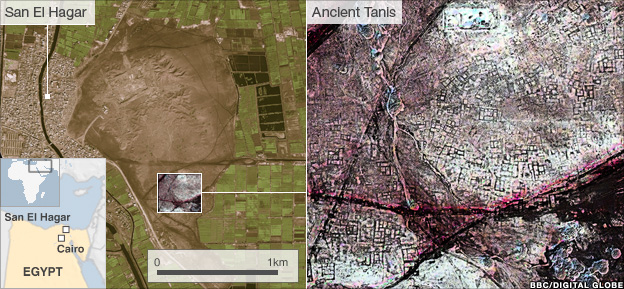
satellite, egypt, lost pyramids, bbcNew infrared technology allows archaeologists to zero in on buried settlements, and 1,000 tombs.
Seventeen mud brick pyramids are among the buried buildings revealed by infrared imagery over the past year. Dr. Sarah Parcak from the University of Alabama in Birmingham used satellites that hover 260km above earth to photograph once thriving Egyptian settlements engulfed by Nile River silts. These images are so detailed that researchers can map out the layout and streets of Tanis, Egypt’s ancient capital located near modern day San El Hagar.

Palestine’s Geothermal Pioneer Shares Expertise Online

2

Madaba’s geothermal systemThe University of Madaba’s geothermal system, the largest in the Middle East

Khaled Al-Sabawi, founder and president of Palestinian green energy pioneers MENA Geothermal, was one of the speakers at this spring’s much-publicised TEDx Ramallah conference. In an engaging and humorous speech, Al-Sabawi detailed the many benefits that geothermal energy has to offer his native land, from lower energy bills and carbon emissions to the prospect of a more independent and self-sufficient energy sector. The speech was reported widely, including by Al-Jazeera English.

As of this week, Al-Sabawi’s talk is now also available online, uploaded to the YouTube channel for TEDx Ramallah, for all to see. In just a few days, the video has attracted almost 10,000 viewers and can be viewed online. See below.

Make Greener Teens Through Composting

9

teen compostComposting with your teens in an educational family project.

Waste not, want not is something that can be taught by making compost. I’ve confess I’ve never much cared whether my vegetables are organic or bought at the neighborhood supermarket. I’ve always thought that the term “organic” is just a marketing ploy targeting a particular group of consumers to whom I do not belong. They are worried about pesticide residues; I’m more concerned with taste.

That’s because I’m a foodie. Taste and texture are all-important. I can take up to 15 minutes at the supermarket feeling each avocado on display to make sure I get the ripest, most perfect avocados on offer. To that end, the first time I had access to a patch of land, I became enamored with the idea of growing heirloom vegetables: huge imperfect Brandywine tomatoes cracking open to reveal sweet red flesh and Country Gentleman corn, white as snow and bursting forth with buttery corn flavor.

I pored over seed catalogues and gardening books and then threw myself into the process of gardening. To my delight, my children shared my interest in all things related to dirt, seeds, flowers, and vegetables. There’s something godlike about growing things.

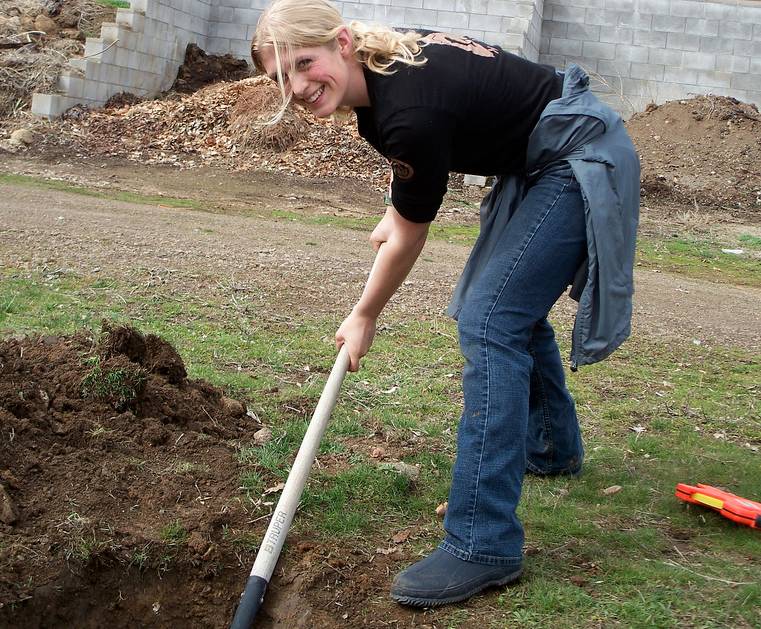
Like James, I decided to make a compost pile. The teens did the heavy labor and dug a deep hole not too close to the house.

This way, the wind wouldn’t waft composting smells and flies into our open windows. The kids took turns schlepping kitchen detritus out to the compost pile, building up layers of vegetable peels, coffee grounds, and dirt.

Here and there, a kid would turn the soil with a shovel. They were fascinated to see and touch the rich results of this experiment: dark, almost black compost you just knew would make a terrific growing medium.

Watching what we’d always thought of as garbage turning into soil made us understand the preciousness of potato peels and egg shells. Even after we moved to an urban apartment and had no land to speak of, throwing vegetable peels away felt like a criminal act.

Composting is a lesson in recycling resources your children (and you) will never forget.

More How-To articles on composting:
Mulch, Rot and Invigorate the Compost Heap (Part 1)
A Half Empty Bin and Some Worms (Part 2)
Make Your Own Vegetable Composter for Under $10

New Rx For Growing Your Brain: S.E.X.

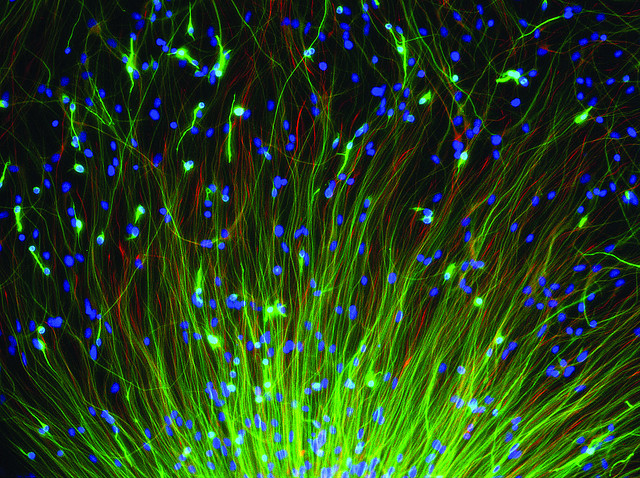
New research suggests that certain activities including making love and exercising regenerate key areas in the brain.

It’s understandably a bit confusing to keep up with all the differing sexual health news. Recently, we reported on the mind-blowing effects of coffee, blowing your nose and making love: turns out these are just a few of the known risks factors that temporarily increase your odds of having a stroke. Can it be that sex is also beneficial to the brain? Recently, scientists suggested that sex might regenerate the brain, results that score high on our eco-sexy science news.

Bosphorus To Become Center of Hydrogen Energy Production If Second Canal Is Built

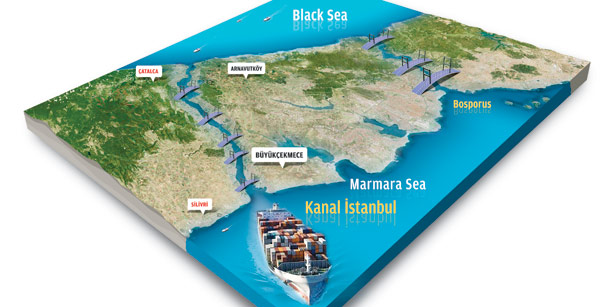
The proposed canal has been slammed by Turkish environmentalists. But authorities at Turkey’s center for hydrogen energy technology see a silver lining: the canal could enable Turkey to become one of the world’s most important producers of hydrogen energy.

When Turkish Prime Minister Recep Tayyip Erdoğan announced his self-termed “crazy project” last month – a new canal connecting the Black Sea and Marmara Sea, a few kilometers west of the Bosphorus Strait – most environmentalists were aghast. The project would open up hitherto undeveloped areas around Istanbul to a rash of giant new constructions, including convention centers, exhibition halls, sports facilities, housing, and Turkey’s largest airport.

But the canal would also take over most of the ship traffic that currently fills the Bosphorus: about 150 ships per day, to be specific. And that would free up the strait for hydrogen energy projects that Turkey has been waiting years to realize.

My Transformation From Carnivore to Vegan, and Back

2

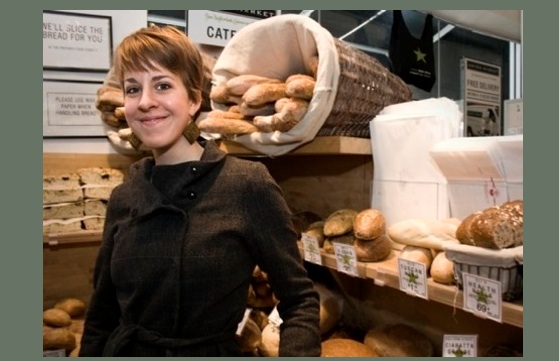
leah koenigAmerican Jewish food writer Leah Koenig talks about her journey back to meat-eating.

A million answers have been given (and a million jokes cracked) around the Passover question “Why is this night different from all other nights?” But this year, my Passover truly felt different. This year, for the first time since I became a vegetarian — nearly 11 years ago — I ate meat at the Seders. My matzo ball swam in a bowl of real chicken soup, and instead of passing along the platter of chicken roasted with thyme and oranges, I joined my tablemates in forking a piece onto my plate.

Herbed Baked Eggs on Toast Recipe

0

image-baked-eggs

In early summer, mornings are still cool and soft sunlight comes streaming into my room. I wake up feeling energized and optimistic, and ready to start the day really well.  If I feel like spoiling my family or just treating myself to an excellent breakfast, I fetch a pre-cooked mushroom sauce from the fridge – see what we say about pre-cooked foods –  and get these eggs going in the oven. By the time I’ve had a cuppa (and here’s our recipe for authentic Turkish coffee), checked my email, and made toast, they’re ready.

image-baked-eggs

image-baked-eggs-ramekin

Herbed Baked Eggs

(Individual serving – multiply as needed )

Equipment:

1 ramekin or custard cup per serving
A deep, ovenproof pan or casserole into which the ramekins will fit
Baking parchment cut into circles to cover the ramekins

Ingredients:

1 or 2 large eggs
1 tablespoon chopped fresh herbs: parsley, basil, cilantro or finely-chopped celery and shallots, alone or in combination
1 tablespoon chopped chives, scallions or shallots
Butter for greasing the ramekins
Salt
Pepper
Paprika
1 slice of whole-wheat bread, the corners snipped off to make a round, and toasted

METHOD
Preheat oven to 350° F (175° C).

Grease each ramekin thoroughly with butter or margarine.
Combine one tablespoon green herbs with one of chives, scallions, or shallots. Place chopped herbs in the bottom of each ramekin and gently drop 1 or 2 eggs over herbs. Don’t worry if eggs break.
Season with salt, pepper, and paprika.
Place one ramekin per portion in baking pan. Pour water into pan to come up to within ¼ inch of the ramekins’ rims. Cover each ramekin with a parchment paper circle or a loose piece of tin foil.
Bake for ½ hour or until eggs are firm. Remove ramekins from water and allow to cool for a few minutes. Use a butter knife to gently loosen the baked eggs. Turn them out onto hot rounds of toast. Cover with mushroom sauce (or any other sauce you like).

If no sauce is handy, butter the toast and serve the eggs as they are –  or with a little sour cream.

Serve with fresh vegetables or fruit.

Mushroom Sauce (Make the night before for convenience.)

Approximately 2 cups sauce or enough for 6 servings

Ingredients:

1 cup chopped fresh mushrooms
¼ cup finely chopped onion or shallots
1 tablespoon butter
1 tablespoon flour
1 cup hot milk
½ teaspoon dried thyme or 1 sprig fresh thyme
Salt and pepper to taste

METHOD

Sauté mushrooms and onions in butter for 5 minutes. Sprinkle the flour in and stir, coating the vegetables. Add salt and pepper, tasting to adjust.

Slowly pour the hot milk in, stirring often. Add thyme. Simmer for 5 minutes, allowing the sauce to thicken. Taste for seasoning. You may thicken the sauce by cooking it longer if wished. Serve, or store in the refrigerator for up to 3 days.

Was breakfast ready too soon? Surprisingly, these eggs can be held for half an hour in their ramekins and reheated in a warm oven for 10 minutes. Just watch out for over-cooking and drying out.

More easy and delicious recipes from Green Prophet’s kitchen:

Pure Rootz Puts the Preppy in Organic Clothing

1

pure rootz organicThe Pure Rootz fashion label brings organic cotton to the Lacoste customer.
Whereas organic food has been a relatively easy sell to high-end customers, organic clothing has been a little tougher to get going.  Organic goat cheese or cherry tomato confit sound delicious to just about anybody, but organic clothing might call to mind tie-dyed hemp drawstring pants or loose beige tank tops.  It doesn’t have to be so.  An increasing number of young designers see the environmental and personal comfort value of using organic cotton, and so lots of trendy clothes are starting to be made with sustainable fibers.  Organic clothing lines are popping up everywhere, including large superstores such as H&M, bringing the trend to the mainstream.

One fashion area that organic clothing is beginning to approach is the high-end market, and Dutch company Pure Rootz is doing its part: one organic polo shirt at a time.

Eco Sins Of The Cheshire Blogger

7

eco sins, cheshire blogger, tafline laylin, cairo, toxic chemicalsPoisoning hair to look “pretty.”

Every four, five years, I get this crazy urge to do what some women find perfectly normal: put nasty stuff in my hair that will supposedly make me look “prettier.” Without fail, I regret it. Here’s how it went down: I was feeling a little bleh and out of it and foolishly thought that a “new do” might perk me up a bit.

So, without giving it the proper amount of thought and ignoring my inner red flags, I marched down to the local hairdresser in Maadi, a fairly well-off Cairene neighborhood. There I asked Hassan to please put  a few highlights in my hair, and to give me a swift trim. “Just a little bit,” I emphasized. Sensing my trepidation, he said, “you’re going to love it.”

Environmental Filmmaker Zeina Aboul Hosn

0

We speak to the Zeina Aboul Hosn, an environmental filmmaker based in the Middle East about sharks, working on the Age of Stupid and the challenges she faces in her work

Shortlisted for the Amnesty International 2008 Media Award for journalists covering human rights, Zeina Aboul Hosn is clearly passionate about the world around her and conveying important messages through her films. As well as working on the widely influential Age of Stupid film, she has participated in an expedition to study sharks in the Gulf which was filmed by Al Jazeera and has also worked in TV across the Middle East. I caught up with her between some turtle conservation work in Dubai and a trip to Beirut, where she was born, to talk about her path into film-making.

Tell us a little about yourself, where you born, where did you grow up and how did you get into film-making?

I was born in Beirut on the 21st of December 1979, but we left to Dubai when I was 2 years old because of the war. I moved back to Beirut to go to university. I was always very passionate about environmental issues so I studied environmental health at American University of Beirut. It was by total chance that I ended up in the world of television. A new channel targeting Arab youth was just about to open in Beirut, and they took me on to present a program where I got to talk about environmental issues among other things. I really believed in the power of TV and the media to change people’s perspectives and behavior, so that made up my mind to do make documentaries.

You have been involved in a couple of projects looking at environmental awareness such as looking at the shark population s in Kuwait and also the Age of Stupid. Why is conservation and protecting nature important to you?

My love for nature and conservation started with a fascination with marine life. The beauty and variety of life in the seas and oceans inspired me to care about the environment and look into what humans are doing to threaten it, and what they can do to protect it. It seemed self- evident to me that in order to survive as a species, we need to be in balance with the nature that surrounds us. Nature is beautiful to look at and be in, plus is it essential for the balance of life on the planet – there is also a lot that we can learn from nature and from other species. The need for conservation then becomes a no-brainer.

Part of your work with Age of Stupid was to look at the attitudes towards climate change in the UAE. It was pretty obvious that a lot of people simply didn’t know or didn’t care about protecting the environment. Do you think that attitudes have changed over the last couple of years?

Only very slightly. I would say people are more aware today, so attitudes are starting to change. But there is still a large gulf between attitudes and actions. What we need is attitudes translating into action, and that is a massive challenge.

Do you feel that films can really have an impact on people’s attitudes and inspire them to treat the planet better?

The reason why the Age of Stupid had such an impact on so many people is that people simply didn’t know – they didn’t know how close we are to disrupting our ecosystem beyond repair. You see people recycling more, choosing more eco-friendly products, switching off light bulbs… These are important steps for sure, but certainly still basic. We need guidance in our efforts to become more green as a civilization – we need to know how.

I saw that too when I was making the film about sharks in Kuwait; the coastguard who was helping us on the boat thought we were silly to want to protect and understand sharks. By the end of the film, he was converted and wanted to carry on the work we had started. Films certainly can inspire people by giving them knowledge – but they need to be coupled with information on how to apply this knowledge.

What has been the most challenging project that you worked on?

Making films is hard work. Every project brings its own challenges- every challenge at the time seems like the biggest and most immense. And then you finish the project and you move on, and you forget all the hardships. Like they say with childbirth – if women remembered the pain of childbirth they would not keep having kids.

What has been the proudest moment of your career so far?

I’d like to think that my proudest moment is yet to come.

What projects are you working on now and what we can expect from you in the future?

The projects are many because the subject material is very rich: we are surrounded by so many ecological issues in the Middle East; there is no shortage of stories to make films about. The trouble is finding broadcasters who are interested in environmental films. Politics and current affairs always take precedent in the region and environmental issues always get pushed to the side. I hope this will change in the future. Maybe I will write some articles for the Green Prophet? The work you guys are doing is great.

Images via Zeina Aboul Hosn.

::ZAH

For more on environmental film-making in the Middle East see:

How Sharks Keep Us Breathing: An Interview With Filmmaker Jonathan Ali Khan

EcoOcean’s Director Andreas Weil Goes Swimming With The Whales in Tonga

EKON, Environmental Sci-fi Film From United Arab Emirates

Dead Sea Worker Exposes Environmental Disaster Through Film


Time Running Out for Saving Dead Sea Hotels

1

dead sea hotelsArtist Sigalit Landau swims naked amongst watermelons in Dead Sea to dramatize its plight.

The Dead Sea is situated at the lowest point on earth and has been the subject a number of projects aimed at reversing the salt lake’s declining water levels. These projects include the controversial Red – Dead Sea Conduit Project, which is being fought against by environmentalists. Another idea, and one that makes much betters sense from an ecological viewpoint, is the one involving the restoration of at least a part of the natural flow of the Lower Jordan River, which has been reduced to not more than a trickle.

But the lack of sufficient water in the entire Dead Sea has now taken a back seat to an even more pressing problem: the one of rising waters in the southern portion of the lake, near many of the hotels and health spas in the Ein Bokek area which are in danger of sinking.

Recycling Tires Can Rid Egypt Of Fumes, Mosquitoes And Rats

1

burning tires, pollution, cairo, recycling, trashA new initiative could put an end to this in Cairo!

Nine million used rubber tires are dumped in Cairo every year, according to the Community Times. Egypt’s capital is in many ways defined by its pollution. Not only are the skies smoggy (well ahead of black cloud season), but waste is a veritable plague. Even the wealthier neighborhoods such as Maadi can’t escape the food scraps, disposable containers, and plastic strewn absolutely everywhere. But nothing here stinks more than the country’s ubiquitous used rubber tires. 

Tel-O-Fun (Finally) Brings Bike Sharing to Tel Aviv

tel aviv bike sharing tel-o-funThanks to Tel-O-Fun, now Tel Aviv urbanites with the tiniest of apartments can bike around without the storage hassle.

Despite widespread announcements that it would open its city-wide bike sharing service in April, Tel Aviv’s Tel-O-Fun finally got kick started in May (but, to its credit, in a bigger way than originally intended).  150 stations and 1500 bikes were made available for shared use by the public earlier this month in an effort to encourage the already growing trend of cycling in Tel Aviv.  (Biking has become such a popular mode of transportation that some cafes offer free bike rentals alongside delicious coffee.)

The service brings an almost kibbutz-like attitude to pedaling – users pick up bikes when they want them and where they want them, and drop them off as soon as they’re done with the idea being that the bikes should be readily available for anyone and everyone.