Corporate training videos often require repeated filming, travel, and production resources every time policies or personnel change. AI-powered face swap tools offer a more sustainable approach by extending the life of digital training content, reducing unnecessary reshoots, and helping organizations communicate more efficiently—provided they are used transparently with clear consent and ethical governance.
Imagine developing a severe allergy to steak after a single tick bite. That's the reality for people with alpha-gal syndrome, a rapidly emerging condition linked to lone star ticks and other tick species. As researchers uncover how tick saliva rewires the immune system, health officials warn that hundreds of thousands of Americans may already be living with this unusual red meat allergy.
Russia is reviving the controversial abiotic oil theory with plans to drill superdeep holes in the Arctic. While small amounts of abiotic methane exist deep within the Earth, most geologists reject the idea that commercial oil reserves originate from non-biological processes, raising questions about the environmental cost and scientific value of the project.
Millions of visitors swim in the pristine waters of the Galápagos each year, but new research suggests sunscreen chemicals and other human-made pollutants are reaching even the islands' most protected marine habitats. Scientists are calling for urgent monitoring to safeguard one of Earth's most iconic ecosystems.
Artificial intelligence is opening a new chapter in Dead Sea Scrolls research. By combining machine learning with chemical analysis, scientists hope to uncover where the ancient manuscripts were produced, identify connections between scribes, and reveal hidden patterns across more than 25,000 fragments that have remained unsolved for decades.
Corporate training videos often require repeated filming, travel, and production resources every time policies or personnel change. AI-powered face swap tools offer a more sustainable approach by extending the life of digital training content, reducing unnecessary reshoots, and helping organizations communicate more efficiently—provided they are used transparently with clear consent and ethical governance.
Imagine developing a severe allergy to steak after a single tick bite. That's the reality for people with alpha-gal syndrome, a rapidly emerging condition linked to lone star ticks and other tick species. As researchers uncover how tick saliva rewires the immune system, health officials warn that hundreds of thousands of Americans may already be living with this unusual red meat allergy.
Russia is reviving the controversial abiotic oil theory with plans to drill superdeep holes in the Arctic. While small amounts of abiotic methane exist deep within the Earth, most geologists reject the idea that commercial oil reserves originate from non-biological processes, raising questions about the environmental cost and scientific value of the project.
Millions of visitors swim in the pristine waters of the Galápagos each year, but new research suggests sunscreen chemicals and other human-made pollutants are reaching even the islands' most protected marine habitats. Scientists are calling for urgent monitoring to safeguard one of Earth's most iconic ecosystems.
Artificial intelligence is opening a new chapter in Dead Sea Scrolls research. By combining machine learning with chemical analysis, scientists hope to uncover where the ancient manuscripts were produced, identify connections between scribes, and reveal hidden patterns across more than 25,000 fragments that have remained unsolved for decades.
Corporate training videos often require repeated filming, travel, and production resources every time policies or personnel change. AI-powered face swap tools offer a more sustainable approach by extending the life of digital training content, reducing unnecessary reshoots, and helping organizations communicate more efficiently—provided they are used transparently with clear consent and ethical governance.
Imagine developing a severe allergy to steak after a single tick bite. That's the reality for people with alpha-gal syndrome, a rapidly emerging condition linked to lone star ticks and other tick species. As researchers uncover how tick saliva rewires the immune system, health officials warn that hundreds of thousands of Americans may already be living with this unusual red meat allergy.
Russia is reviving the controversial abiotic oil theory with plans to drill superdeep holes in the Arctic. While small amounts of abiotic methane exist deep within the Earth, most geologists reject the idea that commercial oil reserves originate from non-biological processes, raising questions about the environmental cost and scientific value of the project.
Millions of visitors swim in the pristine waters of the Galápagos each year, but new research suggests sunscreen chemicals and other human-made pollutants are reaching even the islands' most protected marine habitats. Scientists are calling for urgent monitoring to safeguard one of Earth's most iconic ecosystems.
Artificial intelligence is opening a new chapter in Dead Sea Scrolls research. By combining machine learning with chemical analysis, scientists hope to uncover where the ancient manuscripts were produced, identify connections between scribes, and reveal hidden patterns across more than 25,000 fragments that have remained unsolved for decades.
Corporate training videos often require repeated filming, travel, and production resources every time policies or personnel change. AI-powered face swap tools offer a more sustainable approach by extending the life of digital training content, reducing unnecessary reshoots, and helping organizations communicate more efficiently—provided they are used transparently with clear consent and ethical governance.
Imagine developing a severe allergy to steak after a single tick bite. That's the reality for people with alpha-gal syndrome, a rapidly emerging condition linked to lone star ticks and other tick species. As researchers uncover how tick saliva rewires the immune system, health officials warn that hundreds of thousands of Americans may already be living with this unusual red meat allergy.
Russia is reviving the controversial abiotic oil theory with plans to drill superdeep holes in the Arctic. While small amounts of abiotic methane exist deep within the Earth, most geologists reject the idea that commercial oil reserves originate from non-biological processes, raising questions about the environmental cost and scientific value of the project.
Millions of visitors swim in the pristine waters of the Galápagos each year, but new research suggests sunscreen chemicals and other human-made pollutants are reaching even the islands' most protected marine habitats. Scientists are calling for urgent monitoring to safeguard one of Earth's most iconic ecosystems.
Artificial intelligence is opening a new chapter in Dead Sea Scrolls research. By combining machine learning with chemical analysis, scientists hope to uncover where the ancient manuscripts were produced, identify connections between scribes, and reveal hidden patterns across more than 25,000 fragments that have remained unsolved for decades.
Corporate training videos often require repeated filming, travel, and production resources every time policies or personnel change. AI-powered face swap tools offer a more sustainable approach by extending the life of digital training content, reducing unnecessary reshoots, and helping organizations communicate more efficiently—provided they are used transparently with clear consent and ethical governance.
Imagine developing a severe allergy to steak after a single tick bite. That's the reality for people with alpha-gal syndrome, a rapidly emerging condition linked to lone star ticks and other tick species. As researchers uncover how tick saliva rewires the immune system, health officials warn that hundreds of thousands of Americans may already be living with this unusual red meat allergy.
Russia is reviving the controversial abiotic oil theory with plans to drill superdeep holes in the Arctic. While small amounts of abiotic methane exist deep within the Earth, most geologists reject the idea that commercial oil reserves originate from non-biological processes, raising questions about the environmental cost and scientific value of the project.
Millions of visitors swim in the pristine waters of the Galápagos each year, but new research suggests sunscreen chemicals and other human-made pollutants are reaching even the islands' most protected marine habitats. Scientists are calling for urgent monitoring to safeguard one of Earth's most iconic ecosystems.
Artificial intelligence is opening a new chapter in Dead Sea Scrolls research. By combining machine learning with chemical analysis, scientists hope to uncover where the ancient manuscripts were produced, identify connections between scribes, and reveal hidden patterns across more than 25,000 fragments that have remained unsolved for decades.
Corporate training videos often require repeated filming, travel, and production resources every time policies or personnel change. AI-powered face swap tools offer a more sustainable approach by extending the life of digital training content, reducing unnecessary reshoots, and helping organizations communicate more efficiently—provided they are used transparently with clear consent and ethical governance.
Imagine developing a severe allergy to steak after a single tick bite. That's the reality for people with alpha-gal syndrome, a rapidly emerging condition linked to lone star ticks and other tick species. As researchers uncover how tick saliva rewires the immune system, health officials warn that hundreds of thousands of Americans may already be living with this unusual red meat allergy.
Russia is reviving the controversial abiotic oil theory with plans to drill superdeep holes in the Arctic. While small amounts of abiotic methane exist deep within the Earth, most geologists reject the idea that commercial oil reserves originate from non-biological processes, raising questions about the environmental cost and scientific value of the project.
Millions of visitors swim in the pristine waters of the Galápagos each year, but new research suggests sunscreen chemicals and other human-made pollutants are reaching even the islands' most protected marine habitats. Scientists are calling for urgent monitoring to safeguard one of Earth's most iconic ecosystems.
Artificial intelligence is opening a new chapter in Dead Sea Scrolls research. By combining machine learning with chemical analysis, scientists hope to uncover where the ancient manuscripts were produced, identify connections between scribes, and reveal hidden patterns across more than 25,000 fragments that have remained unsolved for decades.
Corporate training videos often require repeated filming, travel, and production resources every time policies or personnel change. AI-powered face swap tools offer a more sustainable approach by extending the life of digital training content, reducing unnecessary reshoots, and helping organizations communicate more efficiently—provided they are used transparently with clear consent and ethical governance.
Imagine developing a severe allergy to steak after a single tick bite. That's the reality for people with alpha-gal syndrome, a rapidly emerging condition linked to lone star ticks and other tick species. As researchers uncover how tick saliva rewires the immune system, health officials warn that hundreds of thousands of Americans may already be living with this unusual red meat allergy.
Russia is reviving the controversial abiotic oil theory with plans to drill superdeep holes in the Arctic. While small amounts of abiotic methane exist deep within the Earth, most geologists reject the idea that commercial oil reserves originate from non-biological processes, raising questions about the environmental cost and scientific value of the project.
Millions of visitors swim in the pristine waters of the Galápagos each year, but new research suggests sunscreen chemicals and other human-made pollutants are reaching even the islands' most protected marine habitats. Scientists are calling for urgent monitoring to safeguard one of Earth's most iconic ecosystems.
Artificial intelligence is opening a new chapter in Dead Sea Scrolls research. By combining machine learning with chemical analysis, scientists hope to uncover where the ancient manuscripts were produced, identify connections between scribes, and reveal hidden patterns across more than 25,000 fragments that have remained unsolved for decades.
Corporate training videos often require repeated filming, travel, and production resources every time policies or personnel change. AI-powered face swap tools offer a more sustainable approach by extending the life of digital training content, reducing unnecessary reshoots, and helping organizations communicate more efficiently—provided they are used transparently with clear consent and ethical governance.
Imagine developing a severe allergy to steak after a single tick bite. That's the reality for people with alpha-gal syndrome, a rapidly emerging condition linked to lone star ticks and other tick species. As researchers uncover how tick saliva rewires the immune system, health officials warn that hundreds of thousands of Americans may already be living with this unusual red meat allergy.
Russia is reviving the controversial abiotic oil theory with plans to drill superdeep holes in the Arctic. While small amounts of abiotic methane exist deep within the Earth, most geologists reject the idea that commercial oil reserves originate from non-biological processes, raising questions about the environmental cost and scientific value of the project.
Millions of visitors swim in the pristine waters of the Galápagos each year, but new research suggests sunscreen chemicals and other human-made pollutants are reaching even the islands' most protected marine habitats. Scientists are calling for urgent monitoring to safeguard one of Earth's most iconic ecosystems.
Artificial intelligence is opening a new chapter in Dead Sea Scrolls research. By combining machine learning with chemical analysis, scientists hope to uncover where the ancient manuscripts were produced, identify connections between scribes, and reveal hidden patterns across more than 25,000 fragments that have remained unsolved for decades.
Turning trash into art and employing women who have never worked for pay before — two difficult tasks that Turkish company Çöp(m)adam accomplishes at once.
Turkey’s recycling culture is largely unseen. Recycling is usually carried out by poorly compensated workers who salvage reusable materials from trash collected by the municipality and take them to recycling centers. But one Turkish company is raising the profile of recycling in Turkey, making trash into beautiful objects and paying Turkish women a decent wage to do so.
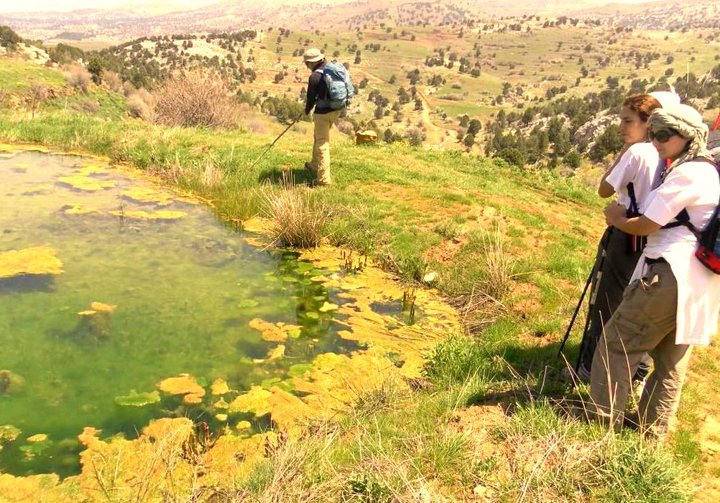
Lebanon boasts one of the world’s most sophisticated hiking trail networks, which traverses 75 towns and villages.
A few years ago, John Keyrouz fled the fast lane in Los Angeles and returned to Lebanon. When he ventured into the mountains to relive fond childhood hiking memories, he was astounded to discover a world class trail system that transects 75 towns and villages and 275 miles of breathtaking mountain scenery.
Besieged with a desire to uplift the country’s rural poor through eco-tourism projects, in 2005 Joseph Karam from ECODIT and his colleague Karim El-Jisr applied for a $3.3 million USAID grant to establish a trail that would rival the organization and professionalism of America’s famed 2,175 mile Appalachian Trail. They got the grant, but the hard work was yet to come.
Building Lebanon’s Mountain Trail
In just two years – between 2006 and 2008 – Karam and El-Jisr developed a feasible concept and proposal for the Lebanon Mountain Trail or LMT trail, obtained substantial funding to implement their ideas, and then worked with a variety of local stakeholders and government representatives to get it “off” the ground.
Not only did they seek council from Lebanon’s own Environmental and Tourism ministries, but they also received guidance from the Appalachian Trail Conservancy, the United States Forest Service, and the International Ecotourism Society.
Dozens of local guides were trained to administer first aid, navigate with a map and compass, recognize trees, and in general conduct professional tours through 3 Nationally Protected Areas, 1 World Heritage Site, and 75 quaint towns and villages, while local guesthouses were empowered to offer affordable accommodation and other facilities for intrepid adventurers.
Each of the LMT’s 26 sections are comprised of trails that both start and end in a village. Some are as short as 9km and the longest distance between two villages is just 24 km. Altitudes range from 3,000 to 5,000 feet above sea level.
A trail with guest lodging along the way
There are numerous guest lodges on the trail along with a few campgrounds for those on a tight budget, and hikers can use ablution facilities at almost all of the networked villages.
Experienced hikers have been known to get from the north to the south in just 26 days (otherwise known as a walk-through), although less experienced hikers are urged to afford themselves an additional week.
More than just another sustainable development project, Keyrouz says of the Lebanon Mountain Trail:
It is a trail of Promise. A promise that, through dedication and love, great strides can be accomplished in the development and protection of the physical, ecological, geographical, historical and cultural treasures of Lebanon. It is also a promise that with proper education and empowerment, we can encourage ownership of the trail by the rural villages and communities along it.
The LMT’s success offers an extraordinary glimpse of what is possible “when a few group of caring individuals set their sites on a common, worthwhile goal.
More on Hiking in the Middle East and North Africa:
New study shows connection between fluoride consumption and hardening of the arteries.
Our previous post on fluoride brought up some startling facts on the dangers lurking in our water. Water laced with fluoride, that is. The list of ills associated with fluoridated water is long and scary: Alzheimer’s, asthma, cancer, arthritis, thyroid dysfunction are among them. On top of that, we know that fluoride doesn’t prevent cavities and may actually cause bones to become brittle. Now we have to worry about what the water we use for drinking, cooking, and hygiene is doing to our hearts and arteries.
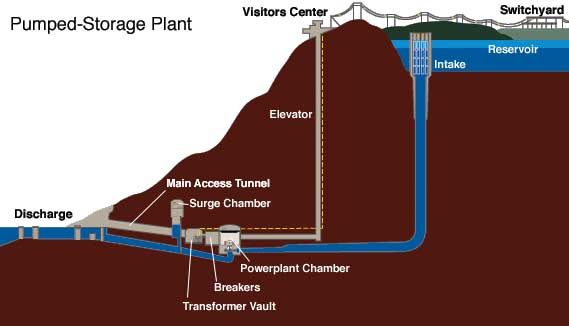
One alternative to the Red-Dead Canal is the Med-Dead Canal hydro pump. The massive hydro pump idea has been around since the 70s and has questionable environmental outcomes.
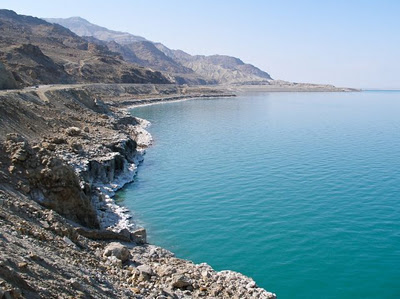
The Israel Chamber of Commerce recently requested that the government reinvestigate a project to connect the Dead Sea and Mediterranean Sea. In a joint letter to Environmental Protection Minister Gilad Erdan and Energy and Water Minister Uzi Landau, Chamber president Uriel Lynn argued that the project would have multiple benefits. Apart from augmenting water flows to the ever-dwindling Dead Sea, Lynn noted the project would improve the environment, tourism and agriculture and produce energy.
The idea is not new. Known as the “Med-Dead” project, it has been kicked around by engineers and environmental experts for decades. In response to Lynn’s letter, Minister Landau wrote that his office had been conducting a feasibility study for a similar project, the “Red-Dead” canal, which would connect the Dead Sea with the Red Sea.
The World Health Organization gets LEED Gold certification, a first for the Hashemite Kingdom.
It’s like the Olympics, but in green building codes: The new Amman headquarters of the World Health Organization (WHO) just grabbed top kudos for green building: Certified Gold under Leadership in Energy and Environmental Design (LEED), a world standard for green building certification.
Investment in renewables grew 104 percent in 2010 in the Middle East and North Africa region- is this a step towards a renewables revolution?
According to data from the United Nations Environment Programme, new investment in renewables in the Middle East and Africa region grew 104 percent in 2010 to $5billion. From inspiring solar projects in Israel, Egypt and Algeria to impressive wind farms in Morocco, it seems that the region is beginning to recognise its abundant renewables energy potential. But can renewables really break into the Gulf market and challenge the dominance of hydrocarbon-based energy?
We have listed 6 big and small solar-powered projects in the MENA region that have inspired us in the hopes that it will do the same for you.
Big or small, solar-powered projects in the Middle East and North Africa are transforming our region. Not only do they hold promise of slowly improving air quality by reducing our dependence on fossil fuels, but they also send the people who live here both an overt and subliminal message: renewable energy is possible and it is cool. Here are 6 solar-powered projects in the Middle East and North Africa (MENA) that make us especially proud – from Desertec’s first 500 MW solar power plant in Morocco to a planned photovoltaic plant in Israel’s sunny south that Arava Power is pushing on the Bedouins’ behalf. If you need hope for our future, this list could help.
Are you lyrical about your two-wheeler? If so, contribute to a literature project on the humble bike
It seems that the majority of people serenading the magic and innocence of cycling are American and European males. In a bid to change this, professors Elamar Schenkel, Alon Raab and Jinhua Li are asking writers from the Arab world to contribute to a special section on cycling in World Literature Today. “Previous anthologies have devoted 90% of their pages to writings by American and European males,” they state. “We will include writings from lands rich in cycling traditions such as China, Turkey, India and Cameroon, by men and women. We are seeking additional poems, stories, sections from novels, essays as well as references to the bicycle in plays, music, and plays.”
From Linz to Tel Aviv: the lifeguard loveshack, a future Pixel Hotel in Tel Avi rendering.
Tafline reported last week on the unusual and super neat project of Pixel Hotels. The idea started in Linz, Austria where unconventional and unused urban properties like garages or spaces within galleries – like a trailer in a gallery – is converted into micro-hotel rooms for unconventional tourists. I stayed in a room in a castle in Syria, all alone with my travel mate Kara about ten years ago. And it was a true in your face cultural experience with Syrian ghosts and all, but this new Pixel Hotel concept is a gorgeous green way to change the face of bland and severely overpriced hotel rooms. Read on for pictures and more.
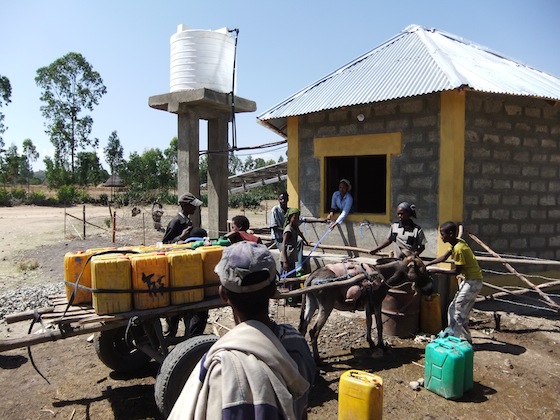
Villagers gather around a kiosk in Afto, Ethiopia to charge their cell phones using solar power and to fill up their jerry cans with UV clean water
Out in the middle of nowhere Ethiopia, fresh water and electricity are hard to come by. It is partly for this reason that the country’s Prime Minister Meles Zenawi has been pushing so hard to implement the controversial Grand Renaissance Dam that will re-write Egypt’s historical control of the Nile River. But DWC, the same people who designed Morocco’s first chemical-free eco pool, have completely transformed life for the villagers of Afto by installing a groundbreaking solar-powered cell-phone charging and water service.
It is true that 2012 may be the last year for President Obama’s bold support for clean energy – because in the wake of the Citizens United decision by the bought-and-paid-for plutocratic new Supreme Court, it is the Koch brothers who get to decide – but oh boy, did he ever get his licks in!
Last year, the US government gave out more loans for clean energy – than even China, which came second in the rankings.
US clean energy investment rose 33% last year to a staggering $55.9 billion – while in China it increased 1 percent to $47.4 billion, according to a study of the industry’s top 20 lenders by Bloomberg New Energy Finance.
One high-tech polymer start-up has developed a coating to solve the problem.
The huge and visionary Desertec Industrial Initiative (Dii) plan to ship vast amounts of solar to Europe has one glaring potential weakness. Dust. Deserts have all the sun that is needed to power vast cities, and recently, the 3rd Desertec deal was signed, but they also have dust. Lots of it. And little water to clean it.
Ever since the classic The Book Of One Thousand and One Nights, which include tales on Aladdin and the Lamp, Sinbad the Sailor and Alai Babba and the Forty Thieves, the Arabian Peninsula, and seacoasts have never been the same. While the characters may be fictional (or maybe not?), the actual location of these magical tales have fascinated people of all ages for centuries. And these places exist. One of the tales, the actual hometown of Sinbad, may be lost from over-development and rising seas in Oman.
An anonymous Green Prophet reader took this photo today at a shopping mall in Tel Aviv’s Dizengoff Center. Go Green ceramic frying pans and pots are slashed to 50 percent off. This follows the picture that Maurice took last week of the fire sale of ceramic cookware in another shopping market. Clearly Israeli shopping centers are trying to offload these products after suspicious reports of dangers in the cookware were asked by a local investigative TV show.
If the outer coatings are found to have dangerous levels of cadmium and lead, and if these could cause potential health effects, does this make a store liable? They are after all selling these products with full knowledge that the jury is still out on whether or not ceramic pots and pans in Israel are dangerous?
These pans have been marketed as environmentally sound and safe. It is not clear whether or not this brand Naaman was implicated in the testing, but it does appear that the supermarkets are looking to get rid of these items.
If readers have any details about this brand, please let us know.

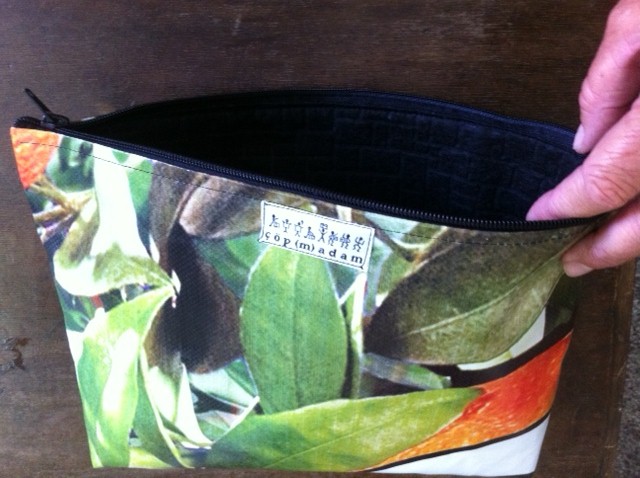
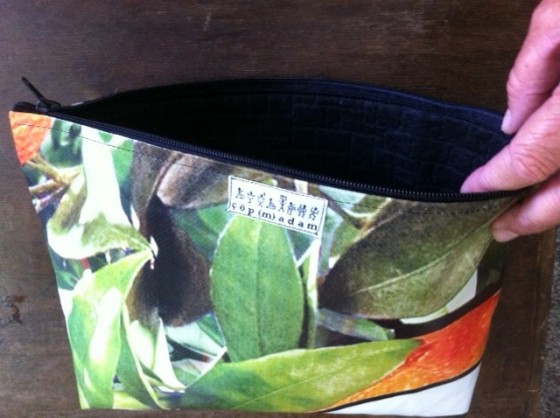 Turning trash into art and employing women who have never worked for pay before — two difficult tasks that Turkish company Çöp(m)adam accomplishes at once.



 The World Health Organization gets LEED Gold certification, a first for the Hashemite Kingdom.







 From Linz to Tel Aviv: the lifeguard loveshack, a future Pixel Hotel in Tel Avi rendering.