


Can Israel and Palestinians Resolve Water Politics in California?


California Israel water crisis Middle East
Can environmental professionals from Israel, Jordan and the Palestinian Authority help solve the epic water battles in California? How similar are the issues of water scarcity and political conflict in the Middle East to those in the Western United States? Can recent examples of successful conflict resolution and cooperation for environmental gains in the Middle East provide valuable lessons for application to California, Utah and Colorado?

A symposium coming to Los Angeles Sept. 9 will explore these critically important questions and showcase ground-breaking efforts for trans-boundary environmental cooperation in the Middle East. The seminar is presented by the Arava Institute for Environmental Studies and features a keynote address from Dr. Peter Gleick, co-founder and president of the Pacific Institute for Studies in Development, Environment and Security.

Securing trans-boundary cooperation is critical as Israel and many areas of the Middle East are in the midst of historic water shortages. Similarly, a drought has been declared in California, adding to recent complications from court-ordered reductions in water deliveries to Southern California to protect endangered species. In addition, the Colorado River Basin is experiencing historic drought conditions.

Research director of the Arava Institute Clive Lipchin comments, 

California’s history can and has been written as successive battles over water waged both within the state and with surrounding states and Mexico. Israel, Jordan and the Palestinian Authority are waging similar battles, attempting to resolve their problems of scarcity, drought and allocation in the middle of a politically tense region.
In many ways, these two regions that are on opposite ends of the planet have very similar problems. Yet, it seems, there are distinct differences in how California and the Middle East attempt to find solutions. Our hope is that our experiences from the Middle East may have relevance to similar issues in the Western United States.
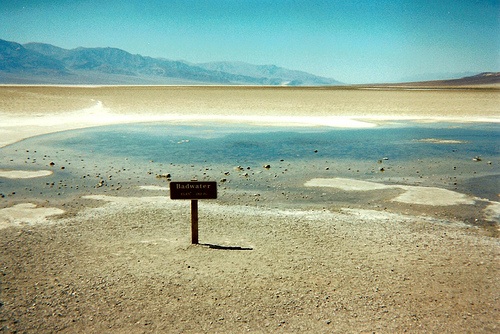
California Israel water Middle East Arava Institute
Each seminar will feature Middle East environmental professionals who have worked together through the Arava Institute to cooperatively solve the region’s environmental challenges, in addition to a resource expert from the city where the seminar is held. 
The panelists will present their research, which covers a range of environmental topics from exposure to airborne particulate matter to watershed protection to the introduction of gray water and saline water as new resources for sustainable farming and crop production.
Interestingly, Lipchin believes that cooperating on environmental issues could be a road to Middle East peace, saying, 
We are finding that time and time again, the cooperation that emerges during our studies is a much more effective means to reduce tensions and secure meaningful environmental gains than are more formal approaches.

Read More

TRENDING

AI data centers are triggering panic, instead of cleantech opportunities

AI may unintentionally become the economic engine that finally modernizes America’s aging grid. California is experiencing a massive AI data center boom, ranking 3rd in the U.S. with 227 operating centers and 54 more in development as of April 2026, according to Stanford.

Abortion Pills, Plan B and Mifepristone and what the new US mail ban means

Abortion pills, often confused with Plan B (the morning-after pill), and historically referred to as RU486 (mifepristone), are part of a broader category of reproductive health medications that women have been using for decades. But they are not the same thing.

Hormuz 2026 Conflict Poses an Energy and Food Security Dilemma in a Warming World

As tensions rise in one of the world’s most critical maritime chokepoints, the ripple effects go far beyond oil—touching food systems, climate pressures, and regional stability

Baby teeth read like tree rings paint a picture of toxins in early life

A new study from the Icahn School of Medicine at Mount Sinai in New York offers a striking insight into how the environments we are born into can quietly shape our brains years later. By analyzing naturally shed baby teeth, the ones tucked under pillows for the tooth fairy, researchers have reconstructed a detailed timeline of exposure to environmental metals during pregnancy and early infancy.

Poop in the East River shows the city’s rat problem and what people like to eat

New York ecology and health can be monitored by a jug of water a week.

How to quiet noise from construction in your office

Streets need to be resurfaced in New York but the humming and grinding noise is unsettling. Noise is environmental pollution. 

EarthX and a blueprint for sustainable investing

Trammell S. Crow, a Dallas-based businessman and father of four, is focusing his efforts on impact investing, and media that focuses on saving the planet through EarthX.

Mining Afghanistan’s Mineral Discoveries Similar to Avatar

Now that American forces in Afghanistan are commemorating the longest period of any war that America has been involved in, including the 1965-73 Vietnam War, the recent discoveries of large and extremely valuable mineral and metal deposits may finally bring to light a reason to continue the presence of US fighting forces in this war torn and backward country.

From Pilot Plant to Global Stage: How Aduro Clean Technologies’ 2026 Expansion Signals a Turning Point for Chemical Recycling Investors Like Yazan Al Homsi

The company's Next Generation Process (NGP) Pilot Plant in London, Ontario, has officially moved into initial operating campaigns, generating the kind of structured, repeatable data that separates laboratory promise from commercial viability.

Nobul’s Regan McGee on Shareholder Value: “Complacency Is the Silent Killer” 

Why the governance framework designed to protect shareholders so...

Should You Invest in the Private Market?

startustartup Unlike public stock exchanges, which offer daily trading, strict...

How to build a 100-year-company

Kongō Gumi is a Japanese construction company, purportedly founded in 578 A.D., making it the world's oldest documented company. What can we learn about building sustainable businesses from them?

How AI Helps SaaS Companies Reduce Repetitive Customer Support Work

SaaS products are designed for large numbers of users with different levels of experience, and also in renewable energy.

Popular Categories