PEOPLE Festival returns to Berlin’s Funkhaus this October, bringing 180 musicians together for a week of collaboration, improvisation and more than 200 one-off performances.
Teletherapy can make mental health care easier to access by reducing travel, scheduling and location barriers. Here are six ways virtual therapy can help people connect with professional support more easily.
A coworking space within walking distance can cut commuting time and give you a reliable place to work, but distance alone does not make it useful. Test the internet, noise, privacy, desk setup, environmental claims and real cost before committing to a membership.
Yazan Al Homsi looks at two very different bets — Aduro Clean Technologies and Rocket Doctor — to show what investors should watch as small-cap companies attempt to move from promising technology to commercial scale.
PEOPLE Festival returns to Berlin’s Funkhaus this October, bringing 180 musicians together for a week of collaboration, improvisation and more than 200 one-off performances.
Teletherapy can make mental health care easier to access by reducing travel, scheduling and location barriers. Here are six ways virtual therapy can help people connect with professional support more easily.
A coworking space within walking distance can cut commuting time and give you a reliable place to work, but distance alone does not make it useful. Test the internet, noise, privacy, desk setup, environmental claims and real cost before committing to a membership.
Yazan Al Homsi looks at two very different bets — Aduro Clean Technologies and Rocket Doctor — to show what investors should watch as small-cap companies attempt to move from promising technology to commercial scale.
PEOPLE Festival returns to Berlin’s Funkhaus this October, bringing 180 musicians together for a week of collaboration, improvisation and more than 200 one-off performances.
Teletherapy can make mental health care easier to access by reducing travel, scheduling and location barriers. Here are six ways virtual therapy can help people connect with professional support more easily.
A coworking space within walking distance can cut commuting time and give you a reliable place to work, but distance alone does not make it useful. Test the internet, noise, privacy, desk setup, environmental claims and real cost before committing to a membership.
Yazan Al Homsi looks at two very different bets — Aduro Clean Technologies and Rocket Doctor — to show what investors should watch as small-cap companies attempt to move from promising technology to commercial scale.
PEOPLE Festival returns to Berlin’s Funkhaus this October, bringing 180 musicians together for a week of collaboration, improvisation and more than 200 one-off performances.
Teletherapy can make mental health care easier to access by reducing travel, scheduling and location barriers. Here are six ways virtual therapy can help people connect with professional support more easily.
A coworking space within walking distance can cut commuting time and give you a reliable place to work, but distance alone does not make it useful. Test the internet, noise, privacy, desk setup, environmental claims and real cost before committing to a membership.
Yazan Al Homsi looks at two very different bets — Aduro Clean Technologies and Rocket Doctor — to show what investors should watch as small-cap companies attempt to move from promising technology to commercial scale.
PEOPLE Festival returns to Berlin’s Funkhaus this October, bringing 180 musicians together for a week of collaboration, improvisation and more than 200 one-off performances.
Teletherapy can make mental health care easier to access by reducing travel, scheduling and location barriers. Here are six ways virtual therapy can help people connect with professional support more easily.
A coworking space within walking distance can cut commuting time and give you a reliable place to work, but distance alone does not make it useful. Test the internet, noise, privacy, desk setup, environmental claims and real cost before committing to a membership.
Yazan Al Homsi looks at two very different bets — Aduro Clean Technologies and Rocket Doctor — to show what investors should watch as small-cap companies attempt to move from promising technology to commercial scale.
PEOPLE Festival returns to Berlin’s Funkhaus this October, bringing 180 musicians together for a week of collaboration, improvisation and more than 200 one-off performances.
Teletherapy can make mental health care easier to access by reducing travel, scheduling and location barriers. Here are six ways virtual therapy can help people connect with professional support more easily.
A coworking space within walking distance can cut commuting time and give you a reliable place to work, but distance alone does not make it useful. Test the internet, noise, privacy, desk setup, environmental claims and real cost before committing to a membership.
Yazan Al Homsi looks at two very different bets — Aduro Clean Technologies and Rocket Doctor — to show what investors should watch as small-cap companies attempt to move from promising technology to commercial scale.
PEOPLE Festival returns to Berlin’s Funkhaus this October, bringing 180 musicians together for a week of collaboration, improvisation and more than 200 one-off performances.
Teletherapy can make mental health care easier to access by reducing travel, scheduling and location barriers. Here are six ways virtual therapy can help people connect with professional support more easily.
A coworking space within walking distance can cut commuting time and give you a reliable place to work, but distance alone does not make it useful. Test the internet, noise, privacy, desk setup, environmental claims and real cost before committing to a membership.
Yazan Al Homsi looks at two very different bets — Aduro Clean Technologies and Rocket Doctor — to show what investors should watch as small-cap companies attempt to move from promising technology to commercial scale.
PEOPLE Festival returns to Berlin’s Funkhaus this October, bringing 180 musicians together for a week of collaboration, improvisation and more than 200 one-off performances.
Teletherapy can make mental health care easier to access by reducing travel, scheduling and location barriers. Here are six ways virtual therapy can help people connect with professional support more easily.
A coworking space within walking distance can cut commuting time and give you a reliable place to work, but distance alone does not make it useful. Test the internet, noise, privacy, desk setup, environmental claims and real cost before committing to a membership.
Yazan Al Homsi looks at two very different bets — Aduro Clean Technologies and Rocket Doctor — to show what investors should watch as small-cap companies attempt to move from promising technology to commercial scale.
I worked as a junior scientist in Switzerland for a couple of years, collecting and researching insects on plants across the Alps, the Valle d’Aosta, along the Rhône and Rhine, and in Poland. We worked in forests and once collected near Auschwitz, where it was impossible not to think about the history of the place while we went about the strangely ordinary scientific work of counting insects and recording plants.
Fig. 1: Senecio leucophyllus (white-leaved ragwort) in the Pyrenees.
Europe has been steadfast about preserving culture and place, but nature does not necessarily respect the boundaries we draw around it. As we move further into the Anthropocene, European landscapes are changing too, and new research from 62 mountain summits shows how warming is reshaping the plant communities of the Alps and other European mountains.
Until a few decades ago, short growing seasons, cold temperatures and the constant risk of frost made high alpine environments difficult for most European plants to colonize. As temperatures have risen, plants from lower elevations have begun moving upward. The result appears positive at first: mountaintops have more plant species than they used to.
But researchers analysing vegetation surveys conducted between 2001 and 2022 through the global GLORIA monitoring initiative found that this increase is masking another trend. With each survey, more existing species could no longer be found, and the plants disappearing were disproportionately species adapted to high elevations.
“The data clearly show that species were more likely to disappear from summits which experienced stronger warming. This correlation was even stronger than the temporal trend”, said first author Johannes Wessely from the University of Vienna.
Rhododendron ferrugineum (rusty-leaved alpenrose) on the western slopes of Mount Schrankogel in Tyrol (Austria) in front of Bockkogel. « Rising Plant Extinction Rates on European Mountain Summits
The likelihood of a species disappearing also increased when it was already growing near the warmer, lower edge of its normal range. “Put differently, when species already grow on warmer-than-average sites they become more sensitive to further temperature increase”, said Harald Pauli, coordinator of GLORIA at the Austrian Academy of Sciences and Boku University.
The scientists believe another phenomenon may be emerging: an “extinction debt.” Alpine plants tend to be hardy and long-lived, meaning populations can persist for decades after environmental conditions begin turning against them. The study found that local extinctions were generally preceded by long periods of population decline, so some of the losses being recorded today may be consequences of warming that began decades ago.
“They could consequently indicate that an extinction debt starts to be paid off. However, whether this interpretation holds true needs further investigation”, said project coordinator Stefan Dullinger.
Polygonum carneum () in front of the main ridge of the Greater Caucasus near Ushguli in Georgia at an altitude of approximately 2700 m
The important point is that biodiversity cannot always be understood simply by counting species. A European mountaintop can gain plants while simultaneously losing the specialists that make it an alpine ecosystem. As common species climb into newly hospitable territory, the cold-adapted plants above them have nowhere higher to go.
When I think back to collecting insects among those European plants, this is what strikes me most. We were documenting which species lived where. A few decades later, some of those ecological boundaries themselves are moving.
“We need prospective evidence showing that AI actually changes patient outcomes.”
Artificial intelligence may help radiologists identify subtle signs of breast cancers that are missed during routine mammograms, and some AI systems may even identify patterns associated with an increased risk of cancer before it becomes visible on a mammogram, but there are still many significant limitations, according to a review led by investigators at the UCLA Health Jonsson Comprehensive Cancer Center.
The review, published in the Journal of Breast Imaging, examines the current landscape of commercially available AI tools used to assist with the interpretation of screening mammograms and summarizes research on their potential to detect and predict interval breast cancers.
Interval cancers are breast cancers diagnosed after a negative screening mammogram but before a woman’s next scheduled screening. They are an important measure of how well a mammography screening program is working and are often more aggressive than cancers detected through routine screening.
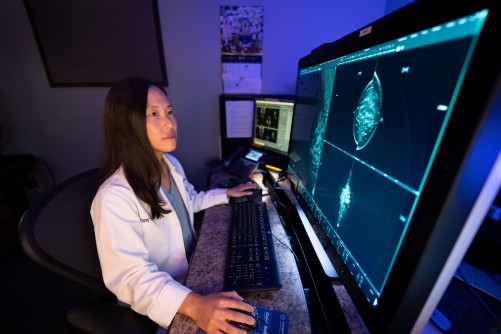
“The ultimate goal of screening mammography is to eliminate these interval cancers and catch as many of them as we can earlier, at the point of screening,” said Tiffany Yu, MD, assistant professor of radiology at the David Geffen School of Medicine at UCLA and senior author of the paper. She is featured in the image above.
“As AI tools become increasingly commercially available, we wanted to provide readers with a timely overview and foundational understanding of interval cancers and potential ways AI can help detect them, because ensuring these tools are safe and clinically effective is paramount.”
Some interval cancers develop rapidly and are not visible on the previous mammogram. Others, however, leave subtle signs that were present on the earlier mammogram but were not recognized at the time of screening. The latter group may represent an opportunity for AI to help radiologists identify cancers earlier.
The researchers reviewed studies evaluating two potential applications of AI. The first was whether AI could identify interval cancers that were retrospectively visible on a previous mammogram. The second was whether AI could identify subtle patterns on a mammogram that appeared normal but were associated with an increased risk of developing breast cancer in the future.
Mammograms check for breast cancer
Across retrospective studies, AI was able to identify a substantial proportion of interval cancers that had subtle signs visible on the prior mammogram. Estimates varied widely, ranging from about 5% to 78%, depending on the study, AI system and methodology.
However, the researchers emphasize that these findings represent potential detection, not proven reductions in interval cancer rates. Most of the studies were retrospective, meaning researchers went back to previously collected mammograms from women who were later diagnosed with breast cancer and determined whether AI could have identified signs of the cancer.
“Finding a cancer retrospectively is very different from demonstrating that using AI during routine screening would have led to an earlier diagnosis,” said Hannah Milch, MD, associate professor of radiology at the David Geffen School of Medicine at UCLA and co-author of the study. “We need prospective evidence showing that AI actually changes patient outcomes.”
Some studies also suggest AI may be able to identify women at increased risk of developing breast cancer even when the mammogram appears normal. In one study, AI assigned its highest risk scores to 23.1% of women who later developed an interval cancer three screening rounds before diagnosis, increasing to 39.4% on the mammogram immediately preceding diagnosis.
While these findings raise the possibility that AI could provide an early warning signal before a cancer becomes apparent, it is not yet clear how clinicians should respond to a high AI risk score when no abnormality is visible on the mammogram. Additional imaging could potentially identify cancer earlier, but it could also result in false positives, unnecessary procedures and overdiagnosis.
The review also highlights a large 2026 prospective randomized controlled trial involving more than 105,000 women that compared AI-supported screening with standard double reading, a routine practice commonly performed in Europe where two radiologists interpret a single mammogram. The interval cancer rate was 1.55 per 1,000 women in the AI-supported group compared with 1.76 per 1,000 in the standard screening group. AI-supported screening also had higher sensitivity, 80.5% compared with 73.8%, while specificity was the same at 98.5%.
The AI-supported approach reduced screening workload by 44.3% without reducing the overall cancer detection rate.
The authors say the trial provides some of the strongest prospective evidence to date for AI-assisted mammography, but caution that it was designed to assess non-inferiority rather than definitively demonstrate a reduction in interval cancer rates. The screening setting also differed from many U.S. programs, including the use of 2D mammography, longer screening intervals and double reading.
More broadly, the researchers found substantial differences among studies evaluating AI and interval cancers. Studies use different definitions of interval cancer and different screening technologies, intervals and radiologist workflows. Most research also evaluates a limited number of AI algorithms, making it difficult to determine whether findings from one system apply to others.
“These differences make it difficult to directly compare results because of international screening program differences, and the lack of studies applicable to U.S. programs,” said Yu. “This also highlights important areas where more research is needed before these tools can be fully integrated into everyday care.”
The researchers say future studies should follow patients prospectively and evaluate whether AI-assisted screening reduces interval cancer rates, as well as recall rates, false positives, radiologist workload and downstream testing. Long-term patient outcomes and post-market surveillance of commercially available AI systems will also be important to determine their safety and effectiveness.
Goodles about to be better? With their purchase by Italy-based Barilla, renowned for high-quality and innovative consumer pasta, it’s a collaboration waiting to happen. Health food mac & cheese brand Goodles upgraded with Barilla expertise and reach? Pasta perfettissimo!
While Barilla has been boiled in controversy by dipping into the waters of culture wars, it came out al dente and emerged with new pastas and toothsome products. These range from a high-end organic al bronzo line, to campanelle that doesn’t brag about being al bronzo, to stars that hit shelves in time for the US bisesquicentennial, to gluten-free options that are edible to gluten-lovers, to protein-enhanced options for protein maxers, and other delightfully well-executed products for pasta lovers like myself.
Barilla’s limited-edition “Cooking Is an Art” pasta boxes celebrated LGBTQ+ families with illustrations by Italian artist Olimpia Zagnoli, part of the pasta maker’s remarkable turnaround after its culture-war controversy.
Enter Gal Gadot, the wonderful Israel actress who herself is no stranger to controversy yet is nonetheless just like any other mom trying to feed her kids something easy and healthy. She got in early on Goodles, which is heathfood pasta in the sense that it’s designed with protein- and fiber-maxxers in mind with enough added nutrients to make your daily multivitamin redundant if it wasn’t already.
Gal Gadot starred in Wonderwoman about 10 years ago
Each serving has two servings each of 14g of protein, 8g of fiber, “21 nutrients from plants” despite some of those nutrients coming from mushroooms; mushrooms are not plants despite having often been classified as such. And yes, it’s kosher. As for plant-based, the Vegan Is Believin’ variety and the gluten-free Vegan Be Heroes round out their offerings, there are also gluten-free versions of several of their dairy options.
If that isn’t enough they also have varieties with premade sauce, varieties that resemble spaetzle, microwave cups that you should both try and donate to your shul’s holiday food drive, as well as plain boxed protein pastas that only have minimal crossover with Barilla’s shapes. I’ve only ever tried their normal boxed Mac & Cheese, which comes in both normal flavors and slightly more adventurous flavors like smoked gouda, pesto, and even hatch chile.
And this is where I feel Barilla has a chance to better Goodles’s offerings, as a writer with over four decades of experience eating health food and pasta. I actually love Italian cooking, to the point that in addition to my chumashim I also have “The Pasta Bible” by Jeni Wright as well as Donna Klein’s invigorating “Vegan Italiano” cookbook. While I might not know from pasta like a chef, an experienced food writer, or an Italian I do know that a bit better pasta brings any dish that much closer to being perfetto.
If I was to judge Goodles only on the strength of its pasta, I would say it’s only Okayles. Part of this is the size of some of the pasta I’ve had (the spirals were unsatisfyingly on the small side) and the texture that seemed to lack the consistency I’ve come to expect from pasta. I would have to try it again to judge the flavor, since when I’ve had Goodles before I used Canadian brand Yofiit’s mixed-legume plantmilk that at the time imparted a noticeable bitterness that I’m not sure I can attribute to the Goodles.
While I suspect the flavors might not be quite what a regular eater of Kraft or Manischewitz might expect, the real area of improvement would be the integrity of the pasta in order to appeal to more customers that Barilla (making its supply chain regenerative) will surely want to reach.
Thus bringing nearly 150 years of pasta excellence to the present is almost certainly going to give Goodles a bigger bite of the market. Barilla certainly seems to think this will satisfy a hunger in the market, having watched Goodles rise as companies like Kraft and Velveeta have been left with a smaller portion of the market. Whatever comes next has executives at both companies excited, especially at the chance to give more consumers a good taste of this healthy pasta. Buon appetito!
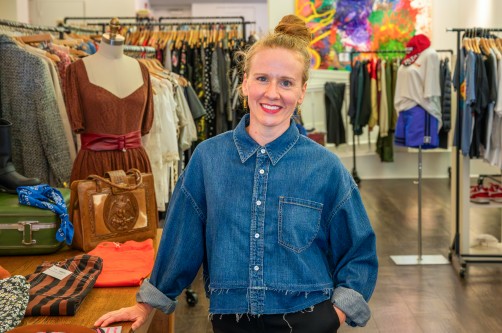
There was a time when fashion changed and we changed or reshaped our clothes. I remember tightening in the legs of my jeans in the late 80s, and a year later chopping them up and adding colorful extensions turning them into bellbottoms, Grateful Dead style. I was working on a budget, so when the fashion changed, I just changed what I own. Fast fashion decades later has changed that. So has ozempic which is turning overweight people into skinny ones. How does that impact fashion? And sustainable fashion and circular fashion?
Skinny models for Ozempic-friendly fashion trends
That is the strange place we have arrived at with Ozempic, Wegovy, Mounjaro and other GLP-1 weight-loss drugs. These medicines were developed to treat diabetes and obesity, but their influence is spilling far outside the doctor’s office. They are changing what people eat, what they drink, how they shop, what size clothes stores stock and, perhaps most uncomfortably, what kind of body fashion considers desirable.
I started thinking about this after sending some questions to Katie Baker Jones, Ph.D., an associate professor and program coordinator in Fashion Design & Merchandising at West Virginia University. Jones studies fashion media and the stories the industry tells us about our bodies.
It’s the kind of rabbit hole we like to jump into over here at Green Prophet. A pharmaceutical drug changes an appetite. An appetite changes a supermarket basket, a smaller body changes a wardrobe and a wardrobe changes textile demand. Multiply those choices by millions of people and suddenly a medical breakthrough for weight loss starts looking like an environmental force.
We are seeing similarly unexpected connections elsewhere in medicine. New research into psilocybin and chemotherapy-induced peripheral neuropathy, for example, suggests that a compound better known for its psychedelic effects may protect sensory nerves by preserving the movement of energy-producing mitochondria. In both cases, drugs are doing things, biologically and culturally, that extend far beyond the reason most of us first heard about them.
But after my first GLP-1 story, I wanted to come back to the people inside this enormous experiment. Are fashion companies actually changing what they manufacture? Will smaller bodies mean fewer textiles? Will people simply throw away their old wardrobes and buy new ones? And after a decade of Americans talking and pushing for body positivity in advertising and sizing options, is fashion quietly deciding that thin is fashionable again?
I sent Jones five questions. Her answers were thoughtful, cautious and considerably more complicated than the simple narrative that everybody is suddenly becoming skinny.
Katie Baker Jones on GLP-1 drugs, fashion and the return of thin
Katie Baker Jones, aassociate professor and program coordinator, Fashion Design and Merchandising, WVU WVU College of Creative Arts and Media
Green Prophet: Are fashion buyers actually changing size orders yet because of GLP-1 use, or is this still mostly discussion and anticipation?
Katie Baker Jones: Yes, there is documented evidence that brands are offering fewer options in the upper size range. From a Guardian article: “The research firm Edited, which tracks items as they launch on retailers’ websites, analysed H&M’s offerings for spring/summer 2026, recording all new women’s dresses landing on the site from January to May and compared it with the same period in 2025. Last year, 3XL and 4XL made up 2% of the new inventory.
This year those sizes were entirely absent. Other large sizes fell too: XXL, which had accounted for 13.3% of inventory in 2025, was down 3 percentage points, while XL was down 2 percentage points, and smaller sizes, XS to large, rose by 3 percentage points on average.” The article offers other examples of mass market brands decreasing or eliminating altogether their upper size ranges.
Even though Gallup reports that only 11% of the American population is currently taking a GLP-1, the fashion press continues to discuss GLP-1 adoption as inevitable/universal and appears to be making buying decisions based on that logic.
Green Prophet: Could widespread weight loss ultimately reduce the amount of textile used by the fashion industry, or do you think people changing sizes and replacing wardrobes could actually increase clothing consumption?
Katie Baker Jones: A decrease in textile usage is possible, but not necessarily from fewer plus size garments being made. Though only mentioned in a few of the trade press articles I read for my study, the industry does have some inkling that GLP-1s could reduce general demand for clothing since, at least for some users, it does seem to reduce overall desire and compulsive behavior and it’s being used to treat addictive behaviors (whether eating, shopping, or controlled substances).
Yes, some folks may need to replace their wardrobes as they lose weight, but it’s probably too early to tell how consumption will be reshaped by broader GLP-1 adoption.
As with most aspects of the fashion industry, reporting tends to focus on what is happening in Western and middle-to-upper class consumer economy – wealthy people have access to these drugs, poorer folks do not or it’s limited to what their insurance will cover. Obesity rates are rising in developing economies, so if we take the global view, the demand for textiles due to shifting body sizes is much more complicated.
That last point is important. The environmental equation isn’t as simple as smaller bodies requiring less fabric. A person losing weight may replace an entire wardrobe. Someone else may buy less of everything. And the changes happening among wealthy consumers in North America and Europe are not necessarily happening elsewhere in the world.
Green Prophet: Are brands beginning to think about the “GLP-1 consumer” as a distinct market — not only in sizing, but in style, identity and purchasing behavior?
Katie Baker Jones: Yes, most of the fashion trade press are focusing on the “Ozempic Economy” – the growth opportunities in wellness, beauty, and apparel that the drug has had or may have in the future. Business of Fashion reports that some brands are actively taking “size volatility” into account in their designs and policies (as has been widely reported, most people who stop using GLP-1s gain back most, if not more, of the weight they lost).
For example, it mentions David’s Bridal has clocked that brides are shopping closer to their wedding date since they may be using GLP-1s to reach an ideal size for their wedding, meaning things like alterations and fit sessions are going to happen on a shorter timeline. This will put pressure on factories and alterations workers to speed up their timelines as well. That same article talked about Soma developing their Bodify bra to better accommodate all the ways breasts may change, whether from giving birth, menopause, but also including for those who have lost breast fullness due to rapid weight loss.
WWD has published several reports on the growth of supplements and fitness regimes specifically aimed at GLP-1 users.
Green Prophet: Do you see a danger that fashion will abandon the body-positivity and size-inclusivity gains of the last decade if smaller bodies become dominant again?
Katie Baker Jones: The abandonment of size inclusivity on runways and in advertising is probably the most visible and rapid impact the spread of GLP-1s has had. Multiple outlets have reported on the noticeable loss of size-diverse models on the most recent runways. There are of course brands that have remained committed to size inclusivity including Christian Siriano and Karoline Vitto, but as with previous “thin is in” eras, the press frames them as anomalies not as bellwethers (and maybe also as a salve to women who still seek larger sizes AND fashionability).
I would argue the marquee luxury fashion houses were always reluctant participants in the body inclusivity movements; even when they did employ mid- and plus-size models for fashion week, the actual product available to consumers was limited at best.
The industry has never been very good at pretending that it aspires to dress every body type; excuses such as the ‘difficulty’ of designing for larger bodies or the economic infeasibility of expanding size runs have served as cover since at least the 1910s when mass manufacture of women’s apparel really started to take off. The work of Carmen Keist and Lauren Downing Peters offer some great historical and contemporary analysis of this issue.
Green Prophet: And the bigger question I became fascinated by: if millions of people eat less, weigh less and potentially consume differently, do you think GLP-1s could become a cultural and economic force far beyond medicine and fashion?
Katie Baker Jones: I am pretty cautious here since this comes back to the “universal and inevitable” issue. I don’t doubt that as weight loss drugs become more widely available, we will continue to see impacts both predictable (the fashion industry abandoning size inclusivity campaigns) and less predictable (the documented reduction in alcohol consumption). But, access to the drugs remains heavily limited and we still don’t have a really clear picture of the longterm implications of GLP-1 use.
One impact I do hope to see is fashion journalism learning from health journalism in terms of its ethical obligations in reporting. As these fields start overlapping more (the fashionable reshaping of bodies through medical intervention), the fashion press will need to keep the overall health of their readers more firmly in mind.
I do hope the fashion press learned at least a few lessons from the late 1990s and early 2000s, when it actively refused to acknowledge it played any role in promoting “thin as the default’ body standard.
I’ve attached an article I have students read published in Vogue in 1996 that drives this point home (link to the PDF –> Johnson_The body myth_1996). My research suggests that there has been some progress on this issue – there is more dialogue on the pros and cons of shifting body sizes and there is more inclusion of divergent voices, including women who identify as “plus size”, writing these pieces.
In an ideal world, the fashion press would truly operate like fashion’s “fourth estate” – holding it to account on issues like diversity in the C suites, size inclusivity, promoting overconsumption, its environmental impacts, worker exploitation, etc. – but we have a long way to go on that front.
—
For years we’ve talked about sustainable fashion as a problem of materials: organic cotton, recycled fibers, water, dyes, carbon emissions and clothing that shouldn’t be thrown into landfill after being worn three times. But perhaps there is another kind of sustainability involved here.
Zentera’s ethical wool
A sustainable fashion industry should be able to accommodate that reality without asking us to dispose of everything in our closets every time our waist changes.
GLP-1 drugs may ultimately reduce some forms of consumption. They may reduce food waste, alcohol consumption or compulsive shopping. They may also generate enormous new markets in clothing, beauty, supplements and wellness. We simply don’t know yet. What Jones reminds us is that we should be cautious about treating any of this as universal or inevitable.
Not everybody will take Ozempic. Not everybody can afford it. GLP-1 drugs are showing us however, something similar on a much larger cultural scale that cannabis and magic mushrooms are doing to managing cancer therapies: a medicine can escape the boundaries of medicine and begin reshaping behavior, business and even our ideas about beauty.
About 30 years ago, cannabis researchers started catching up with what many people self-medicating already understood: compounds in cannabis can help some cancer patients cope with symptoms of treatment. THC-based medicines, for example, have been used to address chemotherapy-related nausea and loss of appetite, while medical cannabis has also been studied for cancer pain and reducing reliance on opioids. I was among the first journalists to report on this, interviewing greats like Raphael Mechoulam on his seminal work into cannabis chemistry.
Companies like Pharmos tried to take the mechanisms of chemistry from cannabis into pain medicine without the “high” but failed early on in the game; not because cannabis didn’t work; I can hazard it’s because they got the dosage wrong and the world wasn’t ready. Also all CBD treatments that focus on pain do need some amounts of THC to work effectively, cannabis research Alan Shackelford has told me.
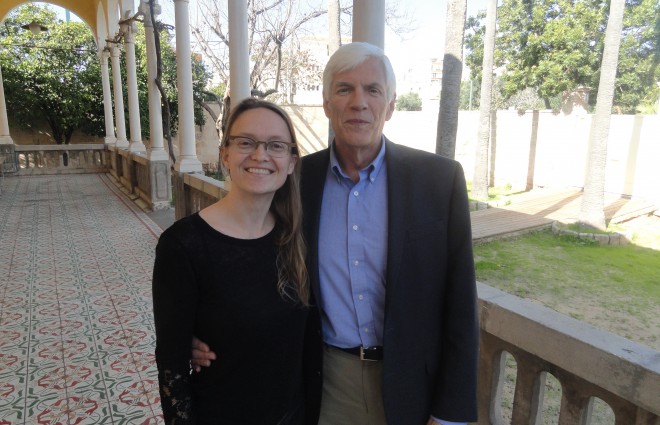
Karin Kloosterman and Alan Shackelford
Now researchers are looking at another psychoactive plant-derived drug for a very different reason. And it’s a recreational drug that still gets negative press. Are we ready for it? New research suggests that psilocybin, the psychedelic compound found in so-called magic mushrooms, could help prevent one of chemotherapy’s most debilitating side effects. The study was published in the journal Science.
Psilocybin may protect nerves during chemotherapy
Chemotherapy-induced peripheral neuropathy, or CIPN, can cause burning pain, pins and needles, numbness, cold sensitivity and loss of sensation in the hands and feet. For some cancer patients the nerve damage becomes so severe that doctors have to reduce chemotherapy doses or stop treatment altogether. Sometimes the effects can be permanent.
Researchers found that just two doses of psilocybin given to mice before chemotherapy prevented the animals from developing this neuropathy. Remarkably, the protection continued through repeated chemotherapy cycles and lasted for months.
The finding is particularly interesting when considered alongside decades of research into psychoactive compounds as medicine. Israel’s Raphael Mechoulam helped establish the modern science of medical marijuana, THC and CBD for chronic pain and cancer patients, while a newer generation of scientists is investigating psilocybin, MDMA and LSD-related compounds for their effects on the brain and nervous system.
Research into psychedelics has also explored their potential to change communication and connectivity between neurons. We have previously looked at how psychedelics including psilocybin and LSD may affect the brain, particularly in research related to depression, trauma and neural plasticity. The chemotherapy study, however, points to a different and surprisingly physical mechanism.
Keeping the nerve’s energy supply running
Psilocybin, the psychedelic compound found in magic mushrooms, may protect sensory nerves from chemotherapy-induced damage by preserving the movement of energy-producing mitochondria along nerve fibers.
Nerve cells require a tremendous amount of energy. Tiny structures called mitochondria act as the cell’s power plants, and they have to be transported along nerve fibers to supply energy to distant nerve endings.
Chemotherapy can interfere with this mitochondrial transport system. When mitochondria stop moving properly along the nerve, the most distant nerve endings can become starved of energy and eventually become damaged or disappear.
Psilocybin appears to keep that energy-delivery system operating by preserving the movement of mitochondria along sensory nerves. In other words, the drug may do more than change how the brain perceives pain: it appears to help protect the physical nerve itself.
The researchers also found that psilocybin helped normalize activity in areas of the brain involved in processing pain.
Perhaps most intriguing for prospective treatments is that the psychedelic trip associated with magic mushrooms may not be necessary. The researchers traced the protective effect to activation of the serotonin 2A receptor, or 5-HT2A. They then tested a nonhallucinogenic compound that activates the same receptor and found that it produced similar protection.
That raises the possibility of developing a medicine that uses the nerve-protecting mechanism identified in psilocybin without making cancer patients undergo a psychedelic experience.
There is an important hitch: the work is still in preclinical stages: the strongest evidence comes from animal models, and psilocybin has not yet been proven to prevent chemotherapy-induced neuropathy in cancer patients. The researchers did, however, also study human peripheral nerves, human stem cell-derived sensory neurons and patient tissue, finding evidence that the same mitochondrial transport pathway exists in humans.
If those findings eventually translate into clinical trials and patients, psychedelics could offer something considerably more important than temporary pain relief. They could potentially help doctors prevent chemotherapy from permanently damaging sensory nerves in the first place.
AWGs, Water From Air Sounds Like Magic. The Energy Bill Is the Catch
There are roughly 13,000 cubic kilometres of water floating through Earth’s atmosphere at any given time. We can’t see most of it, but we feel it every humid summer morning. For decades, engineers have been trying to turn that invisible reservoir into drinking water. And for more than 2 decades we’ve been writing about the promise. When you first hear about Atmospheric Water Generators (AWGs) and the ability to pull water from thin air, the idea sounds like magic.
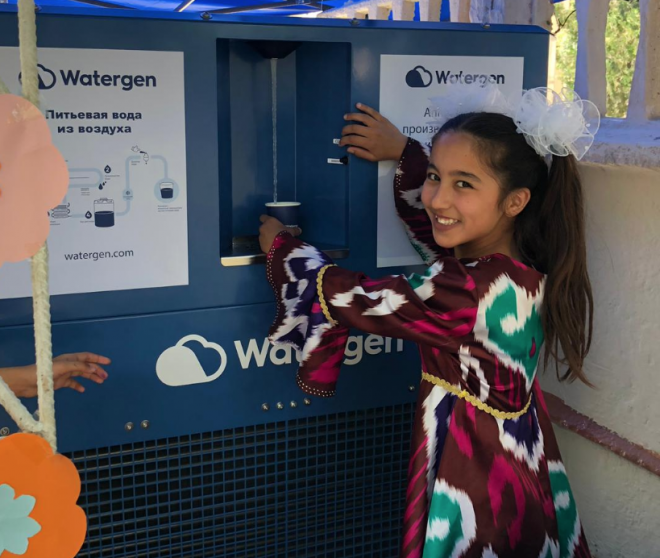
Watergen generates water from air in Bukhara
We’ve covered companies in this space before, like Watergen, but unless the company is also providing a sustainable source of power, the tech isn’t worth its weight in salt. Unless of course you are putting them in emergency or military situations where there is no other choice for accessible drinking water.
For years AWG companies have been seducing us: forget digging deeper wells, building desalination plants or trucking bottled water into remote villages. Just put a machine outside the village or hotel and pull moisture from the atmosphere and drink it.
Companies in this space include Watergen, GENAQ, SOURCE Global and a long list of smaller atmospheric water generator companies who have pursued versions of this idea. Most essentially use refrigeration technology to cool air below its dew point, and collect the residue, much like air conditioners do in your home. Here are 5 ways to reuse your air con water.
A solar-powered water harvester rendering developed by KAUST researchers can extract 2 to 3 liters of water per day during the summer months. Courtesy.
Others AWGs use desiccants or advanced materials that capture water molecules and release them later. SOURCE Global for instance takes another approach with solar-powered hydropanels that use hygroscopic material to capture atmospheric moisture.
The science works but the harder question is whether the energy equation works.
We aren’t actually making water from nothing
Collect AC water directly from the unit.
Anyone who has watched water drip from an air conditioner has already seen atmospheric water generation. Warm air contains water vapor. When you cool that air sufficiently and the vapor condenses into liquid water. But cooling huge quantities of air takes energy.
One experimental study of an atmospheric water generator found energy consumption ranging from about 0.84 kWh per liter under favorable conditions to roughly 2.1 kWh per liter under less favorable conditions. Another study found a range between 0.75 and 4.71 kWh per liter, with warm, humid conditions performing best. You can read more about atmospheric water generator performance in this ScienceDirect study.
That is why putting an atmospheric water generator in Miami and putting one in the Sahara are fundamentally different propositions. The places desperately short of water are often exactly the places where extracting it from dry air becomes thermodynamically difficult and where energy is hard to obtain regularily.
Heat pumps release water when they are on cool mode
Imagine solving water scarcity by installing millions of atmospheric water generators powered by coal- or gas-heavy electricity grids. We would be using energy that contributes to climate change to manufacture drinking water for communities increasingly suffering from drought and climate change.
Solar energy changes the equation because atmospheric water systems are particularly interesting when they can run directly from sunlight, renewable electricity or waste heat. A recent review of atmospheric water harvesting research from Basra, Iraq found that pairing these systems with solar power could substantially improve their economics and environmental performance. The irony is not lost on us. Basra is home to oil extraction facilities for the world’s biggest oil companies. Yet the people of Basra are exposed to pollution and unstable access to power.
Yet, researchers increasingly see combinations of solar, wind, sorbent materials and intelligent controls as promising routes toward lower-energy water production.
SOURCE Global is already commercializing one interpretation of this model. Its hydropanels use sunlight and air rather than a conventional water connection to produce drinking water, although output still depends on local climate conditions, including sunshine and humidity.
Watergen’s lab
Other companies working in atmospheric water generation include Watergen and GENAQ, both of which have developed systems designed to extract drinking water directly from ambient air and that may ultimately be where water from air makes the most sense.
Not necessarily replacing municipal water systems or producing millions of liters for agriculture, but creating decentralized drinking water where conventional infrastructure is expensive, contaminated, unreliable or simply nonexistent. This could very well work in places like Basra where the locals cannot drink the water because it is too polluted and contributing to explosive rates of cancer, according to one woman I met from Basra recently.
Think AWGs in desert schools, remote communities, disaster zones, islands, military installations and homes beyond municipal water networks. But powered by abundant clean energy, and combined with better materials that can capture moisture without brute-force refrigeration, it could become an important piece of the water puzzle. And these systems should be up and running in Gaza already. With the proximity to Europe and the intense global outpouring of support Gaza should be a new frontier of humanitarian help, not a disaster zone.
The atmosphere contains an extraordinary amount of water. It’s time we use it.
Women in Iran are being watched by the morality police
Safety and privacy aside, there is another question hiding behind all those cameras: what is the environmental cost of watching everything?
That debate is playing out in Virginia around Flock Safety, whose automated license plate recognition cameras, or ALPRs, are used by police departments across the United States. According to a 2025 Virginia State Police report cited by the Virginia Center for Investigative Journalism at WHRO, at least 159 Virginia law enforcement agencies used ALPRs, including 139 using Flock Safety.
The cameras can help police locate vehicles associated with crimes. But they also create searchable records of vehicles moving through communities.
What happens when an officer uses that power for personal reasons? What happens if enormous collections of location data are retained or shared far beyond their original purpose?
Just because we can collect all this data, should we?
The Virginia Center for Investigative Journalism obtained thousands of public records revealing confusion among residents, police departments and elected officials about how Flock information was collected, shared and stored.
In Bridgewater, data from just five Flock cameras had been accessed more than seven million times nationwide before Virginia banned out-of-state sharing, VCIJ reported.
Attorney Michael Soyfer of the Institute for Justice told VCIJ that police departments sometimes acquire new surveillance technology with little scrutiny.
“Oftentimes, the department vetting is very minimal,” he said.
In Williamsburg, when a resident asked William & Mary police how its Flock data was shared, Police Chief Don Butler turned to Flock for help answering the question.
Flock vice president Chris Colwell sent talking points that could be forwarded to residents. According to VCIJ, the response did not directly answer Butler’s original question.
Flock itself acknowledges the political challenge. One company training document obtained by VCIJ tells police: “Don’t avoid the concept of mass surveillance because you are not going to convince opponents that it’s not.”
Flock says customers control their data and sharing permissions, searches are logged, access is role-based and data is encrypted. The company says its ALPR technology does not use facial recognition.
There are also legitimate public-safety uses. Norfolk police told VCIJ that Flock cameras had assisted investigations into two shootings since March.
But anti-surveillance advocate Clayton Tye argues cities should demonstrate that benefit.
“If you claim that this has been solving crime, then prove it,” he told VCIJ.
If cities are exchanging some privacy for increased security, shouldn’t they measure exactly what they are getting in return?
The environmental cost of surveillance
Then there is a cost almost nobody discusses.
Every image captured, analyzed, transmitted and stored requires physical infrastructure: cameras, telecommunications networks, servers, data centers, electricity and cooling.
Surveillance isn’t driving the AI boom, but it belongs to the same larger question: how much information do we actually need to collect, move and store?
This is where privacy and sustainability unexpectedly meet.
The greener surveillance system may also be the more private one.
Process information locally when possible. Transmit only useful information. Delete unnecessary data quickly. Restrict sharing and duplication.
The greenest byte may be the one we never send to a data center.
Cities should establish retention limits, audit searches and publish evidence showing how often cameras actually help solve crimes. They should also ask vendors where information is processed, how much is transmitted, how long it is stored and what computing infrastructure is required.
Before we build cities that see everything, perhaps we should decide what is actually worth seeing — and worth storing.
And the people living underneath those cameras should get a say.surveill
GLP-1 drugs are changing American bodies. Fashion researchers are already asking what happens to clothing when millions of people become smaller. But I think there is a much bigger environmental question hiding here. What happens if the physical infrastructure surrounding those bodies gets smaller too?
Smaller clothes require less fabric. People with suppressed appetites may consume less food and be satisfied with smaller portions. Airlines carrying lighter passengers need marginally less fuel, and packaging could get smaller. Cars, chairs, hospital equipment and public transportation have all been engineered around the bodies using them. Could weight loss drugs such as Ozempic, Wegovy and Mounjaro inadvertently change the material footprint of American life?
Katie Baker Jones, associate professor of Fashion Design and Merchandising at West Virginia University, has been studying how GLP-1 drugs are affecting fashion and body culture.
Katie Baker Jones, aassociate professor and program coordinator, Fashion Design and Merchandising, WVU WVU College of Creative Arts and Media
“There’s been a marked decrease of what the industry calls ‘curve models,’ which could be anything above a size four and talk has circulated about buyers not having to buy as many large and extra-large sizes in size runs because we’re presuming everyone’s going to be on these drugs,” Jones says.
There is something uncomfortable about that. Fashion spent the last decade talking about body positivity, only for medicine to suddenly offer millions of people a way to dramatically alter those bodies. And both women and men are going for it. Jones calls her research “My Body Has Gone Out of Style.”
A plus size model may be soon out of style as women shrink from Ozempic
“It’s not just the shape of a sleeve or where a hemline falls, it’s that bodies themselves are now subject to fashion,” she says.
But from an environmental perspective, another question emerges. If average clothing sizes decline, does fashion’s physical footprint decline too? Will there be less material making those clothes or will the once body positive folks shift their choices and buy even more clothing now that they are embracing the new skinny version of themselves?
Consider that a smaller shirt contains less textile than a larger version of the same design. Multiply that difference across millions of garments and we’re talking about cotton, polyester, dyes, water, manufacturing energy and shipping.
The opposite could initially happen. People who lose significant amounts of weight may want to replace entire wardrobes quickly. The greener solution would be a genuinely circular fashion economy capable of getting those discarded clothes onto other bodies instead of into landfill.
Then there are airplanes. I find this aspect interesting. Aviation engineers obsess over weight and limit carry-ons to 20 pounds, weighing checked baggage to the pound, charging a fist-full of money if you go over. Airlines have spent decades shaving pounds from seats, carts, magazines and aircraft components because moving less mass requires less energy.
Passengers are a part of that payload, especially if you are a bigger body. My husband, for instance, is a full checked suitcase and a carry-on piece heavier than me. He’s worth two checked in pieces (100 pounds) heavier than my daughter yet they pay the same ticket price as adults.
If millions of passengers become lighter, airplanes collectively carry less weight. That’s a fact. On an individual flight the difference may be tiny, but multiplied across thousands of daily flights, it becomes more interesting. I’d love to see some numbers on that in terms of carbon emissions.
Luggage could become marginally lighter too as clothing sizes decline, unless of course being smaller also means newfound vanity and a bigger wardrobe.
The much bigger environmental story may be food and how we consume it. GLP-1 drugs suppress appetite and can profoundly change people’s relationship with eating. If millions of people routinely consume fewer calories, what happens upstream?
Restaurants could offer smaller portions, and supermarkets could sell smaller packages. Households might throw away less uneaten food. Demand for some highly caloric processed snack foods could fall.
Food carries an enormous invisible environmental footprint. Behind an unfinished hamburger are crops, animal feed, farmland, water, fertilizer, refrigeration, processing, packaging, trucking and cooking.
Of course, the food industry will adapt. We are already entering an era of products marketed specifically toward people using GLP-1 medications. If consumers replace ordinary meals with expensive protein products, supplements and individually wrapped “GLP-1 friendly” snacks, some potential environmental gains could disappear beneath another mountain of packaging.
There are other efficiencies worth watching too if you have come here for the environmental benefit of weight loss drugs. Cars expend energy moving passengers, elevators move human mass vertically and hospital beds, wheelchairs, office chairs and public transportation are designed around assumptions about population size and weight.
Shipping could change too as smaller garments occupy less space.
None of this means weight-loss drugs are an environmental policy. They are medications with legitimate medical purposes, costs and risks, and potential environmental efficiencies should never become another argument for pressuring people to take them. There is also the rebound effect.
GLP-1s could produce their own rebound economy. People who spend less on food might spend the savings on travel. Lose 50 pounds and you may buy a completely new wardrobe to show off on an Italian holiday. Food companies losing revenue from giant portions will invent premium products to replace those revenues. We know that capitalism is exceptionally good at filling newly empty space.
Jones, who studies body trends, says GLP-1s differ from previous diet crazes because “it’s not just managing caloric intake in a paleo diet and a workout regimen; it’s a medical intervention.”
When a medical intervention reaches millions of people, it can become an economic intervention too. For more than a century, industrial economies became extraordinarily good at selling us more: more calories, bigger portions, bigger cars and closets overflowing with clothes.
Now a pharmaceutical technology is introducing a strange new possibility. What happens to an economy built around ever-increasing consumption when millions of its consumers suddenly want less? Or will they want more of something else? Could it be new relationships, more travel, more specialized clothing?
What industries can you imagine shrinking, or growing, from the Ozempic phenomenon?
A billion-dollar fusion experiment is taking shape in the New Mexico desert, where startup Pacific Fusion hopes to achieve something no fusion facility has yet managed: produce more fusion energy than the total energy stored in the machine.
Pacific Fusion broke ground in August on a $1 billion Research and Manufacturing Campus at Mesa del Sol in Albuquerque. The roughly 225,000-square-foot facility will house its Demonstration System, which the company says is designed to achieve “net facility gain” by 2030.
Pacific Fusion opens billion dollar plant in New Mexico
Scientists at the National Ignition Facility in California made history in 2022 when a fusion reaction produced more energy than the laser energy delivered to its tiny fuel target. But powering the lasers and the rest of the facility required far more energy than the reaction produced. Pacific Fusion wants to push past that barrier and demonstrate a gain across the machine itself.
Instead of using giant lasers, Pacific Fusion plans to fire enormous pulses of electricity at tiny capsules of hydrogen fuel. More than 150 truck-sized pulser modules will work together, creating powerful magnetic fields that rapidly compress the fuel and produce fusion. The company says each module can deliver more than a terawatt of peak power in a pulse lasting about 100 nanoseconds.
If it works, it would be another important step toward the decades-old dream of producing electricity using the same basic reaction that powers the sun.
The project is expected to create more than 200 permanent jobs in New Mexico, along with hundreds of construction and supply-chain jobs.
But this isn’t only a clean-energy story: Pacific Fusion has also signed an agreement with the US National Nuclear Security Administration to collaborate on high-energy-density science and research related to America’s nuclear stockpile. The Demonstration System is expected to produce fusion bursts exceeding 100 megajoules, creating conditions useful for both fusion research and national-security experiments.
Pacific Fusion tools
That dual purpose puts Pacific Fusion at an interesting intersection of climate technology and defence even though some environmentalists believe nuclear energy is an enemy to nature and humanity.
Money is now pouring into the energy sector. Fusion companies raised a record $4.48 billion worldwide in the year to July 2026, bringing reported investment since 2021 to more than $14 billion. That’s because the promise is enormous: abundant, carbon-free energy without burning fossil fuels that could power our jet packs, and EVs.
But to date fusion remains experimental, and turning a spectacular laboratory reaction into an economical power station operating day after day is an entirely different challenge. Pacific Fusion isn’t building that power station yet but it’s building the machine it hopes will prove one can eventually be built.
Europe leads the world in culture and taste. And when it comes to slow food, slow fashion and slow travel, Europe creates the mold. In a new bid to create circular fashion more than a trend but a necessity, European states are now declaring that every fashion piece created in or for the EU must be circular in nature. Funny, given that fast fashion was ultimately perfected into a business model with Sweden’s H&H and Spain’s Zara.
A decomposing plastic for shoes and fashion
EU regulators increasingly will now require fashion companies to address what happens to products after they are made and sold. A major change took effect on 19 July 2026, when large companies in the EU became subject to a ban on destroying unsold clothing, fashion accessories and footwear.
Medium-sized businesses will come under the same restriction from 2030. The requirement forms part of the Ecodesign for Sustainable Products Regulation (ESPR) and is intended to reduce the unnecessary waste of usable products and the resources embedded in them.
The measure is part of a wider restructuring of Europe’s textile-waste system.
The European Commission proposed changes to the Waste Framework Directive in 2023, with textiles identified as a priority area. The revised framework entered into force in October 2025 and introduces EU-wide rules for Extended Producer Responsibility (EPR), making producers financially responsible for supporting the collection and management of textile waste. Social-economy organisations involved in second-hand textile collection also receive specific exemptions and support under the framework.
Together, these policies are pushing fashion companies to rethink product design, inventory management, reuse, repair, collection and recycling. For global brands selling into Europe, the regulatory shift could influence supply chains well beyond the EU. The next generation of fashion products will increasingly need to be designed with their entire lifecycle not just their first sale in mind. Lastly, in terms of market size, the EU Circular Fashion Market was valued at approximately USD 2.8 billion in 2025 and is expected to reach around USD 6.0 billion by 2035, expanding at a CAGR of 7.9% from 2026 to 2035.
Fashion’s Linear Model Has Reached Its Limit
The linear process of making, using and disposing of fashion products is increasingly becoming unsustainable due to high consumption levels coupled with inadequate recovery processes that are leaving valuable materials out of the production process. Annually, there are about 92 million tonnes of textile waste produced globally. In Europe, 6.94 million tonnes of textile waste were produced in 2022 alone, which equates to approximately 16kg per person.
Most of the 85% of the household textile waste produced is not separately collected and is therefore part of the mixed waste streams rather than being used for reuse or recycling. The problem starts even before the use phase since approximately 4-9% of the textiles produced on the European market are destroyed before being used, equating to 264,000-594,000 tonnes annually. This shows why the industry is shifting from disposability towards a circular economy of longer product life, repairing, reusing, reselling and recycling of fibres.
The Garment Must Be Designed for Its Second Life
Sustainable wool by Stella McCartney
The shift toward circular fashion is beginning at the design stage, as brands recognise that recycling becomes far more difficult when garments are made from complex combinations of materials. A single product can contain several fibres along with dyes, coatings, threads, buttons, zippers, labels and adhesives, making separation and recovery more challenging. Designers are therefore increasingly considering material simplicity, durability, repairability and easier disassembly when developing new products.
The goal is to ensure that garments can remain useful through repair and resale before their materials eventually enter recycling streams. This approach also supports the use of fibres that can be recovered and processed into new textile inputs. Digital product information is expected to further support this transition by making material composition and other product characteristics easier to identify. As circularity requirements become stronger, design decisions made at the beginning of a garment’s life will increasingly determine its value at the end, turning design for durability and recovery into an important competitive consideration for fashion brands.
The Infrastructure Behind the Circular Fashion Economy
This bra in a co-production by Balena is made from a plastic that decomposes, but is it edible?
Making clothing recyclable is only one part of the circular-fashion transition. The industry also needs infrastructure that can move garments from consumers back into productive use. This begins with collection networks, including municipal systems, retailer take-back programmes, textile bins and producer-funded schemes. The challenge is significant, with the EU generating around 6.94 million tonnes of textile waste in 2022, while 85% of household textile waste was not separately collected.
Collected garments then move through sorting and material-identification facilities, where they are classified by fibre composition, colour, quality and condition. This determines whether they can be resold, repaired, reused or recycled. Automated sorting and digital identification can improve efficiency, particularly for blended fabrics.
The next stage involves pre-processing, including cleaning, cutting, shredding and removing zippers, buttons, coatings and other components. Materials can then enter mechanical or chemical recycling facilities, with the ultimate goal of producing fibres suitable for new textile manufacturing.
Kitty Shukman shoes
Reverse logistics connects consumers, retailers, collection centres and recyclers, while Digital Product Passports, QR codes and material databases can improve traceability and recycling decisions. Extended Producer Responsibility (EPR) can also help finance collection and waste management.
Building this system could require €8-11 billion (USD 9.3–12.8 billion) in additional capital expenditure and €5-6.5 billion (USD 5.8–7.6 billion) in annual operating expenditure to support a potential 15% textile-to-textile recycling rate by 2035. This creates opportunities for recyclers, fibre producers, sorting companies, logistics providers and digital-technology firms.
Used Garments → Collection Networks → Sorting & Identification → pre-processing → Mechanical / Chemical Recycling → Recovered Fibres → New Textile Production → New Garments
How Fashion Brands Are Responding to the Circularity Mandate
Fashion companies are moving from broad sustainability promises toward measurable changes in materials, product design, recycling capacity and end-of-life management. As European circularity rules become more demanding, brands are preparing for greater responsibility across the garment lifecycle. The focus is increasingly shifting from simply reducing environmental impact to creating products and supply chains that can keep materials in circulation for longer.
Increasing Recycled and Circular Materials
H&M is increasing its use of recycled and sustainably sourced materials while targeting 100% recycled or sustainably sourced materials by 2030, including an ambition to reach 50% recycled materials. In 2025, 91% of its product materials met its sustainability criteria, with recycled materials accounting for 32%. The company is also working with partners including Syre, Circulose, Recover, RE&UP and Loopamid to strengthen access to circular materials.
Moving From Recycled Bottles to Recycled Clothes
adidas is gradually changing where its recycled polyester comes from. The company has maintained 99% recycled polyester use since 2023 and aims for 10% of its recycled polyester to come from recycled textile waste by 2030. The strategy represents a move toward recovering fibres directly from discarded clothing rather than relying primarily on recycled plastic bottles.
Designing Garments for Longer Life
Brands are also reconsidering how products are engineered. Arc’teryx, for example, has introduced circular-design initiatives incorporating recycled materials, repairability and easier component separation. Its approach demonstrates how companies are beginning to consider repair, disassembly and eventual material recovery during the design stage, rather than treating recycling as an end-of-life problem.
Building Recycling Infrastructure
Fashion companies are increasingly investing in the infrastructure needed to support circular production. H&M has established Looper Textile Co. with REMONDIS to develop industrial-scale textile sorting capabilities, while its investment in Syre supports the development of textile-to-textile recycled polyester. Such investments aim to improve the availability and consistency of recycled feedstock.
Collaborating Across the Supply Chain
No individual brand can create a closed-loop fashion system alone. adidas, Bestseller and Inditex are participating in industry initiatives involving textile sorters, recyclers and producer-responsibility organisations. These collaborations are designed to connect fragmented parts of the recycling chain and accelerate the development of commercial-scale textile-to-textile processing.
Taking Greater Responsibility for End-of-Life
Brands are also expanding programmes covering take-back, reuse, repair, resale and recycling. H&M reported collecting more than 17,000 tonnes of textiles from customers in 2025, with the material directed toward reuse or recycling. Such programmes help brands establish reverse flows of materials while extending the useful life of garments.
The Strategic Shift
The industry’s response is moving well beyond the simple use of recycled fabrics. Companies are increasingly building strategies around the complete lifecycle of a garment, from material selection and design to manufacturing, consumer use, collection, reuse and recycling. As regulation strengthens, circularity is becoming both a compliance requirement and a long-term supply-chain strategy, potentially giving early movers greater access to recycled materials and circular production capabilities.
Top 5 EU Beneficiary Markets of the Circular Fashion Economy
Germany
Germany is one of Europe’s largest apparel markets and has significant potential for textile collection, sorting, recycling and circular retail. Its large consumer base can generate substantial volumes of recoverable textiles, while its industrial capabilities support recycling technologies and sustainable manufacturing.
France
France is particularly well positioned because it was an early adopter of textile Extended Producer Responsibility (EPR). Its established collection and producer-responsibility system gives companies experience in financing and managing textile waste, creating opportunities in collection, reuse, repair and recycling.
Netherlands
The Netherlands stands out for its circular-material performance and textile-sorting capabilities. Its 2024 circular material use rate reached 32.7%, the highest in the EU, while the country also has an estimated 200,000-tonne annual textile-sorting capacity.
Italy
Italy combines a major fashion industry with an established textile and manufacturing ecosystem, making it well positioned for circular design, fibre recovery, recycling and sustainable textile production. Its 2024 circular material use rate reached 21.6%, among the EU’s highest.
Sweden
Sweden is emerging as an important market for advanced textile recycling and circular-material innovation. Its position is strengthened by companies such as Circulose, which is developing recycled textile fibres, while Swedish policy and innovation initiatives support the broader transition toward textile-to-textile recycling.
Top 10 Beneficiary Businesses of the Circular Fashion Economy
Textile Recycling -Converts discarded garments into reusable fibres and materials for new textile production.
Textile Sorting -Separates collected clothing by fibre composition, quality, colour and condition.
Circular Fibre Manufacturing -Produces new fibres from recovered cotton, polyester, cellulose and other textile waste.
Repair & Refurbishment -Extends garment lifespans through repair, alteration, cleaning and restoration services.
Resale & Second-Hand -Keeps clothing in circulation through resale platforms, stores and brand-operated second-hand channels.
Reverse Logistics – Moves used garments from consumers and retailers to sorting, resale and recycling facilities.
Recycling Technology -Develops mechanical and chemical processes for recovering materials from textile waste.
Digital Traceability -Provides Digital Product Passports, material identification and tracking solutions for circular supply chains.
Textile Waste Management -Manages textile collection, processing and recovery as producer-responsibility requirements expand.
Conclusion
The shift towards circular fashion is not only about sustainability anymore. European Union regulations, increasing waste of textiles and scarcity of resources are pushing brands to reassess the way clothes are made, sold, used, and reclaimed. The greatest potential for innovation is in creating a circular system in which clothes retain their value even after first use through repairing, reselling, reusing and textile-to-textile recycling.
Yet, to achieve true circularity, more will be needed than the efforts of individual companies. Infrastructure for collection, sorting, recycling, recycled fibres, as well as financing, will need to scale up altogether. As the deadline of 2030 comes closer, the companies that are making investments now can benefit from both regulation and competition.
Plastic bottles remain one of the most stubborn forms of ocean pollution, according to new results from Ocean Conservancy’s 2025 International Coastal Cleanup, the massive volunteer effort that removes and records trash from beaches and waterways around the world.
Volunteers collected a staggering 1,338,712 plastic bottles during the 2025 cleanup, making bottles the number one item recorded. They also picked up 885,854 plastic bottle caps, which ranked third.
That is more than 2.2 million bottles and caps collected in a single year.
“I have spent nearly 15 years conducting hundreds of cleanups all over the world, and whether we’re on the remote Alaskan coast or a tropical island hundreds of miles from land, we find bottles and caps at every cleanup,” said Allison Schutes, Ocean Conservancy’s Senior Director of Conservation Cleanups.
“Most bottles are used for mere minutes and yet can last in the environment forever. Our communities, our ocean, and our planet deserve better.”
Recycled bottles, WE MAKE CARPETS, Taragalte Festival, Morocco, eco design, plastic carpet, bottle carpet
The problem isn’t only that the plastic is ugly or takes generations to disappear. Bottles and their caps can be deadly to wildlife.
Ocean Conservancy points to research showing that hard plastics such as bottle caps are among the most dangerous forms of plastic when swallowed, particularly for seabirds. Its wildlife database even documents an albatross killed after swallowing a plastic bottle whole.
And unlike some difficult-to-recycle materials, beverage bottles already have established recycling systems: “There’s really no excuse for this,” said Dr. Anja Brandon, Ocean Conservancy’s Director of Plastics Policy. “Plastic bottles are among the most recyclable items out there.”
For Brandon, the numbers point to two failures: the world is producing too much plastic in the first place, and too much of what is produced never reaches an effective waste or recycling system.
Ocean Conservancy argues that bottle-deposit programs, reuse and refill systems and extended producer responsibility laws could make a significant difference. Extended producer responsibility, or EPR, shifts some of the financial responsibility for dealing with discarded packaging back onto the companies that produce it.
Since 2021, EPR policies have passed in Maine, Oregon, Colorado, California, Minnesota, Washington and Maryland, according to Ocean Conservancy. Ten U.S. states currently have bottle-deposit laws, while additional states are considering them.
The International Coastal Cleanup has been running since 1986. Nearly 20 million volunteers have since removed more than 405 million pounds of trash while recording almost 440 million individual pieces of marine debris.
That record-keeping may be as important as the cleanup itself. The resulting database has been used by scientists and policymakers to understand what is entering oceans and waterways and whether policies designed to stop pollution are working. Cleanup data, for example, have been used in peer-reviewed research examining the effectiveness of plastic bag bans.
The next International Coastal Cleanup takes place during September, with the official annual event held on the third Saturday of the month.
Picking up bottles from beaches won’t solve the plastics crisis on its own. But after nearly four decades of volunteers documenting what washes up on the world’s shores, one message is difficult to miss: we are still producing enormous quantities of objects designed to be used for minutes and capable of remaining in the environment for generations.
Before computers, there were looms. London’s Softwear exhibition traces the surprising links between weaving, women, punched cards and modern computing.
Looms ran on binary code more than a century before computers. Think about that the next time someone tells you artificial intelligence was invented in Silicon Valley. In 1804, the Jacquard loom transformed weaving by using punched cards to tell a machine which threads to lift and which to leave alone. Hole or no hole. On or off. The weaver could effectively program an intricate flower, geometric pattern or portrait into cloth.
It wasn’t binary code in the strict modern computer science definition, but the principle is startlingly familiar. Information was encoded outside the machine, stored and then read as instructions. And it came from women and it came from weaving.
I studied science and have spent much of my life writing about technology, but I love these moments when the histories we are taught fall apart. Computing didn’t just descend from mathematicians and electrical engineers in the US. Some of its roots run through looms, textiles, punched cards and the precise handwork so often performed by women.
That is the idea behind Softwear, an exhibition curated by Kira Wainstein opening at No Show Space in London on September 18 in London.
“This foundational principle of computers was first harnessed not by scientists or engineers, but by weavers,” the exhibition notes.
The history of computing may have started with Charles Babbage who later borrowed the punched-card idea for his Analytical Engine, the extraordinary 19th-century design for a programmable mechanical computer.
Ada Lovelace understood the connection. Writing about Babbage’s machine in 1843, she famously observed that the Analytical Engine could weave algebraic patterns just as the Jacquard loom wove flowers and leaves.
Punch cards were inspired by the loom
Lovelace is now recognized as an important pioneer of computer programming. A century later, women were again doing the invisible work of computation. Before computers were machines, “computers” were people, many of them women performing mathematical calculations by hand.
Then came war: World War II accelerated computing because governments needed machines to calculate trajectories, crack codes and solve military problems faster than humans could. ENIAC, one of the earliest general-purpose electronic computers, was developed for the US Army to calculate artillery firing tables. Its original programmers were women.
There is a strange parallel here with another exhibition we covered at Green Prophet, from flour sacks to ecological ingenuity. That exhibition showed how women manipulated whatever materials remained available during war: a bra sewn from coat lining, belts made from electrical wire, handbags from telephone wire. Silk maps used to escape from enemies could become clothing.
Follow the map to her heart
Charlotte Johannesson’s Guardian? from 1984 was created after the Swedish artist traded her loom for a computer. Crystal Bennes’s When Computers Were Women translates 2,131 computer punch cards from a CERN experiment into woven textiles.
Shannon Swinburn’s IBM 1401 reconstructs the hand-threaded memory of an early computer. Steph Linn reproduces a digital image through hand-punched knitting cards. Artists daniela brill estrada and Monica C. LoCascio emboss lace drafts alongside physics and poetry onto copper.
Magnetic core memory used tiny magnetic rings threaded with wires. The work required extraordinary dexterity and was often performed by women. Before our information disappeared into something we misleadingly call “the cloud,” you could practically hold computation between your fingers.
Softwear runs September 18 through October 17, 2026 at No Show Space, 39 Temple Street, London. The exhibition features Crystal Bennes, daniela brill estrada & Monica C. LoCascio, Charlotte Johannesson, Steph Linn and Shannon Swinburn and was selected through apexart’s Open Call.
Forests get the headlines while grasslands, steppes and grazing lands rarely do. But at the latest United Nations summit on desertification, held in Ulaanbaatar, Mongolia, the world’s rangelands finally moved closer to center stage. The UN Convention to Combat Desertification’s COP17 ended August 28 with governments and financial institutions announcing a $1.3 billion portfolio for land restoration and drought resilience across 23 countries, they reported to Green Prophet in a press summary.
Mongolian tents in a desert in Asia
At the heart of that effort is a $1.2 billion Rangelands Flagship Initiative spanning 45 projects, the largest mobilization for rangelands in the convention’s history.
This matters because rangelands cover about 54 percent of the Earth’s land surface, support around two billion people and are stewarded by an estimated 500 million pastoralists. Yet they remain mostly invisible in environmental policy, the UN body reports.
Rangelands contain roughly one-third of the world’s key biodiversity areas, but appear in the national climate plans of only 24 countries. Forests, by comparison, are included in the plans of 181 countries.
Why the world needs healthy grasslands
A Mongolian eagle hunter crosses the vast steppe with a golden eagle, carrying on an ancient hunting tradition deeply connected to the land and pastoral life.
Mongolia is considered an appropriate place to start the conversation. Its steppes have supported pastoral cultures for centuries, demonstrating that landscapes often dismissed as empty or unproductive can sustain food systems, wildlife, economies and human communities.
New economic analysis presented at COP17 estimated that rangelands generate between $21 trillion and $47 trillion in ecosystem services every year through food production, water regulation, carbon storage and biodiversity.
Restoration makes economic sense. According to figures presented at the summit, restoring rangelands can return between $4 and $6 for every dollar invested, rising as high as $36 when broader benefits such as water security are counted.
An estimated $355 billion a year is needed through 2030 to meet global land restoration commitments, while current investment sits at around $77 billion. Private finance represents only about six percent of global investment in land restoration.
A traditional Mongolian ger. Mongolia hosted UNCCD COP17 in Ulaanbaatar, putting the world’s rangelands, pastoralists and land restoration at the center of the global environmental agenda.
COP17 advisors want to narrow that gap. Alongside the $1.3 billion portfolio, the UNCCD and Luxembourg launched a Drought Resilience Investment Facility intended to mobilize as much as $400 million in public and private capital for water security, sustainable agriculture, nature-based solutions and land restoration. Saudi Arabia has also made a commitment: The Riyadh Global Drought Resilience Partnership, launched by Saudi Arabia at COP16, also moved forward with plans for a pooled fund that could eventually support around 70 vulnerable countries.
All great fanfare but we’d like to hear about more specific ways that communities can access these funds without having to jump through NGOs and their often highly political gate-keeping. There is a reason why the US cut funding to the UN, and we’ve been noticing a pattern. rThe question after Mongolia is the familiar one: will the money and political promises actually reach the soil, and the people caring for it?
More than 1,000 people are now reported dead after catastrophic flooding tore through Nepal and China’s Tibet region, with thousands more missing. The massive flood which carried cement-like mud through Nepal villages began high in the Himalayas on August 26, when an enormous mass of glacier ice, rock and bedrock collapsed and sent a wall of water, mud and debris down through mountain valleys wiping out anything in its path.
It is tempting to call the Nepal mudslide a natural disaster. But in a rapidly warming Himalaya and Nepal (and world!), the distinction between natural and human-made disasters is getting harder for us to draw.
Scientists are still reconstructing exactly what happened. Satellite imagery examined by researchers indicates that bedrock beneath part of a glacier collapsed, carrying an enormous quantity of ice with it. Permafrost is melting and there is nothing we can do about it, it seems. The resulting avalanche crashed into the valley below, where ice, rock and water transformed into a catastrophic downstream flood.
The United Nations reported in 2023 that that Nepal’s mountains have lost close to one-third of their ice 30 years because of global warming. Scientists caution that climate change cannot yet be identified as the singular trigger for this particular collapse. But warmer conditions can melt snow, degrade the permafrost that helps hold steep mountain slopes together and increase the amount of meltwater moving through these already fragile systems.
This happened to me and my property in Canada two winters ago. One day there was 2 feet of snow, and the next after a 68 degree spring thaw, hundreds of acres of snow melted, the ground still frozen, resulting in a massive amount of water that washed out the road.
A satellite image shows the valleys near the Nepal-China border on August 26, 2026, after the devastating floods. 2026 PLANET LABS PBC
The Himalayas, like the rest of the world, are becoming unstable. This raises an uncomfortable question about what we are building on the other side of the climate equation.
Did China’s AI boom meets the melting Himalayas
Rumors are circulating that China has built secret server farms in the mountains and under glaciers to avoid cooling costs. It’s a known thing – and Finland has been doing this for decades: building server farms underground where it’s cold. We know that China is investing enormous amounts of money and energy into artificial intelligence, cloud computing, data centers and the electricity infrastructure required to run them. Rumors on x, which we can’t verify, suggest that Chinese server farms heated the glaciers near the Himalayas causing the instability to worsen.
There is currently no evidence establishing that connection. And getting data out from China would be impossible.
But data centers consume electricity, and where that electricity is generated from fossil fuels, they contribute greenhouse gases to the atmosphere. Those emissions join the accumulated global emissions driving climate change. The resulting warming does not respect borders, obviously.
The catastrophe also exposes another uncomfortable relationship between development and the Himalayan environment. Hundreds of workers were reported missing from hydropower projects after the flood, with many feared trapped inside tunnels. Roads, bridges, power installations and communities have been devastated.
The Financial Times has reported that scientists are increasingly concerned about development in a Himalayan landscape already being transformed by warming, glacier retreat, permafrost degradation and seismic instability. Imagine what could happen to melting glaciers when mixed with an earthquake?
Reuters reports that Nepal has been pressing China for better access to upstream glacier and water data. Nepal officials say improved real-time information could provide precious warning when ice, lakes or mountain slopes become unstable. China says it has been sharing meteorological and hydrological information with Nepal and will continue supporting disaster relief and risk reduction.
There is no evidence that Chinese servers melted Nepal’s glacier. But there is a much larger story here. Humanity is constructing an increasingly energy-intensive digital world at precisely the moment when the physical world is demonstrating how consequential additional warming can become. Nepal will be dealing with the consequences long after the television cameras leave.
University of Delaware epidemiologist Jennifer Horney warns that the devastating flooding could create health challenges that persist long after the waters recede.
Horney, an expert in disaster preparedness and public health, points to the long-term physical and mental health consequences of flooding, particularly when damaged or inadequate health infrastructure makes it harder for communities to access care.
Flooding can increase the risk of infectious disease outbreaks, she says. Contaminated water and food can contribute to the spread of illness. Standing water left behind by floods can also create breeding grounds for mosquitoes that transmit diseases such as dengue, malaria, encephalitis and chikungunya. So the effects of devastating events persist long after the event.
The World Health Organization is already warning that damaged water and sanitation systems, displacement and disrupted medical services could increase communicable disease risks in Nepal. Health posts have been destroyed, hospital access has been affected and thousands of households require immediate assistance.
Nepal Floods: Clean Energy, Climate Change and How to Help
Nepal biogas reactor created with Engineers Without Borders
National Trust for Nature Conservation (NTNC)— A Nepalese nonprofit working on biodiversity, protected areas, climate change and community-based conservation, including major Himalayan conservation areas.
Clean Energy Nepal (CEN) — Works on climate change, clean energy, clean air, water and building climate resilience in Nepalese communities.
“AI video pilots look great, but never scale. The unit economics that were fine at ten cameras are fatal at ten thousand,” says Ron Kimmel, founder and CSO of Lumana.
I have been writing about technology and the environment for long enough to recognize a familiar pattern. A technology arrives promising to make the world smarter, faster or cleaner, and only later do we start asking about the physical infrastructure underneath it.
Cloud computing is a perfect example. The word itself makes computing sound almost weightless. But there is nothing weightless about a data center. It is concrete, steel, servers, cooling systems, transmission lines, water and enormous amounts of electricity.
Now AI is accelerating that physical buildout. In 2025, U.S. data centers consumed an estimated 312.6 terawatt-hours of electricity, accounting for nearly 40 percent of global data center power consumption. According to Goldman Sachs Research, U.S. data center power demand is forecast to more than double from 31 GW in 2025 to 66 GW by 2027, driven largely by AI infrastructure.
Ron Kimmel, Lumana’s Chief Scientific Officer (CSO)
So when I came across California-based Lumana, an AI video intelligence company founded by former Intel executives, I wasn’t only interested in what its artificial intelligence could see. I wanted to know where all that video goes, how much computing it requires, and whether we really need to send everything to the cloud.
Walk into a bank, supermarket, warehouse, university campus or stadium and cameras are everywhere. Most of the time, nothing particularly interesting is happening. But there is an obvious appeal to giving those cameras intelligence. Instead of recording an incident for somebody to discover later, AI can potentially recognize theft, aggression, a fall or another unusual event while it is happening.
But how do you make a system “see” everything without paying to deeply analyze everything?
Lumana has already connected more than 50,000 cameras, with customers including numerous Fortune 500 companies across the United States. The company raised a $40 million Series A led by Wing Venture Capital in 2025, bringing total funding to $64 million.
Lumana’s Chief Scientific Officer (CSO) Ron Kimmel previously spent nearly a decade at Intel in senior scientific roles and is currently a professor at Israel’s leading Technion Institute of Technology. According to Kimmel, at Lumana’s scale, AI isn’t only an intelligence problem: it is an infrastructure problem.
“At ten cameras, almost any architecture works,” he tells Green Prophet. “You can stream everything to the cloud, run heavy models on every frame and the bill is tolerable.”
Then add another 990 cameras: “Go from ten cameras to a thousand and three costs multiply at once. Bandwidth, because you’re now pushing hundreds of continuous streams off site. Compute, because cloud inference is priced per unit of work and you’re paying to deeply analyze footage that is overwhelmingly routine. And attention, because more cameras means more alerts.”
“That’s why so many AI video pilots look great, but never scale,” Kimmel says. “The unit economics that were fine at ten cameras are fatal at ten thousand.”
“And you learn that the hard part of AI video is not detection, rather it’s trust. If a system creates too many false alerts, people turn it off. Operating at scale forces a discipline around false alerts that no pilot ever would,” he adds.
Don’t send everything to the cloud
Lumana’s answer is a hybrid system. Instead of continuously sending every frame from every camera to a distant data center, an NVIDIA GPU-powered Lumana Core sits on site on a camera or wired into the system and performs the first pass over video locally. Events requiring deeper analysis can be routed to the cloud.
“We don’t send everything to the cloud and we don’t process everything at the same depth,” Kimmel says. “The vast majority of video is routine and never needs to leave the site.”
He describes the philosophy in five words: “We filter before we spend.”
According to Lumana, its architecture can reduce bandwidth requirements by up to 70 percent. Video stays and is processed on site, while metadata, thumbnails and specific clips travel as needed. For companies operating hundreds or thousands of locations, that can mean avoiding expensive internet upgrades while preventing security video from competing with point-of-sale systems, guest Wi-Fi and corporate traffic.
But I was interested in another consequence. If we move less data, do we also use less energy? Kimmel is careful here, which I appreciate. Lumana has not published a formal side-by-side study measuring electricity consumption or carbon emissions against a comparable cloud-heavy video AI system.
“I’m careful not to throw sustainability numbers around without the work behind them,” he says.
But moving data requires energy and processing data requires energy: “Our architecture moves a fraction of the video and runs the heavy, continuous analysis on right-sized local hardware with small, specialized models, instead of pushing everything through large general-purpose cloud inference,” Kimmel says. “Less data moved and less redundant computation is less energy consumption.”
Of course, the edge isn’t energy-free. Lumana Core contains NVIDIA GPUs.
“The Lumana Core runs real GPUs and draws real power,” he says. “The question is what work each watt does.”
He argues that the advantage grows with scale. Sending video from ten cameras to the cloud may be insignificant. At 50,000 cameras, moving and repeatedly processing all that footage becomes a very different proposition. That matters as communities across the United States are being asked to accommodate new data centers and the power infrastructure required to run them.
The greenest camera may be the one you already own
E-waste in Pakistan
There was another part of Lumana’s model that caught my attention. It doesn’t require customers to buy Lumana cameras. The platform is camera agnostic. If an organization already has functioning IP cameras, Lumana can add its AI layer to them.
There are hundreds of millions of cameras already installed around the world. The standard technology-industry response could easily be to persuade everyone that these cameras are obsolete and replace them with shiny new “AI cameras.”
That means manufacturing new equipment, shipping it around the world and disposing of equipment that may still work perfectly well: “The wasteful path is ripping them out and shipping in new proprietary hardware,” Kimmel says. “The efficient path is making what exists smarter.”
Lumana hasn’t calculated the carbon or e-waste savings from keeping those cameras in service. But Lumana offers a principle many people working in sustainability will recognize immediately:
“In physical AI, the most sustainable hardware is usually the hardware you already own,” says Kimmel.
There is also a fascinating question about what all those cameras could eventually become. Today, most security footage is recorded and ignored unless something goes wrong. Kimmel believes AI could turn it into something closer to an operational record and business opportunity.
A company could ask how customers moved through a space, where queues formed, whether procedures were followed or how patterns changed over time. Instead of somebody spending days scrubbing through video, an AI system could search an index of what the cameras had observed.
“The cameras have been always collecting that record,” he says. “The missing piece was a system that understands it.”
“AI is enabling video to become a real-time intelligence layer for the physical world, and the companies that win will be the ones that make that layer accurate, affordable, and trusted.”
And that is where this story gets bigger than surveillance. Much of the AI race has been about adding more: more chips, more parameters, more servers, more data centers and more electricity.
But physical limits have a way of imposing themselves on technological dreams. There are grids to connect to, chips to manufacture, transmission lines to build and communities that may not want another enormous data center next door.
Lumana isn’t a renewable-energy company. It is a security and video intelligence company whose economics have forced it to confront a problem the rest of the AI industry increasingly faces: brute force gets expensive.
For almost two decades at Green Prophet, I’ve looked for the environmental story hiding inside technologies that weren’t necessarily invented to be green. Sometimes the better environmental choice isn’t a new green product at all. It’s designing a system so that it wastes less of what we already have.
That is where Lumana’s architecture gets interesting from an environmental perspective. Kimmel says that in many cloud-centric video systems, large volumes of raw video are continuously transmitted to remote data centers for processing. Beyond the communication overhead itself, this architecture often encourages the use of computationally intensive “heavyweight” AI models, increasing demands on energy, computing infrastructure, storage, and network capacity.
Lumana takes a more hierarchical approach. Computationally efficient and time-sensitive operations are performed close to where the data is generated, at the edge, while more demanding cloud resources are engaged selectively, when their additional capabilities are actually needed. This hierarchy is not merely a software abstraction, it is reflected in the physical deployment architecture of the system.
The result is an architecture designed to use the right level of computation at the right place and time, reducing unnecessary data movement and avoiding the continuous use of expensive cloud computing. In that sense, efficiency and sustainability are not added features of the Lumana platform, they are natural consequences of how the system is designed.
With Lumana, that means leaving functioning cameras on the wall, keeping much of their video close to home, and being selective about what deserves the full force of the cloud.
The AI boom has largely been a story of more. Lumana offers a useful counterargument: sometimes smarter really should mean doing less: “The discipline of deciding what deserves computation is where all of AI is heading. Intelligence per watt is going to matter as much as intelligence,” says Kimmel.