Research from the Wildlife Conservation Society (WCS) and the University of Queensland, published in Ocean & Coastal Management, found that nearly three out of four marine protected areas (MPAs) worldwide are exposed to sewage pollution.
At a time when climate anxiety can feel abstract and overwhelming, and being Jewish something people may need to hide in big cities, Adamah Los Angeles is trying something different: turning Jewish values into local climate action with dirt-under-the-fingernails practicality.
For families with kids, pets, or anyone trying to build a cleaner outdoor space, removing old astroturf is one of the simplest ways to reduce unnecessary exposure to plastics and heat. Some past studies suggest that if kids have played on these surfaces you need to wash their hands.
Artificial turf, the green plastic stuff that is supposed to look like grass, was sold to many home-owners as a clever compromise: a green-looking surface that makes you feel homey, but which needs no mowing. It survives heavy use, and in dry places like Middle East deserts, and in California or Texas, it can replace thirsty lawns. But it is toxic.
“In the midst of uncertain time, renewable energy remains consistent and steadfast in its expansion,” said Francesco La Camera, IRENA’s Director-General. “A more decentralised energy system, with a growing share of renewables and more market players, is structurally more resilient.”
Research from the Wildlife Conservation Society (WCS) and the University of Queensland, published in Ocean & Coastal Management, found that nearly three out of four marine protected areas (MPAs) worldwide are exposed to sewage pollution.
At a time when climate anxiety can feel abstract and overwhelming, and being Jewish something people may need to hide in big cities, Adamah Los Angeles is trying something different: turning Jewish values into local climate action with dirt-under-the-fingernails practicality.
For families with kids, pets, or anyone trying to build a cleaner outdoor space, removing old astroturf is one of the simplest ways to reduce unnecessary exposure to plastics and heat. Some past studies suggest that if kids have played on these surfaces you need to wash their hands.
Artificial turf, the green plastic stuff that is supposed to look like grass, was sold to many home-owners as a clever compromise: a green-looking surface that makes you feel homey, but which needs no mowing. It survives heavy use, and in dry places like Middle East deserts, and in California or Texas, it can replace thirsty lawns. But it is toxic.
“In the midst of uncertain time, renewable energy remains consistent and steadfast in its expansion,” said Francesco La Camera, IRENA’s Director-General. “A more decentralised energy system, with a growing share of renewables and more market players, is structurally more resilient.”
Research from the Wildlife Conservation Society (WCS) and the University of Queensland, published in Ocean & Coastal Management, found that nearly three out of four marine protected areas (MPAs) worldwide are exposed to sewage pollution.
At a time when climate anxiety can feel abstract and overwhelming, and being Jewish something people may need to hide in big cities, Adamah Los Angeles is trying something different: turning Jewish values into local climate action with dirt-under-the-fingernails practicality.
For families with kids, pets, or anyone trying to build a cleaner outdoor space, removing old astroturf is one of the simplest ways to reduce unnecessary exposure to plastics and heat. Some past studies suggest that if kids have played on these surfaces you need to wash their hands.
Artificial turf, the green plastic stuff that is supposed to look like grass, was sold to many home-owners as a clever compromise: a green-looking surface that makes you feel homey, but which needs no mowing. It survives heavy use, and in dry places like Middle East deserts, and in California or Texas, it can replace thirsty lawns. But it is toxic.
“In the midst of uncertain time, renewable energy remains consistent and steadfast in its expansion,” said Francesco La Camera, IRENA’s Director-General. “A more decentralised energy system, with a growing share of renewables and more market players, is structurally more resilient.”
Research from the Wildlife Conservation Society (WCS) and the University of Queensland, published in Ocean & Coastal Management, found that nearly three out of four marine protected areas (MPAs) worldwide are exposed to sewage pollution.
At a time when climate anxiety can feel abstract and overwhelming, and being Jewish something people may need to hide in big cities, Adamah Los Angeles is trying something different: turning Jewish values into local climate action with dirt-under-the-fingernails practicality.
For families with kids, pets, or anyone trying to build a cleaner outdoor space, removing old astroturf is one of the simplest ways to reduce unnecessary exposure to plastics and heat. Some past studies suggest that if kids have played on these surfaces you need to wash their hands.
Artificial turf, the green plastic stuff that is supposed to look like grass, was sold to many home-owners as a clever compromise: a green-looking surface that makes you feel homey, but which needs no mowing. It survives heavy use, and in dry places like Middle East deserts, and in California or Texas, it can replace thirsty lawns. But it is toxic.
“In the midst of uncertain time, renewable energy remains consistent and steadfast in its expansion,” said Francesco La Camera, IRENA’s Director-General. “A more decentralised energy system, with a growing share of renewables and more market players, is structurally more resilient.”
Research from the Wildlife Conservation Society (WCS) and the University of Queensland, published in Ocean & Coastal Management, found that nearly three out of four marine protected areas (MPAs) worldwide are exposed to sewage pollution.
At a time when climate anxiety can feel abstract and overwhelming, and being Jewish something people may need to hide in big cities, Adamah Los Angeles is trying something different: turning Jewish values into local climate action with dirt-under-the-fingernails practicality.
For families with kids, pets, or anyone trying to build a cleaner outdoor space, removing old astroturf is one of the simplest ways to reduce unnecessary exposure to plastics and heat. Some past studies suggest that if kids have played on these surfaces you need to wash their hands.
Artificial turf, the green plastic stuff that is supposed to look like grass, was sold to many home-owners as a clever compromise: a green-looking surface that makes you feel homey, but which needs no mowing. It survives heavy use, and in dry places like Middle East deserts, and in California or Texas, it can replace thirsty lawns. But it is toxic.
“In the midst of uncertain time, renewable energy remains consistent and steadfast in its expansion,” said Francesco La Camera, IRENA’s Director-General. “A more decentralised energy system, with a growing share of renewables and more market players, is structurally more resilient.”
Research from the Wildlife Conservation Society (WCS) and the University of Queensland, published in Ocean & Coastal Management, found that nearly three out of four marine protected areas (MPAs) worldwide are exposed to sewage pollution.
At a time when climate anxiety can feel abstract and overwhelming, and being Jewish something people may need to hide in big cities, Adamah Los Angeles is trying something different: turning Jewish values into local climate action with dirt-under-the-fingernails practicality.
For families with kids, pets, or anyone trying to build a cleaner outdoor space, removing old astroturf is one of the simplest ways to reduce unnecessary exposure to plastics and heat. Some past studies suggest that if kids have played on these surfaces you need to wash their hands.
Artificial turf, the green plastic stuff that is supposed to look like grass, was sold to many home-owners as a clever compromise: a green-looking surface that makes you feel homey, but which needs no mowing. It survives heavy use, and in dry places like Middle East deserts, and in California or Texas, it can replace thirsty lawns. But it is toxic.
“In the midst of uncertain time, renewable energy remains consistent and steadfast in its expansion,” said Francesco La Camera, IRENA’s Director-General. “A more decentralised energy system, with a growing share of renewables and more market players, is structurally more resilient.”
Research from the Wildlife Conservation Society (WCS) and the University of Queensland, published in Ocean & Coastal Management, found that nearly three out of four marine protected areas (MPAs) worldwide are exposed to sewage pollution.
At a time when climate anxiety can feel abstract and overwhelming, and being Jewish something people may need to hide in big cities, Adamah Los Angeles is trying something different: turning Jewish values into local climate action with dirt-under-the-fingernails practicality.
For families with kids, pets, or anyone trying to build a cleaner outdoor space, removing old astroturf is one of the simplest ways to reduce unnecessary exposure to plastics and heat. Some past studies suggest that if kids have played on these surfaces you need to wash their hands.
Artificial turf, the green plastic stuff that is supposed to look like grass, was sold to many home-owners as a clever compromise: a green-looking surface that makes you feel homey, but which needs no mowing. It survives heavy use, and in dry places like Middle East deserts, and in California or Texas, it can replace thirsty lawns. But it is toxic.
“In the midst of uncertain time, renewable energy remains consistent and steadfast in its expansion,” said Francesco La Camera, IRENA’s Director-General. “A more decentralised energy system, with a growing share of renewables and more market players, is structurally more resilient.”
Research from the Wildlife Conservation Society (WCS) and the University of Queensland, published in Ocean & Coastal Management, found that nearly three out of four marine protected areas (MPAs) worldwide are exposed to sewage pollution.
At a time when climate anxiety can feel abstract and overwhelming, and being Jewish something people may need to hide in big cities, Adamah Los Angeles is trying something different: turning Jewish values into local climate action with dirt-under-the-fingernails practicality.
For families with kids, pets, or anyone trying to build a cleaner outdoor space, removing old astroturf is one of the simplest ways to reduce unnecessary exposure to plastics and heat. Some past studies suggest that if kids have played on these surfaces you need to wash their hands.
Artificial turf, the green plastic stuff that is supposed to look like grass, was sold to many home-owners as a clever compromise: a green-looking surface that makes you feel homey, but which needs no mowing. It survives heavy use, and in dry places like Middle East deserts, and in California or Texas, it can replace thirsty lawns. But it is toxic.
“In the midst of uncertain time, renewable energy remains consistent and steadfast in its expansion,” said Francesco La Camera, IRENA’s Director-General. “A more decentralised energy system, with a growing share of renewables and more market players, is structurally more resilient.”
There’s been a big crusade to get big business to adopt renewable energy. You see it every time a major corporation says they’re putting solar panels on their rooftops or buying energy from wind farms. However, small businesses can take advantage of renewable energy in a variety of ways too.
Choose a Greener Energy Company You don’t have to put solar panels on your roof or buy a share of a windfarm to receive renewable energy.
When you compare electricity providers, you can find a greener solution at iSelect. You could choose a company that produces mostly wind or solar power. You could sign up with an energy company that harnesses biomass, burns trash or is inventing next generation renewable power. You don’t have to do anything structurally to your business. You’ll receive power through the same power lines you’ve always used, you’ll just be subsidising renewable energy with every utility bill. A side benefit of this approach is that you may save money on electricity as well as reduce your impact on the planet. You also gain flexibility. You can decide to switch from a company that mostly uses solar or wind to tidal power or hydroelectric. If this isn’t an option, then going with a firm that uses less polluting power sources like natural gas is a good first step.
Look for Practical Projects with a Good ROI Don’t pour money into “moral peacocking” or “greenwashing”, an expensive project intended to look good but not do good. At best, it’s an expensive marketing gimmick. At worst, it’s an expensive waste of money that offends customers. For example, don’t put a massive wind turbine out in the middle of nowhere that hardly does anything and say you’ve made a commitment to the planet. Instead, look for projects that allow you to take advantage of renewable energy that have a good return on investment. Then you have a strong business case regardless of anyone else’s opinion. Have a renewable energy site survey done to learn what sort of renewable energy projects are most effective in your area.
Research Alternatives to Renewable Energy Generation There are two sides to the energy equation: generation and conservation. Don’t assume the only way to go green is to build new power generation via wind turbines or a biomass generator. You may learn that projects like passive heating walls and natural shade could dramatically reduce your energy bills.
Upgrading to more energy efficient windows and industrial equipment, redesigning lobbies and seating areas to be naturally cooled by the wind or making better use of the resources you have all make your business more green. Consider composting material for the gardens instead of trying to burn it in a biomass generator.
Switch to compostable single-use items or long-lasting alternatives instead of throwing so much away and then buying carbon offsets.
There is probably nothing more satisfactory than updating or re-decorating a room in your house. We all love our house, no doubt, but sometimes staring at the same walls or having the same colors around us can make us feel bored. Imagine having an open kitchen that you will be involuntarily looking at all the time, or having one that is so dull, it takes the fun out of cooking. If you relate to either scenario, then maybe it is time you consider updating your kitchen area. When people think of doing this, they often believe it is going to be too much work, or that it might be too overwhelming. But, that is not the case at all. It actually has a lot of potential to be a fun experience, especially if you do it right.
1. Wall Art
Do you feel like your walls are dull? Do you think they need a splash of color, but at the same time, you don’t want to paint them? Well, you are not the only person who feels this way. We all have these dilemmas where we want to change, but we don’t want too much of it. And that is perfectly normal. Updating your walls without painting them is very doable; all you need to do is look around for wall art that will match the mood of your kitchen; as well as, your taste. Wall art is a perfect update for because you can keep it around as much as you like and get rid of it once you feel like you need another remodeling.
2. Mirrors
When decorating their houses, people automatically decide that mirrors are going to go in the bedrooms, bathroom, and the living room if they are feeling creative, but nobody adds mirrors in their kitchen room or even considers it. It might sound strange, but adding a mirrored backsplash to your kitchen will make all the difference. Think about it. Not only will it give your kitchen a new feel, but it will reflect light and make your kitchen seem twice as big. So, your kitchen will seem new, as well as feel lighter and larger.
3. Vibrant Furniture
A lot of people avoid vibrant colors when they are decorating their rooms, especially in the kitchen. Which is why these rooms grow dull over time. They lack color and don’t have a unique feel. Adding a bold color to your kitchen could be scary, and that is totally understandable. However, if you really want a unique update, you need to take a leap of faith and purchase a bright-colored table or paint one of the walls with a strong, vibrant color.
4. More Counter Space
Clutter is your kitchen’s worst enemy and can make you feel as though you don’t have any space for anything else in the room. Decluttering alone can be all the change you need; it will give you more counter space, for instance. Allthe best kitchen remodeling pros take space into consideration, and they all suggest that one of the best additions you can get is to have a rolling cutting board over your sink. So, not only will you have more space, but it will also be very practical for you.
5. Shelves
When it comes to space, there is no denying that your kitchen can always use more. This can be really difficult with smaller areas. However, floating shelves can be your breakthrough. With these nifty things, you can double or triple the area available for your kitchen equipment. Not to mention, they’re a decorating blessing. Try buying them in bright colors, and consider placing decorative items, like dangling plants and pictures. So, in a way, floating shelves are like 3 in 1 type of thing.
6. Stools
Remember those old school vintage stools that we see on TV or the ones in the diner? Consider adding these tools to your kitchen; they will make a great fit and will change the entire look. Adding them will bring life to the room and will be the perfect creative update to it. Besides, who doesn’t like to pretend they’re at a diner while eating their meal?
7. Painted Pantry
Speaking of painted furniture, why not consider painting your pantry? Adding a splash of color will make you feel like you just bought a new kitchen or better you are in a catalog where everything looks perfect. You can get a professional if you are worried about messing up your pantry, but you can also try out fun ideas and use the chance as a DIY activity to share with your family.
8. Themes
Have a theme for your kitchen. It could be whatever you want it to be; you can have it decorated like your favorite diner from a sitcom, old school, or literally anything else. The possibilities with this one are endless. You don’t need to but a lot of things to have a theme. Simplicity is key here, so you don’t really overwhelm yourself.
9. Painted Floor
Changing your kitchen floor can be a hassle, but painting them won’t be as challenging. Take your time and think about the perfect color that will match the ambiance of the room, but at the same time will give it the right feel. The beauty here is that you can try different hues and really take your time with your decision.
10. Multi-light Pendant
Add lights. Consider buying one of those multi-light pendants. Not only will it make the space look brighter, but it will also give it a unique sense of style. Pick a design and color that will make you feel like your kitchen has truly been updated.
Waves of Change
You don’t need to feel worried about updating your kitchen. You can change little things or add little items in the space, and it will be all the change you need. Not every change has to be big and remarkable; it is the little things that truly make all the difference. Updating your kitchen will sometimes require bold moves, like adding vibrant color to the room, decorating the walls, getting a new backsplash, etc. Go ahead and buy something new. Even if people think it’s a little too out there, trust your gut and go for it.
More than 1 in 10 will become demented after 60 when exposed to antidepressants, versus less than 3 in 100. A strong warning to the medical world about loosely prescribing antidepressant meds.
Among people over the age of 60, antidepressant exposure increases the risk of dementia by 3.43 by comparison peers unexposed to this medication. This finding emerged from an international study led by researchers from the University of Haifa.
“The results of the study indicate that antidepressant exposure among older people is associated with an increased incidence of dementia. Clinicians, caregivers, and patients may wish to consider this possible negative consequence of antidepressants among persons over 60”, noted Prof. Stephen Levine of the University of Haifa, the head of the research team.
Dementia is a neurodegenerative disease characterized by impairment and deterioration in cognition and daily activities. The disease affects 5-6% of people over the age of 60. Research indicates that the number of cases of dementia is expected to rise steeply, doubling by 2040. At present there is no cure for dementia, so it is vital to identify factors modify the incidence of the disease.
In addition, other studies estimate that 1.8% of the population suffers from depression in old age, recent years have witnessed a rise in the use of antidepressant medication among the elderly. Antidepressants are not only prescribed for depressive disorder but also for other disorders, such as insomnia, anxiety, pain etc.
The latest study, published in the American Journal of Geriatric Psychiatry, was undertaken by Prof. Levine of the University of Haifa, Dr. Arad Kodesh of Meuchedet HMO, Dr. Anat Rotstein of the University of Haifa, and an international team of researchers from Icahn School of Medicine at Mount Sinai in New York, Karolinska Institute and Jönköping University in Sweden, and the Nicosia Medical School in Cyprus.
The study population comprised 71,515 participants over the age of 60 who did not have a diagnosis of dementia during the period 2002-2012. This group was examined from a prospective historical perspective to identify whether incident dementia developed in the period 2013-2017.
The results show that of the 3,688 participants exposed to antidepressant medication 407 (11%) developed dementia, while out of the 67,827 participants not exposed to antidepressants 1,768 (2.6%) developed dementia. Using advanced statistics it emerged that exposure to antidepressants was significantly associated with a 3.43 increased risk of dementia.
The antidepressant-dementia association remained statistically significant in 24 additional analyses the authors undertook examining: subsamples with plausible differential dementia risks (e.g., without depression!), and various aspects of antidepressant medication.
“Patients, caregivers, family members and clinicians may wish to consider this potentially consequence of antidepressants in order to weigh up the costs and benefits of treatment in old age. Furthermore, further research is warranted into the association between medication and dementia risk to improve treatment decisions and outcomes.” Prof. Levine concluded.
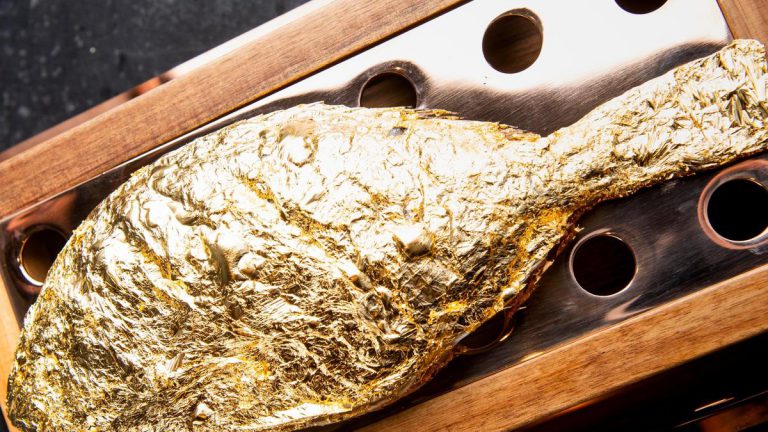
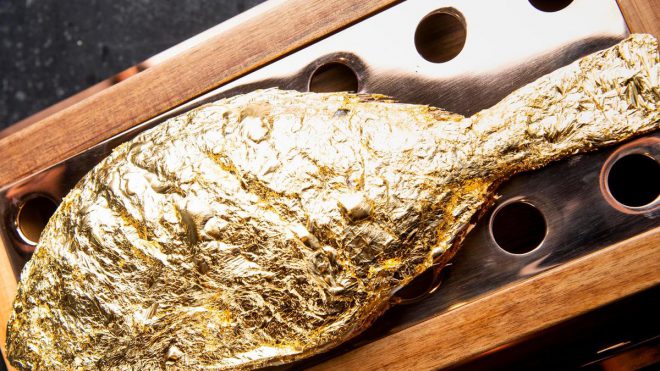
These oddities may appear to be the ultimate in personal vanity, including selling gold bars in vending machines. Perhaps the ultimate vanity extreme in the UAE is a new trend for restaurants in Dubai and Abu Dhabi to serve edible gold in foods ranging from hamburgers to steaks and seafood.
This bizzare foodie trend includes foods with actual gold dust sprinkled on or mixed in them are selling well to those who can afford to purchase them. Examples include 24K prime steaks or “golden” sea bream dinners running at about $90 per person. Even desserts like ice cream often come available with gold-laced flower toppings at appropriate prices.
Gold still appears to be a favored and sought after commodity in the UAE, especially in uncertain times. The opulence shown in this region, where luxury hotel suites can run as much as $25,000 per night, is often a topic for social protests; especially when construction workers and domestic servants there work in near-servile conditions for mere pittance wages while those more fortunate live luxurious live.
In Dubai, for example, one can order a gold-laced cappuccino coffee, served in the lounge of the Burj Al Arab hotel.
From an environmental viewpoint, overbuilding and overconsumption and desalination has caused considerable damage to the already fragile ecosystem of the Arab Gulf region, which still claims to have one of the world’s largest populations of dugong aquatic mammals.
Obviously, money wasted on foodie trend opulence which serves zero health benefits could be better spent on trying to save what’s left of the region’s natural environment. The big question is who is concerned enough there to do this?
Israelis, says research published by the University of Washington, enjoy the world’s healthiest diet. The study, Global Burden of Disease, was conducted by Dr Christopher Murray, Director of the Institute for Health Metrics and Evaluation, University of Washington, and published in the UK medical journal The Lancet. It followed the diets of people in 195 countries, between 1990 to 2017.
Dr. Murray writes, “The countries with the lowest rates of diet-related deaths were Israel (89 deaths per 100,000 people), France, Spain, Japan, and Andorra.”
It’s no wonder that the Israeli diet is the world’s healthiest. Israelis consume a variety of vegetables, fresh fruit, grains, seeds and local animal protein products as a matter of course. Tradition and history influence these choices. Much of the population still remembers the austerity of country’s early years, when beef was a rare luxury and chicken was reserved for Shabbat. Back then, housewives knew dozens of recipes for that meaty vegetable, eggplant. Rice-shaped pasta was invented to substitute for the imported grain. Olive oil was expensive and imported, unless you were lucky enough to live in the country, where local Arab and Druze villagers milled their own olives.
Today, advanced agricultural techniques have brought a huge variety of fresh, locally-grown foods to the Israeli market. Shoppers can step out to the supermarket or shuk confident that they’ll find all the produce on their lists, and good local olive oil with a stamp of standards approval on the label. And yes, people are still eating eggplant. In fact, Israel has the largest number of vegans per capita in the world.
But let it be said: although an estimated 5% of Israelis identify as vegan, most shoppers bring dairy products, eggs, poultry, fish and meat home for dinner. What’s the difference between that an the ordinary Western diet, then?
The difference is in the approach. Israelis favor dishes with Mediterranean ingredients. Not much red meat. Lots and lots of vegetables and salads. From working-man’s humus joints where they put a little dish of olives, hot relish and sliced onions to go with your meal – to fancy restaurants, Israelis expect to find vegetables on the menu. Israelis even eat salad for breakfast. It’s a diet that suits the hot climate and reflects culinary influences of over 60 ethnic streams.
“This study affirms what many have thought for several years – that poor diet is responsible for more deaths than any other risk factor in the world,” Dr. Murray writes. “While sodium, sugar, and fat have been the focus of policy debates over the past two decades, our assessment suggests the leading dietary risk factors are high intake of sodium, or low intake of healthy foods, such as whole grains, fruit, nuts and seeds, and vegetables. The paper also highlights the need for comprehensive interventions to promote the production, distribution, and consumption of healthy foods across all nations.”
How about a good, solid plate of humus (chickpeas) with tahini (sesame seeds) now? Top it with beans and a boiled egg, and you have the essential Israeli street meal. All you need is a fresh pita to mop it all up. Or, to go with your grilled chicken, majadra, that delicious rice and lentil dish? Just pass the olives, please.
Most laminate wood flooring is not eco friendly. It may be cheap, it may “look” like wood, but chances are it’s full of formadehyde and toxic chemicals. Go for real wood, cork floors or beautiful old fashioned tiles. Carpets are a boig no no.
Is laminate wood flooring a sustainable option?
The short answer: it depends. The easy answer, probably not. The likely answer no way. Laminates are bonded together with toxic glues and made to look like wood.
They look like wood and feel like wood but many of today’s low cost wood floors are laminate. That means they are made with crushed up wood and mixed together with glue, much in the same way magical cardboard bikes or bamboo plates and furniture are put together. Taking a natural material and then bonding it all together with plastic glue does not make a product green. Remember the ramen noodle guy? He can fix anything with ramen noodles and crazy glue. That’s what laminate flooring is and basically most bamboo products. Don’t get bamboozled.
One one hand manufacturers use renewable resources but on the other hand, everything is held together with petrochemical-based glues which contain neurodisruptors and toxins.
The most eco way to make a wooden floor is to use reclaimed wood from building sites. Or from sunken logs brought to the surface and processed. With a little hunting around you can find gorgeous ancient wood that you can replane at a carpentry shop and you have an ancient 100% eco floor. Or maybe when you dig up the old tiles in your house you might find a perfectly gorgeous old wooden floor or another set of tiles.
Another wooden floor option is to buy new planks from sustainably farmed wood. Look for the FSC stamp but that’s not perfect either. And the cost of wood since Covid hit the world has made reflooring or home improvements right now a not so sustainable option.
Rcycling old wood into new laminate with veneeer is an option. In fact, most laminate flooring manufacturers now explicitly point out how sustainable and eco-friendly this flooring option is and use it as a major selling point for their product. I’d look at their safety and materials data sheets before buying laminate of any kid because it might contain formadehyde and all sorts of other toxins you’d be living and sleeping with.
Most laminate products are flasely labelled. And if you seacrh on Google they will scream for your attention. That means that we need to perform our due diligence and proper research before we can truly walk away knowing we’ve done what’s best for the planet.
As laminate flooring is made from a mixture of potentially toxic resin (glue) and fiber-board, how the materials made can vary from manufacturer to manufacturer.
It is possible to find eco-friendly laminate flooring, but the chance is doubtful that it will be unless you find a very specific company. Look around. Ask your friends. Although, even the most sustainable of practices surrounding production aren’t worth much if the product itself isn’t very sustainable, further complicating the issue. You’d need to look into greenhouse gas emissions and life cycle of the product.
Laminate Materials & Their Harvesting Checklist
To understand the ecological impact of laminate flooring, it should be understood exactly what it is made out of and where those materials are made from.
Sustainable laminate flooring that comes from FSC & PEFC sustained forests is essential to long term sustainability of this textile. About three ingredients make up the bulk of laminate’s four layer design. The topmost layer is typically made from aluminum oxide as a way to protect each individual plank while the rest of a plank is made primarily from fiberboard and resins.
The fiberboard needs to come from a sustainable place, as it is primarily made from wood. When laminate flooring is FSC & PEFC certified, it means that the wood used in the construction of each board comes from a forest that adheres to strict sustainability rules when it comes to how many trees and cut and in what configuration.
If laminate doesn’t carry this certification, there’s a risk that it was harvested from forests where clear-cutting and other bad environmental practices are in place. When harvested properly from forests that adhere to conservation rules laid out by governing bodies, the harvesting of the wood itself is eco-friendly.
Laminate Is Recyclable
When it comes to tile flooring and hardwood, very seldom are the materials recycled to be used in further building developments. The tiles often go to the dump and the hardwood will either suffer the same fate or become wood pulp at best, assuming whoever is disposing of the hardwood planks cares enough to make sure it goes to a recycling facility.
Laminate however is completely recyclable (in theory) though doubtful because of the toxins and glues in them. and there are many facilities equipped to separate the individual ingredients for reuse. The particle board interior layers are easily repurposed to give these materials a second life. If you have the energy for that.
Even the most battered and beaten laminate flooring can be sent to a chipboard center and properly converted into wood chips and fibers. Since only the top layer needs to be aesthetically pleasing, it doesn’t matter the condition of the individual planks being recycled. More often than not the new material used in the production of laminate flooring is the new layer close to the top with the design picked out by the customer. Check before you buy that your laminate is recyclable.
Waste From Other Industries Can Be Used
The wood fibers and chips that make up individual fiberboards present in laminate flooring don’t just have to come from other laminate floors, many other industries create massive amounts of bark, sawdust, or miscut wood, all of which can be sold to a laminate floor company for a fraction of the price and at a fraction of the environmental impact of felling new trees. You can make laminate from any sort of material, probably even ramen noodles. Remember: it’s not the material they are selling that you need to look at carefully. It’s how it’s all held together.
If you think about the sheer volume of industries that make use of wood and end up with lots of scraps at the end of the day, it is easy to see how the laminate flooring business can help put those scraps to better use. Very few products have the distinction of being able to deal with waste from other manufacturing processes, making this kind of flooring in a class of its own. That is a positive step.
Sustainable Creation Practices
The resins that keep laminate board together and at their strongest is primarily melamine, a resin recreated by a reaction of formaldehyde with a few extra toxic ingredients.
The overall amount of formaldehyde used in each board and at the factory as a whole has been on the decrease over time but it is a risky and toxic material. Laminate flooring that uses less formaldehyde is often marked with a CARB, P2, E1, or E0 designation that signifies a lower overall formaldehyde level. Think about whether you want to expose your office workers to this material before you cover the office in laminate.
When laminate flooring comes from FSC & PEFC certified forests, consumers can rest assured that no pesticides were used and that no heavy metals are present in any of the boards.
Even at the manufacturing plant most laminate flooring producers are tending towards equipment that has lower overall emissions to take advantage of the many different government incentives for doing so. This means that the manufacturing process is as environmentally friendly as possible, with new leaps in sustainability occurring on a very frequent basis. Again, look for materials data before you buy.
Installation Is Easy
No special adhesives are required to keep laminate flooring in place, this reduces the overall use of volatile organic compounds that are bad news for the health status of any living things nearby. This is true but if you are actually trying to isolate sounds in your home between floors you will need layers of plastic padding and piles of off gassing glue.
Laminate flooring can eliminate the need for VOCs altogether assuming you have purchased the variety that doesn’t need any adhesives whatsoever, which in today’s market is nearly all varieties.
Laminate can be LEED Certified
In response to poor practices in design that lead to deforestation and pollution of the environment, the Leadership in Energy and Environmental Design (LEED) certification program was created in 1993 to work as a watchdog in the building sector that wishes to ensure sustainable practices.
Building materials and techniques are ranked based on their overall impact on the environment, with everything from emissions during production to ramifications of installation & use taken into account. Most laminate flooring holds a LEED certification of at least certified, with some even going as far as silver and above in overall sustainability. Again look at the materials in the resins.
This burden hinges on the manufacturer, as it is their responsibility to ensure that they conform to all of the requirements of LEED as well as only obtaining their materials from FSC certified forests.
Any manufacturer that has done so will display this fact prominently, so if you can’t find these certifications from a certain manufacturer then it is best to keep shopping around until you find one that you can confirm without a shadow of a doubt contributes to sustainable building practices.
Cork might be the better option if you can find cork board that’s glued together with a natural resin. Or tile, or upcycled old wood. Or maybe just keep living with the old floor.
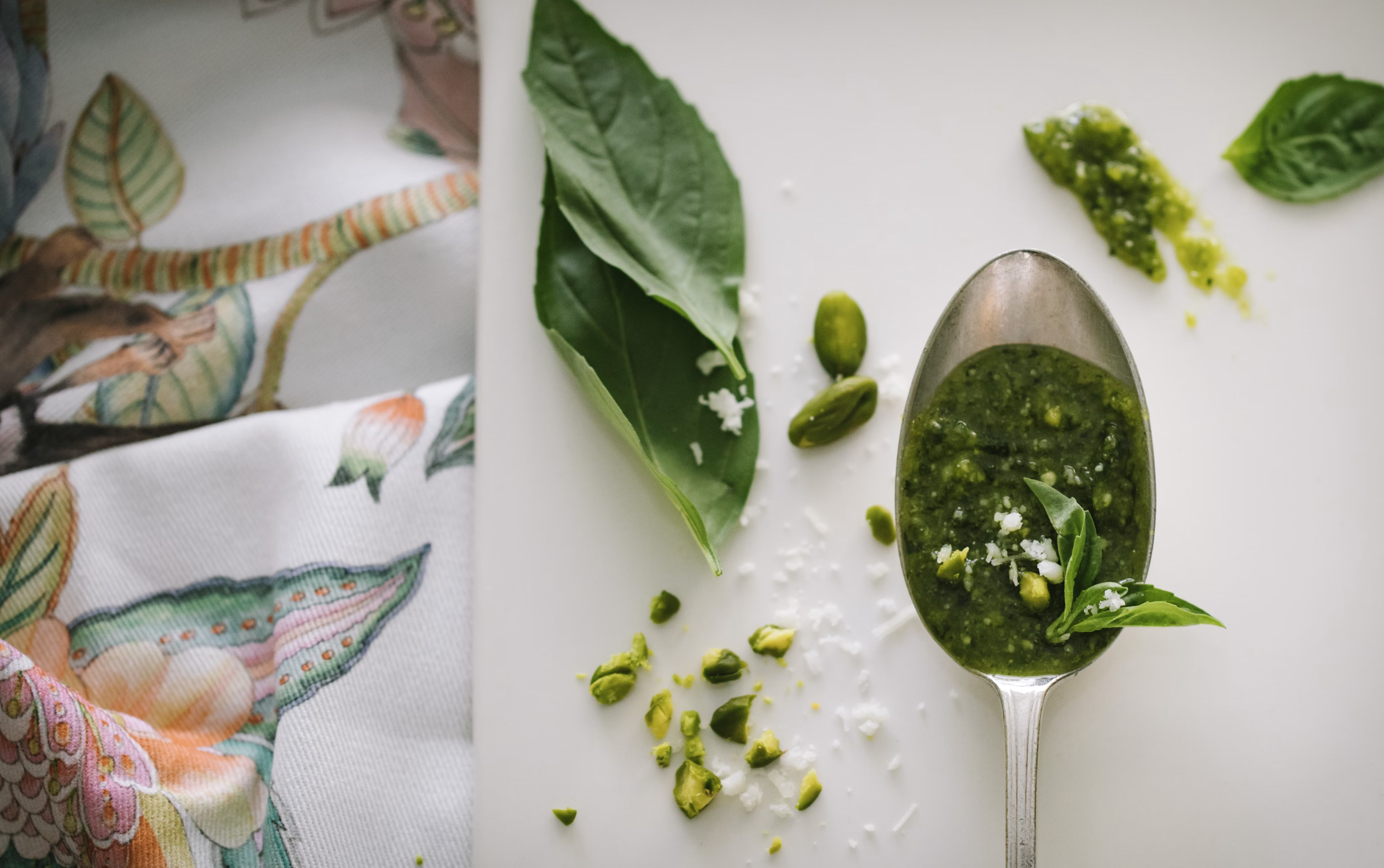
Early summer, and the basil plant in my container garden is tall and bushy. Karin gave us a great pesto recipe, and I’ve already blended up handfuls of fragrant, dark-green leaves to make lots of that pungent Italian sauce. After trimming the tops off the plant, it took only two weeks for another healthy crop to grow in. What am I going to do with it all? Now I’m pondering other delicious ways to use up the basil bounty.
Basil’s flavor is dominant, and pesto is really where you can allow it to shine. But it’s a surprisingly versatile herb, and many foods accept its unique, almost clove-like taste. For example…
Basil and orange peel vinegar.
Peel an orange, avoiding the bitter white pith as much as you can. Drop the fragrant swirls of peel into a jar of apple cider vinegar. Push a good handful of fresh, rinsed and dried basil sprigs into the jar and close it up. Keep the vinegar in a dark place for a week, then use it in any salad dressing. It will keep up to a year.
Roasting an organic chicken or duck?
Separate the skin from the flesh with your fingers and carefully push basil leaves and slivers of garlic under the skin. Season the bird, dribble olive oil over it, and roast. This is especially tasty with duck.
Two-tomato and basil sauce.
This no-cook sauce tops pasta or lightly steamed vegetables, and is vegan. Drain 1/3 cup of sun-dried tomatoes in oil, but reserve the oil. Put the sun-dried tomatoes in the food processor or blender. Add 15 oz. (425 grams or 2 cups) fresh cherry tomatoes. Push 1 cup of fresh basil leaves onto the tomatoes.
Peel two cloves of garlic and add. Finish with the juice of one lemon. Whizz until you have the consistency you like, adding oil from the sun-dried tomato jar by tablespoons if needed. You can use dry-packed sun-dried tomatoes; then you’ll need to add olive oil to get a saucy texture. If you want a good, chunky texture, don’t process the tomatoes but chop them all up finely, then add the rest of the ingredients and mix it all up in a big bowl.
Summery herb cocktail.
Muddle (slightly crush) a healthy sprig of basil and an equally healthy sprig of mint in a glass with 1 teaspoon granulated sugar. Add 1.5 oz. Rum and squeeze some lemon juice in. Top with ice and seltzer or tonic water.
More basil tips: Chop a small handful of basil and stir it into any marinade, for any food. Lay some basil leaves under the fish you’re about to bake. Make scented sweet cream according to our geranium-scented recipe, substituting basil for the geranium leaves. Pour over fresh fruit.
Get the picture? It’s amazing how many culinary uses basil has. Try some. You’ll feel good about using up your crop, and you’ll get a whole new view of its delicious flavor.
You might have a green or impact business. But traditional SEO or marketing still must come into play if you want to succeed alongside your competition.
There are quite a few methods to market small businesses. However, some business people usually get carried away by various ideas are the processes and they lose focus and miss to drive real results. Today is the age of digital marketing. And, if you are serious about your marketing program to bring an effective outcome to help your business grow, you should take a look at these tips offered by people in the online small business community.
Social media engagement for customers
Promoting your business on social media doesn’t mean you just post chunks of content on the social network. The content must be such that it is engaging and should be with the right customers – potential customers. If you are looking for tips on how to post engaging content that brings in real results, read this: Social Media HQ post by a great authority. All this will ultimately help get leads for your products and services and help convert.
Words and phrases that you must avoid in your content
Note that words and phrases play a key role in bringing great results in your content marketing strategy. Yet it is also important to know that words and phrases should be used wisely (judicially) and there are certain words and phrases you should not use in your content. A leading content expert at Content Marketing Institute lists such words. Read up the post to learn more.
Have a lead funnel strategy to promote in the digital horizon
Today, consumers are on the move and have considerably shorter attention spans. And, when it comes to online browsing the experience is acute. You must create a lead funnel array. It will make easy for you to get leads for your business. Creating a landing page will help immensely.
To learn more, you can read posts such as Digital Attention Span by a lead authority. You can also refer to people’s opinion on BizSugar.
Boost the value of your business with the marketing campaigns
The marketing material that you use in your marketing strategy plays a key role in determining the quality of the outcome of the whole marketing strategy. If you are thinking of impressing your customers, and draw them to your business for making them actual buyers, read the Do It Yourself (DIY) guide by leading expert. This guide furnishes tops tips on how to choose the marketing campaign materials that best suit your business.
Leverage the potential of how to’ content
Content furnishing tutorials and how to’ content are of great value for customers. It will be equally beneficial for your business as well. A Bright Local post by a lead expert explores the impact the aforementioned kinds of content pm in your linking building and voice search results.
Use different methods in SEO (search engine optimization) strategy
If you follow only a one-sided SEO (search engine optimization) strategy, it may help in the short term alone. Over time, you must adopt different ways in your strategy. This will help accrue positive effect in the long term. In the Search Engine Journal, there is a blog post on this. One of the best strategies to improve your SEO ranking is to increase your backlinks. You can use the best press release distribution service to help you publish your articles on high traffic sites to get link juice and increase your SEO ranking.
Optimization of LinkedIn profile is crucial to getting more leads
Your social media connections will help boost the number of your audience. They can also become real leads for your business. If you wish to leverage LinkedIn for connecting with potential clients and accrue great results, remember to read this: SEO Guide for more connections and better leads by a lead authority.
Rework on the blog on your website to realize profits
If you are posting blog content for your business and you actually wish to boost your income, take into account this point when you create content. In Blogging post, the author accounts for the unsuitability of blog strategy. There are many diverse opinions on the post on BizSugar.
Leverage Google Data Studio to review Facebook ads
If you wish none of the dollars you spend on advertising goes waste, you must keep a track on the date. For this, you can choose any of the tools that are widely available. Google Analytics is a case in point. A post in Social Media Examiner, the expert author throws light on how businesses can use Google Data studio to evaluate your Facebook ads.
Promoting a small business could be a challenge for startups. Yet, with proper financial and organizational planning, it could be leveraged to the best for your business.
Opt for Rapid Essay
London based Rapid Essay (rapidessay.com) is a lead academic writing assistance services offering agency offering diverse academic writing services at high school, college and university levels. If you’re unable to work on your academic writing project because of lack of free time and money, you can get online assignment help with Rapid Essay. The company offers high quality, fast and timely essay writing service that could bring you the best score final examination.
Local community gardens growing organic veggies like tomatoes are certainly nothing new these days. Many large cities, such as New York City, have had community garden projects for years. Even obscure locations, such as the Wadi Rum desert region in Jordan, have organic vegetable projects grown by local inhabitants.
My own experience with these “home grown” veggie projects only began this Spring, when I signed up to participate in a community garden project being sponsored by the Netanya Municipality. After living for years in apartments and having less than satisfactory results growing veggies and herbs in window sills and balconies, I jumped at the chance
to have my own small plot to grow garden vegetables and fresh herbs.
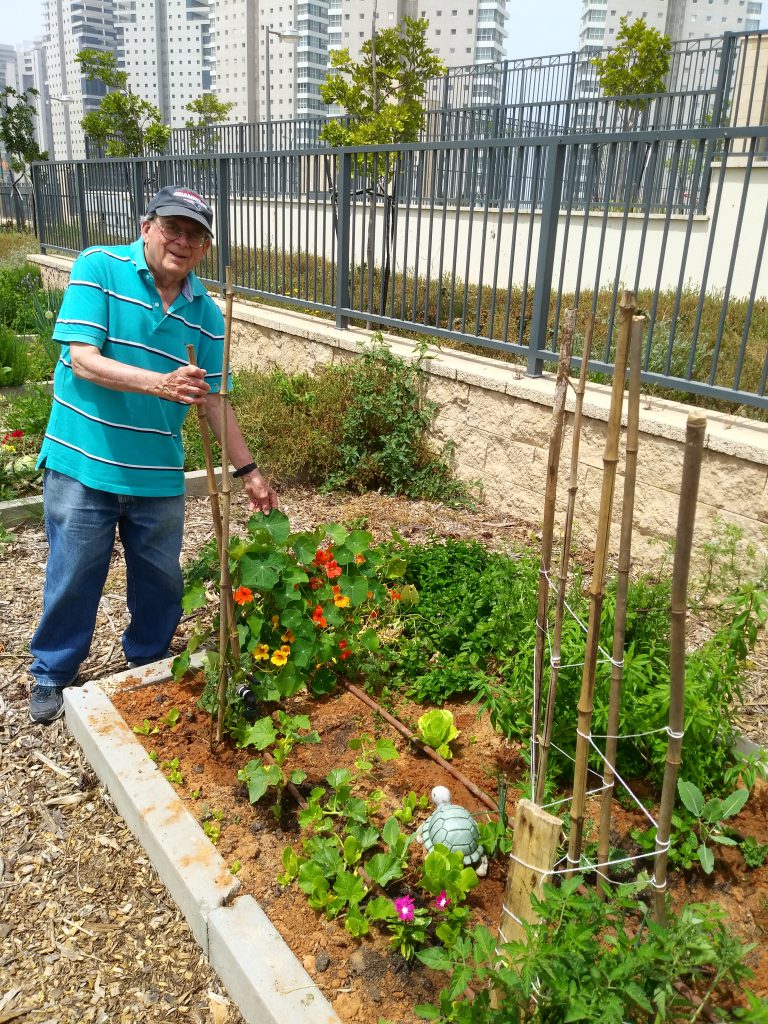
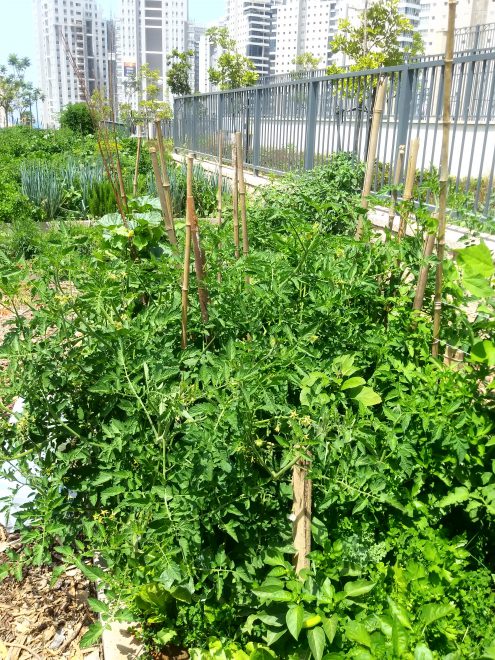
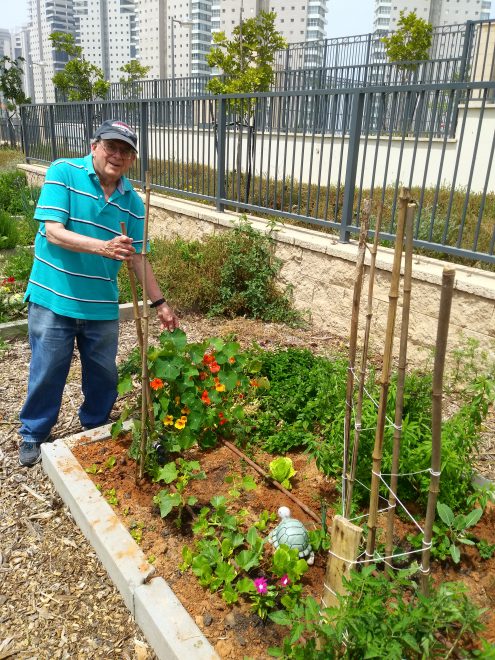
This project began in early April when I received my 2.5 X 1.5 meter plot next to the Ir Yamin cultural center in south Netanya (above photo). In this location, each participant also received seedling starter plants such as tomato, pepper, cucumber,kohlrabi,lettuce, kale, eggplant; and a variety of herbs from the Municipality. The plots are irrigated from drip irrigation systems already in place. The gardens are organic in nature with no pesticides or commercial fertilizers being used, other than natural compost material.
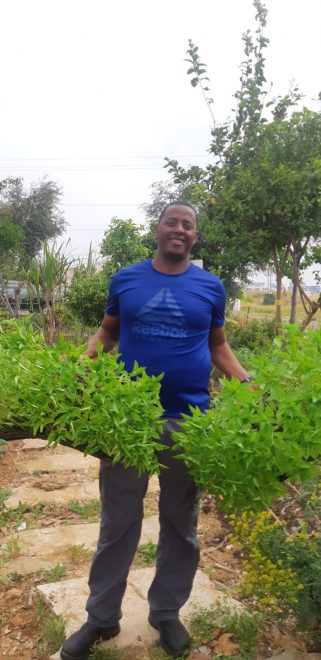
Malcolm, an employee of the Municipality and in charge of Netanya’s 6 community plots (photo) was on hand to give advice and assist plot holders in planting and tending their crops. Being a former immigrant from Ethiopia, Malcolm has been especially helpful with members of his own ethnic community, many of whom are enthusiastically involved in group garden plots in several locations.
“The idea of the group community gardens was formulated to help encourage a feeling of community and of belonging to the particular community where the gardens are located” says Lou Hammer, who previously immigrated to Israel from the USA and is involved in a community garden project in the Dora neighborhood in southern Netanya.
“We have brought people with disabilities here to see the gardens and to participate in planting and growing vegetables. Just seeing the happy expressions on their faces when their ‘crops’ are ready to harvest is proof enough to the success of these community garden projects,” adds Hammer.
Malcolm hopes to write a book on community garden projects and tailor it to school children to increase their interest in agriculture and ‘working the land’. “I also would like to teach kids to grow crops, which will hopefully give them more community awareness as well” he says.
Unlocking the potential of agricultural innovations, be it simple solutions or satellite-based technologies, will help prevent a drought from turning into famine and forced displacement and to reverse desertification, FAO Director-General José Graziano da Silva said today.
Speaking at the opening of the 2nd International Seminar on Drought and Agriculture at FAO headquarters in Rome, as part of the World Day to Combat Desertification and Drought celebrations, Graziano da Silva said: “It is quite impossible to avoid a drought from happening, but we can avoid a drought turning into famine or displacement of people.”
He stressed that more than 80 percent of all damage and loss caused by drought was absorbed by farmers and agricultural sector, noting that one of the main causes of increasing hunger in the last three years was El Niño provoking severe droughts on the East African coast.
“Every year the world loses 24 billion tons of soils, and dryland degradation reduces national domestic product in developing countries by 8 percent annually,” the United Nations Secretary-General Antonio Guterres said in a video message recorded for the World Day. “We must urgently change such trends. Protecting and restoring land – better use it – can reduce forced migration, improve food security and spur economic growth. It can also help us to address the global climate emergency.”
Simple solutions – great impact
The FAO Director-General emphasized that in order to cope with droughts and to reverse desertification, in addition to geospatial technologies, farmers can also benefit from very simple solutions.
In this regard, he cited the 1 million cisterns project to storage rainfall as a good example. “This is very simple. You store the rainfall water under your house making it available for drinking and for animals all year round,” he said.
Also in the Sahel region, FAO and partners are supporting the African Union to establish the Great Green Wall- Africa’s flagship initiative to combat land degradation, desertification and drought, the FAO chief said. The plan is to surround the Sahara with a wide belt of vegetation, trees and bushes in order to green and protect the agricultural landscape, preventing the desert from advancing.
“This measure is helping us to stop desertification which is one of the main reasons of growing conflict between pastoralists and farmers,” he added.
Leveraging technologies to combat drought – new WaPOR version launched
The development of innovative applications and portals in recent years can bring accessible and actionable information directly to the farmers’ hands. FAO supports countries in raising awareness and building capacity on such tools to strengthen resilient agricultural practices.
Today FAO launched a revamped version of WaPOR, an open-access database tapping near real time satellite data to monitor land and water productivity in Africa and the Near East. Data from WaPOR, initially launched in 2017, helps policy makers and farmers to make informed decisions to be better prepared for drought and increase agricultural production with less water use.
The updated version 2.0 offers better methodology and covers three additional countries with 100 metre resolution data: Iraq, Sudan and Niger. With recent additions, the total amount of countries covered by this resolution has increased from 18 to 21.
The Government of the Netherlands allocated $2.5 million for the further development of the WaPOR database and its expansion to other areas over the two-year period (2019 – 2020).
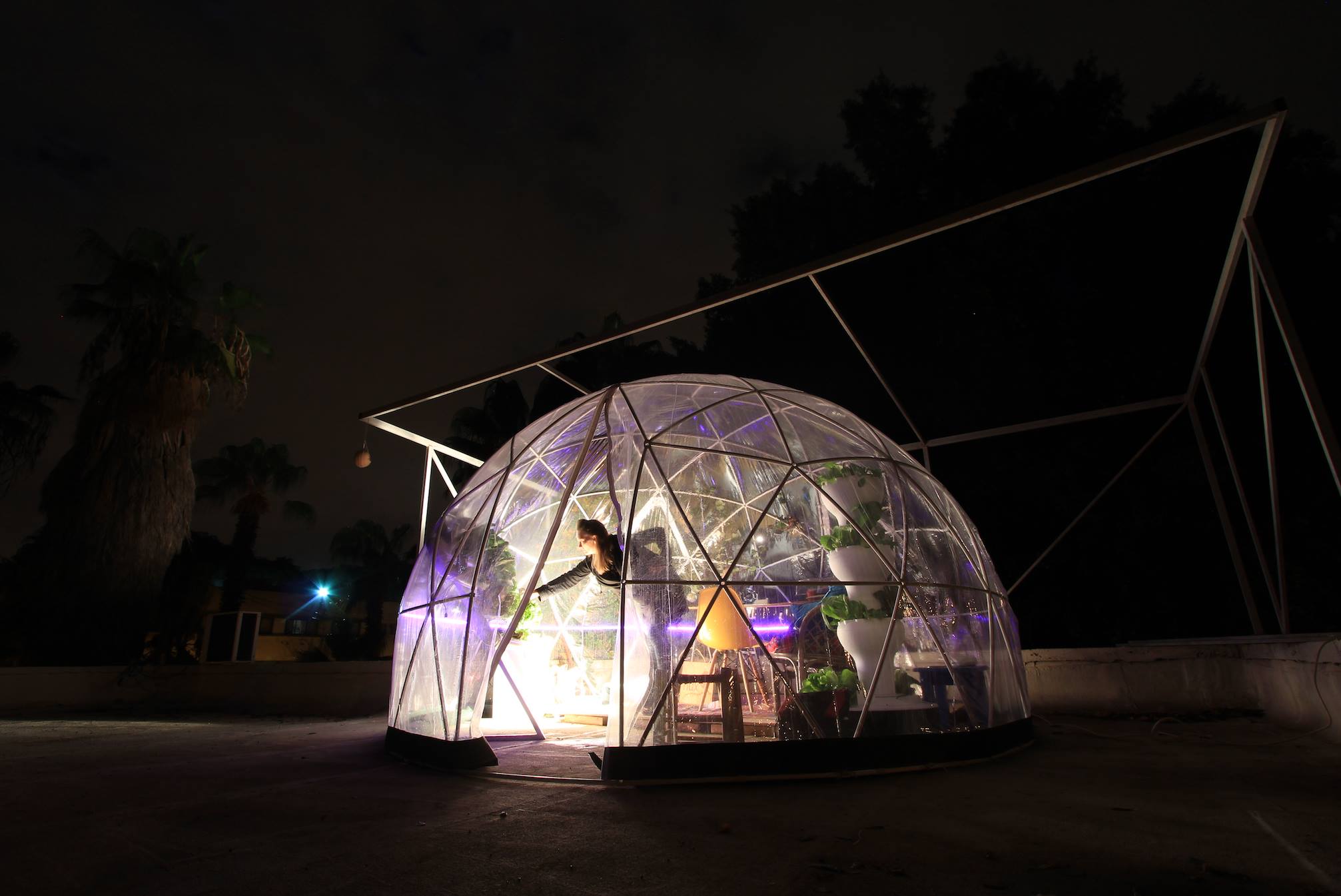
The flux biodome is testing plant AI and machine learning to know the language of plants and desert.
Further technologies produced by Israel’s military (see flux for regenerative agriculture) could help immensely as this agtech company can aggregate plant and environmental data to predict and help augment the effects of desertification before they begin.
Iraqis as refugees, Iraqis as victims of ISIS, Iraqis as victims of climate change. Some help on the way to get a leg up on the problem in agriculture.
Farming families in northern Iraq’s Nineveh Governorate (the setting of the Jonah and the Whale biblical story!) will benefit from a European Union contribution of €15 million to the Food and Agriculture Organization of the United Nations to recover agricultural livelihoods. The area, which includes the city of Mosul, was known as the country’s ‘breadbasket’ before conflict caused widespread damage and displacement.
This project is expected to directly benefit almost 10,000 vulnerable farming families (around 60,000 people), as well as flow-on benefits for local service providers and labourers.
Iraqis need subsidies to fix their farms.
Some Iraqis are turning to new crops not dependant on arable land, like these mushroom farmers. There have also been plans to rehabilitate the Iraqi marshlands.
“As part of the EU’s commitment to the whole of Iraq, supporting the regions so tragically devastated by the recent conflict remains a high priority. By reviving agriculture in Nineveh, a key sector of the economy, this new project will help communities and returnees in rural areas, increasing their income and employment opportunities,” said Ramon Blecua, European Union Ambassador to Iraq.
“We are grateful to the European Union for this generous contribution to help us rehabilitate key agricultural facilities and equipment. Getting these services operational again will be a big help for farmers and local businesses,” said Mustapha M. Sinaceur, FAO Representative a.i. in Iraq. “Creating jobs in the heartland of agriculture, where so many jobs depend on the rich soils of Nineveh Governorate, is vital for community stabilization,” he said.
Iraqis bake bread for the army
The impact of conflict on the agricultural sector has been devastating and includes damage to water systems, irrigation facilities and other agricultural infrastructure, disruption of value chains and losses of personal assets, crop and livestock production, and food supplies.
Since the Iraqi government announced the defeat of Islamic State, also known as Da’esh, a year ago, many people have returned, encouraged by the efforts to ensure a secure and safe environment. However, some areas still lack basic services and job opportunities for both returnees and those who remained. FAO and the EU working together for family farmers
Iraqi farmers at the market
The EU-funded project supports smallholder farming families to diversify incomes, increase resilience, and provide nutritious and healthy diets.
The project will support vulnerable smallholder farmers to resume vegetable production, introduce efficient irrigation water use and management, encourage agri-food processing, improve small-scale dairy processing and marketing, and boost animal fodder production and conservation.
Women, in particular, will be supported to participate in home-based vegetable and dairy production and processing. Unemployed young agriculture graduates will be encouraged to benefit from training to gain employment as agri-food processors, farmer field school and farmer business school facilitators, community animal health workers, market information system operators, and food security and nutrition data collectors and analysts.
Together, these activities will respond to families’ immediate needs for food and essential non-food items as well as restoring agricultural livelihoods that generate income and employment over the longer term.
At the same time, the project aims to restore vital government infrastructure and support services to the agriculture sector that have been destroyed, damaged, or looted.
The project is an EU contribution to the UN’s Recovery and Resilience Programme (RRP) in Iraq. It is part of a larger package of support (€ 184.4 million euros) the EU has contributed to support stabilization and humanitarian efforts undertaken by the UN in support of the Government of Iraq since 2016.
FAO’s response in Iraq
Under the Iraq Humanitarian Response Plan 2019, FAO is working to ensure rural families have the resources to re-establish and secure their agricultural livelihoods and build their resilience into the future. FAO’s work, in close coordination with the Iraqi government, supports families returning to retaken areas, internally displaced families, host communities and refugees from Syria.
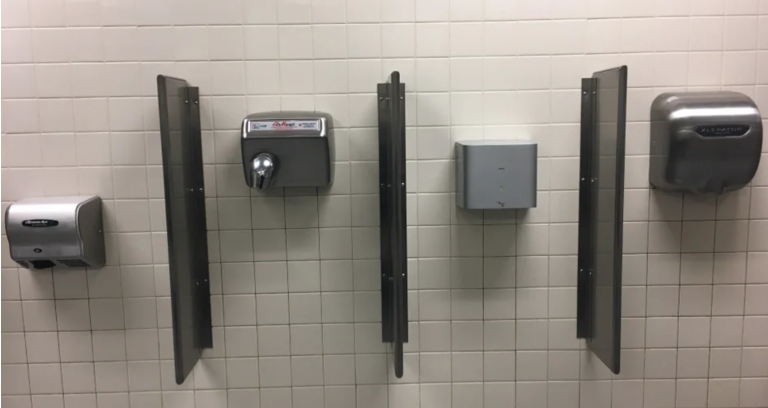
Maybe you want a hand dryer for the home or office. How do you choose the best energy efficient one for you?
It doesn’t take an expert or a scientist to tell you that the environment is suffering from human consumption patterns. Scientists predict bleak futures if we continue down the same path we’re currently on, and unless action is taken, Mother Earth might not be so forgiving in the years to come. Energy consumption, or rather excessive consumption, is one of the worst factors affecting the environment. The carbon emissions and greenhouse gases emitted by energy cause a lot of damage to the environment, and many are starting to become aware of that fact.
One of the products that consumes a lot of energy is a hand dryer, but it doesn’t have to. There are energy efficient hand dryers out there that can help you protect the environment, but there are some things you need to consider before buying one.
Power
The point of getting an energy efficient hand dryer is saving energy. So, you need to ask yourself exactly how much power does it need? There is a catch to it. Powerful hand dryers can dry people’s hands faster and more efficiently, but they’re also very noisy and can be quite annoying. On the other hand, a powerful dryer surprisingly consumes less energy because it’s faster and more efficient, so there’s no need to keep it on for a long period of time.
Cost
Protecting the environment is important, and while getting a hand dryer, you should definitely take that into consideration. But let’s face it, no one wants to pay a lot of money just to protect the environment. Fortunately, energy efficient hand dryers come in all shapes and forms, and not all are as expensive as you’d think. You’ll want to get a good model to be hygienic and efficient, and if you add a little extra buck, it can be energy efficient too. But before you frown upon that notion, remember that investing money in an energy efficient hand dryer means saving money on your electricity bills, because saving the environment can also mean cutting down costs if played right. A good, energy efficient, model will also last you a while, so you won’t have to keep replacing an older malfunctioning one.
How much noise does it make?
As stated earlier, quieter hand dryers use less power, but they also run on forever to dry a person’s hand. This is why you need to look it up by the numbers to learn which will be more energy efficient, and cost-saving in return, for you to get. Do you go for the quieter option with less power, but takes extra time? Or is the stronger model with shorter time more energy efficient? Do the math and judge for yourself.
How long does it take?
At the end of the day, a hand dryer is a customer-centric product. So, their experience needs to be pleasant. No one wants to stand over a hand dryer for a couple of minutes till their hands dry off, and they’ll probably walk off with them still wet. So, learn how long the machine takes to dry a hand, and compare it to the energy consumption patterns.
Try different models
It’s important to try out different models before settling on just one. Yes, you want an energy efficient one that will save you money and protect the environment, but there are other factors to consider. Hygiene, for instance, is very important. Some dryers have air filters to ensure that the air that comes out is sanitary. It’s options like these that make a difference for the customers, and that’s what you should go after.
The workforce in renewable energy is growing at a fast clip. Get the latest report from the international agency, IRENA based in Abu Dhabi.
Eleven million people were employed in renewable energy worldwide in 2018 according to the latest analysis by the International Renewable Energy Agency (IRENA). This compares with 10.3 million in 2017. As more and more countries manufacture, trade and install renewable energy technologies, the latest Renewable Energyand Jobs – Annual Review finds that renewables jobs grew to their highest level despite slower growth in key renewable energy markets including China.
Asia leads with 60% of the renewable jobs
The diversification of the renewable energy supply chain is changing the sector’s geographic footprint. Until now, renewable energy industries have remained relatively concentrated in a handful of major markets, such as China, the United States and the European Union. Increasingly, however, East and Southeast Asian countries have emerged alongside China as key exporters of solar photovoltaic (PV) panels. Countries including Malaysia, Thailand and VietNam were responsible for a greater share of growth in renewables jobs last year, which allowed Asia to maintain a 60 per cent share of renewable energy jobs worldwide.
“Beyond climate goals, governments are prioritising renewables as a driver of low-carbon economic growth in recognition of the numerous employment opportunities created by the transition to renewables,” said Francesco La Camera, Director-General of IRENA. “Renewables deliver on all main pillars of sustainable development – environmental, economic and social. As the global energy transformation gains momentum, this employment dimension reinforces the social aspect of sustainable development and provides yet another reason for countries to commit to renewables.”
Solar energy makes up 33% of all jobs in renewables
Solar photovoltaic (PV) and wind energy remain the most dynamic of all renewable energy industries. Accounting for one-third of the total renewable energy workflow, solar PV retains the top spot in 2018, ahead of liquid biofuels, hydropower, and wind power. Geographically, Asia hosts over three million PV jobs, nearly nine-tenths of the global total.
Solar energy jobs come out on top in the workforce of renewables.
Most of the wind industry’s activity still occurs on land and is responsible for the bulk of the sector’s 1.2 million jobs. China alone accounts for 44 per cent of global wind employment, followed by Germany and the United States. Offshore wind could be an especially attractive option for leveraging domestic capacity and exploiting synergies with the oil and gas industry.
Renewable energy jobs highlights:
The solar PV industry retains the top spot, with a third of the total renewable energy workforce. In 2018, PV employment expanded in India, Southeast Asia and Brazil, while China, the United States, Japan and the European Union lost jobs.
Rising output pushed biofuel jobs up 6% to 2.1 million. Brazil, Colombia, and Southeast Asia have labour-intensive supply chains where informal work is prominent, whereas operations in the United States and the European Union are far more mechanised.
Employment in wind power supports 1.2 million jobs. Onshore projects predominate, but the offshore segment is gaining traction and could build on expertise and infrastructure in the offshore oil and gas sector.
Hydropower has the largest installed capacity of all renewables but is now expanding slowly. The sector employs 2.1 million people directly, three quarters of whom are in operations and maintenance.
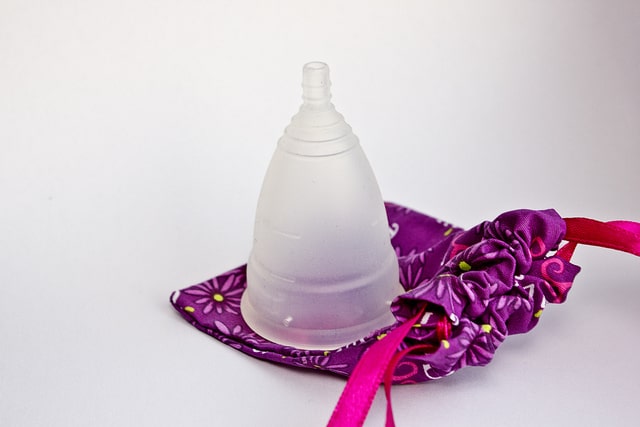
Menstrual cup collects menstrual blood, and you can reuse it
Do you use homemade pads or moon cups? There are so many alternatives to wasteful products that choke our bodies and our natural environment.
The environment is big news right now. Our oceans are full of plastic waste and there are bulging landfill sites all over the world. The biggest problem with the never-ending stream of human waste is that most of it is likely to stick around for a very long time.
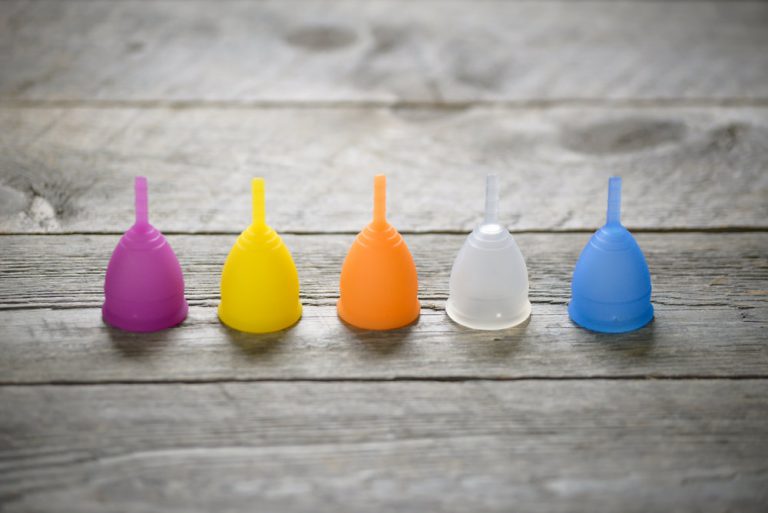
Menstrual cups in colors of the rainbow
One of the biggest issues is plastic. Each year, we produce millions of tons of the stuff, and every day, around eight million bits of plastic waste end up in the ocean. Conservative estimates say there are around 51 trillion microscopic pieces of plastic in the ocean right now. None of this plastic waste ever goes away. Larger plastic objects break down slowly, over many decades, until they become microscopic plastic fragments, which are swallowed by marine animals and eventually consumed by us and them.
The damage caused to our environment is shocking. You might think that photos of marine animals lying dead on a beach, their stomachs full of plastic waste, does not affect you directly, but it does. Plastic pollution causes knock-on effects, such as chemical contamination of waterways, which ends up in our drinking water. It’s also unpleasant to walk along an idyllic beach and spot used tampons and sanitary towels washed up by the tide.
Bad for the Environment
Tampons and sanitary towels are bad for the environment. They are not sustainable and cause long-term, lasting damage to the world around us. Most of the materials used to manufacture tampons and sanitary towels are non-recyclable, which means they end up in landfill sites and floating in oceans.
On average, women use around 11,000 disposable sanitary products in one lifetime. That’s a lot of waste. Even organic tampons, which are made from organic cotton, are not good for the environment. They do break down, but it’s incredibly slow. In addition, most of the packaging, and in the case of many brands of tampons, the applicators, are made from plastic, so they never break down.
One way to do your bit for the environment is to switch to reusable sanitary products.
Menstrual Cups and Period Panties
Menstrual cups and period panties are more eco-friendly than tampons and sanitary towels. Instead of being discarded after each use, menstrual cups and period panties are reusable and will last for several years.
Menstrual cups are designed to be worn internally, where they collect menstrual blood. Period panties look like regular underwear, except they have a thick, super absorbent layer to soak up period blood and prevent leaks. In both cases, you rinse or wash them rather than throw them away.
There are many different brands of both out there, including Diva Cup, Lunette, Thinx, and Lunapads. You can read menstrual cup and period panty reviews online if you need some help and advice. Alternatively, ask your friends what they use or connect with other users on social media; there is a whole sub-culture of women who actively promote plastic-free periods on Instagram and YouTube. By making the switch to reusable sanitary products, you can join the community and the conversation.
Aa well as being much better for the environment, reusable sanitary products are also much better for your pocket.
Period Poverty Around the World
Women spend around $100 on sanitary products every year. This is a big expenditure for girls and women in low-income households, and in many rural areas, women and girls are forced to make do with rags to soak up their period blood.
Reusable sanitary products are rinsed/washed and reused. With the right care, they can last several years, which saves the user a lot of money.
Menstrual cups and period panties are also a lot easier to use. Once you get used to the technique of inserting and removing a menstrual cup, you will wonder why you haven’t made the switch before. It is far easier removing and emptying a menstrual cup when there is no bathroom available. As long as you have some clean water to rinse your hands and the cup, you are good to go.
Blood as a fertilizer on farms?
In addition, menstrual blood is good for the environment and can be used as an iron-rich fertilizer for plants and vegetables.
Human waste including blood, can be used for fertilizing plants. With caution.
There are many reasons to make the switch to reusable menstrual products such as menstrual cups and period panties. If you’re not convinced yet, try it for one month and see how you get on?
Drones can clean plastic from the sea. Turns out they can do so much more: When you want to catch the Big One and don’t have a boat, what do you do? Use your drone. We ran into this man Avram “casting” his line out 400 yards (350 meters) at the Sea Port of Jaffa, in Tel Aviv.
The drone is used to drop the bait about 50 meters from shore, much farther than one man can cast
Low impact fishing using a drone
Local men love to fish but most can’t afford to own a boat. Before work or after they jump down to the sea and cast out there line. But fishing in shallow waters will own bring you home teeny tiny fish called ‘barbunia’ or red mullet and they are really an acquired taste.
But Avram here who we caught on film uses a very clever approach. He has rigged out his drone with a catch and release apparatus. He ties the baited line of his rod to the drone and then steers his drone out 400 yards, deep enough to where the fishing boats can go. He drops the line and brings the drone back to home base.
He turns the drone off and then tightens the line manually, and waits. It can take 1 or 2 hours until he catches the big one. And it is worth the wait, he tells me.
Reeling in the drone
“I catch all kinds of fish,” he says. “Grouper, and even red snapper. I caught a 2.5 red snapper last Friday and we ate it at our Shabbat dinner.”