Home Blog Page 16

Iran’s holiest city about to run dry as terror chosen over water management

0
Mashhad
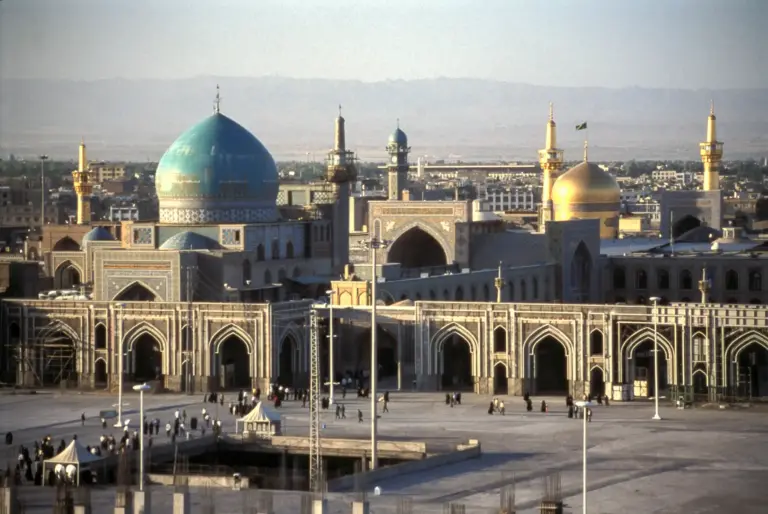
Water systems are on the verge of collage in Iran’s holiest city Mashhad, second in size only to Tehran

Iran’s second-largest city, Mashhad, is facing an acute water emergency after dam reservoirs feeding the city fell below three percent capacity, according to Iranian state and local media. Officials warn that without rainfall or improved inflows from neighboring Afghanistan, the city’s supply could soon collapse. It’s happened before that Iranian generals have accused Israel for stealing their clouds.

Iranians on X are talking about murdered bodies showing up in the dried sediment. “Reports that at least 74 bodies have been found in the Karaj Dam in Iran, all thought to be executed anti-regime dissidents,” says X commentator Nioh Berg.

“Because of the drought and lack of rain, this dam has dried up almost completely and revealed a MASS GRAVE. The victims had their hands and feet tied, and they were rolled into rugs, as well as wrapped in plastic. Their murderers didn’t account for the drought, and thought the bodies would never be found. This news story was published and then quickly deleted by regime media, after they realised it’s probably their own doing.”
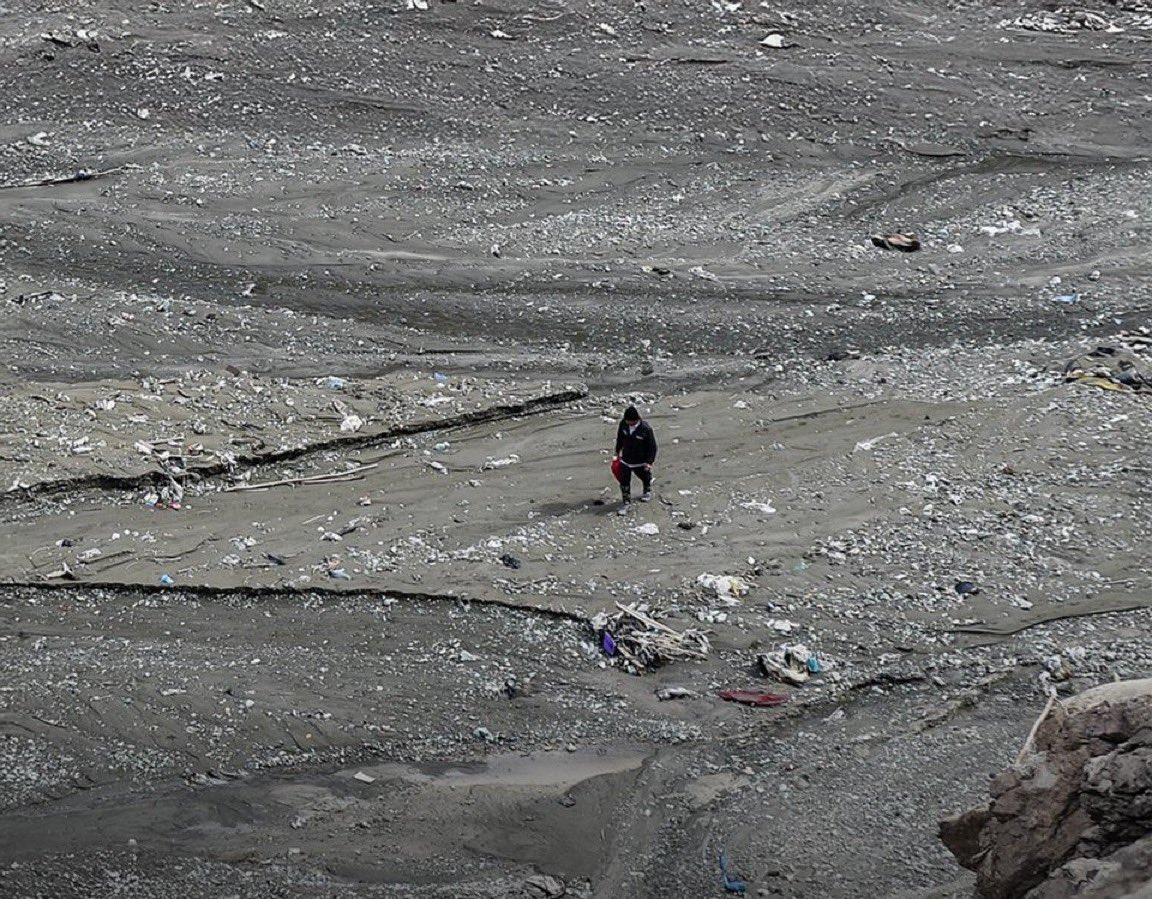
Dead bodies are being exposed in dried sediment of dams in Iran


“The water storage in Mashhad’s dams has now fallen to less than three percent,” Hossein Esmaeilian, the chief executive of the water company in Iran’s second largest city by population, tells ISNA news agency. He adds that “the current situation shows that managing water use is no longer merely a recommendation — it has become a necessity.”

Mashhad lies in Razavi Khorasan Province in northeastern Iran, a semi-arid region dependent on a small network of dams for drinking water, agriculture, and limited power generation. The most critical of these are the Doosti (Friendship) Dam, built jointly by Iran and Turkmenistan on the Hari (Harirud) River; and the smaller Kardeh and Torogh dams that directly supply the urban network.

The Doosti Dam, completed in 2004 near the Turkmen border, was designed to provide up to 60 % of Mashhad’s potable water. But its inflows have plummeted after Afghanistan’s Taliban government inaugurated the Pashdan Dam upstream on the Hari River near Herat earlier this year. Iranian officials accuse Kabul of violating cross-border water agreements and cutting off critical flows. The Iranian daily Jomhouri-e Eslami warned this week that the new Afghan dam “threatens the very survival” of Mashhad’s reservoirs.

qanat, qanat system, ancient water system, Persian qanat, Middle East irrigation, traditional irrigation, underground aqueduct, water channel, sustainable water management, desert irrigation, ancient engineering, qanat Iran, qanat Iraq, water conservation, historical water system, aquifer irrigation, traditional water technology, UNESCO qanat, old irrigation method, qanat architecture
An ancient Qanat system in Persia. Spread throughout the arid Middle East, these systems predated Roman aqueducts but the historical narrative isn’t told.

The Hari River — about 1,000 kilometers long — originates in Afghanistan’s central highlands, flows west through Herat into Iran, and ends in Turkmenistan’s Karakum Desert. Historically, its seasonal floods recharged aquifers and sustained farming along the Iranian border. But with multiple new Afghan dams under Taliban control, less water is reaching Iran’s northeastern provinces, even as rising temperatures and a prolonged regional drought accelerate evaporation.

Related: The Taliban kills Japanese water hero

Within Iran, years of poor water management compound the crisis. Kardeh and Torogh dams, both built in the 1970s, are now near “dead storage,” with barely enough volume for municipal use. Over-extraction of groundwater around Mashhad — home to more than three million people and millions of pilgrims annually — has further destabilized the system, causing land subsidence and salinization of wells.

Iran has also been spending billions normalizing terror by finding Palestinians to join Hamas, Lebanese to join the Hezbollah and for the Yemenites to become Houthis. Paying for conflict and not supporting your own people, comes with a high cost. The Iranian regime hates Saudi Arabia, the UAE and Israel so much that it will sacrifice anything in its global jihad.

Experts say the situation underscores both climate vulnerability and political risk in transboundary basins. Iran’s government is pressing for negotiations with the Taliban over shared water rights, as Afghanistan pulls the plug on its water by creating its own dams, but cooperation remains uncertain amid border skirmishes and mistrust.

Grand Ethiopian Renaissance Dam, GERD Ethiopia, Blue Nile hydroelectric project, Ethiopia Nile River dam, Africa’s largest dam, Ethiopian hydropower, GERD water security, Nile River dispute, Ethiopia Egypt Sudan water conflict, renewable energy Ethiopia
Grand Ethiopian Renaissance Dam (GERD) on the Blue Nile — Africa’s largest hydroelectric project reshaping East Africa’s power supply and sparking regional water security debates.

If inflows from Afghanistan remain restricted and rainfall fails again this winter, Mashhad could face mandatory rationing and long-term aquifer collapse — a warning sign for the entire region as climate change and geopolitics converge in Iran’s drying east. Could we see a bigger conflict between Iran and Afghanistan? A good possibility. Similar tensions have been brewing for years between Ethiopia building the GERD dam and Egypt which is being denied water upstream.

If you’ve ever travelled to cities like Amman, Jordan, the water-stressed city shows how life goes on with water stress. Some city folks get water piped in once a week, but because municipal supply is so limited, many households, businesses, and institutions buy extra water from private tanker trucks and store this in private reservoirs so they never run out.
Ski Japan and skip the cherry blossoms

0
Japan powder
Skiing in Japan from Samurai is now 

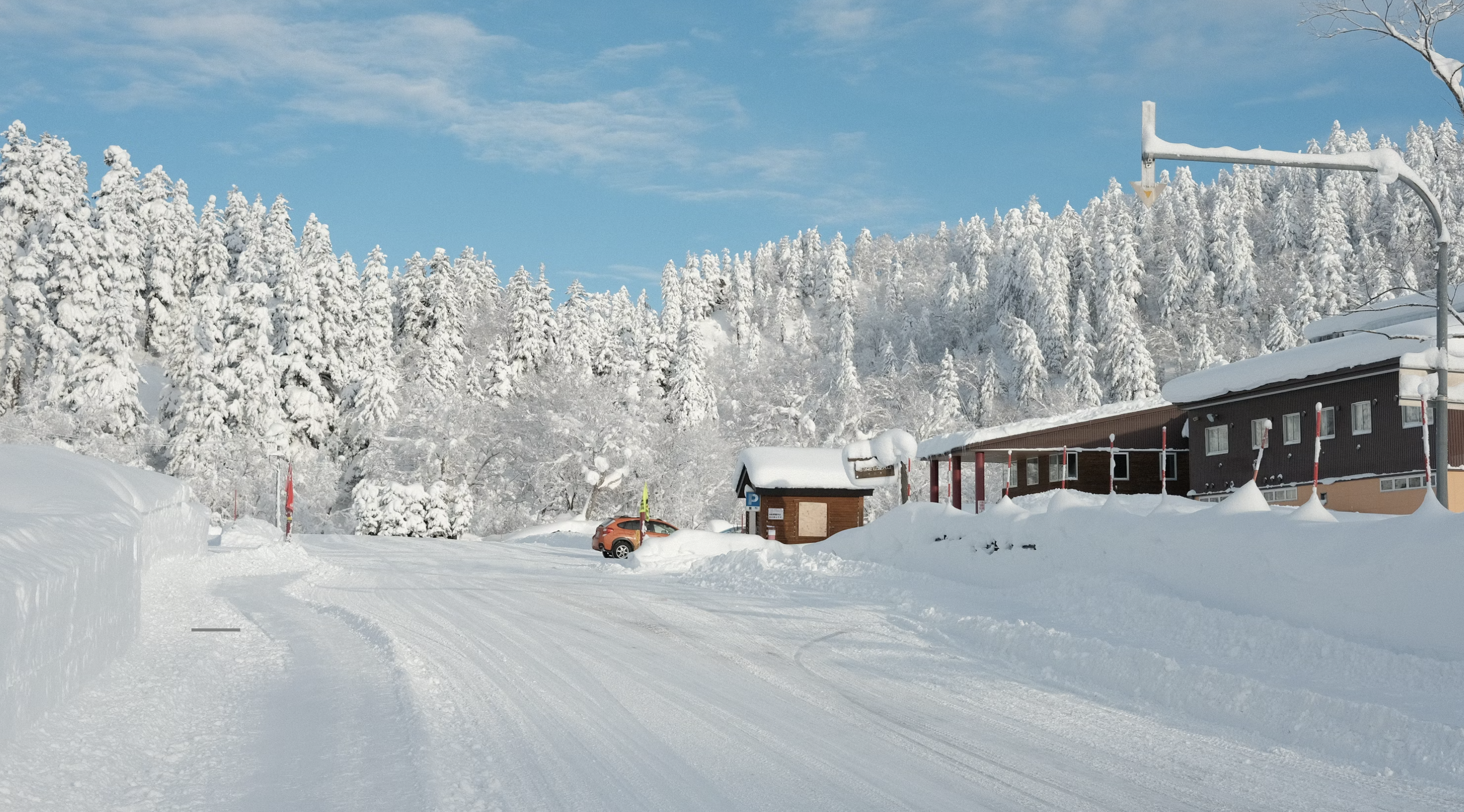
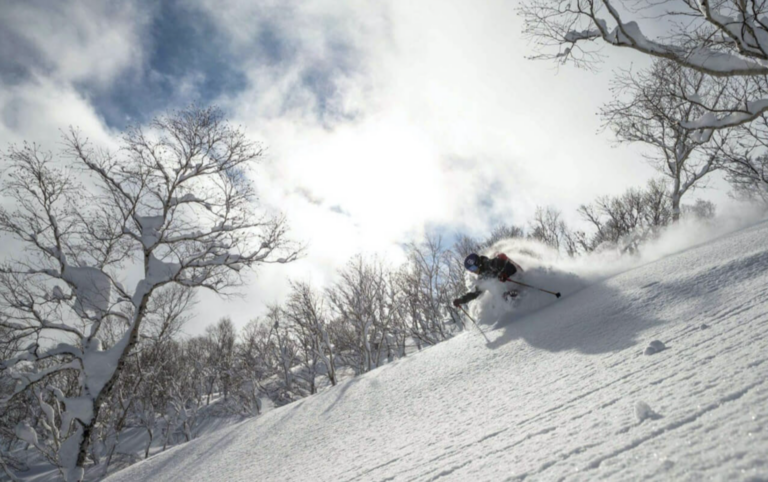
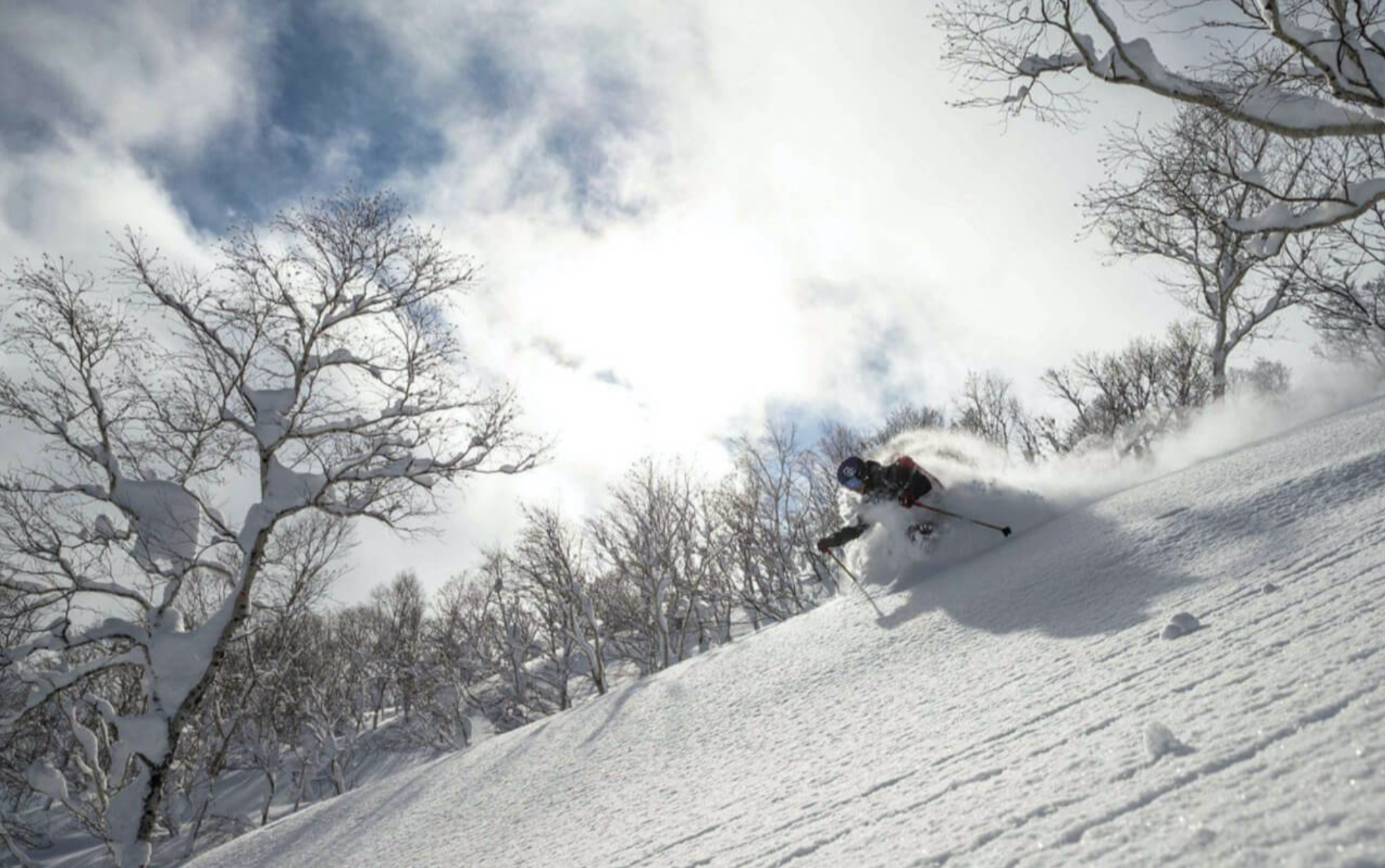
When you think of Japan, you probably picture cherry blossoms or neon-lit sushi bars. But in winter the country reveals a different kind of magic: snow-covered mountains, steaming outdoor onsen baths that are piped in from natural hotsprings, and one of the most unique ski cultures on Earth. From Hokkaido’s deep powder to Nagano’s Olympic valleys, Japan offers a winter experience that blends sustainability, tradition, and breathtaking natural beauty.

Start in Hokkaido, Japan’s northern island and snow capital. The Niseko region is internationally famous for its reliable powder and long winter season. The combination of cold Siberian winds and Japan’s maritime climate creates light, dry snow that falls almost daily between December and March.

The four main resorts—Grand Hirafu, Hanazono, Niseko Village, and Annupuri—are connected by lifts and shared passes, making it easy to explore all the mountain areas without a car. The nearest airport is New Chitose near Sapporo, and the journey from Tokyo by train and regional rail takes about five hours. In recent years Niseko has also begun introducing renewable-powered facilities and electric buses to reduce carbon emissions. We like that!

Skiing in Japan

For travelers arriving from Tokyo, Nagano Prefecture on Honshu island is the most convenient option. The Hakuba Valley, which hosted events during the 1998 Winter Olympics, includes ten interconnected resorts that receive generous snowfall from mid-December to March.

Hakuba Happo-One and neighboring Iwatake are especially popular for their mix of wide beginner runs and challenging alpine terrain. The Hokuriku Shinkansen bullet train connects Tokyo to Nagano in under two hours, followed by an hour’s scenic bus ride to Hakuba. Several hotels and lodges here now run on renewable electricity and promote zero-waste practices in partnership with the village’s sustainability initiative.

Nearby, Nozawa Onsen is perhaps Japan’s most atmospheric ski destination. The mountain offers more than thirty-six runs, and the village itself—famous for its natural hot springs—has been welcoming skiers for decades. Thirteen public baths bubble with geothermal water, free for anyone to use. Streets are narrow and walkable, and the entire community is heated partly by geothermal systems that prevent snow from icing the roads. The easiest route from Tokyo is by Shinkansen to Iiyama, followed by a short local bus ride.

Farther north in Niigata Prefecture, Myoko Kogen offers a quieter, more traditional atmosphere. The area includes several classic resorts such as Akakura Onsen, Ikenotaira, and Suginohara, known for tree skiing and soft snow that lingers into spring. Myoko’s municipal tourism office has committed to the national “Zero Carbon Tourism” framework, encouraging resorts and lodges to convert to renewable power and hybrid transport.

When to ski in Japan?

Onsen in Japan
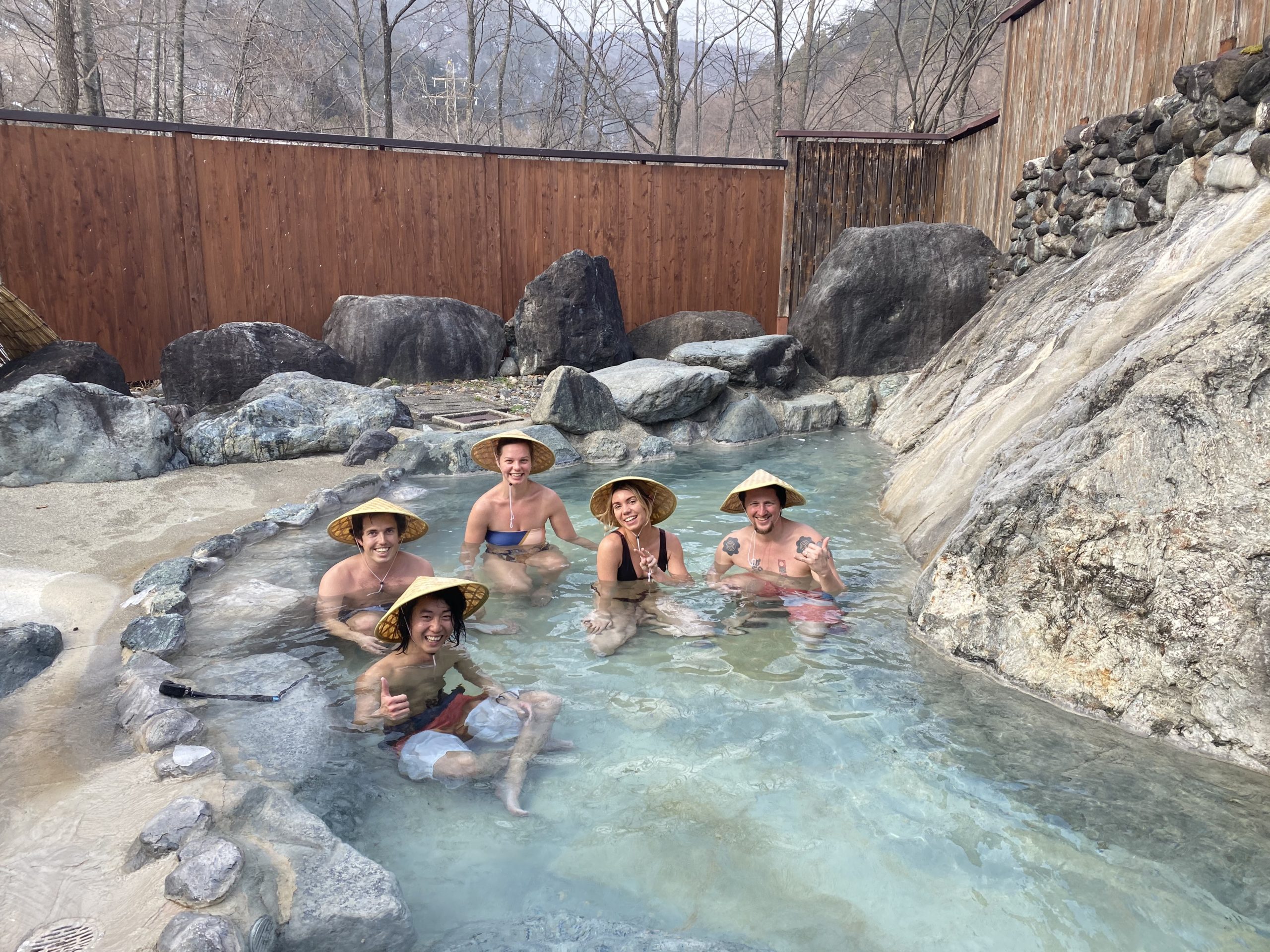
An onsen in Japan, perfect for after skiing

Japan’s ski season typically runs from mid-December to late March, although Hokkaido’s colder climate often allows skiing into April. The best conditions tend to occur in February, when snow depth peaks and crowds thin after the holidays. Climate data from Japan’s Meteorological Agency show that average winter temperatures have risen by about 1.5 degrees Celsius since the 1970s, shortening the season at lower-altitude resorts. In response, several ski areas are investing in energy-efficient snowmaking systems powered by renewable energy and reforesting slopes to stabilize the snowpack.

What sets Japan apart from other ski destinations is how seamlessly nature and culture intertwine. After a day on the mountain, most visitors trade ski boots for slippers and head to an onsen—an outdoor hot spring surrounded by snow and cedar trees. In Hakuba, bathhouses draw water from volcanic sources deep beneath the Alps. In Hokkaido, ryokans such as those near Niseko or Jozankei combine minimalist architecture with local cuisine and geothermal heating. Soaking in mineral water after skiing under falling snow is not just a ritual of comfort; it’s an immersion in the country’s centuries-old respect for natural energy.

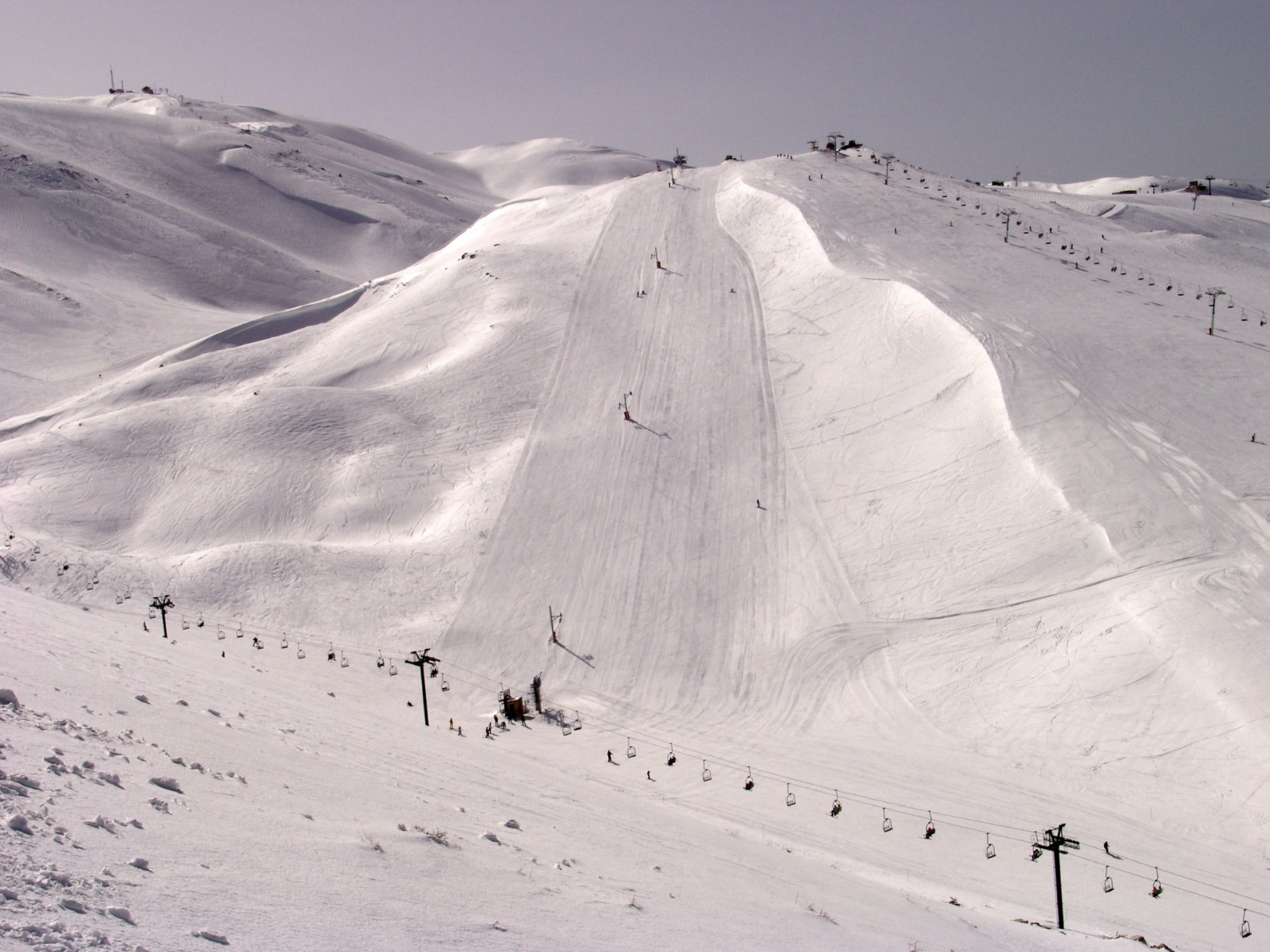
Related: Skiing in Lebanon, where, when, how

Traveling sustainably in Japan is straightforward. The Shinkansen network, powered mainly by electricity from renewable and low-carbon sources, connects all major ski areas. Rail passes like the JR East or JR Hokkaido Pass make it affordable to combine multiple resorts in one trip without relying on rental cars or domestic flights.

Local bus systems in Hakuba, Myoko, and Niseko are expanding electric and hybrid fleets. Choosing rail over air travel can reduce your carbon footprint by as much as 80 percent for domestic journeys. We’ve rented cars in Japan and while it was find for a couple of days, most of the highways are boring, expensive and give little extra value along the way. The cars are small so you won’t be able to fit much if any gear, and you need to navigate driving on the wrong side of the road if you are from the United States.

Bringing gear or renting it?

Ski and snowboard rental shops in major resorts like Niseko, Hakuba, Furano, and Nozawa Onsen are exceptionally well equipped. Many rent out high-end gear from brands like Rossignol, Atomic, Burton, and Salomon — often less than two seasons old. Shops like Rhythm Japan (Niseko, Hakuba) or Spicy Rentals (Nozawa, Myoko) offer performance packages that rival what you’d find in the Alps or Rockies. The gear is also calibrated to the snow and getting around on public transport in Japan will be cumbersome with gear brought from home.

Skiing in Japan isn’t just about chasing powder and getting around fast —it’s about slowing down and seeing how a country deeply attuned to the seasons adapts to a warming world. From the geothermal heat that warms its baths to the electric trains that glide through frozen valleys, Japan shows how winter tourism can evolve without losing its soul. The snow still falls, the onsen still steam, and in every village the quiet rhythm of winter endures. And maybe you’ll get to see a snow monkey along the way.

Forget the cherry blossoms in Japan. Take the train north, breathe in the cold air, and ski your troubles away. A little saki can warm you up at the end of the day.

Lebanon ski resorts and when to escape climate change

0
The Cedars in Lebanon via in the snow

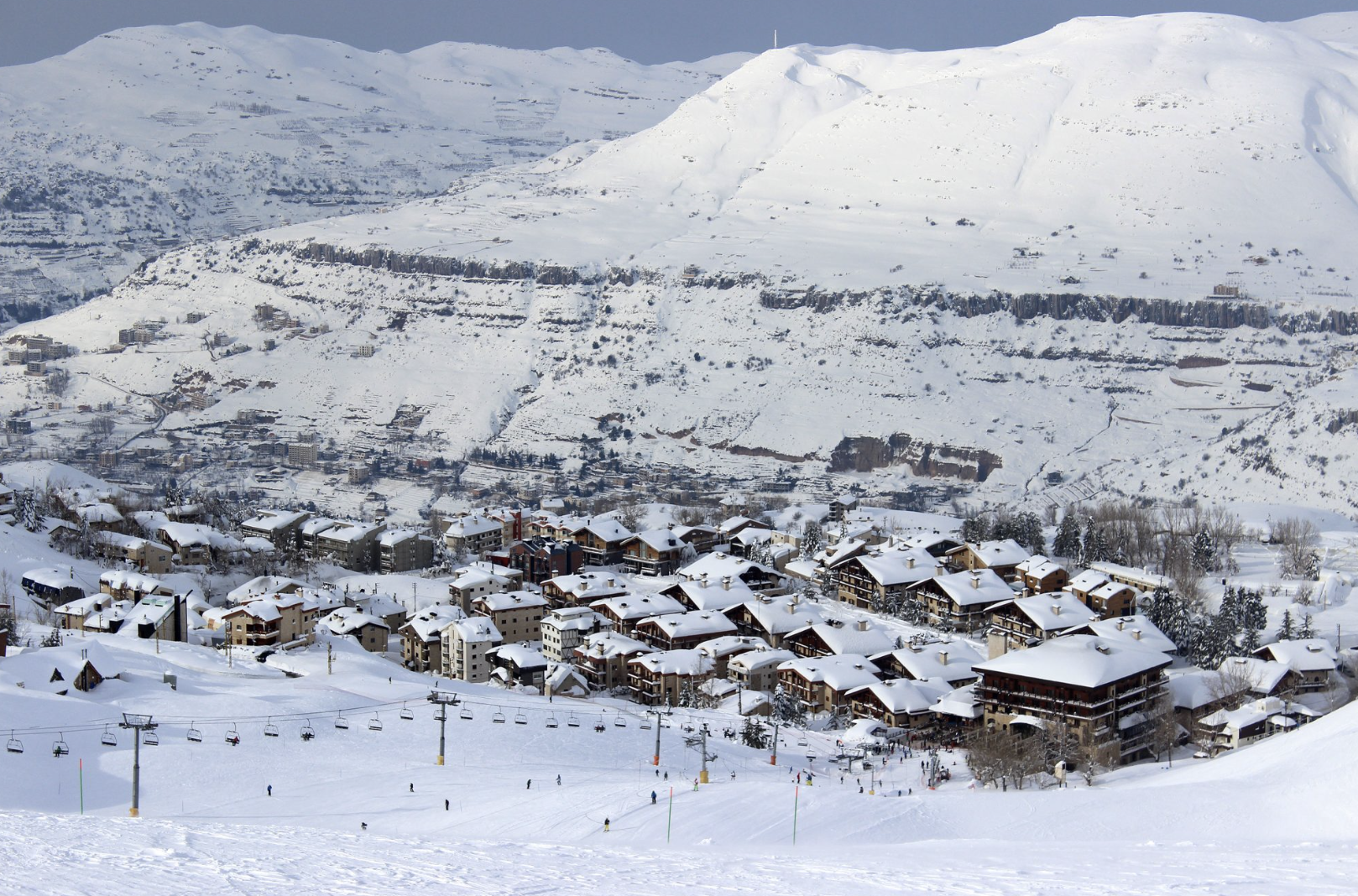
Planning your winter holidays and want something a little more exotic for the family? Lebanon offers a rare alpine escape in the Middle East—high-altitude slopes within close reach of the coast, cedar forests and mountain villages. You can ski by day and swim by night. Resorts such as Mzaar Ski Resort Faraya, Cedars (Bsharri) Ski Resort, Zaarour Club, Laqlouq, Faqra and the nearby Cedars of God (Bsharri) forest region deliver a mix of skiing and nature. But the future of winter tourism here is being challenged by changing seasons and climate change.

Where to Ski in Lebanon:

Lebanon has downhill and cross-country skiiing. From In the Snow 

Mzaar Ski Resort Faraya: Located in the Keserwan-Jbeil mountains and just over an hour from Beirut, Mzaar is Lebanon’s largest ski resort and a go-to for all ski levels. It offers dramatic views across the Bekaa Valley. For travelers, this is the most accessible destination and contains a wide range of slopes, accommodations and après-ski options.

Cedars (Bsharri) Ski Resort: In the Bsharri region, the Cedars resort lies near the famed “Cedars of God” grove and operates at higher altitude than many Lebanese resorts. Because of the elevation, it tends to offer better snow cover and is a strong choice for those seeking reliability and dramatic alpine scenery.

Zaarour Club: Zaarour is situated on Mount Sannine in the Matn district, about 35 km from Beirut. With north-facing slopes, activities beyond skiing, and a quiet setting, it’s ideal for families or visitors who want a gentler ski trip within close reach of the city.

Laqlouq lies at a lower base altitude (around 1,650-1,800 m) and while it offers charm and authenticity, its lower elevation means more sensitivity to warm weather and shrinking snow cover. If you visit, plan for a flexible schedule and keep an eye on snow conditions.

Faqra combines winter sports with historic Roman ruins and natural beauty. Though not always as large as Mzaar or the Cedars, it offers a distinctive ski-holiday option in Lebanon’s mountain belt.

Cedars of God (Bsharri) Region: While not strictly a ski resort itself, the Cedars of God forest near Bsharri forms a spectacular backdrop to the ski resort experience. The high-altitude forest of Lebanese cedar trees is emblematic of Lebanon’s mountain ecosystem. It adds ecological and cultural value to a ski visit in the region.

Why the Ski Seasons Are A-Changin’

beirut from above
Ski by day and stay in Beirut by night

Lebanon’s ski industry is under pressure from climate change. According to Reuters, snow cover is expected to shrink by up to 40 percent by 2040. A recent review notes that ski resorts in Lebanon face the challenge of insufficient snow, increasingly shorter seasons and rising expenses. For example, at Mzaar only about 70 percent of slopes were able to open in one season due to insufficient snowfall. Lower snowfall, delayed season openings, and rising temperatures all contribute to uncertainty for visitors and operators alike.

What this means for you as a skier: choose resorts with higher elevation (like the Cedars), monitor local snow and weather reports ahead of your trip, and set realistic expectations—the skiing season may begin later, end sooner, and conditions may not be the same every year.

Lebanese resorts and communities have begun to adapt. And despite the country lacking basic resources such as continuous power or a safe water supply, some of the measures include upgrading snow-making infrastructure, improving the efficiency of ski lifts, and diversifying into four-season mountain tourism.

Ski resorts in Lebanon are coping by turning the region into a full-season tourist destination, like Blue Mountain in Barrie, Ontario, Canada, which turns its ski lifts into bike lifts for downhill bike riding on extreme trails. The Canadian ski town also offers forest treks and climbing sports, along with man-made pools and family packages for the resorts that normally don’t generate income in the summer.

So if the snow is melted for your ski holiday in Lebanon, this is what you can do: enjoy hiking, mountain biking, wellness retreats—to compensate for shorter ski seasons. Participate in forest conservation and the protection of mountain ecosystems (such as the Cedars of God) to maintain snow-catch and water-storage functions.

Planning Your Ski Trip to Lebanon

Here are some tips to maximize your ski holiday in Lebanon:
• Go early or late in the season: mid-January to early March tends to offer the best conditions, though keep an eye on real-time snowfall. Book a flexible ticket for flights and hotel rooms if possible.
• Choose high-altitude resorts: resorts like the Cedars have more reliable snow because of elevation.
• Flexibility helps: check snow reports, know that slope availability may vary, and look for resorts that offer other activities if snow is thin.
• Book accommodations near the slopes: resorts like Mzaar and Zaarour are close to the coast and Beirut, making logistics easier.
• Respect the environment: Lebanon’s mountains are ecologically fragile—choose resorts and services that demonstrate sustainable practices.

If you’re looking for a ski escape that blends altitude, Mediterranean views and unique mountain culture, Lebanon is still an exciting choice and one you can talk about when you return home. Resorts like Mzaar Ski Resort Faraya, Cedars (Bsharri) Ski Resort, Zaarour Club, Laqlouq and Faqra offer a range of experiences from lively slopes to tranquil escapes. However, the window for consistent snow is narrowing, and the effects of climate change are real. Planning ahead, choosing your resort wisely and embracing the full mountain experience (not just snow) will give you your best chance of a memorable trip. Lebanon’s mountains aren’t just skiing locations—they’re landscapes in transition, and your visit can both enjoy and support their evolving future.

According to Planet Ski, “There are currently 68 countries in the world that offer equipped outdoor ski areas covered with snow. Even if snowfields are much more numerous there are about 2,000 ski resorts worldwide. Besides the major ski destinations in terms of skier visits, there are a number of other, smaller destinations, where skiing has been an industry for a long time, or is currently developing.”

The most obvious emerging destinations are Eastern Europe and China, according to the expert ski site. There are a number of other small players spread out across the globe and they are in: Cyprus, Greece, India, Iran, Israel, Lebanon, Lesotho, Morocco, New Zealand, Pakistan, South Africa, Turkey and several more. Have a ski experience to share in a less-travelled area? Send us a report [email protected].

For more background on Lebanon’s ski industry and climate change, read
Put Away Your Snowboard: Lebanon’s Slopes Are Melting, which looks at how higher temperatures have already cut the skiing season in half.

If you’re comparing Lebanon with other regional options, see 5 Top Ski Holidays in the Middle East,
which includes Mzaar in Lebanon alongside other regional ski spots.

For a broader look at eco-conscious winter travel and skiiing, link to our past coverage on Where to go for a sustainable ski holiday?, which weighs up greener ski choices and resort practices.


Built to Last: How Michael Shanly Turned Five Economic Crises into Enduring Strengths

0
Michael Shanly

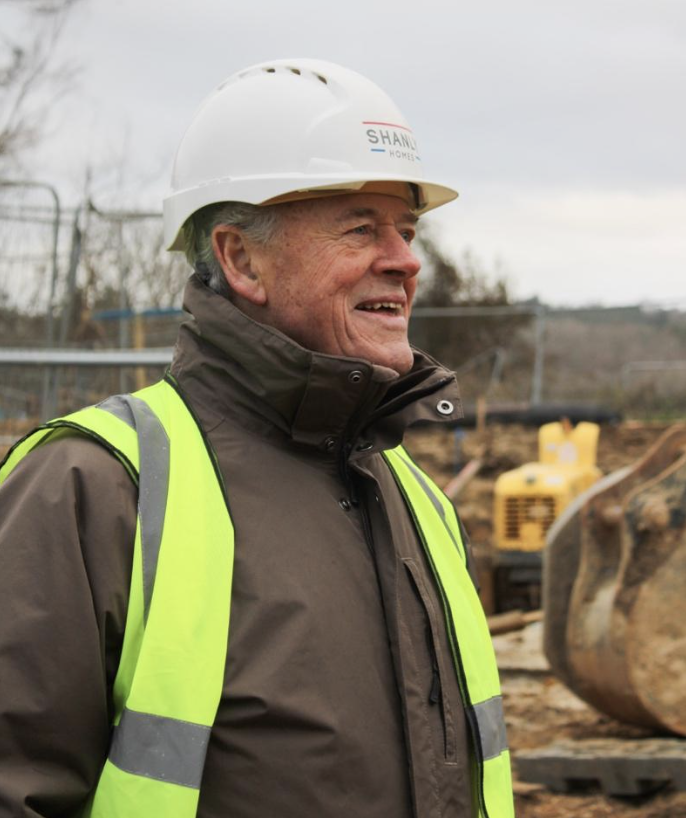
Most developers see economic downturns as something to endure. Michael Shanly has consistently seen them as opportunities to strengthen his business for the long term. Across five major crises – from the 1974 property crash to the COVID-19 pandemic – his approach has remained remarkably steady: adapt quickly, stay close to operations, and make decisions that build resilience rather than short-term relief.

The record speaks for itself. While many of his competitors have retrenched, restructured, or disappeared altogether during economic turbulence, Michael Shanly has emerged from each cycle stronger. His companies have built more than 12,000 homes, developed 1,500 commercial tenancies and maintained consistently high standards of quality – all while facing the same economic headwinds that have undone much of Britain’s property sector.

This isn’t a story of good fortune. Over five decades, luck evens out. The more interesting question is what principles have allowed Shanly to keep finding stability when others could not.
1974: Building a Foundation in Crisis

In 1974, Britain’s economy was in disarray. The global oil shock had sent inflation spiralling, credit was tightening, and the property market was grinding to a halt. Mortgage rates soared and development finance all but dried up.

At a construction site in Maidenhead, Shanly found himself managing a project that had suddenly become financially uncertain. Where most developers chose to pause and wait for the market to recover, he took a more pragmatic view. On the site sat a house marked for demolition. Rather than proceed with the original plan, he converted it into rental flats to generate income that would support the wider development.

It was a small, adaptive decision that kept the project alive when others stalled. More importantly, it revealed a broader truth: property could be managed for steady, long-term income rather than short-term speculation.

That insight became the foundation of what would later be Sorbon Estates, formally incorporated in 1994 but built on habits formed two decades earlier. The willingness to adapt, to find practical solutions rather than wait for ideal conditions, would define his career and shape the group’s approach to every crisis that followed.

Principle One: Lead from the Ground, Not the Boardroom

The most telling part of that 1974 episode isn’t the rental conversion itself, but how Shanly handled it. He took over day-to-day site management to control costs and keep the project on track. It wasn’t symbolic; it was necessary.

That operational involvement became a consistent feature of his leadership. By understanding the details of his developments first-hand, Shanly has always been able to make decisions grounded in practical reality. It also set a cultural tone: accountability starts at the top, and leadership means engagement, not distance.

As he puts it, “I like to do things the best we can. I still go round our sites tweaking and improving so we can be proud of what we’ve built.”

This attention to the operational side of business builds credibility internally and foresight externally. Problems are spotted earlier, decisions are more informed, and teams are more aligned. It’s a habit that compounds over time.


2020: Agility in a New Kind of Crisis

By 2020, Shanly had weathered recessions, housing slumps and banking crises. The COVID-19 pandemic posed a different challenge altogether – not a property collapse, but a nationwide standstill that disrupted every sector at once.

The response of the Shanly Foundation showed how deeply the group’s long-term principles had taken root. Within weeks, the foundation had created an emergency fund distributing nearly £185,000 to more than 100 local charities supporting those most affected by the crisis.

This was not a reactive act of goodwill but an example of institutional readiness. The systems and relationships built over decades allowed the foundation to act quickly and effectively. Agility, in this case, wasn’t improvised – it was the natural outcome of long-term planning.

The lesson was clear: resilience is not built during the crisis. It’s built in advance, through decisions that favour strength and stability over convenience.

Thinking in Decades, Not Quarters

Shanly’s approach rests on a simple but often neglected principle: think in decades, not quarters.

The most sustainable advantages come from long-term thinking – prioritising relationships, quality and reputation over immediate returns. Sorbon Estates has embodied this by holding its properties rather than selling them on, favouring stable income and tenant longevity over speculative growth.

That philosophy shapes its tenant mix too. More than half of Sorbon’s retail tenants are independents, a deliberate choice that brings diversity and resilience to local high streets. When national chains falter, independent traders tend to adapt and endure. It’s a quieter, steadier model that has repeatedly proved its worth in difficult markets.

In downturns, this focus on quality and relationships provides a buffer. Tenants who are treated as partners are more likely to renew, diversify and grow. The real advantage comes afterwards: when the market recovers, companies that have stayed consistent, kept their standards and maintained their reputation are in a far stronger position to grow.

Quality as a Form of Insurance

Perhaps the most distinctive part of Michael Shanly’s approach is his insistence on quality, even when conditions are toughest. Where others cut costs, he has chosen to protect standards.

His philosophy is straightforward: “True development is not about speed or cost-cutting, but about crafting spaces with lasting value that meet the needs of their communities and endure for generations.”

It’s a principle that pays off over time. Well-built developments hold their value better, attract repeat buyers and tenants, and build trust with planners and communities. Those who compromise during crises often spend years rebuilding both their reputation and their margins.

The Shanly Group’s integrated model – from land acquisition through to construction, investment and affordable housing – allows this quality control at every stage. It’s one reason Shanly Homes was recognised as Thames Valley’s Housebuilder of the Year in 2021 and 2025 and Sorbon Estates was awarded Commercial Landlord of the Year, also in 2025.

The Compounding Effect of Consistency

Across five decades and five major crises, Shanly’s career demonstrates how resilience compounds. Each downturn provided lessons and systems that strengthened the organisation for the next.

The decision to convert a single house into rental flats in 1974 led to an income-based investment model that underpins Sorbon Estates today. The careful infrastructure behind the Shanly Foundation allowed a rapid pandemic response in 2020. The refusal to compromise on quality has become a brand asset in its own right.

For business leaders, the message is straightforward. Resilience isn’t built from grand gestures or sudden innovation, but from steady, consistent decisions repeated over time.

Lead from the ground. Maintain standards. Think long-term. Build relationships.

None of these ideas are new. But few have been applied with such consistency, across so many challenges, for so long.


Houston eco mosque opens amid Texas faith and climate tensions

ismaili center houston architecture, ismaili center houston gardens, farshid moussavi building design, thomas woltz landscape, aga khan green building, houston buffalo bayou skyline, islamic modern architecture texas, sustainable civic center houston, reflecting pool ismaili center, aga khan development network, faith based architecture, pluralism in texas, eco architecture houston, islamic art design usa, houston cultural corridor, farshid moussavi architect, thomas woltz nelson byrd woltz, greenwashing architecture, aga khan award sustainability, houston civic landmark

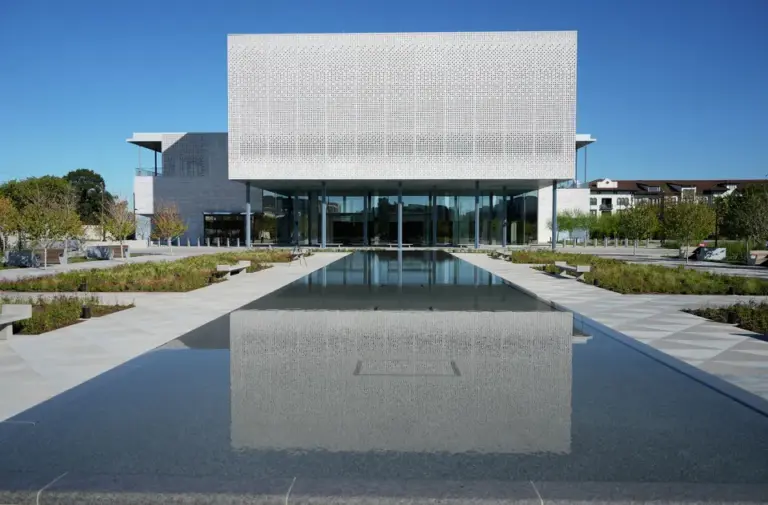
On November 6, 2025, Houston welcomed its newest civic landmark: the Ismaili Center, Houston, a luminous Shia Muslim complex overlooking Buffalo Bayou Park that merges Islamic art, architecture, and landscape design.

It was inaugurated by Mayor John Whitmire alongside Rahim Aga Khan V.

Related: 5 eco mosques in the world

Aga Khan is the new Imam of the world’s Shia Ismaili Muslims — the Center marks the first Ismaili civic and cultural complex in the United States, and perhaps the most ambitious example of faith-based sustainable design built in the South. It is the first Ismaili Center in the United States, joining those in London, Vancouver, Lisbon, Dubai, Dushanbe, and Toronto. The project fulfills a vision set in motion by Shia leader Karim Aga Khan IV (1936–2025) and realized by his son and successor.

But in Texas, a state where political tensions are now rising over pluralism, and at a time when the Aga Khan’s own architecture awards have faced accusations of greenwashing, Houston’s newest monument is more than a work of beauty — it’s a test of credibility.

In September 2025, Governor Abbott signed a law banning what the state describes as “Sharia compounds” — developments “open only to Muslims” or controlled by religious law structures. This was in response to a Muslim-built EPIC city that discriminates on who can buy homes in the community based on religion.

A Civic Oasis in a Divided State?

ismaili center houston architecture, ismaili center houston gardens, farshid moussavi building design, thomas woltz landscape, aga khan green building, houston buffalo bayou skyline, islamic modern architecture texas, sustainable civic center houston, reflecting pool ismaili center, aga khan development network, faith based architecture, pluralism in texas, eco architecture houston, islamic art design usa, houston cultural corridor, farshid moussavi architect, thomas woltz nelson byrd woltz, greenwashing architecture, aga khan award sustainability, houston civic landmark

The estimated $170 million project sits at the intersection of Allen Parkway and Montrose Boulevard, within walking distance of the Rothko Chapel and the Menil Collection — Houston’s spiritual-artistic corridor.

That spirit will be tested. In recent months, Governor Greg Abbott has come under fire for launching a campaign to halt construction of a proposed Islamic-planned community near Dallas, drawing accusations of Islamophobia from faith leaders and civil-rights groups (Houston Chronicle). Elsewhere, redistricting maps have cut Black and Latino representation in Houston by half, prompting protests by local clergy and activists (Houston Chronicle).

Amid this climate, a Muslim-led institution dedicated to “shared human values” carries political resonance. The Ismaili Center, Houston, designed by London-based architect Farshid Moussavi and landscape architect Thomas Woltz, aims to model pluralism through design witnessed by open courtyards, shaded eivans (verandas), and gardens meant for dialogue, art, and quiet reflection.

ismaili center houston architecture, ismaili center houston gardens, farshid moussavi building design, thomas woltz landscape, aga khan green building, houston buffalo bayou skyline, islamic modern architecture texas, sustainable civic center houston, reflecting pool ismaili center, aga khan development network, faith based architecture, pluralism in texas, eco architecture houston, islamic art design usa, houston cultural corridor, farshid moussavi architect, thomas woltz nelson byrd woltz, greenwashing architecture, aga khan award sustainability, houston civic landmark

The building’s green credentials are strong — at least on paper. Rising above the 500-year floodplain, its underground garage doubles as a flood reservoir. The 11-acre landscape slopes gently toward the Bayou, channeling runoff through terraces, reflecting basins, and flood-adaptive gardens. It’s parking lot underground can hold runoff in the case of a flood.

Woltz calls it “a transect of Texas,” planted with desert agave, prairie grasses, and Gulf Coast reeds — a living metaphor for ecological and cultural adaptation.

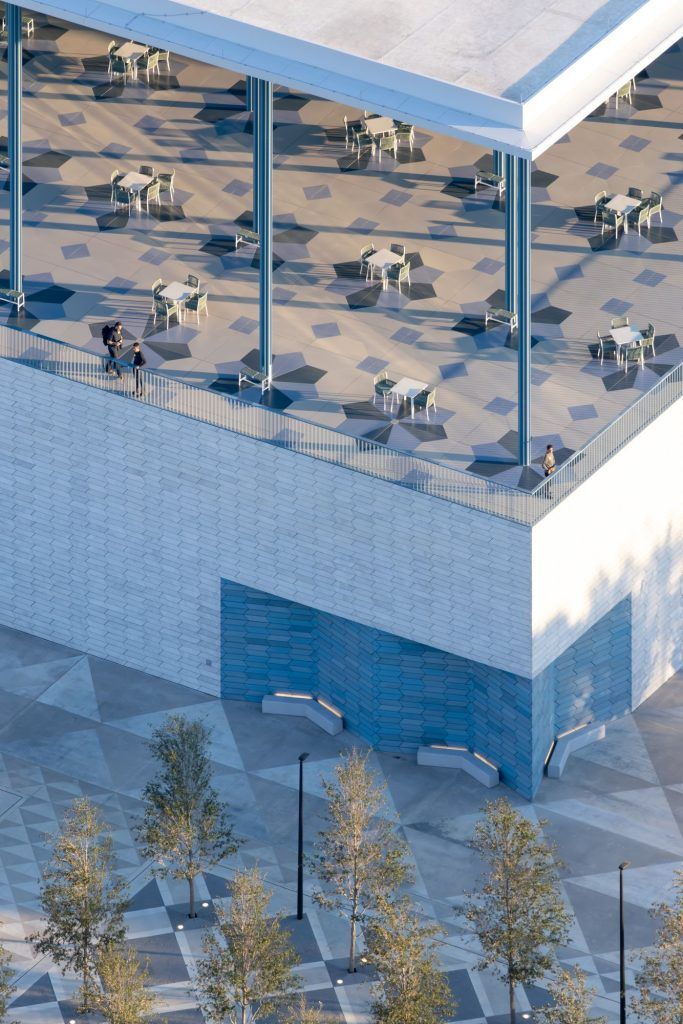
Materials were chosen for longevity — stone, steel, and ultra-high-performance concrete with a 100-year life cycle. Natural light filters through perforated screens that recall Persian craft traditions. The design philosophy echoes the global movement for regenerative Islamic architecture explored in Green Prophet’s stories on Hassan Fathy’s legacy and green architecture across MENA.

Ismaili center concrete


The Shadow of Aga Khan Greenwashing

ismaili center houston architecture, ismaili center houston gardens, farshid moussavi building design, thomas woltz landscape, aga khan green building, houston buffalo bayou skyline, islamic modern architecture texas, sustainable civic center houston, reflecting pool ismaili center, aga khan development network, faith based architecture, pluralism in texas, eco architecture houston, islamic art design usa, houston cultural corridor, farshid moussavi architect, thomas woltz nelson byrd woltz, greenwashing architecture, aga khan award sustainability, houston civic landmark

The Aga Khan Development Network (AKDN), which oversees the Ismaili Centers and funds the prestigious Aga Khan Award for Architecture, has faced increasing scrutiny over how it markets “sustainability.”

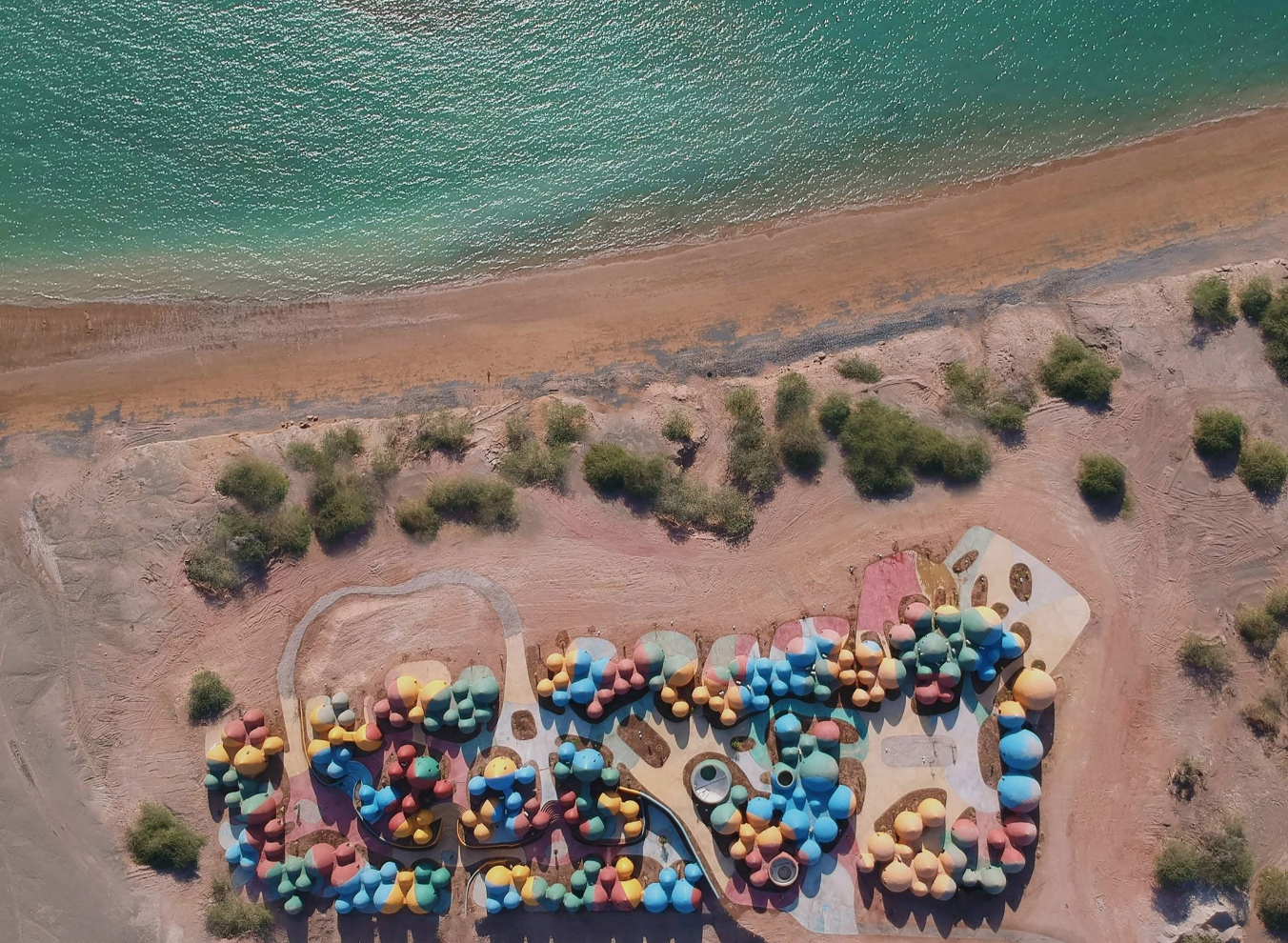
Green Prophet’s recent investigation, “When Greenwashing Overwrites Ecology at the Superadobe Majara Residence”, questioned the ecological validity of one of the Aga Khan Award’s 2025 winners in Iran. That project — celebrated for its earthy “superadobe” domes — was found to rely heavily on unsustainable materials, tourist economics, and a romanticized desert aesthetic. They did not reply to our questions and ignored an Iranian architect Ronak Roshan who embodies ecological integrity above all in her practice.

Another Green Prophet piece on the 2025 Aga Khan Architecture Winners argued that the Award risks functioning as a form of cultural branding — celebrating Islamic modernity while skimming over deeper environmental costs and issues. These critiques raise a question for Houston: will this Center be an authentic green civic landmark, or a monumental case study in eco-optics and religious politics?

As we’ve explored in “Saudi Greenwashing at NEOM” and “UAE Green Finance and COP29”, even projects wrapped in the language of sustainability can mask carbon-heavy construction and elitist urbanism.

A Real Test of “Faith in Practice”

ismaili center houston architecture, ismaili center houston gardens, farshid moussavi building design, thomas woltz landscape, aga khan green building, houston buffalo bayou skyline, islamic modern architecture texas, sustainable civic center houston, reflecting pool ismaili center, aga khan development network, faith based architecture, pluralism in texas, eco architecture houston, islamic art design usa, houston cultural corridor, farshid moussavi architect, thomas woltz nelson byrd woltz, greenwashing architecture, aga khan award sustainability, houston civic landmark

Unlike many mosques or churches, the Ismaili Center Houston explicitly presents itself as civic infrastructure: a place for performances, classes, and lectures, with a café and art exhibitions open to all. The Aga Khan center does the same in Toronto. Yet when we see the way a dominant group politically includes projects with little merit for the sake of politics, we believe this is more politics and optics than true pluralism.

The Aga Khan’s global network has a record of genuine impact — funding hospitals, universities, and rural-resilience projects from East Africa to Pakistan. Yet critics note a lack of public reporting on carbon metrics or third-party audits.

If the Ismaili Center Houston truly evolves into a community green hub — hosting lectures on climate justice, native gardening workshops, or open dialogues on the energy transition — it could redefine how faith institutions serve cities in crisis. But given the rise of antisemitism across the United States and Canada, much of it fueled by extremist rhetoric, it’s fair to ask whether this is also a political project dressed in the language of pluralism. If its lush gardens and polished stone remain mostly symbolic, the Center risks becoming yet another addition to the Aga Khan’s portfolio of beautifully designed but tightly managed “sustainable” showcases.

Whether the Ismaili Center becomes a true model for green faith architecture or just another chapter in the Aga Khan’s controversial brand of eco-diplomacy will depend on what happens after the press photos fade.

Canaan’s sacred wine and folk worship in the fields

0
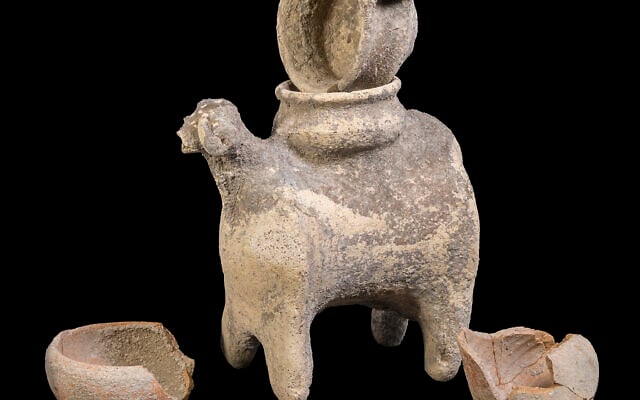
Several 3,300-year-old Canaanite artifacts, including a ram-shaped vessel, were unearthed in archaeological excavations along Highway 66, near Tel Megiddo in northern Israel, in a discovery announced on November 5, 2025. (Katerina Katzan/Israel Antiquities Authority)

Long before prophets, before Israelite kings or Jerusalem temples, the people of Canaan lived by the rhythm of the soil. They planted vines on the slopes of the Jezreel Valley, crushed grapes beneath their feet, and poured the first sweet liquid to their gods. Now, a remarkable discovery near Tel Megiddo in Israel reveals how ancient wine and worship intertwined at the dawn of urban life in the Holy Land.

An Israel Antiquities Authority excavation conducted ahead of road construction on Highway 66 has uncovered one of the earliest known winepresses in the country — about 5,000 years old — and a collection of ritual vessels that bring to light the domestic cult of the Canaanites. The excavation, financed by the Netivei Israel – National Transport Infrastructure Company, was part of a large-scale development upgrading the main artery that links Yokneam, the Jezreel Valley, and the Gilboa region.

According to the Israel Antiquities Authority, “Impressive evidence of Jezreel Valley settlement expansion at the onset of urbanization, and of the Canaanite cult that existed in the land before the Israelites entered the region, was recently uncovered east of Tel Megiddo.”

The discoveries reveal how daily life, agriculture, and religion once merged seamlessly across the northern valleys.

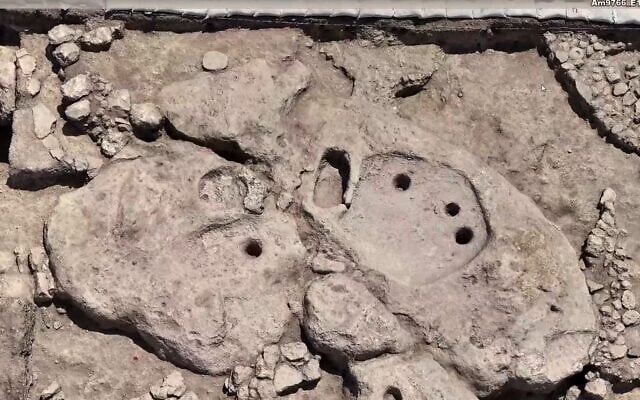
From the Early Bronze Age IB, a small rock-cut winepress was exposed — a sloping treading floor that channeled juice into a hewn collection vat. “This winepress is unique, one of very few known from such an ancient period when urbanization first took place in our region,” explained Dr. Amir Golani and Barak Tzin, Excavation Directors on behalf of the Israel Antiquities Authority.

“Winepresses are indeed very common throughout the country, but it is very difficult to date them. Until now, indirect evidence indicated that wine could have been produced 5,000 years ago, but we did not have conclusive proof of this – a ‘smoking gun’ that would clearly show when this happened in our area. This winepress finally provides new and clear evidence that early wine production actually took place here.”

Around the press, the team uncovered dwellings and courtyards that hint at an early village economy. The winemaking enterprise was likely community-based, tied to the cycles of agriculture and celebration. Megiddo’s residents were already part of a regional network that shipped jars of oil, grain, and perhaps even wine to Egypt and the wider Mediterranean world.

Folk Worship in the Fields

A later phase of the excavation, dating about 3,300 years ago to the Late Bronze Age II, uncovered evidence of popular Canaanite worship just outside the ancient city’s gate. Archaeologists found a miniature ceramic model of a shrine, imported Cypriot jugs, and an intact set of vessels used for libations — the ceremonial pouring of liquids.

Among them was a zoomorphic vessel in the form of a ram. The IAA described how it worked: “A small bowl, which was attached to the ram’s body, was designed to function as a funnel; and a similar bowl – with a handle – was probably held to pour the liquid into the funnel during a ceremony. The ram’s head was shaped like a spout. Once the vessel was filled, tilting the ram forward spilled the liquid out from its mouth to collect it into a small bowl placed before it. The vessel seems intended for pouring a valuable liquid such as milk, oil, wine or another beverage, which could either be drunk directly from the spout, or poured into a smaller vessel for consumption, or as a votive gift.”
A 5,000-year-old wine press was unearthed in archaeological excavations along Highway 66, near Tel Megiddo in northern Israel, in a discovery announced on November 5, 2025. (Yakov Shmidov/Israel Antiquities Authority)

The vessels had been deliberately buried in the earth. Their placement suggested small-scale rituals carried out by farmers outside the city’s main temple precinct. In the words of the Authority, “The burial locations of these ritual vessels in the ground yet in the direct line of sight to the large temple area operating at Tel Megiddo in the Late Bronze Age II – may indicate a Canaanite folk cult that took place outside the city on the way to the main city gate – possibly by local farmers who could not enter the city and its temple, coming from their nearby fields to offer consecrations of liquids or valuable agricultural produce, such as wine or oil.”

This “folk cult” reveals a side of ancient religion often missed in grand temple ruins. These were ordinary people, not priests or kings, giving thanks to the land through what they produced. Wine, oil, and milk were not merely commodities but sacred mediums that connected the human and divine.

Layers of Faith and Soil

The Megiddo discoveries illuminate the continuity of belief that tied Canaanite farmers to their earth. For more than a century, excavations at Tel Megiddo have revealed palaces, temples, and gates that mark the rise of urban civilization. But these new finds, uncovered along the modern highway, extend that story beyond the city walls. They show that devotion was not confined to elites but lived in courtyards and fields.

“Megiddo has been excavated for over a century,” the researchers summarized. “While it is long-recognized as a key site in the study of ancient urbanism and Canaanite worship, the excavations we conducted east of the tel have revealed a new part of the matrix between the known settlement in the city – evidence of which has been revealed upon the tel – and the activities taking place in the area around and outside the city. The 5,000-year-old hewn winepress places the beginnings of the local wine industry in a very early urban-settlement context, while the offerings from the period about 3,300 years ago indicate the continuity of ritual consecration and libations outside the sacred complex within the tell, possibly expressing aspects of the local Canaanite folk cult.”

As Eli Escusido, Director of the Israel Antiquities Authority, noted, “The Israel Antiquities Authority’s extensive excavations along the route of the Jezreel Valley road are revealing, layer by layer, the wealth of history hidden and embedded in the soil here. The exposure of ancient wine-making facilities, and the evidence of folk worship outside of Megiddo, allow us to become acquainted with the daily life and beliefs of the region’s residents over the course of thousands of years.”

The finds will soon be displayed at the Jay and Jeanie Schottenstein National Campus for the Archaeology of the Land of Israel in Jerusalem. “These remarkable discoveries are a national asset and proof that advancing national infrastructure can proceed with full responsibility towards the past,” added Nissim Peretz, CEO of Netivei Yisrael.

The soil of Canaan still holds the scent of crushed grapes. Five millennia later, wine remains part of the region’s spirit — a testament to how the people of this land once turned harvest into holiness, and work into prayer.

Pea pod wine recipes are making a comeback with allotment gardeners

0
drinking pea pod wine
Time for peapod wine

Peapod wine (get the recipe here) often associated with the classic British sitcom The Good Life, where the characters Tom and Barbara Good make and drink a potent “peapod burgundy”. 

In the age of craft cocktails and artisan spirits, urban foraging and making the most out of the least, one unlikely throw-back is quietly making a comeback: peapod wine.

Once a humble “country wine” born out of thrift during hard times, it’s now being re-discovered for its simplicity, novelty and sustainable roots. The process involves simmering fresh green pea pods, discarding the pods themselves and fermenting the resulting infusion with sugar, grape concentrate (or raisins), yeast and other minimal additives.

Historically, peapod wine was born in rural kitchens where the shelling of peas left behind abundant pods and no desire to waste them. Rather than compost or discard, enterprising home brewers turned them into a light-bodied table wine. Vintage articles describe it as an old-school countryside favourite, and “a fine example of country wine thrift.”

The flavour profile is reportedly crisp, clean and surprisingly refined, with little trace of vegetal “pea” taste. Essentially, the fermentation and added grape concentrate mask the pod flavour, yielding a light dry white wine.

What’s driving the comeback? Sustainability. Up-cycling kitchen leftovers, minimising waste and making something homemade with basic ingredients resonates strongly with modern home-brewers and eco-aware drinkers. The DIY movement in fermentation (from kombucha to natural wines made from honey, even! ) has opened the door to recipes like this.

Also, the story and novelty add value: a wine made from what most would toss sparks conversation at dinner parties, tastings and small local producers seeking niche markets.

Pea pods for pea pod wine
Want to make wine from your pea pods, or will you eat them raw?

That said, it’s not without challenges: sourcing enough pea pods in the right season, ensuring sanitary fermentation, that they are organic, and ageing time (many recipes suggest several months to a year before optimal clarity and flavour). If the pods are healthy and young, I’d probably just eat them raw.

But for those willing to experiment, peapod wine offers a bridge between heritage, sustainability and craft. It’s a reminder that innovation sometimes means looking backward — to what humble home-makers did when times were tough.

We have the peapod wine recipe here.

Inflatable concrete homes: a California and Ontario case study

Robert Downey Jr.'s Binishell in Malibu. Courtesy of Nicolo Bini.
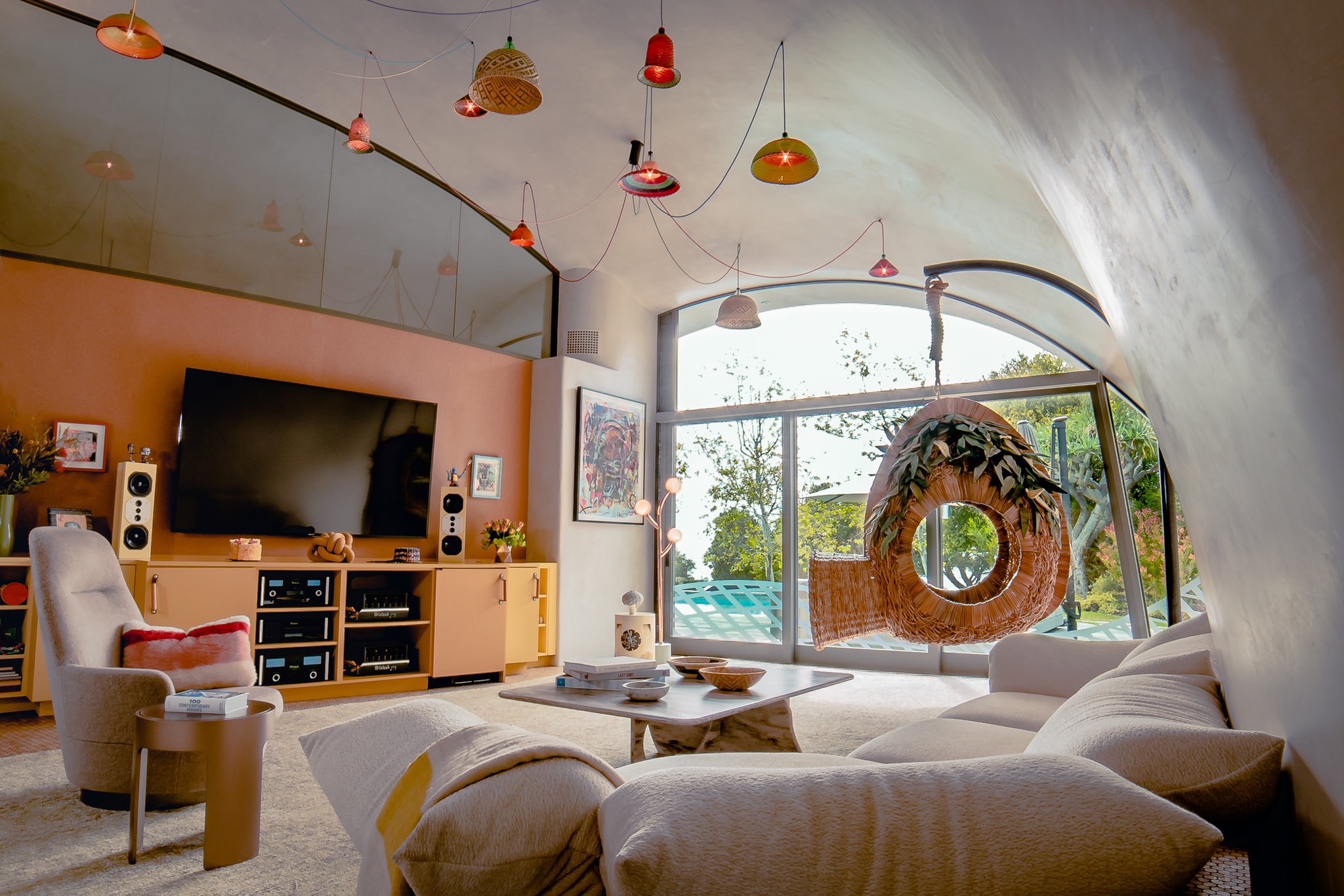
Robert Downey Jr.’s Binishell in Malibu. Courtesy of Nicolo Bini


Grocery prices and mortgages in cities are going through the roof. You’ve decided to go rural and you are looking at the options. What about an inflatable concrete home like the one built by Robert Downey Junior? If you’ve chosen this path, over superadobe, you wonder, how can you make the numbers work and make it sustainable? Read our article on inflatable concrete homes and how much they cost.

Let’s start: Imagine buying a modest rural plot, somewhere near Sudbury, Ontario, or in the Sierra foothills of California—and building a 1,000-sq-ft (93 m²) home using an inflatable-shell method like that created by Binishell. A flat, fabric form is inflated on-site and filled with a low-carbon concrete mix that hardens into a seamless, dome-like shell.

Binishell Robert Downey Junior home in Malibu

Inside, the walls are finished and insulated with hempcrete, a breathable, carbon-negative material that stores carbon as it cures. The entire build aims to reduce dependence on expensive mortgages, rising energy bills, and urban living costs while embodying resilience and ecological balance.

Because there’s no heavy scaffolding or formwork, construction is quick and more or less clean. Inflation and concrete pumping take a day; curing takes a week or so. The costs?

Ontario: Shell cost ≈ US $25–40 / sq ft.

California: Shell cost ≈ US $45–60 / sq ft.

After adding foundations (will you have a finished basement?), utilities, and finishes, total cost lands between US $120–16/sq ft—far below conventional rural builds, which often exceed US $250/sq ft. The finished home is highly energy-efficient: thick hempcrete walls and thermal-mass concrete stabilize interior temperature, lowering heating and cooling bills by up to 50%. Over 15 years, savings on mortgage and energy can reach tens of thousands of dollars. For people who want to start a regenerative farm or an online business in the country, this is a no-brainer.

inflatable concrete house, inflatable concrete homes, concrete dome house, Binishell house, Automatic Construction, sustainable housing, low-cost housing, eco architecture, alternative building methods, monolithic dome, back to the land movement, affordable housing, concrete home cost, off-grid living, green building, low carbon cement, hempcrete construction, aircrete house, prefab home innovation, modern dome architecture
Inflatable concrete house

Concrete’s carbon footprint is its biggest flaw, but newer mixes cut emissions dramatically. Take calcined-clay blends (LC³), fly-ash or slag substitutes, and carbon-mineralization technologies like CarbonCure which can reduce CO₂ output by 40 %. In California, renewable-energy credits further offset embodied carbon; in Ontario, pairing solar panels or micro-hydro with low-carbon materials can make the structure nearly net-zero.

Look out for hidden costs and restrictions. Some people prefer to buy land in unorganized townships to avoid too much government oversight. That doesn’t mean you can do what you want. Permits are still needed. In Ontario, you need a building permit for any new structure over 10 square meters (108 sq ft), or for any structure, including sheds, over 15 square meters (sq ft), depending on the municipality.

Hempcrete adds another layer of sustainability, absorbing CO₂ during curing and improving indoor air quality. Together, these materials turn a traditionally high-carbon building type into a model of circular design. Hempcrete is also fire resistant, and added bonus for people in forest fire prone areas in California.

The biggest barrier today in new sustainable building isn’t technology—it’s building codes. Inflatable concrete shells fall outside most standard residential classifications. In both provinces and states, permits require engineering certification, structural testing, and often a variance from conventional framing standards. Builders must collaborate with local inspectors early, providing proof of structural integrity, insulation values, and fire ratings. If you are into dealing with those hassles you can create a model home for your neighbors to follow.

Inflatable-shell homes offer a credible path to affordable, durable, and lower-carbon living. For those willing to navigate permitting and pioneer new methods, this approach could define the next generation of rural housing—fast to build, low in cost, and light on the planet. It always takes the first movers to start new dreams.

Inflatable Concrete Domes in Canada

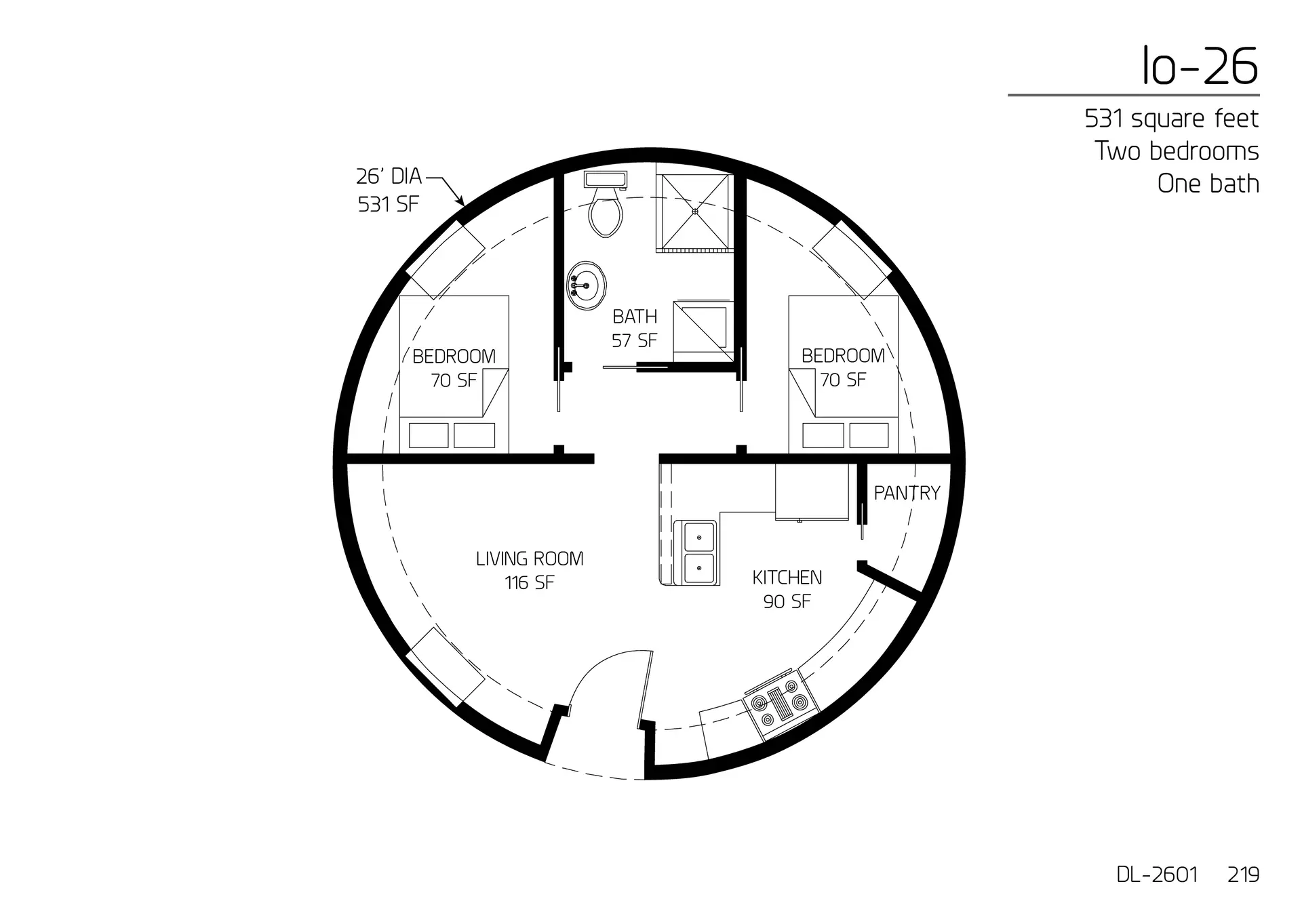
The Monolithic Dome Institute (MDI) has helped bring air-formed concrete construction to Canada, proving that dome-shaped, energy-efficient homes can thrive even in cold northern climates. Its method, known as the Monolithic Dome system, relies on an inflatable air-form, steel-reinforced concrete, and foam insulation to create one continuous, highly durable shell.

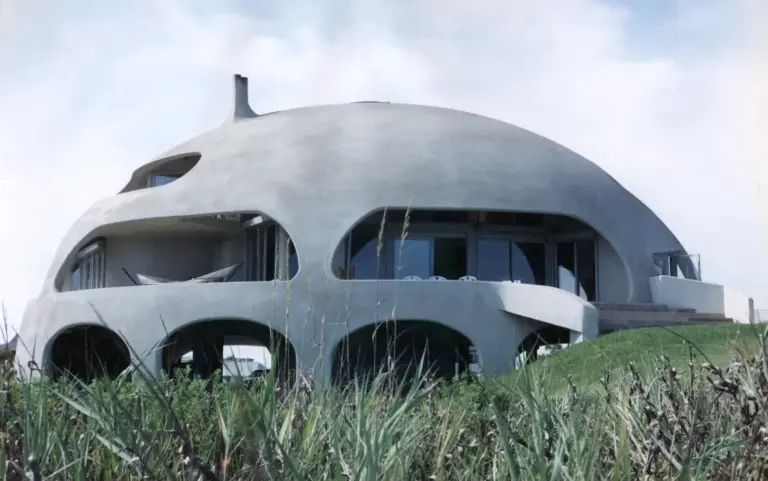
In Yorkton, Saskatchewan (shown below), Canadian Dome Industries built a 40-foot (12.2 m) hemispherical home that demonstrates the system’s practicality and strength.

Another dome, located in central Alberta, measures 55 feet in diameter and was built off-grid in 2005. This structure uses passive-solar orientation, thick insulation, and thermal-mass concrete to remain comfortable year-round, reducing energy demand in both heating and cooling seasons.

Canadian Dome Industries, Yorkton dome home, Saskatchewan dome house, Monolithic Dome Institute, inflatable concrete house Canada, airform concrete dome, sustainable housing Canada, concrete dome construction, off-grid dome home, energy-efficient dome house, reinforced concrete dome, cold climate architecture, Canadian green building, passive solar dome, innovative home design Canada, Monolithic Dome Yorkton, foam insulated concrete shell, dome home Saskatchewan, resilient housing Canada, air-inflated concrete structure
Yorkton Dome in Canada
Canadian Dome Industries, Yorkton dome home, Saskatchewan dome house, Monolithic Dome Institute, inflatable concrete house Canada, airform concrete dome, sustainable housing Canada, concrete dome construction, off-grid dome home, energy-efficient dome house, reinforced concrete dome, cold climate architecture, Canadian green building, passive solar dome, innovative home design Canada, Monolithic Dome Yorkton, foam insulated concrete shell, dome home Saskatchewan, resilient housing Canada, air-inflated concrete structure
Yorkdon Dome, finished


Construction begins with a flexible Airform membrane anchored to a circular foundation. The membrane is inflated to the desired dome shape, and workers spray its interior with polyurethane foam to form a stable surface. Steel reinforcement is attached to the foam, and layers of shotcrete (sprayed concrete) are applied, hardening into a self-supporting structure. The finished shell functions as roof, walls, and insulation all in one piece—eliminating many of the weak points found in conventional buildings.

Monolithic dome planning

According to the Monolithic Dome Institute, these domes use up to 50% less energy than standard homes. Their rounded shape sheds wind and snow efficiently, making them highly resistant to storms, mold, fire, and pests—key advantages in Canada’s variable climate. We just need a new shape of bed to fit a square in a rounded room.

While MDI’s technique differs from newer “inflatable concrete bladder” methods—where the form itself is filled with concrete rather than sprayed over—the principle remains the same: air replaces formwork.

Binishell Robert Downey Junior home in Malibu
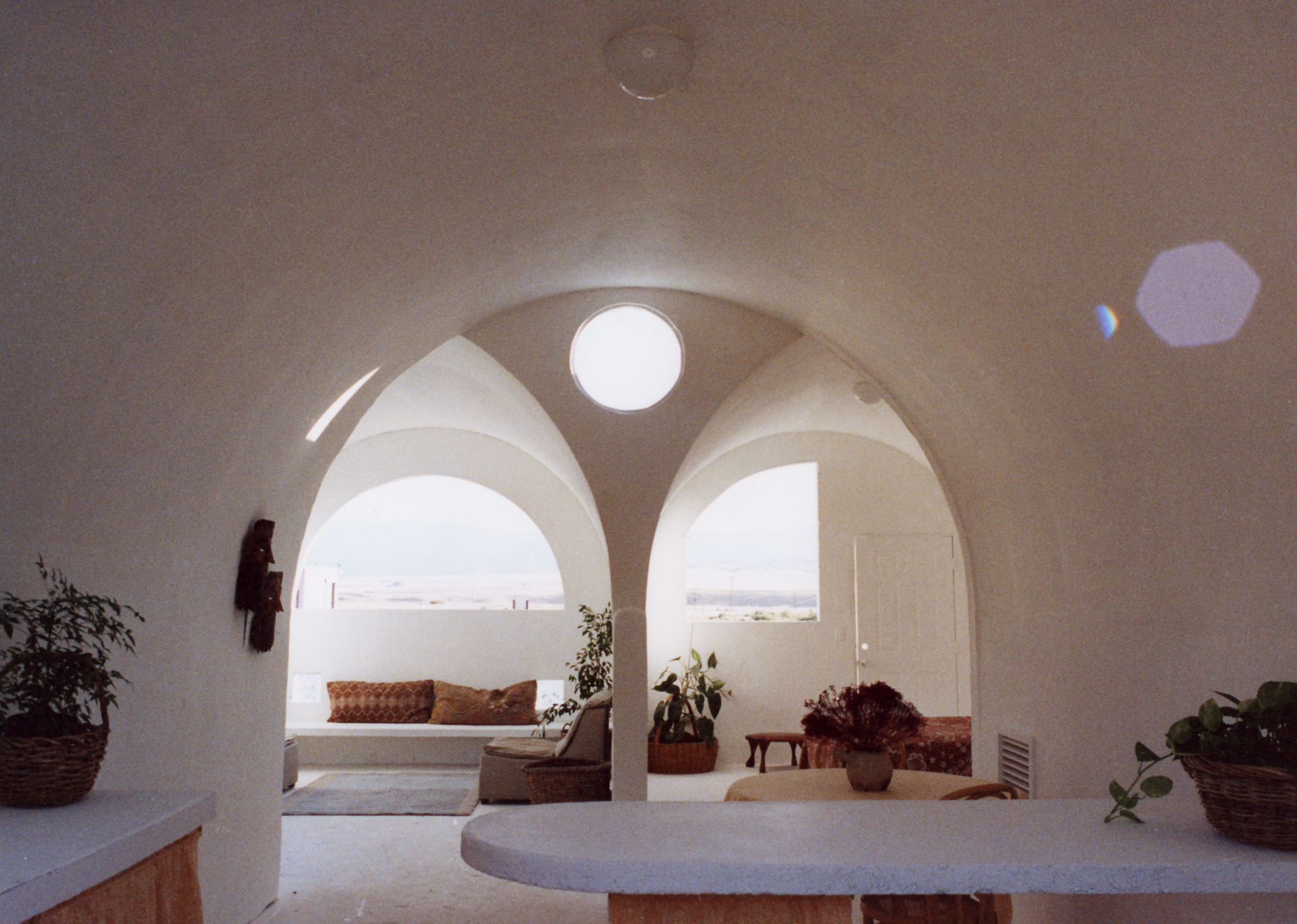
Inside a Binishell home

These Canadian dome homes demonstrate that air-formed, reinforced concrete shells are a proven, climate-resilient housing solution and a foundation for more sustainable, low-carbon building methods in the future. With builds for industry, the Monolithic Domes aren’t as pretty as Binishells.


Inflatable Concrete Houses: What Are They & How Much Do They Cost?

inflatable concrete house, inflatable concrete homes, concrete dome house, Binishell house, Automatic Construction, sustainable housing, low-cost housing, eco architecture, alternative building methods, monolithic dome, back to the land movement, affordable housing, concrete home cost, off-grid living, green building, low carbon cement, hempcrete construction, aircrete house, prefab home innovation, modern dome architecture
Inflatable concrete house

What is an inflatable concrete house? Robert Downey Junior owns one. And they’ve been touted as costing a mere $3500 a build. An inflatable concrete house is a home whose structural shell is formed by using an inflated form or bladder, often made of fabric or drop-stitch material – see our article on Binishells. This form is then filled or coated with concrete—sometimes sprayed—to create a permanent, self-supporting shell. After the concrete sets, the inflatable form either remains as part of the structure or is removed.

A Binishell rendering. Courtesy of Nicolo Bini.
A Binishell home, a modern eco-home works well in the warm, dry climate of California

There are several versions of this method, but the classic Binishell system was invented by Italian architect Dante Bini, and uses a large inflatable bladder laid on the ground. Reinforced concrete is poured or sprayed on top, then inflated so the shell lifts itself into its final domed shape.

Binishells homes for $3500
Binishell homes for $3500

A newer approach developed by Automatic Construction employs inflatable flexible factory formwork—flat, lightweight drop-stitch fabric bladders that are transported easily, inflated on-site, and then filled with concrete to form both walls and roof. We can imagine that 3D printing concrete robots will be able to handle the lay-down of concrete in the future. Current designs don’t look great but are pilots in progress.

The company website states that their factory-made forms reduce on-site labour, transport cost, and job-site waste; they claim their buildings will cost “1/5th the cost” of standard cast-in-place concrete. Their website also notes that actual homes you can live in are “coming soon”.

Automatic Construction first pilots

Another experimental process, created by researchers at the Vienna University of Technology, uses pre-hardened concrete panels placed on an inflatable air cushion. When inflated, the panels lift and bend into their final curved geometry, a process known as pneumatic forming of hardened concrete. The research is coming out of  TU Wien’s Institute of Building Construction and Technology, led by Professor Benjamin Kromoser and Professor Johann Kollegger.

Instead of pouring wet concrete into a form, the concrete is already cured, and the inflation pressure deforms it elastically, forming arches, shells, or domes. Once the desired shape is reached, it’s fixed in place with steel reinforcements or stiffening ribs. This technique allows the creation of elegant curved concrete roofs and shells without traditional scaffolding, molds, or 3D-printed supports.

The appeal of these systems lies in their efficiency and simplicity. Inflation and concrete filling can take place in a few hours instead of the weeks required for conventional formwork. Builders report significant labor and material savings, and dome or shell shapes provide exceptional strength and durability, even under severe environmental conditions. The method also carries a distinctive architectural character that attracts designers seeking expressive, futuristic, or minimalist aesthetics.

As for cost, estimates vary widely depending on design, size, and finishing.

Some small Binishell prototypes have been built for around US $3,500 using sprayed concrete over an inflatable form. Automatic Construction reports shell costs of roughly $10–$30 per square foot for 100- to 200-square-foot prototypes—far below standard homebuilding prices. The Vienna method is described as “quick and cost-saving” for double-curved shell structures, but specific dollar/€ cost numbers are not given in the available sources.

More conventional dome homes, which use similar air-form techniques, typically range between US $100 to 250 per square foot once fully finished. A 1,000-square-foot monolithic dome, for example, might cost about US $60,000 for the basic shell and around US $130,000 after interior finishing.

In all cases, actual costs depend on local labor, materials, foundation, insulation, utilities, and compliance with building codes—but inflatable concrete shells remain one of the fastest and potentially most cost-efficient structural methods emerging in contemporary housing design.

earth architecture, earth bag construction, green building, eco building, architecture, nader khalili, hassan fathy, sustainable architecture
Earth Architecture at Caltech by Nader Khalili

The fact that cement is a non-sustainable resource (read our article here on how cement is destroying the seas), may lead prospective home owners down a different path if you are following the aesthetics of a dome.

majara superadobe iran, eco architecture iran, sustainable building iran, earthbag construction iran, superadobe dome iran, natural building iran, eco resort hormuz island, sustainable tourism iran, adobe dome architecture, green building iran, eco hotel iran, earth architecture iran, environmental design iran, sustainable architecture middle east, natural materials construction iran
Superadobes built on this island in a greenwashing campaign

Caltech’s Nader Kalili invented prototypes for adobe dome homes (he called superadobes), earthen homes made to breath and which are sustainable at their core from a materials point of view, but this does not give them a pass if developers destroy islands like this one, in a quest to build a sustainable resort.

earth architecture, earth bag construction, green building, eco building, architecture, nader khalili, hassan fathy, sustainable architecture
Adobe architecture

These are great solutions for rebuilding Gaza and Sudan with earthen homes, and for helping back-to-the-land movements create affordable homes that are healthy and safe. If you are in the space of sustainable home building, get this book Habitat. We’ve featured the editor Sandra Piesek here. It’s currently the best and more sober resource for land-based architecture of the people for the people. Some architects refer to it as vernacular architecture.

Love the idea of an inflatable concrete house? We have some case studies for California and Canada.

Sea Moss: The New Superfood, Or Just A Trend?

0

red sea moss, eucheuma cottonii, red algae superfood, seaweed farming, carrageenan source, ocean nutrition, coral reef ecosystem, marine biodiversity, sustainable aquaculture, sea moss harvesting, seaweed health benefits, tropical seaweed, coastal sustainability, marine plants, ocean farming, natural skincare ingredient, plant-based collagen, vegan omega source, marine superfood, Caribbean sea moss

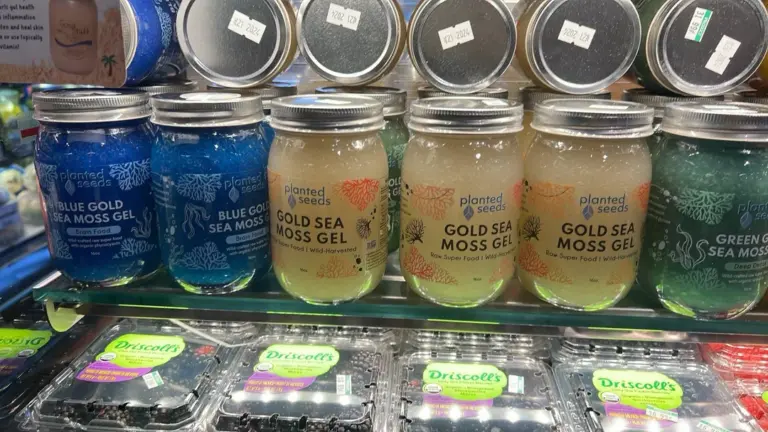
Sea moss became the new super-food when Kim Kardashian started talking about blending it into her smoothies. Fans following the trend claim that sea moss gives skin a new glow, raises energy, helps with weight loss, and keeps digestion, er, moving along. While it’s nice to think that a jar of mango or strawberry-flavored sea moss gel can change your life, it’s worth taking a closer look at the product before you invest your hard-earned bucks.

sea moss gel

People living by the sea have gathered seaweeds for thousands of years as free and healthy food. Nowadays you can buy many varieties of seaweeds at the supermarket. Think of sushi, which is rice wrapped in nori seaweed. All good stuff, as long as you can be sure that the seaweed you buy has been sustainably harvested from pollution-free waters. More on that later. We’ve also posted about the benefits of a different superfood, spirulina.

Singer Azealia Banks makes her own sea moss blend, as posted on X.


Seamoss recipe Azealea Banks

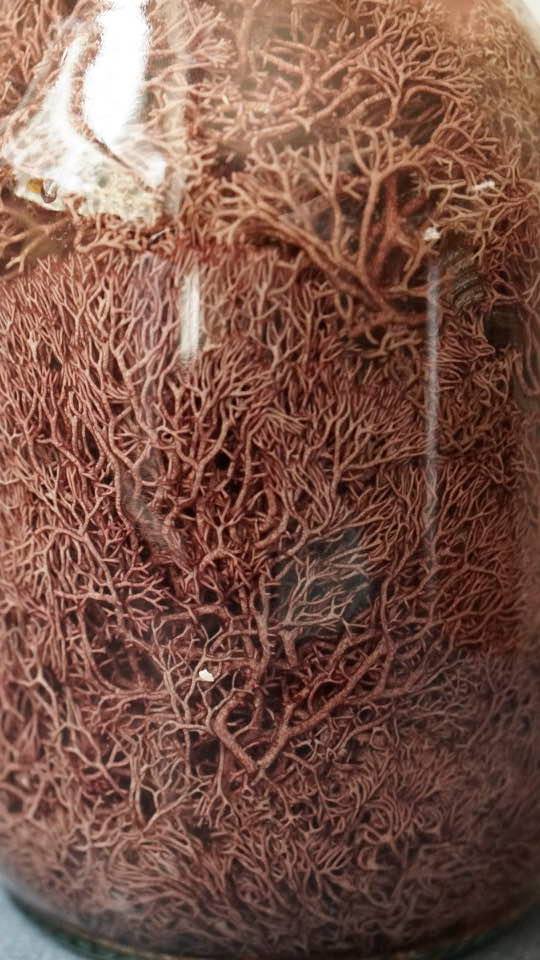
Commercially manufactured sea moss can come from different kinds of seaweed, although usually it’s the type known as Irish moss, or red algae. It’s soaked until the fronds become soft, then processed into gel, powder, gummies and capsules. It’s easy to blend into soups or smoothies, as gel or in powdered form.

Sea moss offers plenty of life-enhancing minerals and vitamins: calcium, folate, magnesium, vitamin K, and zinc, and iodine, a mineral essential for a healthy thyroid gland. It’s a natural source of carrageenan: a thickening and emulsifying agent in yogurt and ice cream, and non-dairy milks. Sea moss provides fiber too.

Yet too much iodine-rich sea moss can be harmful. Eating seaweeds in time-honored traditional ways is one thing; mixing a couple of tablespoons of gel into something liquid is another; and taking sea moss supplements is another thing yet.

Discussing sea moss supplements, registered dietitian Leah Oldham, at the Henry Ford Health center, Michigan, explains:

“Some types of sea moss contain very high levels of iodine, and you could get more than your daily limit without realizing it. Going above the daily upper limits of iodine can lead to goiter, or an enlarged thyroid. The upper limit for adults is 1,100 mcg, but it’s less for children and teens.”

Seafoods, dairy, and eggs have iodine. Even some fruit and vegetables offer iodine: cranberries, strawberries, beans, spinach, and garlic are some. You could hardly overdose on iodine from eating normal amounts of fresh produce.

red sea moss, eucheuma cottonii, red algae superfood, seaweed farming, carrageenan source, ocean nutrition, coral reef ecosystem, marine biodiversity, sustainable aquaculture, sea moss harvesting, seaweed health benefits, tropical seaweed, coastal sustainability, marine plants, ocean farming, natural skincare ingredient, plant-based collagen, vegan omega source, marine superfood, Caribbean sea moss
Sea moss from the Med Sea

“Sea moss supplements seem like an easy way to get the benefits of sea moss without the taste,” continues Oldham. “The problem is that the Food and Drug Administration does not regulate supplements, so you don’t always know what you’re getting.” Here we’re looking at the possibility of fillers and other un-labelled ingredients.

Oldham adds that sea moss growing in waters polluted with industrial runoff, heavy metals, and chemicals will naturally absorb all that garbage. If you if you’re interested in trying sea moss, look for brands that promise organic.

sea moss

Blending two tablespoons of sea moss gel into your morning smoothie may safely fulfill the promise of boosted health and beauty. There are lots of glowing enthusiastic claims made for those benefits. But sea moss isn’t for everyone.

People taking medications for thyroid, high blood pressure, and potassium-sparing diuretics risk unpredictable interactions between sea moss and their meds. Sea moss may have blood-thinning properties, so those taking blood-thinning medication should avoid it.

Too much sea moss in your diet can cause nausea, vomiting, and diarrhea. Take no more than the standard 2 tablespoons of gel daily. It hasn’t been determined if sea moss supplements are safe for pregnant and breastfeeding people. Talk to your health practitioner before starting to supplement your diet with sea moss.

There isn’t enough research to validate claims that sea moss can slow the progress of Parkinson’s disease. True, there’s research on treating stiff, slow-moving worms with sea moss. No conclusions reached as to the possible effect on stiff, slow-moving humans.

Best, of course, is to eat a normal culinary portion of seaweed when you can. Are you lucky enough to harvest fresh sea moss from an unpolluted beach? Then you can make your own, safe gel. Here’s a recipe from webmd.com:

First, wash the sea moss and then soak it in cold water for a full day, changing the water frequently and removing any dirt you see. You can leave this on your kitchen counter to soak, as you don’t need to refrigerate it.

You’ll know your sea moss is ready to use when it’s doubled in size and has become white and jelly-like.
Once it’s ready, put the sea moss, along with some water, into a blender and blend until smooth. Start with 1 cup of water and add more if the mixture is too thick.Then refrigerate for at least 2 hours, which will thicken it some more.

Once you have your prepared sea moss, you can store it in the fridge for up to 2 weeks and use it in recipes. For instance: smoothies, soups, stews, baked goods.

You can also make sea moss gel from sea moss powder by blending 1/4 cup of powder with 2 cups of hot (not boiling) water in your blender. Cool the mixture and store it in your refrigerator.


Photo of fresh dried sea moss by Plateresca, Getty Images

Mini medical machines destroy pancreas cancer cells in new study

0

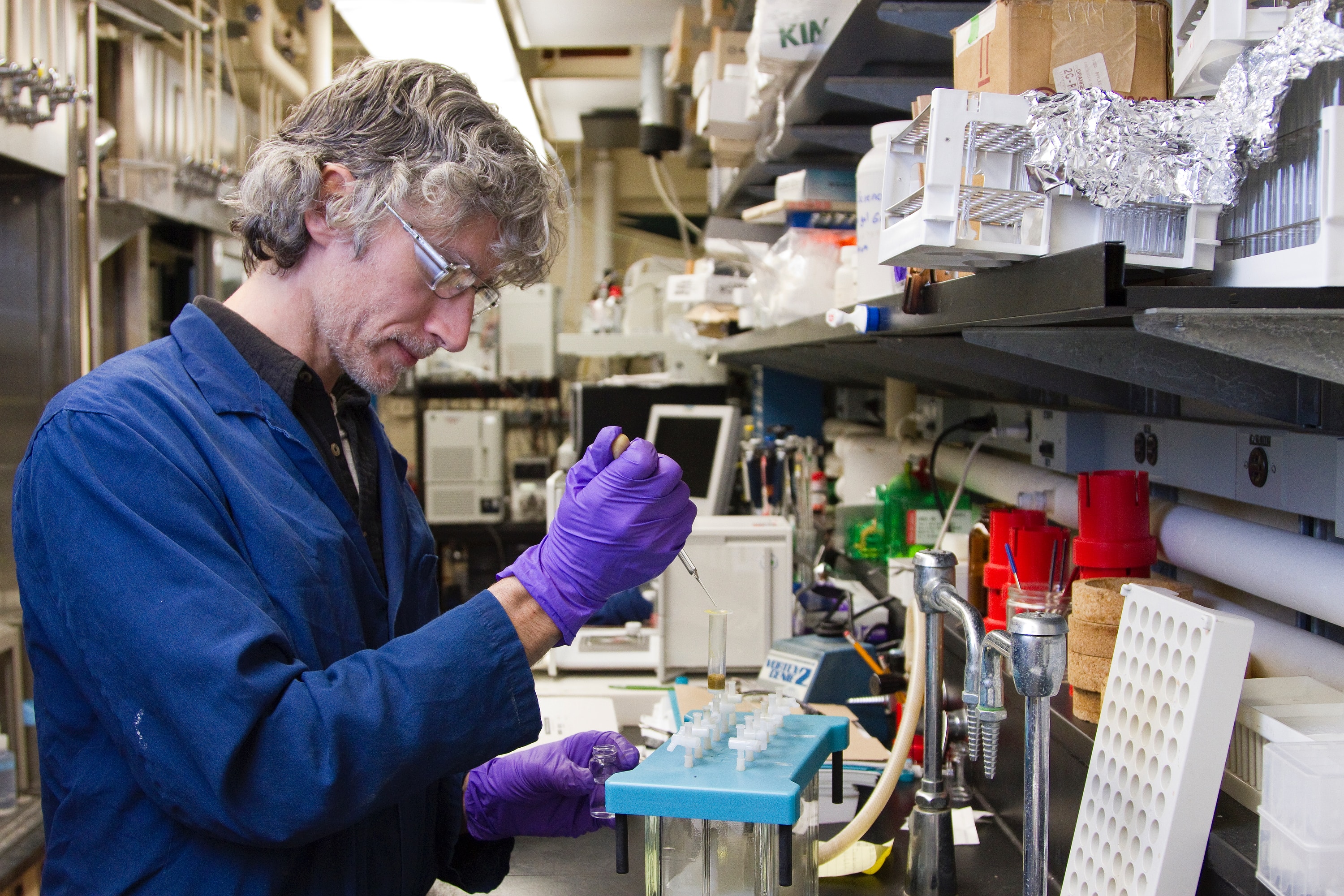
man testing bacteria resistance with pipettes in lab

A new study has found for the first time that magnetoelectric nanoparticles — tiny, wirelessly controlled particles activated by magnetic fields — can both locate and destroy pancreatic tumors in preclinical models, offering a potential new approach to minimally invasively treating one of the deadliest cancers.

The study was led by scientists and engineers at Sylvester Comprehensive Cancer Center, the University of Miami College of Engineering, Moffitt Cancer Center and Cellular Nanomed, Inc. The findings appeared in the issue of Advanced Science.

In the study, a single intravenous dose of these magnetoelectric nanoparticles (MENPs), when activated by a magnetic field inside an MRI machine, caused pancreatic tumors to shrink to one-third their size and completely disappear in one-third of the treated models. The treatment also more than doubled survival time, all without damaging healthy organs.

Unlike chemotherapy or surgery, this approach uses no drugs, heat, or invasive procedures. Instead, MENPs are injected into the bloodstream, guided by a small magnet to the tumor site, and then activated by the magnetic field of a standard MRI scanner. When switched “on,” the particles generate tiny electric fields that disrupt cancer cell membranes and trigger natural cell death — leaving nearby healthy tissue unharmed.

The approach could overcome key limits of existing electric-field-based therapies, such as tumor treating fields (TTFs) and irreversible electroporation (IRE), which require either wearable devices or surgical electrodes.

“This study brings us one step closer to connecting to the human body wirelessly to help it heal in real time,” said Sakhrat Khizroev, Ph.D., a professor in the College of Engineering and the study’s co-senior author. “We hope it opens a new era in medicine where technology can precisely target diseases that were once considered untreatable.”

The research shows how MENPs can be delivered directly to pancreatic tumors, where they are remotely activated by a magnetic field inside an MRI scanner. Once activated, the nanoparticles generate local electric fields that distinguish between healthy and cancerous cells based on their molecular properties, causing only the malignant cells to undergo apoptosis, or programmed cell death.

MRI scans confirmed that this treatment reduced tumor size and produced clear imaging signals, supporting MENPs as a powerful therapy and diagnostic, or “theranostic,” tool. Because the particles function without pharmaceutical drugs or biological reagents, the approach minimizes side effects and could eventually be applied to other difficult-to-treat diseases.

The idea of using MENPs to wirelessly control local electric fields was first proposed by Khizroev and Liang in 2011. Over the past decade, the concept evolved through global research partnerships and technological breakthroughs, culminating in this study.

Despite major advances in oncology, pancreatic ductal adenocarcinoma (PDAC) remains one of the deadliest cancers, with a five-year survival rate below 10%. It is projected to become the second leading cause of cancer-related death in the United States by 2030. Traditional methods, including surgery, radiation and chemotherapy, often harm healthy tissue, while newer approaches such as immunotherapy have shown limited success.

One of the greatest challenges in treating PDAC lies in controlling the electric fields that influence cancer cell growth. Because human tissue conducts electricity, it has been nearly impossible to manipulate these fields precisely inside the body.

The new findings suggest that MENP therapy could one day give patients a safer, more precise option.


Toxic sea otters and the pollution they collect at sea

0


Toxic sea otters

Along the cold Pacific waters of British Columbia, Canada sea otters float belly-up, cracking shellfish on their chests. They look playful and carefree, yet inside their bodies something far more troubling is happening. A recent study of 11 dead sea otters found along B.C.’s coast revealed that every single one carried high quantities of eight different “forever chemicals” in both liver and muscle tissue.

These PFAS compounds—used in everything from food packaging and cosmetics to non-stick pans, water-repellent outdoor gear, and electronics—do not break down in nature. Over time they accumulate in the food chain, becoming more concentrated as they move from small organisms to fish and ultimately to top predators like otters.

One compound, perfluorooctanesulfonamide (PFOSA), once a key ingredient in Scotchgard, stood out. Its presence in multiple tissues signals long-term environmental exposure and a chemical load that these animals had no way to escape. Sea otters are more than charming coastal icons; they are keystone predators that keep kelp forests alive by controlling sea urchin populations.
When otters become sick or die, entire marine ecosystems begin to unravel. Their contamination is not a side note. It is a warning.

The danger does not end at the tide line. Humans eat the same shellfish and fish, swim in the same waters, and breathe the same coastal air. PFAS chemicals are already linked to fertility problems, hormone disruption, immune system suppression, cancer, and developmental issues in children. If sea otters are saturated with these chemicals, it raises a blunt question: what is happening in our own bodies?

While Canada has taken preliminary steps to regulate PFAS, efforts lag behind those in parts of Europe and the United States, where governments are moving to phase these chemicals out almost entirely. Here, the pace is slower, and monitoring remains limited. Meanwhile, each rainfall carries more PFAS into rivers and coastal ecosystems, and each product we buy that claims to “repel water or stains” brings the problem closer to our homes and oceans.

Saving sea otters is not simply about protecting a beloved species. It is about defending the health of coastal communities, marine food webs, and future generations. The toxins building up in otters are the same ones that build up in us, and their decline is a message we would be foolish to ignore. In the slick sheen of their fur and the stillness of their bodies on the shoreline lies a truth about modern life: we have filled our ocean with chemicals designed never to disappear, and now they are coming back to us through the creatures that depend on those waters to live.

If we want healthy oceans, healthy seafood, and healthy children, we must act before the kelp forests fall silent and the otters vanish from the Pacific coast. Their fate is tied to ours, and time is running out to change course.

Read more on forever chemicals and the sea

Two tons of micro-plastics on Israel’s Mediterranean Sea coast

Microplastics you breathe from dust in the desert

Ecomondo vs. COP: Where the Climate Transition Actually Happens

Ecomondo

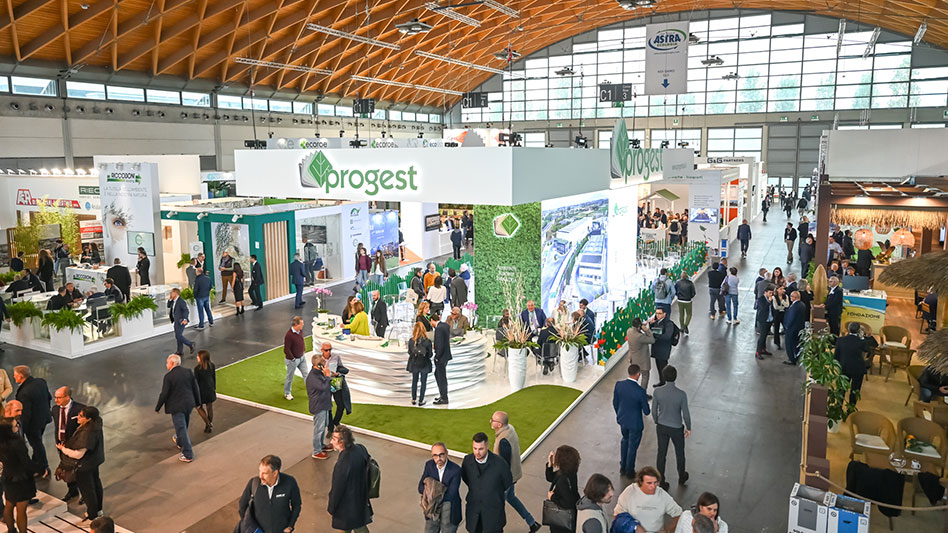
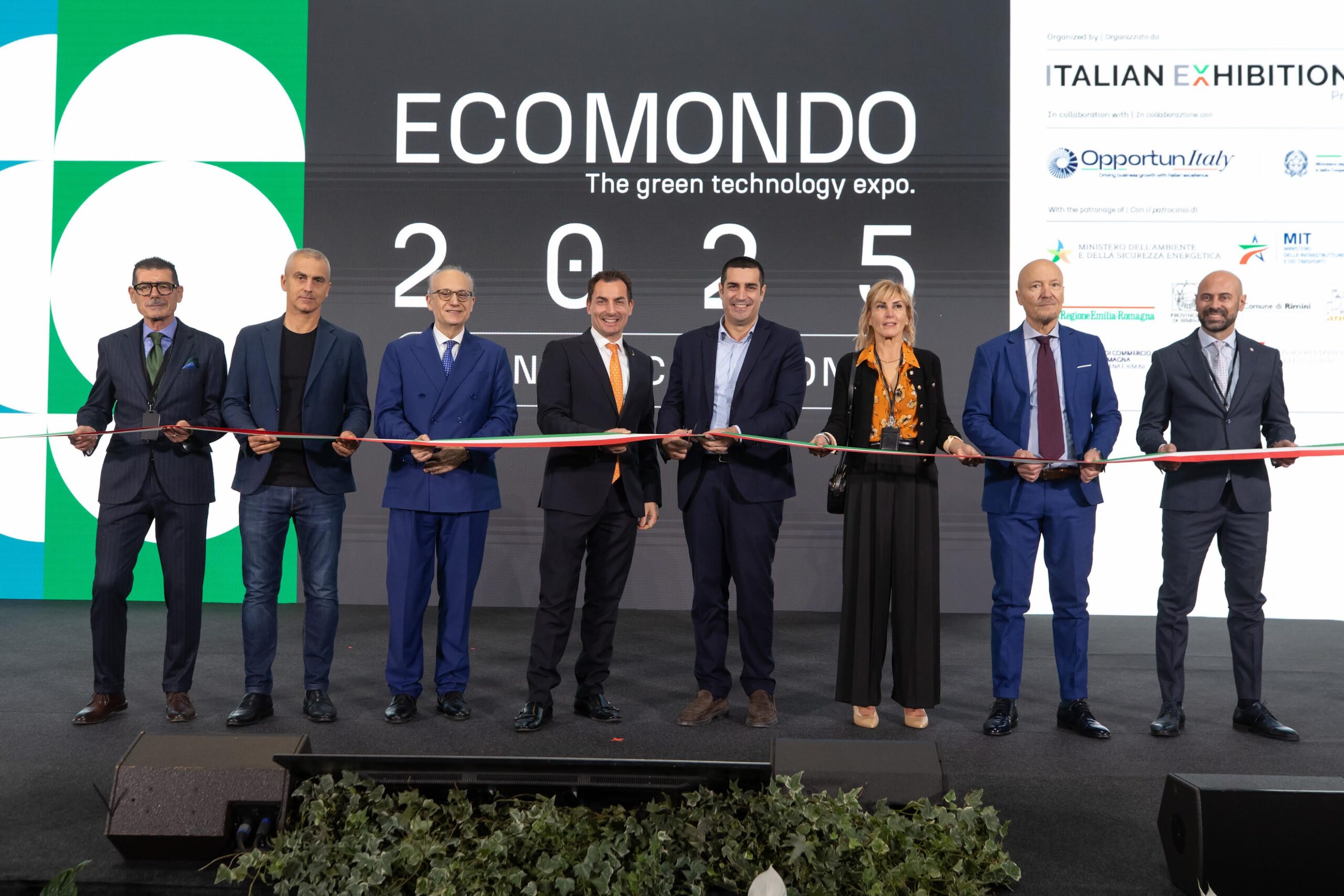
As the 28th edition of Ecomondo opens in Rimini, Italy it comes with a quiet truth that feels almost subversive in the era of climate mega-summits and scripted ministerial statements: this trade fair — full of waste-sorting robotics, composting technology, soil-remediation systems, and industrial biogas machinery — may now matter more to the planet’s future than the COP conferences that dominate global climate headlines.

COP has always been about diplomacy, negotiation, and political signaling. It is the global stage where nations gather to pledge emissions targets, debate loss-and-damage financing, and reaffirm their commitment to a shared climate agenda. It’s a place where people meet when the previous work has already been done.

But we are no longer living in a decade where promises are the substance of climate action. We are living in the decade of execution.

ANAS – CANTIERI STATALI. Incontro con Sindaco Alessandro Barattoni e tecnici Anas sui lavori della SS16 Adriatica e della Ss 67.

And execution does not happen in marble plenaries or UN press tents. It happens in exhibition halls like those in Rimini — in the sight of shredder lines turning textile waste into new feedstock, water-recycling systems being stress-tested, algae vats bubbling quietly, and biofertilizer reactors feeding regenerative agriculture.

In other words: COP is where the world talks about climate action. Ecomondo is where the world actually builds it.

This year Ecomondo brings together more than 1,700 exhibiting companies, 30 halls, 166,000 square meters of circular-economy innovation, 380 hosted buyers from 66 countries, and over 200 conferences led by industrial, academic, and regulatory experts. It’s a demonstration of scale — but not the theatrical scale of global diplomacy. It’s the scale of supply chains, of business models, of industrial ecosystems.

Walk through Rimini and the difference is instant: instead of panels debating ambition levels, you see companies demonstrating anaerobic digesters, next-gen composting infrastructure, optical sorters for plastic waste, textile-recycling machinery, aquifer-restoration systems, AI-enabled climate monitoring tools, lithium battery shredders, and sludge-to-fertilizer technology.

Europe’s emissions goals will not be met by pledges, but by infrastructure. The circular economy will not scale through slogans, but through procurement, factories, and financing models. And Ecomondo understands this.

The 2025 programme leans into the hardest industrial questions of the decade:

  • How do we close the loop on textiles under new EU rules?
  • What happens to 2030’s waste solar panels and wind turbines?
  • Can biogas and biomethane scale fast enough to displace fossil gas?
  • How do cities transform waste streams into economic resources?
  • How do we regenerate degraded soils at continental scale?
  • How do we secure critical minerals without opening new wounds?

COP’s theater vs. Ecomondo’s workshop

COP is necessary — it forces nations to face each other and acknowledge a shared emergency. But it is also a place of gesture politics, where governments announce recycled commitments, fossil fuel lobbyists measure influence, and energy companies pose as climate champions while expanding extraction.

In Rimini, the performance drops away. Nobody wins Ecomondo with a pledge or a photo op. You win if your system works, if your process scales, if a municipal department or multinational buyer signs a deal to decarbonize their operations.

Italy is not always positioned as a climate-policy powerhouse. Yet in circularity, water treatment, bioeconomy, and industrial ecology, it is quietly one of the most advanced economies in the world that knows how to dream –– and work.

In a global conversation often dominated by the U.S.–China technology rivalry, Ecomondo is a reminder: Europe’s strength is systems thinking. Decarbonization here looks like integration — circular supply chains, wastewater reuse, biobased feedstocks, land restoration, local manufacturing, and policy synchronized with industry.

Oil is building our green future, and ACWA is showing the world how with $10 billion in investments

0
Davos in the desert, FII
ACWA is hob-knobbing at Davos in the Desert.

Over the last month Saudi Arabia’s government-owned ACWA Power has signed roughly $10 billion in clean-energy and water-infrastructure agreements, stretching from the Gulf to Central Asia and Africa. On paper, it’s a renewables story as they erect gigawatt-scale solar farms, grid-scale batteries, and desalination plants powered by clean electricity. Development finance is flowing into emerging economies.  The deals were signed at the Future Investment Initiative (FII9) in Riyadh known as Davos of the Middle East.

But strip away the slick branding and this feels uncomfortably like a new-era greenwash: the same wealth built on hydrocarbons now deciding the fate of clean power. One truth remains — oil money is now one of the biggest buyers of renewable infrastructure on the planet.

Should we cheer or flinch? It’s a moral knot: the petro-economies that fueled climate breakdown are now financing the transition — selling the sickness and then the cure. If this is the price of decarbonization, it forces a reckoning. Who gets to build the future? And why do we trust the arsonists to run the fire brigade?

ACWA’s largest shareholder is the Public Investment Fund of Saudi Arabia which is owned by Saudi Aramco. PIF’s finances come largely from oil revenue and Aramco dividends. Those petrodollars are now underwriting solar and wind farms abroad such as Uzbekistan’s vast steppe, North Africa’s desert grids, along with water-stressed coastlines from the Red Sea to the Indian Ocean.

The company announced the commercial commissioning of the Karatau Wind 100 MW Project in the Qorao’zak and Beruniy districts of Karakalpakstan, Uzbekistan. The project comprises 16 Envision Energy wind turbines of 6.5 MW each, a 15.4 km overhead transmission line, and a 220 kV substation, with associated Balance of Plant facilities. Electricity will be supplied under a 25-year Power Purchase Agreement to the National Electric Grid of Uzbekistan (NEGU).

For Africa, ACWA Power deepened its long-standing partnership with the International Finance Corporation (IFC) through two strategic agreements aimed at accelerating clean energy and water infrastructure deployment on the continent. The first Framework Agreement, valued at up to USD 1 billion, will provide project and corporate financing as well as capacity building and advisory support for ACWA Power’s growing portfolio across Africa.

This includes participation in the OPEC Fund for project financing, equity bridge loans, as well as equity investments support with USD 450 million as the initial target. “The agreement reflects the parties shared commitment to advancing utility-scale clean energy and water projects that drive inclusive, low-carbon growth across the developing world,” says ACWA, signaling its virtuousness as saving the world it is helping us destroy.

Halloween in Saudi Arabia

Saudi Arabia is modernizing, however, and this may open the monarchy up for criticism. Saudi Arabia let women drive in 2018, and this year users on social media showed how a Halloween party, considered haram by Muslims, was allowed to take place in Riyadh.

Red Sea Fashion week
Swim suits Saudi Arabia


The country is scaling up for tourism and a culture shift by building megacity projects under the name of NEOM. Celebrities in favor of a great paycheck are already lining up to visit places like Shebara, a pristine island in the Red Sea built with no sustainability impact report.

The LEED-Platinum property seeks to minimise its environmental and literal environmental footprint by cantilevering the accommodation spaces above the coral reefs with only a few square meters of ground impact at the base of the supporting column. The result is an aerial accommodation ‘pod’ that almost seems to defy gravity and suspends the guest directly above and within the beauty of an untouched marine eco-system; an observation platform for guests to witness the fish, birds and turtles that thrive in the area. The entire project is powered by a centralized solar farm and fresh water is supplied from a solar powered desalination plant. Recycling of waste material takes place on the island minimizing the need to bring or remove materials from the site. The entire infrastructural backbone of the project forms part of a visitor experience where guest can be exposed to and learn about the approach that goes into making the project a truly self-sustained human development. The design language of the resort compliments the uniqueness of the site. The approach to the façade design has been to minimize visual impact, employing a highly reflective stainless-steel skin polished to a mirror finish. These reflective orbs float, almost imperceptible, reflecting the colors and surface patterns of the ocean, the intense colors of the sky as they change throughout the day. This approach serves to lessen the visual impact of the architecture on the surrounding environment while also greatly improv the building’s energy performance with a near 100% reflection of the solar gain at the mirror surface. These heavily insulated spaces can be effectively cooled with minimal energy losses.
View from above, Shebara in Saudi Arabia

This is not philanthropy but strategy. While Saudi Arabia can announce the “discovery” of a new oil reserve as a PR drill, consumers and oil importers will change loyalties the minute a university invents a way to create practical, unlimited, non-pollution energy.  Saudis, whose wealth knows no limits, are building stakes in a post-oil world, and they’re doing it faster and more decisively than many Western democracies whose politics have stalled climate spending.

In Washington, clean-energy capital flows through regulatory funnels and election cycles. In Riyadh, it’s sovereign mandate and execution, but it’s complex because Saudis do not have convention ambitions in size and scale of anything they create, with little concern for the environment except “on paper”. See The Line.

ACWA’s $10 billion announcement is about procurement, equipment orders, power-purchase frameworks, project finance. Meanwhile, the West is still arguing over heat pumps and carbon taxes. (Luckily Torus, connected to Warren Buffet’s company Berkshire Hathaway is putting practical energy in motion with a flywheel invention to stabilize the grid.)

There is a paradox here in every move ACWA and Aramco makes. Some call it green hypocrisy or hedging. But the more honest description is energy geopolitics moving into its next phase. Whoever builds and finances tomorrow’s grids will shape tomorrow’s trade routes, alliances, and dependencies — just as oil once did. So if you enjoy the west and your freedoms, fight for renewable energy independence by raising up and influencing projects and companies locally.

China understood this early through batteries, solar manufacturing, and Belt-and-Road transmission lines. Now the Gulf sovereigns have joined the board. They don’t want to be buyers of technology, but as builders and exporters of clean-power megaprojects.

The uncomfortable question is not whether oil money should fund renewables but maybe if anyone else can move this fast.

Dubai bank sends staff to co-working spaces

0
Letswork, co-working office space in Dubai

Investors debate between scaling up in Riyadh or Dubai, but the UAE will be the favored Middle East investment hub along with Tel Aviv insofar that conditions are made for great for employees, entrepreneurs and startups. A good business starts from the ground-up and co-working spaces give community and credibility to those who’ve outgrown the bomb shelter or second bedroom.

Emirates NBD, a banking group in the Middle East has partnered with Dubai’s own Letswork, a leading co-working workspace provider in the region, to offer bank employees access to over 4,000 coworking desks, meeting rooms and offices across the UAE and beyond. In Canada, leading banks are telling disgruntled staff working from home since COVID, that they need to come back to the office. What if there could be a middle way to large financial hubs in city centers? Could bank employees be shuttled around to co-work offices around the country?

According to the terms of the partnership, select Emirates NBD employees will join a 12-month pilot program to experience on-demand workspaces through Letswork’s intuitive platform, with the potential for wider rollout across the bank. The collaboration follows Letswork’s participation in Emirates NBD’s National Digital Talent Incubator Program, where early conversations between the bank and startup laid the foundation for this engagement and future ones.

The UAE is investing in AI and new businesses, including banks, will need places to work.

Emirates NBD (DFM: Emirates NBD) is a leading banking group in the MENAT (Middle East, North Africa and Türkiye) region with a presence in 13 countries, serving over 9 million active customers. As of 30th September 2025, total assets were AED 1.139 trillion, (equivalent to approx. USD 310.1 billion). The Group has operations in the UAE, Egypt, India, Türkiye, the Kingdom of Saudi Arabia, Singapore, the United Kingdom, Austria, Germany, Russia and Bahrain and representative offices in China and Indonesia with a total of 797 branches and 4,526 ATMs / SDMs. Emirates NBD is the leading financial services brand in the UAE with a Brand value of USD 4.54 billion.  

Emirates NBD Group serves its customers (individuals, businesses, governments, and institutions) and helps them realise their financial objectives through a range of banking products and services including retail banking, corporate and institutional banking, Islamic banking, investment banking, private banking, asset management, global markets and treasury, and brokerage operations. The Group is a key participant in the global digital banking industry with 97% of all financial transactions and requests conducted outside of its branches. The Group also operates Liv, the lifestyle digital bank by Emirates NBD, with close to half a million users, it continues to be the fastest-growing bank in the region.

Emirates NBD contributes to the construction of a sustainable future as an active participant and supporter of the UAE’s main development and sustainability initiatives, including financial wellness and the inclusion of people of determination. Emirates NBD is committed to supporting the UAE’s Year of Sustainability as Principal Banking Partner of COP28 and an early supporter to the Dubai Can sustainability initiative, a city-wide initiative aimed to reduce use of single-use plastic bottled water.

By leveraging Letswork’s secure and flexible platform, employees can book meeting rooms, coworking spaces and private offices instantly across over 100 hubs in Dubai, and more than 25 hubs in Abu Dhabi and the Northern Emirates, and additional international locations. according to a news release.

Aligning with the bank’s focus on excellence and customer service, the collaboration allows for greater flexibility and convenience when travelling for meetings in Abu Dhabi, with easy access to high-quality working and meeting spaces. It offers a more streamlined and efficient way to book external workshops and meeting spaces across the UAE through Letswork’s intuitive platform.

Letswork’s network of coworking hubs gives employees based in the outskirts of Dubai and the Northern Emirates to work closer to home thereby reducing commuting time and improving work-life balance.

Letswork was co-founded in 2019 by Omar Al Mheiri and Hamza Khan in Dubai, UAE. They identified a gap: freelancers and startups in Dubai needing flexible, affordable workplace options without the commitment of long-term leases. From one hotel partner in Dubai they expanded into a global network. It was modeled after WeWork, a global networking and office space provider. WeWork emerged from Chapter 11 bankruptcy in May 2024 after the U.S. Bankruptcy Court approved the company’s restructuring plan, which eliminated approximately US$4 billion in debt.

Before co-working spaces were a business model, communities organized their own community-focused and shared office spaces. As interest grew, so did the concept as a scalable business opportunity.

Coworking spaces are a sustainable choice as a multitude of businesses can share many resources such as machines and physical office space and meeting rooms, desk staff, marketing, kitchens and security.

Emirates NBD (DFM: Emirates NBD) is a leading banking group in the Middle East region with a presence in 13 countries, serving over 9 million active customers. As of 30th September 2025, total assets were AED 1.139 trillion, (equivalent to approx. USD 310.1 billion). The Group has operations in the UAE, Egypt, India, Turkey,  Saudi Arabia, Singapore, the United Kingdom, Austria, Germany, Russia and Bahrain and representative offices in China and Indonesia with a total of 797 branches and 4,526 ATMs / SDMs. Emirates NBD is the leading financial services brand in the UAE with a Brand value of USD 4.54 billion.

Emirates NBD contributes to the construction of a sustainable future as an active participant and supporter of the UAE’s main development and sustainability initiatives, including financial wellness and the inclusion of people of determination. Emirates NBD is committed to supporting the UAE’s Year of Sustainability as Principal Banking Partner of COP28 and an early supporter to the Dubai Can sustainability initiative, a city-wide initiative aimed to reduce use of single-use plastic bottled water.