In recent years sustainability has become increasingly more important. It’s on the forefront of many people’s minds and large companies have had little choice but to implement changes in their businesses to meet the demands of consumers, and startups are paying attention.
Entrepreneurs are beginning to shift their focus towards new and innovative ideas that have sustainability at its core. It’s a necessary action to take, as it’s not just consumers that want a greener future for business, but job seekers too.
Sustainability is Essential for New Businesses
In a recent IONOS study exploring entrepreneurship in the USA, 90% of the survey’s participants attributed huge significance to the topic of sustainability and stated that going green in business is essential in creating a positive image for customers. The same study also found that this a huge bonus when competing with other brands.
There has already been a major shift in attitudes for entrepreneurs considering sustainability, and it seems inevitable that more green businesses will continue to spring up in the future if what the study has discovered holds up.
“Recycling, packaging, businesses are changing all of those things because that’s what consumers want.” – Jerry Greenfield, co-founder of Ben & Jerry’s Ice Cream.
Fair production, sustainable packaging, and durability are just some of the thing’s customers look out for when buying new products. Entrepreneurs and new startups have listened and are starting to consider the environmental impact of their business plans.
Is Going Green Genuine?
Are new startups genuinely interested in sustainability and bettering the world or does going green have more to do with staying relevant and competing with other brands? And does it really matter?
Business has always been about supply and demand. If consumers want sustainable products and services, it’s only normal that businesses will evolve to meet the needs of the consumer. So long as greenwashing becomes less of a problem, sustainable startups can only be a good thing.
Going back to nature is one of the most replenishing things you can do to break the monotony of life. You will not only feel refreshed but also more connected with yourself. The clean and purified air of a hill station is not only good for your body but also has tremendous effects on your soul. You will feel light-weight after spending quality time in nature.
When you visit a hill station, you can utilize this time to recollect your thoughts and get in touch with yourself. The busy life we are leading in the hustle-bustle of a city, we often forget ourselves. A trip to nature can help us reconnect with ourselves.
If you are planning to visit a hill station for your holidays this season, here we present to you five tips to make the most out of your trip.
Plan Your Trip
Planning a trip is very important if you truly want to enjoy every moment to the fullest. Without a properly planned trip, you will only waste your time and energy. You should know the best route to reach your destination as roads to hill stations can be rushy as well as in a bad shape. Therefore, you should plan your route and your schedule.
You should plan your budget before leaving for the trip. This makes sure that you have enough cash to pay for the essentials such as hotel room, car fuel, and other expenses and also carry a little extra cash in case of emergencies. Do not rely on ATMs, as they are a rare sight in hill stations.
Thirdly, you should also plan your trip, the activities you are going to do and what are the best places to visit where you are going. Make sure that you utilize your time and money effectively.
Maintain Your Health
Maintaining good health when traveling to a hill station can be a tough job. If you do not take precautionary measures, you can get sick easily. First of all, you should bring enough water to last your trip. If you did not bring water, make sure you use only the bottled water, as freshwater can cause distress to your body. Our bodies are not accustomed to freshwater, therefore, if you drink water from local taps, you might end up getting a stomach ache.
You should also make sure that you try out local food only from places that maintain good hygienic practices. Eating substandard food may also upset your stomach and ruin your entire trip. Follow health maintenance tips to keep yourself healthy and energized for the trip.
Spend More Time In Nature
The very reason you are visiting a hill station is to reconnect with yourself and to reconnect with nature. Try to avoid office work while on vacation. Instead, participate actively in the activities that the hill station has to offer. You can go mountain climbing, trekking, or a simple walk in nature. The choice is yours. However, when you are visiting a hill station, there may be some allergens in the air, therefore, to be sure, get your allergy testing done so that you can stay safe during the trip.
When in a hill station, make sure you enjoy the sounds of wild animals, birds, and insects that you might not hear in the city. Staring at the visually-appalling scenery can help you get a boost of refreshment.
Pack All The Essentials
When packing your suitcase for the trip, make sure you pack all your essentials. Packing warm clothes would be a wise decision because nights on a hill can get chilly and you do not want to get cold and flu on your first night out on the hill station. Therefore, pack warmer clothes for the evenings.
You should pack the most comfortable pair of shoes you own. When you are at a hill station, you might want to walk to places to enjoy the fresh air and breathtaking scenery. Therefore, packing comfortable shoes will be a good option.
Lastly, you should pack all the essentials in your bag. You should have a few medicines including painkillers and anti-allergic medicines in your kit. Also, make sure you keep sunscreen and bug spray in your bag.
Recharge Your Power Banks
The purpose of visiting a hill station is to reconnect with nature. However, you might want to keep your gadgets charged for emergencies. Always keep a fully charged power bank with yourself if you are planning to spend the entire day out. Hill stations may not have a power source available at every nook and corner. Therefore, power banks will keep you covered in this regard.
You might want to make videos and photos of nature and yourself. Therefore, a power bank will be required to keep your mobile phone and camera recharged.
According to theNational Institutes of Health, erectile dysfunction (ED) is a medical problem that many men are currently struggling with or will encounter at some point in their life. As of the writing of this article, an estimated 30 million men in the US are living with erectile dysfunction. And a large percentage of them say it has placed a strain on the romantic relationship they have with their wife or girlfriend and has severely affected their self-esteem.
What is Erectile Dysfunction?
For men who have not had the misfortune of being diagnosed with erectile dysfunction and are not too familiar with it, erectile dysfunction, also known as impotence, is an inability to get and keep an erection firm enough to engage in sexual activity. While it is far more common in older men, erectile dysfunction can strike at any age, and according to many urologists, it can happen for multiple reasons. And one of those reasons is poor eating habits, which we will discuss at length later in this article. For the time being, however, let’s take a moment to familiarize ourselves with what happens in the male body when a man develops erectile dysfunction.
According to an article published by the renownedJohns Hopkins Medicine, medical conditions that interfere with blood flowing to the penis are the primary cause of ED. When blood flows into the penis, it becomes firm. If blood cannot flow into the penis, it remains flaccid. Of course, an inability to get it up from time to time is not uncommon, but when it becomes a constant issue, it is usually a sign of erectile dysfunction that requires medical intervention. Some of the medical conditions that can set the stage for ED, according to the same article from Johns Hopkins Medicine, include the following:
Prostate problems
Diabetes
High blood pressure
Vascular disease
High cholesterol
Chronic sleep disorders
Neurogenic disorders
Peyronie’s disease
Priapism
Mental health disorders
Substance abuse
Kidney disease
Smoking
The Best and Worst Foods When It Comes to Erectile Dysfunction
Consuming a poor diet can cause or worsen erectile dysfunction in the same way that underlying physical or mental health problems can. But, of course, the opposite is also true; a healthy, well-balanced diet can prevent or lessen the effects of erectile dysfunction. With that in mind, let’s discuss some of the worst offenders as far as foods that contribute to or worsen erectile dysfunction:
Foods high in saturated fat – While bacon, beef, breakfast sausages, hot dogs, and the like are delicious, they are high in saturated fat. The same is true of cakes, biscuits, and most types of cheese. According to the U.S. National Library of Medicine, a diet high in saturated fat can trigger atherosclerosis, a condition that causes arteries to narrow. When this happens, it can increase the risk of heart attack, stroke, and, you guessed it, erectile dysfunction.
Sugary foods – If you’re a fan of cookies, candies, sodas, and the like, you should too many of these sugary foods and drinks can cause numerous health problems, erectile dysfunction being among them. Without delving too far into the science behind it, consuming too much sugar adversely affects insulin production in the body.
Alcohol – Consuming a few alcoholic beverages from time to time is generally safe, but you don’t want to overindulge. After all, doing so can have consequences, some of which can affect sexual performance and overall sexual health. To put this into greater context, we need only look at a study published in theIndian Journal of Psychiatry, an esteemed quarterly peer-reviewed open-access medical journal. According to the study data, around 72 percent of male study participants who admitted to drinking alcohol excessively said they struggled with low libido, premature ejaculation, and an inability to achieve an erection.
Foods That Can Fend Off or Lessen the Effects of Erectile Dysfunction
Much like some foods that can increase the risk of developing ED, some can go a long way toward lowering that risk. The most notable of these include the following:
Nitrate-rich vegetables – Eating plenty of spinach, lettuce, and other nitrate-rich vegetables can make it easier for men to achieve and maintain an erection. Studies show that eating these foods produces nitric oxide, which improves both vascular health and blood flow.
Avocados – Like nitrate-rich vegetables, eating vegetables rich inmonounsaturated fats, such as avocados, can also help men in the bedroom. Essentially, avocados and other vegetables high in monounsaturated fats contribute to better cardiovascular health and improved blood flow. They can also stimulate testosterone production, a hormone that is critical to male sexual health and prowess.
L-arginine – If you’re a man who values a strong erection, you should consider eating more fish, red meat, poultry, soy, whole grains, beans, and other foods rich in L-arginine. Studies show that theL-arginine in these foods aids the body in creating more nitric oxide, which, along with improving blood flow and overall vascular health, contributes to much better arterial smooth muscle relaxation. For those not aware, arterial smooth muscle relaxation increases blood flow to the penis.
Bottom Line
In summary, multiple things can cause erectile dysfunction, and in many cases, resolving such a condition requires medical intervention. But for some men, changing what they put on their dinner plate is enough to make them feel like their old selves again.
According to a 2020 report from the United Nations, there has been a “staggering rise” in the number of extreme weather events over the past two decades, driven largely by rising global temperatures and other climatic changes. Between the years 2000 and 2019 there were 7,348 major natural disasters around the world, a 74 percent increase from the previous two decades.
From the snowstorm in Virginia that left hundreds of drivers stranded on a highway for over 24 hours to the historic rainfall in the Henan province of China that caused devastating floods and killed hundreds of people, as the number of these events continue to occur with increasing frequency they are also stressing the health, social and economic systems of countries at a global scale.
If we are to prevent climate change from rendering our planet uninhabitable and protect it for the future, sustainably thinking can no longer be the responsibility of the individual. In the 1970’s when awareness about environmental consciousness first began to gain popularity, the phrase “reduce, reuse and recycle” became a popular slogan encouraging consumers to be mindful of the way they were operating was affecting the planet, but today it has become clear that try as they might individuals, households and even entire communities will not be able to make a consequential difference on their own.
Instead, change needs to occur comprehensively in order for the world to become a more sustainable place. While individuals can make small and meaningful changes in their own daily lives by paying attention to their carbon footprint, they also have the ability to create larger change by encouraging their governments to create sustainability policies. Through policy, governmental bodies can accelerate change and bring it about more efficiently, creating regulations and guidelines that can then be followed by both its citizens and businesses operating within its borders.
Completing the circle are corporations and businesses, who through initiatives have the ability to not only influence governmental policy but also present consumers with more opportunities to be sustainable in their lives. Today, companies are expected to not only talk about their belief in sustainable practices, but also prove it through actionable steps toward goals such as carbon neutrality.
Indeed, from the United Nations’ Sustainable Development Goals (SDGs) to the use of ESG (environmental, social and governance) in yearly reporting there are a growing number of ways in which a business can show transparency in their operations and display their commitments to sustainability. However, there are many who are choosing to go beyond reporting, thinking creatively and coming up with innovative new ways to bring sustainability into their business practices.
One such company is JD.com, the internet giant that is currently China’s largest retailer both online and off. Founder and president Richard Liu has committed to building his company on consumer trust and quality since he started it as a small booth in a tech bazaar nearly two and a half decades ago, and the company’s mission statement updated in 2020 to be “powered by technology for a more productive and sustainable world” shows the company’s continued commitment to a greener future.
Having announced that it will reduce carbon emissions for the company by 50 percent by 2030 compared with 2019, JD.com’s efforts in that regard were recently recognized by the Global Compact Network China as a Chinese enterprise with some of the best practices in realizing the SDGs in 2021. Over the past nine years, Global Compact Network China has been selecting and highlighting Chinese companies that are both practicing and promoting meaningful SDG-focused practices in order to encourage others to follow in their footsteps.
JD.com was given special note for its contributions to the “carbon peak and carbon neutrality” category, recognizing its ability to balance productivity with low-carbon initiatives such as green infrastructure and technological innovations that have made its logistical operations such as warehousing, packing and transportation more sustainable. This includes its solar cell-powered logistic parks, data centers with ultra-low power usage effectiveness (PUE) and over 20,000 new energy delivery vehicles.
The company’s “Asia No.1” smart warehouse located in Xi’an was also recently certified as carbon neutral by the China Beijing Environment Exchange and Centre Testing International Group, making it China’s first logistics park to be established as carbon neutral.
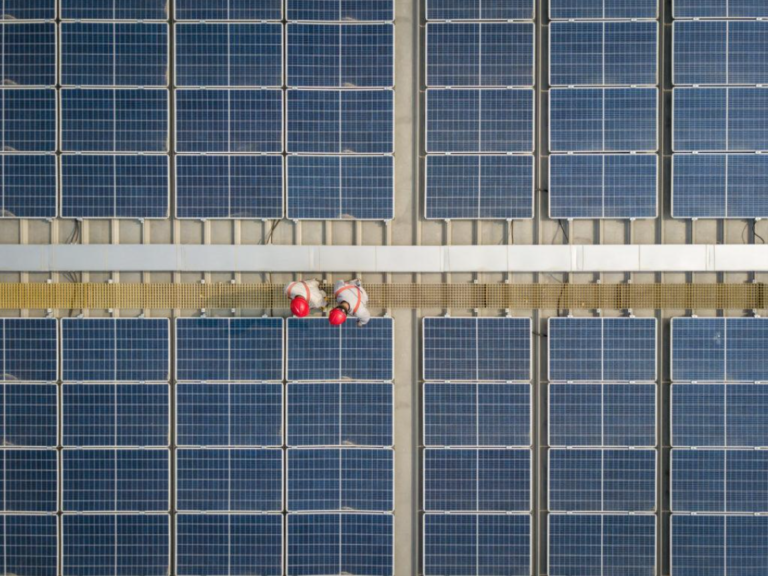
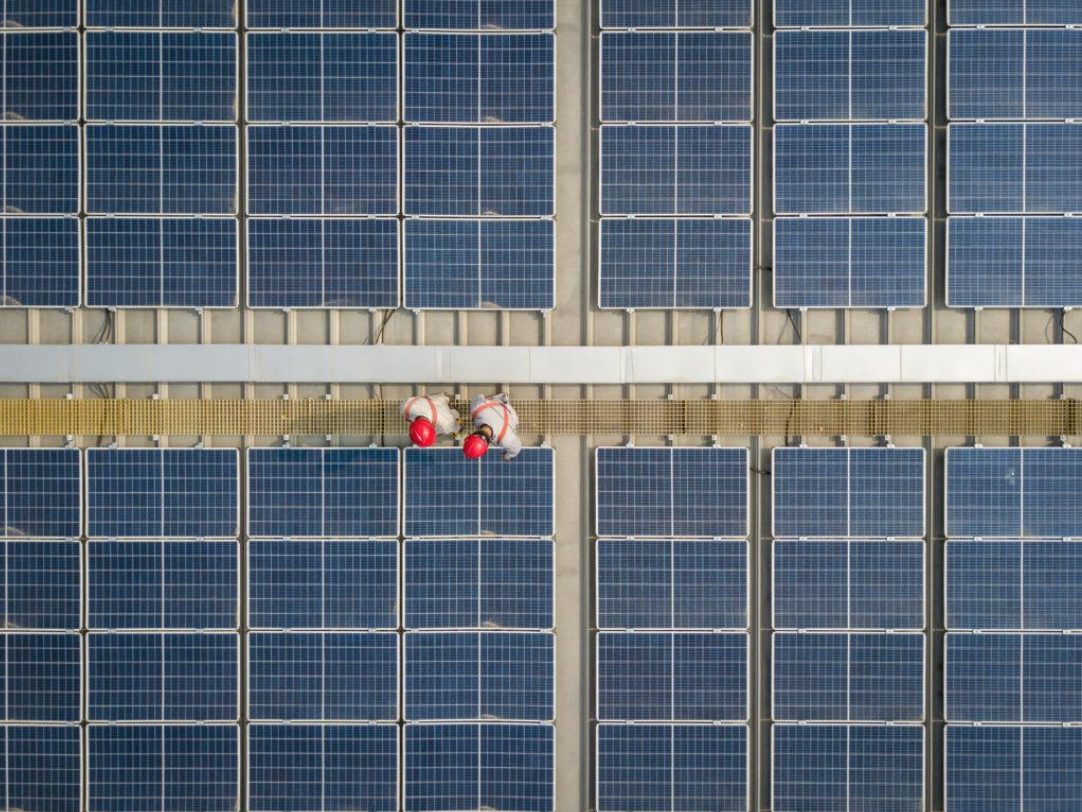
Beginning operations in 2019, JD.com’s Asia No.1 logistics park in Xi’an has 100,000 square meters of rooftop solar panels installed to utilize photovoltaic energy and generate renewable electricity for its intelligent warehouse operations. Additionally, the park meets heating needs through distributed air conditioning instead of a conventional boiler room in certain areas, and new energy is also widely used in forklifts and other special equipment, including 22 sets of charging terminals that can support charging two vehicles at a time each.
According to JD.com, the outstanding emissions in 2021 were offset through China Certified Emissions Reductions with the support of the China Beijing Environment Exchange, and a representative for Centre Testing International Group noted that the company is the industry leader in promoting the “dual carbon” goals announced by President Xi Jinping at the 75th session of the United Nations General Assembly in September of 2020.
At the end of 2021 JD.com had completed the installation of solar panel systems at 13 of its logistics parks, and it aims to provide green energy to 85 percent of its warehouses within three years. The next warehouse set to be carbon neutral is the Asia No.1 located in Suqian which is targeting a goal of carbon neutrality by 2023.
JD Technology, the branch of JD focused on technological developments, also recently signed a cooperation framework agreement with Miracle Automation Engineering Co., Ltd (MAE) to build an ecosystem for the entire industry chain of lithium battery recycling through a new business model titled “internet + recycling.”
Electric vehicles have become more popular on a global level with each passing year, but China has consistently had the largest market in the world. According to China’s Ministry of Industry and Information Technology, over three million new energy vehicles were sold across the country in 2021, up 1.6 times when compared year-over-year and as electric vehicles become more prevalent and age the need for recycling methods will only grow.
By combining MAE’s resources and experience in the lithium battery recycling industry and automobile-related fields with JD Technology’s managing capabilities in logistics, warehousing, supply chain technology, cloud computing and big data, an ecosystem will be created that can help ensure that the new energy vehicle industry does not fall into some of the same sustainability problems that have plagued other industries.
It is only through a joint effort of governments, businesses and individuals on a global level can the negative effects of climate change be effectively mitigated. Countries must scrutinize their economic models, industries must recognize their moral responsibility to exacting change, and individuals must utilize their voices to encourage those with the power to make changes to do so. Through companies like JD.com, their own industry and the industries of those they serve are being irrevocably changed for the better.
Water parks are the best destinations for family and friends. This place is perfect for children; water parks are safe and made for fun. Bring back your childhood memories and scream your head off. There are water-slide races, dance floor, slides and many more to enjoy. Get soaked in the water and enjoy your holiday. The blue water can save you in hot summer.
China is a popular country among tourists. Apply for a visa to Chinaif you want to have full-on fun because this country has many water parks. The city life is amazing and water parks are the best to relax on weekends. If you’re planning for a foreign trip then think about China, visa is all that you need to have fun in giant pools. You can try the below-mentioned water parks to beat the summer heat with fun.
Suzhou Amusement Land
Yushan Road of Suzhou city has an amazing destination for water babies. Suzhou Amusement Land has 13 pools; tourists can go for the Fish Pedicure, the Rose Hot Spring, Dead Sea Pool and many more for their entertainment. You can also go to a spa to relax. Suzhou Amusement Land has attractive rides and long slides for the pool. People gather around for partying and enjoying. This place is also safe for children; there are special pools and water rides for them.
Hangzhou Paradise
Xiaoshan District of Eastern China has an awesome water park that covers a vast area. This water park can support up to thousands of people a day. Hangzhou Paradise has distinct sections for children, surfing, swimming and many more. IF you ever get the chance to visit Hangzhou Paradise, don’t forget to try the Water Slides, Big Octopus, Water Swing, Viking Boat, Water Forest, Happy Water House and many exciting things. A day in Hangzhou Paradise can charge you for the week.
Beijing Wtercube Waterpark
China has the world’s largest and advanced water park in Beijing City. Beijing Wtercube Waterpark is spared over a large area and has many places to explore. It’s located in the National Aquatic Centre of Olympic Sports Park. This indoor water park has the coolest features and it’s very famous around the world. People love to visit Beijing Wtercube Waterpark, especially in summer. There are lots of rides and creative pools for your entertainment; you must try out Tornado, Speed Slide, Bullet Bowl, Aqua pool, Pipeline and many more. The best part is that Beijing Wtercube Waterpark adjusts the water temperature according to the season, so 12 months are suitable for a visit.
Shenzhen Happy Valley Maya Water Park
Do you know anything about the Mayan culture? If you have never heard about it, then it’s best to be it Shenzhen Happy Valley, Maya Water Park. This water park is completely based on Mayan culture. People can stay there for a while and enjoy in the pool day and night. Does not matter if you can swim or not, Shenzhen Happy Valley has everything for all groups of people. You will be pleased with the service of this place. Spend your holiday differently – in the city of Maya.
Guangzhou Chimelong Water Park
The Yingbin Road is famous for Guangzhou Chimelong Water Park. This is the reason, why people from different cities travel to Yingbin. We all need a break from our hectic life and Guangzhou Chimelong Water Park can give you full-on entertainment. You won’t in a pool but an awesome wave pool. The artificial waves will give you the feeling of a beach. The Waterpark offers 9 different games for the people. To change your mood, the park has also introduced an awesome dance floor – rock music and acrobatics. It can be reached easily if you take a bus from the subway. A day spent at Guangzhou Chimelong Water Park will be counted forever.
Come alone or bring your family members or friends, these above-mentioned water parks in China will make your day. You can never imagine how much this country has advanced; now they can create a beach feeling inside the four walls. No need to drive long and go to the beach, because your beach is in the middle of the city. They are very famous in China for short holidays. Spend quality time in pools.
The Middle East promises travellers from far and wide a whirlwind of captivating cultural and historical experiences that are sure to induce a sense of wanderlust. Boasting some of the world’s greatest wonders and a history brimming with age-old languages, traditions and unique heritage, the region sports some of the most iconic places to see and visit. Let’s take a look at some of the places in the Middle East worth travelling to and exploring.
Egypt’s Great Pyramids
While this may be a well-known tourist attraction, the Great Pyramids of Giza are a marvellous sight to behold. Claiming its spot as one of the old 7 Wonders of the World, the Great Pyramid of Giza is the oldest structure among them all, but Egypt’s Great Pyramids offer more for culture vultures to bear witness to. Be sure to visit the 3-pyramid complex near El Giza, only a short while away from Egypt’s capital city of Cairo. The Great Sphinx of Giza is another must-see attraction. Even today, these awe-inspiring structures continue to perplex even the most qualified and experienced archaeologists and scientists. After all, how did human beings manage to construct such an impressive and challenging project without the tools used today?
The City of Jerusalem
The Old City of Jerusalem hails a spot on our list of the must-see places for all it offers eager globe trotters. While security presence peppers the outskirts of its religious sites, it only serves as yet another gentle reminder of the rich history that Jerusalem has. Home to a diversity of historical, cultural and religious attractions, Jerusalem delivers a cultivating experience to even the most discerning traveller. Must-see attractions here include the Dome of the Rock, the Western Wall, and the Church of the Holy Sepulchre.
Istanbul
East meets west in Istanbul, a breathtakingly beautiful destination that reaffirms its mighty position as the economic, cultural and historical heart of Turkey. Strategically located right in the centre of the Middle East and Europe, Istanbul is a unique compilation of culturally and historically significant sites that represent its ancient roots. The older side of its city is starkly contrasted by its modern-day attractions that beckon travellers to explore, ranging from vibrant street markets and towering skyscrapers to luxury palaces and trendy coffee shops.
Dubai, the City of the Future
While still a young city in its wealth and economic status, Dubai is steeped in history and innovation, with some of its most notable structures including the Burj Khalifa (the world’s tallest building) and Ain Dubai (the largest observation wheel in the world). The Dubai Skyline is dotted with iconic skyscraper buildings, but the city also offers a more playful alternative to its visitors.
It features the world’s deepest scuba diving pool with a lost city at the surface, the Middle East’s largest integrated amusement park (Dubai Parks and Resorts), a diverse selection of international dining outlets, trendy beachfront attractions like La Mer, and the mind-blowing Palm Jumeirah, a man-made archipelago boasting celebrity chef-owned restaurants and luxury leisure attractions alike. Dubai is revered for its rapid transition from a humble desertscape that once carried its economy by pearl diving and the trading of textiles, gold, spices and perfumes to the booming metropolis that it is today, making it a definite must-see tourist destination for travellers of all kinds.
The Archaeological City of Petra
Nabatean gods and goddesses had a range of talents. Some are carved here on the face of a monument in Petra.
Located in the breathtakingly beautiful nation of Jordan, Petra continues to wow its visitors with its pink sandstone mosques, tombs, temples and palaces that give it the name of the “Rose City.” Its Greek-style temple called “Al Khazneh” is a well-known UNESCO World Heritage Site. Petra has grown in popularity over the years, even resulting in the newly formed town of Wadi Musa that welcomes world travellers and is a short and blissful stroll away from the temple grounds. Here is also where you can find hotels offering free shuttle services to visit the temple.
Travel insurance for your Middle Eastern Adventure
It’s no secret that visiting any international destination can be stressful due to potential delayed or cancelled flights, lost baggage, or medical emergencies, to name a few unforeseen inconveniences. Securing quality healthcare and avoiding lost expenses can be a challenging task. That’s why travel insurance is a popular investment to give you peace of mind wherever you go.
Allianz Travel has over 30 years of experience in offering first-class services and products to tourists from around the globe. Our global headquarters are based in Paris, but we also have regional offices in more than 28 countries worldwide. Allianz Travel and Allianz Assistance is the largest travel insurance and assistance company in the world, providing end-to-end travel insurance solutions to those in need.
Below are five broad areas that can be addressed when it comes to lowering the obstacles, which lead to the stimulation of renewable investment.
Transparent and regulated power arrangement. It is important to establish policies that are transparent and predictable because it is going to provide confidence to investors because they believe they are going to recover the investment they have made in power generation. Some examples of these policies include allowingindependent power produces (IPP); having standardized and bankable power purchase agreement templates; having fair rate and transparent adjustment and public participation; holding transparent auctions. There was a recent transmission line auction in Brazil that didn’t attract investors after being launched in 2016 that is the perfect example. They revised the terms that included a tariff revision formula based on long-term interest rates and inflation, and higher maximum tariffs encouraged many investors to participate.
Clean energy or climate incentives. When there is an integrated and multi-year approach with short-term targets for reducing fossil fuel plants, and investing more in renewable energy, it makes it easier to come up with good policies. Establish carbon-pricing mechanisms like a carbon market, and also legislation to do with carbon removal is going to help a lot. A good example is Chile. They first started with passing a decommissioning schedule for coal power plants and then they engaged with the private power plant owners to come up with a schedule to phase out coal. They then had a tax on carbon for coal-powered plants.
Measures that are good for businesses. There are some policies that can help push investment in renewable energy that isn’t even specific to energy. Some of these include tax policy (this is where they don’t charge VAT on clean power sales or withholding taxes on profits), improved permitting processes, allowing foreign direct investment, and letting foreign investors repatriate profits.
Good financing mechanisms. It is important to have innovative financing mechanisms so that it mitigates risks, which offers higher return potential or create more opportunities to invest in. The masala bond is a good example of a finance mechanism that helps with risk mitigation. These are Indian Rupee-dominated bonds that allow foreign countries to invest in India. It mitigates the risk by providing a currency hedge. The project’s return and the cost of financing can be tied to the achievement of the decarbonization target. According to TheEuropean Smaller Companies Trust, European Bank of Reconstruction and Development invested €56 million in a bond offered by Tauron Polska Energia with the total bond being €233 million. The financing costs will end up going low if they meet the 2030 decarbonization objectives.
There are some financial innovations under consideration that will help in creating more renewable energy investment opportunities. Some examples include;
The synthetic corporate power purchase agreements (CPPAs) offer hedges against fluctuation in power costs for the buyer and also provide demand for renewable energy.
Energy transition mechanism that gives investors a chance of buying high-carbon emitting assets then retiring them and replacing them with renewable energy (the financial returns from this will come from the operation of high carbon and renewable-energy assets that is supplemented by things like carbon credit for faster retirement). The WEF has a task force that is working to come up with operational details on these innovations.
Early risk assumption. Many projects that have succeeded had an early investor who was ready to take the risks. Once the risks concerning the project had been ameliorated, the sponsor then found it easy to get more and less expensive capital for the project. A good example of such a project was the BTG Pactual transition project mentioned above. The company took the full equity risk at the start but managed to get debt financing once the project was done. The role can be supplemented or even fulfilled by international development organizations. InfraCo Asia is a good example of this approach where Asia GDP growth has been recorded. They were involved in a smart solar network in the Philippines where they only supported the first 4,000 homes although the project was targeting 200,000 homes for this clean energy project. They later managed to find another investor.
What is WEF doing to encourage clean energy?
The above five areas are associated with the government. It is important for governments in emerging economies to come up and enact legislation that is going to help in ameliorating some risks and improving returns on energy projects. Making Green loans available to encourage clean energy is a step that many governments have chosen. They need to request international financial institutions and multilateral development banks to raise their risk financing capacity and risk instrument offerings. The government needs to work with the private sector to come up with goals and parameters for investment opportunities in the renewable energy sector. They should be receptive to any financial innovations that can result in more private foreign capital flowing in to be used for clean energy projects. For governments in developed economies, they need to commit to mobilizing more funds for such projects and also provide technical advisory assistance.
Governments from both developing and developed economies should act fast because of the need to invest in low-carbon energy. The actions being taken in this decade are going to have a big impact on emissions for decades to come, or they can help fulfill SDG.
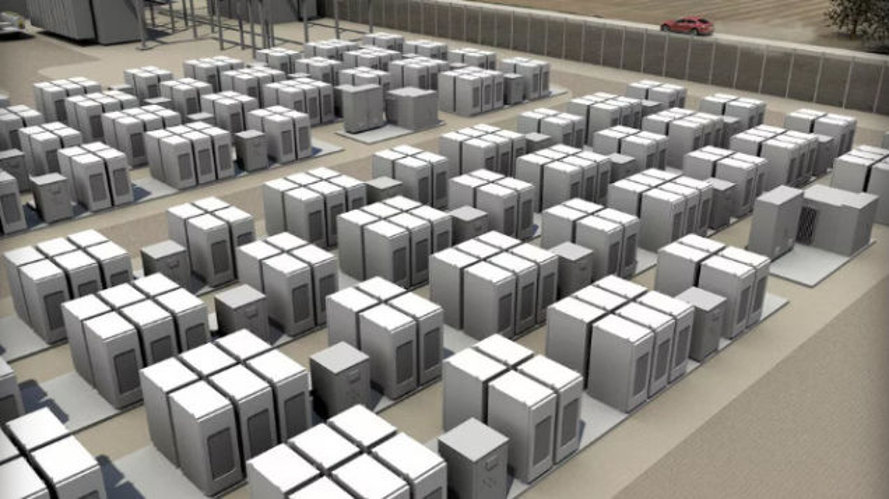
Tesla’s Megapack battery stations aim to store power from the sun.
Not every one of the high-efficiency solar panels you see embedded on rooftops utilizes solar batteries. Whether a solar kit uses batteries or not depends on the owner’s goals and the type of kit they have.
Most residential solar kits use a grid-tied system. That means there’s no need for batteries — especially if the homeowner has a net metering option.
More often than not, those with solar batteries are owners that utilize a hybrid or off-grid solar kit. However, many are beginning to realize the benefits of using a solar battery, even with grid-tied systems.
Benefits of a Solar Battery
A grid-tied system is the most common solar kit you’ll find on residential installations. These kits tie to a conventional power grid. The system then sells back the excess electricity through net metering. If net metering is available, the homeowner receives a reduced or eliminated energy bill.
However, pairing a grid-tied setup with a solar battery adds an extra layer of flexibility and energy security. Instead of sending all excess power back to the grid, a portion can be stored for use during outages, peak pricing hours, or at night when solar production drops. When installers model these hybrid systems using tools like energy-yield calculators,solar proposal platforms such as SolarGenix, and system design software, it becomes easier to compare payback periods and long-term savings across different configurations. This helps homeowners understand not just immediate bill reductions, but also how storage improves resilience and energy independence over time. In the bigger picture, combining batteries with grid-tied solar makes residential renewable energy more reliable, adaptable, and financially predictable.
The drawback to grid-tied kits is that they rely on conventional sources of energy that must be bought from the local power company. This is where solar batteries come in like the hero we all deserve. Adding a battery system allows homeowners to store any excess power produced during the day to draw on at night.
The significant advantage here is that homeowners get to use their free electricity instead of relying on the grid and purchasing energy during peak hours. The second significant benefit of a solar battery system is that it allows you to avoid power grid interruptions and have electricity in the event of a blackout.
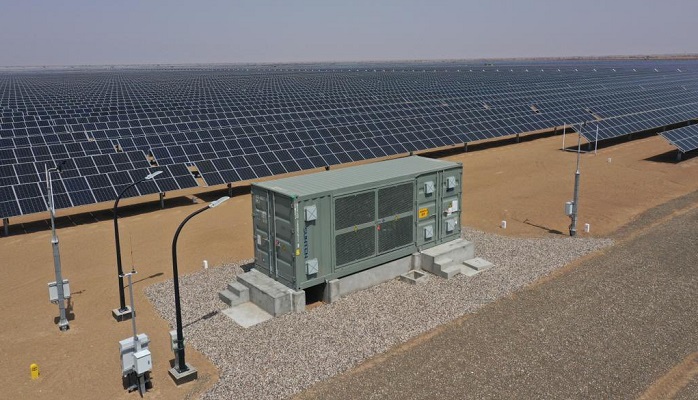
The Ibri solar power plant, Oman
Solar Battery Types
Before understanding how solar batteries work, it’s vital to understand the various battery types and storage options.
Currently, all solar batteries fall into one of the following categories:
Lithium-Ion
Lead-Acid
Flow
Out of the options available, most manufacturers prefer lithium-ion batteries. That’s because lithium-ion can hold greater amounts of energy for much longer than the alternatives.
Additionally, these types have a more reliable lifespan and are much more compact. However, the advanced technology that makes lithium-ion batteries so great also makes them the most expensive option.
Lead-acid batteries are also commonly used because they’ve been around for many years and are a much cheaper alternative. It’s a proven material used in everything from cars to off-grid solar batteries.
The newest battery type on the market is flow batteries. These have a substantial Depth of Discharge (DoD). This makes them ideal for people who plan on heavy battery use and want their batteries to last. However, these require vanadium, a rare metal, making flow batteries the most expensive option.
Once you determine the best material for your project, you’ll want to get a battery bank. The truth is, installing a solar battery system is expensive. For that reason, many people attempt a DIY solar battery bank. While this is entirely possible, it may end up costing you more in the long run because it may not be as efficient or durable.
General Solar Battery Process
The way your solar battery system is configured determines how the batteries work. The three approaches include AC coupling, DC coupling and replacing the inverter.
AC Coupling
An AC-coupled system requires several inverters and a battery bank to operate. This system connects an off-grid inverter and a battery bank and pairs it to a grid-tied inverter.
During normal day-to-day usage, the DC electricity generated by the solar panels gets sent directly to the inverter to convert into AC. Any excess AC production is then sent through a separate inverter, where it’s converted back to DC to be stored in the battery system.
In the event of a blackout, the system pulls the stored electricity from the battery bank. The off-grid inverter “tricks” the grid-tied inverter into thinking power is still available because the off-grid inverter acts as a secondary power source.
Essentially, AC-coupled systems invert electricity each time it’s sent from the solar panels, from the house to the battery bank and from the battery bank back to the house.
Because there are multiple inversions, it results in a loss in efficiency compared to a DC-coupled system. However, AC-coupled systems can store energy from the panels and the grid, making it ideal for those who like to ensure they have a constant energy source without interruption.
DC Coupling
Off-grid systems operate with DC coupling. In these systems, the array of solar panels is connected directly to a battery bank and uses a charge controller.
These systems take the converted DC electricity collected from the solar panels and store it directly into the batteries as DC electricity. When needed, it leaves the batteries as DC and goes through an inverter to be converted into usable AC electricity.
DC coupling works well with various types of off-grid inverters and battery banks. However, it requires manually flipping the switch on the charge controller for the battery banks to recharge.
Replacing the Inverter
The last and most expensive solar battery system is one that replaces the original grid-tie or micro grid-tie inverter with a hybrid or storage-ready option.
Whether you currently have a solar battery system or are thinking of getting one, it may be beneficial to install a hybrid inverter. That’s because these work perfectly with and without batteries. It gives homeowners the option to add on a battery system at a later date.
Hybrid inverters convert DC to AC and vice versa. Ultimately, it eliminates the need for additional components and functions as an inverter for electricity directly from the solar panels and from the battery bank.
Backup and Peace of Mind
Regardless of the type of solar battery system you select, the benefits remain the same. You create a way to become self-reliant and have electricity in the times you need it most. With climate change, strange weather patterns and a subpar electrical grid, it’s clear that solar is the best option for a reliable and independent system.
An artistic impression of the high-frequency retrograde (HFR) vorticity waves. These waves appear as swirling motions near the equator of the Sun. These mysterious waves move in the opposite direction to the sun’s rotation, which is to the right, three times faster than what is allowed by hydrodynamics alone.
Scientists have discovered that there is a new kind of wave emitted by the sun that doesn’t fit existing theories. The researchers from the NYU Abu Dhabi’s Center for Space Science have found this new set of waves appear to travel much faster than predicted by theory. The discovery sheds insight into the matter that makes up the sun.
If you want to meet dreamers to ask them questions about our planet and the universe around us, ask an astrophysicist.
Published in Nature Astronomy, the researchers – led by Chris S. Hanson — detail how they analyzed 25 years of space and ground-based data to detect these waves. The high-frequency retrograde (HFR) waves – which move in the opposite direction of the Sun’s rotation – appear as a pattern of vortices (swirling motions) on the surface of the Sun and move at three times the speed established by current theory.
“The very existence of HFR modes and their origin is a true mystery and may allude to exciting physics at play,” said Shravan Hanasoge, a co-author of the paper. “It has the potential to shed insight on the otherwise unobservable interior of the Sun.”
Discovery can shed light on stars
If we understand the physics of the sun, we can better understand the origin the universe.
The interior of the Sun and stars cannot be imaged by conventional astronomy (optical or x-ray etc.), and scientists rely on interpreting the surface signatures of a variety of waves to image the interiors. These new HFR waves may yet be an important puzzle piece in our understanding of stars.
Complex interactions between other well known waves and magnetism, gravity or convection could drive the HFR waves at this speed. “If the HFR waves could be attributed to any of these three processes, then the finding would have answered some open questions we still have about the Sun,” said Hanson. “However, these new waves don’t appear to be a result of these processes, and that’s exciting because it leads to a whole new set of questions.”
By studying the Sun’s interior dynamics – through the use of waves – scientists can better appreciate the Sun’s potential impact on the Earth and other planets in our solar system.
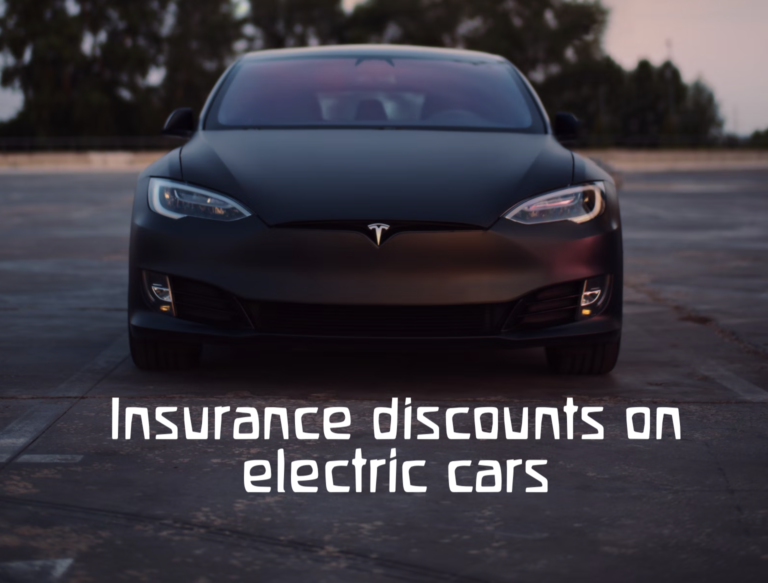
Electric cars can get you discounts on insurance. Find out how.
Of course, we’re not talking about green-colored cars; we’re talking about eco-friendly cars, which there is a huge market for. While having a car with a cleaner fuel source doesn’t affect how well you drive and your chances of getting into an accident. But that doesn’t mean that your car insurance providers won’t appreciate your efforts in reducing your carbon footprint. Several car insurance companies do offer a discount for drivers of green cars.
Car Insurance For Green Cars
Hybrid and electric cars require car insurance as any normal vehicle would. Every state except New Hampshire requires drivers to carry at least a certain amount of basic car insurance or liability coverage. There is no specialized car insurance for green cars like hybrid and electric models, so standard auto coverage will do just fine. Green cars tend to be safe as well, so car insurance premiums for them aren’t as high.
Green Cars And Standard Cars
When it comes to owning a green car, it’s really no different from a standard one but in some cases you can get rates for car insurance on the cheap. Electric and fuel-based cars both handle on the road the same, and there really are no new features to learn about eco-friendly cars. Except that there are no moving parts in the engine and they tend to not break down. Fuel cost is not the only difference. The only difference is their fuel and fuel cost, which is enough to influence a buyer’s decision and to make a difference.
Green Car Insurance Discount
If a car insurance provider finds that your car actively reduces your carbon footprint, then they can give you a discount on your coverage. Ask around about carbon taxes and incentives because your state or province, or even town might have benefits that effect This discount on your rates can go up to 20%. Every major car insurance company has green car discounts, as would smaller, local ones. This is based on an annual basis of saving.
Other Insurance That Can be Discounted For Being Green
Eco-friendly insurance discounts aren’t just available in the realm of car insurance. Your home, for example, can be made green and reduce your carbon footprint. This also qualifies you for a green discount on your homeowners’ policy. The same can also be said for a motorcycle insurance policy as there are eco-friendly ones on the market.
Carbon Footprint
For reference, a carbon footprint refers to anyone’s carbon dioxide output. It can be applied on a daily, weekly, or annual scale as a measurement. A green insurance discount is usually given if it is proved that someone has reduced their carbon dioxide output. The most prominent way that humans produce carbon dioxide is with their car so driving less or having an eco-friendly one is the most common way to earn the discount.
Prototype from Mays Motors, the first electric car of the Middle East Starts production in 2023. Carbon fibre, has a range of about 350 miles and can accelerate from 0 to 80 in about 4 secs. Mad Max here we come.
Mays Motors with Noor Majan reveals the prototype of the Middle East’s first electric car. It will go into production in 2023. We first heard reports of an electric car in the making in 2010 and wasn’t sure if it was an April’s Fools joke or not. As April rolls around again, 12 years later, we are enjoying the news that Oman plans on producing its own electric car.
It will be called the Mays i E1 and some 500 of the Mad Max looking trucks have been pre-ordered, according to Haider bin Adnan al Zaabi, a co-founder of Mays Motors.
The company plants on expanding after an investment and will show of its new motor in Dubai at the STEP International Conference, one of the largest conferences related to tech companies and investments in the world.
Zaabi says that Mays Motors has started work in a small factory in Barka and they plan to sell globally. Parts, shipping, global rollout is a big deal.
Zaabi tells a local paper Muscat Daily he is also hopeful of spurring job opportunities as the company increases production. “We will create more job opportunities for Omanis. We are working with some private companies and Shell to set up recharge points in petrol stations across Oman to cater to demand.”
Mays i E1 has a carbon fibre body, a range of 500km on a single charge and can accelerate zero to 100km/hr in less than four seconds.
Baharat is an essential blend you can make at home. It’s like a Middle Eastern answer to curry. But distinct.
I live in the Middle East. Whenever my mom comes to visit she freaks out over the new flavors. Middle East cuisine has its own distinct curries and flavors for vegetables, fish and meat. There aren’t thousands of varieties, but like Indian cuisine the flavor of a good spice blend depends on its source, blend and freshness.
Baharat is a new spice trend in the western world but its an old Arabian favorite. It’s essential if you want to make makluba or mafroum. If you haven’t tasted either of these dishes you haven’t lived.
Bahārāt (Arabic: بهارات) is just an Arabic word for spices and it’s usually used to season lamb, fish, chicken, beef, and soups. It can also be used as a condiment. I’ve been taught by my Arab-Israeli friends how to use it on chicken (season it very, very lightly – sprinkled on top before the oven), and it’s also essential in the Palestinian favorite maklooba (see recipe here). But if you are vegan you can sprinkle it on tofu or seitan. Why not?
Since I live in Jaffa, close to amazing spice shops, I just buy my own baharat.
If you don’t live near an Arabian market that will blend its own fresh spices, make your own. Because old spice mixes don’t work well for any kind of food. When it comes to spices, fresh is best.
Maqlub is a traditional Palestinian, one-pot meal that feeds dozens.
There is different baharat according to where you live. The Turkish baharat includes mint, while in Tunisia, baharat is a mixture of dried rosebuds, pepper and ground cinnamon. In the Arab Gulf, loomi (dried black lime) and saffron may also be used in kebsa, also called Gulf baharat.
Since I live in the Levante, I am going to give you the baharat I know, one used by Arabs in Israel. I’d be happy to know how it’s different in places near by.
Here’s how you make your own baharat:
Baharat Recipe
1 tbsp ground cardamom pods (the black seeds inside)
1 tbsp ground dry ginger
½ tbsp ground nutmeg
1 tbsp ground black pepper
1 tbsp ground cinnamon
½ tbsp allspice*
*Like me, if you don’t have an allspice on hand, you can simply make your own by combining 2 parts cinnamon, one part ground nutmeg and one part ground cloves.
You can simply mix all together, and store in a dark airtight jar for use on all foods that need a little Middle Eastern kick. I prefer to buy some spices like nutmeg, cloves, cinnamon and cardamom – the dried spices, and grind them whole in my Vitamix machine (which also makes a killer ice-cream).
You can also use a mortar and pestle as shown in the video below.
The dry container that you use for grinding flour is the one you use for making baharat. Enjoy!
At the start of the month, markets don’t always have much new. You can still find what’s in season in February. But newcomers like strawberries were still expensive and not sweet yet. Now, seasonal produce is on the upward swing towards summer’s abundance in the Middle East and those piles of strawberries fill the air with their fragrance as you move from vendor to vendor in the shuk. Strawberry prices will continue to fall slightly as spring progresses, but if you want to put jam up now, you won’t regret it.
Fruit and Avocados
Avocados must be the best bargain in fruit right now. Black, wrinkly Hass avocados are sold dead ripe and ready for eating right now. Try our natural moisturizing blend with some of these ripe avocados. The larger smooth green varieties are mostly sold hard for ripening at home.
Melons have begun. The smaller varieties are sweet already, but I advise waiting for hotter weather to buy watermelons. Here’s our guide on how to choose the best one. Oranges and clementines are still around, but fading out of the picture. Lemons are still abundant and good. Bananas are attractive, with prices slightly lower than at the beginning of the month.
Apples and pears are mostly imported from colder climates like Europe and although attractive, not especially sweet. International shipping and perhaps refrigeration seem to draw the sweetness and flavor out of fruit. However, loquats are out in quantity, and they are a purely local fruit to the Near Middle East region.
Other springtime arrivals are passion fruit, and kiwi fruit, both highly priced. Passion fruit vines grow easily in the climate of Lebanon, Israel and the Palestinian Authority regions. Turkey and Jordan too. Find the fruit dropping off garden fences onto sidewalks, but kiwi is produced by farmers in colder hilly regions. Quinces are available and look beautiful, but are most expensive.
Papaya fruit has now arrived, although scanty and expensive. Yellow guavas, with their unforgettable heady odor, are another springtime newcomer.
Timeless cooking principle we live by: cook seasonal produce together. Right now eggplants, peppers and tomatoes are fat and glossy, so cooks here naturally grill, then blend them together with garlic and olive oil. It’s a delicious spread with the slightly charred flavor that says Middle East. Or try grilling chunks of vegetables, our way.
Another tip: garlic confit will never go to waste.
Shakshoukah, eggs poached in a tomato sauce with bell peppers, is another brilliant way to combine seasonal vegetables. It makes for a hearty breakfast to share. Great for brunch.
Those prime ingredients for Middle-Eastern chopped salad, cucumbers and tomatoes, are excellent now and prices are coming down as summer approaches.
Red, green and yellow bell peppers in all their colors are fat and prime for stuffing, grilling and pickling. Red bell peppers are slightly more expensive than their yellow, orange, and green cousins. Beware peppers imported from Turkey though. Buy organic if you can. Peppers are worth buying for salad or muhamarra spread now, but wait for full summer to buy quantities for pickling.
Eggplants again: both long, slender and full-bodied varieties, are worth buying now. Once the hot weather starts eggplants are the first to spoil and buckle in the heat. So buy now and enjoy some baba ghanoush with our tried and tested recipe.
Squash varieties like pumpkins and zucchini are handsome and excellent for light springtime soups.
Green string beans and yellow wax beans are more in evidence although their prices are still on the high side. Artichokes are full and heavy; this is prime season for them.
Red, white, and baby potatoes of both colors are excellent, as always in spring. Onions are improving – you can ignore the sprouty ones that vendors are still trying to get rid of for the fresh new crops.
Short-season vegetables:
Peas are in the markets now, as are green fava beans. Cardoons are in the markets. The cardoon, Cynara cardunculus, also called the artichoke thistle, is a thistle in the sunflower family. It is a naturally occurring species that also has many cultivated forms, including the globe artichoke.
Fresh green garlic is here and if you like it, now’s the time to buy for drying or preserving. Two ways to preserve fresh garlic are peeling and freezing it, or burying the cloves or entire cleaned bulbs in olive oil and herbs and baking till soft. This confit of garlic also freezes well. And eggplants yet again: baby eggplants for pickling are available in some markets. Buy now if you like them.
Some cold-weather vegetables are still firm and worth buying: cabbages, kohlrabi, beets, turnips, carrots, celeriac, parsley root.
Leafy vegetables like lettuces, Swiss chard and celery are very good. Broccoli has been looking rather old, but cauliflowers are going strong, fat, and white.
Season for herbs
Herbs are so exuberantly beautiful and plentiful that they deserve space all to themselves. Mint, thyme, rosemary, parsley, dill, watercress, arugula, rocket, bitter wormwood for a sprig in tea, coriander leaf, fresh fenugreek leaves, which are favored by the Indian community, a garlicky Persian leaf called” richu,” basil, scallions, leeks, fresh ginger and “shav,” or sour grass for soup.
A variety of savory that tastes like za’atar is being sold now.
If you are a forager
Forager’s notes: Mulberry trees will be starting to put out leaves, good for stuffing or drying and crumbling later for tea. Look for them. Shepherd’s purse is flowering and getting leggy, but the heart-shaped seed pods make a peppery accent in salads. Wild marigolds and chamomile flowers are very abundant wherever they’re allowed to grow.
Plantain
Nettles, chickweed and mallows are no longer worth picking. It’s too late in the season. Plantain leaf is especially abundant now because of the recent heavy rains. Fumaria and cleavers are still good. Mandrakes may be seen in cold regions, but beware – the intriguing purple fruit is toxic.
We promised you eggplant ideas, and here they are:
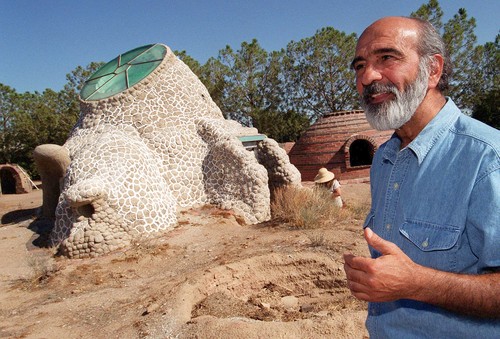
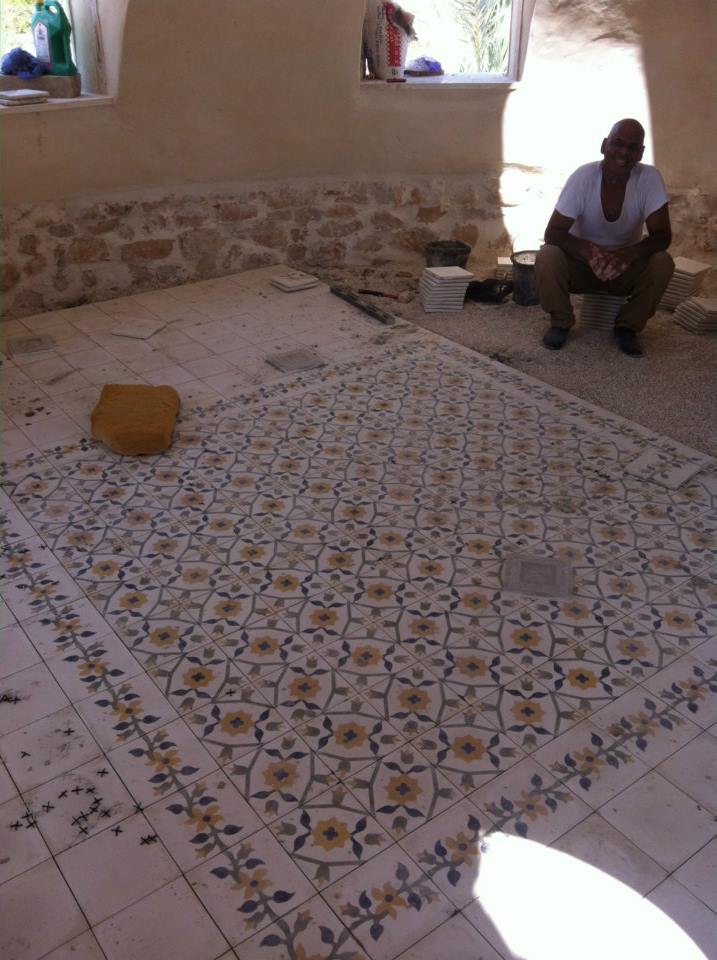
If you look to indigenous people for inspiration many low tech solutions left by our ancestors can suit us fine today. And one dreamer and doer that our friends go to intern with in the past is the late Nader Khalili from Iran. He had a dream to build womb-like homes for desert dwellers and lived out his dreams at Cal-Tech in California where models of his natural buildings made from sand bags can be explored. You can see an example at Cal-Tech below.
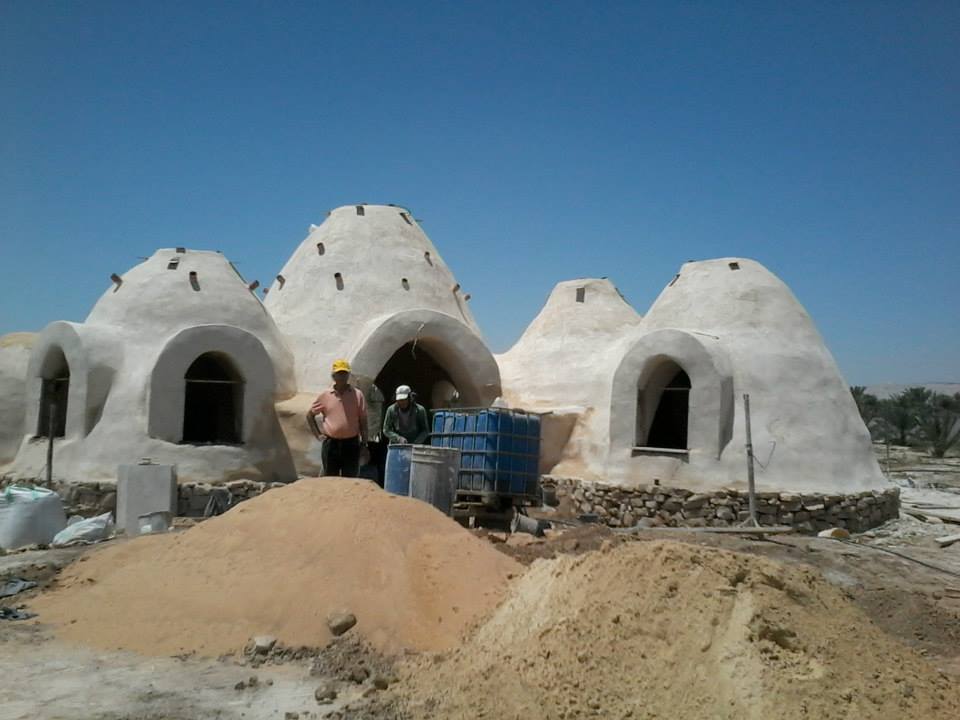
Super Adobe in Jericho
Super Adobe in California
Super Adobe in California
Cal-Earth’s Eco Dome, styled by Cordelia Reynold Photo: Eric Simpson / Courtesy of Cal-Earth
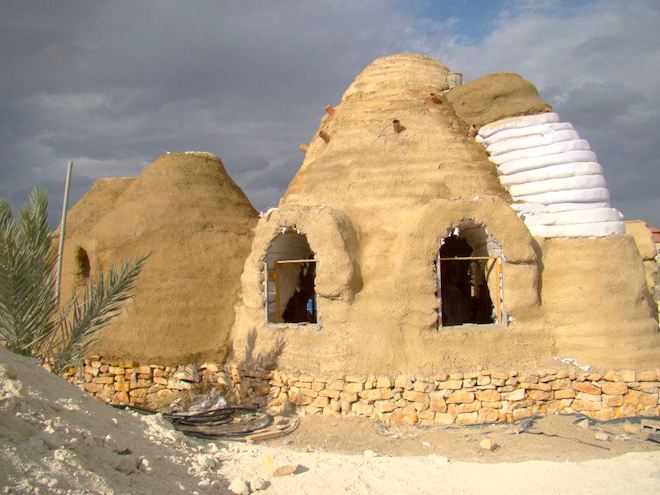
Working with NASA as part of an initiative to design homes fit for space, Iranian architect Nader Khalili conceived the dome home, pictured above, as an affordable, accessible, easy to build, and environmentally sensible housing solution. This works in dry desert climates such as Iran, Israel, Yemen, Saudi Arabia and the Palestinian Authority.
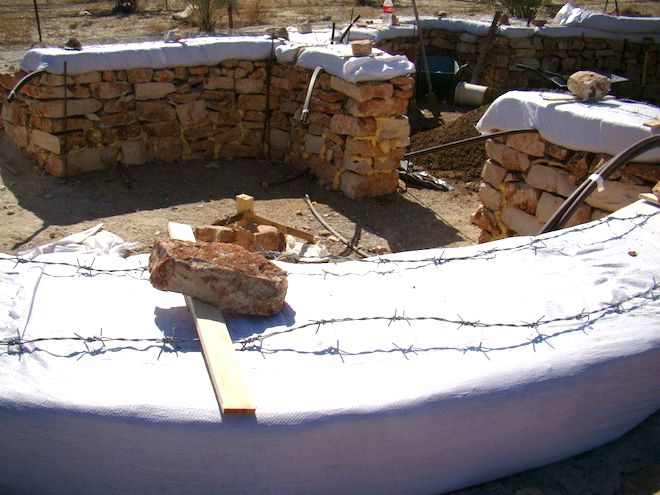
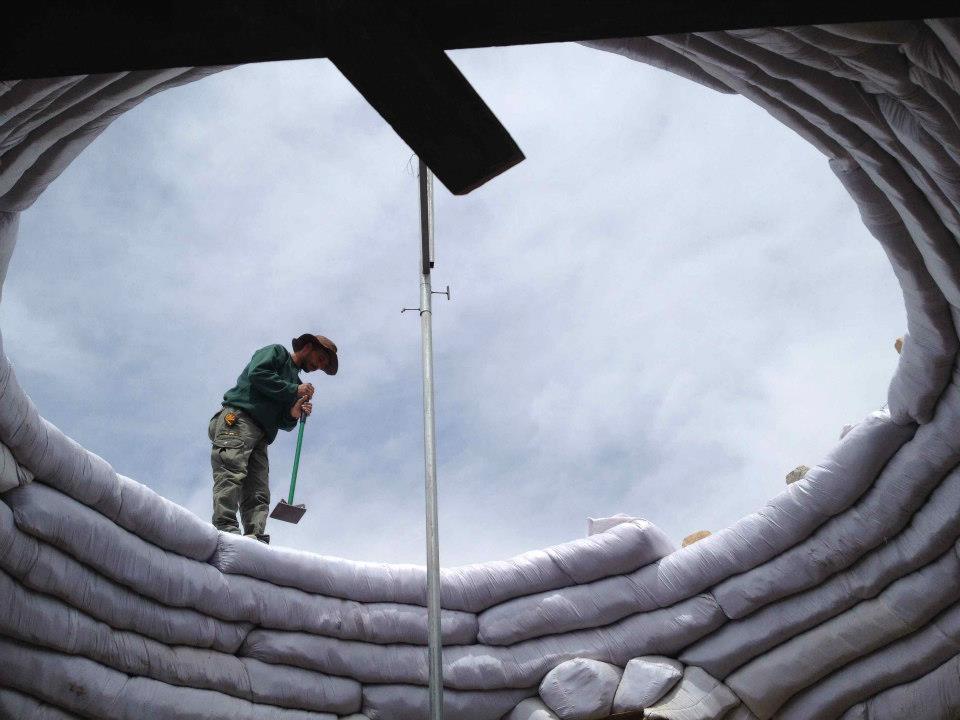
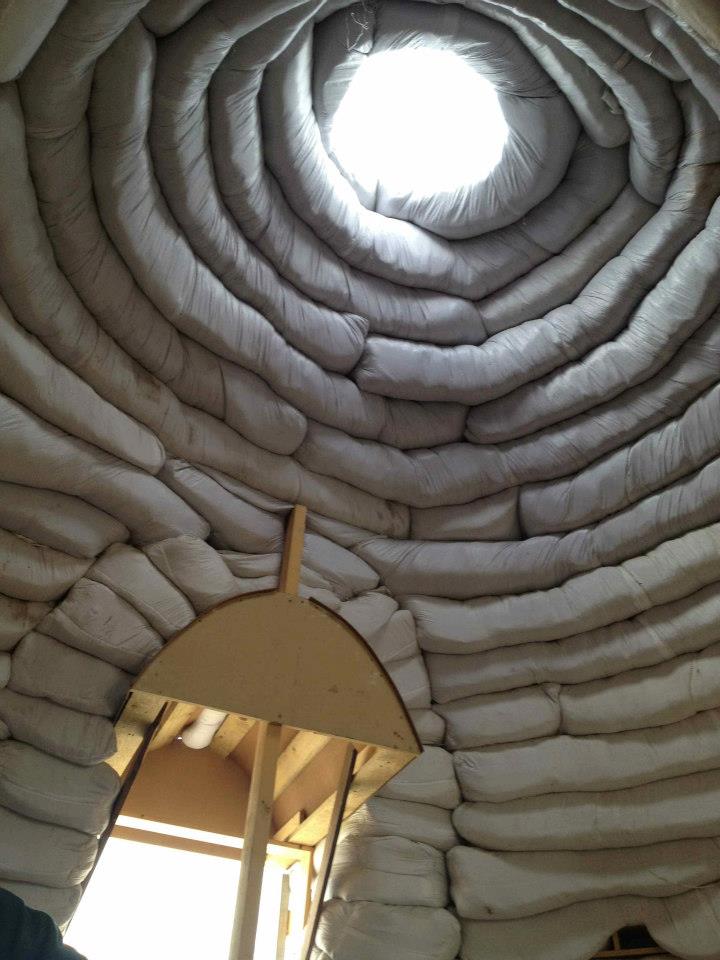
Nader first presented his Superadobe construction method, which involves stuffing bags full of readily available dirt and then stacking them in a circular form. The bags are held together with barbed wire, and then covered with lime plaster. Any holes are filled in with grout.
The resulting homes are so well-insulated, no air-conditioning is necessary in summer, and in winter, the thick walls retain enough heat to keep the interior space comfortably warm
In 1991, Khalili founded the California Institute of Earth Art and Architecture (Cal-Earth), which continues to provide workshops and empower people around the world with these low impact structures.
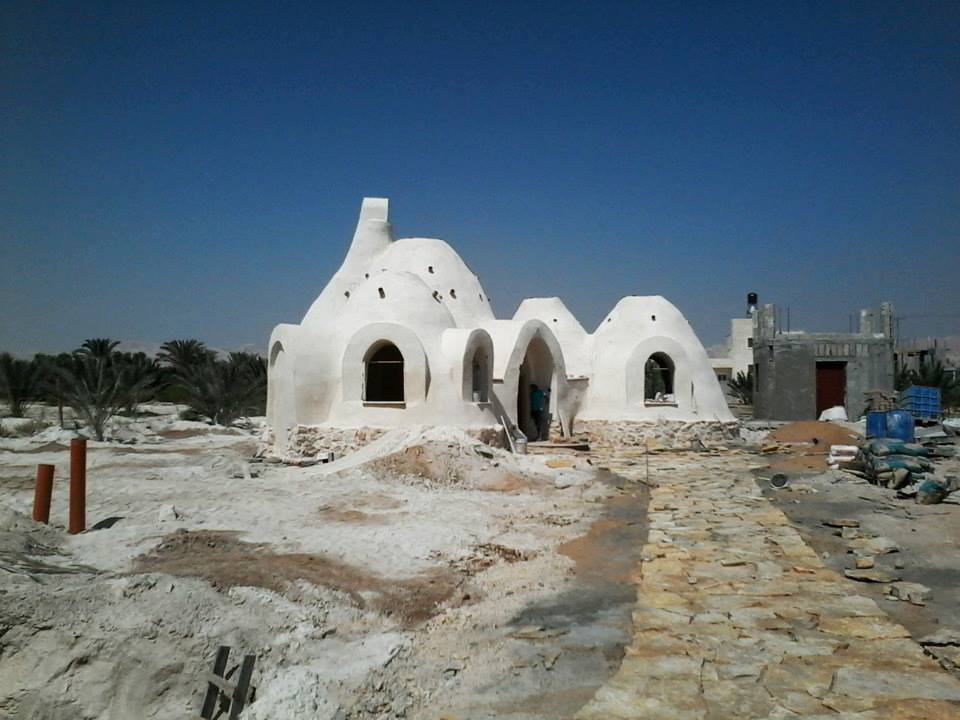
For SharmsArd, a Palestinian firm that Ahmad Daoud commissioned to build his home in Jericho, building with Earth was an obvious choice that allows them to feel empowered in the context of the nation’s ongoing struggle towards a peaceful unification with their neighbours.
One of the firm’s partners, Danna Massad, expresses their collective desire to operate independently of the foreign aid that so many Palestinians have to rely on to make any kind of respectable living in Palestine.
“I think the Palestinian society is oversaturated with international aid,” she told NPR’s Emily Harris several years back.
“Of course, we’re not the only example of a local business that refuses any kind of aid, but we can see how excited people get … to see how you can actually do something without being dependent.”
Despite some skepticism from his community, Daoud is chuffed with his new home. “It’s an environmentally friendly house,” he told NPR. “I can tear it down and nothing will remain. In the summer, I don’t need air conditioning, and in the winter, I don’t need heat.”
I love potatoes (especially in Moroccan cooking like mafroum) and coming from an immigrant family from Holland and Scotland, eating potatoes was basically a part of every meal, like bread and butter.
But my mother was always afraid of potato “eyes” and the green bits and she and my dad would prune the unwanted bits away. In a time when we want to eat and forage all food scraps, the green parts of the potatoes are definitely something we need to leave for the compost bin. And maybe not even feed the animals.
It turns out green potatoes are so toxic they can kill.
In 1924, Science magazine reported on a fatal case of potato poisoning: James B. Matheney of Vandalia, Illinois, had gathered about one and a half bushels of tubers, which had turned green due to sunlight exposure.
Two days after eating the potatoes, most of his family – wife, two daughters and four sons – showed symptoms of poisoning; the only exceptions were James himself, who didn’t eat the potatoes, and a breast-fed baby boy. His wife, aged 45, died a week later, followed by their 16-year-old daughter. The other five members of the family recovered.
Although such fatalities are rare among human beings, farm animals often get sick or die after eating green potatoes. Symptoms include damage to the digestive system as well as loss of sensation, hallucinations and other neurological disturbances. Death can be caused by a disruption of the heartbeat.
The culprits are the toxic substances solanine and chaconine; their concentration rises sharply with exposure to light or during sprouting, and they protect the tubers from insects and disease.
Solanine and chaconine belong to the large family of glycoalkaloids, which includes thousands of toxins found in small amounts in other edible plants, including tomatoes and eggplant. These substances have been known for over 200 years, but only recently has Prof. Asaph Aharoni of the Plant Sciences Department at the Weizmann Institute in Israel begun to unravel how they are produced in plants.
He and his team have mapped out the biochemical pathway responsible for manufacturing glycoalkaloids from cholesterol. Their findings will facilitate the breeding of toxin-free crops and the development of new crop varieties from wild strains that contain such large amounts of glycoalkaloids that are currently considered inedible.
Several years ago, in research reported in The Plant Cell, the scientists identified the first gene in the chain of reactions that leads to the production of glycoalkaloids.
In a more recent study published recently in Science, they managed to identify nine other genes in the chain by using the original gene as a marker and comparing gene expression patterns in different parts of tomatoes and potatoes.
Disrupting the activity of one of these genes, they found, prevented the accumulation of glycoalkaloids in potato tubers and tomatoes. The team then revealed the function of each of the genes and outlined the entire pathway, consisting of ten stages, in which cholesterol molecules turn into glycoalkaloids.
Could this mean a future of potatoes that never turn green and which can be stored longer to feed more people efficiently? A story we wrote in 2018 points to this direction. But we aren’t really sure genetic alteration is the key. Genetic selection is okay.
An analysis of the findings produced an intriguing insight: Most of the genes involved are grouped on chromosome 7 of the potato and tomato genome. Such grouping apparently prevents the plants from passing on to their offspring an incomplete glycoalkaloid pathway, which can result in the manufacture of chemicals harmful to the plants.