
According to a 2020 report from the United Nations, there has been a “staggering rise” in the number of extreme weather events over the past two decades, driven largely by rising global temperatures and other climatic changes. Between the years 2000 and 2019 there were 7,348 major natural disasters around the world, a 74 percent increase from the previous two decades.
From the snowstorm in Virginia that left hundreds of drivers stranded on a highway for over 24 hours to the historic rainfall in the Henan province of China that caused devastating floods and killed hundreds of people, as the number of these events continue to occur with increasing frequency they are also stressing the health, social and economic systems of countries at a global scale.
If we are to prevent climate change from rendering our planet uninhabitable and protect it for the future, sustainably thinking can no longer be the responsibility of the individual. In the 1970’s when awareness about environmental consciousness first began to gain popularity, the phrase “reduce, reuse and recycle” became a popular slogan encouraging consumers to be mindful of the way they were operating was affecting the planet, but today it has become clear that try as they might individuals, households and even entire communities will not be able to make a consequential difference on their own.
Instead, change needs to occur comprehensively in order for the world to become a more sustainable place. While individuals can make small and meaningful changes in their own daily lives by paying attention to their carbon footprint, they also have the ability to create larger change by encouraging their governments to create sustainability policies. Through policy, governmental bodies can accelerate change and bring it about more efficiently, creating regulations and guidelines that can then be followed by both its citizens and businesses operating within its borders.
Completing the circle are corporations and businesses, who through initiatives have the ability to not only influence governmental policy but also present consumers with more opportunities to be sustainable in their lives. Today, companies are expected to not only talk about their belief in sustainable practices, but also prove it through actionable steps toward goals such as carbon neutrality.
Indeed, from the United Nations’ Sustainable Development Goals (SDGs) to the use of ESG (environmental, social and governance) in yearly reporting there are a growing number of ways in which a business can show transparency in their operations and display their commitments to sustainability. However, there are many who are choosing to go beyond reporting, thinking creatively and coming up with innovative new ways to bring sustainability into their business practices.
One such company is JD.com, the internet giant that is currently China’s largest retailer both online and off. Founder and president Richard Liu has committed to building his company on consumer trust and quality since he started it as a small booth in a tech bazaar nearly two and a half decades ago, and the company’s mission statement updated in 2020 to be “powered by technology for a more productive and sustainable world” shows the company’s continued commitment to a greener future.
Having announced that it will reduce carbon emissions for the company by 50 percent by 2030 compared with 2019, JD.com’s efforts in that regard were recently recognized by the Global Compact Network China as a Chinese enterprise with some of the best practices in realizing the SDGs in 2021. Over the past nine years, Global Compact Network China has been selecting and highlighting Chinese companies that are both practicing and promoting meaningful SDG-focused practices in order to encourage others to follow in their footsteps.
JD.com was given special note for its contributions to the “carbon peak and carbon neutrality” category, recognizing its ability to balance productivity with low-carbon initiatives such as green infrastructure and technological innovations that have made its logistical operations such as warehousing, packing and transportation more sustainable. This includes its solar cell-powered logistic parks, data centers with ultra-low power usage effectiveness (PUE) and over 20,000 new energy delivery vehicles.
The company’s “Asia No.1” smart warehouse located in Xi’an was also recently certified as carbon neutral by the China Beijing Environment Exchange and Centre Testing International Group, making it China’s first logistics park to be established as carbon neutral.
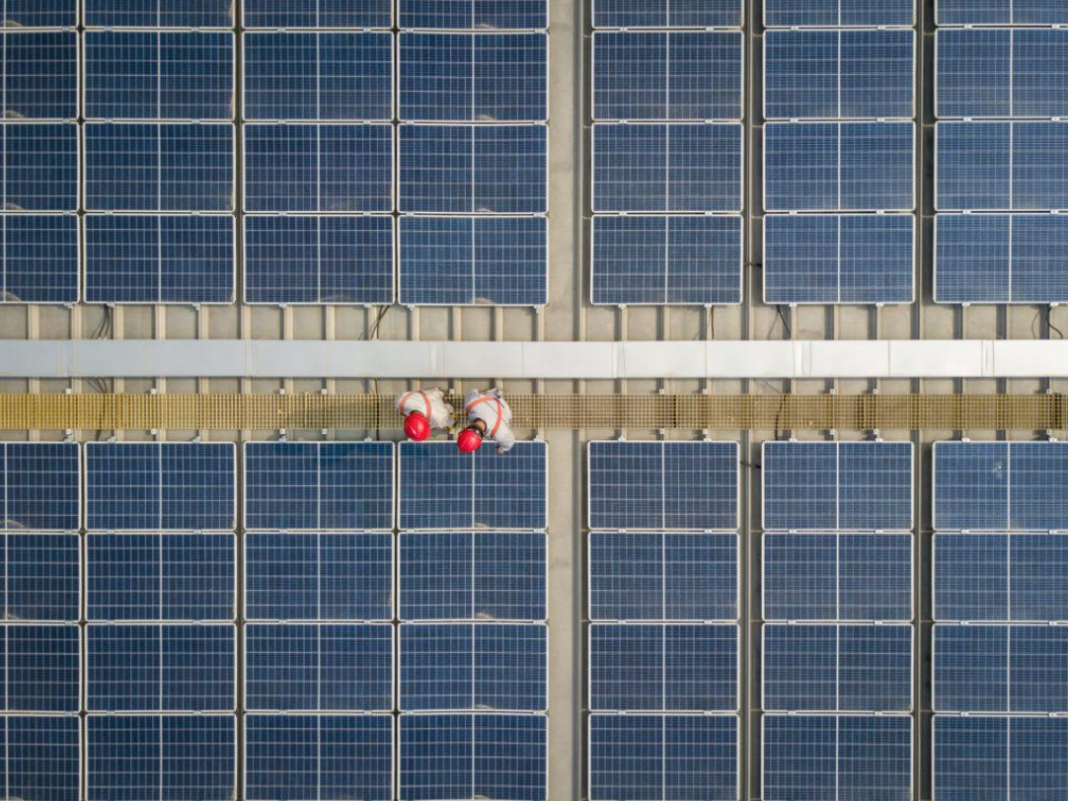
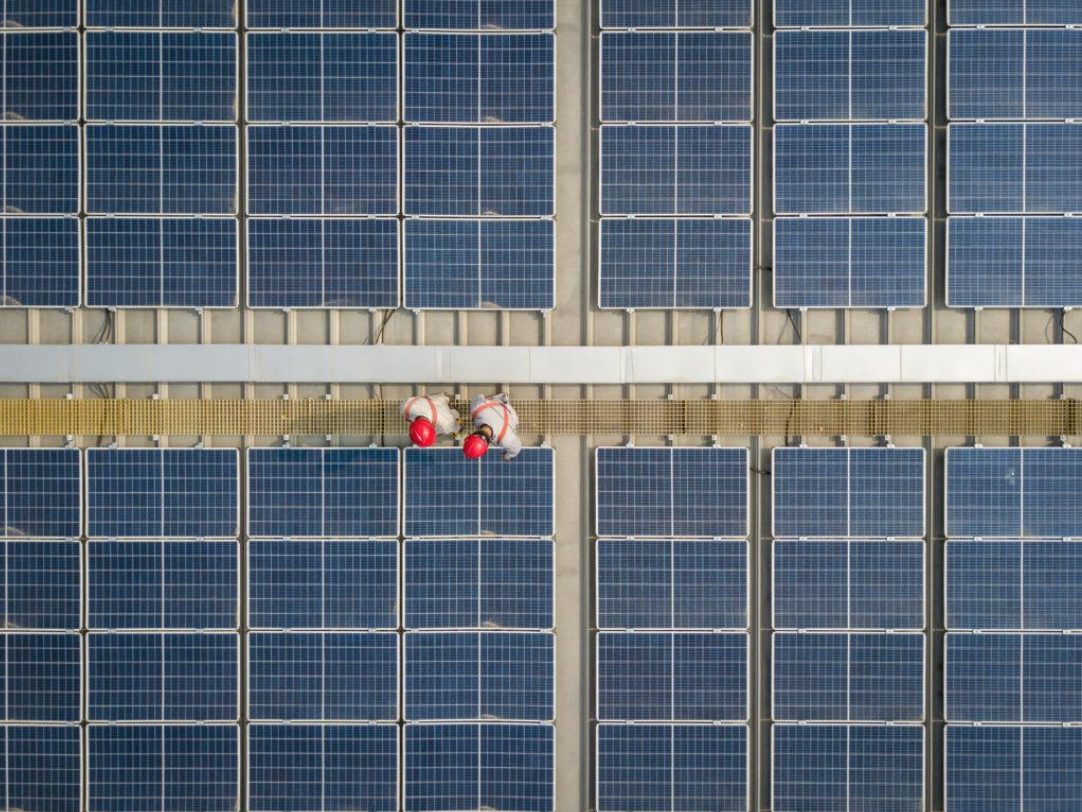
Beginning operations in 2019, JD.com’s Asia No.1 logistics park in Xi’an has 100,000 square meters of rooftop solar panels installed to utilize photovoltaic energy and generate renewable electricity for its intelligent warehouse operations. Additionally, the park meets heating needs through distributed air conditioning instead of a conventional boiler room in certain areas, and new energy is also widely used in forklifts and other special equipment, including 22 sets of charging terminals that can support charging two vehicles at a time each.
According to JD.com, the outstanding emissions in 2021 were offset through China Certified Emissions Reductions with the support of the China Beijing Environment Exchange, and a representative for Centre Testing International Group noted that the company is the industry leader in promoting the “dual carbon” goals announced by President Xi Jinping at the 75th session of the United Nations General Assembly in September of 2020.
At the end of 2021 JD.com had completed the installation of solar panel systems at 13 of its logistics parks, and it aims to provide green energy to 85 percent of its warehouses within three years. The next warehouse set to be carbon neutral is the Asia No.1 located in Suqian which is targeting a goal of carbon neutrality by 2023.
JD Technology, the branch of JD focused on technological developments, also recently signed a cooperation framework agreement with Miracle Automation Engineering Co., Ltd (MAE) to build an ecosystem for the entire industry chain of lithium battery recycling through a new business model titled “internet + recycling.”
Electric vehicles have become more popular on a global level with each passing year, but China has consistently had the largest market in the world. According to China’s Ministry of Industry and Information Technology, over three million new energy vehicles were sold across the country in 2021, up 1.6 times when compared year-over-year and as electric vehicles become more prevalent and age the need for recycling methods will only grow.
By combining MAE’s resources and experience in the lithium battery recycling industry and automobile-related fields with JD Technology’s managing capabilities in logistics, warehousing, supply chain technology, cloud computing and big data, an ecosystem will be created that can help ensure that the new energy vehicle industry does not fall into some of the same sustainability problems that have plagued other industries.
It is only through a joint effort of governments, businesses and individuals on a global level can the negative effects of climate change be effectively mitigated. Countries must scrutinize their economic models, industries must recognize their moral responsibility to exacting change, and individuals must utilize their voices to encourage those with the power to make changes to do so. Through companies like JD.com, their own industry and the industries of those they serve are being irrevocably changed for the better.