
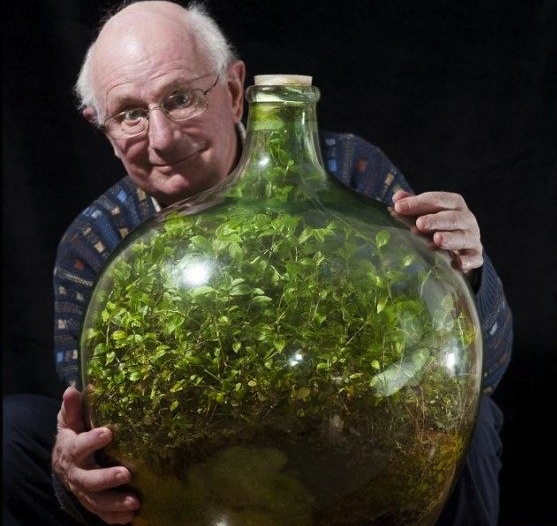

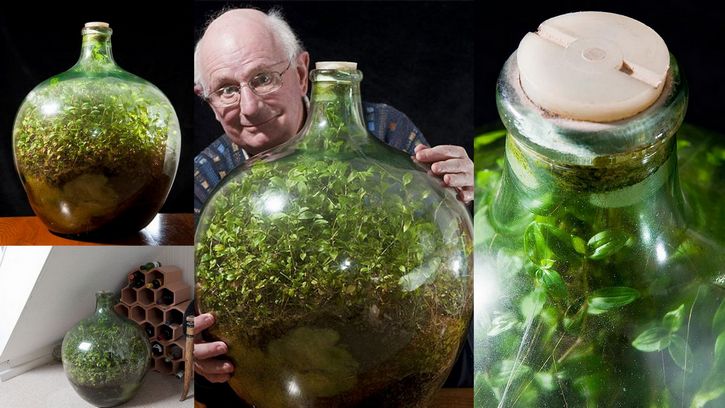
Plants sealed inside a large glass jug a half century ago are self-sustained inside a perfect ecosystem. Is there a message in this bottle for the parched Middle East?
In 1960, a heyday for macramé, bell bottoms and terrariums, amateur gardener David Latimer planted four seedlings in a 10 gallon carboy – an enormous glass jug from the pre-plastics era used in chemical manufacturing. He couldn’t imagine that 50 years later the plants would still be growing, with zero input from the outside world except sun and a small water in 1972.
“Bottle gardens were a bit of a craze and I wanted to see what happened if you bunged (corked) the thing up,” he told The Daily Mail.
He popped plants into a soil base, added a splash of water, and tightly closed the top with a greased stopper. Then he waited a dozen years before giving it another drink. The last time Latimer watered the garden was in 1972: Nixon was in the White House and Elvis was still recording.
His garden created its own miniature ecosystem, but only one of the original four species survived.
The spiderworts seedling, or tradescantia, filled the jar with foliage despite being cut off from fresh air and added moisture. Because the plant absorbs light, it can photosynthesize, recycling nutrients and converting sunlight into all the energy needed for growth.
Photosynthesis creates oxygen and water. It’s the opposite of cellular respiration that occurs in other organisms, including humans, where energy-containing carbohydrates react with oxygen to produce carbon dioxide and water and release chemical energy.
This ecosystem uses cellular respiration too. Bacteria in the soil breaks down dead leaves and absorbs the plant’s waste oxygen, releasing carbon dioxide which the growing plant can reuse. Water absorbed by roots is released into the air during transpiration. It condenses – effectively “raining” down into the potting mixture, and the cycle begins again.
The bottle stands beneath the stairs in his front hallway.
“It’s 6 feet from a window so gets a bit of sunlight. It grows towards the light and gets turned round every so often so it grows evenly,” the 80-year old Englishman said, “It’s the definition of low-maintenance. I’ve never pruned it; it just seems to have grown to the limits of the bottle.”
Latimer sent a photo in to a gardening program inquiring if his special garden held “scientific or horticultural interest”. Are there lessons to learn, specific to growing in water-starved regions? Perhaps some insight to advance xeriscaping for decorative planting or crops?
You can’t smell, touch or eat this garden, but it fascinates.
The new Wardian Case?
The New York Botanical Garden blogged a bit of history behind this story:

“Latimer’s amazing bottle garden is phenomenal, and it has a rich heritage. The Wardian case, precursor to today’s terrarium, was invented in 1829 by Dr. Nathaniel Ward. Originally created to provide a habitat for moths, the Wardian case became a worldwide phenomenon and one of the keys to bringing new plant species home from explorations in far off lands.

Wardian cases, bottle gardens, and terrariums are very easy to create, and even easier to care for. Need some tips? We have those. They make a lovely alternative to flower bouquets for your plant-loving sweetie.”
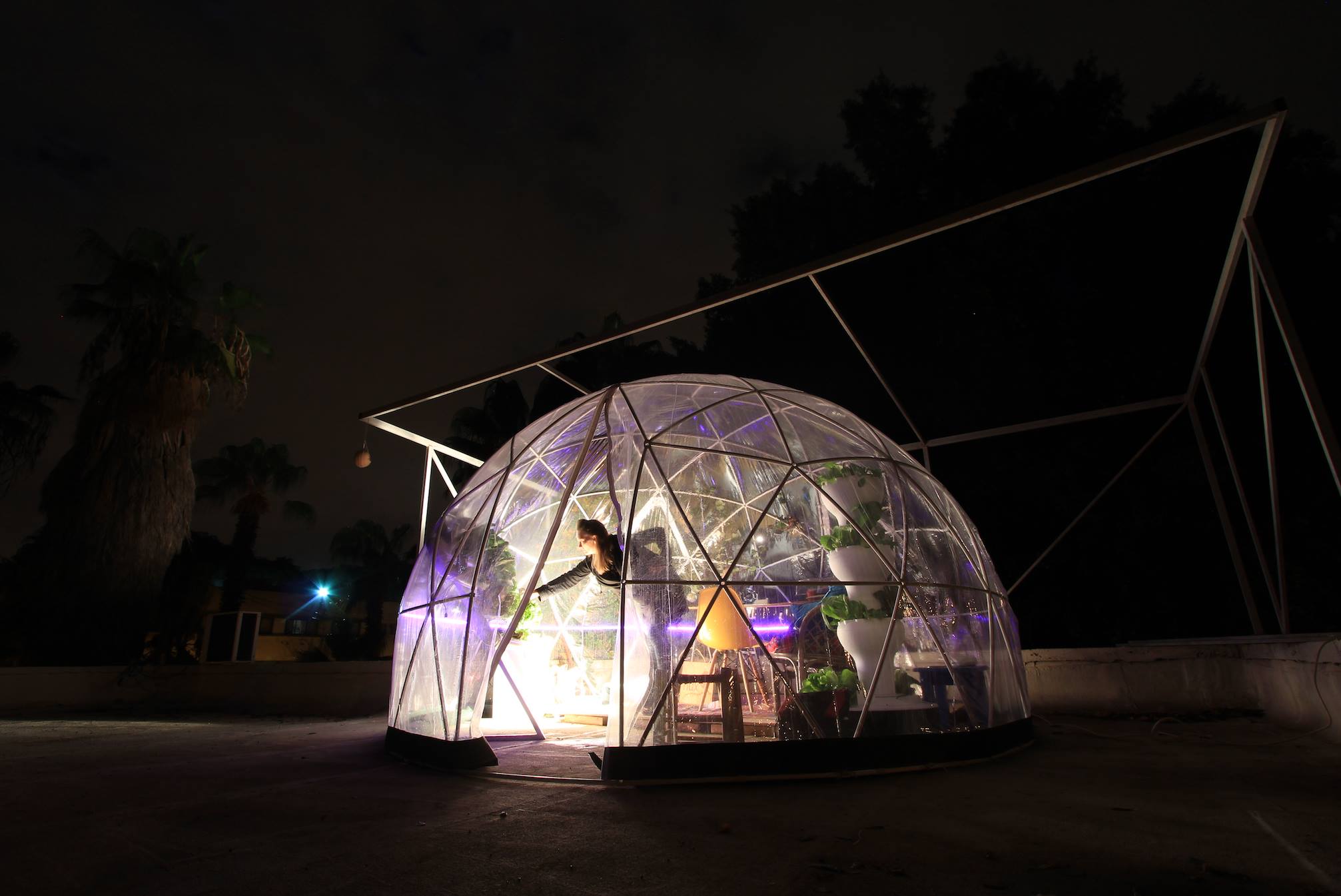
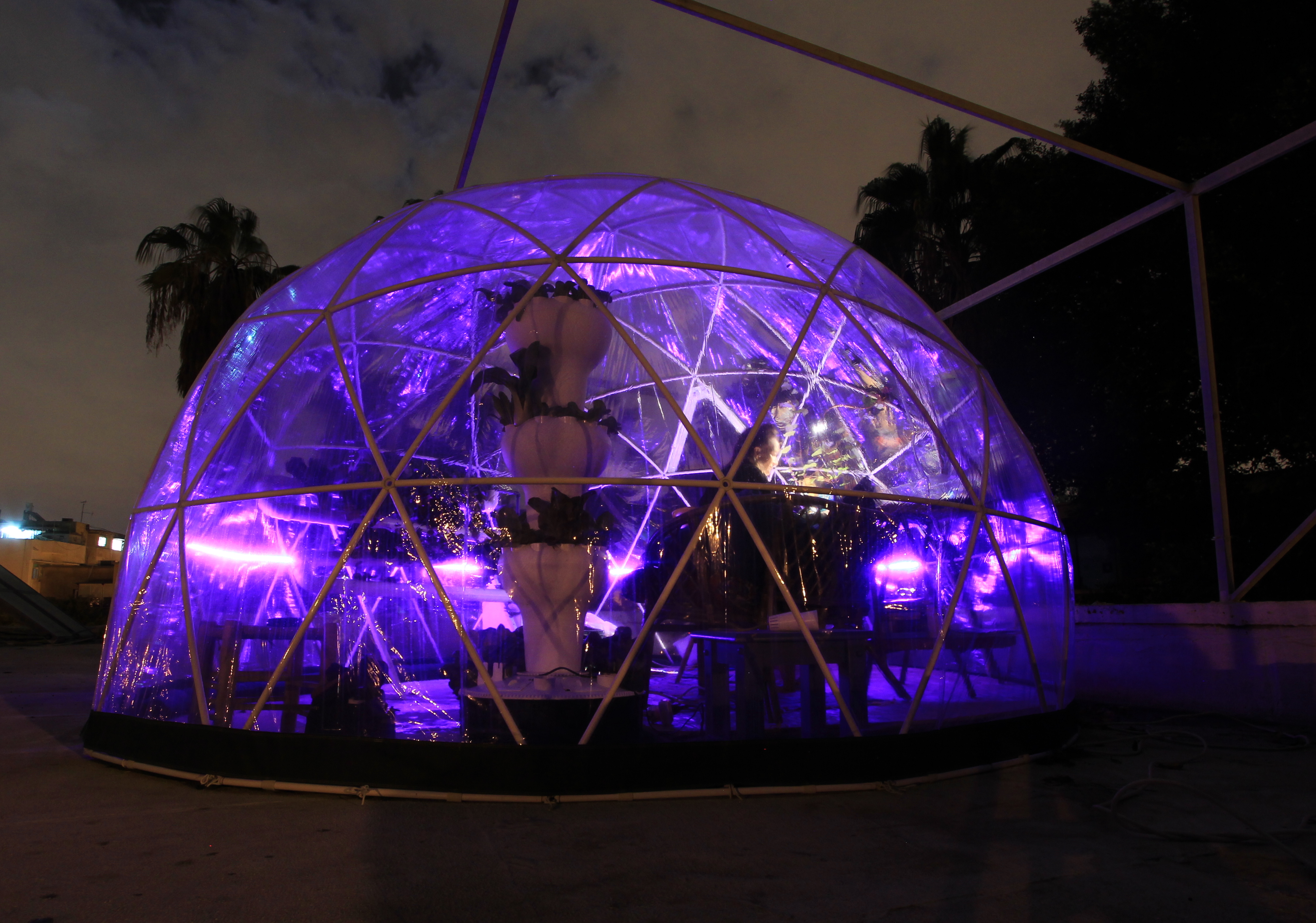
Doubt I could score a carboy here in Jaffa, where I live today but there are plastic bottles everywhere I turn. I’m tempted to try growing one in an old juice bottle. But because I was in love with the idea of a vivarium, I created one on my rooftop, then my backyard on a bigger scale, using hydroponic tools. I desired to live inside my own terrarium, to be the life inside my terrarium, and then I had to find out I was working inside a vivarium. See the pictures below. But I guess you could also call it a greenhouse.
Terrarium and vivarium, what’s the difference?
Both words use the Latin arium meaning “container”, but the different prefixes tell us what they’re designed to contain; terra contains “earth” and vivere means “life”.
In my vivarium I was the life that my biodome contained, along with my hydroponically grown plants. Normal people make mini-tropical rainforests in their vivariums and add spiders and lizards. I had spiders in mine, along with me.




[…] druppel water geeft. Geloof je ons niet? De Brit David Latimer geeft een aantal van zijn planten al sinds 1972 (!) geen water meer en toch leven ze ruim 45 jaar later nog steeds. De reden? Hij heeft de planten […]
[…] can find a perfect environment for the plants that you can just leave it alone. A gardener named David Latimer has proven that he could make an eternal closed terrarium that have lasted for more than 50 years […]
I googled spiderworts and that is not what is shown in the picture. I want to know what that plant is it looks nice and bushy/ viney. It did say that he planted four seed types and only one survived
Tried to locate the gent to get the info on the plant species – no luck. Unfortunately, all old news reports on this refer to spiderwort as the surviving plant. Thanks for the comment!
Tradescantia fluminensis. It is a variety of spider-wort. There are some different looking varieties within the species. This one apparently quite hardy.
[…] TERRARIUMS for SALE. mini and large sustainable, organic, ecosystems for people who admire the beauty of life that plants provide. These ecosystems are extremely low level maintenance, some don’t need to be watered or fed for 50 years as recorded below.. http://www.greenprophet.com/2013/05/terrarium-david-latimer/ […]
I wanna know what kind of plant has he grown? and he did he care his garden from bugs? Did he use any Pesticides at the first?
“The spiderworts seedling, or tradescantia, filled the jar with foliage despite being cut off from fresh air and added moisture”
also he wouldn’t have to protect it from bugs because he didn’t put any into the SEALED JAR.
[…] Read more […]