5 ways to uplift and green your Ramadan Iftar (fast)

green iftar guide harira soupFrom vegetarian recipes to cutting out plastic, Arwa puts together a Green Iftar Guide to make your Ramadan a little more eco-friendly

Ramadan is a time of reflection, spiritual re-focus and self-improvement. It’s a time to look back on the person you are, the way you live your life and to think about bad habits you want to leave behind and new habits you want to embrace. As such, trying out a green could be the first step you take towards a more ethical and environmentally-friendly life. Realising the waste that occurs during Iftar (breaking of fast) and doing something to tackle it will hopefully inspire you to take more green action in your everyday life. Whether that is growing your own food, using more sustainable forms of travel or limiting your waste – this green step during Ramadan will inshalla be the first of many.

What I want you to ask yourself is whether these were as green as you would have liked? Did you throw away food? Did you use Fairtrade goods where you could? Are you cutting down your meat intake and trying new scrumptious veggie recipes? Have you been avoiding plastic cups and plates even though they ease your post-Iftar washing up load? Want to do better? Well, here’s our Green Iftar Guide to help make those next 23 Iftars a little greener.
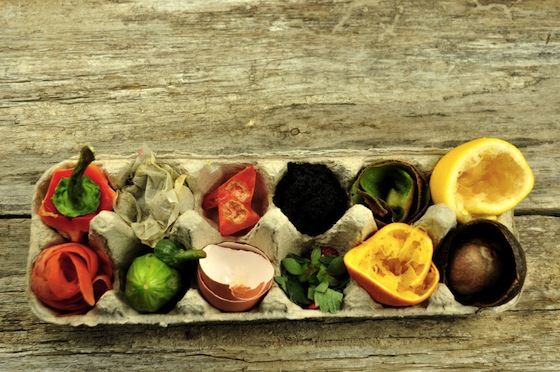
1. Cut Food Waste

At a time when we as Muslims are supposed to remember the many blessings that god has bestowed upon us, it amazes me how much food we are still throwing away. In the United Arab Emirates alone, it is believed that 500 tonnes of food are wasted every year during Ramadan. And yet, there are simple steps that everyone can take to stop this mountain of food being thrown away. Don’t ever shop when you are hungry, buy less, cook less (around a third less then you think you need), store your food properly and don’t make fresh food when you have perfectly yummy leftovers that just need a little freshening up.
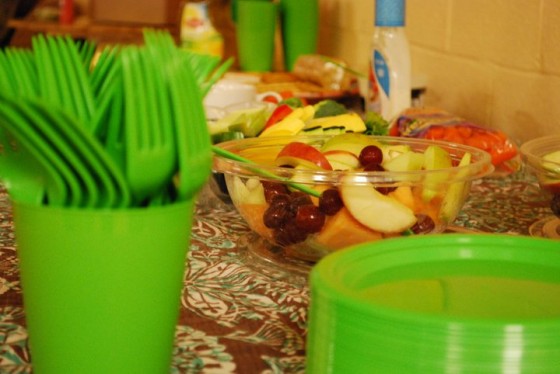
green iftar guide, ramadan fast2. Bring Your Own Plate

Styrofoam-filled bins are a familiar sight at most mosques during Ramadan as public Iftars tend to involve piles and piles of plastics cups, plates and cutlery. As plastic is hugely toxic to the land where it is eventually dumped, however, we need to change our reliance on it. The best way to avoid plastic is to ask people to bring their own plates and cutlery. Not only does this cut out the plastic but it also means you can have better control over your portions and can avoid overeating. If you live in the US, you can also rent out this Zero-Waste Iftar kit from DC Green Muslims.
fair trade muslim green iftar guide

3. Embrace FairTrade

Trade justice is an important principle in Islam and Muslims have a responsibility to ensure that they do not consume products that contribute towards injustice. However, very few make sure that the food they buy has been traded fairly – you can change that this Ramadan by trying out FairTrade products like dates, almonds, juices and fruits. In the Qur’an it reads: “Give full measure and full weight in justice, and wrong not people in respect of their goods” (11:85). So why not support Fairtrade during your Iftar and raise awareness of the importance of ethical consumption and fair trade in the Muslim community.

4. Go Vegetarian

Despite popular belief, vegetarian dishes don’t have to be dull. In fact, not eating meat means that you have to get a little creative and include lots of bean, nuts and vegetables into the mix. If you want to keep to the Middle Eastern theme, there are some great traditional veggie dishes such as Mujadera, Tabbouleh and that’s not including a plethera of lovely hot soups, sticky sweets and yummy pastries. Check out our guide to the best vegetarian Ramadan recipes from the Middle East.
5. Eco-Mosque Checklist

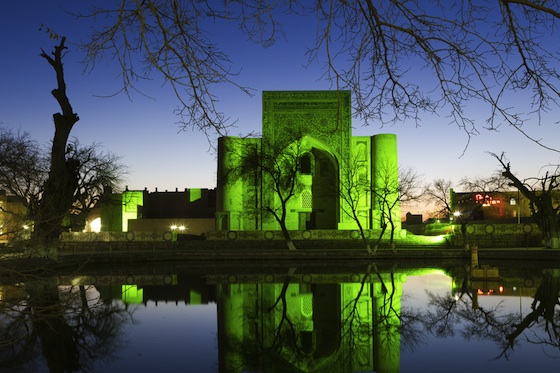
To help build on your green Iftar actions, you could look at greening your local masjid and raising the environmental-awareness of your local community. The best way to start is with an inclusive green message during a khutbah or through posters at key areas of the mosque. Hosting green events or even green Iftars to get people talking about the issues in a more open and friendly environment is also a great idea. The next steps could include looking at water and energy usage in the mosque and cutting that down as well as encouraging people to travel to prayers using more sustainable modes. MADE, a UK-organisation which is leading a campaign for an ethical and FairTrade Ramadan is also hosting ethical Iftars in London, Birmingham and (possibly) in Manchester too. See here for the full details.

Please let us know how your green Iftar goes and Ramadan Mubarak!

For more on having a green Ramadan see:
Vegetarian Ramadan Recipes From the Middle East
Ramadan Food Waste and Green Tips for Cutting It Down
Break Your Ramadan Fast with FairTrade
The Eco-Mosque Checklist – 7 Steps To A Greener Mosque
Embracing A Greener Ramadan

Image of compost fruit via Shutterstock.com. : Image of Madrassah in Bukhara, Uzbekistan via Shutterstock.com :: Top image of Harira Traditional Maghreb Soup via Shutterstock.com
Arwa Aburawa
Arwa Aburawahttp://www.greenprophet.com
Arwa is a Muslim freelance writer who is interested in everything climate change related and how Islam can inspire more people to care for their planet and take active steps to save it while we can. She is endlessly suspicious of all politicians and their ceaseless meetings, especially as they make normal people believe that they are not part of the solution when they are the ONLY solution. Her Indian auntie is her model eco-warrier, and when Arwa is not busy helping out in the neighborhood alleyway garden, swap shopping or attempting fusion vegetarian dishes- with mixed success, she’d like to add- she can be found sipping on foraged nettle tea.

Hot this week

How Renewable Energy is Revolutionizing the Way We Power Our World

Solar has become the star of the transition thanks to modular hardware and straightforward installation. It fits dense cities and remote towns alike. Many companies are turning to rooftop arrays and carport systems - and exploring commercial solar installation as a practical way to lock in future savings.

How does one start prepping?

Faced with an extreme winter storm this year, Americans wonder how to be prepared for catastrophe. Miriam has lived through wars in the Middle East - so she's prepared on giving you a guide to prepping.

Fishermen sue tire manufacturers on behalf of the salmon

A federal trial in San Francisco has brought US tire manufacturers, fishing groups, and environmental scientists into court over a chemical most drivers have never heard of — but which scientists say may be silently reshaping aquatic ecosystems.

Listening to Water: Tarek Atoui’s Next Work for Tate Modern

Born in Beirut, Lebanon in 1980 and now living in Paris, Atoui has spent years building instruments that don’t sit comfortably in concert halls. Many of them involve water, glass, and ceramics — materials that react to sound instead of simply producing it.

Leading Through a Dual-Energy Transition: Balancing Decarbonisation with Energy Security

Experience in one area of the energy industry isn't enough to guarantee readiness across all the others. That's where a structured program like an MBA in energy can come in. Today's advanced curricula explore energy economics, finance, policy, and strategic management alongside the technical subjects. And when pursuing an energy MBA online, professionals can skill up and retrain without having to step out of the labor market -- an important perk at a time when skilled professionals are already in short supply.

Topics

How Renewable Energy is Revolutionizing the Way We Power Our World

Solar has become the star of the transition thanks to modular hardware and straightforward installation. It fits dense cities and remote towns alike. Many companies are turning to rooftop arrays and carport systems - and exploring commercial solar installation as a practical way to lock in future savings.

How does one start prepping?

Faced with an extreme winter storm this year, Americans wonder how to be prepared for catastrophe. Miriam has lived through wars in the Middle East - so she's prepared on giving you a guide to prepping.

Fishermen sue tire manufacturers on behalf of the salmon

A federal trial in San Francisco has brought US tire manufacturers, fishing groups, and environmental scientists into court over a chemical most drivers have never heard of — but which scientists say may be silently reshaping aquatic ecosystems.

Listening to Water: Tarek Atoui’s Next Work for Tate Modern

Born in Beirut, Lebanon in 1980 and now living in Paris, Atoui has spent years building instruments that don’t sit comfortably in concert halls. Many of them involve water, glass, and ceramics — materials that react to sound instead of simply producing it.

Leading Through a Dual-Energy Transition: Balancing Decarbonisation with Energy Security

Experience in one area of the energy industry isn't enough to guarantee readiness across all the others. That's where a structured program like an MBA in energy can come in. Today's advanced curricula explore energy economics, finance, policy, and strategic management alongside the technical subjects. And when pursuing an energy MBA online, professionals can skill up and retrain without having to step out of the labor market -- an important perk at a time when skilled professionals are already in short supply.

From Green Energy to Healthy Societies: Why old systems thinking is becoming relevant again

Across the Middle East and North Africa, large investments are being made in green hydrogen, renewable energy, water infrastructure and sustainability. Most of these efforts are discussed in the context of climate change, decarbonization and economic diversification. That framing is important, but it may not capture their full value.

We saw peace – an interreligious encounter deep in our eyes

They came from Israel, Palestine, Jordan, Iraq, Yemen, Morocco, Tunisia, Lebanon, Egypt… There are Sunni Muslims, Shiite Muslims, Jews (Orthodox and Reform), Orthodox Christians, Coptic Christians, Protestant Christians, Druze, Baha'is, a Scientologist.

Can biochar reduce ‘Forever Chemicals’ in food if it’s used in farms?

Biochar is produced by heating organic material in a low-oxygen environment so it does not burn. This process, known as pyrolysis, transforms plant matter into a stable, carbon-rich material.

Related Articles

Popular Categories