The History of Thanksgiving and How to Green Yours!

One of the wonderful customs that the American settlers here in the Middle East has brought over from the old country is Thanksgiving. Here is my green tribute to them!

In 1621, the Plymouth colonists, led by William Bradford and Wampanoag Indians shared an autumn harvest feast which is acknowledged today as one of the first Thanksgiving celebrations in the colonies. This feast was actually in keeping with a long tradition, rooted in various cultures, of celebrating the harvest and giving thanks for a successful bounty of crops.

But it wasn’t until the 1863 that Thanksgiving was declared a national holiday. Prompted by many editorials by Sarah Josepha Hale, along with the desire to bring together the American people who where bitterly divided as a result of the civil war, President Abraham Lincoln declared it a national holiday.

Today it become the traditional opening to the Holiday Season. Turkey and Turducken are feasted upon along with pies of all kinds; and don’t forget the cranberry sauce and stuffing! It’s enough to make your mouth water!

So how do you green such a celebration of consumption?

Many people will suggest that being green is about being authentic so therefore you should eat what they ate back then. The colonists did not have sugar, that mans no pumpkin pies or cranberry sauce. Hmm, not sounding so fun anymore? Also, sweet potatoes were no common then, so that would be out of the menu, as well as corn, which was all dried up by then.

If you want to go green for your meal then I’d suggest going by the basic food greening rules:

  • When you can, go organic. You don’t need to consume pesticides with all your wonderful dishes!
  • Cut back on extra meats. While that is probably more authentic to the original feast, the meat industry is one of the more destructive industries to our planet. I’m not saying to go veggie, what would a thanksgiving meal be without a turkey. But going green is about exploring alternatives that contribute to a better path. The original settlers had access to various grains; try a new grain dish and cut back on one of the meaty dishes.
  • Waste not. This is probably one of the more authentic traditions you can take on in spirit of the original settlers. The feast was to give thanks for a crop of bounty, so you can bet that they didn’t go and waste the goods that they had received; turkey carcass can be stewed, many side dishes are good the next day. There is no shame in continuing your thanksgiving into the Sabbath!

Enjoy your feasting!

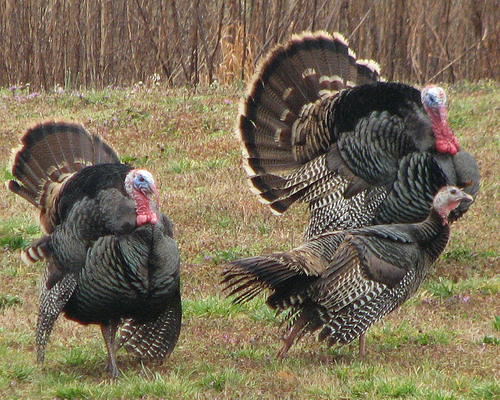
Image Credits: Turkeys by Vicki’s Nature, Cranberry Sauce by 3m1ly

Jack Reichert
Jack Reicherthttps://www.greenprophet.com/
As far back as he can remember Jack Reichert has been interested in the environment. In the second grade, he rallied all of his classmates to donate one recess a week to cleaning up litter from the schoolyard. That was the same year that a city councilman asked him to help with his campaign because of the letter Jack had written asking him to clean up Boston Harbor. Ever since Jack has followed the development of the international green conscience with anticipation and hope that one day we will treat Mother Earth with the respect she deserves and not turn her into another Giving Tree. For tips, feedback and prophet sightings, Jack can be reached at jack (at) greenprophet (dot) com.

Read More

1 COMMENT
  1. One way I made our Thanksgiving more environmentally friendly was by not leaving any leftovers. Actually this is great information that I will try to implement for the rest of the holidays.

LEAVE A REPLY

Please enter your comment!
Please enter your name here

TRENDING

Abortion Pills, Plan B and Mifepristone and what the new US mail ban means

Abortion pills, often confused with Plan B (the morning-after pill), and historically referred to as RU486 (mifepristone), are part of a broader category of reproductive health medications that women have been using for decades. But they are not the same thing.

Saving Gourmet Wild Plants For The Future

Think of truffles, a gourmet wild food. The European...

Middle-Eastern spices and natural medicine (A through C)

In the Middle East, aromatic traditional foods are regarded...

Sink holes from over-watering farmers’ fields

Sinkholes are rapidly appearing in Turkey’s central Anatolian farming region, particularly around Konya and Karapınar. These giant gaping holes in the ground in areas of farmland, known locally as obruk, are not random geological events. They are linked to prolonged drought, climate-driven heat stress, and heavy groundwater extraction for agriculture in one of the country’s most important breadbaskets.

Stay at Michelberger in Berlin, your home base for the last cool city on earth

Berlin still feels like the last real city where you can just walk out the door and live without a schedule. Staying at Michelberger gave us a base in the middle of Friedrichshain’s raw energy – near RAW-Gelände, Skatehalle, Boxi and all the vegan food and alt shops you could want. From there, Berlin unfolds on foot, by tram, and without ever needing a tourist plan.

How to quiet noise from construction in your office

Streets need to be resurfaced in New York but the humming and grinding noise is unsettling. Noise is environmental pollution. 

EarthX and a blueprint for sustainable investing

Trammell S. Crow, a Dallas-based businessman and father of four, is focusing his efforts on impact investing, and media that focuses on saving the planet through EarthX.

Mining Afghanistan’s Mineral Discoveries Similar to Avatar

Now that American forces in Afghanistan are commemorating the longest period of any war that America has been involved in, including the 1965-73 Vietnam War, the recent discoveries of large and extremely valuable mineral and metal deposits may finally bring to light a reason to continue the presence of US fighting forces in this war torn and backward country.

From Pilot Plant to Global Stage: How Aduro Clean Technologies’ 2026 Expansion Signals a Turning Point for Chemical Recycling Investors Like Yazan Al Homsi

The company's Next Generation Process (NGP) Pilot Plant in London, Ontario, has officially moved into initial operating campaigns, generating the kind of structured, repeatable data that separates laboratory promise from commercial viability.

Nobul’s Regan McGee on Shareholder Value: “Complacency Is the Silent Killer” 

Why the governance framework designed to protect shareholders so...

Should You Invest in the Private Market?

startustartup Unlike public stock exchanges, which offer daily trading, strict...

How to build a 100-year-company

Kongō Gumi is a Japanese construction company, purportedly founded in 578 A.D., making it the world's oldest documented company. What can we learn about building sustainable businesses from them?

How AI Helps SaaS Companies Reduce Repetitive Customer Support Work

SaaS products are designed for large numbers of users with different levels of experience, and also in renewable energy.

Popular Categories