American Wasteland’s Jonathan Bloom Shows Creative Ways to Reduce Food Waste

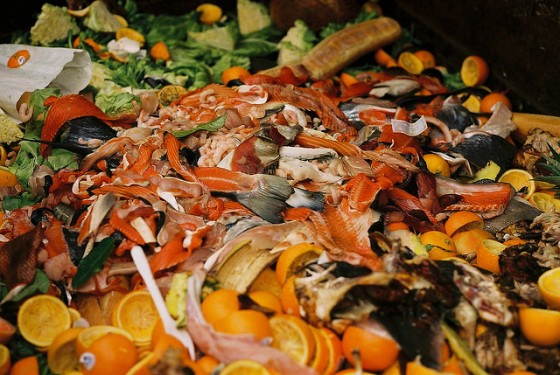
Food and scraps in a grocery dumpster.Jonathan Bloom, author of “American Wasteland,” explains why the environmental impact of food waste is rarely acknowledged.

jonathan bloom wastelandBecause most food decomposes into the ground (even McDonald’s), people assume that leftover food makes a small impact. But by the time food reaches our table, it has already used enormous amounts of natural resources for growing, harvesting, and transport. Then there are the pesticides and other chemicals used in modern food production. When food remains uneaten, those resources have served no purpose. And much of the wasted food, whether left at the farm, grocery store, restaurant, school, or home, ends up in a landfill.

In his new book American Wasteland, food waste expert Jonathan Bloom tackles an environmental topic that people prefer not to think about. But food waste, especially in landfills, is a serious environmental hazard.

Solid waste emits methane, a much more harmful substance than carbon dioxide with a “global warming potential” (GWP) 21 to 25 times more than that of carbon dioxide over a 100-year period. While American landfill methane emissions are “only” the ninth-largest source of greenhouse gas, they are easier to reduce than car emissions or paper production, for example. Some estimates put the amount of American food waste at 50% of the total food produced.

In Israel, 38% of the garbage consists of organic material, including inedible material like peels and shells, as well as wasted food. As more products are recycled, the percentage of organic materials in landfills increases.  Israel is seeking to increase composting and reduce organic waste.

Bloom traces the sources of food waste beginning with farms, where produce that might not survive the hazardous two-week trip to distant supermarkets is left to be plowed under. He follows the produce to grocery store chains, who reject any fruit that is mis-sized, misshapen, slightly discolored, or stored incorrectly. Once in the store, perfectly edible foods that have reached their sell-by date are culled and sent to the garbage because of overly strict regulations. And that’s without considering the vast amounts of food thrown out by the average household.

The effect of food waste on the environment can be reduced by the government paying more attention to the problem. Bloom visited Great Britain, where household waste totals decreased by 25% in less than ten years and a mere 16.5% of food and packaging waste is landfilled. Contrast that to 97% of food waste in the US, which doesn’t even collect detailed statistics on food waste.

Great Britain reduced its food waste and landfill emissions by removing misleading product labels, raising the price of landfill dumping, working with retailers to set policies discouraging food waste (even when the policies reduced their revenues), encouraging anaerobic methods of waste disposal that create usable energy, and a public relations campaign including a “Green Granny” that encouraged the public to use up their food instead of tossing it.

All of these techniques can easily be adopted to the Middle East. In Israel, a quick look at the unconsumed food on people’s plates after a wedding, or outside the shuk, demonstrates a severe lack of awareness in this area.

Also in Israel, produce languishes in the fields because of a lack of manpower to pick it. As a protest, the farmers have scheduled a two-day strike with no shipments of eggs, dairy products or produce to the stores. Much of this perishable food will undoubtedly end up in a landfill, emitting methane for the next couple of generations.

More green food posts:

Atoning for Environmental Sins in the Kitchen this Yom Kippur

Meat Prices Going Up? Tips for Switching to a Vegetable-Based Diet

12 Tips for Saving Water in the Kitchen

Hannah also writes a blog on efficient cooking, Cooking Manager.

Photo credit: storkist

Hannah Katsman
Hannah Katsmanhttps://www.greenprophet.com/
Hannah learned environmentalism from her mother, a conservationist before it was in style. Once a burglar tried to enter their home in Cincinnati after noticing the darkened windows (covered with blankets for insulation) and the snow-covered car in the driveway. Mom always set the thermostat for 62 degrees Fahrenheit (17 Celsius) — 3 degrees lower than recommended by President Nixon — because “the thermostat is in the dining room, but the stove’s pilot light keeps the kitchen warmer.” Her mother would still have preferred today’s gas-saving pilotless stoves. Hannah studied English in college and education in graduate school, and arrived in Petach Tikva in 1990 with her husband and oldest child. Her mother died suddenly six weeks after Hannah arrived and six weeks before the first Gulf War, and Hannah stayed anyway. She has taught English but her passion is parental education and support, especially breastfeeding. She recently began a new blog about energy- and time-efficient meal preparation called CookingManager.Com. You can find her thoughts on parenting, breastfeeding, Israeli living and women in Judaism at A Mother in Israel. Hannah can be reached at hannahk (at) greenprophet (dot) com.

Hot this week

Why Health Systems Are Reaching a Turning Point

Health emerges from a continuous energy and material flow from water through food to human physiology. Technical energy systems support this cycle through water treatment, agriculture, and infrastructure.

Sustainability That Sells: How Profit and Purpose Come Together in the Hive

Whether you are a commercial grower, hobbyist beekeeper or retail equipment supplier, this system opens a new income stream with minimal environmental impact.

The Fitness App Revolution: Building the Future of Wellness Through Strategic Development

In an era where smartphones are ubiquitous and health consciousness is at an all-time high, the fitness industry has undergone a radical digital transformation. Fitness applications have moved far beyond simple pedometers, evolving into comprehensive wellness platforms that serve as personal trainers, nutritionists, and community hubs right in our pockets.

A Brief History of Basil From India to Italy

Beloved, fortunate, sweet, and royal; an herb with a long and storied history in Asia and across the world. Called by many names, basil has featured in previous Green Prophet articles, so enjoy another serving, a brief history of basil.

How Renewable Energy is Revolutionizing the Way We Power Our World

Solar has become the star of the transition thanks to modular hardware and straightforward installation. It fits dense cities and remote towns alike. Many companies are turning to rooftop arrays and carport systems - and exploring commercial solar installation as a practical way to lock in future savings.

Topics

Why Health Systems Are Reaching a Turning Point

Health emerges from a continuous energy and material flow from water through food to human physiology. Technical energy systems support this cycle through water treatment, agriculture, and infrastructure.

Sustainability That Sells: How Profit and Purpose Come Together in the Hive

Whether you are a commercial grower, hobbyist beekeeper or retail equipment supplier, this system opens a new income stream with minimal environmental impact.

The Fitness App Revolution: Building the Future of Wellness Through Strategic Development

In an era where smartphones are ubiquitous and health consciousness is at an all-time high, the fitness industry has undergone a radical digital transformation. Fitness applications have moved far beyond simple pedometers, evolving into comprehensive wellness platforms that serve as personal trainers, nutritionists, and community hubs right in our pockets.

A Brief History of Basil From India to Italy

Beloved, fortunate, sweet, and royal; an herb with a long and storied history in Asia and across the world. Called by many names, basil has featured in previous Green Prophet articles, so enjoy another serving, a brief history of basil.

How Renewable Energy is Revolutionizing the Way We Power Our World

Solar has become the star of the transition thanks to modular hardware and straightforward installation. It fits dense cities and remote towns alike. Many companies are turning to rooftop arrays and carport systems - and exploring commercial solar installation as a practical way to lock in future savings.

How does one start prepping?

Faced with an extreme winter storm this year, Americans wonder how to be prepared for catastrophe. Miriam has lived through wars in the Middle East - so she's prepared on giving you a guide to prepping.

Fishermen sue tire manufacturers on behalf of the salmon

A federal trial in San Francisco has brought US tire manufacturers, fishing groups, and environmental scientists into court over a chemical most drivers have never heard of — but which scientists say may be silently reshaping aquatic ecosystems.

Listening to Water: Tarek Atoui’s Next Work for Tate Modern

Born in Beirut, Lebanon in 1980 and now living in Paris, Atoui has spent years building instruments that don’t sit comfortably in concert halls. Many of them involve water, glass, and ceramics — materials that react to sound instead of simply producing it.

Related Articles

Popular Categories