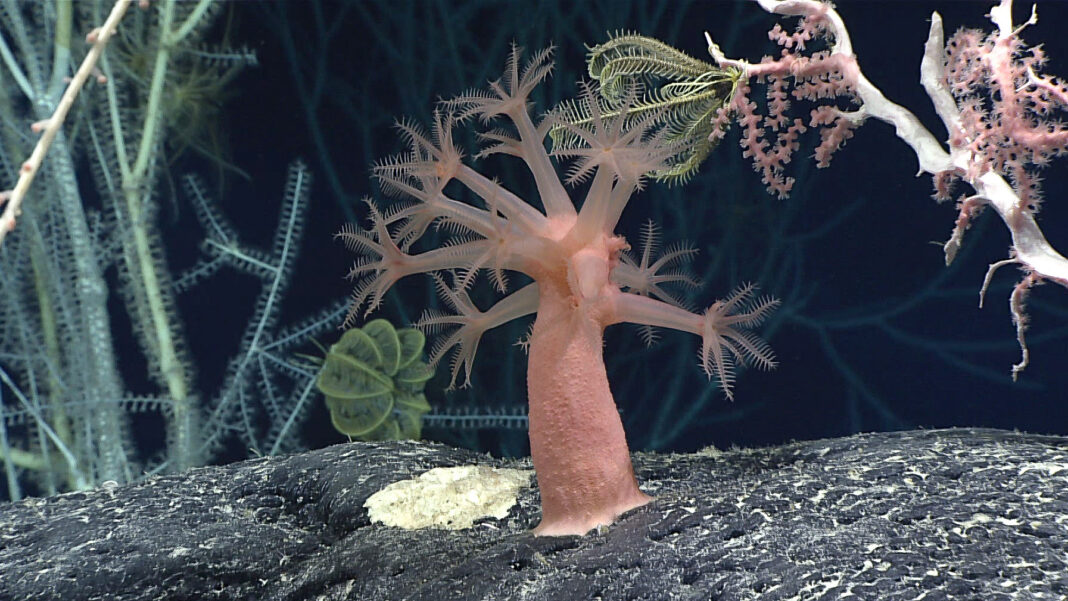


After weeks of intense debates at the International Seabed Authority (ISA) meeting in Jamaica this summer, deep seabed mining will not be allowed. The ISA, an international organization responsible for overseeing and regulating mineral resource activities in the seabed and ocean floor, focuses on protecting the marine environment from harmful impacts related to deep-seabed activities.
On July 28, 2023, the ISA announced the reinstatement of a moratorium on deep-sea mining. The proposal to discuss the protection of the marine environment and the future of deep-sea mining, initially blocked, will be on the agenda for the upcoming Assembly in 2024 thanks to champion countries’ efforts.
The ocean is already under significant stress from various factors, and deep-sea mining could exacerbate the situation. A temporary halt, or in the ISA’s terms, moratorium, is considered the best option until there is sufficient scientific evidence to protect the marine environment adequately. A number of companies have started mining for precious metals and minerals and policies need to be developed before the sea floor is ripped apart.
The deep-sea mining industry is being questioned as unnecessary for the green transition, and alternative measures like technology choices, recycling, and circular economy practices are suggested to reduce mineral demand. Transitioning to a circular economy is vital to effectively address biodiversity and climate crises.
A total of 21 countries have joined the call for a ban, precautionary pause, or moratorium on deep seabed mining, with Canada, Brazil, Finland, and Portugal making announcements during the ISA meetings. Additionally, companies representing 32% of the global tuna industry expressed concerns, 37 financial institutions managing over 3.3 trillion euros in assets highlighted the need for understanding potential risks, and the UN Commissioner on Human Rights advised against deep-sea mining.
Throughout the week, China, in favor of deep sea mining, had opposed the motion for discussion but eventually consented to include it in the agenda for 2024.
Supporters of deep-sea mining argue that it is necessary to fulfil the growing demand for metals like cobalt and nickel, which are crucial for producing batteries used in electric cars and the the shift towards green energy from fossil fuels. Companies like Regenx from Canada show that we can do a better job of recycling and re-using what we already have in the system. Another Canadian company, started the whole deep sea mining controversy. The Canadian company The Metals Company partnered with a tiny nation of Naura in Micronesia to trigger a loophole.
Canada is undoubtedly a mining nation and we need to hope that Canada will set the global environmental standard on protecting its Arctic borders and Pacific and Atlantic coasts when it comes to deep sea mining.
According to the Mining Association of Canada, which represents mines and their assets mining industry continues to be a critically important part of Canada’s economy, and contributed $125 billion to the GDP in 2021, 5% of the total. Mining, quarrying and oil and gas extraction made up 7.9% of Canada’s $2 trillion gross domestic product.
The debate made clear that governments, financial institutions, scientists, and communities are uniting in opposition to deep seabed mining and are creating progress.
However, the potential danger of unregulated deep-sea mining persists, and the complete extent of its impact, if allowed to proceed, remains uncertain.