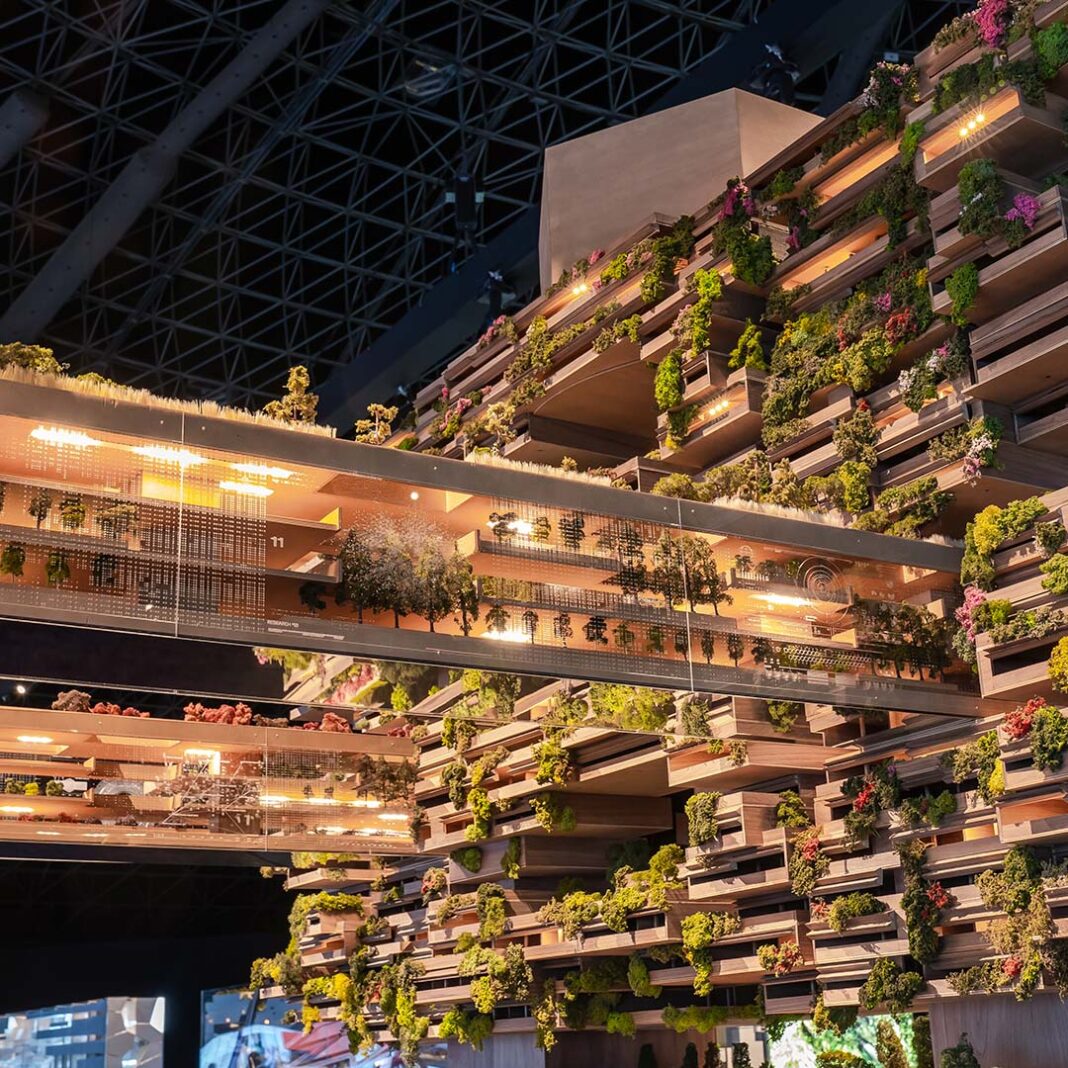
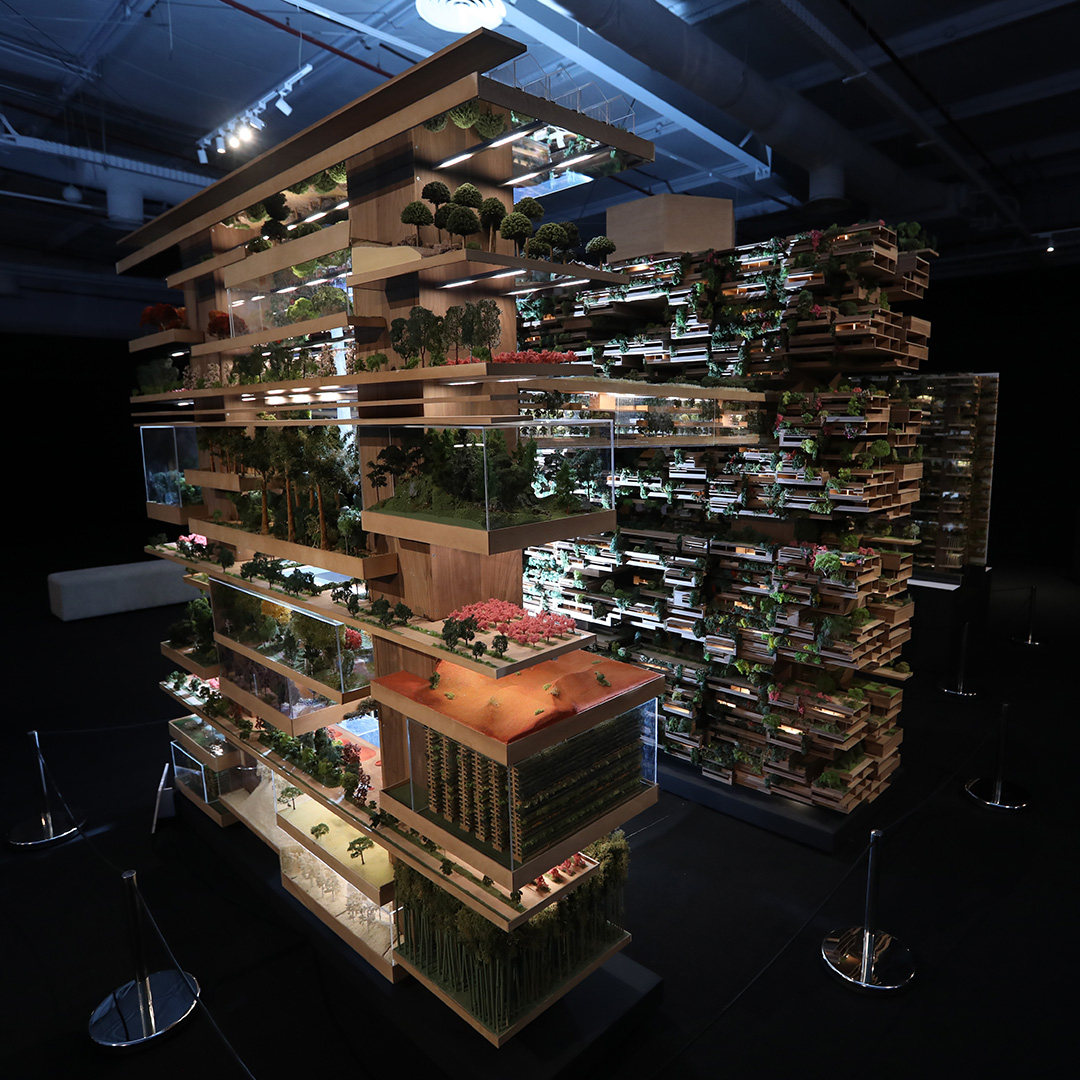
See the world’s largest 15-minute city, The Line

The Line Saudi Arabia, a 15 minute-city, rendering
A section from The Line, Saudi Arabia, a 15 minute-city, rendering shown in Riyadh

Saudi Arabia’s prince Mohammed bin Salman Al Saud has decided to put oil money profits from Saudi Aramco, its national oil company and largest company in the world, to an interesting use: he is building 110-mile long 15-minute city called The Line on the coast of the Red Sea.

Below is a series of renderings of how the The Line will look. The display was put up recently in Riyadh, the capital city and business hub of Saudi Arabia. Until now the project was being built in a manner of secrecy with media outlets like Green Prophet reported on satellite images captured at the building site.

A section from The Line, Saudi Arabia, a 15 minute-city, rendering shown in Riyadh

The Line, the linear city, will also be a 15-minute city, an urban planning concept where most of one’s daily necessities such as work, shopping, healthcare, education and leisure can be easily reached by a 15-minute walk or bike ride from any point in your city. (Saudi Arabia is also thinking about implementing a 4-day work week).

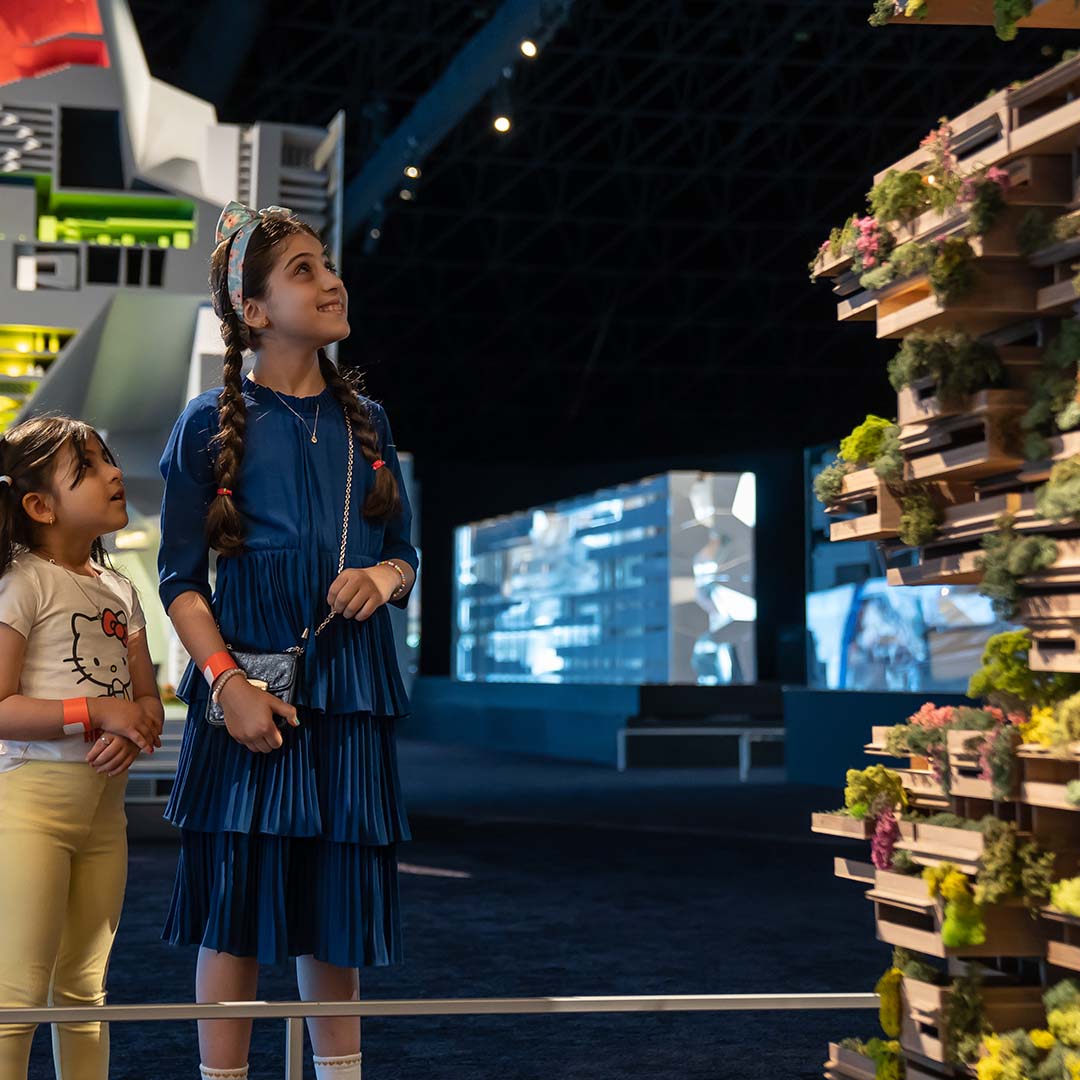
Boys look at model of The Line, a 15-minute city part of Neom, Saudi Arabia

Children look at model of The Line, a 15-minute city part of Neom, Saudi Arabia

Healthy cities in Europe like Rotterdam (read here why this Dutch city is so sustainable) and in Jaffa, Israel already do this. But by building one from scratch there is a risk of sanitizing the joy of living in such places which grow organically like an Old Growth Forest. Copying and pasting commercial concepts planned in advance in 15-minute chunks could be risky. Like Masdar learned in the United Arab Emirates, its 15-minute, zero energy city developed by the renewable energy company of the same name, was a flop. A unique design with an incredible lure, the more adventurous among Abu Dhabi’s intrepid tourists may find something endearing about this unrealized dream. 

Why conspiracy theorists are against 15-minute cities

Conspiracy theorists, often the same people who are climate change deniers, and against Covid vaccinations aren’t buying the dream of 15-minute city, developed in concept by Professor Carlos Moreno at the Sorbonne in Paris, which has enraged a number of Americans and Canadians who believe that driving your car is a basic right. This is despite the cost of gas directly controlled by Saudi Aramco, the Saudi owned oil company, owned by the Crown Prince and which made a record 161 billion USD in profits last year.

Naysayers are calling the 15-minute city concept a “socialist conspiracy theory” that takes away basic human rights to movement, comparing the idea to Nazi ghettos in Germany. That comparison is highly overused. Loose words spoken in social media today by both the “woke” and the right wing confound and confuse conversations. 

I love the idea of 15-minute cities if people will want to live in them. 

Children look at model of The Line, a 15-minute city part of Neom, Saudi Arabia

It is certainly probable that highly socialist countries like my motherland Canada are to blame for emerging interest in 15-minute cities as a cultural and environmental concept. Years ago at the University of Toronto I was shaped by an environmental philosophy course with lectures on “what makes a city healthy”. Strip malls, housing projects, suburbia were deemed unhealthy and unsocial, while mixed-housing streets in the middle of Toronto like Walmer Road where I lived in the Annex, were very much good examples of a healthy city at work and play. 

Children look at model of The Line, a 15-minute city part of Neom, Saudi Arabia

A healthy street and neighborhood should include people from all walks of life: students, the wealthy class, the welfare class, and everything in between and Walmer Road offered that, amazingly so. A laundromat, grocery store, parks, good eats, dog-friendly parks, pubs and my university were within a 15-minute walk. I lived there for 5 years celebrating that I didn’t need a car. My bike filled in for getting places fast closer to Lake Ontario, even in the snow.

When I got older and returned to Toronto I noticed that the dream wasn’t always accessible to all. My cousin bound to a wheelchair is part of a sailing club and can travel to work in her chair but when the sidewalks aren’t ploughed from the snow, she has a problem. When my dad was dying in a hospital in Toronto, it took me more than 15-minutes to go out by foot in the freezing to find him fresh fruit which wasn’t available at the hospital, a dead zone area around the bottom part of the university where it links to the city’s financial heart on Bay Street. Don’t doctors and bankers need fresh fruit? 

Children look at model of The Line, a 15-minute city part of Neom, Saudi Arabia

According to Wired with help from right-wing figures in the US and UK, including the author Jordan Peterson, the 15-minute city concept has become entwined within a much bigger universe of conspiracies based around the idea of a “Great Reset” that will see people locked in their homes by climate-obsessed autocracies.

Children look at model of The Line, a 15-minute city part of Neom, Saudi Arabia Children look at model of The Line, a 15-minute city part of Neom, Saudi Arabia

Being locked down in my opinion is only a state of mind (our carbon-based bodies are already trapped on earth and are forced to breath, eat, sleep), and living in a 15-minute city will make people much happier if done right. Imagine grandmothers living within walking distance to their grandkids. Kids who can wild range roam like they live in a kibbutz? I live in a 15-minute city in Jaffa, Israel. Now that my kids are older they get around fine by now although the electric bikes make it unsafe for them to use bike lanes. 

I shop on foot, get to my college classes by a short 10-minute bike ride. My health services, rarely used, is 10-minutes by foot and I know the names of the people who run the corner stores. This is opposed to living the American dream in Los Angeles, driving to everywhere and shopping at big box shops on the cheap. 


Karin Kloosterman
Karin Kloostermanhttp://www.greenprophet.com
Karin Kloosterman is an award-winning journalist, innovation strategist, and founder of Green Prophet, one of the Middle East’s pioneering sustainability platforms. She has ranked in the Top 10 of Verizon innovation competitions, participated in NASA-linked challenges, and spoken worldwide on climate, food security, and future resilience. With an IoT technology patent, features in Canada’s National Post, and leadership inside teams building next-generation agricultural and planetary systems — including Mars-farming concepts — Karin operates at the intersection of storytelling, science, and systems change. She doesn’t report on the future – she helps design it. Reach out directly to [email protected]

Hot this week

How Renewable Energy is Revolutionizing the Way We Power Our World

Solar has become the star of the transition thanks to modular hardware and straightforward installation. It fits dense cities and remote towns alike. Many companies are turning to rooftop arrays and carport systems - and exploring commercial solar installation as a practical way to lock in future savings.

How does one start prepping?

Faced with an extreme winter storm this year, Americans wonder how to be prepared for catastrophe. Miriam has lived through wars in the Middle East - so she's prepared on giving you a guide to prepping.

Fishermen sue tire manufacturers on behalf of the salmon

A federal trial in San Francisco has brought US tire manufacturers, fishing groups, and environmental scientists into court over a chemical most drivers have never heard of — but which scientists say may be silently reshaping aquatic ecosystems.

Listening to Water: Tarek Atoui’s Next Work for Tate Modern

Born in Beirut, Lebanon in 1980 and now living in Paris, Atoui has spent years building instruments that don’t sit comfortably in concert halls. Many of them involve water, glass, and ceramics — materials that react to sound instead of simply producing it.

Leading Through a Dual-Energy Transition: Balancing Decarbonisation with Energy Security

Experience in one area of the energy industry isn't enough to guarantee readiness across all the others. That's where a structured program like an MBA in energy can come in. Today's advanced curricula explore energy economics, finance, policy, and strategic management alongside the technical subjects. And when pursuing an energy MBA online, professionals can skill up and retrain without having to step out of the labor market -- an important perk at a time when skilled professionals are already in short supply.

Topics

How Renewable Energy is Revolutionizing the Way We Power Our World

Solar has become the star of the transition thanks to modular hardware and straightforward installation. It fits dense cities and remote towns alike. Many companies are turning to rooftop arrays and carport systems - and exploring commercial solar installation as a practical way to lock in future savings.

How does one start prepping?

Faced with an extreme winter storm this year, Americans wonder how to be prepared for catastrophe. Miriam has lived through wars in the Middle East - so she's prepared on giving you a guide to prepping.

Fishermen sue tire manufacturers on behalf of the salmon

A federal trial in San Francisco has brought US tire manufacturers, fishing groups, and environmental scientists into court over a chemical most drivers have never heard of — but which scientists say may be silently reshaping aquatic ecosystems.

Listening to Water: Tarek Atoui’s Next Work for Tate Modern

Born in Beirut, Lebanon in 1980 and now living in Paris, Atoui has spent years building instruments that don’t sit comfortably in concert halls. Many of them involve water, glass, and ceramics — materials that react to sound instead of simply producing it.

Leading Through a Dual-Energy Transition: Balancing Decarbonisation with Energy Security

Experience in one area of the energy industry isn't enough to guarantee readiness across all the others. That's where a structured program like an MBA in energy can come in. Today's advanced curricula explore energy economics, finance, policy, and strategic management alongside the technical subjects. And when pursuing an energy MBA online, professionals can skill up and retrain without having to step out of the labor market -- an important perk at a time when skilled professionals are already in short supply.

From Green Energy to Healthy Societies: Why old systems thinking is becoming relevant again

Across the Middle East and North Africa, large investments are being made in green hydrogen, renewable energy, water infrastructure and sustainability. Most of these efforts are discussed in the context of climate change, decarbonization and economic diversification. That framing is important, but it may not capture their full value.

We saw peace – an interreligious encounter deep in our eyes

They came from Israel, Palestine, Jordan, Iraq, Yemen, Morocco, Tunisia, Lebanon, Egypt… There are Sunni Muslims, Shiite Muslims, Jews (Orthodox and Reform), Orthodox Christians, Coptic Christians, Protestant Christians, Druze, Baha'is, a Scientologist.

Can biochar reduce ‘Forever Chemicals’ in food if it’s used in farms?

Biochar is produced by heating organic material in a low-oxygen environment so it does not burn. This process, known as pyrolysis, transforms plant matter into a stable, carbon-rich material.

Related Articles

Popular Categories