Saudi Aramco invests in hydroponics with Red Sea Farms

red sea farms, saudi arabia, hydroponics

Saudi-owned and world’s largest oil company invests in food 

Saudi Aramco is investing in what many people hail as food for the future: hydroponics. Hydroponics means growing food crops like lettuce and fresh herbs (it started with cannabis in Canada) using a water based medium and added nutrients to a closed loop system based on plastic pipes. Hydroponics works well for growing cannabis where the cost of the product is high, but its application for food at items such as lettuce and fresh herbs is still being challenged as a viable business model.

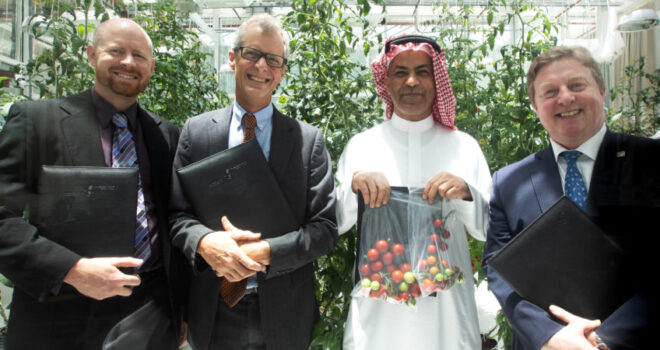
Investors with money to spare are trying on hydroponics: Saudi Aramco has led a $18.5 million USD investment round with the The Savola Group to grow soilless agriculture at the Red Sea Farms in Saudi Arabia.

Saudi Aramco, officially the Saudi Arabian Oil Company, is a Saudi Arabian public petroleum and natural gas company based in Dhahran. As of 2020, it is one of the largest companies in the world by revenue. It is 95% owned by the Saudi government ruled by the Saud family. 

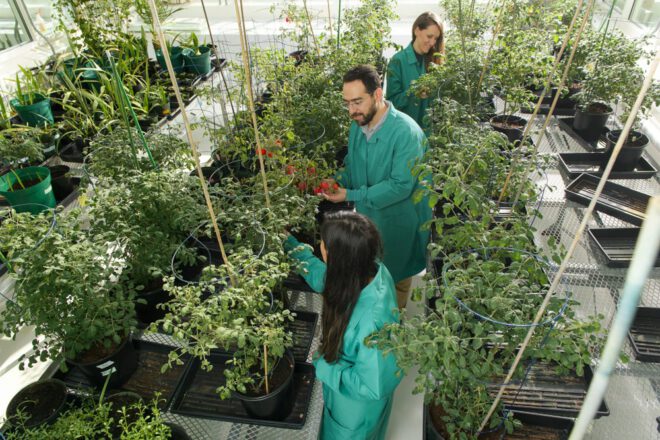
The Red Sea Farms is a jointly-owned Saudi Arabian and United Arab Emirates agtech business that uses less freshwater than traditional agriculture through hydroponics, an approach to farming that requires, still, a heavy dependence on synthetic fertilizers to work. 
red sea farms, hydroponic food agtech

Red Sea Farms is building an indoor farm to sustainably feed guests at The Red Sea Project and be a main supplier to the luxury destination’s resort; it has partnered with Silal in the UAE to deploy new technologies for sustainable desert farming.
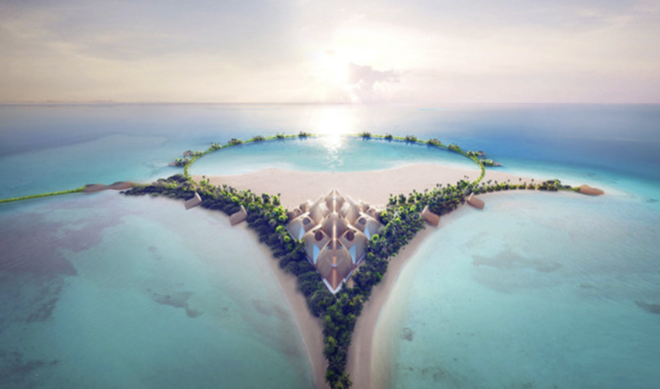
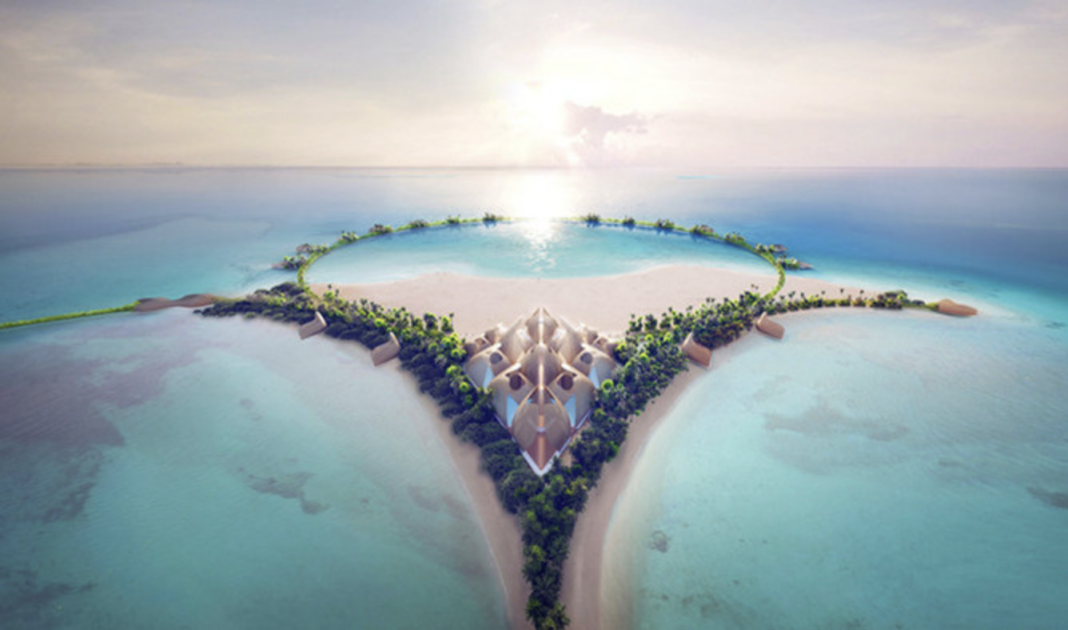
Red Sea Project

In January 2022, Red Sea Farms expanded into the USA and recently completed a new commercial-scale 6-hectare technology retrofit site near Riyadh, KSA and an R&D facility at the King Abdullah University of Science and Technology in Thuwal, KSA – where technologies are delivering results ahead of expectations.

What is the Red Sea Project?

The Red Sea Project is the world’s most ambitious tourism project, offering an exclusive experience of unparalleled diversity for discerning global travellers. The site encompasses an archipelago of more than 90 pristine islands, miles of sweeping desert and dramatic mountain landscapes.

Red Sea Farms, which will supply food the Red Sea Project, has raised a total of USD $36.5 million to date.

I was at a luxury, sustainable resort in Thailand called Keemala that offered hydroponics food to their guests. A peek under the hood in the backyard and I could see the hydroponics were hardly in operation. Good in theory, in practice, very difficult to do without the right oversight. 

For the Red Sea Farms, the recent fund raise was co-led by Wa’ed – the venture capital arm of Saudi Aramco and The Savola Group – the leading strategic investment holding group in MENA food and retail, through their corporate venture capital program. KAUST Innovation Fund, one of Red Sea Farms’ original investors, is also participating, along with OlsonUbben LLC, an investment entity owned by Tony Olson and Jeffrey Ubben. Tony Olson is the CEO of SPINS, a leading wellness-focused data company and advocate for the Natural Product Industry, and Jeffrey Ubben is the Founder and Managing Partner at Inclusive Capital Partners and a pioneer in impact investing.

Proceeds will support Red Sea Farms’ global and regional expansion plans – including expansion of the fresh produce business in the GCC.  Global expansion is focused on technology development, and productization – with first generation product sales expected by Q4 2022. 

::Red Sea Farms

Karin Kloosterman
Karin Kloostermanhttp://www.greenprophet.com
Karin Kloosterman is an award-winning journalist, innovation strategist, and founder of Green Prophet, one of the Middle East’s pioneering sustainability platforms. She has ranked in the Top 10 of Verizon innovation competitions, participated in NASA-linked challenges, and spoken worldwide on climate, food security, and future resilience. With an IoT technology patent, features in Canada’s National Post, and leadership inside teams building next-generation agricultural and planetary systems — including Mars-farming concepts — Karin operates at the intersection of storytelling, science, and systems change. She doesn’t report on the future – she helps design it. Reach out directly to [email protected]

TRENDING

What are AWG air-water generators, and why they aren’t a golden-bullet solution (yet)

Atmospheric water generators (AWGs) sound like magic: machines that can pull drinking water out of air. The idea is mentioned in the Bible, where the elders would pray for water collected as dew on plants and the catch on turning this into a machine is in the physics. To turn invisible vapor into liquid, you must remove heat, especially the latent heat of condensation.

Jordan’s $6 Billion Aqaba–Amman Desalination Project from the Red Sea Moves Forward

In 2025, the Jordanian government signed agreements with a consortium led by Meridiam and SUEZ, alongside VINCI Construction and Orascom Construction. Under a 30-year concession agreement, the consortium will design, build, finance, operate, and maintain the system before transferring it back to the Jordanian government. The total investment is estimated at approximately $6 billion USD.

Saudi Arabia cancels the Asian games at Neom’s Trojena

Neom, a bombastic collection of futuristic cities and resorts, has flopped as Saudi oil prices roll back reality. The Saudi plan of hosting the 2029 Asian games to be held at Trojena, a ski report in the desert, has been cancelled. 

Xcimer is the Denver-based startup that could put Saudi Arabia out of business

An American company can collapse OPEC if they can prove their approach to unlimited energy works.

The Saudi Startup Turning Desalination’s Toxic Waste Into Its Own Disinfectant

For millennia, the Middle East's water crisis seemed an immutable fact of geography — a region defined as much by what it lacked as by what lay beneath its sands. Today, a convergence of plummeting solar costs, advancing membrane technology, and hard-won engineering expertise is rewriting that story.

Should You Invest in the Private Market?

startustartup Unlike public stock exchanges, which offer daily trading, strict...

How to build a 100-year-company

Kongō Gumi is a Japanese construction company, purportedly founded in 578 A.D., making it the world's oldest documented company. What can we learn about building sustainable businesses from them?

From Pilot Plant to Global Stage: How Aduro Clean Technologies’ 2026 Expansion Signals a Turning Point for Chemical Recycling Investors Like Yazan Al Homsi

The company's Next Generation Process (NGP) Pilot Plant in London, Ontario, has officially moved into initial operating campaigns, generating the kind of structured, repeatable data that separates laboratory promise from commercial viability.

How AI Helps SaaS Companies Reduce Repetitive Customer Support Work

SaaS products are designed for large numbers of users with different levels of experience, and also in renewable energy.

Pulling Water from the Air

Faced with water shortage in Amman, Laurie digs up...

Turning Your Energy Consultancy into an LLC: 4 Legal Steps for Founders in Texas

If you are starting a renewable energy business in Texas, learn how to start an LLC by the books.

Tracking the Impacts of a Hydroelectric Dam Along the Tigris River

For the next two months, I'll be taking a break from my usual Green Prophet posts to report on a transnational environmental issue: the Ilısu Dam currently under construction in Turkey, and the ways it will transform life along the Tigris River.

6 Payment Processors With the Fastest Onboarding for SMBs

Get your SMB up and running fast with these 6 payment processors. Compare the quickest onboarding options to start accepting customer payments without delay.

Related Articles

Popular Categories