Vertical Forests, A Practical Design For Humanizing Cities Again

vertical-forest-egypt

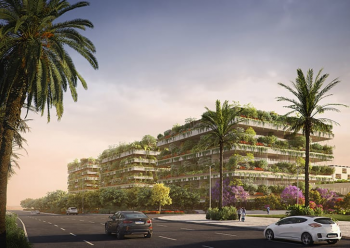
What on earth is a vertical forest? It’s a forest that doesn’t grow on the earth. It grows in troughs placed on the balconies of residential buildings, hotels, and parks, making huge urban green spaces that don’t take up ground space, but rise skyward.  Today’s overcrowded, denatured, polluted cities are only waiting for them. They are the brainchild  of Italian architect and urban planner Stefano Boeri.

Boeri’s office, Stefano Boeri Architetti,  has already planted 27 vertical forests in cities around the world. Now Egypt has accepted plans for three seven-story forested buildings to be built in the New Administrative Capital, which is planned to replace Cairo as the capital city.  One of the three buildings will be a hotel; the other two will contain apartments. Planned together with Egyptian designer Shimaa Shalash and Italian landscape architect Laura Gatti, the buildings will house terraces containing 350 trees and 14,000 shrubs of more than 100 different species. 

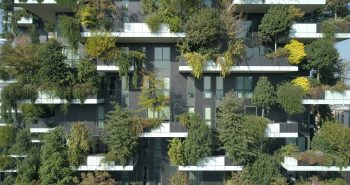
What’s wonderful about vertical forests? A few hundred square meters of building can host thousands of square meters of trees and shrubs. Each  balcony may hold over a dozen trees from three to nine meters high, plus smaller plants. It’s calculated that one vertical forest holds the equivalent of two hectares of woodland and ground level undergrowth.

Apartment dwellers in forested buildings enjoy the human feeling of closeness to nature that until now was the privilege of those living in houses with yards. They can follow the seasons as their trees and bushes change colors, fade, and bloom again over the year. Greenery guarantees cleaner air  for residents and for the city as a whole, as plants filter ambient dust, absorb carbon dioxide and produce oxygen. Plants also act as a shield against city noise. 

Vertical forests can help stabilize climate change. The shade cast over buildings walls and glass facades deflects sun glare and in summer, can reduce interior temperatures significantly. (As we noted, the need for shade in cities is becoming more and more urgent.) With comfortable indoor temperatures, residents won’t automatically switch the air conditioning on, thus reducing their, and the city’s, greenhouse emissions.  

An example in the works is the Nanjing Vertical Forest, the first vertical forest in China. It has two towers that contain 800 trees from 27 local species and 2,500 cascading plants and shrubs. It’s projected to absorb 18 tons of CO2 per year and  produce 16,5 tons of oxygen. 

The natural habitats of birds and insects are fast disappearing to make room for urban construction. A building planted with a vertical forest actually attracts small wildlife, not only helping to preserve species but to preserve human varieties of food crops. As is known, many important crops depend on insect pollination, such as watermelons, stone fruit, nuts, and avocados. Bees or butterflies that visit flowering shrubs in a forested apartment balcony may well help fertilize food crops in fields or groves outside the city limits. 

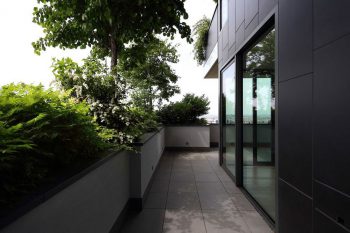
How are vertical forests made and maintained? The plant troughs are placed on balconies. The photo below shows how. 
vertical forest

They are 1.10 meters high and up to 1.10 meters wide. The growing medium is a mix of soil, compost, and volcanic material that helps keep the mass light. Irrigation comes from groundwater pulled by a solar-powered pump system on the roof to all the troughs in the building. The plants used in this project are chosen according to the demands of the climate and installed in the troughs as saplings, slowly naturalizing to their new conditions. The troughs and plants are maintained under building regulations.

Ideally, cities would construct many such vertical forests. The Boeri site describes a future urban ecosystem where birds and insects thrive and help green the environment.

 “The creation of a number of vertical forests in the city can set up a network of environmental corridors which will give life to the main parks in the city, bringing together the green space of avenues and gardens and interweaving various spaces of spontaneous vegetation growth.”
vertical forest

All images via Stefano Boeri Architetti.



Miriam Kresh
Miriam Kreshhttps://www.greenprophet.com/
Miriam Kresh is an American ex-pat living in Israel. Her love of Middle Eastern food evolved from close friendships with enthusiastic Moroccan, Tunisian and Turkish home cooks. She owns too many cookbooks and is always planning the next meal. Miriam can be reached at miriam (at) greenprophet (dot) com.

Hot this week

Why Health Systems Are Reaching a Turning Point

Health emerges from a continuous energy and material flow from water through food to human physiology. Technical energy systems support this cycle through water treatment, agriculture, and infrastructure.

Sustainability That Sells: How Profit and Purpose Come Together in the Hive

Whether you are a commercial grower, hobbyist beekeeper or retail equipment supplier, this system opens a new income stream with minimal environmental impact.

The Fitness App Revolution: Building the Future of Wellness Through Strategic Development

In an era where smartphones are ubiquitous and health consciousness is at an all-time high, the fitness industry has undergone a radical digital transformation. Fitness applications have moved far beyond simple pedometers, evolving into comprehensive wellness platforms that serve as personal trainers, nutritionists, and community hubs right in our pockets.

A Brief History of Basil From India to Italy

Beloved, fortunate, sweet, and royal; an herb with a long and storied history in Asia and across the world. Called by many names, basil has featured in previous Green Prophet articles, so enjoy another serving, a brief history of basil.

How Renewable Energy is Revolutionizing the Way We Power Our World

Solar has become the star of the transition thanks to modular hardware and straightforward installation. It fits dense cities and remote towns alike. Many companies are turning to rooftop arrays and carport systems - and exploring commercial solar installation as a practical way to lock in future savings.

Topics

Why Health Systems Are Reaching a Turning Point

Health emerges from a continuous energy and material flow from water through food to human physiology. Technical energy systems support this cycle through water treatment, agriculture, and infrastructure.

Sustainability That Sells: How Profit and Purpose Come Together in the Hive

Whether you are a commercial grower, hobbyist beekeeper or retail equipment supplier, this system opens a new income stream with minimal environmental impact.

The Fitness App Revolution: Building the Future of Wellness Through Strategic Development

In an era where smartphones are ubiquitous and health consciousness is at an all-time high, the fitness industry has undergone a radical digital transformation. Fitness applications have moved far beyond simple pedometers, evolving into comprehensive wellness platforms that serve as personal trainers, nutritionists, and community hubs right in our pockets.

A Brief History of Basil From India to Italy

Beloved, fortunate, sweet, and royal; an herb with a long and storied history in Asia and across the world. Called by many names, basil has featured in previous Green Prophet articles, so enjoy another serving, a brief history of basil.

How Renewable Energy is Revolutionizing the Way We Power Our World

Solar has become the star of the transition thanks to modular hardware and straightforward installation. It fits dense cities and remote towns alike. Many companies are turning to rooftop arrays and carport systems - and exploring commercial solar installation as a practical way to lock in future savings.

How does one start prepping?

Faced with an extreme winter storm this year, Americans wonder how to be prepared for catastrophe. Miriam has lived through wars in the Middle East - so she's prepared on giving you a guide to prepping.

Fishermen sue tire manufacturers on behalf of the salmon

A federal trial in San Francisco has brought US tire manufacturers, fishing groups, and environmental scientists into court over a chemical most drivers have never heard of — but which scientists say may be silently reshaping aquatic ecosystems.

Listening to Water: Tarek Atoui’s Next Work for Tate Modern

Born in Beirut, Lebanon in 1980 and now living in Paris, Atoui has spent years building instruments that don’t sit comfortably in concert halls. Many of them involve water, glass, and ceramics — materials that react to sound instead of simply producing it.

Related Articles

Popular Categories