

Should you eat diatomaceous earth (DT) for health?

A Green Prophet reader reports that her healer recommends a daily teaspoon of diatomaceous earth (D.E.) to suppress a sudden, uncharacteristic appetite for junk food. 

“Diatomaceous earth makes me feel full,” she says.   “And it’s supposed to cleanse the intestines.” 

Somewhat repelled, but intrigued, I went on an information quest. What research yielded was this: diatomaceous earth is powdered rock that’s  composed of fossilized silica shells of diatoms, a species of alga. Diatoms don’t fit neatly into any of the usual categories of animal, vegetable or mineral, but they are living creatures. Below is a photo, via microscope, of ocean diatoms in between ice crystals in Antarctica. People use it on their gardens to kill insects, but along with the eating coal trend, people are eating diatomaceous earth. 
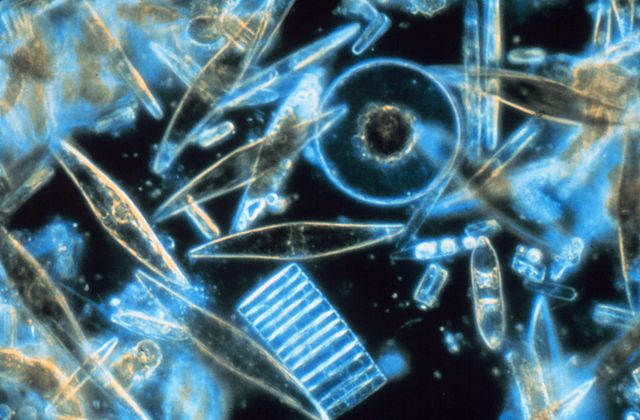
The millennial accumulation of fossilized diatom shells, mixed with natural clays and minerals, formed deposits that are most often found in or near lakes, wetlands and the ocean. Diatom shells are composed of silica (silicon dioxide), and is a form of sand; dangerous when it’s inhaled. Long-term exposure causes a lung disease, silicosis. So if you eat it, best not to breath it while you are stirring the glass. 

Diatomaceous earth as natural pesticide

We’re familiar with the use of diatomaceous earth as a natural pesticide. The silicon particles have sharp edges that minutely lacerate slugs, snails, and insects such as ants, cockroaches, bed bugs (hey New York!), and fleas. The pests lose moisture through the wounds and dehydrate. 

Farmers mix diatomaceous earth with grains in storage, to prevent insect infestation and clumping. Some hold that diatomaceous earth helps to de-worm farm animals. Diatomaceous earth is sometimes used as a soil improver, especially in potted plants such as bonsai.  However mild diatomaceous earth pesticides are, they are still regulated in the United States under the Federal Insecticide, Fungicide, and Rodenticide Act and must be registered with the Environmental Protection Agency.

Industry has uses for D.E. too: its abrasive properties are handy in metal polish, water filtration, production of dynamite, toothpaste and even some facial scrubs. I recommend our own safe, natural sugar scrub recipe over commercial products.

Now why are people eating diatomaceous earth?

And do studies show any benefit from ingesting it?

There are two types of diatomaceous earth: food-grade and non food-grade. The difference is in the content of crystalline vs. amorphous silica dioxide in it, and how finely-ground the powder is. I’m coming to the conclusion that “food-grade” is a misnomer, as there’s no solid evidence that diatomaceous earth contributes nutrition, nor anything to health, that real food doesn’t already.

The long, long list of health benefits attached to eating diatomaceous earth will make you dizzy. A daily teaspoon, blended into a smoothie or stirred into juice, is claimed to improve hair, skin, and bones. It’s supposed to detoxify the body by improving digestion, and help absorb nutrients.  Vendors claim that you’ll lose weight and reduce cholesterol levels and blood pressure.  It’ll cure diarrhea and constipation.

From eliminating coughs and menopausal symptoms to relieving back pain and insomnia, diatomaceous earth is the miracle superfood supplement of the moment.  Somewhat like CBD infused drinks. Some even claim that ingesting diatomaceous earth staves off aging and Alzheimer’s.

No results for diatomaceous earth in science

Oh, please. No studies exist that back up those claims. Websites that extol eating diatomaceous earth publish testimonials, not study results. They usually lead you to a shopping cart. I can understand how diatomaceous earth makes you feel full (you must drink a lot of water with it) – which will cut your appetite and lead to weight loss. But so will psyllium seeds. Or eating six small, nutrient-dense meals a day.

Want to detox? Why go with a sharp-edged substance that will scrape your intestinal walls, carrying protective mucous away and leaving you vulnerable to viruses and bacteria? Seen through a microscope, you can appreciate the tiny, sharp protrusions that so efficiently kill slugs and insects. 

Today’s readers are more than familiar with what it takes to detox and live longer: get off cigarettes and excessive alcohol; drink a lot more water; eat lots of salads (here’s an ancient salad recipe from the Rambam) and cooked vegetables; avoid sugar and red meat; exercise regularly and if possible, in the fresh air.

To lower blood pressure (and de-stress), learn to meditate, or learn yoga. Eat high-cocoa content chocolate! Or make these Raven cookies. If you suspect you’re harboring parasites, like after drinking unsafe water while traveling, visit to the doctor. 

Use your good judgement with trendy “superfoods” like diatomaceous earth, which isn’t a food at all.

So should you be eating diatomaceous earth?

You already know what I think.

Photos via Wikipedia and www.findlow-filters.com 

Miriam Kresh
Miriam Kreshhttps://www.greenprophet.com/
Miriam Kresh is an American ex-pat living in Israel. Her love of Middle Eastern food evolved from close friendships with enthusiastic Moroccan, Tunisian and Turkish home cooks. She owns too many cookbooks and is always planning the next meal. Miriam can be reached at miriam (at) greenprophet (dot) com.

Hot this week

How Renewable Energy is Revolutionizing the Way We Power Our World

Solar has become the star of the transition thanks to modular hardware and straightforward installation. It fits dense cities and remote towns alike. Many companies are turning to rooftop arrays and carport systems - and exploring commercial solar installation as a practical way to lock in future savings.

How does one start prepping?

Faced with an extreme winter storm this year, Americans wonder how to be prepared for catastrophe. Miriam has lived through wars in the Middle East - so she's prepared on giving you a guide to prepping.

Fishermen sue tire manufacturers on behalf of the salmon

A federal trial in San Francisco has brought US tire manufacturers, fishing groups, and environmental scientists into court over a chemical most drivers have never heard of — but which scientists say may be silently reshaping aquatic ecosystems.

Listening to Water: Tarek Atoui’s Next Work for Tate Modern

Born in Beirut, Lebanon in 1980 and now living in Paris, Atoui has spent years building instruments that don’t sit comfortably in concert halls. Many of them involve water, glass, and ceramics — materials that react to sound instead of simply producing it.

Leading Through a Dual-Energy Transition: Balancing Decarbonisation with Energy Security

Experience in one area of the energy industry isn't enough to guarantee readiness across all the others. That's where a structured program like an MBA in energy can come in. Today's advanced curricula explore energy economics, finance, policy, and strategic management alongside the technical subjects. And when pursuing an energy MBA online, professionals can skill up and retrain without having to step out of the labor market -- an important perk at a time when skilled professionals are already in short supply.

Topics

How Renewable Energy is Revolutionizing the Way We Power Our World

Solar has become the star of the transition thanks to modular hardware and straightforward installation. It fits dense cities and remote towns alike. Many companies are turning to rooftop arrays and carport systems - and exploring commercial solar installation as a practical way to lock in future savings.

How does one start prepping?

Faced with an extreme winter storm this year, Americans wonder how to be prepared for catastrophe. Miriam has lived through wars in the Middle East - so she's prepared on giving you a guide to prepping.

Fishermen sue tire manufacturers on behalf of the salmon

A federal trial in San Francisco has brought US tire manufacturers, fishing groups, and environmental scientists into court over a chemical most drivers have never heard of — but which scientists say may be silently reshaping aquatic ecosystems.

Listening to Water: Tarek Atoui’s Next Work for Tate Modern

Born in Beirut, Lebanon in 1980 and now living in Paris, Atoui has spent years building instruments that don’t sit comfortably in concert halls. Many of them involve water, glass, and ceramics — materials that react to sound instead of simply producing it.

Leading Through a Dual-Energy Transition: Balancing Decarbonisation with Energy Security

Experience in one area of the energy industry isn't enough to guarantee readiness across all the others. That's where a structured program like an MBA in energy can come in. Today's advanced curricula explore energy economics, finance, policy, and strategic management alongside the technical subjects. And when pursuing an energy MBA online, professionals can skill up and retrain without having to step out of the labor market -- an important perk at a time when skilled professionals are already in short supply.

From Green Energy to Healthy Societies: Why old systems thinking is becoming relevant again

Across the Middle East and North Africa, large investments are being made in green hydrogen, renewable energy, water infrastructure and sustainability. Most of these efforts are discussed in the context of climate change, decarbonization and economic diversification. That framing is important, but it may not capture their full value.

We saw peace – an interreligious encounter deep in our eyes

They came from Israel, Palestine, Jordan, Iraq, Yemen, Morocco, Tunisia, Lebanon, Egypt… There are Sunni Muslims, Shiite Muslims, Jews (Orthodox and Reform), Orthodox Christians, Coptic Christians, Protestant Christians, Druze, Baha'is, a Scientologist.

Can biochar reduce ‘Forever Chemicals’ in food if it’s used in farms?

Biochar is produced by heating organic material in a low-oxygen environment so it does not burn. This process, known as pyrolysis, transforms plant matter into a stable, carbon-rich material.

Related Articles

Popular Categories