Treating snail fever and swollen bellies with prawns

snail-fever-africa

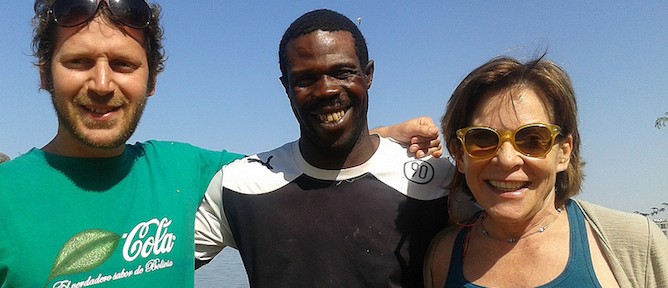
Amit Savaia (left), went to Africa for three months to volunteer after finishing his first degree in science. With four other Israeli students from Israel’s Ben-Gurion University of the Negev, he helped build a computer platform to connect African farmers with their neighbors.

What tugged at his heartstrings, though, was the problem of schistosomiasis, the “snail fever” caused by ingesting parasites. This disease causes the characteristic swollen bellies in African children.

While mortality rates are low from snail fever, it is the second most socioeconomically devastating disease in Africa, after malaria. The chronic illness can damage internal organs and can lead to slowed growth and cognitive development. In adults, it carries an increased risk of bladder cancer.
snail-fever-africa-amit-savaia-2

Savaia vowed to help Africa beat this problem. Today, earning a master’s degree, he is working with the Bill & Melinda Gates Foundation-funded organization Project Crevette to develop a natural way to stop schistosomiasis in Senegal — using cultured prawns based on research from Ben-Gurion University.

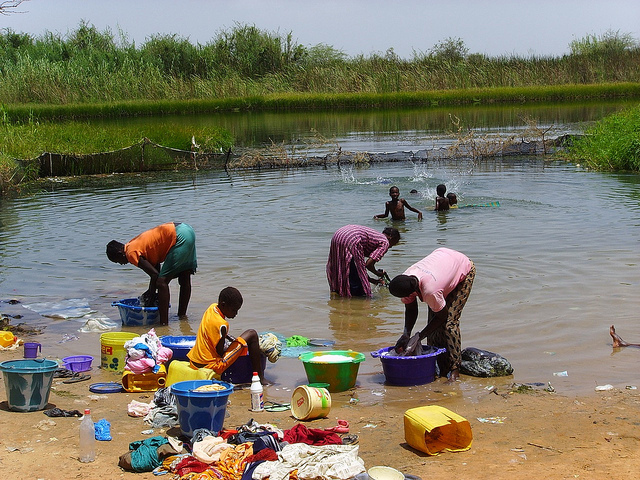
He is concentrating his efforts on the local watering hole in the Lampsar Village in Senegal. Savaia says that it’s next to impossible to get the villagers to stop swimming and urinating in the water, which keeps the parasitic cycle going.

Prawn release in Africa

This watering hole in Senegal is a breeding ground for snail fever. Says an impassioned Savaia, now looking for funding to take his research to the final stages: “Schistosomiasis, also known as bilharzia, has no sustainable cure or treatment. The only drug used today to heal the people is an old drug called Praziquantal (PZQ), which kills the mature worms inside the body. There is no vaccine, even though a lot of companies are trying to make one.”

Sustainable solution to disease in Africa
snail-fever-africa-amit-savaia-prawn

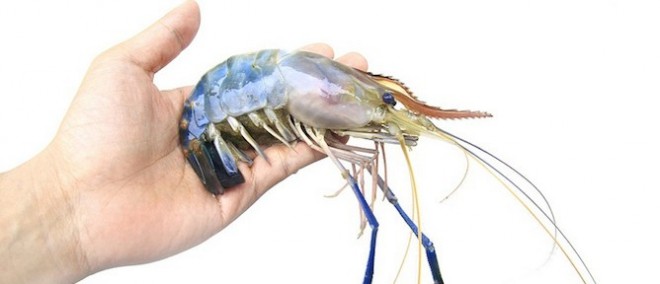
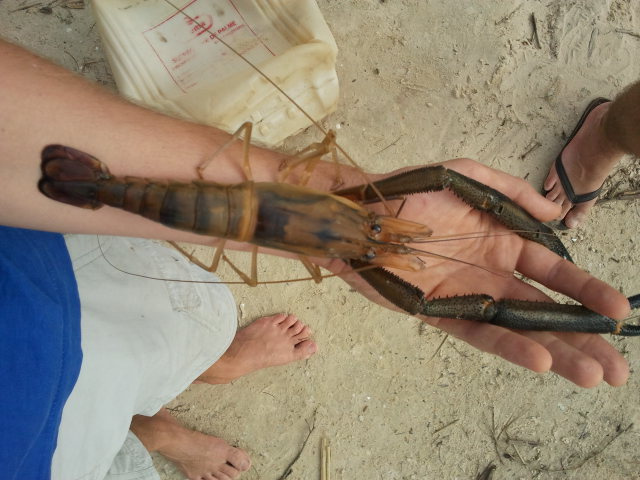
The back story is that a river in Senegal was dammed, and consequently female prawns – natural predators of snails — were blocked from laying their eggs. The parasite-carrying snail population in the watering hole skyrocketed, and the snail-fever parasite grew with it.

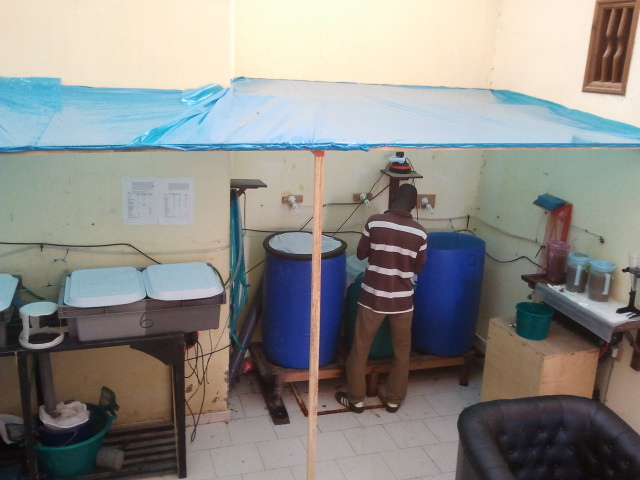
Working on the project since 2012, Savaia proposes using advanced breeding methods to reintroduce prawns to the river. The catch is, these prawns are particularly delicate and hard to grow, especially in captivity. “Not many people have done it before and we had only one reference on how to do it,” he says.

But he has much hope for the approach. It is innovative, sustainable, and creates a triple winning situation for the farmers, villagers and fisherman, he says.
snail-fever-africa-amit-savaia

When he is able to prove the concept, “it could be applied in many more countries. These prawns are distributed almost all over the west coast of Africa. Senegal isn’t the only place where a dam started such a problem.”

Savaia’s academic supervisor, Prof. Amir Sagi, has done decades of research on prawns and crustaceans. Savaia also works with Prof. Dina Zilberg, Ben-Gurion’s expert on aquatic animal health.

They have learned that the larvae of this prawn species need to be reared in saline water for two months. After that, the crustacean goes through 14 cycles, or 15 molts, to become post-larvae of a small adult prawn.

Up until this point, “The animals are very delicate,” he says.

When they are reintroduced in the dammed river, they successfully eat the snails that harbor the parasite. A negative cycle is stopped. The question is how to turn this basic research into a project that Africa can do for itself.

Savaia has been strongly affected by seeing, first hand, the damage that the parasites do.

“I must say when we go to the villages you don’t see those awful pictures of children with big stomachs, and extremely sick people, because they stay at home or in hospitals,” he says.

“But when you take their urine and you filter it in order to know how sick they are [by counting how many eggs are in the sample], we find urine as red as blood. This comes from the eggs sitting on their kidneys and intestines.”

Savaia’s dream is big, but he’s unstoppable. “We want to make farms to teach farmers how to produce the prawns so they can sell some for the markets as a crop, because they are delicious, and the rest will be released in the river with an agreement of the health ministry.

“This way, everyone will be happy,” concludes Savaia.

Karin Kloosterman
Karin Kloostermanhttp://www.greenprophet.com
Karin Kloosterman is an award-winning journalist, innovation strategist, and founder of Green Prophet, one of the Middle East’s pioneering sustainability platforms. She has ranked in the Top 10 of Verizon innovation competitions, participated in NASA-linked challenges, and spoken worldwide on climate, food security, and future resilience. With an IoT technology patent, features in Canada’s National Post, and leadership inside teams building next-generation agricultural and planetary systems — including Mars-farming concepts — Karin operates at the intersection of storytelling, science, and systems change. She doesn’t report on the future – she helps design it. Reach out directly to [email protected]
1 COMMENT

Comments are closed.

TRENDING

Eco organization offices destroyed by Iran missile

Tel Aviv's eco organization, the Heschel Center, was impacted by an Iranian missile.

What are AWG air-water generators, and why they aren’t a golden-bullet solution (yet)

Atmospheric water generators (AWGs) sound like magic: machines that can pull drinking water out of air. The idea is mentioned in the Bible, where the elders would pray for water collected as dew on plants and the catch on turning this into a machine is in the physics. To turn invisible vapor into liquid, you must remove heat, especially the latent heat of condensation.

Jordan’s $6 Billion Aqaba–Amman Desalination Project from the Red Sea Moves Forward

In 2025, the Jordanian government signed agreements with a consortium led by Meridiam and SUEZ, alongside VINCI Construction and Orascom Construction. Under a 30-year concession agreement, the consortium will design, build, finance, operate, and maintain the system before transferring it back to the Jordanian government. The total investment is estimated at approximately $6 billion USD.

The Saudi Startup Turning Desalination’s Toxic Waste Into Its Own Disinfectant

For millennia, the Middle East's water crisis seemed an immutable fact of geography — a region defined as much by what it lacked as by what lay beneath its sands. Today, a convergence of plummeting solar costs, advancing membrane technology, and hard-won engineering expertise is rewriting that story.

Elon Musk to create Mars base station on the Moon

For those unaware, SpaceX has already shifted focus to building a self-growing city on the Moon, as we can potentially achieve that in less than 10 years, whereas Mars would take 20+ years.

Should You Invest in the Private Market?

startustartup Unlike public stock exchanges, which offer daily trading, strict...

How to build a 100-year-company

Kongō Gumi is a Japanese construction company, purportedly founded in 578 A.D., making it the world's oldest documented company. What can we learn about building sustainable businesses from them?

From Pilot Plant to Global Stage: How Aduro Clean Technologies’ 2026 Expansion Signals a Turning Point for Chemical Recycling Investors Like Yazan Al Homsi

The company's Next Generation Process (NGP) Pilot Plant in London, Ontario, has officially moved into initial operating campaigns, generating the kind of structured, repeatable data that separates laboratory promise from commercial viability.

How AI Helps SaaS Companies Reduce Repetitive Customer Support Work

SaaS products are designed for large numbers of users with different levels of experience, and also in renewable energy.

Pulling Water from the Air

Faced with water shortage in Amman, Laurie digs up...

Turning Your Energy Consultancy into an LLC: 4 Legal Steps for Founders in Texas

If you are starting a renewable energy business in Texas, learn how to start an LLC by the books.

Tracking the Impacts of a Hydroelectric Dam Along the Tigris River

For the next two months, I'll be taking a break from my usual Green Prophet posts to report on a transnational environmental issue: the Ilısu Dam currently under construction in Turkey, and the ways it will transform life along the Tigris River.

6 Payment Processors With the Fastest Onboarding for SMBs

Get your SMB up and running fast with these 6 payment processors. Compare the quickest onboarding options to start accepting customer payments without delay.

Related Articles

Popular Categories