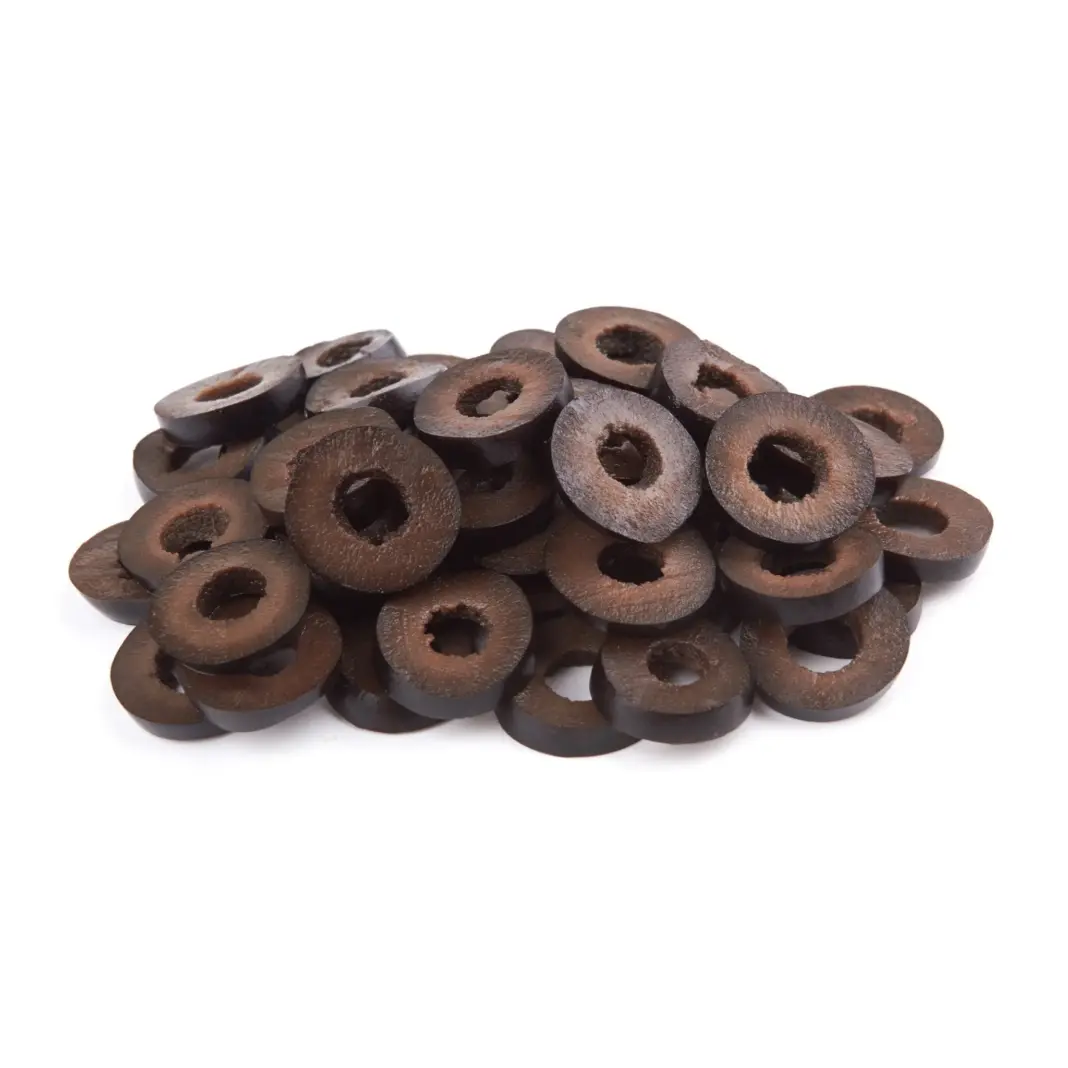


Olives –– the symbol of the Mediterranean and of good heart health and peace. The Old Testament speaks of olives are as loved as honey, figs, grapes, and pomegranates. As cherished as they are, black olives may be keeping a not-so-healthy secret. Olives naturally turn from green to black when they ripen, but they usually don’t ripen uniformly. To even out the color and look of black olives, and to make them cure quicker, Californians invented a way to dye them so that they will look and taste great.
What we are saying is that most black olives that you buy are actually green olives dressed up in black! It’s like the take of pink pistachios.

So when you buy ripened black olives in a can, the olives are usually neither actually black or ripe. Many olives in a can are picked when they are green and are cured using an iron salt and brine and lye solution to cause the olives to darken and preserve quickly. Additives may include lye, acetic acid, chloride salts, iron salts (such as ferrous gluconate also known as ferrum sulfate) and compressed air bubbled through the olive curing vats help develop the black color.

Some health effects of eating ferrous gluconate, which is generally regarded as safe, or GRAS for human consumption: This chemical study found that there are people who may have allergies to ferrous gluconate, represented by the food labeling E number E579 in Europe: “Although ferrous gluconate is widely applied in food processing and is generally regarded as safe, it should be used according to the prescribed level. Excessive application can lead to iron overload.”
This site is a food additives watchdog that points out some potential side effects of ferrous gluconate, used as a common iron supplement pill. Possible Side Effects of Ferrous Gluconate E579 can be gastrointestinal discomfort, anorexia, diarrhea, nausea, heartburn, vomiting, constipation, fecal impaction, darkening of stools, gastrointestinal necrosis, and hematemesis. Allergic reactions and cardiovascular effects such as circulatory collapse.

Natural shops offer what they call black olives that are not “dead” or treated with pasteurization, lye and other chemicals.

They argue the case against additives in olives are to make them look better: “Olives don’t need to be this way. The difference between raw and pasteurised; between brine or salt or water and the chemical lye is little known, but significant on all levels. And that difference can be vast.
“Olives are a huge global market and something that we are likely to consume with little thought on a regular basis. Increasingly, even modern processing methods such as lye are being outpaced by techniques such as ultrasound, taking a natural process even further away from its roots,” they add.
Wait, is there a problem with green olives too?
Lye is a powerful corrosive substance which may be still present when you or your family eat the olives. It is used in commercial olive processing in both green and black olives to speed up the process, but like vinegar to make pickles, this method of using lye takes out all the good stuff that fermented fruits and vegetables can give you. Traces may be left on the olives.
Self sufficient culture explains why he won’t use lye. “I use lacto fermentation to cure my olives because I want good bacteria to survive the curing process and be present in my olives for the heath qualities it brings particularly for “gut” health.” We have piles of stories on health fermentation. Start with Jeff’s article on Sandor Katz.
While we have made and cured ripened black olives in the past (here is a recipe for making olives at home, which include blackened olives), we are now going to think twice about buying any black olive in brine if it means eating additives that may be harmful to my health or my kids. We are also going to look for naturally fermented green olives, because we didn’t realize that green olives in the can are industrialized.
How you can avoid lye and ferrous gluconate in your olives?
- Make your own olives means you need to live close to a Mediterranean market or olive groves in California. We have done the process which involves washing the olives every day for a month and then letting them sit for a month more. My son did it for a school project without the washing part. They added salt and lemon and after a few weeks they were picked perfectly. If you live in a Med area country, there ma be olive trees that you can forage from in towns and cities. Ask around.
- Buy your olives at a natural food stores with labels and vendors you trust.
- Go visit natural, slow food farms as part of your summer holidays in Europe and eat your heart out.
Love everything about olives? Here is more:
Here are 17 varieties of olives. How many do you know?
Want to plant an olive tree in a container at home? Read here how.

Here is a story about the world’s oldest olive tree. Guess where?
Meet the olive oil pioneer who fixed his heart with olive oil.