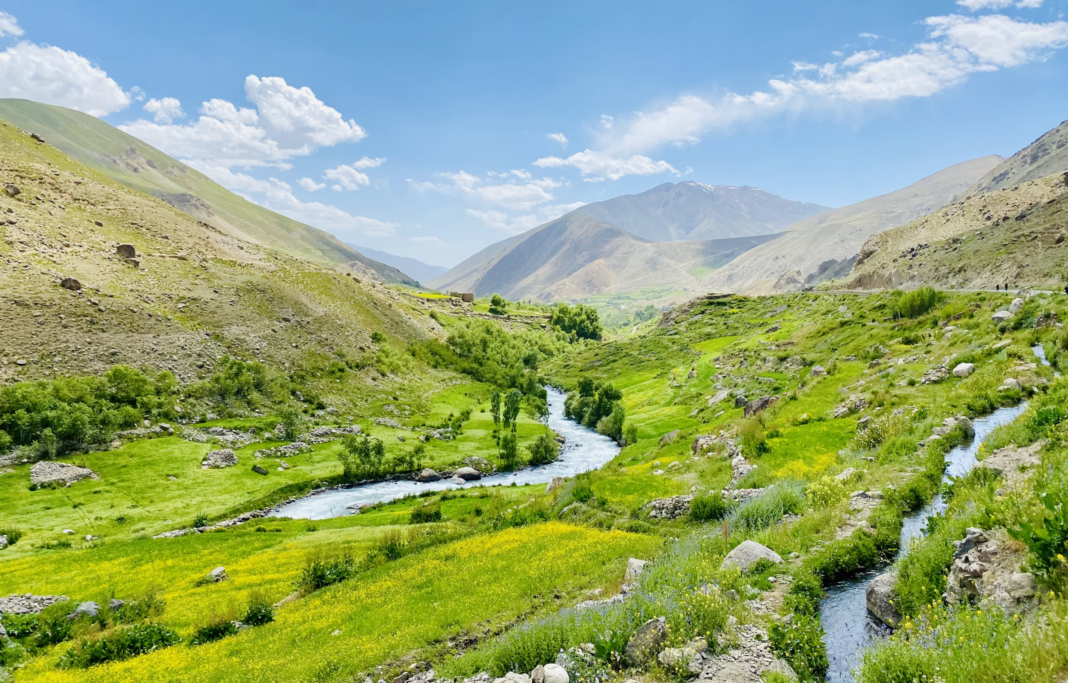
Rain and floods kill dozens in Afghanistan

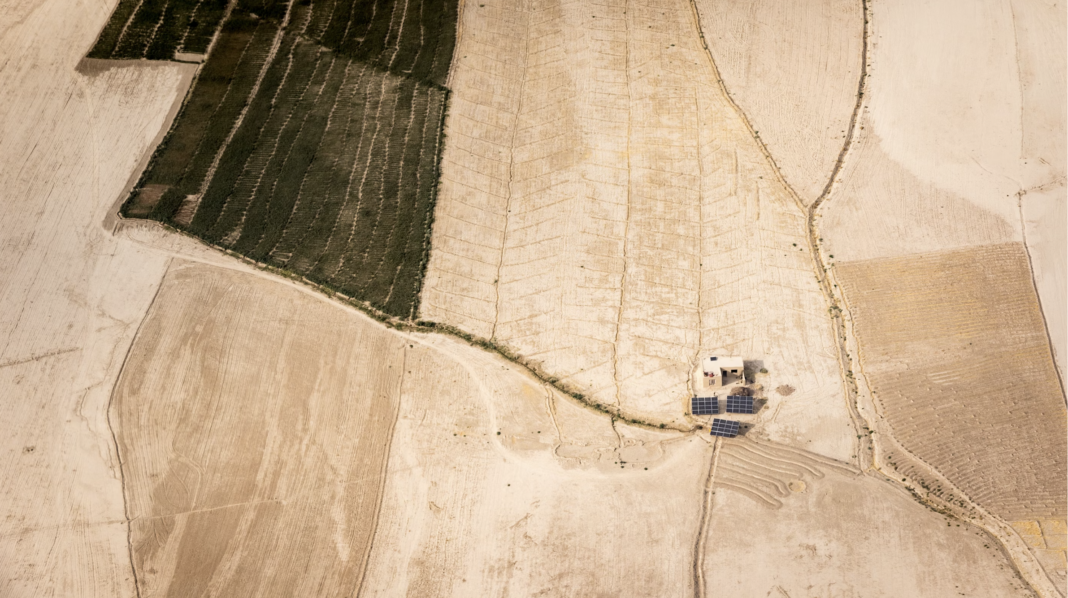
Afghanistan farm uses solar panels to pump water to the farm.
Afghanistan farm uses solar panels to pump water to the farm. Water management, climate change mitigation is needed to stop unrest, violence and conflict in the Middle East. The Taliban currently controls Afghanistan.

After a long dry spell last autumn and winter, Afghanistan and its neighboring Middle East countries have been witnessing unusually heavy rains and snowfall this year. In recent news, about 35 people are presumed dead from flooding in Afghanistan.

This comes less than a few weeks after the United Arab Emirates and Oman were flooded. According to the Emirati National Center for Meteorology, this April’s rain was the heaviest rainfall recorded in 75 years. Mid-April, more than a year’s worth of rain fell in a day on the Arabian Peninsula, one of the world’s driest regions.

Some suggest that ongoing experiments in cloud seeding is the reason for the freak weather. Others note that it’s a bigger experiment than that: human-made climate change.

From April 14 to 15 this year, the United Arab Emirates and northern parts of Oman say the rainfall accounted for at least 20 fatalities in Oman and four in the UAE.

Israel also clocked the hottest temperatures on record in April, at 40 degrees C beating a 30-year record. According to research from the University of Roehampton in England, the human body may lose the ability to rid of excessive heat and stop functioning optimally when outside temperatures reach beyond 40 degrees Celsius (104 F).

Afghanistan, run by the Taliban, is one of the most vulnerable countries to climate change. As climate change affects water, farming, food –– we will see more unrest and terror –– exactly what happened in Syria during its civil war period. About 580,000 people died in Syria as a result of water insecurity, food insecurity, with millions more as displaced as refugees in Lebanon, Turkey, Jordan, Europe and Canada.

Syrians are currently under the thumb of a cruel dictator Basher Al-Assad and his British-born private-school educated wife Asma Al-Assad. The Syrian economy runs on drug money.

Why Afghanistan is especially vulnerable to climate change

  1. Water Scarcity: Afghanistan heavily relies on snowmelt and rainfall for its water supply, particularly for irrigation in agriculture, which sustains the livelihoods of a significant portion of the population. However, changing precipitation patterns and the melting of glaciers due to rising temperatures are leading to reduced water availability, exacerbating existing water scarcity issues.
  2. Droughts and Floods: Erratic rainfall patterns have intensified the frequency and severity of droughts and floods in Afghanistan. Prolonged droughts devastate agricultural output, exacerbate food insecurity, and drive rural communities into poverty. Intense rainfall events trigger flash floods, destroying infrastructure, homes, and crops, and displacing thousands of people annually.
  3. Displacement and Conflict: The intersection of climate change impacts with existing socio-political challenges further compounds Afghanistan’s vulnerability. Displacement driven by climate-induced disasters strains already fragile social systems, exacerbates resource competition, and can fuel conflict over dwindling water and arable land, perpetuating a cycle of instability and insecurity.

If we don’t want to see more mass migrations from the Middle East to Europe and North America, we as people of the world need to help find solutions to those in vulnerable, dry lands in the Middle East and Africa. People will have no choice but to flee to cooler, more prosperous lands.

Read More

TRENDING

5 projects to help kickstart your company’s sustainability journey 

True progress happens when environmental ambition meets action. Decarbonizing efficiently is possible for any business in any sector, but actually getting started can sometimes feel daunting.   The trick? It’s to start small and build momentum. Here are five potential projects to help you get started.  

Hormuz 2026 Conflict Poses an Energy and Food Security Dilemma in a Warming World

As tensions rise in one of the world’s most critical maritime chokepoints, the ripple effects go far beyond oil—touching food systems, climate pressures, and regional stability

Climate change traced in sea turtle shells

It's sea turtles which may in the end save islands in the Seychelles. They may also better help us understand climate change. Like rings on a tree, scientists have found a way to read sea turtle shells and how they are impacted by climate change tells a story. 

We’ve lived through the past 11 of the hottest years on record

Have we forgotten about global warming when the world...

Huge Fish Nursery Discovered Under Freezing Arctic Seas

In 2019, an underwater robot camera exploring the seabed...

How to quiet noise from construction in your office

Streets need to be resurfaced in New York but the humming and grinding noise is unsettling. Noise is environmental pollution. 

EarthX and a blueprint for sustainable investing

Trammell S. Crow, a Dallas-based businessman and father of four, is focusing his efforts on impact investing, and media that focuses on saving the planet through EarthX.

Mining Afghanistan’s Mineral Discoveries Similar to Avatar

Now that American forces in Afghanistan are commemorating the longest period of any war that America has been involved in, including the 1965-73 Vietnam War, the recent discoveries of large and extremely valuable mineral and metal deposits may finally bring to light a reason to continue the presence of US fighting forces in this war torn and backward country.

From Pilot Plant to Global Stage: How Aduro Clean Technologies’ 2026 Expansion Signals a Turning Point for Chemical Recycling Investors Like Yazan Al Homsi

The company's Next Generation Process (NGP) Pilot Plant in London, Ontario, has officially moved into initial operating campaigns, generating the kind of structured, repeatable data that separates laboratory promise from commercial viability.

Nobul’s Regan McGee on Shareholder Value: “Complacency Is the Silent Killer” 

Why the governance framework designed to protect shareholders so...

Should You Invest in the Private Market?

startustartup Unlike public stock exchanges, which offer daily trading, strict...

How to build a 100-year-company

Kongō Gumi is a Japanese construction company, purportedly founded in 578 A.D., making it the world's oldest documented company. What can we learn about building sustainable businesses from them?

How AI Helps SaaS Companies Reduce Repetitive Customer Support Work

SaaS products are designed for large numbers of users with different levels of experience, and also in renewable energy.

Popular Categories