This sweet pea is smart when choosing bacterial partner

peas can feel, wink, see

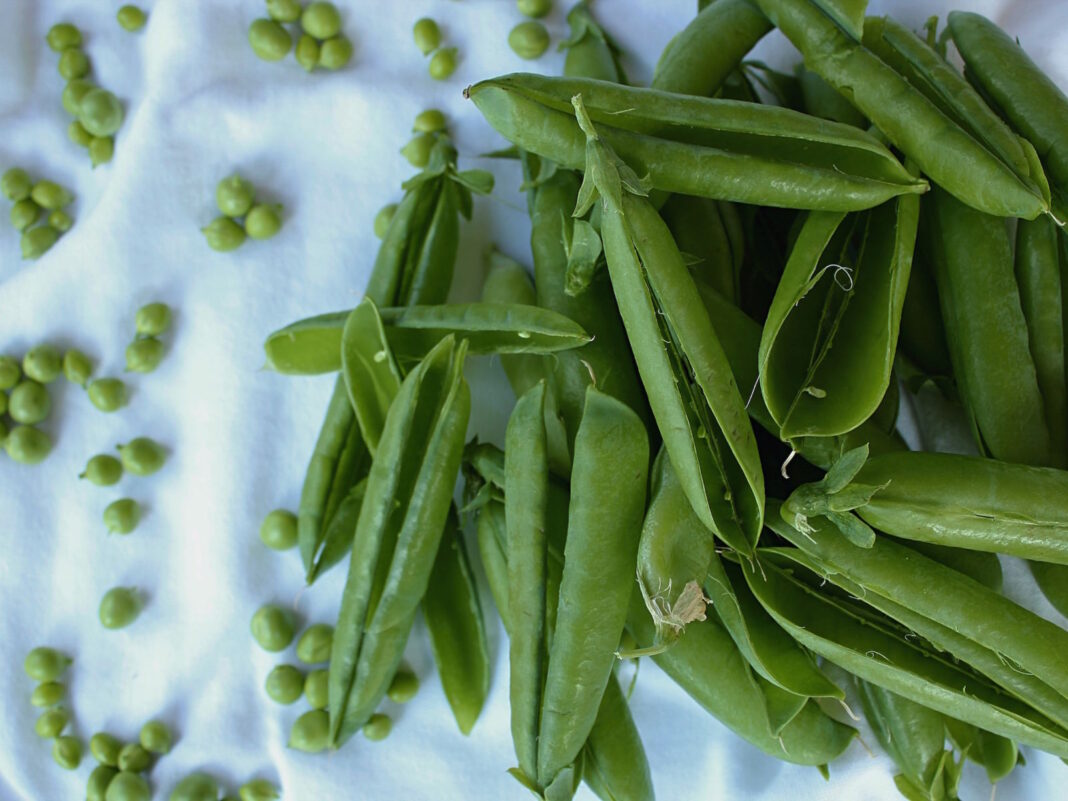
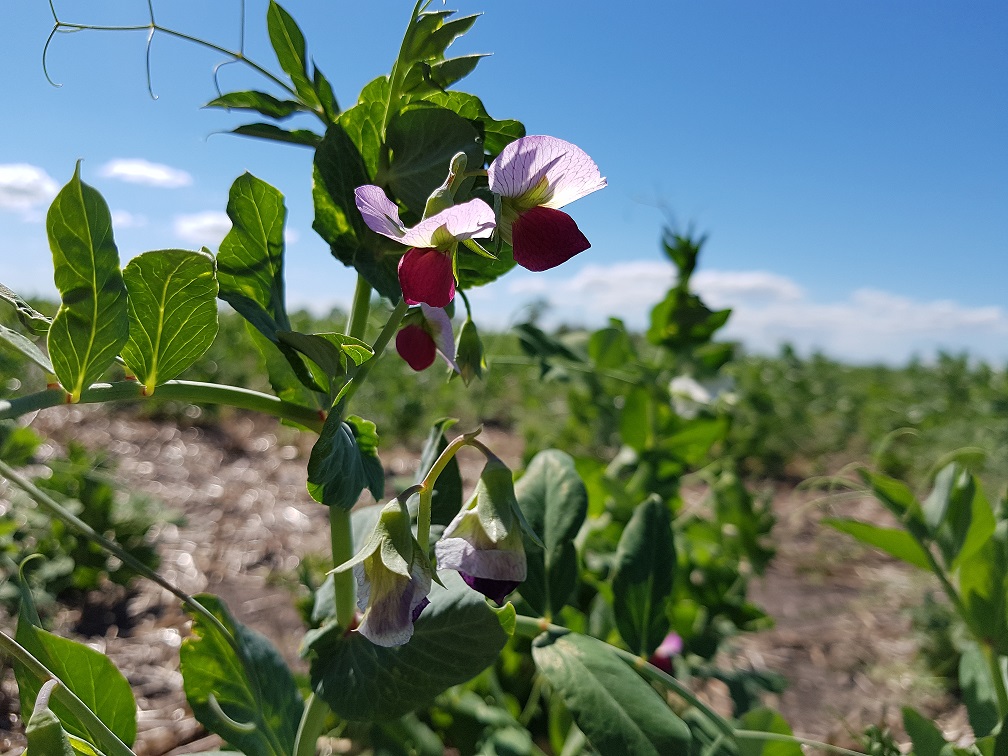
Researchers have shown that pea plants are not only capable helping up with solar energy and making a good alternative meat burger like Beyond Meat but they able to help us with sustainable agriculture too. Scientists at Oxford have found that peas are selective with choosing symbiotic bacteria as partners. These are smart investment decisions say the researchers in a new report. 

(And if you got here just because you love peas, read our pea pod soup recipe. It’s a killer). 

The new research, published today in PNAS, shows that a plant weighs up the different bacterial partners, and then only provides sugar to the best available strains; cutting off those that are less good. This means that the plant must be able to compare different strains and invest accordingly: a strain that looks like a good investment in one context, might be a poor choice in another. 

Annet Westhoek at the Department of Plant Sciences, University of Oxford, who jointly led the work said: ‘The bacteria only start to supply nitrogen once they have been in the nodules for a few days, so the plant has to wait before it can decide how beneficial each bacterial strain will be.’

Globally, the biggest factor limiting plant growth is a lack of nitrogen, which makes up almost 80% of the Earth’s atmosphere. But plants simply can’t make use of nitrogen gas in the air. For this reason, legumes – the plant family that includes peas – have evolved a symbiotic relationship with soil bacteria called rhizobia, which convert nitrogen gas into a form that plants can use.

Pea plants host the bacteria in specialised root growths called nodules, but the bacteria demand sugar from the plant in return for the nitrogen that they supply.

The plant is usually infected by many different bacterial strains and some bacteria provide more nitrogen than others, giving rise to an investment dilemma. While it was already known that some plants stop investing in bacteria which provide no nitrogen at all, by cutting off their sugar supply, it hasn’t been clear until now how plants make more subtle investment decisions.

This study used a novel approach by engineering a bacterial strain that was intermediate in its ability to provide nitrogen. The plants treated this strain differently depending on which other strains were available. When the only choice was a strain that provided no nitrogen at all, then the plant invested in the intermediate strain. But, when a really good strain was available, the plant cut off investment to the intermediate strain.

One of the study’s lead authors, Laura Clark, a DPhil student at Oxford’s Department of Plant Sciences and Merton College, said: ‘This research shows that plants must have some mechanism to compare different bacteria and make smart investment decisions. We were really surprised that plants could do that, rather than simply supplying sugars in proportion to the nitrogen supplied.’

Dr Lindsay Turnbull, who co-supervised the research, said: ‘This is a key development as previous research in this area used naturally-occurring bacteria which may have differed in many characteristics. In this study, the bacterial strains were genetically altered to provide different levels of nitrogen, so we can be sure that changes in the plant’s response are due to differences in their ability to supply nitrogen.’

Currently, most crop plants are supplemented with inorganic nitrogen fertilisers. These are produced on an industrial scale by the Haber-Bosch process, an energy-intensive reaction which consumes around 1% of the world’s energy supply. Their use also leads to run-off into waterways, causing excessive growth of algae and leading to coastal dead-zones.

Professor Phil Poole, who co-supervised the research, said: ‘Understanding how plants manage their interactions with bacteria could help us select plants which are better at choosing effective bacterial partners. This could reduce the demand for nitrogen fertilisers and the associated problems that they cause.’


Karin Kloosterman
Karin Kloostermanhttp://www.greenprophet.com
Karin Kloosterman is an award-winning journalist, innovation strategist, and founder of Green Prophet, one of the Middle East’s pioneering sustainability platforms. She has ranked in the Top 10 of Verizon innovation competitions, participated in NASA-linked challenges, and spoken worldwide on climate, food security, and future resilience. With an IoT technology patent, features in Canada’s National Post, and leadership inside teams building next-generation agricultural and planetary systems — including Mars-farming concepts — Karin operates at the intersection of storytelling, science, and systems change. She doesn’t report on the future – she helps design it. Reach out directly to [email protected]

Read More

TRENDING

24 7 renewable energy: how solar, wind, batteries and AI SaaS replace fossil fuels

A new report from the International Renewable Energy Agency based in Abu Dhabi makes something clear that many in the industry already suspected. When solar and wind are paired with battery storage, they can deliver reliable, round the clock electricity at costs that compete with, and often beat, fossil fuels.

Japan wants to build a solar panel ring around the moon

Unlike solar power on Earth, which is limited by night cycles, weather, and seasons, the Moon offers something close to uninterrupted exposure to the Sun. By placing solar infrastructure in orbit or along the lunar surface, engineers could generate continuous clean energy at a scale that may exceed global electricity demand,  the Japanese scientists say.

Batteries from salt? New grid projects suggest the idea is becoming real

Peak Energy makes storage batteries from salt making us one step closer to cleaner, endless energy from the wind and the sun

Turning Your Energy Consultancy into an LLC: 4 Legal Steps for Founders in Texas

If you are starting a renewable energy business in Texas, learn how to start an LLC by the books.

Astro uses AI to help procure land for renewable energy

For oil-rich, environmentally vigilant Gulf states, Astro isn’t just another startup story. It is a blueprint for accelerating an energy transition that is now existential, not optional.

Yerukim Forms a New Green Economy Where the Money is Really Green

The Yerukim members who pick up the recyclables get to keep the monetary reward, the public earns "green" bills that can be used in shops, and business owners get to be associated with environmentalism.

Choosing Riyadh over Dubai? What Investors Should Know

Saudi Arabia is deploying capital at unmatched scale to catalyze tourism and advanced industry while rewiring its power-and-water backbone. The investable frontier is widening—especially in renewables, grid storage, water efficiency/desal retrofits, and hospitality operating platforms. Prudent investors will insist on phased delivery, enforceable KPIs (energy, water, biodiversity), and RHQ/zone compliance—while pricing political-economy and reputational risks alongside growth upside.

Sell your cooking oil for biodiesel money

Want to make money on old french fry oil? Sell it.

Qatar Alternative Energy Summit Pairs Investors And Innovators

Alternative energy investors and innovators can meet n' greet in Doha, Qatar March 16 and 17.

Here’s How To Implement The Four Pillars Of Employee Engagement

If you throw a party for your work team and they are vegans, don't make it a barbecue. Know the sustainability values of your team to boost moral and retain good people.

Locals From Rishon Fight IKEA

Big Box stores are a pretty new concept in Israel, and thank God that not every Israeli city wants them in their backyard. A word from someone who has see the beautiful farmland around her hometown Newmarket, Ontario stripped and converted into vulgar strip malls of big box shops: they have no place in a healthy and sustainable town or city.

The Jewish National Fund Meets An Inconvenient Truth

According to the JNF, it has transformed thousands of acres of barren land into green forests in Israel. They state that each person emits about 23 tons of carbon per year, estimating that each tree planted can absorb one ton of carbon in its lifetime. That's a whole lot of trees you'd need to be planting. Could so many fit in Israel?

How to quiet noise from construction in your office

Streets need to be resurfaced in New York but the humming and grinding noise is unsettling. Noise is environmental pollution. 

Popular Categories