Every year, as many as 15-20 million mattresses are thrown away, filling landfills. And millions more mattresses are manufactured to take their place, consuming resources and potentially adding more toxic chemicals into the environment.
Many mattress manufacturers have started to recognize the impact of their business on the environment, though, and have begun taking steps to reduce their impact. From the materials they use to their manufacturing processes to policies regarding recycling, modern mattress companies are doing more to support the environment than ever before.
Changing Manufacturing Processes and Materials
Many mattress manufacturers have committed to reducing their carbon footprint in all aspects of their business, from the materials they use to how they ship their products. For example, some of the common manufacturing initiatives include:
- Using recycled steel for inner springs and box spring components
- Using bamboo and organic cotton for coverings
- Eliminating harmful chemicals, including PBDE flame retardants, phthalates, and CFCs, as well as heavy metals like lead and mercury, from their mattress products and using natural flame retardants instead to meet safety standards.
- Using wood from sustainable forests certified by the Forest Stewardship Council
- Changing manufacturing processes to “just in time” to reduce energy usage and the need for excess warehouse space
- Reducing packaging
- Shifting to high-efficiency equipment and introducing maintenance and recycling initiatives to reduce energy usage and waste
Although these initiatives may not reduce all of the environmental impact of the mattress manufacturing process, it is making a difference. In fact, one area where mattress makers are making great strides is developing organic and eco-friendly mattresses. Although the foams and materials used in mattresses have come a long way, they still often use man-made components derived from petroleum or other products, albeit in much lower quantities than in the past. The best organic mattresses, however, are made primarily from naturally-derived, sustainable latex. Latex comes from rubber trees, and is naturally antimicrobial and durable. This durability is important, as it allows latex mattresses to last longer, ultimately keeping more mattresses out of landfills.
Mattress Recycling Programs
Because of the amount of space they take up in landfills (a single mattress uses 23 cubic feet of space) and the difficulty inherent in crushing and processing them, many local and regional landfills have either banned mattresses altogether, or made it unattractive for consumers to leave mattresses by increasing tipping fees. Instead, most landfills are requiring mattresses be recycled instead, and to help support that effort, a number of mattress manufacturers have built, or supported the development of dedicated mattress recycling centers. In most cases, 90 percent or more of the components of a mattress can be recycled and used for other products, keeping most of the materials out of landfills.
Some of these recycling programs are required by law. Connecticut led the way by enacting “extended producer responsibility” laws for mattresses. Under these laws, which have extended to several states, consumers pay a fee when they purchase a new mattress to cover the collection, recycling, and refurbishment of old mattresses. In the states with EPR laws (currently Connecticut, Rhode Island, and California), mattress manufacturers have come together to form the Mattress Recycling Council, a nonprofit organization that handles all aspects of mattress disposal.
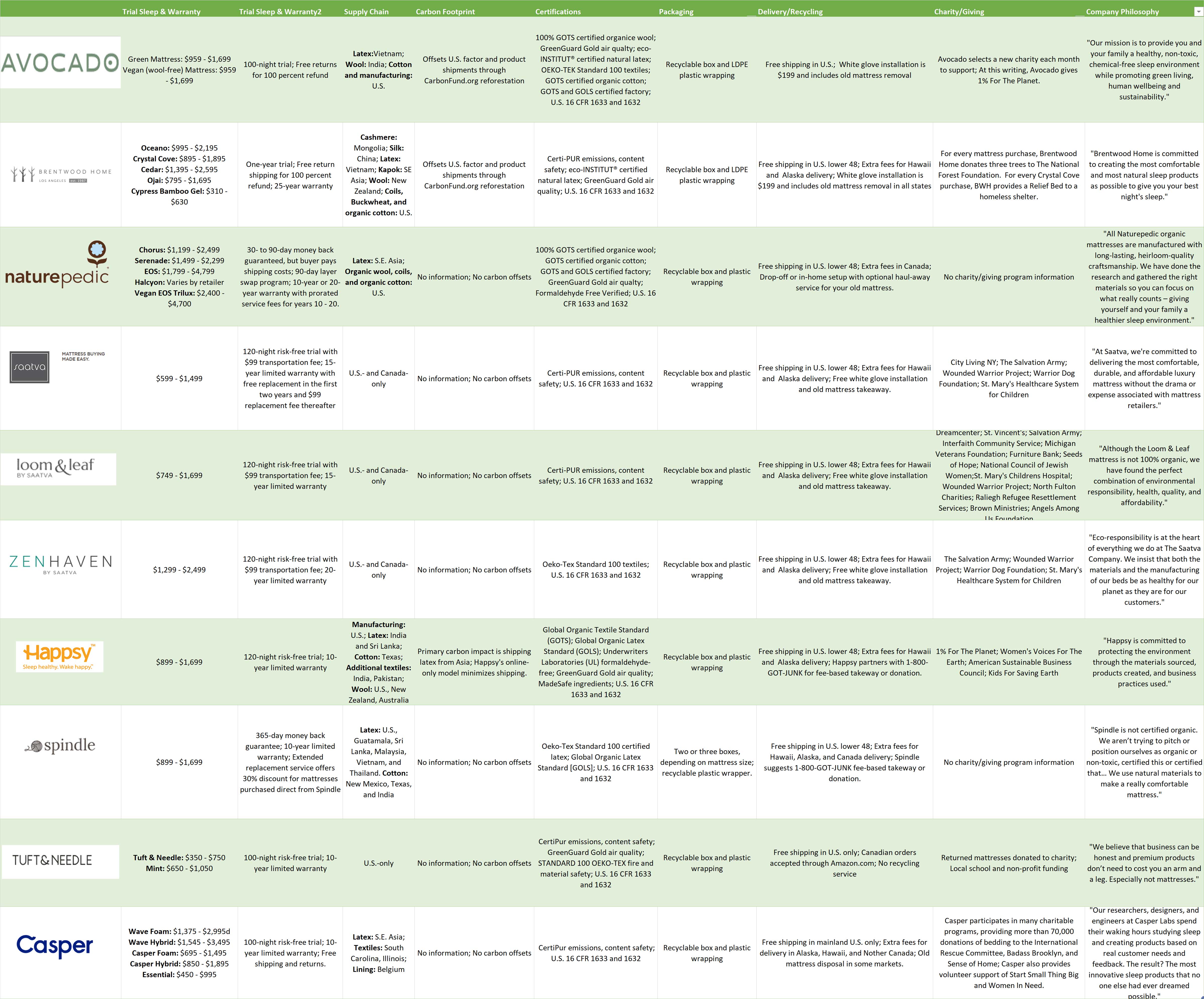
Unfortunately, not all states have eco-friendly mattress disposal programs. In some cases, because of laws regarding the sale of mattresses and health standards, mattresses returned by consumers are destroyed and sent to the landfill. However, with the growing popularity of bed in a box and direct to consumer sales for mattresses, that process is becoming somewhat less common. Most companies that sell mattresses directly to consumers have a recycling or donation program for mattresses that consumers return. For instance, Casper has donated more than 70,000 mattresses to various charitable organizations worldwide. Customers are still responsible for arranging for recycling when they want to replace their mattresses after a few years, but these policies still keep a fair number of mattresses out of landfills.
Environmental Programs
Some mattress manufacturers are going beyond manufacturing and shipping changes, and using their products as a means to give back and support the environment. For example, Nolah manufactures their mattresses using AirFoam, a material that doesn’t contain viscoelastic foam like other brands. Their eco-consciousness doesn’t stop there, though. For every mattress purchased, the buyer has the opportunity to “adopt” an endangered animal, with the company donating profits to the Defenders of Wildlife. Other companies that support environmental causes include Brentwood Home, which donates three trees for every mattress purchased to the National Forest Foundation, and Avocado which manufactures green and vegan mattresses and donates a portion of their profits to environmental organizations each month.
Mattress companies have come a long way in recent years in their efforts to become more sustainable and environmentally friendly. As new technologies for manufacturing develop, and recycling programs expand, the industry as a whole will reduce its impact on the planet while still giving us a comfortable place to sleep.