Ecuador should be everyone’s bucket list

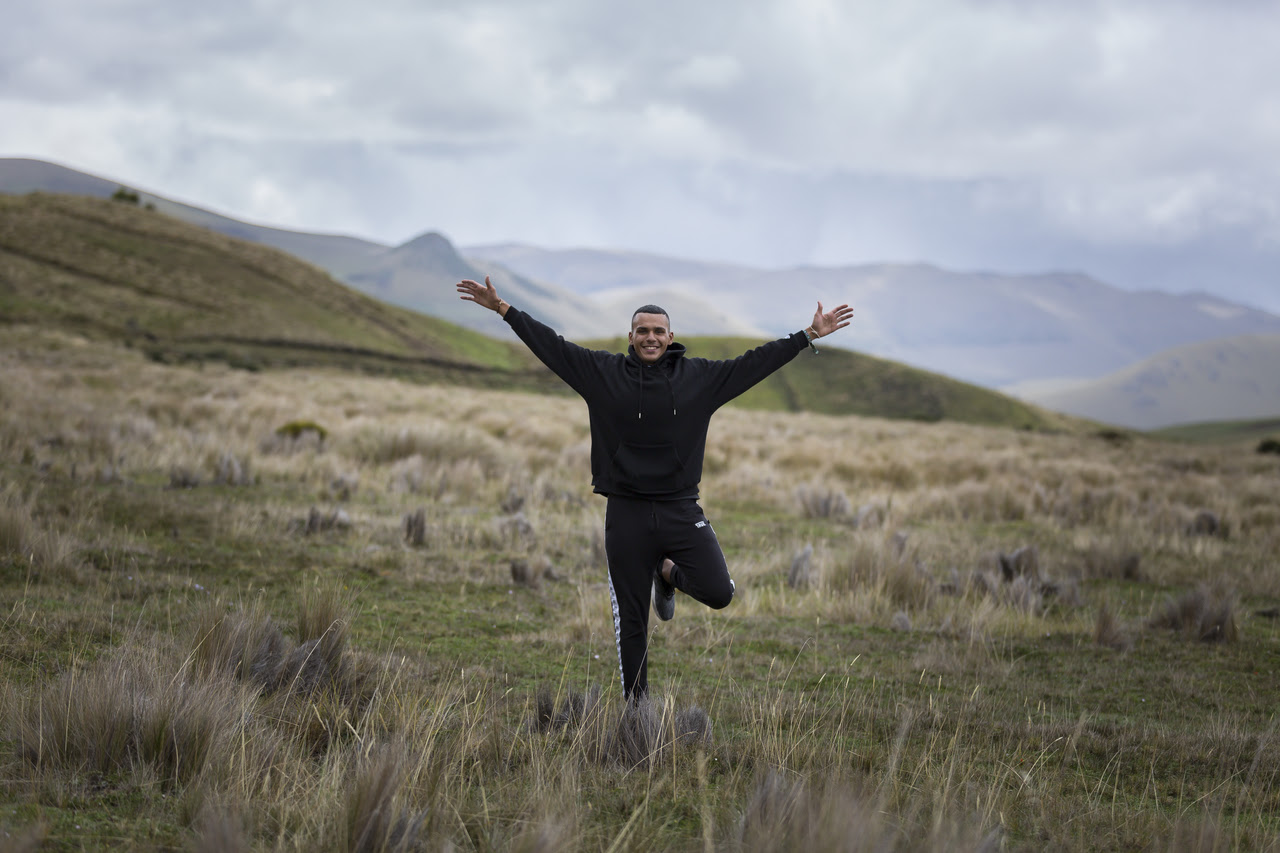
A traveler enjoys the almost-untouched landscape of Ozogoche Complex, located inside Sangay National Park. Photo: Juan Pablo Verdesoto

It can get overwhelming to choose your next vacation destination, especially given that you may only have 3 weeks out of the entire year to travel. Wherever you choose to go, it better be worth it, right?

Despite the fierce competition – I mean, there are so many incredible destinations – Ecuador belongs in your top ten. Here’s why.

Small, but diverse.

Though a relatively small country compared to its neighbors Colombia and Perú, Ecuador has much to offer. In fact, it has arguably more to offer. The reason is that given its smaller size, travel between regions is much easier. In the course of two or three weeks, you can realistically experience Ecuador in all its diversity. 

Ecuador is one of the most biodiverse countries in the world. The Andes Mountain Range, which cuts through the country, is a natural barrier that has spurred evolution and biodiversity. On one side of the range, you’ll find the Amazon rainforest as well as a cloud forest, both teeming with otherworldly creatures. 

The Andes itself hosts a number of distinctive ecosystems, such as the paramo, a type of high altitude grasslands. In Ecuador, this mountain range is lined with enormous volcanic peaks, many of which remain active. The Andes is rich in cultural, as well as natural, diversity, and during your travels you’ll have the chance to explore traditional markets and visit historic cities like Cuenca. 

Heading towards the coast, on the other, western side of the Andes, you’ll find yet another type of cloudforest. Within this lush environment, there are hundreds of hummingbird and butterfly species, as well as epiphytes and orchids. The cloudforest transitions into tropical jungle hugging much of the coast, except for the southern provinces, where dry forest prevails.

Parque Calderon is located right in the center of Cuenca. This city is one of the safest in all Ecuador. Photo: embarcados.travel travel blog

Great beaches and amazing adventure destinations

Across this spectacularly diverse country, you’ll come across some of the continent’s best beaches and adventure destinations.

If you’re into surfing, you’ll definitely want to visit Montañita, Ayampe, and Mompiche. These beach towns are also good options if you’re not into surfing and just want to spend a few days chilling by the sea, sipping a piña colada and snacking on fresh ceviche. 

Due to its natural wealth and untamed landscape, Ecuador lends itself perfectly to outdoor adventure. Hikers and mountaineers can enjoy climbing through the thin air (+15,000 feet / 4,500 meters) to the summits of Volcano Cotopaxi, Tungurahua, Cayambe or doing multi-day treks like the Quilotoa Loop. Downhill mountain biking and horseback riding are other ways to get the adrenaline pumping while appreciating the landscape.

Another option is finding your own sustainable community based tourism opportunities based on searches near you. Try “sustainable tourism+ destination”.

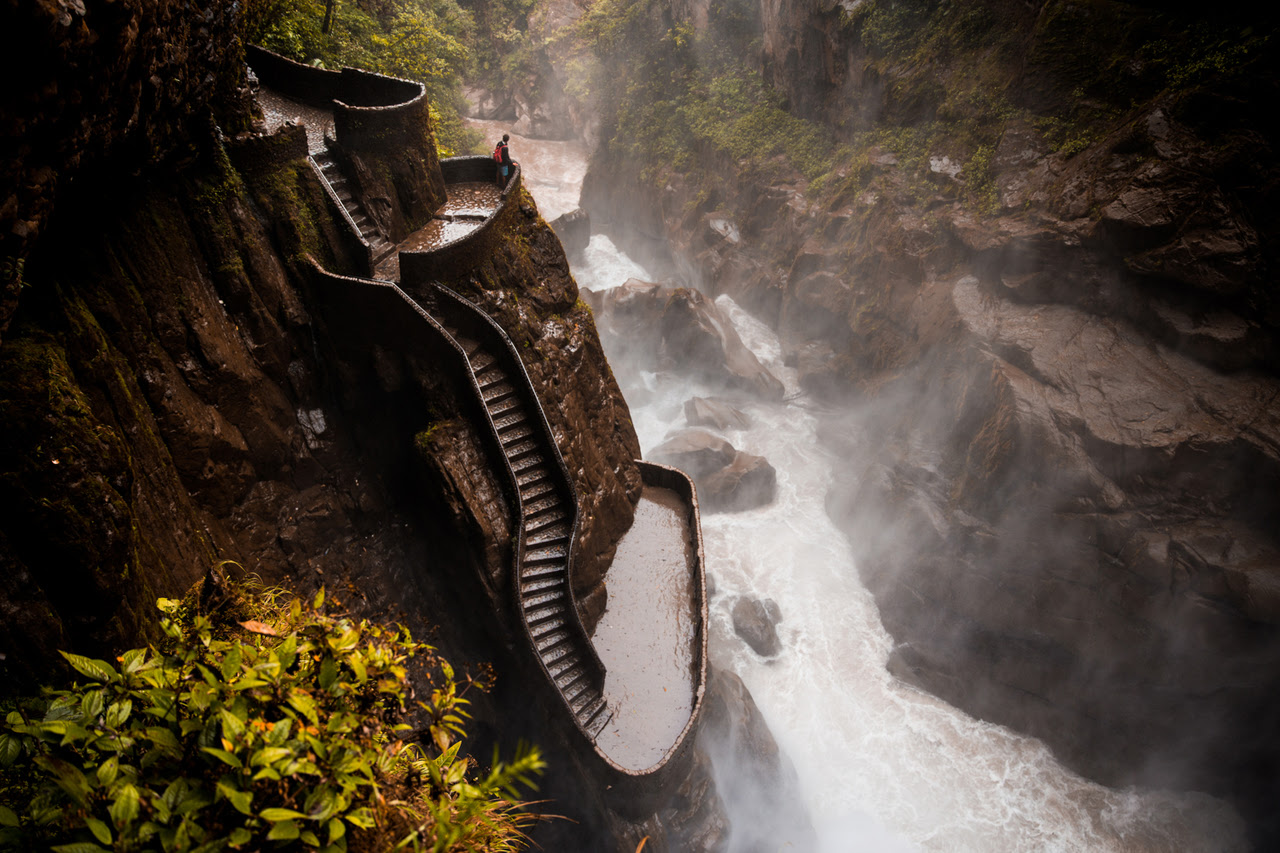
Closer to the Amazon, you’ll find the city of Baños, which is considered the Ecuadorian adventure destination. Visitors come here to zipline across tropical gorges, bungee jump off bridges and river raft through spectacular canyons. Or try going on a cruise right through the Amazon

Pailón del Diablo is one of the main attractions of Baños town. This waterfall is more than 80 meters tall. Photo: Viaja la Vida travel blog

The best way to travel around Ecuador

One of the reasons Ecuador makes for an excellent backpacking destination is because it’s so easy and inexpensive to travel through the country. Regular bus transport is surprisingly cheap, averaging at $1.00 per hour travelled. You’ll be able to get almost anywhere in the country, though in some cases it might require a few buses.

That said, an alternative to regular buses is becoming more popular, and with good reason. It’s called the Wanderbus Ecuador and it’s a hop on, hop off system with added benefits. Instead of picking up and dropping off passengers at difficult-to-reach bus terminals in sketchy neighborhoods at odd hours (that would describe the regular bus system…), the Wanderbus has convenient pick up and drop off locations closer to the Old Town and Marsical, where most travelers spend the night. Because of this, it’s a much safer way to get around by bus.

Additionally, it offers passengers the opportunity to meet like-minded travelers and the bilingual guides on each bus provide recommendations about hostels, restaurants and activities at every stop. Which leads me to another benefit of the Wanderbus: its routes are designed to take you directly to every must-see destination across the country. 

Do you want to know the best part about travelling in Ecuador? You can experience all of this – the beaches, adventure, natural wonders, and more – well within your budget. That’s right, to top things off, Ecuador may be one of the most affordable countries to visit in Latin America. Has it made your bucket list yet? I’d add Morocco and the Kasbah to yours, if I could. 

Bhok Thompson
Bhok Thompsonhttp://www.greenprophet.com
Bhok Thompson is an “eco-tinkerer” who thrives at the intersection of sustainability, business, and cutting-edge technology. With a background in mechanical engineering and a deep fascination with renewable energy, Bhok has dedicated his career to developing innovative solutions that bridge environmental consciousness with profitability. A frequent contributor to Green Prophet, Bhok writes about futuristic green tech, urban sustainability, and the latest trends in eco-friendly startups. His passion for engineering meets his love for business as he mentors young entrepreneurs looking to create scalable, impact-driven companies. Beyond his work, Bhok is an avid collector of vintage mechanical watches, believing they represent an era of precision and craftsmanship that modern technology often overlooks. Reach out: [email protected]

Read More

TRENDING

Understanding Food Production: Karl Studer on the Urban-Rural Knowledge Gap

Karl Studer occupies an unusual position in American business. As President of Quanta Services, he oversees electrical infrastructure operations across the United States, Canada, and Australia, managing thousands of employees and multibillion-dollar projects.

Tigris River oil spill highlights Iraq’s environmental oversight and our addiction to oil

A fresh oil spill in the Tigris River, filmed by an Iraqi university student, has reignited concern over Iraq's polluted waterways. From ancient Mesopotamia to modern Basra, the country's dependence on oil has come at a steep environmental and human cost, with activists warning that unchecked contamination is putting ecosystems and public health at risk.

Doctor-Led Direct Hair Transplant: What Surgeon Involvement Means for Outcomes

Hair restoration technology continues to evolve, but the surgeon behind the procedure remains the most important factor. Doctor-led hair transplants emphasize careful diagnosis, conservative donor management, natural hairline design, and long-term planning rather than simply maximizing graft counts. By treating donor hair as a limited resource and tailoring each procedure to the patient's future hair loss, experienced surgeons can reduce the need for corrective surgery while delivering more natural, sustainable results.

Data centers in Space? Sophia Space and Apex plan on busing them in

Can data centers really be built in space? Pasadena-based Sophia Space is partnering with Apex to test the idea by launching modular AI computing systems into low Earth orbit in 2027. Using radiation-hardened compute TILEs cooled by passive radiative systems and mounted on scalable satellite buses, the companies aim to prove that edge computing can operate reliably in space. While challenges remain, the project represents an important step toward distributed orbital computing networks that could support everything from climate monitoring and pollution tracking to autonomous spacecraft navigation in an increasingly crowded orbital environment.

Mona Khalil, Orange House Project founder, sea turtle protector killed in Lebanon

Mona Khalil spent decades protecting Lebanon's sea turtles and coastal ecosystems. Her death in the ongoing conflict between Israel and Hezbollah shines a light on a broader environmental tragedy unfolding across northern Israel and southern Lebanon. From damaged wetlands and disrupted bird migrations to threatened seed banks and endangered wildlife, the region's ecosystems are becoming casualties of a war with no clear end in sight.

Yerukim Forms a New Green Economy Where the Money is Really Green

The Yerukim members who pick up the recyclables get to keep the monetary reward, the public earns "green" bills that can be used in shops, and business owners get to be associated with environmentalism.

Choosing Riyadh over Dubai? What Investors Should Know

Saudi Arabia is deploying capital at unmatched scale to catalyze tourism and advanced industry while rewiring its power-and-water backbone. The investable frontier is widening—especially in renewables, grid storage, water efficiency/desal retrofits, and hospitality operating platforms. Prudent investors will insist on phased delivery, enforceable KPIs (energy, water, biodiversity), and RHQ/zone compliance—while pricing political-economy and reputational risks alongside growth upside.

Sell your cooking oil for biodiesel money

Want to make money on old french fry oil? Sell it.

Qatar Alternative Energy Summit Pairs Investors And Innovators

Alternative energy investors and innovators can meet n' greet in Doha, Qatar March 16 and 17.

Here’s How To Implement The Four Pillars Of Employee Engagement

If you throw a party for your work team and they are vegans, don't make it a barbecue. Know the sustainability values of your team to boost moral and retain good people.

Locals From Rishon Fight IKEA

Big Box stores are a pretty new concept in Israel, and thank God that not every Israeli city wants them in their backyard. A word from someone who has see the beautiful farmland around her hometown Newmarket, Ontario stripped and converted into vulgar strip malls of big box shops: they have no place in a healthy and sustainable town or city.

The Jewish National Fund Meets An Inconvenient Truth

According to the JNF, it has transformed thousands of acres of barren land into green forests in Israel. They state that each person emits about 23 tons of carbon per year, estimating that each tree planted can absorb one ton of carbon in its lifetime. That's a whole lot of trees you'd need to be planting. Could so many fit in Israel?

How to quiet noise from construction in your office

Streets need to be resurfaced in New York but the humming and grinding noise is unsettling. Noise is environmental pollution. 

Popular Categories