
Iran bans dog walking

In some Middle Eastern cities, the governments embrace dog walking, dog loving and dog everything. It seems like there are more dog parks than people parks in some areas of Tel Aviv, but if you live in Iran, watch out. Taking your dog out for a spin might land you in jail. The country’s totalitarian regime has banned another human pleasure owning one of man’s best friends. Since dogs are considered “haram” or impure in Islam, the Islamic Government, literal in its interpretation of Allah’s commands has outright banned dog walking in cities like Tehran.

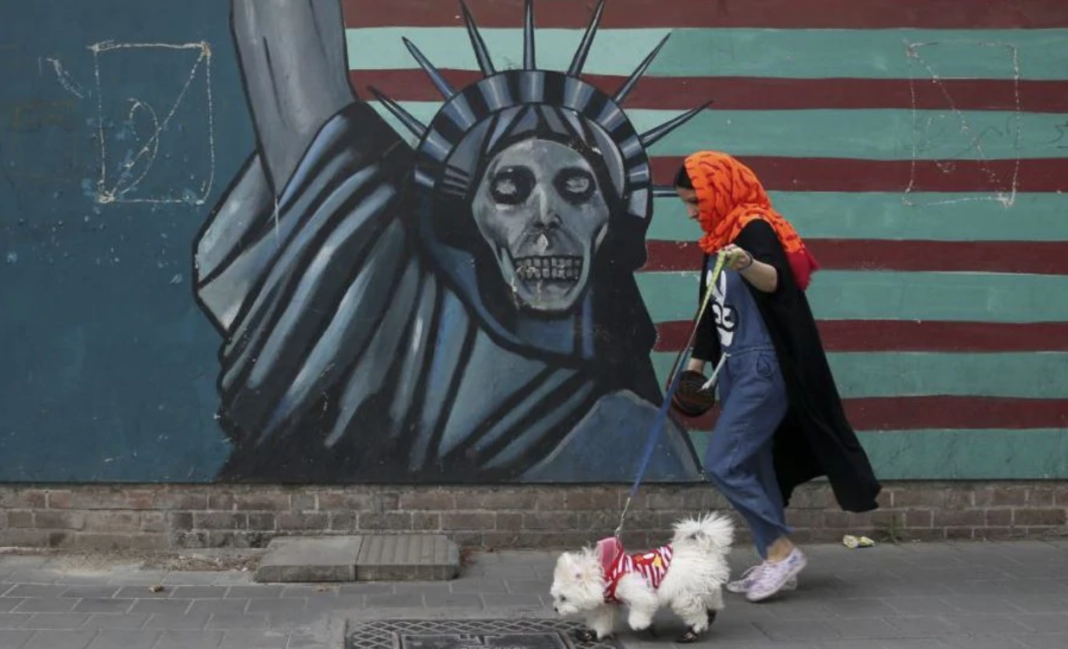
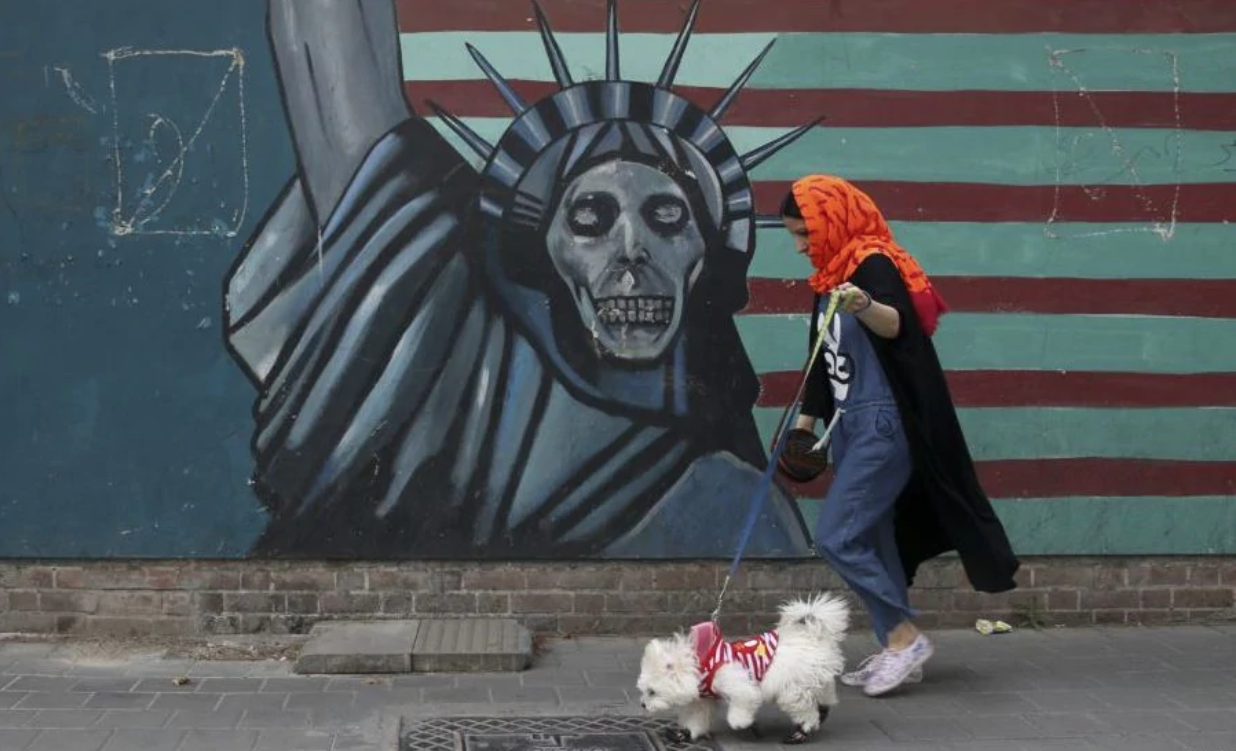
ABC News from the US went to Tehran and met people like Fatima pictured below. She has been banned from taking Peaky anywhere around the streets of Tehran. Last month the Police Chief of Tehran said dog walking is now banned everywhere. Now Fatima walks Peaky in her friend’s backyard adjacent to her apartment building.

dog walking, tehran, banned, woman with hijab walking dog

“People who walk dogs will be prosecuted,” Brigadier General Hossein Rahimi said in an interview with the semi-official Fars News Agency on Tuesday. Rahimi also announced that you can’t travel with dogs in cars, or bring them to any public parks.


dog with hijab, iran, tehran dog walking ban in cars and in parks

“People like to stay with their families and acquaintances on a weekend. It’s fun to spend some hours in the park where you live, but unfortunately some ignore this right of families and ignore the teachings of the Islamic religion that considers the dog as unclean and follow the satellites and the Western style of bringing the dog to the park,” he added.

The presence of dogs he noted has caused many people to stop using the parks.

In Arabic, dogs are called “najis,” which is also a technical religious term that translates to “unclean.” If you touch a dog with a wet hand you have to wash it three times before you pray.

But in Parsi social media many people have sided with animal lovers and dog-owners, advocating for them to find a safer way to walk their pets.

Tehran is one of the most polluted cities in the world, and it is fair that public parks be free from pets walking around unattended. And even when owners do pick up after their dogs, soiling by urine and other stuff inevitably spoils the cleanliness of parks. But like other aspects of Tehran life: drinking, drugs, underground clubs… people will be people. Strict regulations against pets may have the opposite effect: more people might decide to keep their dogs in covert locations, making them unhappier – both the owners and the pets – in the longun.

Time for Iran to make a pet friendly park. Which one of our activists over there can make it happen?

Karin Kloosterman
Karin Kloostermanhttp://www.greenprophet.com
Karin Kloosterman is an award-winning journalist, innovation strategist, and founder of Green Prophet, one of the Middle East’s pioneering sustainability platforms. She has ranked in the Top 10 of Verizon innovation competitions, participated in NASA-linked challenges, and spoken worldwide on climate, food security, and future resilience. With an IoT technology patent, features in Canada’s National Post, and leadership inside teams building next-generation agricultural and planetary systems — including Mars-farming concepts — Karin operates at the intersection of storytelling, science, and systems change. She doesn’t report on the future – she helps design it. Reach out directly to [email protected]

Read More

TRENDING

The Hidden Components Powering the Renewable Energy Revolution

A rooftop solar system looks simple: panels, an inverter, a battery and a few cables. But beneath that simplicity lies a bill of materials thousands of lines long, where tiny current sensors, magnetic cores, gate drivers, capacitors and connectors quietly determine efficiency, safety and lifespan. These overlooked components—not the solar panels themselves—are why today's residential solar systems are smaller, smarter and far more reliable than those of a decade ago.

Teen Farmerettes were Canada’s answer to Victory Gardens during wartime food shortages

It is a wake-up call to teen girls on TikTok planning their next Coachella outfit or trip to Sephora: During the Second World War, thousands of young men left family farms to enlist, but the crops still needed planting and harvesting. Ontario's government answered by recruiting high school girls, from ages 16 to 18, to spend parts of spring, summer and fall to fill in for the labor shortage. 

The Early Believers: Investors Who Backed SpaceX Long Before Its Record IPO

SpaceX’s 2026 IPO didn’t just mint billionaires—it revealed the many forms of conviction behind one of the most doubted bets in venture history.

From eco city experiment to global clean energy giant: How Masdar became the UAE’s renewable energy powerhouse

Masdar began as an ambitious eco city in the Abu Dhabi desert. Two decades later, it has become one of the world's largest renewable energy developers, financing billions of dollars in solar, wind and battery storage projects across the globe.

Is the manosphere selling a testosterone crisis? Pentagon’s new “Low T” policy sparks debate

The Pentagon's decision to introduce annual testosterone testing for U.S. military personnel over 30 has sparked debate among doctors and public health experts. Researchers warn that social media influencers are turning normal signs of ageing into a "Low T" crisis, encouraging unnecessary hormone testing and supplementation while blurring the line between evidence-based medicine and marketing.

The Essential Guide To Sustainability in Project Management

Sustainability is an approach where businesses and individuals balance the environmental, social, and economic aspects of a project such that current and future stakeholders are not overburdened with the impacts of the project in future.

Yerukim Forms a New Green Economy Where the Money is Really Green

The Yerukim members who pick up the recyclables get to keep the monetary reward, the public earns "green" bills that can be used in shops, and business owners get to be associated with environmentalism.

Choosing Riyadh over Dubai? What Investors Should Know

Saudi Arabia is deploying capital at unmatched scale to catalyze tourism and advanced industry while rewiring its power-and-water backbone. The investable frontier is widening—especially in renewables, grid storage, water efficiency/desal retrofits, and hospitality operating platforms. Prudent investors will insist on phased delivery, enforceable KPIs (energy, water, biodiversity), and RHQ/zone compliance—while pricing political-economy and reputational risks alongside growth upside.

Sell your cooking oil for biodiesel money

Want to make money on old french fry oil? Sell it.

Qatar Alternative Energy Summit Pairs Investors And Innovators

Alternative energy investors and innovators can meet n' greet in Doha, Qatar March 16 and 17.

Here’s How To Implement The Four Pillars Of Employee Engagement

If you throw a party for your work team and they are vegans, don't make it a barbecue. Know the sustainability values of your team to boost moral and retain good people.

Locals From Rishon Fight IKEA

Big Box stores are a pretty new concept in Israel, and thank God that not every Israeli city wants them in their backyard. A word from someone who has see the beautiful farmland around her hometown Newmarket, Ontario stripped and converted into vulgar strip malls of big box shops: they have no place in a healthy and sustainable town or city.

The Jewish National Fund Meets An Inconvenient Truth

According to the JNF, it has transformed thousands of acres of barren land into green forests in Israel. They state that each person emits about 23 tons of carbon per year, estimating that each tree planted can absorb one ton of carbon in its lifetime. That's a whole lot of trees you'd need to be planting. Could so many fit in Israel?

Popular Categories