
Top 6 Factors Favouring Sustainable Development In The Middle East

masdar city, abu dhabi, green building, desert, zero carbon

People have this general perception that the Middle East lags behind in matters of sustainability. There is the misconception that people in this region lead flashy lifestyles and engage in over-consumption to balance out the ever-increasing wealth from an endless supply of oil. However, when you get to the ground, you soon discover that the situation is far much different, and that sustainability is a concept that many espouse here. Although CMC Markets may have reported falling stock prices due to Middle East political tensions which is true, business in this region remains sustainable due to the following reasons:

A hybrid approach

According to Al Zubi, the head of sustainability at Majid Al Futtaim Properties (MAFP), the Middle East is a recipient of many best practices from around the world. Some countries, such as Singapore, have been able to combine technology and ideas to create a hybrid approach. The hybrid approach is always the best and has proved to be a determining factor in enhancing sustainability. Consequently, the Middle East has seen its malls thrive as a result of espousing gleaming modernity, opulence, and luxury. These malls are now attracting thousands of shoppers from around the globe.

A unique region

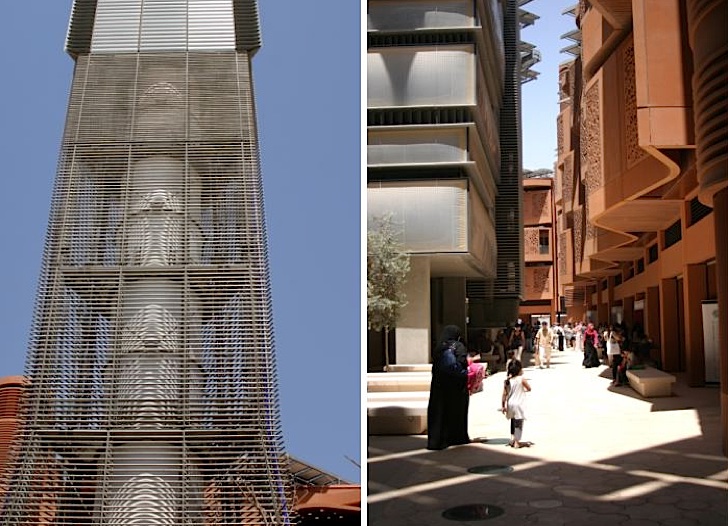
Al Zubi avers hat some factors combine to make the Middle East a unique area. Most significant of the factors is the prevailing northwest breeze that creates a comfortable microclimate that is likely to attract many tourists. The construction industry is harnessing this pleasant weather by designing and angling buildings in such a way as to capture the cool breeze. Also, the construction industry is taking a leading role in sustainability standards. For instance, Mashreib has undertaken a regeneration project in Qatar that will have the largest number of LEED buildings, all targeting the gold and platinum status.

Development of own standards

It is not lost to the world that the Middle East is no longer playing catch-up to the rest of the world. International reference points revolve around LEED from the US, and BREEAM from the UK. Most governments in the Middle East have developed their standards to reflect the needs, challenges and local conditions. Qatar has QSAS while Abu Dhabi has installed PEARL. These standards are the pedestals for mounting quality and ensuring efficiency and adherence to international requirements.

Defining quality

The Middle East commitment to ensuring quality is beyond doubt. In the United Arab Emirates, all new state buildings are required to have a minimum of a two-star rating. The effect of this requirement has been the establishment a local green building market that is boosting skills through training. You will note that working in government institution is no different from working for an NGO due to the high standards the Middle East has put into place.

The family connection

The importance of the family has played a great role in the sustainability of business in the Middle East. Al Zubi points out that most of the private companies are owned by families. He argues that it is never about profit or passion, but both. The import of family-owned businesses lies in the creation of jobs in an environment of high unemployment rates. In Lebanon, for instance, one family-owned mall is likely to create two thousand job openings for the local people. You are not likely to read about the impact of families on the economies of Middle East countries because of their stringent culture that demands modesty. Consequently, there may be no reports detailing how many people have gained jobs in family businesses.

A social dimension to sustainability

Sustainability can’t be assured without putting social factors into consideration. Most Middle East countries have taken measures to ensure worker safety, training, and health. You may note that past generations relied on safe working environments in government jobs or corporate companies. However, the current trends are leading to entrepreneurship. Consequently, the UAE awards about 10% of all contracts to Small and Medium Enterprises (SMEs). Boosting the local enterprise is key to sustainability.

Several factors have combined to do sustainable business in the Middle East. Being a unique region with a wealth of resources, and a hybrid approach to development, the Middle East has created a perfect environment for green business. Development of own standards and allowing families to start the business has also gone a long way to boost the economy of the Middle East. The Middle East region is no longer playing catch-up.

Bhok Thompson
Bhok Thompsonhttp://www.greenprophet.com
Bhok Thompson is an “eco-tinkerer” who thrives at the intersection of sustainability, business, and cutting-edge technology. With a background in mechanical engineering and a deep fascination with renewable energy, Bhok has dedicated his career to developing innovative solutions that bridge environmental consciousness with profitability. A frequent contributor to Green Prophet, Bhok writes about futuristic green tech, urban sustainability, and the latest trends in eco-friendly startups. His passion for engineering meets his love for business as he mentors young entrepreneurs looking to create scalable, impact-driven companies. Beyond his work, Bhok is an avid collector of vintage mechanical watches, believing they represent an era of precision and craftsmanship that modern technology often overlooks. Reach out: [email protected]

Read More

TRENDING

Who Owns the Farm Robot? A State of Jefferson Startup Takes on Carbon Robotics

In California's self-proclaimed State of Jefferson, a small agricultural technology company is challenging the dominant laser-weeding business model. Laudando & Associates believes farmers should own and repair their AI-powered weeding tools rather than pay ongoing subscription fees. The approach has put the company on a collision course with industry leader Carbon Robotics, sparking a patent dispute that has pushed the Jefferson startup toward overseas markets while raising broader questions about ownership, right-to-repair, and the future of farm automation.

Etihad offers free travel insurance to any visitor to the UAE

Talk about a way to woo your visitors. Etihad, the UAE's national carrier has decided to offer free travel insurance to visitors heading to the UAE.

Weston Higginbotham’s Funeral Set for June 17 as Family and Friends Honor Environmentalist

The family of environmentalist and eco-engineer in training, James "Weston" Higginbotham will gather with friends, classmates, and supporters on June 17 in Birmingham, Alabama, to celebrate the life of the Auburn University student whose death in a Kyoto forest in Japan touched people around the world.

Health Canada approves lab grown milk

Canada's approval of animal-free dairy proteins marks a milestone for precision fermentation and the growing alternative-protein industry. Will consumers embrace milk made without cows?

Before Funeral, Auburn University Creates Environmental Scholarship in Memory of Weston Higginbotham

The James "Weston" Higginbotham Endowed Scholarship will support Auburn students pursuing ecological engineering, ensuring that the work Weston cared about so deeply continues long after his passing.

Yerukim Forms a New Green Economy Where the Money is Really Green

The Yerukim members who pick up the recyclables get to keep the monetary reward, the public earns "green" bills that can be used in shops, and business owners get to be associated with environmentalism.

Choosing Riyadh over Dubai? What Investors Should Know

Saudi Arabia is deploying capital at unmatched scale to catalyze tourism and advanced industry while rewiring its power-and-water backbone. The investable frontier is widening—especially in renewables, grid storage, water efficiency/desal retrofits, and hospitality operating platforms. Prudent investors will insist on phased delivery, enforceable KPIs (energy, water, biodiversity), and RHQ/zone compliance—while pricing political-economy and reputational risks alongside growth upside.

Sell your cooking oil for biodiesel money

Want to make money on old french fry oil? Sell it.

Qatar Alternative Energy Summit Pairs Investors And Innovators

Alternative energy investors and innovators can meet n' greet in Doha, Qatar March 16 and 17.

Here’s How To Implement The Four Pillars Of Employee Engagement

If you throw a party for your work team and they are vegans, don't make it a barbecue. Know the sustainability values of your team to boost moral and retain good people.

Locals From Rishon Fight IKEA

Big Box stores are a pretty new concept in Israel, and thank God that not every Israeli city wants them in their backyard. A word from someone who has see the beautiful farmland around her hometown Newmarket, Ontario stripped and converted into vulgar strip malls of big box shops: they have no place in a healthy and sustainable town or city.

The Jewish National Fund Meets An Inconvenient Truth

According to the JNF, it has transformed thousands of acres of barren land into green forests in Israel. They state that each person emits about 23 tons of carbon per year, estimating that each tree planted can absorb one ton of carbon in its lifetime. That's a whole lot of trees you'd need to be planting. Could so many fit in Israel?

How to quiet noise from construction in your office

Streets need to be resurfaced in New York but the humming and grinding noise is unsettling. Noise is environmental pollution. 

Popular Categories