
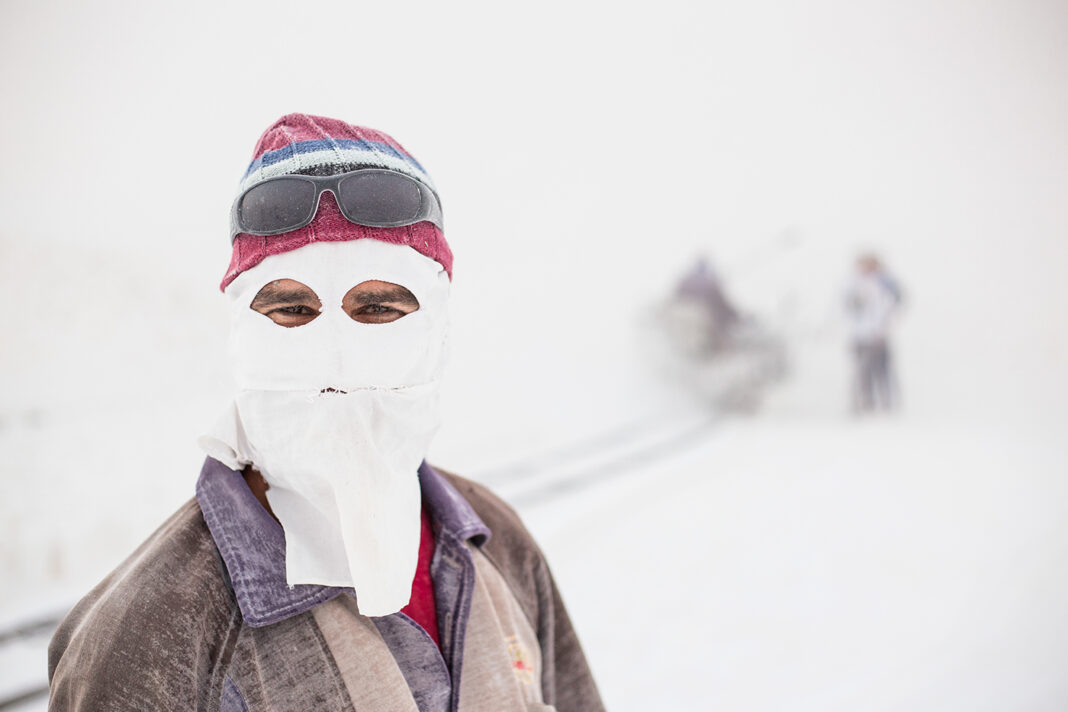

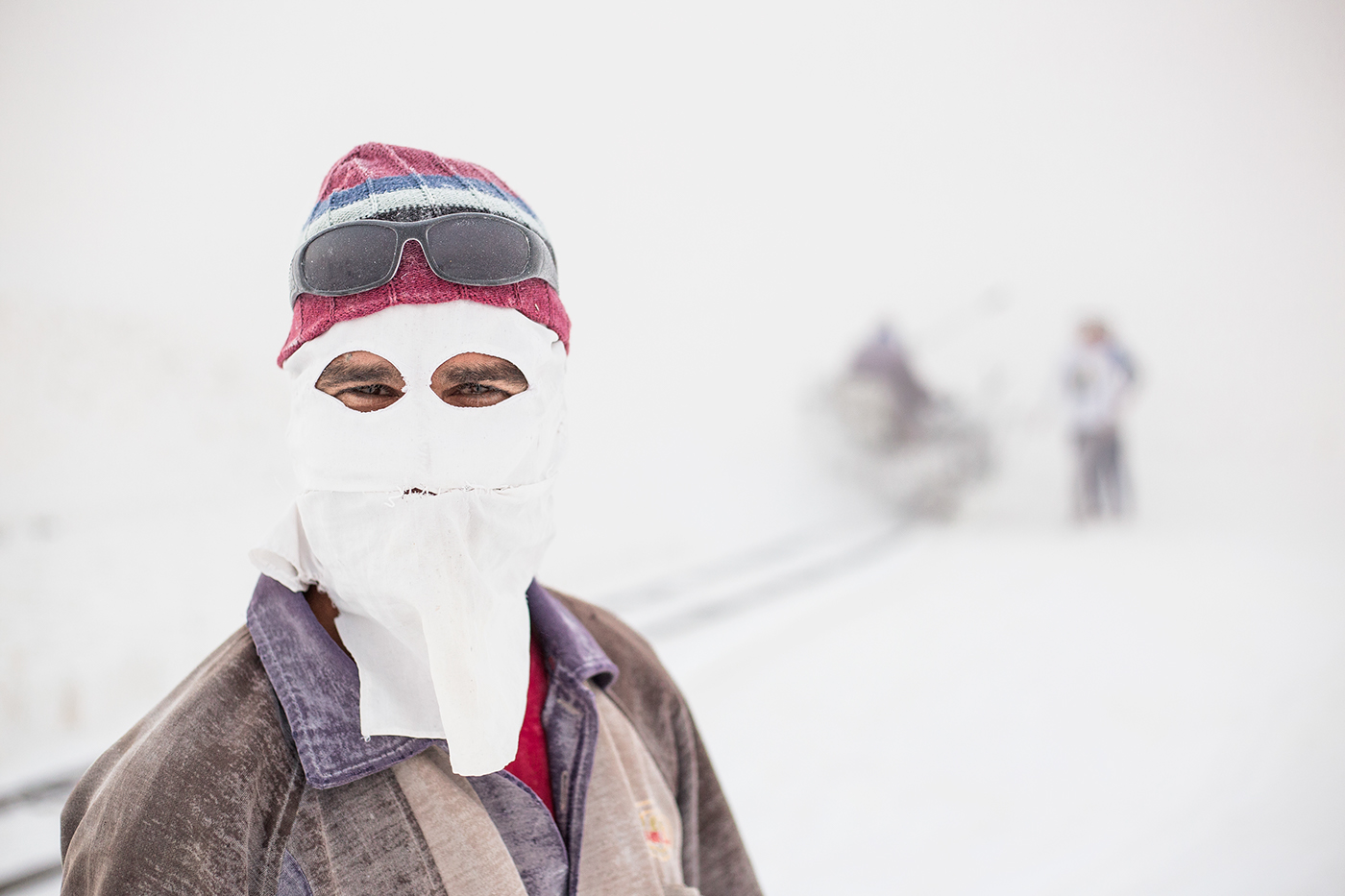
 An Egyptian photographer has captured stunning scenes of the daily life of workers in the limestone quarries in southern Egypt. Toiling in a constant blizzard of white limestone dust, these men are employed in one of the most dangerous industries on earth. Had a hard day at work? Prepare to have your perspective snapped.

Architecture student Ezzat Hisham was inspired by a photojournalist friend who had visited the quarries two years earlier. Eager to explore the quarries firsthand, Hisham packed up his cameras and travelled to Minya, the capital of the Minya Governate in Upper Egypt, about 150 miles south of Cairo on the western bank of the Nile River. This is where the day workers muster at 4 AM until pickup trucks arrive to transport them to the quarries.

Initially mistaken as just another laborer, Hisham confided his plan to record their work. Over a few days, some of the men shared their stories. Back home in Cairo, he uploaded his photographs to his Instagram account, later to Facebook. The stark images quickly went viral, drawing attention to the under-reported situation of the quarrymen.

Around 45,000 people, including children, work in Minya’s 1,500 quarries, digging out rock that later will be used for building or powdered for use by pharmaceutical and ceramic companies. Workers use machinery with sharp rotor blades which are the main cause of injury. Equipment is often homemade and employers are not held responsible for staff safety. Electrocution is common as exposed wires snake across the entire worksite.

The main killer turns out to be the limestone itself. Workers inhale its dust which contains high levels of silica, which infiltrates lung tissue, causing silicosis which turns normal tissue into fibrosis, reducing breathing capacity. Silicosis is incurable and can also cause heart damage.
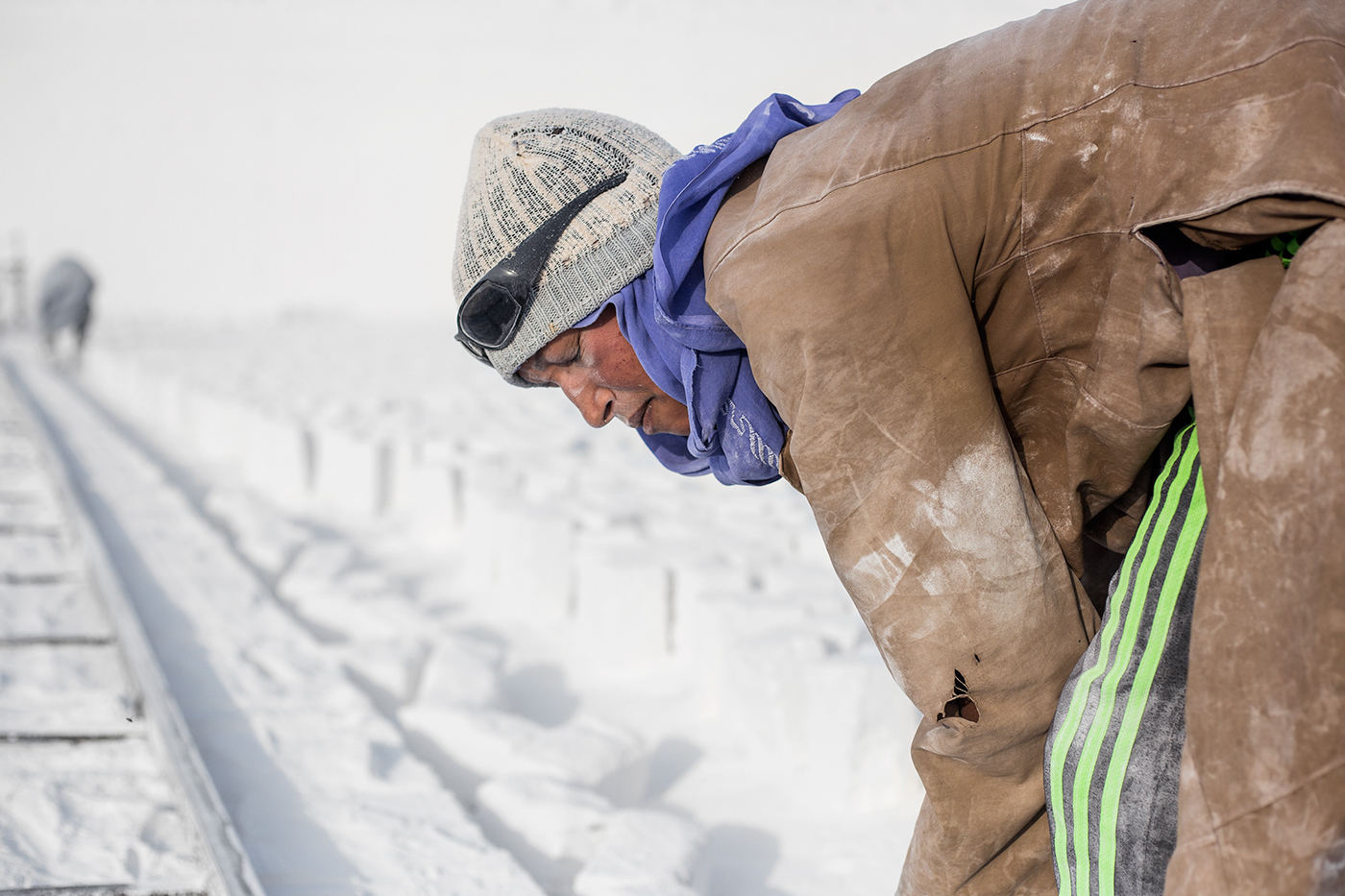
The job typically pays about $4 USD a day, plus a falafel sandwich. There are no employee benefits such as pensions, insurance, or sick pay. There health is their only asset. This could be the most dangerous workplace in the world, but things are slowly changing.
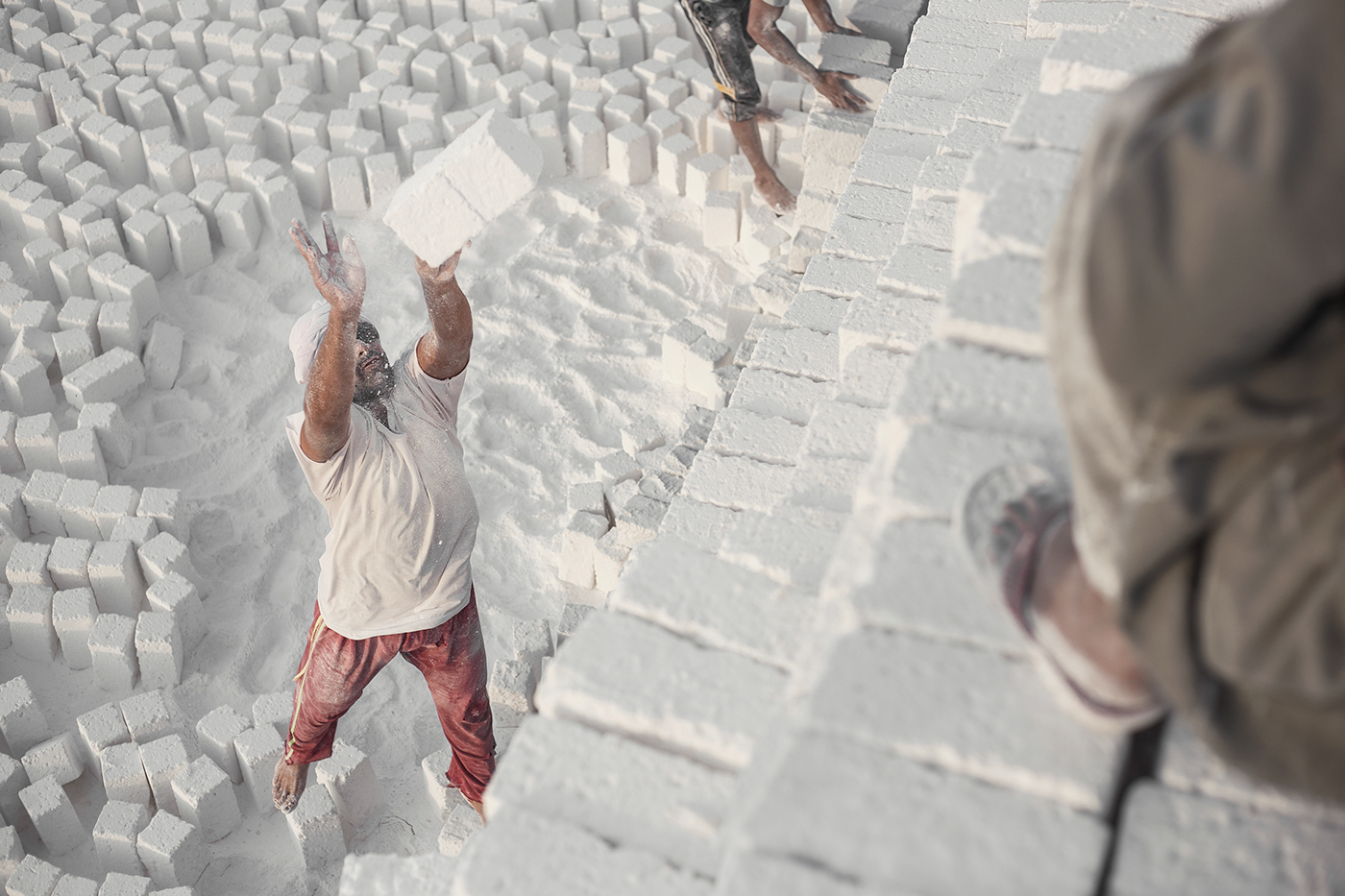
In the aftermath of the 2011 Egyptian Revolution, assisted by local organization Wadi el Nil, the quarrymen unionized, and reversed the employers’ threat of wage reductions into a modest pay rise. Wadi el Nil also helped underwrite small loans for the wives of injured workers enabing them to set up micro-businesses to generate income.

What is now needed is government regulation of health and safety, and consumer pressure extended to the industries dependent on the limestone end products to demand an ethical supply stream.
All images from Ezzat Hisham’s Instagram




[…] Toiling in a constant blizzard of white limestone dust, these men are employed in one of the most dangerous industries on earth. Had a hard day at work? Prepare to have your perspective snapped with these images on Green Prophet.com. […]