

 The 2016 Rio Olympics are history, but a hindsight review shows a surprising sideshow of contemporary human issues running through the international athletic games. We’re not talking about substandard construction in the Olympic Village, contaminated water, or violent crime.
Instead, we spotted elite athletes using the event to broadcast personal agenda.
It makes perfect sense that this international event be used to flag our attention to modern day matters; consider that more than 30 million viewers tuned in for the Opening Ceremony alone. Some Olympians were cast as accidental spokespeople and others used focused intent. Here are some of the social issues elevated to the world podium, and do tell us if there are others we missed. Let the humanitarian games begin!
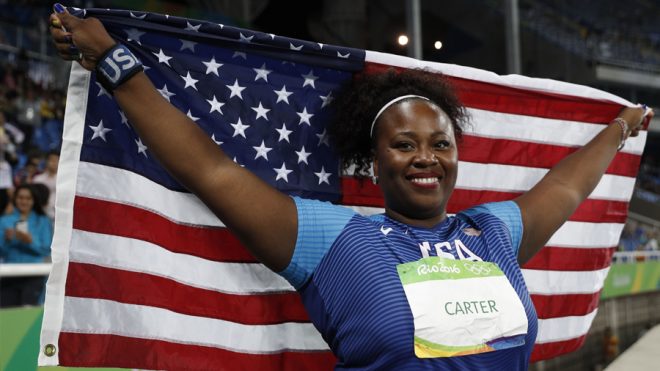 Female body image – USA’s Michelle Carter won gold in women’s shot put with her final throw, but was fat-shamed by trolls on social media. Impeccably groomed throughout her events, she told IAAF.org before the Olympic trials,“I believe when you take the time to take care of yourself and put yourself together, that helps boost your confidence.”
She’s a certified makeup artist who sells cosmetics via her website, ShotDiva. She told the New Yorker that it’s essential for her to feel good on the field, and decided against caring about what other people think. Carter said, “I think now, it’s like, ‘You know what? We’re girls and we can throw heavy balls and be in the dirt and we look good while we’re doing it.’ I think it’s bringing more attention to the sport and girls are realizing, Hey, I can do this and it’s OK to do this as a girl.”
In addition to her makeup business, Carter also runs a sports-confidence camp for girls called You Throw Girl that works with female athletes, building their confidence to compete.
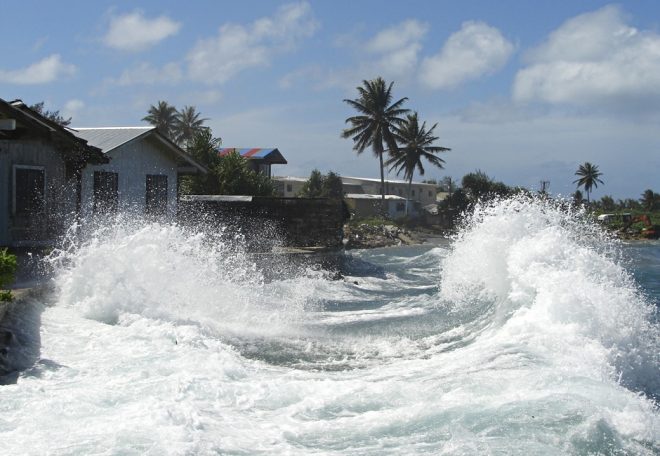 Climate Change – Kiribati weight lifter David Katoatau celebrated his sixth-place finish in the 105kg weightlifting competition with a wildly jubilant dance that broadcast a serious message about the survival of his tiny Pacific island homeland. Rising seas from climate change threaten to submerge the 33 coral atolls on which 102,000 people live. Kiribati (shown above) is located about 2,400 miles south of Hawaii.
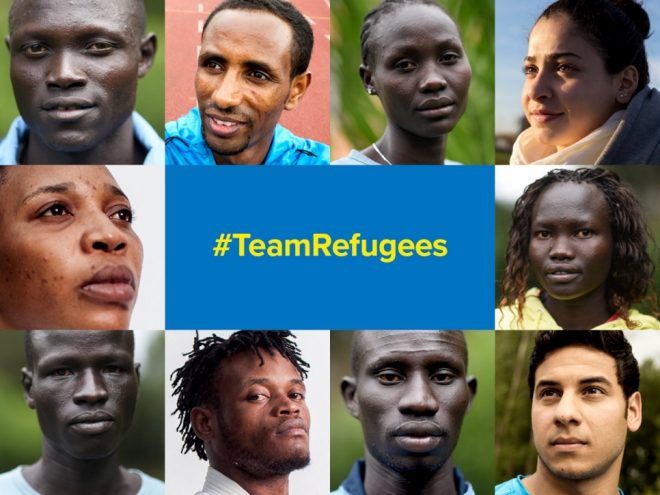 Refugees – Ten refugee athletes, seen above, stood as a symbol of hope for displaced people worldwide when they participated in the summer Games as the Refugee Olympic Team (ROT), the first ever team without a national identity.
Upon announcing the team members at a press conference, International Olympic Committee (IOC) president Thomas Bach said, “These refugees have no home, no team, no flag, no national anthem. We will offer them a home in the Olympic Village together with all the athletes of the word. The Olympic anthem will be played in their honour and the Olympic flag will lead them into the Olympic Stadium.”
He added, “This will be a symbol of hope for all the refugees in our world, and will make the world better aware of the magnitude of this crisis. It is also a signal to the international community that refugees are our fellow human beings and are an enrichment to society. These refugee athletes will show the world that despite the unimaginable tragedies that they have faced, anyone can contribute to society through their talent, skills and strength of the human spirit.”
 Organ donation – German Olympic canoe slalom coach Stefan Henze died as a result of a taxi accident during the Games, but because he was an organ donor, his choice saved the lives of four people. The 35-year-old former world champion had been travelling from the canoe slalom venue when the accident happened, and he later died in hospital due to serious head injuries. His family, who travelled to Rio after the accident, had given their consent to the transplants.
Henze (above, right) was a successful Olympian, winning silver in the Athens games in 2004 with Marcus Becker. He was crowned world champion in 2003 and European champion in 2008. But his posthumous feats are what he will be remembered for. “Heart, liver and both kidneys have been successfully transplanted. Thus he has saved four lives,” a spokeswoman from the Brazilian health ministry told the conservative daily Die Welt.
 Gender fluidity – A new hot-button issue in athletics is hyperandrogenism. It’s a little known condition that was flagged by medical tests that look for banned drugs. In these cases, rather than evidence of doping, the tests detect “abnormally high” testosterone levels in women. Hyperandrogenism is a medical condition that causes a person to produce high levels of hormones and can be caused by differences in sexual development. It is a complex and excruciatingly sensitive issue, as it invades privacy and calls into questions basic questions of identity.
The International Association of Athletics Federation (IAAF), the governing body of track and field, has rules aimed at providing a fair playing field for women by disqualifying athletes with high testosterone, a naturally occurring strength-building hormone. The rules were established after South African runner Caster Semenva (shown above) won a gold medal in the women’s 800m at the 2009 World Championships. Controversy arose because her strenght and speed seemed too “masculine”. Forced to undergo tests, she was ultimately ruled eligible to compete as a woman, which is how she identifies.
Similarly, the track career of India’s Dutee Chard was nearly derailed when the IAAF, suspicious of her performance, gave her an option to avail herself to a panel of medical experts who could recommend surgery or chemical treatment to reduce her testosterone levels, or stop competing. Ultimately suspended from competition, she challenged the decison in the Court of Arbitration for Sport, and the IAAF regulations are now on hold, suspended since July 2015.
That means hyperandrogenic women were permitted to compete in Rio without having to artificially control their testosterone levels.
According to the IAAF, at least 14 Olympian women have gone through this screening. A 2014 study calculated that seven out of 1,000 elite female athletes may be hyperandrogenic, 140 times higher than expected among the general population.



[…] The subliminal subtext of the 2016 Rio Games – Impeccably groomed throughout her events, she told IAAF.org before the Olympic trials,“I believe when you take the time to take care of yourself and put yourself together, that helps boost your confidence … high” … […]