Qatar’s First Saltwater Barley Crop Sprouts in the Desert

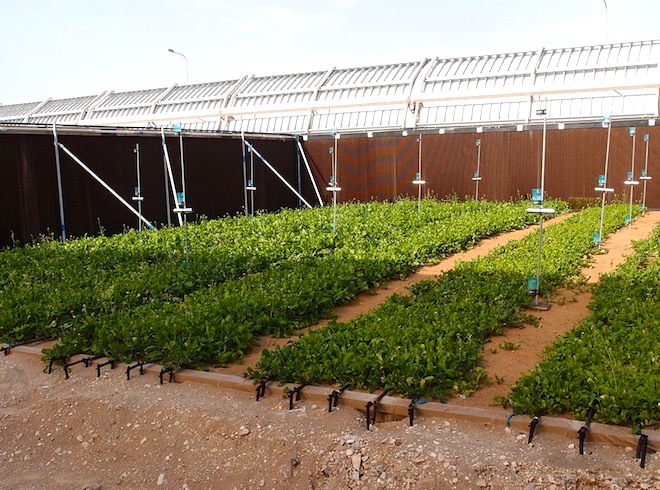
greening the desert, Sahara Forest Project, saltwater greenhouses, barley in the desert, Qatar, Middle East, food security, water scarcity, desertificationWater scarcity combined with desertification makes for a scary combination in the Middle East, but The Sahara Forest Project (SFP) is pioneering a promising solution: greenhouses that use saltwater to grow food in the middle of the desert.

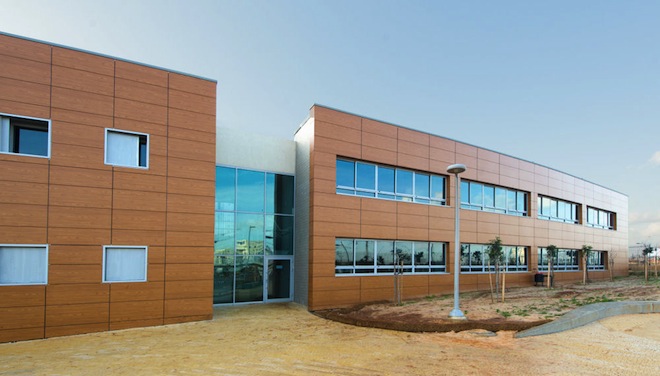
Since the pilot project broke ground in Qatar last December, three cucumber crops have been harvested, and now the group has harvested their first barley crop.

Speaking at a Sustainable Qatar Meeting at the Friends of Environment Center, cultivation coordinator Patrick Brading stressed that their seawater greenhouses, scaled up, could go a long way to ease food insecurity and provide employment opportunities.

A 4,000 hectare project could create up to 6,000 direct jobs and 13,000 indirect jobs, Brading said at the meeting.

“This is an investment opportunity of $1.5 to 2bn with an annual production of 173,000 tons of tomatoes, 7.5mn liters of bio fuel, and permanent CO2 storage of 495,000 tons per year,” he said.

“It will also have scope for 280 Gwh clean energy for export yearly.”

Jordan has also signed up to work on greening its desert using the seawater greenhouses, and a Danish group is working on a documentary to track SFP’s progress.

While raising money for the documentary through a recent Kickstarter campaign, the Copenhagen Film Company raised a few questions that are relevant to Brading’s suggestion that Qatar should invest in the SFP project to secure a more sustainable future.

“Will the people behind the Sahara Forest Project succeed in bringing this technology to market and sharing it with the societies of people who need it most: local desert communities in water scarce regions?” they asked.

“Will they benefit from this revolutionary technology economically, environmentally and socially?”

The pilot project is Qatar in its very early stages, and barley and cucumbers are the only crops that have been grown so far, so it’s still too soon to get too excited.

But such soaring success so early in the game offers a glimmer of hope for those living throughout the Arabian Peninsula and indeed other desert countries as well.

:: Gulf Times
Tafline Laylin
Tafline Laylinhttp://www.greenprophet.com
As a tour leader who led “eco-friendly” camping trips throughout North America, Tafline soon realized that she was instead leaving behind a trail of gas fumes, plastic bottles and Pringles. In fact, wherever she traveled – whether it was Viet Nam or South Africa or England – it became clear how inefficiently the mandate to re-think our consumer culture is reaching the general public. Born in Iran, raised in South Africa and the United States, she currently splits her time between Africa and the Middle East. Tafline can be reached at tafline (at) greenprophet (dot) com.

Read More

TRENDING

5 Reasons Why You Should Save Seeds (and plant them)

Saving seeds from tomatoes, peppers, herbs and flowers helps preserve biodiversity, strengthen food security, and keep heirloom varieties alive. Even a small balcony garden can make a difference.

Saving Gourmet Wild Plants For The Future

Think of truffles, a gourmet wild food. The European...

Middle-Eastern spices and natural medicine (A through C)

In the Middle East, aromatic traditional foods are regarded...

The holy sidr tree can stop desertification

Al-Rumaydh describes the Sidr less as a single organism and more as a working ecological unit. Its deep roots reach down toward groundwater, while lateral roots spread wide to catch surface moisture. Its dense canopy slows wind instead of blocking it abruptly, reducing erosion.

Green finance in Saudi Arabia, can “Davos in the Desert” change the planet?

As world leaders and billionaires descend on Riyadh for this year’s Future Investment Initiative — better known as “Davos in the Desert” — we wonder where the planet fairs in all this political business talk. Saudi Arabia’s Vision 2030 plan has turned the kingdom into an unlikely global stage for innovation and investment, drawing over 20 heads of state, 50 ministers, and hundreds of financiers, tech executives, and policy shapers.

Yerukim Forms a New Green Economy Where the Money is Really Green

The Yerukim members who pick up the recyclables get to keep the monetary reward, the public earns "green" bills that can be used in shops, and business owners get to be associated with environmentalism.

Choosing Riyadh over Dubai? What Investors Should Know

Saudi Arabia is deploying capital at unmatched scale to catalyze tourism and advanced industry while rewiring its power-and-water backbone. The investable frontier is widening—especially in renewables, grid storage, water efficiency/desal retrofits, and hospitality operating platforms. Prudent investors will insist on phased delivery, enforceable KPIs (energy, water, biodiversity), and RHQ/zone compliance—while pricing political-economy and reputational risks alongside growth upside.

Sell your cooking oil for biodiesel money

Want to make money on old french fry oil? Sell it.

Qatar Alternative Energy Summit Pairs Investors And Innovators

Alternative energy investors and innovators can meet n' greet in Doha, Qatar March 16 and 17.

Here’s How To Implement The Four Pillars Of Employee Engagement

If you throw a party for your work team and they are vegans, don't make it a barbecue. Know the sustainability values of your team to boost moral and retain good people.

Locals From Rishon Fight IKEA

Big Box stores are a pretty new concept in Israel, and thank God that not every Israeli city wants them in their backyard. A word from someone who has see the beautiful farmland around her hometown Newmarket, Ontario stripped and converted into vulgar strip malls of big box shops: they have no place in a healthy and sustainable town or city.

The Jewish National Fund Meets An Inconvenient Truth

According to the JNF, it has transformed thousands of acres of barren land into green forests in Israel. They state that each person emits about 23 tons of carbon per year, estimating that each tree planted can absorb one ton of carbon in its lifetime. That's a whole lot of trees you'd need to be planting. Could so many fit in Israel?

How to quiet noise from construction in your office

Streets need to be resurfaced in New York but the humming and grinding noise is unsettling. Noise is environmental pollution. 

Popular Categories