Long Public Bus Converted into $300,000 Un-green Luxury Home

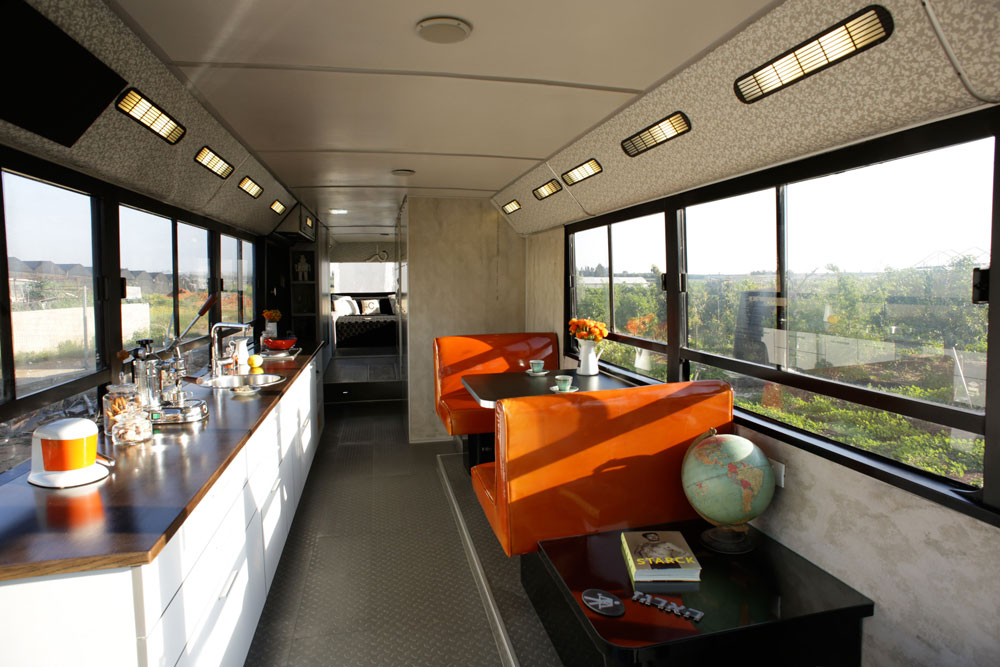
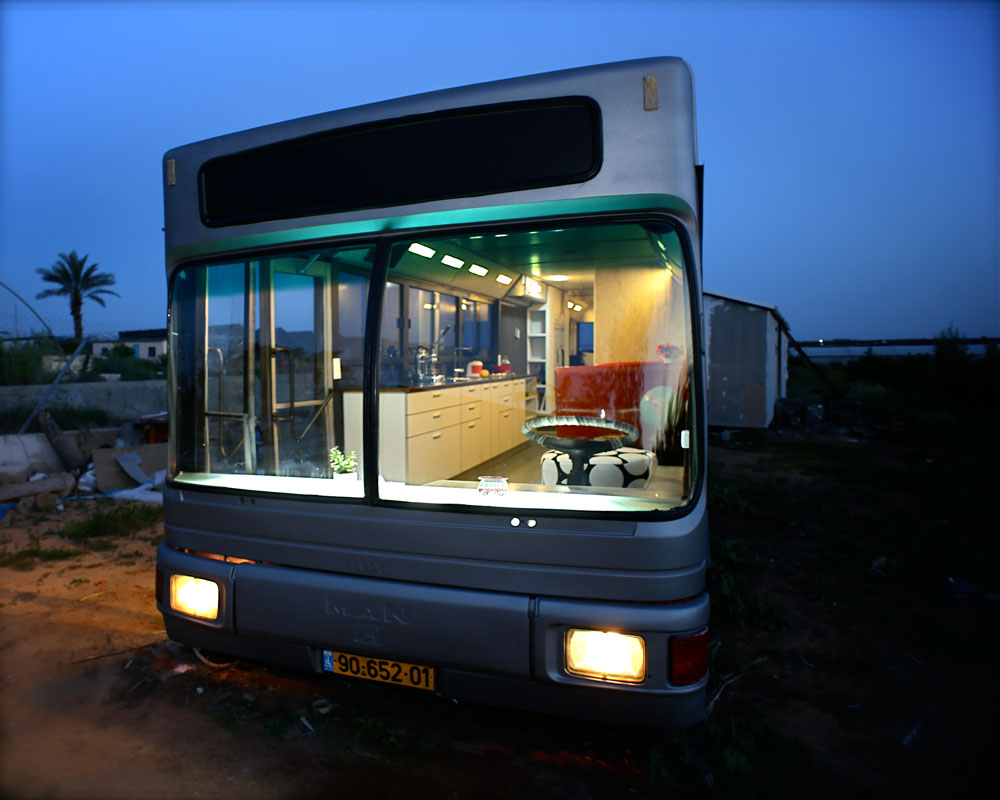
adaptive reuse, Dan bus conversion, israeli bus conversion, sustainable design, recycled materials, We were so excited to learn that an Israeli pair transformed an old bus into an attractive luxury home, until we saw what materials they used. Looking for an opportunity to make some money, Tally Saul and Hagit Morevski used such carbon-intensive and toxic materials as cement, concrete and formica to complete their ungreen conversion.

adaptive reuse, Dan bus conversion, israeli bus conversion, sustainable design, recycled materials,

Neither Saul nor Morevski are untrained fly-by-nighters looking for a get rich quick scheme.

Saul is a psychotherapist , according to Xnet, as well as a former marketing executive, while Morevski is an ecological pond water treatment specialist and a CEO partner of Goglass.

They decided to do the bus conversion after Saul read about alternative housing, and soon found themselves with a junked up Dan bus that measures 2.5 by 12 feet. See below.

israel bus renovation

israel-bus-renovation-before-shots

adaptive reuse, Dan bus conversion, israeli bus conversion, sustainable design, recycled materials,

After staring at the thing for several days uncertain how to proceed, the duo decided to stick as close to the original spirit of the bus as possible.

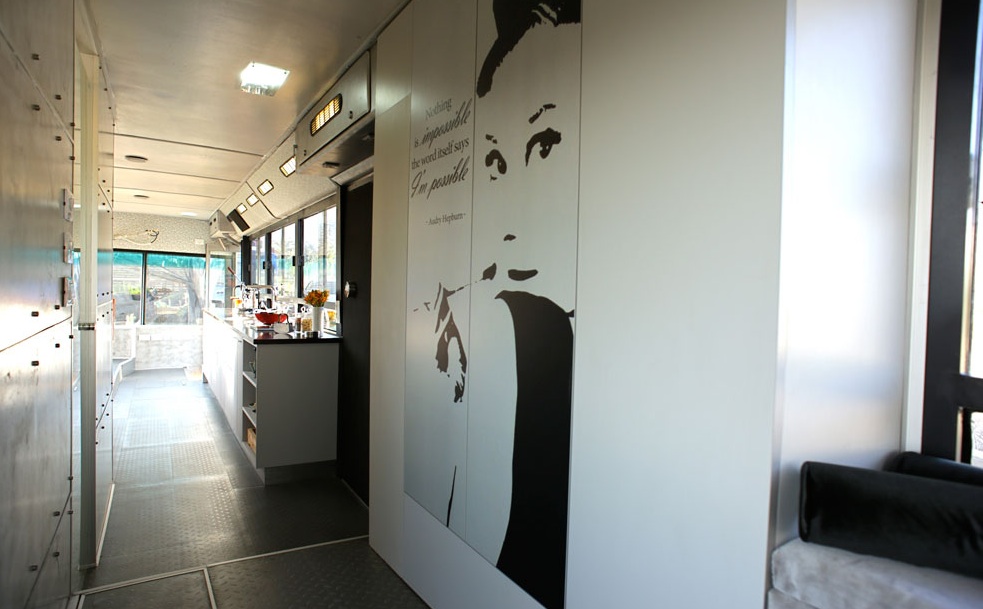
With help from Ward Design, they sunk into their interior plan, which was largely dictated by the awkward dimensions; they eventually decided to keep the windows, wheels and handles and fill up the vast spaces between with luxury furnishings.

The new floor resembles the old somewhat, and they had to level out the slope with some carpentry,  and they even managed to preserve and restore pieces of the old to furnish the new – including a suite of aluminum frames and the original doors.

adaptive reuse, Dan bus conversion, israeli bus conversion, sustainable design, recycled materials,

But then the project takes somewhat of a kitsch turn.
israel bus renovation

israel-bus-renovation

Instead of breathable natural materials befitting to such an enclosed space, like bamboo, for example, the design team added orange vinyl diner-styled seating, formica finishings in both the bathroom and kitchen, a velvet-covered couch and other such weirdness.

Their intentions were pure – if you can call a $300,000 price tag lobbed on the final result pure, but we wouldn’t want to be trapped inside with all those materials off-gassing.

:: Xnet

Images via Lior Danzig

Tafline Laylin
Tafline Laylinhttp://www.greenprophet.com
As a tour leader who led “eco-friendly” camping trips throughout North America, Tafline soon realized that she was instead leaving behind a trail of gas fumes, plastic bottles and Pringles. In fact, wherever she traveled – whether it was Viet Nam or South Africa or England – it became clear how inefficiently the mandate to re-think our consumer culture is reaching the general public. Born in Iran, raised in South Africa and the United States, she currently splits her time between Africa and the Middle East. Tafline can be reached at tafline (at) greenprophet (dot) com.

Read More

8 COMMENTS
  1. Does it still drive…like a fancy RV or is it stationary? If it’s stationary, who’s going to spend that much money on it? Having been to the shtachim (West Bank settlements), kibbutzim and small villages in the north like Hararit, my experience is that people out there build their own stuff for far less money (and to their own taste in decor/design). Not to say they’re environmentalists using bamboo (and no concrete/cement) – this isn’t Portland, Oregon or the Bay Area, California. On the other hand, Israelis have had solar water heaters since maybe the late 70s? But you’ve given me a good idea by expecting so much green consideration in any Israeli renovation (which we know full well NOT to be the very greenest part of Israeli culture). We should have a GREEN Home Show, where people from across the country can learn about all different types of environmentally friendly materials and ways to renovate the home…I’ll mention it to my colleagues at SPNI.

TRENDING

How Responsible Tourism Could Help Protect the World’s Last Wild Places

From Antarctica and South Georgia to the Galápagos and Thailand, fragile destinations are finding ways to manage tourism without shutting visitors out. Visitor caps, conservation fees, biosecurity rules and controlled access can reduce environmental damage while helping fund the protection of wild places.

How Slow Travel Is Changing the Way We Explore

From trekking fees in Nepal and wildlife conservancies in Kenya to visitor limits in Patagonia and strict Arctic rules in Svalbard, responsible adventure travel can help fund conservation, protect habitats, and create sustainable income for local communities.

How Responsible Adventure Travel Can Protect the World’s Wild Places

From trekking fees in Nepal and wildlife conservancies in Kenya to visitor limits in Patagonia and strict Arctic rules in Svalbard, responsible adventure travel can help fund conservation, protect habitats, and create sustainable income for local communities.

Koh Phangan’s angels for the dogs and the cats

Koh Phangan may be known for yoga, detox retreats, and full moon parties, but beyond the curated paradise lies a different reality—one of injured stray animals and the quiet work of rescue. This story explores PACS (Phangan Animal Care for Strays), a grassroots animal shelter tackling overpopulation, disease, and neglect on the island. Through firsthand experience with teens, it reveals how meaningful travel, volunteerism, and compassion offer a deeper kind of healing—far from the Instagram version of paradise.

The Essential Guide To Sustainability in Project Management

Sustainability is an approach where businesses and individuals balance the environmental, social, and economic aspects of a project such that current and future stakeholders are not overburdened with the impacts of the project in future.

Yerukim Forms a New Green Economy Where the Money is Really Green

The Yerukim members who pick up the recyclables get to keep the monetary reward, the public earns "green" bills that can be used in shops, and business owners get to be associated with environmentalism.

Choosing Riyadh over Dubai? What Investors Should Know

Saudi Arabia is deploying capital at unmatched scale to catalyze tourism and advanced industry while rewiring its power-and-water backbone. The investable frontier is widening—especially in renewables, grid storage, water efficiency/desal retrofits, and hospitality operating platforms. Prudent investors will insist on phased delivery, enforceable KPIs (energy, water, biodiversity), and RHQ/zone compliance—while pricing political-economy and reputational risks alongside growth upside.

Sell your cooking oil for biodiesel money

Want to make money on old french fry oil? Sell it.

Qatar Alternative Energy Summit Pairs Investors And Innovators

Alternative energy investors and innovators can meet n' greet in Doha, Qatar March 16 and 17.

Here’s How To Implement The Four Pillars Of Employee Engagement

If you throw a party for your work team and they are vegans, don't make it a barbecue. Know the sustainability values of your team to boost moral and retain good people.

Locals From Rishon Fight IKEA

Big Box stores are a pretty new concept in Israel, and thank God that not every Israeli city wants them in their backyard. A word from someone who has see the beautiful farmland around her hometown Newmarket, Ontario stripped and converted into vulgar strip malls of big box shops: they have no place in a healthy and sustainable town or city.

The Jewish National Fund Meets An Inconvenient Truth

According to the JNF, it has transformed thousands of acres of barren land into green forests in Israel. They state that each person emits about 23 tons of carbon per year, estimating that each tree planted can absorb one ton of carbon in its lifetime. That's a whole lot of trees you'd need to be planting. Could so many fit in Israel?

Popular Categories