
Green Recycling Machines for Light Bulbs and Batteries in Sharjah

light bulb recycling sharjah

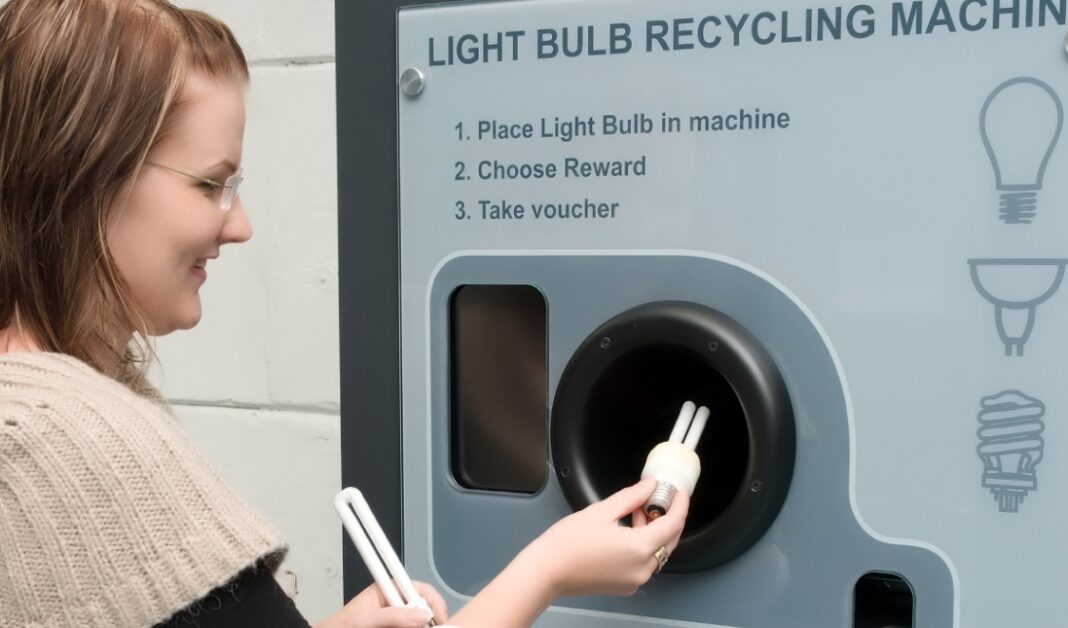
You can get vending machines for the strangest things in the Arab Gulf – even for gold bars. But thinking in a greener direction, the United Arab Emirates is the second country in the world to adopt light bulb and used battery recycling machines to the public. Five reverse vending machines are being set up in Sharjah this week. Used light bulbs and batteries are considered hazardous waste, though just a drop in the bucket of electronic related waste. But bulbs and batteries do contribute to the build up of dangerous levels of mercury when these chemicals seep into the ground.

The city of Sharjah already employs vending machines for plastic bottle recycling and medical wastes through an organization called Wakaya, and the city’s environment agency is planning to award prizes to people for their recycling initiatives.

The initiative is part of Shajah’s Zero Waste for 2015 campaign. Bee’ah, who we featured here is also trying to get commercial properties and malls to use more efficient lighting.

Image via revend 

Karin Kloosterman
Karin Kloostermanhttp://www.greenprophet.com
Karin Kloosterman is an award-winning journalist, innovation strategist, and founder of Green Prophet, one of the Middle East’s pioneering sustainability platforms. She has ranked in the Top 10 of Verizon innovation competitions, participated in NASA-linked challenges, and spoken worldwide on climate, food security, and future resilience. With an IoT technology patent, features in Canada’s National Post, and leadership inside teams building next-generation agricultural and planetary systems — including Mars-farming concepts — Karin operates at the intersection of storytelling, science, and systems change. She doesn’t report on the future – she helps design it. Reach out directly to [email protected]

Read More

3 COMMENTS

TRENDING

Self-repairing contact lenses and desalination membranes that fix themselves?

Could the humble contact lens become a sustainability breakthrough? Researchers in Korea have developed a self-healing hydrogel lens that repairs scratches with just one hour of UV light exposure. Beyond reducing waste from disposable contacts, the technology could one day help extend the life of solar panels, water filtration systems, and other plastic-based products.

From Pilot Plant to Global Stage: How Aduro Clean Technologies’ 2026 Expansion Signals a Turning Point for Chemical Recycling Investors Like Yazan Al Homsi

The company's Next Generation Process (NGP) Pilot Plant in London, Ontario, has officially moved into initial operating campaigns, generating the kind of structured, repeatable data that separates laboratory promise from commercial viability.

What are AWG air-water generators, and why they aren’t a golden-bullet solution (yet)

Atmospheric water generators (AWGs) sound like magic: machines that can pull drinking water out of air. The idea is mentioned in the Bible, where the elders would pray for water collected as dew on plants and the catch on turning this into a machine is in the physics. To turn invisible vapor into liquid, you must remove heat, especially the latent heat of condensation.

Urban miner Sortera raises $45 million USD to pull aluminum from the scrap pile

Sortera Technologies, founded in 2020 by Nalin Kumar and Manuel Garcia, is emerging as a major U.S. circular-industry player. Led by CEO Michael Siemer, the company uses AI and advanced sensors to turn scrap metal into high-value aluminum alloys. Its new ~$45 million funding round signals investor appetite for industrial decarbonisation—where emissions cuts come not from PR-friendly solar installs, but from upgrading the materials that power EVs, solar frames, and construction.

Waste Reform from the Ground Up: How Trash Balers Are Helping Cities Rethink Sustainability

If you’ve ever watched a recycling truck weaving through city streets, you’ve seen the problem firsthand. Most of what we call “recycling” still depends on long-distance transportation and centralized sorting facilities. Those systems are energy-intensive and prone to contamination — the dreaded mix of wet food, plastic wrap, and paper that renders recyclables useless.

Yerukim Forms a New Green Economy Where the Money is Really Green

The Yerukim members who pick up the recyclables get to keep the monetary reward, the public earns "green" bills that can be used in shops, and business owners get to be associated with environmentalism.

Choosing Riyadh over Dubai? What Investors Should Know

Saudi Arabia is deploying capital at unmatched scale to catalyze tourism and advanced industry while rewiring its power-and-water backbone. The investable frontier is widening—especially in renewables, grid storage, water efficiency/desal retrofits, and hospitality operating platforms. Prudent investors will insist on phased delivery, enforceable KPIs (energy, water, biodiversity), and RHQ/zone compliance—while pricing political-economy and reputational risks alongside growth upside.

Sell your cooking oil for biodiesel money

Want to make money on old french fry oil? Sell it.

Qatar Alternative Energy Summit Pairs Investors And Innovators

Alternative energy investors and innovators can meet n' greet in Doha, Qatar March 16 and 17.

Here’s How To Implement The Four Pillars Of Employee Engagement

If you throw a party for your work team and they are vegans, don't make it a barbecue. Know the sustainability values of your team to boost moral and retain good people.

Locals From Rishon Fight IKEA

Big Box stores are a pretty new concept in Israel, and thank God that not every Israeli city wants them in their backyard. A word from someone who has see the beautiful farmland around her hometown Newmarket, Ontario stripped and converted into vulgar strip malls of big box shops: they have no place in a healthy and sustainable town or city.

The Jewish National Fund Meets An Inconvenient Truth

According to the JNF, it has transformed thousands of acres of barren land into green forests in Israel. They state that each person emits about 23 tons of carbon per year, estimating that each tree planted can absorb one ton of carbon in its lifetime. That's a whole lot of trees you'd need to be planting. Could so many fit in Israel?

How to quiet noise from construction in your office

Streets need to be resurfaced in New York but the humming and grinding noise is unsettling. Noise is environmental pollution. 

Popular Categories