

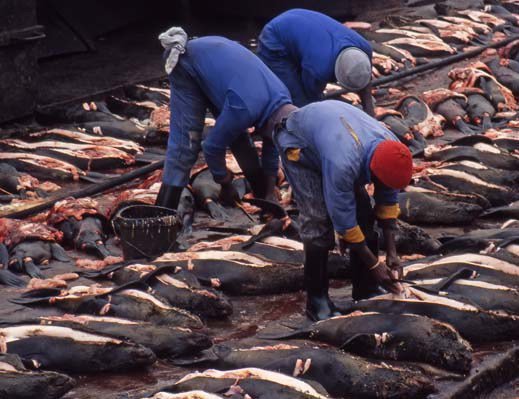
Activists have launched an international campaign to boycott key Namibian industries ahead of its annual slaughter of 91,000 seals.
Not long ago we wrote a story about Hatem Yavuz, the “King of Seal Killers,” and our readers were outraged. An Australian man with Turkish heritage, Yavuz is now responsible for 85% of the world’s seal market. The Canadian seal hunt with haunting images of bloody ice? He harvests the majority of those animals for their fur. The lesser known hunt in Namibia? Much of it can be traced to Yavuz.
I interviewed him for a story that was published today in The Ecologist; he claims that his operation is the ‘best worst option out there,’ but animal rights activists disagree and have launched a campaign to boycott all of Namibia’s key industries until the government ends the annual, brutal slaughter of 91,000 seals for their fur and body parts.
Unnecessary suffering
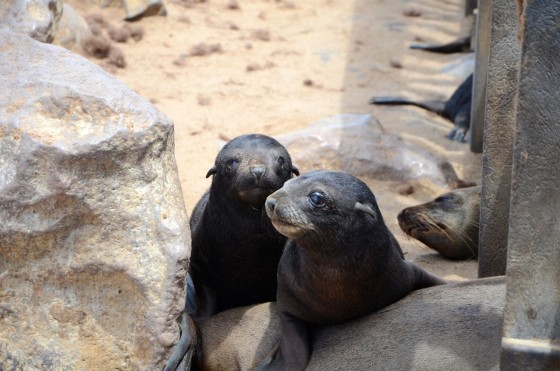
Every year between July and September, in the early hours of the morning before tourists flock to marvel at Cape Fur seals living at the Cape Cross colony in Namibia, men bearing clubs corral hundreds of pups that are often not weaned. As the animals panic and run towards the Atlantic Ocean to seek safety, the men bash their skulls.
Sometimes they manage to stun the animal into unconsciousness, which is considered best practice among seal hunters and the European Food Safety Authority (EFSA), but often they don’t. As a result, when the hunters plunge a knife into the seals’ hearts to bleed them, the animals are aware that this is happening.
Almost every country (including those in the European Union) has banned seal hunting as it has become increasingly evident that hunting for commercial gain, as opposed to subsistence, is unnecessarily cruel. But the men and women who profit from this bloody business are equally convinced that their work is justified.
Seal hunting on its last legs
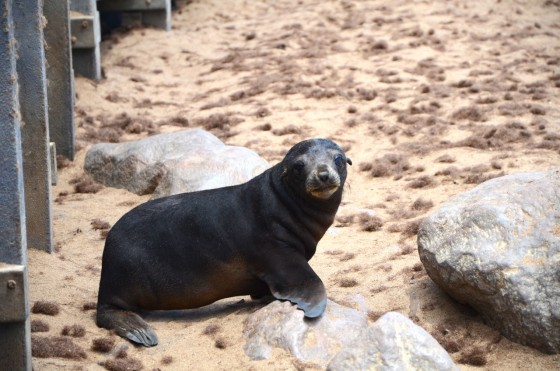
To activists and media, seal hunting seems to be on its last legs. It’s an unpalatable business. Nobody enjoys watching small animals suffer on ice and sand so that unconscionable men and women can wear their fur. But Yavuz claims that his business is as strong as ever.
Through an anonymous tip, we discovered that the opposite is true. Yavuz is being charged more for furs than others and a supplier in Namibia claims that he is “running out of money.”
In the meantime, reports demonstrate that developing eco-tourism around live seals is more profitable for a greater number of people than the annual cull. At present, only a small handful of Namibian locals truly benefit from the short-lived seal “industry,” though Yavuz claims that he is building schools and supporting conservation efforts.
Boycott
Namibia will start their annual hunt in just a few months, but activists have launched campaigns all over the planet to encourage people to boycott Namibia’s tourism and other key industries. Also, Seals of Nam and Seal Alert SA, along with a film crew, plan to conduct their own survey of seal colonies along Southern Africa’s Atlantic Coast in order to better gauge the cull’s ecological impact.
While I was working on this story in Namibia and trying to convince him to put me in touch with local people, Yavuz accused me of trying to put people out of business.
“Oh darling, he wrote, “In business to set people out of business you have to pay a heavy price.”
My business is to tell it like it is. Read The Ecologist story and make up your own mind.


@Karin Kloosterman: I’m not sure if he ever faced persecution. Because of his greed Namibia seals will become extinct if this massive slaughter dosen’t end soon.
What really angers me the most is,i could see if these seals were killed for food if families were starving. Thier killed for no reason what so ever,just so this GREEDY SELFISH TURKISH MAN GETS RICH!!!! These innocent creatures have to suffer cause of man’s greed.I hope the money he’s making off of these creatures goes towards hospital bills to him and his love ones!!!!
I wonder if this man ever faced persecution.
This lowlife Hatem Yavuz needs to be shot!! I don’t even blame the seal killers thier poor uneducated and ignorant.He’s even exploited these men as well just for his finaicial gain. Canada is comming to a end to the seal slaughter there, now it’s time to put a end to Namibia’s seal slaughter. If this continue’s NAMIBIA SEALS WILL BE EXTINCT!!! THIS IS A TRUE FACT!!!
This is cruel and inhumane. It’s bad enough canadian seals being slaughtered for no reason NOW THIS!!! This GREEDY SELFISH man from Austrlia needs to be shot.I blame more him then the seal clubbers themselves. He’s exploited them also the same way he’s doing to the seals. Please Guys/Gals don’t give up on these creatures. We must fight till the end!!!
Israel’s Voice in the Global Actions to End the Seal Massacres
April 27th a beautiful sunny day in Tel-Aviv and around 160 people of all ages are holding posters reading ‘END THE BLOODBATH of BABIES!!’, “FUR IS BORN’….and many other slogans causing the passersby to inquire; and learn the truth of the massacre of nursing seal pups both in Canada and in Namibia. The local demonstration organized by the International Anti Fur Coalition (IAFC) is part of the global action to end the seal slaughter. In both countries the nursing pups are often skinned alive as their mothers witness, helplessly trying to defend their young. The Canadian massacre has all but been closed down via the revealed brutality involved. The market is banned by the E.U., U.S.A., Russia, Mexico, Belarus, the Ukraine, and others….. The Canadian government loses millions of tax payers’ dollars on the annual massacre and has 400,000 pelts in storage from past years that they can not sell. The DFO of Canada raises the kill quota each year (this year up to 400,000) the true kill will be less then 16,000, as the sealers have no market and many only kill the pups out of spite and throw the bloody pup skins into the sea.
Namibia’s annual seal slaughter violates their existing law; the Namibia’s Animal Protection Act of 1962; which outlaws the repeated clubbing to death of any animal. The government overlooks the law by declaring that the seal are not “animals”; this is to profit from a trade agreement to buy all the pelts till 2019 with their sole buyer Hatem Yavz a business from Turkey and living in Australia. The population of seal has sharply decreased in resent years from 2 million to only 650,000 and yet the kill quota has increased to 85,000 pups to be killed. The massacre takes place at seal/nature reserves where the blood soaked sand is cleaned up with bulldozers each day before the eco-tourist arrive
In both nations the seals natural birthing habitats have all but disappeared, forcing the mother seals to birth and raise her young on the shore where they are in danger. The IAFC plans to contact the Canadian Ambassador and the Namibian conciliate with their signed petition and official letter addressing the issue.
I Truly hope that the Seal Hunt is on its last legs !!!! Also That the Activists that are launching campaigns to all people across the planet will boycott Nambia’s touism and other key industries :-0 Thank-You
Sounds like a seriously dubious creature.
Was that a bit of a threat at the end? 🙁 Hope not!
Good story.