
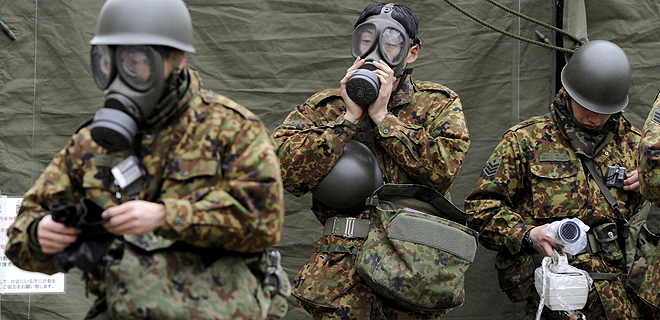

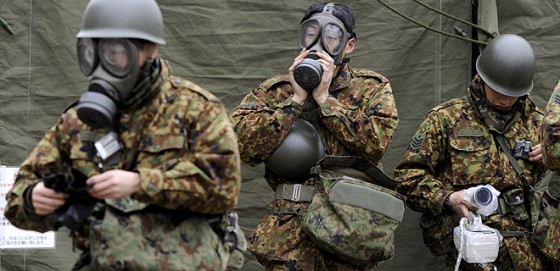
 Japanese soldiers prepare for the worst. The China Syndrome? Is the worst yet to come?
Radiation from damaged reactor cores at Japan’s Fukushima Diiachi nuclear power plant now appear to be reaching dangerous proportions according to statements being issued by governmental authorities and assessments being made by nuclear energy safety analysts. Some experts in Israel say the Japanese aren’t disclosing the nature of the exposed radiation due to shame. The nuclear facilities at both the Fukushima Diiachi and Fukushima Diani, were both damaged when a giant earthquake and resulting tsunami tidal waves overflowed the protective barriers and flooded equipment vital in keeping the reactor core fuel rods cool.
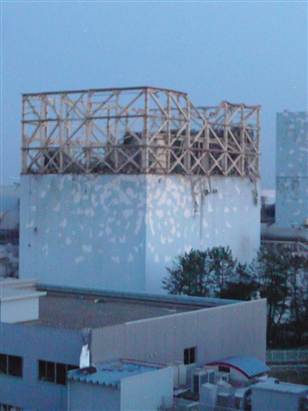 “Top blown” Fukishima reactor housing
The situation has become so acute that a 30 km (20 mile) “no-fly” zone has been imposed with none being allowed near the plants for fear of being contaminated by radiation.
“The reactor’s cooling systems are simply not working,” said Peter Yanev, a nuclear energy engineering expert who was interviewed by CNN. He went on to say that the present situation is much worse than that which happened there back in 1978 when a less powerful earthquake struck in the area and did not result in a tsunami.
As told by Yanev to CNN:
“Actually, the plant survived the 8.9 magnitude quake with little damage. The tsunami that occurred afterward overwhelmed the protective sea wall barrier and flooded the generators which are vital to running the cooling systems to keep the reactor cores from overheating. As a result, the emergency power systems are not functioning properly to keep the reactor cores properly cooled.”
Yanev therefore attributes the tsunami as being the main cause of the malfunctions. Tsunami or not, the result nuclear radiation leaks are causing many Japanese to panic in a situation they have not faced since August, 1945.
Safety issues surrounding the Fukushima Diaachi plant have been ongoing for years, it was later revealed, including a partial cover-up of the 7.1 magnitude quake in 1978 that resulted in some damage and fires at the 40 year old plant. Japanese officials are now advising people that the resulting radioactive material leakage “can impact human health”.
This is indeed an understatement as levels of radiation in the metropolitan Tokyo area are now at much higher than normal levels and many international diplomats, including those from Israel, are being advised to leave.
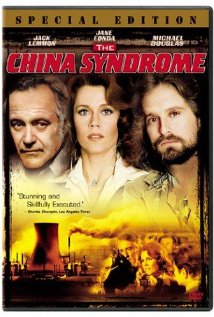 Meltdown at the movies
The nuclear nightmare that now seems to be unfolding at the Fukushima plants reminds this writer of a Hollywood movie called The China Syndrome, that was released in 1979 and dealt with a nuclear power plant in the USA that went into an emergency shutdown procedure when it was discovered by a plant technician, played by Jack Lemon, that the coolant water for the reactor cores was dangerously low due to an incorrect gauge reading.
The plant was about to go into meltdown mode, known to nuclear technicians as “the China syndrome” when a nuclear plant’s fuel rods could literally melt down into the ground due to the intense heat generated (or all the way to China, via the earth’s core).
The drama intensified when the technician, against orders from his superiors, shut down the plant, causing it to go into SCRAM or emergency shutdown, when anyone unfortunate to be inside would no be able to escape – and would ultimately die from the heat and radiation emitted.
Due to the Japanese government now admitting that the radioactive steam and particles that have escaped so far “can impact human health” that is question to how much has been covered up so far by local health and other officials so as to not cause alarm among the country’s population, as well as concern from other countries lying in the path of ocean and air currents from Japan, including the Chinese mainland and the Korean peninsula.
What is happening in Japan is now likely to bring the safety precautions in nuclear plants located in other parts of the world into question, especially those located near bodies of water like large rivers, lakes, and oceans.
Who’s developing nuclear in the Middle East?
While the Middle East still does not have large numbers of nuclear plants, many are in the planning stage, including one in southern Turkey at Akkuyu, in Egypt (still under deliberation) in Saudi Arabia and Kuwait, in Jordan , and in Qatar, where the government there recently made an agreement with Russia towards the development of nuclear energy in Qatar.
And, of course, there is Iran’s current nuclear program, with its newly completed nuclear facility at Bushehr, and Israel’s two “scientific reactors” at Dimona and Sorek.
The ultimate outcome of Japan’s nuclear plant disaster may determine if nuclear energy for creating electricity is a worthwhile endeavor after all.
Read more on nuclear energy issues in Japan and in the Middle East:
Japan Nuclear Meltdown Will Seriously Effect World Environment
Is Israel Coming Out of the Nuclear Closet by Planning Nuclear Power Station?
Lebanese Op-Ed Calls Nuclear Energy in the Middle East “a Fad”



with japans approval.. send in missles aimed at digging a trench from the ocean to the reactors using the ocean as a killing the (open core) effect. of course clear out the area. plus the area will probably be uninhabitable atherwards. but the way i see it now that area is non livable for miles for a very long time to come. this is a very scary idea, this is just a suggestion. i am a proud american and thing then japanise are very nice people. i am sure they have better conclutions than these erradic ones… the other concern would be that will the ocean accually do the job. and how much radioactive material will go back to the ocean contaminated it..