Art and Spirituality: The Antidote to Bigger, Better, More

peaceful-waterside-benchGentle artists and prophets inspired by nature offer a cure against environmental destruction

This post takes its inspiration from two different stories. One by Mike Shanahan, an environmental journalist whose work we admire, and another published in Al MasryAlyoum. The first proposes that incorporating religious principles into our daily lives will heal our relationship with the earth. Our own Arwa has suggested, for example, that Islam promotes eating meat in moderation, and the MTV Muslimah discusses how Islam kindles her eco-soul.

The second profiles an artist who captures the magical colors of a Nubian village before its harmony is destroyed. In both cases the message is clear: we no longer walk in step with nature. Somehow, we have built a global empire that values excess over simplicity, ambition and individuality over the love of our fellows. Can art and spirituality bring us back down to earth?

Spiritual pollution

Although currently taking a break from his position at the International Institute for Environment and Development, Mr. Shanahan is using this month to work with the Convention on Biological Diversity. He also posts brief commentary to his new blog.

Summarizing an interview with Zen Buddhist master Thich Nhat Hahn in The Guardian, Mr. Shanahan writes, “…the root cause of our environmental problems — from overfishing to climate change, from deforestation to the loss of biodiversity — is that societies worldwide have become spiritually polluted.”mushroom-close-up

Our viral fear of discomfort, and our lack of faith in nature’s ability to provide for us, has led us instead to take comfort in behaviors that nature can’t sustain.

Referring to the Thich Nhat Hahn’s recent book ‘The World We Have – A Buddhist approach to peace and ecology‘, Mr. Shanahan quotes:

“The situation the Earth is in today has been created by unmindful production and unmindful consumption. We consume to forget our worries and our anxieties. Tranquilising ourselves with over-consumption is not the way.”

The solution, according to both the environmental master and the Zen master, is to take comfort in simplicity, to enjoy kindness and benevolence, to love nature. Because when you love a thing, a soft puppy, a particular lake, or another person, the humanity in you seeks to protect that thing.

Gharb Soheil

It is because Hoda Baraka loves Gharb Soheil that she has picked up her camera to protect it. What draws thousands of visitors each year to this village in northern Egypt – the colors, the Nubian men whose simple lives are etched on to their skin, the stark environment – is also in jeopardy of being destroyed.

Tourists are economically valuable, but tourist expectations and fantasies often overrun a place and ruin its character. Elsewhere in Egypt the pyramids are barely visible through Cairo’s smog, and the Red Sea, a haven for divers, is fished out, its coral reefs bleached.

What we lose, we can never regain,” Ms. Baraka told Al MasryAlyoum.
hoda-baraka-journalist

Her images eschew facts, inculcating beauty instead in order to help the villagers campaign against unsustainable development. This aim is supported by the Center for Environment and Development for the Arab region and Europe (CEDARE).

Surrounded by billboards and exciting, flashy toys that can distract us from simplicity, we sometimes need an earthy reminder. At these times, it can be helpful to invoke the colorful, gentle messages gifted by our prophets and by our artists.

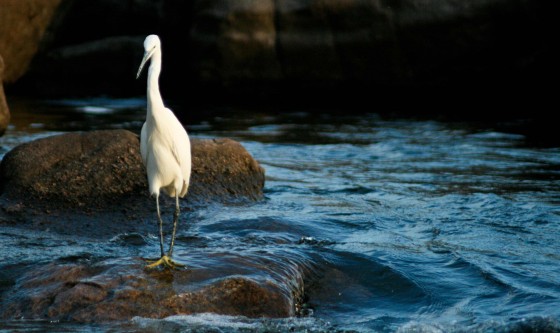
:: Mike Shanahan and Al MasryAlyoum; upper images by Tafline Laylin

Lower image by photographer/environmental journalist Hoda Baraka. Picture exhibited in exhibit entitled ‘From Gharb Soheil’

More Travel and Nature stories:

Man Arrested Attempting To Smuggle “Golden” Falcon Eggs

Using A Mosquito’s Best Defense Against It

Anne Frank’s Tree – The Chestnut Tree – Finally Falls

Tafline Laylin
Tafline Laylinhttp://www.greenprophet.com
As a tour leader who led “eco-friendly” camping trips throughout North America, Tafline soon realized that she was instead leaving behind a trail of gas fumes, plastic bottles and Pringles. In fact, wherever she traveled – whether it was Viet Nam or South Africa or England – it became clear how inefficiently the mandate to re-think our consumer culture is reaching the general public. Born in Iran, raised in South Africa and the United States, she currently splits her time between Africa and the Middle East. Tafline can be reached at tafline (at) greenprophet (dot) com.

Read More

1 COMMENT

TRENDING

10 Amazing Facts About the Sidr Tree

Most people in the West have never heard of the Sidr tree. That's strange when you think about it. This tough, thorny desert tree has fed people, bees, birds, and camels for thousands of years. It appears in Islamic tradition. Its honey sells for astonishing prices.

Farmer Focus Sold as Humane and Halal. PETA Says the Reality Is Far Less Ethical

According to documents obtained by PETA, and sent to Green Prophet, Farmer Focus accumulated 40 violations from the Harrisonburg-Rockingham Regional Sewer Authority between January and March 2026 for overly acidic wastewater and excessive pollutant levels.

Al-Khidr: Islam’s Original Green Prophet

Long before "sustainability" entered the modern lexicon, Islamic tradition had its own ecological saint. His name is Al-Khidr — The Green One. He appears briefly in the Quran, yet his presence has shaped Islamic thought, Sufi mysticism, and folk tradition across fourteen centuries. Today, he's emerging as an unexpected symbol for Muslims thinking seriously about the environment.

Muslim vegetarians? More young Muslims are saying yes

The halal food market is now worth trillions globally, and companies are beginning to notice growing demand for halal-certified vegetarian and vegan products.

Jujube, the sidr tree of medicine and magic

A magic holy sidr bath to deflect the evil eye? It needs 7 powdered sidr leaves stirred into a bucket of warm water. The hadith of the Prophet Muhammad allows to repeat healing prayers and verses from the Koran to increase the water’s potency. 5 grams, or 1 tablespoon of sidr powder equals 7 leaves.

Yerukim Forms a New Green Economy Where the Money is Really Green

The Yerukim members who pick up the recyclables get to keep the monetary reward, the public earns "green" bills that can be used in shops, and business owners get to be associated with environmentalism.

Choosing Riyadh over Dubai? What Investors Should Know

Saudi Arabia is deploying capital at unmatched scale to catalyze tourism and advanced industry while rewiring its power-and-water backbone. The investable frontier is widening—especially in renewables, grid storage, water efficiency/desal retrofits, and hospitality operating platforms. Prudent investors will insist on phased delivery, enforceable KPIs (energy, water, biodiversity), and RHQ/zone compliance—while pricing political-economy and reputational risks alongside growth upside.

Sell your cooking oil for biodiesel money

Want to make money on old french fry oil? Sell it.

Qatar Alternative Energy Summit Pairs Investors And Innovators

Alternative energy investors and innovators can meet n' greet in Doha, Qatar March 16 and 17.

Here’s How To Implement The Four Pillars Of Employee Engagement

If you throw a party for your work team and they are vegans, don't make it a barbecue. Know the sustainability values of your team to boost moral and retain good people.

Locals From Rishon Fight IKEA

Big Box stores are a pretty new concept in Israel, and thank God that not every Israeli city wants them in their backyard. A word from someone who has see the beautiful farmland around her hometown Newmarket, Ontario stripped and converted into vulgar strip malls of big box shops: they have no place in a healthy and sustainable town or city.

The Jewish National Fund Meets An Inconvenient Truth

According to the JNF, it has transformed thousands of acres of barren land into green forests in Israel. They state that each person emits about 23 tons of carbon per year, estimating that each tree planted can absorb one ton of carbon in its lifetime. That's a whole lot of trees you'd need to be planting. Could so many fit in Israel?

How to quiet noise from construction in your office

Streets need to be resurfaced in New York but the humming and grinding noise is unsettling. Noise is environmental pollution. 

Popular Categories