Nature Iraq's Conservation in A Combat Zone

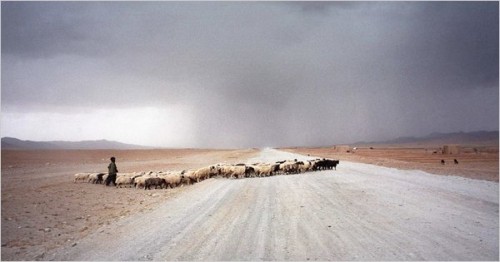
nature-iraq-conservationThese soldiers escort conservationists protecting the lapwing bird in active Al Qaeda territory.

The Middle East’s conservation warriors are diving to restore coral and boating to protect sharks in the Red Sea. But in the western Iraqi desert, where Al Qaeada operatives are active in a region called the “triangle of death”, Omar Fadhel and his team risk their life for birds.

Escorted by a galley of stalwart soldiers wearing bulletproof vests and some carrying assault rifles, Fadhel and 2 other conservationists trek to a region that is a safe haven for the lapwing, a rare bird.

The only Non Government Organization (NGO) doing regular field work in the region, according to Richard Solash, Nature Iraq receives funding from The US Agency for International Development (USAID), the Canadian International Development Agency (CIDA), and the Italian Environment Ministry.

Priorities in the combat zone

The Iraqi Environment Ministry, however, is less sympathetic to this work. “How can you go to the command center of the Iraqi police asking them to provide you with men — and these men will face the chance of fighting with Al-Qaeda just looking for a bird or doing environmental work?” Fadhel says to Solash. “This is a very, very unsuitable mission or task to make them understand what you are doing.”
iraq-marshlands-restoredToppling Hussein’s Poor Environmental Policies

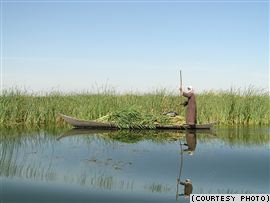
Fadhel’s work is important though. In Southern Iraq, the marshlands thought to be the biblical garden of Eden were almost completely destroyed under Saddam Hussein’s rule.  Nature Iraq resuscitated half of them, despite constant military batterings, after the famous statue of Hussein came crumbling down.

The organization was founded by Azzam Alwash, who grew up in the region but left to study in the United States, writes Solash, but still faces numerous obstacles.  Although he insists that Iraqis are aware of and respectful of nature, and that they’re not gun-wielding barbarians, he tells Solash that “Nature Iraq needs to refresh and rehabilitate the Iraqi environment and teach the people how to deal with wildlife instead of dealing with guns and weapons.”

Conservation in a nicely wooded park on happy lane is challenging enough, but protecting a rare bird in the midst of a potential enemy is something else.  We think it’s something more akin to heroism.

:: images and story via Radio Free Europe Radio Liberty

More About Middle Eastern Critters:

What Tagged Hawksbill Turtles From Qatar Tell Us

Owls Unite Arab Farmers in Palestine, Israel and Jordan

Half of UAE’s Falaj Mualla Camels Choked on Plastic Bags

Tafline Laylin
Tafline Laylinhttp://www.greenprophet.com
As a tour leader who led “eco-friendly” camping trips throughout North America, Tafline soon realized that she was instead leaving behind a trail of gas fumes, plastic bottles and Pringles. In fact, wherever she traveled – whether it was Viet Nam or South Africa or England – it became clear how inefficiently the mandate to re-think our consumer culture is reaching the general public. Born in Iran, raised in South Africa and the United States, she currently splits her time between Africa and the Middle East. Tafline can be reached at tafline (at) greenprophet (dot) com.

Read More

1 COMMENT

LEAVE A REPLY

Please enter your comment!
Please enter your name here

TRENDING

Saving Gourmet Wild Plants For The Future

Think of truffles, a gourmet wild food. The European...

Middle-Eastern spices and natural medicine (A through C)

In the Middle East, aromatic traditional foods are regarded...

Iran’s water mafia and thirst for war leaves the country on brink of being dry

Iran’s Lake Urmia, once the Middle East’s largest saltwater lake, has shrunk by 90 percent due to mismanagement, dams, and drought. As Tehran pours billions into foreign conflicts, water activists face repression at home. The crisis mirrors Syria’s drought-driven unrest, showing how water scarcity can destabilize entire regions.

Colossal’s Veterinary Breakthrough: Pioneering Medical Care for De-Extinct Species

When the world's first de-extinct animals were born, they presented veterinary professionals with an unprecedented challenge: how do you provide medical care for species that haven't existed for over 12,000 years? The dire wolf pups at Colossal Biosciences represent not just a scientific breakthrough, but a new frontier in veterinary medicine and animal husbandry.

A Fox Rescuer’s Final Battle: Remembering Mikayla Raines of Save A Fox

The animal rescue world is mourning the tragic loss of Mikayla Raines, founder and executive director of Save A Fox Rescue, who died recently after what her friends and colleagues described as a lifelong struggle with mental illness. She committed suicide after experiencing online harassment. Her passing has left a powerful legacy—and painful questions—rippling through the fox rescue and wildlife rehabilitation communities.

How to quiet noise from construction in your office

Streets need to be resurfaced in New York but the humming and grinding noise is unsettling. Noise is environmental pollution. 

EarthX and a blueprint for sustainable investing

Trammell S. Crow, a Dallas-based businessman and father of four, is focusing his efforts on impact investing, and media that focuses on saving the planet through EarthX.

Mining Afghanistan’s Mineral Discoveries Similar to Avatar

Now that American forces in Afghanistan are commemorating the longest period of any war that America has been involved in, including the 1965-73 Vietnam War, the recent discoveries of large and extremely valuable mineral and metal deposits may finally bring to light a reason to continue the presence of US fighting forces in this war torn and backward country.

From Pilot Plant to Global Stage: How Aduro Clean Technologies’ 2026 Expansion Signals a Turning Point for Chemical Recycling Investors Like Yazan Al Homsi

The company's Next Generation Process (NGP) Pilot Plant in London, Ontario, has officially moved into initial operating campaigns, generating the kind of structured, repeatable data that separates laboratory promise from commercial viability.

Nobul’s Regan McGee on Shareholder Value: “Complacency Is the Silent Killer” 

Why the governance framework designed to protect shareholders so...

Should You Invest in the Private Market?

startustartup Unlike public stock exchanges, which offer daily trading, strict...

How to build a 100-year-company

Kongō Gumi is a Japanese construction company, purportedly founded in 578 A.D., making it the world's oldest documented company. What can we learn about building sustainable businesses from them?

How AI Helps SaaS Companies Reduce Repetitive Customer Support Work

SaaS products are designed for large numbers of users with different levels of experience, and also in renewable energy.

Popular Categories