A coworking space within walking distance can cut commuting time and give you a reliable place to work, but distance alone does not make it useful. Test the internet, noise, privacy, desk setup, environmental claims and real cost before committing to a membership.
Yazan Al Homsi looks at two very different bets — Aduro Clean Technologies and Rocket Doctor — to show what investors should watch as small-cap companies attempt to move from promising technology to commercial scale.
Breast reconstruction can be an important part of recovery, but persistent pain, infection, changes in breast shape or mesh movement deserve medical attention. Here are the warning signs patients should know after breast mesh surgery.
As ABA practices grow, so can their administrative footprint. Smarter billing and documentation systems can reduce duplicated work, wasted staff time and inefficiencies while supporting sustainable growth.
Meta description:
The Houthis have turned Yemen’s Red Sea coast into part of a global geopolitical crisis. But behind the missiles, shipping disruptions and Suez Canal headlines is Mocha — the ancient Yemeni port that gave the world its name for coffee.
A coworking space within walking distance can cut commuting time and give you a reliable place to work, but distance alone does not make it useful. Test the internet, noise, privacy, desk setup, environmental claims and real cost before committing to a membership.
Yazan Al Homsi looks at two very different bets — Aduro Clean Technologies and Rocket Doctor — to show what investors should watch as small-cap companies attempt to move from promising technology to commercial scale.
Breast reconstruction can be an important part of recovery, but persistent pain, infection, changes in breast shape or mesh movement deserve medical attention. Here are the warning signs patients should know after breast mesh surgery.
As ABA practices grow, so can their administrative footprint. Smarter billing and documentation systems can reduce duplicated work, wasted staff time and inefficiencies while supporting sustainable growth.
Meta description:
The Houthis have turned Yemen’s Red Sea coast into part of a global geopolitical crisis. But behind the missiles, shipping disruptions and Suez Canal headlines is Mocha — the ancient Yemeni port that gave the world its name for coffee.
A coworking space within walking distance can cut commuting time and give you a reliable place to work, but distance alone does not make it useful. Test the internet, noise, privacy, desk setup, environmental claims and real cost before committing to a membership.
Yazan Al Homsi looks at two very different bets — Aduro Clean Technologies and Rocket Doctor — to show what investors should watch as small-cap companies attempt to move from promising technology to commercial scale.
Breast reconstruction can be an important part of recovery, but persistent pain, infection, changes in breast shape or mesh movement deserve medical attention. Here are the warning signs patients should know after breast mesh surgery.
As ABA practices grow, so can their administrative footprint. Smarter billing and documentation systems can reduce duplicated work, wasted staff time and inefficiencies while supporting sustainable growth.
Meta description:
The Houthis have turned Yemen’s Red Sea coast into part of a global geopolitical crisis. But behind the missiles, shipping disruptions and Suez Canal headlines is Mocha — the ancient Yemeni port that gave the world its name for coffee.
A coworking space within walking distance can cut commuting time and give you a reliable place to work, but distance alone does not make it useful. Test the internet, noise, privacy, desk setup, environmental claims and real cost before committing to a membership.
Yazan Al Homsi looks at two very different bets — Aduro Clean Technologies and Rocket Doctor — to show what investors should watch as small-cap companies attempt to move from promising technology to commercial scale.
Breast reconstruction can be an important part of recovery, but persistent pain, infection, changes in breast shape or mesh movement deserve medical attention. Here are the warning signs patients should know after breast mesh surgery.
As ABA practices grow, so can their administrative footprint. Smarter billing and documentation systems can reduce duplicated work, wasted staff time and inefficiencies while supporting sustainable growth.
Meta description:
The Houthis have turned Yemen’s Red Sea coast into part of a global geopolitical crisis. But behind the missiles, shipping disruptions and Suez Canal headlines is Mocha — the ancient Yemeni port that gave the world its name for coffee.
A coworking space within walking distance can cut commuting time and give you a reliable place to work, but distance alone does not make it useful. Test the internet, noise, privacy, desk setup, environmental claims and real cost before committing to a membership.
Yazan Al Homsi looks at two very different bets — Aduro Clean Technologies and Rocket Doctor — to show what investors should watch as small-cap companies attempt to move from promising technology to commercial scale.
Breast reconstruction can be an important part of recovery, but persistent pain, infection, changes in breast shape or mesh movement deserve medical attention. Here are the warning signs patients should know after breast mesh surgery.
As ABA practices grow, so can their administrative footprint. Smarter billing and documentation systems can reduce duplicated work, wasted staff time and inefficiencies while supporting sustainable growth.
Meta description:
The Houthis have turned Yemen’s Red Sea coast into part of a global geopolitical crisis. But behind the missiles, shipping disruptions and Suez Canal headlines is Mocha — the ancient Yemeni port that gave the world its name for coffee.
A coworking space within walking distance can cut commuting time and give you a reliable place to work, but distance alone does not make it useful. Test the internet, noise, privacy, desk setup, environmental claims and real cost before committing to a membership.
Yazan Al Homsi looks at two very different bets — Aduro Clean Technologies and Rocket Doctor — to show what investors should watch as small-cap companies attempt to move from promising technology to commercial scale.
Breast reconstruction can be an important part of recovery, but persistent pain, infection, changes in breast shape or mesh movement deserve medical attention. Here are the warning signs patients should know after breast mesh surgery.
As ABA practices grow, so can their administrative footprint. Smarter billing and documentation systems can reduce duplicated work, wasted staff time and inefficiencies while supporting sustainable growth.
Meta description:
The Houthis have turned Yemen’s Red Sea coast into part of a global geopolitical crisis. But behind the missiles, shipping disruptions and Suez Canal headlines is Mocha — the ancient Yemeni port that gave the world its name for coffee.
A coworking space within walking distance can cut commuting time and give you a reliable place to work, but distance alone does not make it useful. Test the internet, noise, privacy, desk setup, environmental claims and real cost before committing to a membership.
Yazan Al Homsi looks at two very different bets — Aduro Clean Technologies and Rocket Doctor — to show what investors should watch as small-cap companies attempt to move from promising technology to commercial scale.
Breast reconstruction can be an important part of recovery, but persistent pain, infection, changes in breast shape or mesh movement deserve medical attention. Here are the warning signs patients should know after breast mesh surgery.
As ABA practices grow, so can their administrative footprint. Smarter billing and documentation systems can reduce duplicated work, wasted staff time and inefficiencies while supporting sustainable growth.
Meta description:
The Houthis have turned Yemen’s Red Sea coast into part of a global geopolitical crisis. But behind the missiles, shipping disruptions and Suez Canal headlines is Mocha — the ancient Yemeni port that gave the world its name for coffee.
A coworking space within walking distance can cut commuting time and give you a reliable place to work, but distance alone does not make it useful. Test the internet, noise, privacy, desk setup, environmental claims and real cost before committing to a membership.
Yazan Al Homsi looks at two very different bets — Aduro Clean Technologies and Rocket Doctor — to show what investors should watch as small-cap companies attempt to move from promising technology to commercial scale.
Breast reconstruction can be an important part of recovery, but persistent pain, infection, changes in breast shape or mesh movement deserve medical attention. Here are the warning signs patients should know after breast mesh surgery.
As ABA practices grow, so can their administrative footprint. Smarter billing and documentation systems can reduce duplicated work, wasted staff time and inefficiencies while supporting sustainable growth.
Meta description:
The Houthis have turned Yemen’s Red Sea coast into part of a global geopolitical crisis. But behind the missiles, shipping disruptions and Suez Canal headlines is Mocha — the ancient Yemeni port that gave the world its name for coffee.
DairyX is successfully crafting next-gen teasty casein micelles using precision fermentation
DairyX Foods Ltd. announces a major advancementin creating authentic milk proteins without cows, using precision fermentation. The food-tech start-up has developed a method to produce casein proteins that can self-assemble into micelles. Micelles are the primary building blocks of dairy products, such as cheese and yogurt.
DairyX has also refined a complementary technology to enhance the gelation of its casein micelles, considered the holy grail of the industry. DairyX’s gelating micelles enable manufacturers to produce firm, stretchy and creamy products using their traditional dairy-making processes.
Creating a smarter casein with precision fermentation
Consumers can’t resist dairy’s taste and robust health benefits. Casein micelles are key to the appealing sensory profile of dairy products.
DairyX’s precision fermentation technology uses microorganisms (specifically yeast) to produce smart casein proteins. “Not all caseins produced using precision fermentation are alike,” explains Maya Bar-Zeev, PhD, Head of Product Development and Downstream Processing. “We trained yeast to produce the next generation of casein. DairyX’s patent-pending casein is an advanced form created to precisely and effectively organize into micelles.”
“The industry knows quite well that caseins are extremely hard to produce using precision fermentation, so our initial goal was to solve this problem. Once we successfully crafted caseins, the next major challenge was to upgrade caseins so they could self-assemble into gelating micelles to produce the dairy properties manufacturers are seeking,” explains DairyX CEO and founder Arik Ryvkin, PhD.
Currently, manufacturers of animal-free dairy products use additives, like stabilizers, emulsifiers and thickeners, which don’t perform as well as cow’s milk and can add unpleasant aftertastes. These fail to satisfy consumer cravings for a real dairy experience.
“DairyX caseins have amino acid sequences identical to those of their animal counterparts, making them, in fact, non-genetically modified,” explains Galit Kuznets, Head of Strain Development and Fermentation. “Our casein also eliminates the need for hormones and antibiotics applied in dairy farms.
For consumers, taste and price are dairy’s two most important features. DairyX addresses taste with its innovative caseins while also making non-animal dairy affordable. The company is creating yeast strains that produce exceptionally high casein yields in short timeframes. This approach ensures that DairyX’s ingredients are cost-effective – a crucial factor for adoption by dairy manufacturers.
One of the reasons BeyondMeat hasn’t taken off widely with consumers and its sales sluggish is the price point – the vegan burgers are 3 or 4 times the cost of real beef. That and the burgers leave an awful lot of coconut aftertaste and a bit of havoc on the stomach.
“Another significant challenge that dairy companies face is adapting their production facilities to use new ingredients,” Bar-Zeev explains. “This is why we created a drop-in replacement for milk that does not require process changes or retooling.”
Worldwide, 270 million cows spend their lives in the production of dairy products. Not only does this impact the cows, it also harms the environment. Dairy production is responsible for over 3% of global greenhouse gas emissions and uses excessive farmland and water. Totally eliminating cow’s milk as a food source is not practical, so DairyX is devoted to lowering the dairy industry’s dependence on traditional milk as a raw ingredient. Doing so promotes sustainability, improved animal welfare, and the use of precious land and water for better causes.
Founded in 2022, DairyX investors include: Peregrine Ventures, Jesselson, Phibro Animal Health Corporation, the Israel Innovation Authority and Incentive – Peregrine’s Incubator. The company has signed a letter of intent with CSM Ingredients and several other dairy partners.
Believer Meats from Israel
Israel is the biggest consumer of vegan food by capita. And one of the world centers for cultivating meat and dairy alternatives. Read more here.
Mellower mornings with CBD based coffee creamer heading to Walmart
You could find a CBD-based body scrub online, but until now Walmart was staying away from CBD-based nutraceuticals. In a new announcement this week you can now make your morning more mellow with CBD-enhanced products you can find at Walmart. CBD are the non-hallucinogenic molecules found in the cannabis plant otherwise known as medical marijuana.
The initial offerings of CBD Life Sciences, Inc. (OTC PINK:CBDL) will include Nano CBD Coffee Creamer, Mellow Mornings, and CBD Pain Cream, which have seen growing demand in local markets.
These products will now have national distribution, broadening our customer base across the US announces CBD Life Sciences: “By entering the Walmart Marketplace, we are now accessible to one of the largest retail platforms in the world, boasting over 120 million monthly visitors. This launch strategically positions CBDL to significantly increase brand visibility and consumer base.”
The company says that their yearly forecasts project a substantial revenue boost, with a projected increase of 35% in annual sales due to this new distribution channel. Revenue growth over the past 12 months has already seen a 20% rise, and they expect accelerated growth driven by this expansion.
“Our launch on Walmart Marketplace represents a monumental step forward in our growth strategy,” said Lisa Nelson, CEO of CBD Life Sciences, Inc. “We are not only expanding our reach but enhancing our capacity to deliver value to our investors. The CBD market is poised for explosive growth, and with this new distribution channel, we are strategically positioned to capitalize on the rising consumer demand.”
“As a small but rapidly growing company, we recognize that entering high-traffic marketplaces like Walmart is a powerful catalyst for scaling. We continue to prioritize innovation in our product lines and have seen positive feedback from both consumers and local retailers.
“With our products now on Walmart Marketplace, we anticipate a sharper competitive edge and a much larger footprint in the booming CBD sector, which is projected to reach $47.22 billion by 2028.
Octopus kicks away freeloading fish. In new footage, octopuses were seen punching ‘opportunistic’ fish, individuals that attached themselves to the hunting group but did not help them find food. (Eduardo Sampaio)
Octopuses recruit fish from the right “school” of thought to help them get food
Octopuses and fish have been caught on camera teaming up to hunt for prey. In a new study from the Max Planck Institute of Animal Behavior, researchers caught 13 instances of the cross-species collaboration over 120 hours of footage, showing a big blue octopus (Octopus cyanea) working with different fish species to capture meals.
Each of these scenes hinted at complex group dynamics, with different species adopting different roles. “The other fish provide several options, and then the octopus decides which one to take,” says animal-behaviour researcher and co-author Eduardo Sampaio who published his findings in Nature Ecology & Evolution. This comes on the heels of first-ever marine research that shows how coral reefs are eating laxatives and our blood pressure medication.
An octopus–fish hunting pack searches for prey. Credit: Eduardo Sampaio and Simon Gingins
“There’s this element of shared leadership.”
In new footage, shown above, octopuses were seen punching ‘opportunistic’ fish, individuals that attached themselves to the hunting group but did not help them find food. There is evidence for getting rid of freeloading friends in nature. Don’t feel guilty if you too have to kick your friend off your couch.
The octopuses also seemed to adapt and respond to different situations.
Dr. Eduardo Sampaio from the Cluster of Excellence “Centre for the Advanced Study of Collective Behaviour” and researcher at the Max Planck Institute of Animal Behavior. Credit: Victor Rault / Captain Darwin
In some groups, certain fish species — especially blacktip groupers (Epinephelus fasciatus) — were opportunistic, attaching themselves to the group without helping to find food. In some of these cases, octopuses would use their tentacles to ‘punch’ these opportunists in what seemed to be an attempt to punish them or get them to leave the group. Sampaio, pictured above, says that the team is interested in studying whether octopuses can recognize individual fish that have previously exhibited opportunistic behaviour.
UAE-based AI company G42 has announced a strategic partnership with US chipmaker Nvidia to create advanced AI solutions for climate technology, specifically focused on improving global weather forecasting accuracy. This comes in the heels of a $1.5 billion investment from Microsoft earlier this year.
As part of the collaboration, the companies will establish a climate tech lab and an operational base in Abu Dhabi, reflecting the UAE’s increasing investments in artificial intelligence.
Abu Dhabi with its investments through its renewable energy investment-wing Masdar, and its home to the international energy group IRENA, proves it can be a trusted partner and East-West bridge to American tech firms that have relied on cooperating with Israel to access the Middle East. The UAE has become what Saudi Arabia and its ruled wishes it could be. Saudi Arabia is building out nonsense “sustainable” 15-minute cities like the Line that likely no-one but the construction crew will want to live in.
The Line, a 150-mile mirrored vertical, linear city, Construction has started.
This move is part of the UAE’s broader efforts to diversify its economy away from oil, with government-backed G42 playing a central role.
Recent US-UAE collaborations include Microsoft’s $1.5 billion investment in G42 and the opening of two new AI centers in Abu Dhabi. Additionally, Abu Dhabi’s MGX investment company is joining a $30 billion AI infrastructure fund alongside BlackRock and Microsoft.
The announcement comes just ahead of UAE President Sheikh Mohammed bin Zayed‘s first visit ever to the White House, where discussions with President Biden will focus on AI, economic cooperation, and regional security. (Related: The UAE goes nuclear).
G42, a UAE-based artificial intelligence (AI) technology holding company, and Microsoft Corp. today announced a $1.5 billion strategic investment by Microsoft in G42. The investment will strengthen the two companies’ collaboration on bringing the latest Microsoft AI technologies and skilling initiatives to the UAE and other countries around the world.
As part of this expanded partnership Brad Smith, Vice Chair and President of Microsoft, will join the G42 Board of Directors.This expanded collaboration will empower organizations of all sizes in new markets to harness the benefits of AI and the cloud while ensuring they are adopting AI that adheres to world-leading standards in safety and security.
Building on the two organizations’ long-standing collaboration in AI and digital transformation initiatives, Microsoft’s investment deepens the reciprocal commitment to this strategic partnership. G42 will run its AI applications and services on Microsoft Azure and partner to deliver advanced AI solutions to global public sector clients and large enterprises. G42 and Microsoft will also work together to bring advanced AI and digital infrastructure to countries in the Middle East, Central Asia, and Africa, providing these nations with equitable access to services to address important governmental and business concerns while ensuring the highest standards of security and privacy.
Sheikh Tahnoon bin Zayed Al Nahyan
H.H. Sheikh Tahnoon bin Zayed Al Nahyan, Chairman of G42, said: “Microsoft’s investment in G42 marks a pivotal moment in our company’s journey of growth and innovation, signifying a strategic alignment of vision and execution between the two organizations. This partnership is a testament to the shared values and aspirations for progress, fostering greater cooperation and synergy globally.”
The partnership will also support the development of a skilled and diverse AI workforce and talent pool that will drive innovation and competitiveness for the UAE and broader region with the investment of $1B in a development fund for developers.
“Our two companies will work together not only in the UAE, but to bring AI and digital infrastructure and services to underserved nations,” said Brad Smith, Microsoft Vice Chair and President. “We will combine world-class technology with world-leading standards for safe, trusted, and responsible AI, in close coordination with the governments of both the UAE and the United States.”
The commercial partnership is backed by assurances to both governments through a first of its kind agreement to apply world-class best practices to ensure the secure, trusted, and responsible development and deployment of AI.
Microsoft and G42 (also a name for a Glock handgun) will work closely and elevate the security and compliance framework of their joint international infrastructure. Both companies will move forward with a commitment to comply with US and international trade, security, responsible AI, and business integrity laws and regulations.
The company G42 says, “Our name, inspired by Douglas Adam’s, ‘The Hitchhiker’s Guide to the Galaxy’, where 42 is the answer to the ultimate question of life, the universe and everything, remains our inspiration to unleash the power of advanced technologies, and particularly hashtag #AI, to explore new frontiers for humanity.”
Coral reef hunters find 10 human pharmaceuticals in the Red Sea
Coral reefs are being bathed in common household pharmaceuticals from blood pressure medication to laxatives antidepressants: A new study from Tel Aviv University at the Red Sea detected traces of 10 common medications in coral samples collected from both shallow and deep sites in the Gulf of Eilat.
Sulfamethoxazole, an antibiotic used for respiratory and urinary tract infections, was found in as many as 93% of the sampled corals.
The researchers obtained a list of the most commonly used pharmaceuticals in Israel from their health services. Testing for 18 of these compounds, they detected 10 of them in the coral samples. Not even a single sample, retrieved from either shallow or deep water, was found to be drug-free.
The 10 pharmaceuticals found in the corals belonged to different categories: antibiotics, blood pressure medications, antiplatelet agents, calcium channel blockers, laxatives, proton pump inhibitors, statins, and antidepressants.
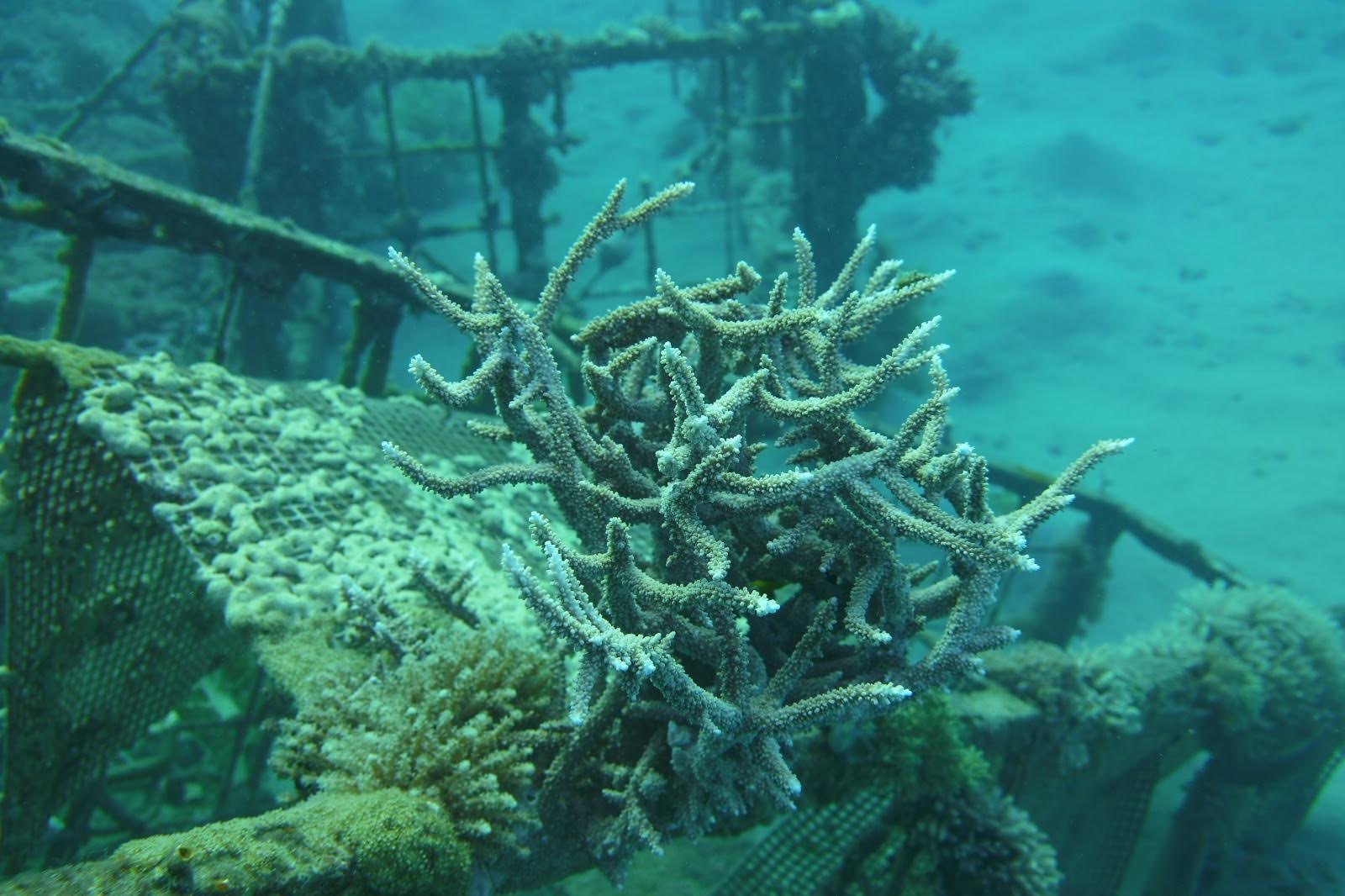
Studied coral genera Acropora sp. and Favites sp. growing on artificial substrates in the Underground Restaurant study site.
The alarming study was led by Prof. Noa Shenkar and her PhD student Gal Navon, in collaboration with the Hydrochemistry laboratory led by Prof. Dror Avisar. The results were published in the prestigious journal Environmental Pollution.
“In this first-of-its-kind study, we conducted a large-scale investigation for detection of pharmaceuticals in corals,” says Prof. Shenkar. “We sampled 96 reef-building stony corals representing two types, Acropora sp. and Favites sp., in shallow sites (5-12 meters) as well as deeper sites beyond the limits of recreational diving (30-40 meters).
Coral reefs, the depths and the drugs they are exposed to
“We were surprised to find an extensive presence of medications even in the deep-water corals – which usually escape contaminations affecting corals in shallower areas.”
“What does the presence of pharmaceuticals in corals actually mean? Clearly, the corals did not receive a prescription for antibiotics from their doctor,” explains Prof. Shenkar. “These medications are taken by humans to affect a certain receptor or biological pathway, and they can also impact other organisms.
Noa Shenkar underwaterNoa Shenkar
“Previous studies, conducted by both our lab and others, have revealed many examples of this negative impact: estrogen from birth control contraceptive pills induces female features in male fish, impairing reproduction in certain species; Prozac makes some crabs aggressive and reckless; and antidepressants damage the memory and learning abilities of squids.
“There is no reason to believe that corals should be immune to such effects. For instance, if our pharmaceuticals should disrupt the spawning synchrony of coral populations, it would take us a long time to notice the problem, and when we do, it might be too late.”
Studied coral genera Acropora sp. and Favites sp. growing on artificial substrates in the Underground Restaurant study site.
“Stony corals build coral reefs, and the types we studied are very common in the Gulf of Eilat,” adds Gal Navon. “Coral reefs are a cornerstone of marine biodiversity. They provide food, shelter, and spawning sites to numerous species, and support the human fishing and tourism industries. Today this delicate ecosystem is under pressure as a result of climate change, pollution, and overfishing. The presence of pharmaceuticals in coral tissues adds another layer of concern, indicating that human activities even contaminate faraway marine environments.”
“Clearly these medications save lives, and we have no intention of requesting people to reduce their use,” says Prof. Shenkar. “However, we must develop new sewage treatment methods that can effectively handle pharmaceutical compounds. Also, each of us must dispose of old medications in ways that do not harm the environment. Ultimately these drugs come back to us. I know people who avoid medications, but when they eat a fish, they might unknowingly consume a ‘cocktail’ of drug residues absorbed by the fish from the marine environment.”
Travel around China and the time zone never changes. Compare this to Canada which is about the same size as China and Canada switches time zones 3.5 times from one coast to the other. It is normally known as the China Standard Time (CST).
The current weekend in Iran as it is means Iran only matches the global markets for four consecutive days of the week, harming economic growth, according to to economists in Iran.
While the Iranian parliament agreed to shift the weekend this past May 15, the Islamic Guardian Council, rejected it saying it will harm Islamic values.
Persian social media is full of young people who say they were shot in the eye by security forces
Iran, once a western-like country with freedom of culture, movement, dress, and expression is now run by Islamic ideologists who impose sharia law on Iranian people who are not Muslim or who identify as secular. Iran also has an Islamic morality police that arrest women for not wearing the appropriate Muslim dress code. Some women have died in custody of the morality police. Others have lost eyes protesting the tough, conservative control the Iranian regime has on the people.
Some of the outspoken people from Iran are saying the recent attack on the Iranian-funded Hezbollah is poetic justice. Hundreds of pagers blew up last week, causing blindness in hundreds of terrorists who were waiting for commands from Hassan Nasrallah.
“The hypocrisy is glaring: the same regime that intentionally blinded peaceful ‘Woman, Life, Freedom’ protesters in Iran is now offering medical care to Hezbollah operatives who lost their eyesight to pager explosions,” says Masih Alinejad, an activast against the Iranian regime, who is based in the US: “Two years ago, when people took to the streets to peacefully protest the brutal murder of #MahsaAmini at the hands of the morality police, the IRGC and some Hezbollah operatives shot people in the eyes and blinded them.
“Now, on the second anniversary of the uprising, the very regime’s ambassador to Lebanon and its other proxies have lost their eyes.”
A space elevator, also called a space bridge, star ladder, or orbital lift, is a proposed type of planet-to-space transportation system, often depicted in science fiction. The main component of a space elevator would be a cable anchored to the surface and extending into space.
Futuristic Japan is planning one for the year 2050. Obayashi Corporation aims to connect Earth to space with an 80,000 mile cable made from carbon nanotubes (CNTs) allowing 30 passengers to be launched into space at about 150mph, getting them to a space station in about a week.
Japan’s Obayashi Corporation space elevator
The discovery of CNTs by a Japanese engineer in 1991 has pushed this vision forward, with potential launches of the construction project to begin as early as next year. Japan is not the first to come up with the idea of a space elevator.
In 1895, Konstantin Tsiolkovsky proposed to build a space elevator that could reach from Earth into space; it never got off the ground, but in 1957 another Russian – Yuri Artsutanov – came up with a more plausible idea. It wasn’t built either, but he had a chance to judge a team of Israeli students who were tackling the concept anew.
In Japan, the the space elevator construction would be multi-stage process with materials transported via rocket to low Earth orbit where a spaceship will use electric propulsion to ascend to geostationary Earth orbit.
One of the significant advantages of the space elevator, says the Obayashi Corporation is its cost-effectiveness and sustainability. Traditional rocket launches are expensive and polluting. Each launch could cost just a few thousand dollars, making space access more affordable and frequent. This project aligns with Japan’s goals for carbon neutrality by 2050, providing a greener alternative to current space travel technologies.
Maybe they can figure out a way to get space junk out of orbit at the same time.
Obayashi Corporation is one of five major Japanese construction companies along with Shimizu Corporation, Takenaka Corporation, Kajima Corporation, and Taisei Corporation. It is listed on the Tokyo Stock Exchange and is one of the Nikkei 225 corporations. Its headquarters are in Minato, Tokyo.
About 25 years ago when the environment movement was becoming a thing, we heard the strangest idea: that people were opting out of having children to save the planet.
We spent a few days with an editor at Grist magazine in Helsinki who told us she is child-free and proud –– here is her essay. And it’s been a topic of shame and ridicule in the eco movement if you do have kids.
Environmental concerns and climate change has been a top reason for at least 5% of Americans to remain childless, data from the Pew Research Center shows.
A relatively obscure movement believes there is a more radical way for us to save the planet: by depopulating to the point that people go extinct.
The Voluntary Human Extinction Movement (VHEMT) is an environmental movement, led by Les Knight that calls for all people to abstain from reproduction in order to cause the gradual voluntary extinction of humankind. VHEMT supports human extinction primarily because it would prevent environmental degradation.
It’s voluntary head Les Knight advocates: “May we live long and die out.” He posts material on X that support women’s rights in Iran but which denies that rapes by Hamas in Israel were committed, not linking to the fact that the dehumanization of women in Iran is directly caused by the Iranian jihadists who are funding Hamas terror.
Some gene lines should be discontinued.
The Shakers, a now defunct sect of Christianity practiced celibacy, communal living, confession of sin, egalitarianism, and pacifism. According to material from the Alfred Shaker Museum in the US, the Shaker population started to decline slowly in the 1860’s not because people were dying off: one of the reasons the Shaker population started declining was because of the fact that many people didn’t believe in the Shaker’s religious views.
Shakers were minimalist designers and are admired for that in today’s design world.
Shaker Design re-imagined in New York
As time went on, more and more people practiced other religions instead, such as Catholicism.
House with solar panels on it engulfed in flames. Some blame Israel for attack on iPhones and solar panels in Lebanon. DW: claims are false.
After Hezbollah-targeted pagers and walkie talkies blew up last week killing dozens and wounding hundreds of Hezbollah terrorists, a rumor started from Lebanon that the cyber group also attacked solar panels.
According to fact checkers at Deutsche Welle, a German public, state-owned international broadcaster funded by the German federal tax budget (the German CBC or BBC), the claims are false.
While Israel has never claimed that they caused the pager explosions, DW writes:
Claim: Other social media users insinuated that Israel had caused solar panels to burst into flames. “Lebanon: Sabotaged solar panels have started significant electrical fires. Over 500 individuals have been reported injured so far”, this user wrote featuring an Israeli flag. Attached was an image of burning solar panels and a house on fire.
DW Fact check:False. There are no documented cases of exploding solar panels in the current attacks in Lebanon. The image shown on X is a collage of two old pictures.
So far, only pagers and walkie-talkies exploded in Lebanon according to both regional and international news, says DW. While Hezbollah and Iran both hold Israel accountable for the explosions it’s not confirmed who is responsible for the attacks. Those Lebanese who invested in foldable and portable solar power systems are safe, granted they did not rent their garage to the Hezbollah as a missile-launch pad.
Established in 1998 by the forward-thinking duo of Vijay Eswaran and Joseph Bismark, the QI Group steadily expanded its reach, now boasting a presence in nearly 30 countries worldwide. The multinational entity’s success lies in its ability to identify and capitalize on opportunities, strategically investing in diverse ventures that have become the pillars of its operations. From wellness and lifestyle to education, travel, and leisure, luxury goods, and retail, the company has meticulously crafted an interconnected ecosystem of services and products that cater to the evolving needs of a global clientele.
At the heart of the company’s accomplishments is its diverse and multicultural workforce of over 2,000 employees. This rich tapestry of talent, reflecting the enterprise’s international footprint, exemplifies its commitment to fostering a dynamic and inclusive work environment. By harnessing the expertise and perspectives of its global team, the QI Group has navigated the complexities of the modern business landscape, delivering innovative solutions that resonate with its customers.
What Is the Goal of QI Group?
The goal of the QI Group is to create a sustainable and inclusive global business ecosystem that prioritizes integrity, service, sustainability, and leadership. The company aims to achieve this through strategic investments and partnerships that foster long-term growth and development across various sectors. By focusing on innovation and social responsibility, the QI Group endeavors to positively impact the communities in which it operates while also ensuring the longevity and health of the planet.
The company operates based on four core values: integrity, service, sustainability, and leadership. These principles guide the company’s operations and strategic decisions, ensuring it remains ethically sound, socially responsible, and environmentally sustainable.
At the core of its remarkable success lies an unwavering commitment to integrity. This principle of “truth above all and truth in all” permeates every facet of the organization’s operations; far beyond mere compliance with laws and regulations, the organization’s dedication to integrity represents a deep-rooted determination to do what is morally and ethically right, no matter the circumstances. This steadfast approach has earned the trust and respect of the company’s diverse stakeholders — from its loyal clientele to its talented workforce and esteemed partners — a testament to the transformative power of principled leadership.
The company’s unwavering commitment to service is captured in its guiding principle, “We serve to lead and lead to serve.” This philosophy reflects a more profound understanding that true success is not measured solely by profits or market share but by the positive impact an organization can have on its stakeholders and the communities it serves. For the QI Group, service is not just a means to an end but a fundamental aspect of its corporate identity. This ethos permeates every facet of the company’s operations, from its customer relations to its broader mission of positively influencing the lives of all those it encounters.
By prioritizing service, the QI Group has cultivated a corporate culture imbued with a spirit of generosity and altruism. The company’s service-driven approach has become a cornerstone of its success, enabling the organization to build lasting relationships with its clients, partners, and employees — all of whom share the company’s vision of using business as a force for positive change.
Guided by its role as a “caretaker for the next generation,” the QI Group has firmly embedded sustainability at the heart of its corporate ethos. Its unwavering commitment to environmental stewardship transcends mere compliance with regulations, reflecting a profound sense of responsibility to preserve the health and longevity of the planet.
The QI Group has set an exemplary standard for sustainable business practices through a multifaceted approach. From initiatives to conserve natural resources to innovative programs that resurrect damaged ecosystems, the company has demonstrated its unwavering dedication to safeguarding the delicate balance of our world. By leading through example, the organization hopes to inspire a ripple effect, empowering its stakeholders, industry peers, and the broader community to adopt more eco-conscious practices and champion the cause of environmental preservation.
At the QI Group, the belief in nurturing entrepreneurial passion drives its unwavering commitment to independence, inclusiveness, and innovation. By fostering a culture of leadership that inspires and empowers others, the company has cultivated an environment where fresh ideas can take root and inclusive practices are the norm.
The QI Group’s understanding of leadership extends far beyond the confines of the corporate hierarchy. It is a quality that every member of the organization can embody, whether through personal initiative, creative problem-solving, or leading projects that drive positive social change. This inclusive approach to leadership allows the company to harness the diverse talents and perspectives of its workforce, harnessing the collective power of its people to achieve remarkable feats. It’s created a dynamic and innovative ecosystem by encouraging this entrepreneurial mindset. It empowers individuals at all levels to take charge of their professional journeys and contribute to the company’s vision.
Strategic Investments and Global Reach
Through its investment arm, QI Capital, the organization actively invests in various portfolios in Malaysia, Sri Lanka, India, Hong Kong, New Zealand, the U.K., and the USA. The company has invested in financial services organizations, education, telecommunications, Swiss watchmaking, natural food retailers, hospitality management, and an online marketplace.
One of its significant achievements in the luxury market was acquiring the Swiss watch brand Cimier in the early 2000s. Cimier, which celebrated its 100th anniversary in 2024, is renowned for its precision and craftsmanship, contributing to the Group’s esteemed reputation in the luxury goods sector.
The organization’s commitment to education exemplifies its partnership with a leading Malaysian bank to raise funds to expand Quest International University’s new campus. Through a $21.48 million Sukuk Ijarah program, a type of Islamic financing based on leasing principles, the company has showcased its innovative approach to long-term investment in education. This financing marks the QI Group’s first entry into Malaysia’s capital markets, highlighting its strategic and forward-thinking approach.
With its diverse portfolio and strategic vision, the QI Group is well equipped to navigate the complexities of the modern world, ensuring continued growth and impactful contributions to society.
Bitcoin mining—the process by which new bitcoins are entered into circulation—is notoriously energy-intensive. It requires powerful, specialized computers known as ASICs (Application-Specific Integrated Circuits) that are capable of handling immense computational tasks. These machines operate continuously and compete against each other to solve mathematical problems that become progressively more difficult over time. The energy consumption of these operations is substantial, often compared to the energy usage of entire countries.
The nature of Bitcoin mining is inherently energy-intensive. It requires powerful, specialized computers that are capable of handling immense computational tasks. These machines operate continuously and compete against each other to solve mathematical problems that become progressively more difficult over time. The energy consumption of these operations is substantial, often compared to the energy usage of entire countries.
One of the unavoidable byproducts of this massive computational effort is heat. A significant amount of heat is generated as these high-power devices run 24/7, leading to concerns about wasted energy and its environmental impact. The electricity used is another major factor, with the sourcing of this power becoming a critical point of discussion within the cryptocurrency community and beyond, as stakeholders seek more sustainable practices.
In an innovative twist, some enterprises are channeling the waste heat generated from Bitcoin mining to more productive uses. As Bitcoin mining operations generate substantial amounts of heat due to their intense computational requirements, this byproduct has traditionally been viewed as an inevitable, albeit problematic, consequence. However, a growing number of forward-thinking companies are now exploring ways to capture and utilize this excess heat, transforming it from a waste product into a valuable resource.
One such leader is Akbar Shamji, the founder and CEO of a privately held Canadian company whose operations are focused on the designing, building, and operating of ESG focused data centers. Shamji’s aim for the company is to both contribute to the sustainability of blockchain technology and lead by example in the movement towards greener digital infrastructures. Below, we explore how he and others in the blockchain industry are setting a standard for responsible practices in the digital currency landscape.
The energy demands of bitcoin mining
Bitcoin mining is an essential component of the cryptocurrency network, serving both to process transactions and to create new coins. This process is underpinned by a method known as “proof of work,” which requires participants, or “miners”, to solve complex cryptographic puzzles. The purpose of these puzzles is to secure the network and verify transactions, preventing issues like double-spending. Miners who successfully solve these puzzles are rewarded with newly minted bitcoins, incentivizing continuous operation and competition.
The requirement to solve these puzzles means that Bitcoin mining rigs—specialized computer systems—are constantly running high-power computations. This relentless demand for computational power translates directly into high energy consumption. Each puzzle solution requires miners to perform trillions of calculations, which in turn consume vast amounts of electricity. This has led to the installation of “mining farms,” locations with large numbers of mining rigs, often situated where electricity costs are lowest, sometimes regardless of the environmental impact of the energy sources.
The environmental concerns associated with Bitcoin mining are significant. The energy-intensive nature of mining often relies on non-renewable energy sources which contribute to carbon emissions and broader environmental degradation. In regions where coal or other fossil fuels are the primary energy sources, the environmental impacts are exacerbated.
This high energy use also strains local power grids and can lead to increased energy costs for local communities. As the value of Bitcoin increases, the incentive to mine intensifies, potentially leading to escalated energy use and an increased carbon footprint, posing substantial challenges to global efforts to combat climate change.
Transforming waste heat into a valuable resource
In the context of Bitcoin mining, waste heat refers to the thermal energy generated by mining rigs during their high-power computational operations. In the absence of effective heat management, this waste heat is often released into the environment, representing a missed opportunity for energy recovery and adding unnecessary strain on cooling systems. Efficiently capturing and repurposing this waste heat can significantly enhance the overall energy efficiency of Bitcoin mining operations and mitigate some of the environmental impacts associated with their energy-intensive nature.
In Norway, Akbar Shamji’s company has established a hydro-powered data center that features an innovative program for recycling its heat into greenhouses. This program captures the excess thermal energy from its Bitcoin mining operations and repurposes it to support agricultural activities, transforming waste heat into a valuable resource. The process starts with advanced heat recovery systems, like heat exchangers, which transfer thermal energy from the mining equipment to a water-based medium or air. This heated medium is then channeled to nearby greenhouses.
Once in the greenhouses, this recycled heat helps maintain an optimal temperature for growing crops, which is particularly valuable in colder climates where consistent warmth is essential for year-round production. By utilizing this waste heat, Shamji’s company not only reduces the dependency on traditional heating sources (typically powered by fossil fuels) but also lowers the energy costs for agricultural operations.
The program is a prime example of circular economy principles in action. By recycling the byproduct of Bitcoin mining—heat that would typically be released into the environment—Akbar Shamji’s company boosts the sustainability of its data centers and supports local agriculture. This clever reuse of waste heat improves both the efficiency and environmental impact of the mining operations while fostering a cooperative relationship between technology and agriculture.
The greater impact of innovative practices
Some server farms are buried deeo underground to offset carbon emissions created by air conditioning. Choose services that are moving in this direction
The use of waste heat from Bitcoin mining into agricultural practices opens up exciting prospects for the future of both sustainable agriculture and renewable energy usage. As more companies adopt similar innovative approaches, the potential to revolutionize agricultural heating practices becomes increasingly significant. This shift could lead to broader adoption of renewable energy sources and waste heat recovery systems, enhancing the overall sustainability of farming operations. By turning what was previously considered waste into a valuable resource, industries can contribute to a circular economy that reduces reliance on non-renewable energy sources and minimizes environmental impact.
These collaborations can foster innovation and inspire other sectors to reevaluate their waste products and byproducts. The successful integration of waste heat into greenhouse operations can serve as a blueprint for other industries, encouraging them to explore similar partnerships that could lead to sustainable practices and solutions. This shows that the path to greater sustainability is not limited to advancements within a single industry but can be significantly accelerated through cross-industry collaboration, leveraging diverse expertise and resources for a more sustainable future.
What’s more, the broader impacts of these developments extend beyond environmental benefits. By showcasing practical, scalable solutions for integrating renewable energy and waste heat recovery, these advancements can drive policy changes and encourage investment in green technologies. As businesses and governments recognize the economic and environmental advantages of these practices, we may see increased support for policies that promote sustainability and innovation. Ultimately, the continued evolution of these technologies has the potential to foster a more sustainable and resilient energy landscape, benefiting both agriculture and the broader economy.
According to Akbar Shamji, his company’s core focus is to innovate in the blockchain space while building ESG focused data centers. As the world grapples with issues like climate change, resource depletion, and environmental degradation, the need for creative and effective strategies such as these has never been more urgent. Technologies that repurpose waste, enhance energy efficiency, or reduce carbon footprints are not just beneficial; they are essential for the long-term health of our planet.
Senior living spaces should provide a comfortable, healthy atmosphere to promote happiness and well-being. Eco-friendly spaces focus on natural, sustainable practices to improve air quality, resource use, and the world around us. Eco-friendly senior living facilities can provide a cost-efficient, healthy space for older adults to thrive without harming the environment. As a bonus, sustainable practices can significantly improve how older adults live in these communities.
1. Air Quality
Plants in a Brooklyn apartment. A good way to clean air.
Sustainable practices include better insulation, high-quality air filters, and indoor plant use to boost air quality. Older adults are prone to lung problems such as chronic obstructive pulmonary disease (COPD), lung cancer, pneumonia, and asthma. Improved air quality can reduce asthma attacks and ease symptoms of lung conditions.
2. Stress Relief
Natural light, indoor plants, and accessible outdoor spaces are essential for an eco-friendly living space. These features have been scientifically proven to reduce stress, improve mood, and create a relaxing atmosphere. Sunshine also provides valuable vitamins and nutrients that older adults may have trouble receiving.
3. Heart Health
Exposure to calming outdoor spaces, better-regulated temperatures, and indoor plants can improve stress levels, air quality, and mood. A lower stress level can provide significant benefits for the heart, including lowering blood pressure, which can contribute to heart attacks and worsening heart disease. Better air quality means healthier breathing, which supplies more oxygen to blood cells to help keep the heart pumping healthily.
4. Mental Health
Eco-friendly senior living spaces can provide access to gardening areas, green transportation like biking or scooters, and social activities like sports. These activities promote exercise, socializing, and enrichment, improving mental health. Better air quality can bring more oxygen to the brain, supplying it with more nutrients. The knowledge of helping the environment through eco-friendly practices and living can boost mood, too.
5. Enrichment
Older adults can learn to garden, compost, incorporate green transportation practices, and recycle in eco-friendly communities. Learning new activities and becoming a part of something bigger and beneficial can provide plenty of enrichment for older adults, sometimes improving mood, mental health, and pain relief. Indoor plant life and access to natural light can also enrich the living environment.
6. Comfort
Comfort is a significant issue in many senior living facilities. It’s common for seniors to experience abuse or neglect, regardless of location. Neglect can include missed meals, health issues due to unregulated room temperature, or lack of medication. Abuse and neglect in senior communities are prevalent issues in every state. In Texas, there were 4,000 reported cases in 2022 alone. There were nearly 10,000 reported nursing home neglect cases in SC, but many go unreported. Florida seniors surveyed indicated that 75% had witnessed or experienced abuse or neglect. Eco-friendly living involves better ventilation, air quality, and temperature controls. These factors can prevent overheating or hypothermia in older adults with trouble regulating body temperature during periods without staff supervision, mitigating the chances of neglect or injury.
7. Building Quality
Natural materials, good air quality, and water filtration systems reduce strain on a building and its equipment (like air conditioning systems). These features make buildings last longer, reducing wear and tear. Better-quality structures make for safer, happier living spaces in senior communities.
8. Water Quality
Eco-friendly living areas can and should prioritize water recycling practices (rainwater collection, greywater recycling, and more). With water filtration and recycling systems, water quality is improved. Harmful pollutants and chemicals are removed from the water to make it safe for consumption. Water is crucial for health, particularly for older adults.
9. Pollutants
Senior living facilities are often in older buildings, where pollutants like microplastics, asbestos, and chemicals can be common. Eco-friendly renovations provide clean air, food, water, and other materials to reduce harmful irritants to the skin, lungs, and overall health.
10. Finances
Renewable energy like solar or wind power dramatically reduces the cost of utility bills in senior living communities, improving financial health for older adults. Electric transportation or vehicles eliminates the cost of gas. Water recycling can significantly reduce water usage, which saves money as well. Improved finances can provide more freedom and security for seniors in these communities.
Conclusion
Eco-friendly living spaces provide many benefits not just to the environment but to residents as well. For older adults, air quality, water quality, and pollution play a huge role in mental and physical health. In senior living communities that prioritize sustainable practices like renewable energy, water recycling, and air quality, there can be a significant increase in senior health and happiness. Good air quality can reduce the effects of common lung conditions in senior populations. Water recycling can improve the quality of water and remove harmful pollutants.
Access to gardening, indoor plants, and sunlight can improve mental health, lower blood pressure, improve heart health, and increase enrichment. Eco-friendly living may reduce the prevalence of neglect through temperature control and access to healthier living spaces.
Wind turbines can pull more energy as a farm if the first turbine in a row goes slower. This kind of data can improve efficiency and profits.
Businesses in the same industry can often learn from each other’s successes and failures. It would be naive to think your competitors are not keeping an eye on your every move. From branding and pricing to social media posts and promotions, competitors should have one another on their radar. However, if your party supply store starts promoting Halloween costumes in August, don’t be surprised if your competitor starts early too.That said, they should not blatantly copy what the other one is doing.
Brands in complementing industries can also enjoy learning from other businesses. When clothing stores highlight certain trending colors in their window displays, shoe and bag stores often mimic them. So even if someone is not in the market for a neon yellow dress, they might consider the bright yellow bag as a pop of color with a monochromatic outfit. Here are some more ways competitor insights can help your business.
1. Watch Search Engine Ranking
When someone searches for “car detailing near me,” your business should pop up on the first page if that’s your focus. There are several ways to do that, with one of the most important being targeted website content. You need to be using the right keywords to rank well in search. This is an area where you can learn a lot from the competition. If another car detailing business in your area consistently appears at the top of search results, it’s worth analyzing their approach.
Start by checking out the keywords they’re targeting by reviewing their website content, meta descriptions, and headers. You can also conduct acompetitive content analysis to identify gaps. Consider creating content that addresses common questions potential customers might have, like “how often should I get my car detailed?” or “what does a full car detailing service include?” By offering valuable, informative content that’s optimized for search, you increase the chances of attracting organic traffic.
2. Monitor Communications
An upcycled phone
Whether it’s their website, marketing materials, or social media posts, it’s imperative that you know what content competitors are churning out. Even if it’s poorly written copy, you should be subscribed to their marketing. The generic template-kind of emails from your competitor could mean you have a chance to shine with more organic content. Include an interview with the founder and add some behind the scenes pics for a human touch. With so much AI-generated content floating around today, you must stand out.
If social media is not your forte, hire someone so that you’re on top of your game. Many customers today make shopping decisions based on what they see in their social media feeds. Learn about algorithms, so your content reaches your target market. Even if they don’t purchase immediately, your company will hopefully be on their mind the next time they want to buy a product you sell.
3. Know Pricing and Promotions
Look for coupons for favorite green products
With everything else being equal, sometimes the bottom line is what decides if a customer is going to go for Company A or B. Keep a watch on industry price trends. Try to stay competitive unless you have another edge. Don’t try to undercut the market by pricing yourselves too low. This could make customers think there is something lacking in your business if you are offering the same service for half price. It can also hurt the entire industry when one business tries to bring the market rate down.
In addition tomonitoring competitors pricing, stay abreast of the sales and offers they advertise. Both businesses may have an oil change for the same amount. However, one business keeps sending $10 off coupons to their mailbox. That’ll easily change where a non-loyal customer will go. You can also walk into a competing business to see where they shine and what they lack. Take your own car for an oil change at a local competing business and evaluate their customer service, convenient timings, and so on. Emulate what they do well, and improve upon gaps.
4. Fill Gaping Holes
If the competing business is lacking in any area, it can be an opportunity for your business to stand apart. Say a pizza joint has great food but they don’t deliver. You can ensure you have your own delivery drivers and are available on the popular food delivery apps like Doordash and GrubHub. This way, a customer who cannot drive to the store can still order from your business. Of course, the taste and price also matter, so make sure that’s top notch.
Opportunities can change with time. The other pizza place may eventually start offering delivery. But there is no need to despair. You can find some other unique selling proposition to differentiate your business. There are so many factors involved in a good experience that every business can shine. Unique toppings, delicious sides, a friendly smile at checkout, and an easy-to-order-app are just a few ways you can outshine your competitors.
Consider that wind farms have a certain efficiency if the first turbine is slowed down. This can help create a more efficient farm and a lead on competition.
When you keep an eye on competitors professionally, there is far less guesswork. You will not make decisions based on a hunch. You will have concrete data showing which keywords, for instance, are used most in search. You can then modify your strategy accordingly. When you see what is working for others, it is easier to replicate it in your own unique way.
Marmosets use specific vocal labels to address other individual members of their species. When researchers separated pairs of marmosets with a barrier, they found that they used distinct ‘phee calls’ for the monkey on the other side.
“We think that this behavior is important for [marmosets’] social cohesion and therefore it’s crucial for their survival,” says neuroscientist and co-author David Omer.
Omer published his research in Science, along with a team of researchers from the Hebrew University. The researchers, led by graduate student Guy Oren, recorded natural conversations between pairs of marmosets, as well as interactions between monkeys and a computer system. They found that these monkeys use their “phee-calls” to address specific individuals.
Even more interestingly, the marmosets could discern when a call was directed at them and responded more accurately when it was.
“This discovery highlight the complexity of social communication among marmosets,” explains Omer. “These calls are not just used for self-localization, as previously thought— marmosets use these specific calls to label and address specific individuals”.
The study revealed that family members within a marmoset group use similar vocal labels to address different individuals and employ similar sound features to code different names, resembling the use if names and dialects in humans.
This learning appears to occur even among adult marmosets who are not related by blood, suggesting that they learn both vocal labels and dialect from other members of their family group.
“Marmosets live in small monogamous family groups and take care of their young together, much like humans do,” says Omer. “These similarities suggest that they faced comparable evolutionary social challenges to our early pre-linguistic ancestors, which might have led them to develop similar communicating methods.”
This research provide new insights into how social communication and human language might have evolved. The ability of marmosets to label each other with specific calls suggests they have developed complex brain mechanisms, potentially analogous to those that eventually gave rise to language in humans.
There are over 100 electric vehicle options in Ireland. Volkswagen is one option.
As electric car sales roll out of the UK, TotalEnergies from France and SSE from Scotland, have signed a binding agreement to create a joint venture to establish a new major player in EV charging infrastructure in the UK and Ireland, under the brand “Source”.
The new business partnership will create about 3000 high power charge points throughout Scotland, Ireland, England and Wales, meeting demand from fleet owners and private EV car owners to get a fast charge when they stop for a coffee. Fast charge stations can “refill” a Tesla in about 20 minutes as long as there is no wait for a charge point.
Investors know that Ireland is a great country for tech investment and companies that support them – see Ireland SEO. But in the last year or so its model for attracting international investments has been frayed. Support of EVs could open new models for startup and transportation businesses.
In the latest news charge points are needed in more remote locations but that is not what this business deal will fulfill.
According to the press material issued, Source will deploy up to 3000 high power charge points (of 150 kW and more) grouped in 300 “EV hubs”, targeting what they expect is a 20% market share. The majority of the charging hubs will be in prime locations in urban areas and powered by renewable energy provided by SSE and TotalEnergies.
Several hubs are already under construction in the UK with plans for dozens more, currently in development studies, the company just announced.
“TotalEnergies is proud to contribute to the development of electric mobility to decarbonize transportation in the UK and Irelan,” says Mathieu Soulas, Senior Vice President New Mobilities at TotalEnergies.
“This is a great opportunity to extend our network in Europe and stake out a key position as a reference high-power charging player.
“We want to offer our customers – passenger cars and fleet alike – a nationwide, ultra-fast and reliable charging service that allows them to travel efficiently with complete peace of mind. This development also contributes to our integrated power strategy in the UK, combining renewable and flexible power generation capacity, trading and marketing of low-carbon electricity available 24 hours a day.”
In the UK, Source will provide reliable ultra-fast charging stations now needed since the enforcement into law of the UK Government’s zero vehicle emissions mandate for all new cars and vans. Getting the power supply infrastructure built for EV and fleet owners is one of the biggest challenges facing the decarbonisation of transport. Consider that in countries like Sweden you cannot rent a vehicle that isn’t an EV.
As of this year, China is the country with the most electric cars in the world. In 2021, there were 417 million registered vehicles in China, 319 million of which were passenger cars. Of that, 13.1 million were “new energy vehicles” – those with electric, hybrid or hydrogen fuel cell powertrains.
Ireland plans on putting 1 million electric vehicles on roads by 2030, while building consumer confidence in EV charging. Countries like Canada have declared that all new cars on the road must be electric by 2035. Consumers are in a panic to buy fuel-based cars such as trucks as charging stations are few and far between in northern locations. Even in cities like Toronto, consumers are complaining that they can’t get adequate charges at rental apartments. A charge would take more than 24 hours on a regular outlet.
The partners in the new UK electric car deal with Source, such as SSE actually builds renewable energy power plants such as wind farms.
“SSE is already playing a leading role in decarbonising the UK and Ireland’s power system including building the world’s largest offshore wind farm and transforming electricity networks,” says Neil Kirkby, Managing Director of Enterprise at SSE.
“Now this agreement will help accelerate progress towards a decarbonised transport system too, ensuring the vehicles that keep the economy moving can do so in a more sustainable and efficient way,”