
(In Hebrew)
Channel One’s Yoman reports on the struggle by residents of Florentine, a neighborhood in south Tel Aviv, against the city’s building plans in the area. The city wants to build a ring of skyscrapers encircling the adjacent Neve Tzedek neighborhood, as well as a new neighborhood in Florentine that would include buildings up to 11 stories tall.
Florentine Fights Back
Some ins and outs on cloth diapers for your eco-baby


Eco-Mom Sophie started the debate on cloth diapers (or nappies as she calls them – it must be a UK thing). She continues her argument for why parents should switch over to cloth. Stinky khaki buckets aside, her arguments are in favor of making this earth a little bit greener.
“The Cloth Nappy Reigns”
It certainly does! Today we will be looking at what’s available here in Israel; you’ll be amazed at what we have got, also cloth nappy care routine with tips to get you started. But first, again just to show how important it is to your baby as well as our environment, here’s a few more unfriendly facts about disposables:

- That gel that sucks up and holds all the pee pee is sodium polyacrylate; it’s a real nasty, it has been linked to allergic reactions & toxic shock syndrome, it is a lethal chemical.
- Very nice and just to reassure you, to make those nappies nice and white chlorine is used which has been linked to dioxin, a known carcinogenic.
- The thing is disposables have only been around for the last 40 years or so, just like the majority of chemicals used in everyday products which means there really is no long term data about their health effects, so when you choose between cloth and disposable you are looking at a known and an unknown, well I know what I would choose. You?
So where to start: The great news is that all the suppliers in Israel have websites where you can take a look, have a read, ask all your questions, get advice and order the nappies straight to your home.
Siach Teva sells Kushies that have an excellent all in one nappy for the hard to convert, just put it in the laundry instead of the rubbish; they also have the classic which is used with a cover, prefolds and a swimsuit nappy.
Prices start from 32 NIS for the basic up to 69 NIS for the Ultra.
Bishvelnu sells Motherease & Sandy’s.
Motherease is a big favorite, literally, as it is a onesize nappy and by folding it up it can be used from birth to potty, this is the most economical option in the long run as you do not need to buy several sizes, prices start from 65 NIS.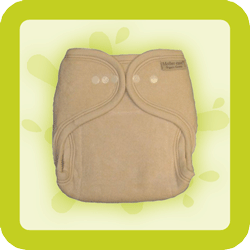

Dahlias Diapers offers Happy Heinys which are pocket diapers, this is also an easy to use all in one option, and Bummis which work with flat & prefolds, prices start from 65 NIS.
Robyna this is a local company manufacturing pocket diapers from fleece, prices start from 75 NIS.
All of these companies offer discounts for multibuy packs for further savings and also offer trial packs.
So what do you need to get started? Checklist:
- It’s recommended between 18 to 20 nappies/diapers
- 4 nappy covers
- you can also buy extra booster pads for extra absorbency – ideal for the nighttime or heavy wetters
- and a roll of liners, biodegradable & flushable of course, to keep it super easy with the khaki.
Top Tip – Do not use fabric softeners on your nappies and your towels and if we are really talking about it, not at all. First of all, it coats the fabrics with oils which affects its ability to absorb and there is nothing natural about it and can irritate your baby’s delicate skin. Use vinegar, an essential in every green household. About 1/2 cup of white vinegar will leave all your washes soft & fresh. It’s cheaper too!
More green baby tips:
Cell Phone Cancer Linked to Salivary Gland Tumors
An Israeli scientist, Dr. Siegal Sadetzki, has found a link between cell phone usage and the development of tumors. Dr. Sadetzki, a physician, epidemiologist and lecturer at Tel Aviv University, published the results of a study recently in the American Journal of Epidemiology, in which she and her colleagues found that heavy cell phone users were subject to a higher risk of benign and malignant tumors of the salivary gland.
Those who used a cell phone heavily on the side of the head where the tumor developed were found to have an increased risk of about 50% for developing a tumor of the main salivary gland (parotid), compared to those who did not use cell phones.
The fact that the study was done on an Israeli population is significant. Says Sadetzki, “Unlike people in other countries, Israelis were quick to adopt cell phone technology and have continued to be exceptionally heavy users. Therefore, the amount of exposure to radiofrequency radiation found in this study has been higher than in previous cell phone studies.
“This unique population has given us an indication that cell phone use is associated with cancer,” adds Sadetzki, whose study investigated nearly 500 people who had been diagnosed with benign and malignant tumors of the salivary gland.
Controlled Study Reveals Link
The study’s subjects were asked to detail their cell phone use patterns in terms of how frequently they used one, and the average length of calls. They were compared to a sample of about 1,300 healthy control subjects.
The study also found an increased risk of cancer for heavy users who lived in rural areas. Due to fewer antennas, cell phones in rural areas need to emit more radiation to communicate effectively.
Sadetzki predicts that, over time, the greatest effects will be found in heavy users and children.
While anecdotal evidence has been substantial, the consistency of the results of this study support an association between cell phone use and these tumors. The risks have been hard to prove, mainly due to the long latency period involved in cancer development, explains Sadetzki.
Keep Calling but Call Smarter
Today it is estimated that more than 90% percent of the Western world uses cell phones. As the technology becomes cheaper and more accessible, its usage by a greater number of people, including children, is bound to increase.
“While I think this technology is here to stay,” Sadetzki says, “I believe precautions should be taken in order to diminish the exposure and lower the risk for health hazards.” She recommends that people use hands-free devices at all times, and when talking, hold the phone away from one’s body. Less frequent calls, shorter in duration, should also have some preventative effect.
While she appreciates the ease of communication that cell phones allow between parents and their children, Sadetzki says that parents need to consider at what age their children start using them. Parents should be vigilant about their children’s using speakers or hands-free devices, and about limiting the number of calls and amount of time their children spend on the phone.
“Some technology that we use today carries a risk. The question is not if we use it, but how we use it,” concludes Sadetzki.
Sadetzki’s main research on this new study was carried out at the Gertner Institute for Epidemiology and Health Policy Research at the Sheba Medical Center. Her research is part of the international Interphone Study, which attempts to determine an association between cell phones and several types of brain and parotid gland tumors.
15 Cities Pledge to Cut Back on Emissions


Fifteen of the largest cities and towns in Israel have signed an international environmental resolution to cut down on greenhouse gases emissions, joining 800 local governments worldwide.
The pledge is to reduce emissions by 20% by 2020.
It will be interesting to see how this resolution is enforced. While there’s a lot of talk about which areas will be addressed (such as transportation) it still seems unclear how that would work. There will be initiatives to plant more gardens and trees, which is never a bad thing.
Al Gore to Visit Israel


Israel has lured climate Change evangelist Al Gore to the Holy Land.
Come May, Gore is expected to drop in at Tel Aviv University to collect a $1 million in prize booty awarded by the Dan David Foundation.
It is reported that Gore will donate all the prize money to a good environmental cause.
Eco Rabbi: Stones and Health


It once happened that a farmer was removing stones from his field and putting them onto a public thoroughfare. There was a certain pious person who challenged the farmer: “Why are you taking stones from what is not yours and putting them onto what belongs to you?” The farmer just laughed.
Will Kenaf Become the World’s New Wood?
[youtube]http://www.youtube.com/watch?v=uPKT_NNupJ4&feature=related[/youtube]
We’ve talked about the wonders of bamboo, but another material, being researched and improved by Israeli scientists may become the new bamboo, the new hemp and the new wood. Watch Jonathan Dayan from Tel Aviv University talk about his PhD research on kenaf.
Ofir Drori Fights Animal Poaching in Cameroon


Eight years ago Ofir Drori, now 31, set off for Africa. He was looking for adventure and work as a photojournalist. Inspired by animal right’s activists Jane Goodall and Dian Fossey, Israeli Drori got in deeper than he expected.
He is now fighting crime and corruption in the animal trade business in Africa – working to stop animal trafficking and poaching. Based in the Nlongkak Valley in Cameroon, Drori heads the Last Great Ape Organization, known for short as LAGA.
LAGA was founded in Israel by Drori and other Israeli conservation colleagues including the editor of the Israeli Geographical magazine, and the manager of the Safari, a safari park near Tel Aviv.
The organization, which is based in the Cameroon, is small and lean, with just 10 team members. Its mission is to make sure that a 1994 law in Cameroon made to protect endangered species, such as gorillas, elephants, chimps and lions, is enforced.

Before Drori no one had been prosecuted for trafficking or poaching animals in most of Central and West Africa. Estimates say that about 3,000 gorillas, 4,000 chimps and about 4,000 elephants are killed each year in Cameroon.
While organizations such as the World Wildlife Foundation are in place to fight such violations, their effectiveness is damaged by corruption on the local level, Drori, the organization’s executive director says.
Looking at Goodall, who devoted a part of her life to saving chimps in Tanzania, Drori says, “Jane Goodall was predicting the start of ape extinction within 15 years. This brought me to Cameroon to write about this crisis. Searching for the heroes fighting to change this forecast, I found a larger problem instead.”
Although there is a law to prevent the killing of endangered animals such as gorillas, and lions (known by locals as bushmeat), Drori started researching into why it wasn’t being enforced.
His impetus to start LAGA (now called EAGLE) came from a shocking encounter at a remote village, known for its extensive ape trade. “I was led to an infant survivor of the bushmeat trade,” he says, “a baby chimp, tied up abused and sick, in a dirty room. His eyes were like those of human babies, but nobody seemed to notice.”
Drori knew that if nothing was done, the chimp would die. Appealing to the local authorities didn’t seem to help. He bluffed the poachers, and got them to hand him over the chimp. “I untied him from his ropes,” he reports “and hugged him. In seconds he was transformed to a baby and he clung to my chest like it was an island of safety.”
Drori saved the chimp he named Future, and decided to open a wildlife law enforcement NGO to fight for and save the lives of other animals.
Defending wildlife from extinction is a moral obligation, says Drori – a cause worth dedicating one’s life to. Drori, who grew up in a suburb of Tel Aviv, was always drawn to the natural world and to Africa in particular. As a youth he attended the Nature School in Jaffa and traveled to Africa for the first time before joining the army.
Only two months after finishing his three-year military service – while his friends were heading to Goa and Tierra del Fuego – Drori opted to return to Africa. Although Drori had no experience in animal conservation prior to founding LAGA four years ago, he recognized that this lack of knowledge could also be an advantage.
“LAGA was born out of criticism against the failure of conservation and the realities of the foreign aid business in general,” he says. He is looking to create “a paradigm shift.”
The efforts have paid off. From a baseline of zero, Cameroon is now monitoring its wildlife traffickers. A majority of those convicted end up with long imprisonment terms, says Drori.
Wildlife traffickers usually get caught by LAGA’s undercover spy network. Their work has helped break down an international ring of ivory smugglers selling products to Hong Kong.
To take the organization to the next level, one of the crew Njike Horline, a lawyer who heads LAGA’s legal department, is now in the US by invitation of the US Embassy in Cameroon to learn about the American court of justice system.
“If repressive measures are not taken to control commercial hunting, we risk losing these animals in 10 to 15 years,” says Drori.
Read more on animal trafficking:
Ofir is stopping poaching in Cameroon
Dubai Porsche driver walks cheetah on a leash
Live Baby Leopard Found in Suitcase En Route to Dubai
Footprints in the Snow


One of my fondest memories of my childhood is going out to explore the new world the day after a big snow. I can still remember vividly how the snow would hang off the trees, the pristine white fields so bright that they blind you if you look at them directly. I always felt sad, though, on my way back home looking at the damage I had caused to that breathtaking view by leaving my footprints across the expanses.
When going throughout our daily lives we each leave an ecological footprint in our world. Much like the footprints in the snow, these ecological footprints are effects we have on our environment as a result of the actions we engage in daily.
The joy of growing a gooseberry bush


Today is devoted to the sheer joy of growing something, in this case, an organic gooseberry bush (Latin: Ribes Grossularia).
Growing something – anything really, from a geranium stem, roughly transplanted and shoved in soil, to vegetables for your plate; can be a mystical experience. It mesmerizes, absorbs, transfixes … and continues the biblical evocation of mankind in the Garden of Eden.
Ultimately, planting something is beneficial for the environment – a universal give and take between all the elements needed for the plant to grow is undertaken, and humans are (for once) on the margins of the process.
Over a year ago, I brought back from the UK a packet of organic gooseberry seeds, picked up from a garden centre. Dutifully planting these seeds in a plastic plant tray (one of the cheap and ugly green ones found everywhere around this country), the 40-odd seeds slowly budded and become little plant-lets.
The soil was a mixture of home-baked compost and garden centre fine potting soil – maybe the stuff with tiny polystyrene balls in. The argument for using these is that they aerate the soil, which allows roots to spread easier and prevents the soil material from clogging; but of course, ultimately millions of these polystyrene balls aren’t good for the environment, and will eventually get into water and wildlife. So try to buy bagged soil with mulched bark in instead.
A dozen of these baby plants went to a fellow green-fingered friend. The needs of her fleshly baby took priority, and the wee gooseberry seedlings sadly went to the great compost-maker in the sky.

The rest I nurtured paternally, fretting every time we went away for a few days, and calling in favours from friends for regular watering duties. Some remained to grow in pots, (the seedlings, not the long-suffering friends) and others went into a large flowerbed at the back of the house, which is regularly fertilised with each seasons fresh compost (see earlier articles I wrote Mulch, rot & reinvigorate: composting part 1 and A half empty bin & some worms: composting part 2′.
Random garden accidents, cats and weather, gradually reduced the seedlings to just one, but what a prince among plants this is, now after a year of delicate growth, slowly unravelling itself into a bush. There aren’t yet any fruit on the branches, but every time I inspect it I remember boyhood tastes of wild gooseberry jam, or plain stewed gooseberry and ice cream.
This berry was common in my childhood, both in gardens, allotments and out in the wild, finding shelter in hedgerows along with blackberries, elderberries and sloes, with which a skilled and patient parent concocted sloe gin every summer – and left it to become a punchy winter liqueur. (Make liquor out of blossoms of plants too such as almond blossoms).
These wild fruits have rapidly disappeared from the English countryside – pesticides and policies on the size and shape of hedgerows, country lanes and most places of wild wilderness, having eaten away this reality. Gooseberries found in British supermarkets and gourmet health food shops are often imported, and priced over most people’s budget.

So with all this in mind, I cultivate and nurture this bush outside, which is about 2 foot in height so far. Apparently they take about 2 years before bearing fruit, and even then the yield for the first growing season is low. Hazards to watch out for include fruit fly, including a variety called saw fly, birds with a sweet tooth, and in our case, warring cats.
I will be bringing more seeds back from my next trip (if anyone has a local source, please let me know), and nurturing the next crop sometime soon. If anyone wants to join me in the introduction of this fabulous fruit into Israel (perhaps this could be my contribution to the 60th birthday celebrations), get in touch.
Perhaps peace through gooseberries is too much to hope for, but if you plant a seed, you’ll get first taste of a glorious gooseberry fool 2 seasons hence!
Growers take note:
Gooseberries may be banned as a cultivated species in some places because they’re considered invasive in some areas and may displace native species. They are also an intermediate host of at least one serious disease, white pine blister rust. Cultivation is no longer banned in US states, except for many Maine. They are considered a high value cultivar .
Want more growing joy? Try these 7 healing herbs, growing an olive tree in a pot, or growing a fig tree.
Green Prophets Start at Home: The Living Room


We’ve already had a green kitchen party, we’ve learned about ways to conserve water while greening the old bathroom; we’ve even talked about ways to green your bedroom (hey, you know what we mean). Today we’re moving over to the living room, with a focus on energy conservation.
Roughly two-thirds of our annual energy budget gets pumped into space and water heating in the home. Winter heating emits greenhouse gases.
The good news is that there are ways to heat the living room without being a burden on the earth: Turn down the thermostat, put on a sweater, and cuddle up on the couch under a big blanket are great ways to cut down on heating use.
Jerusalemites say ‘no’ to nylon
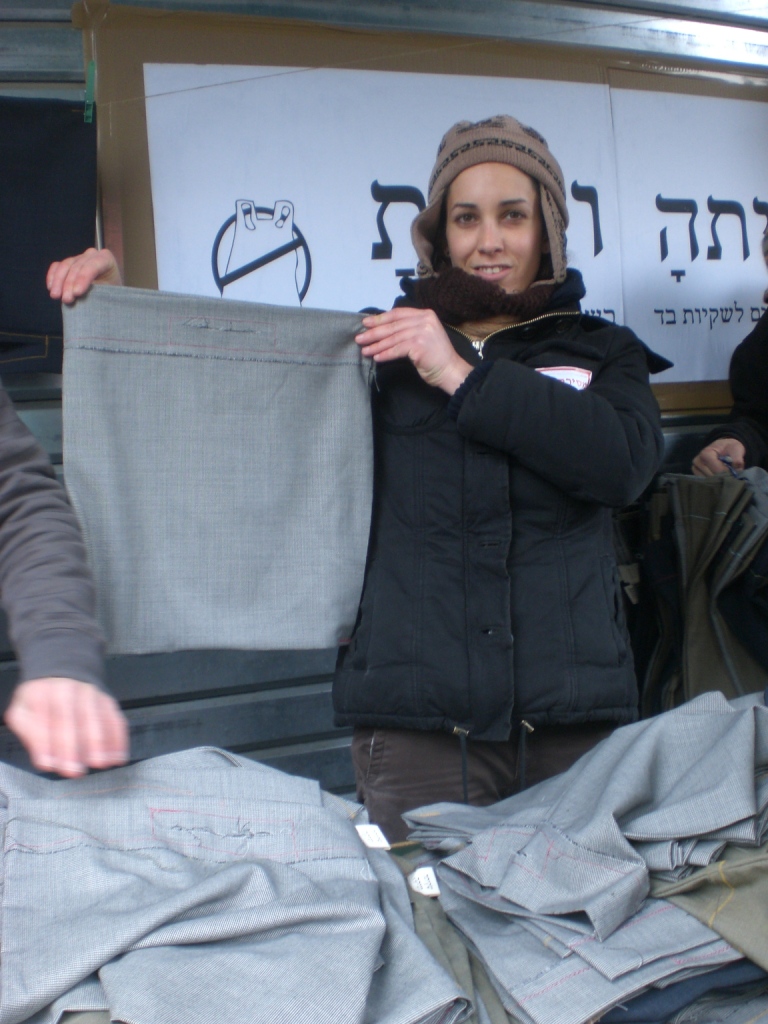
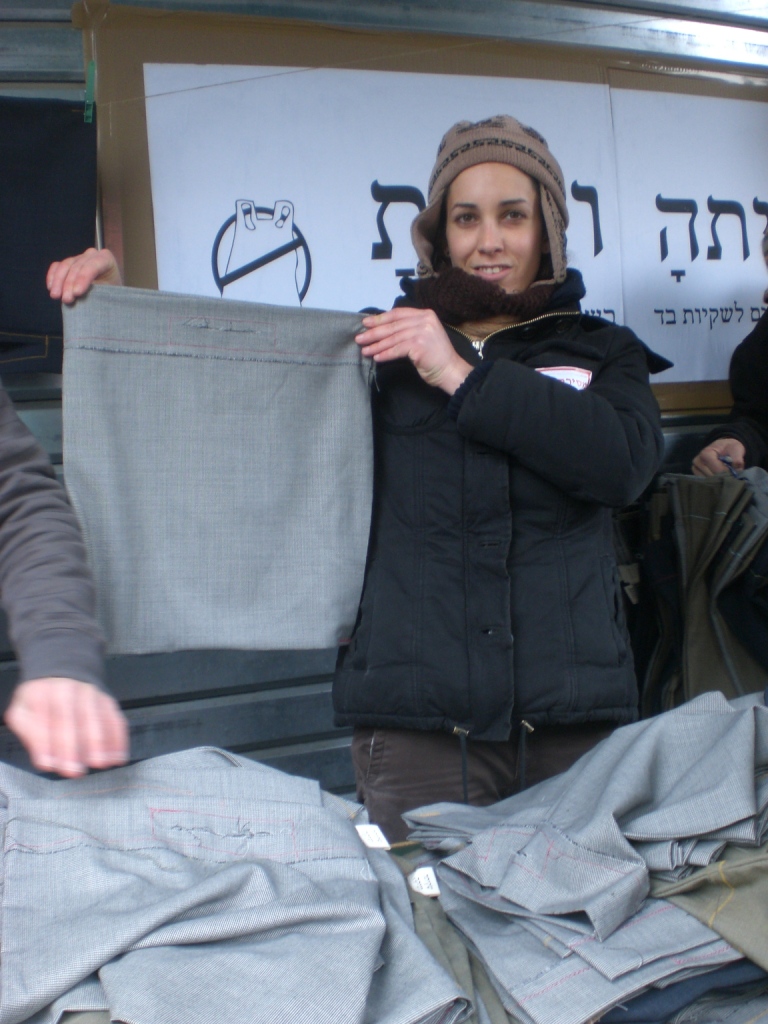 Jerusalem art students tried their luck recently at weaning Israelis off their addiction to plastic bags at the city’s Machane Yehuda market.Green Prophet recently reported on ‘Plastic for Free’ phenomenon of nylon-binging in Israeli shops, so it’s welcome news that their new shopping bags are not only eco-friendly (made from cloth instead of plastic), they’re cheap (1 shekel each) and stylish too (courtesy of students from the nearby Bezalel Academy of Art and Design).Reporting on them for the Jerusalem Post I recounted an all-too familiar shopping experience in Israel:
“Don’t worry, it’s only a plastic bag,” a fellow shopper at Mahaneh Yehuda market told me when I declined the offer of a free plastic bag to carry home my groceries.
Re-Routing Deadly Electronic Waste

 Israelis are known for their advances in high-tech. We brag about it whenever we can. A little known fact is that Israel also generates and exports tons of e-waste, or electronic waste.
Bringing things up to speed is an Israeli company, Snunit Recycling which is poised to make a pretty penny from our electronic waste. And we don’t mind that fact at all.
While computers and electronic devices contain materials such as lead, mercury and cadmium (all very poisonous materials), they also contain good parts too, such as gold, platinum and silver.
Not quite like the Alte Zachen in Tel Aviv that ride around on donkey or horse to fetch your junk, Snunit has begin operating only two collection points so far, INN reports, as well as a mobile collection service across the country, to collect old electronic devices for recycling.
Small Shops Add Soul


Character vs. flash: An old building in the city center, and a shiny, new Aroma.
What gives a city its particular character? Is it the city’s architecture, its parks and open spaces, its scents, its people?
An article in Ha’aretz’s Real Estate section last week did a pretty good job of conjuring up downtown Jerusalem by describing its shops: “You can’t mistake these stores. They look like they’re out of a movie about the 1950’s. Next to a shiny Castro, Golf or Fox outlet you see a pole from which hang nightgowns and 10 NIS undershirts, or a grimy metalwork shop showcasing a broken-down hot-water boiler, with a mess of tar affixing it to the ground. Or a locksmith or a backgammon club. Until half a year ago Nahalat Shiva Street featured a ceramicist making clay pots for a throwback era.”
Not exactly flattering, but a pretty accurate picture. Like it or not, all of those small, old, “hole in the wall” shops are an integral part of the city’s character and identity. However, the author of these lines, Ranit Nahum-Halevy, is not trying to paint a poetic picture of the city center, she is describing a problem, and the above lines are followed by the rhetorical question: “What can the city do?”
The Jerusalem Of Green Project
 “Sometimes you’ve just got to act” is a personal motto of two enterprising environmental activists, Devora Liss & Shoshannah Finkelman, who have initiated the Jerusalem Of Green Project, based at the Mercaz HaMagshimim (New Immigrant Absorption and Community Centre) in Jerusalem’s German Colony.The JOG Project mentors anyone who has an idea for an environmental project, and gives them the necessary support, resources, and a little funding to get the idea up and running. Currently there are 4 projects that Shoshannah and Devora oversee, both through a monthly ’round table’ meeting with all the participants, and with regular one to one sessions with each participant. The projects in development right now include an online Green Talmud Project; a Recycling Initiative for Yeshiva students; a Green Audit project that gives individuals and families the chance to have their lifestyle and energy output ‘audited’, and a scheme to bring to shoppers and shops on Emek Refaim in the German colony a localised cloth shopping bag, in place of the ubiquitous (and hopefully soon to be outlawed) plastic bag.
I will report back on these projects and how they develop over the next few months in a series of special posts.