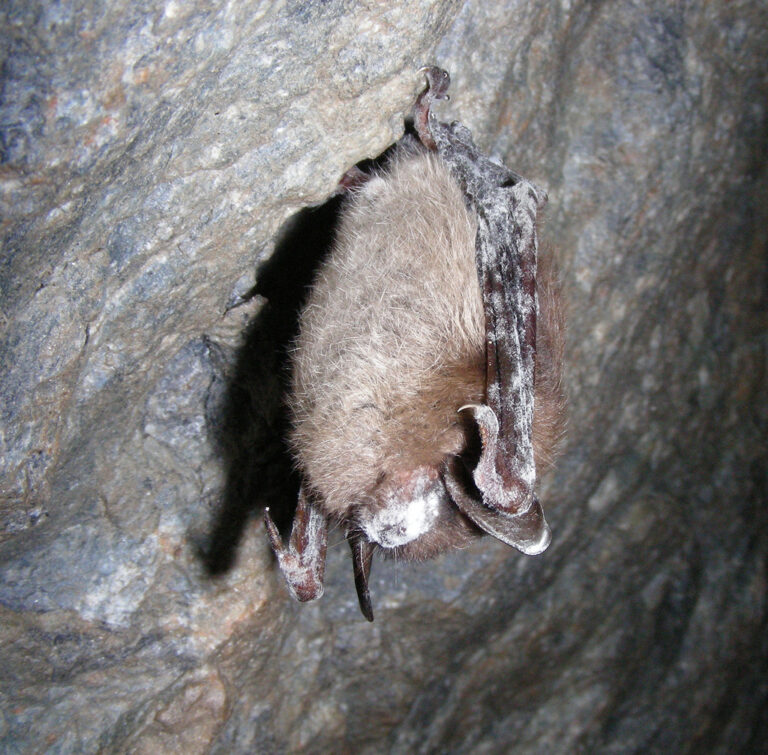
A little brown bat with white-nose syndrome. Credit: Marvin Moriarty/USFWS
We often curse some animals we don’t like in nature. Mosquitoes come to mind as the first choice. And a lot of people don’t like bats because of the movies, but they are masterful at pest control. According to the US Forest Service bats catch 1,000 mosquito-sized insects in an hour, and a nursing mother eats approximately 4,500 insects every night.
When insect-eating bats are wiped out by a new fungus found in the US known as ‘white nose syndrome’, farmers turn to pesticides for pest control — possibly leading to knock-on effects for human health and the survival rates of babies.
Researchers compared counties in the northeastern United States where the white nose fungus had killed most bats to those areas where the disease hadn’t yet spread.
In places where bat populations had crashed, farmers used 31% more insecticides and infant deaths not due to accidents or homicides rose by 8% — numbers that the authors suggest might be linked. Where bats remained, there was no change in pesticide use or infant mortality.
Tricolored bat from Avery County, North Carolina, with white-nose syndrome. Credit:Gabrielle Graeter/NCWR.
White-nose syndrome (WNS) according to the NGO in its name is a disease that affects hibernating bats and is caused by a fungus, Pseudogymnoascus destructans, or Pd for short. Sometimes Pd looks like a white fuzz on bats’ faces, which is how the disease got its name. Pd grows in cold, dark and damp places.
White nose syndrome in bats. Little Brown Bat; close up of nose with fungus, New York, Oct. 2008. Credit: Ryan von Linden/New York Department of Environmental Conservation
It attacks the bare skin of bats while they’re hibernating in a relatively inactive state. As it grows, Pd causes changes in bats that make them become active more than usual and burn up fat they need to survive the winter. Bats with white-nose syndrome may do strange things like fly outside in the daytime in the winter.
Where did White-nose Syndrome Come From?
Biologists first saw bats sick and dying from white-nose syndrome in 2007 in caves near Albany, New York. However, cave explorers in that area had taken a photo of bats with a white powder on their noses the year before, so white-nose syndrome has been in North America at least since 2006.
According to the whitenosesyndrome website white-nose syndrome has killed millions of bats in North America. At some sites, 90 to 100 percent of bats have died. Several species are affected, with the hardest-hit being the northern long-eared bat, little brown bat, and tricolored bat.
There is no cure for white-nose syndrome, but scientists from all over the world are working together to study the disease, how it spreads and infects bats and what we can do to control it. Several experimental treatments, including a vaccine and making changes to bat habitats, are in progress and will hopefully lead to increased survival of bats from this devastating disease.
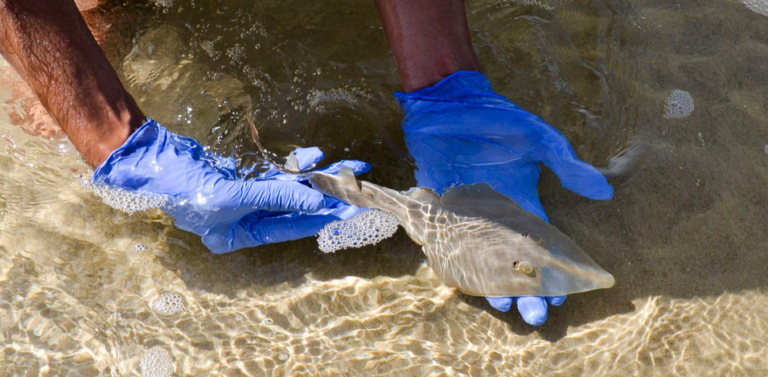
Highly endangered but still kicking: researchers from Israel have found the breeding ground of a rare sea creature, a kind of ray once thought to be a shark, called the guitarfish. The long-term study at the Leon H. Charney School of Marine Sciences at the University of Haifa found that the coast between Ma’agan Michael and Dor Beach serves as a nursery ground for the blackchin guitarfish and the scientists are working to get it declared a nature reserve.
Dor Beach is a popular place for people from all over Israel to swim. It is free to enter but you need a car to get there.
Blackchin guitarfish is a cartilaginous fish in danger of extinction.
The researchers found that concentrations of juvenile guitarfish develop from the end of August through early November.
“A nursery ground is a natural area where animals, particularly marine species, gather during the early stages of life. A nursery ground is defined as an area that enhances the animals’ chances of survival during the sensitive early stage of life by providing optimum conditions in terms of food, protection against predators, and shelter from extreme environmental conditions. Following the study findings, we hope this area will be declared a nature reserve when the young guitarfish gather here so they can be protected,” says PhD student Eynav Cohen, one of the study’s authors.
The guitarfish, also referred to as shovelnose rays, are a family, Rhinobatidae, of rays. The guitarfish are known for an elongated body with a flattened head and trunk and small, ray-like wings. The combined range of the various species is tropical, subtropical, and warm temperate waters worldwide.
Guitarfish populations are in constant decline around the world, and in the Mediterranean Sea in particular, mainly as a result of net fishing. These fish are now classed at the highest level of extinction risk for vertebrates.
According to the International Union for Conservation of Nature (IUCN), the blackchin guitarfish is in critical danger of extinction. The researchers add that there is a lack of biological and ecological knowledge about guitarfish, including population sizes along Israel’s coast and worldwide. Most of the existing knowledge comes from commercial fishing data.
This study was the first time a monitoring program for guitarfish in Israel was established.
The researchers hope that their study’s findings, confirming that the area serves as a nursery ground for the blackchin guitarfish, will motivate national to regional regulatory bodies to declare the area as a marine nature reserve when the guitarfish are present.
So little is known about the Mediterranean Sea and its biodiversity. Since the establishment of the Suez Canal and the linking of the Med Sea to the Red Sea biodiversity has become under threat due to invasive species such as the jellyfish taking over. Egypt earns almost $10 Billion USD a year for the canal which allows ships to bypass Africa on their way to Europe but Egypt has denied its culpability in the biodiversity invasion.
The Egyptian National Authority for Tunnels has contracted a consortium to renovate its Cairo Metro Line 1. The group includes France-based Colas Rail, Egypt‘s Orascom Construction and Japan’s Hitachi Rail in an 800 million EUR) ($1.1 B USD) contract, split between the three companies.
The Line 1 in Cairo metro is the oldest underground train line in Egypt and is the heart of the city’s urban transport system, carrying 1.5 million people daily. The new investment will increase capacity on the line.
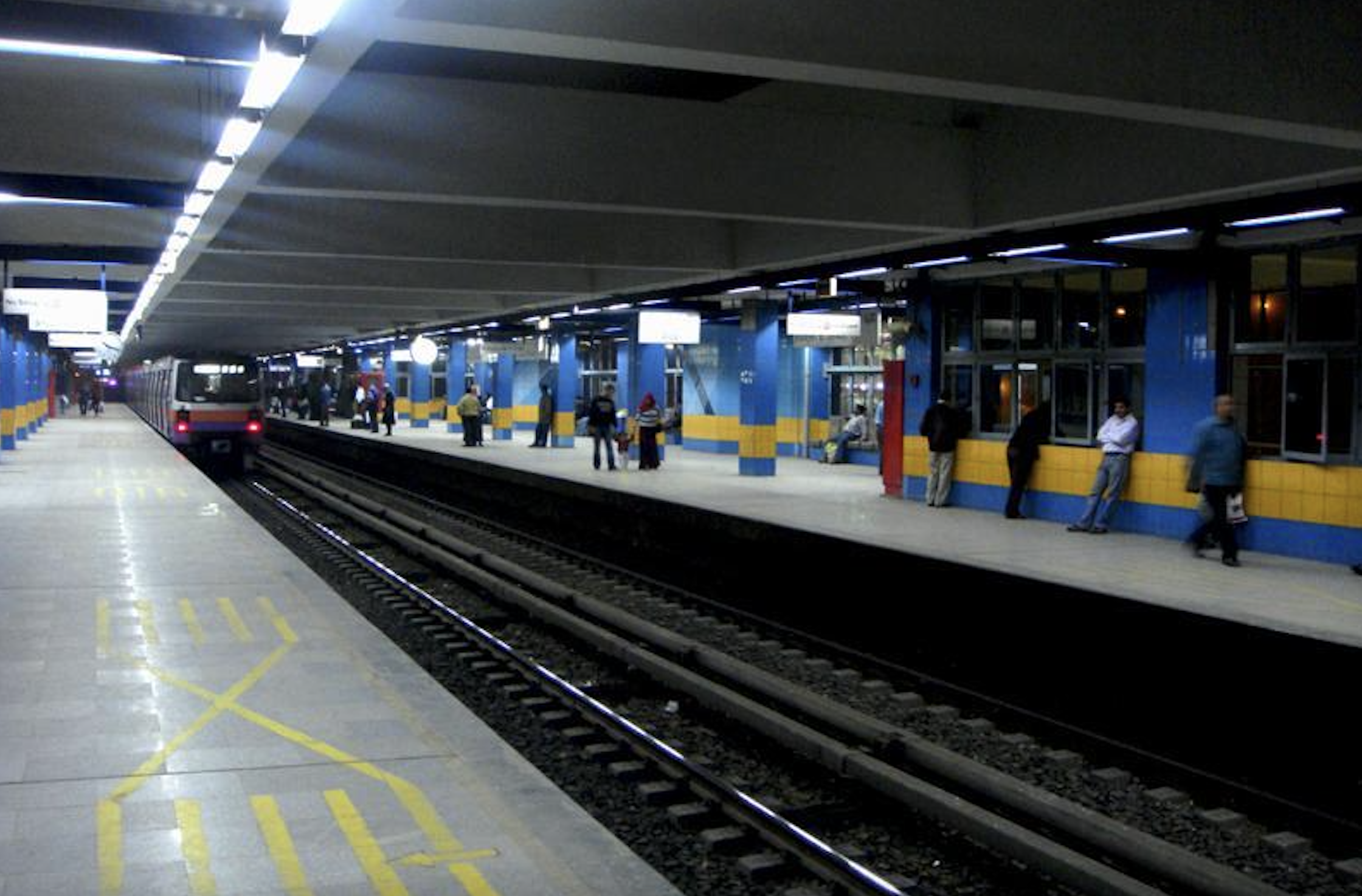
Cairo commuter train
“We are proud to have supported the National Authority for Tunnels over more than 40 years in the construction of reliable, low-carbon urban mobility infrastructure in Cairo and Alexandria,” said Hervé Le Joliff, Chairman of Colas Rail. “The modernisation of line 1, which Colas Rail helped to build in the 1980s, represents a new challenge. Over the next few years, many of the world’s major cities will have to modernise their underground railway lines to keep pace with the growing demand for mobility among the population.”
The trains of Cairo. Look at the trash everywhere.
Under the contract, Colas Rail will work with Orascom to modernize the electric power supply and electromechanical systems in stations, tunnels and on the rail track.
Hitachi Rail will upgrade the signaling, control and telecommunications infrastructure.
This work will be completed during the day while maintaining commercial operations on the line. The project is expected to start in October 2024 and will run for 64 months.
Alessio Bencivenni, Head of Ground Transportation Systems for Egypt, Hitachi Rail said: “Our solution will enable greater safety, reliability and capacity on the line and deliver more seamless and sustainable journeys for passengers in Cairo.”
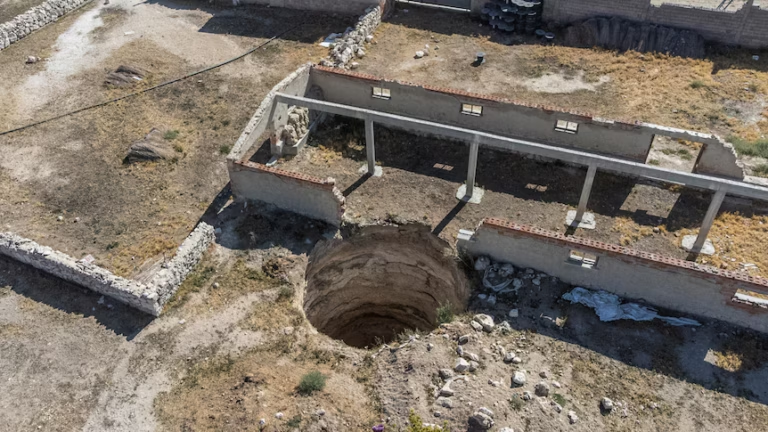
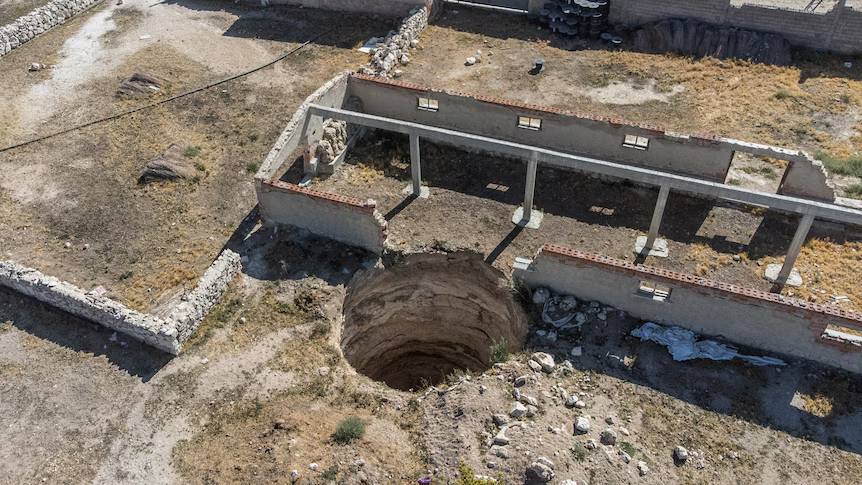
A farm in Turkey threatened by sinkholes. Image via ABC News: Tom Joyner
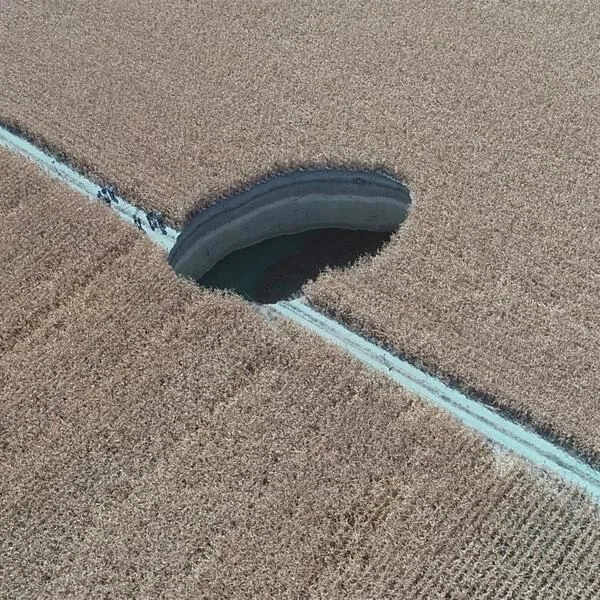
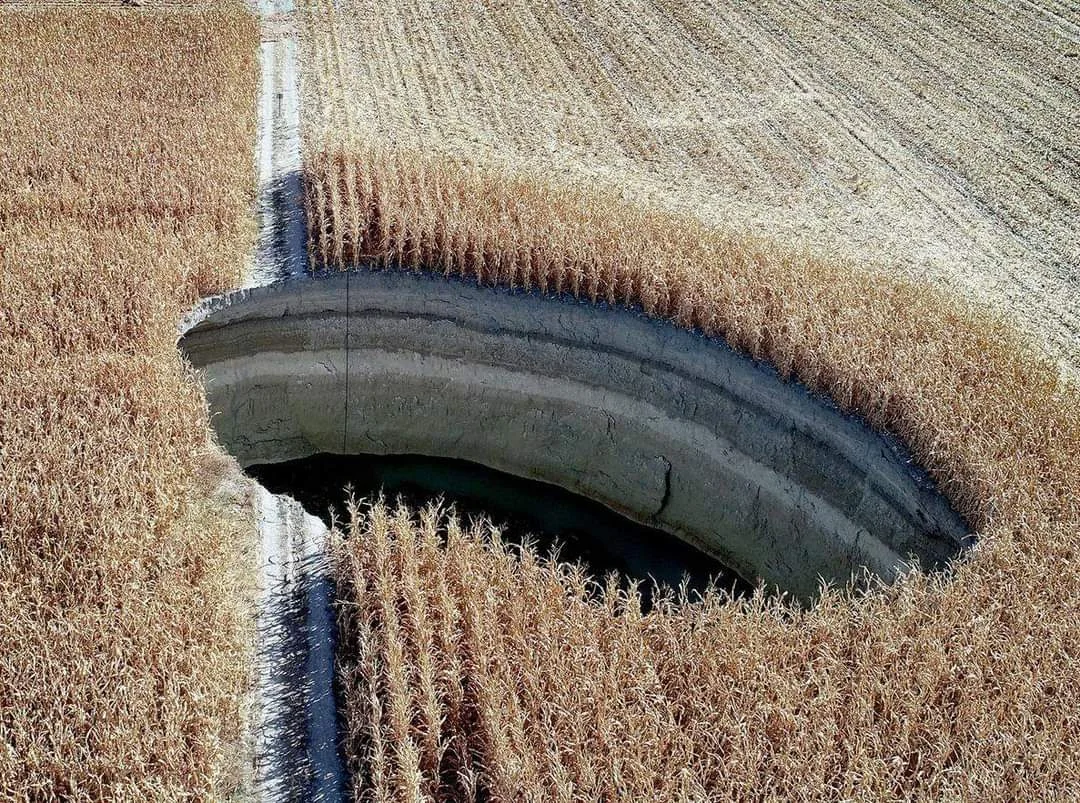
In the fertile plains of Turkey known as the Konya Plain and celebrated as the country’s breadbasket, an eerie phenomenon is taking shape. More than 2,600 sinkholes have appeared in the last years and experts believe it’s from drought and a reckless use of the country’s groundwater draining the aquifers.
Deadly sinkhole in farmers’ field Turkey. The above images via Reddit
Varying in size the sinkholes are starting to threaten not on the farmers’ lives but residential areas as well including the regions of Cihanbeyli, Yunak, Kulu, Sarayönü and Kadınhanı, where the farmers’ rely on grain production.
While sinkholes are believed to occur in nature, experts in Turkey say the sudden increase is manmade. Officials at the the Disaster and Emergency Management Authority (AFAD) and the Sinkhole Application Research Center at Konya Technical University are closely monitoring the situation.
Turkish environmentalists were killed for protecting the land. The least we can do is petition that justice is served.
The government had issued rules for sterilizing feral dogs and cats on the streets. The policies weren’t enforced and now the animals are paying the price.
Ethiopia has built a dam on the Nile to meet 60% of its power needs. Downstream countries Sudan and Egypt are furious as this threatens their water supply. They are asking for UN intervention –– or war?
The Nile River as we know it is the large river that floods wide areas of Egypt, allowing for the farming of wheat, beans, cotton and fruit –– and tourism. But the Nile is one of the longest rivers in the world, and one of the two major sources of the mighty Nile starts in Ethiopia at what is known as the Blue Nile at Lake Tana. The Blue Nile is the source of 85% of the Nile water. The second source starts lower down in Uganda and passes through Sudan.
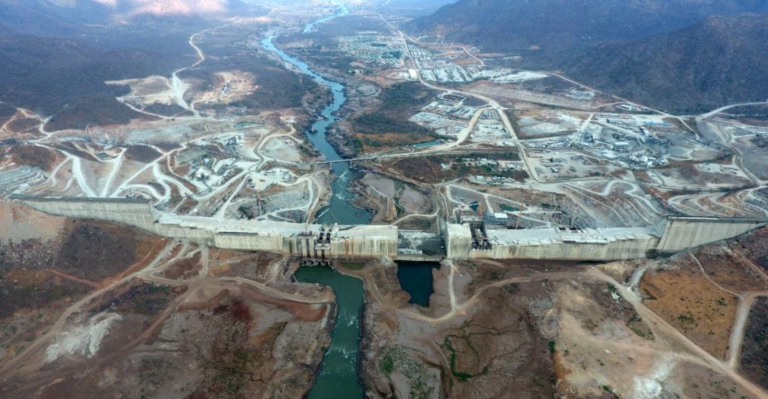
Over the years Ethiopia has been building a dam called the Grand Ethiopian Renaissance Dam (GERD) about 10 miles east of Sudan to supply its energy needs. Ethiopia has been building Africa’s largest hydro-electric dam since 2011. The landlocked country, which I visited this year, has one of the lowest rates of access to modern energy services, with its energy supply primarily based on biomass, followed by oil (5.7%) and hydropower (1.6%).
The main purpose of the GERD in Ethiopia is power generation, and its 13 turbines are expected to produce about 16,000 GWh of electricity annually which will double Ethiopia’s previous output of electricity and provide power to 60% of the country’s population. If you have ever visited Ethiopia you will understand how meaningful this is.
The GERD dam was completed in 2023
In 2023, Ethiopia filled the GERD reservoir to completion and Egypt, opposed to the GERD project, announced this was a violation of international law.
In the image below via the US Government site USGS you will see the area of GERD before the dam was built, and then a second photo of the water it required to fill the dam area near completion.
The GERD reservoir is in a deep gorge, so its surface area is relatively small compared to its volume. This means less water will be lost to evaporation than in desert reservoirs. The lake’s capacity is about twice the volume of Lake Mead formed by the Hoover Dam in the United States.
Including the Aswan High Dam in Egypt, which forms Lake Nasser and has the capacity of four times the volume of Lake Mead, two of the world’s largest dams are now on the Nile River system, in two different countries.
But Egypt is not happy about the Ethiopian dam, despite it building its own dam on the Nile: “We are ready to exercise our right to defend and protect the rights and interests of the Egyptian people, in accordance with the UN Charter,” said a warning letter issued to the Ethiopian government, addressed to the President of the UN Security Council and signed by the Egyptian Minister of Foreign Affairs, Badr Abdelatty this month.
Egypt calls for the intervention of the UN in regards to filling of the GERD. Egypt says that Ethiopia is violating previous international agreements: “Egypt is almost entirely dependent on the Nile River for its renewable water resources, that are indispensable for the vital human needs and fundamental rights of Egyptians,” the letter states.
“Even though the Nile River has witnessed consecutive above-average flood seasons in recent years, which has relatively protected Egypt from major harm, the continuation of Ethiopian policies, as announced by the Ethiopian Prime Minister on 26 August 2024, could result in an existential threat to Egypt as well as the rights and interests of the 150 million citizens of both downstream countries, and would consequently jeopardize regional and international peace and security.”
For this reason, Egypt declares that after “having exhausted all amicable means, including those repeatedly resorting to the Security Council, in hopes of persuading Ethiopia to desist from its unlawful unilateral policies and accept any of the existing compromise solutions that balance the interests and rights of all parties, the Government of Egypt, therefore stands ready to exercise its rights to defend and protect the rights and interests of the Egyptian people, in accordance with the United Nations Charter.
“Egypt urges the Security Council to assume its responsibilities under Article 24 of the UN Charter, by taking appropriate measures to ensure that Ethiopia cease its unlawful unilateral practices in the Nile Basin,” the letter concludes.
Egypt recently signed a military agreement with the Somali governments to deploy Egyptian troops in the Horn of Africa which borders Ethiopia.
“Such policies are at odds with the aspiration of most regional countries to enhance cooperation and integration among themselves, instead of sowing seeds of strife and differences between peoples bound by ties of brotherhood and common destiny,” Abdelatty said addressing the UNSC president.
Abdelatty said the dam will have “serious negative effects on the two downstream countries” which are Egypt and Sudan.
Is Egypt the pot calling the kettle black? Egypt built the Aswan Dam or the Aswan High Dam, as one of the world’s largest embankment dams, built across the Nile in Aswan, Egypt, between 1960 and 1970. It is about 600 miles from the Sudan border.
Like many other dams in the world, the Aswan dam had negative effects leading to water-borne disease, a rising water table that damaged urban sewer systems, damaging ancient monuments, and it deteriorated agricultural fields. The lack of rich sediment in the water drove high artificial fertilizer use and wiped out fish populations.
Egypt is not an angel in other ecological ways: It disregards the effects of the Suez Canal which is destroying ecosystems in the Mediterranean Sea despite the man-made canal bringing in an estimated $9.4 billion USD (2023) in revenue. Egypt was not abiding by UN law when it allowed for billions of dollars of terror money to siphon into its borders through to Gaza over the last 15 years. And it easily allowed Hamas terrorists to cross into Egypt and fly out of its sovereign borders to countries like Turkey and Qatar.
When it comes to ecological deodorant I’ve tried them all in countries around the world. The deoderant crystals, roll-ons, and pots of paste you slide onto your pits with your fingers. It’s come to a point where I can’t trust the eco deodorants because they don’t work, and I can’t stand the non-eco solutions because of the fake smells and the obvious health risks.
Ask my friends on a sunny afternoon in the Middle East: don’t hug me. I smell.
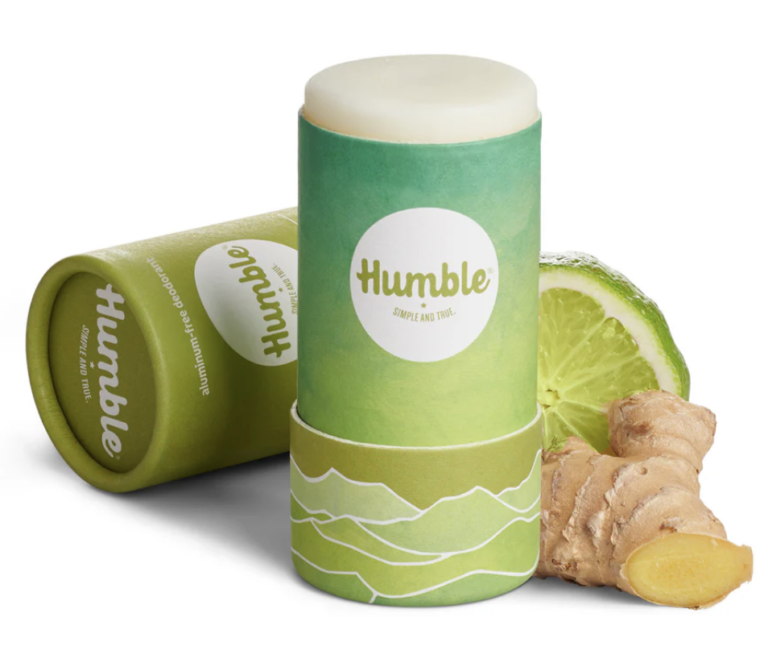
Now it hasn’t been put to the true test of weeks or months, but so far so good: It seems that I have found deodorant salvation in a little non-plastic tube made by a company in New Mexico – a 60-person team making products, mainly deodorant under a brand called Humble.
I bought a Humble deodorant at Nature’s Emporium near Toronto. The scent I found – bergamot and ginger is – a pleasure, with bergamot being my favorite go to scent. It’s light and citrusy.
Humble’s simple tube makes it easy to apply a few layers of the creamy but dry when applied.
The fact that Humble works is what works for me. I have read some mixed online reviews about it staining clothing:this might be from the MCT, a coconut derived oil used in the formulation but I haven’t noticed any problems. My wardrobe is pretty basic and since I have a sweat problem I tend to avoid pastel colors and colored silks. I work and live in my clothes and Humble, so far so good.
The main ingredients in Humble are things you can probably cook together on your own from products you buy at a pharmacy: MCT, corn starch, baking soda, and beeswax. And that’s what you will love about this product.
A FIFA stadium for the World Cup 2034 in Saudi Arabia
It’s 10 years away and hopefully the Houthi conflict in the Red Sea far behind them: Saudi Arabia has already revealed plans for 15 of its 2034 World Cup stadiums. This will be the second FIFA World Cup to be help in the Middle East after Qatar hosted the 2022 FIFA World Cup.
The stadiums will host the World Cup and includes a venue built at the 15-minute city, The Line. Another is based on the surface of the bark of a tree.
A total of 11 new stadiums will need to be built, with 3 under construction. Two of Saudi Arabia’s largest stadiums will be renovated for the event and 2 others expanded. How can we ensure that worker’s rights in Saudi Arabia are upheld?
A Guardian report issued in February 2021 found that more than 6,500 migrant workers from India, Pakistan, Nepal, Bangladesh and Sri Lanka had died in Qatar since the award of the tournament. The death records were not categorised by occupation or place of work but it is assumed they were accidents that took place during construction of the stadium, pointing to modern-day slavery conditions in Qatar that still has not seen much media attention.
“Trade unionists have used the COP18 discussions in Qatar to bring the silent but disturbing plight of migrant workers to light. While the emirate boasts about its plans to build a bevy of solar-powered stadiums in advance of the 2022 World Cup in addition to a host of other eco-boosting projects, very little has been said about who is going to do the work. Like Abu Dhabi, Dubai and Saudi Arabia, Qatar relies very heavily on migrant workers, who do all the dirty work but receive few of the benefits of their hard, miserable labor.”
FIFA is set to confirm Saudi Arabia as the host for the 2034 event in December, with the country the only bidder for the event. Who is going to hold FIFA and Saudi Arabia accountable for worker’s rights when basic media is not allowed to report from Saudi Arabia?
Read on for details of the 15 stadiums set to host games at the 2034 World Cup:
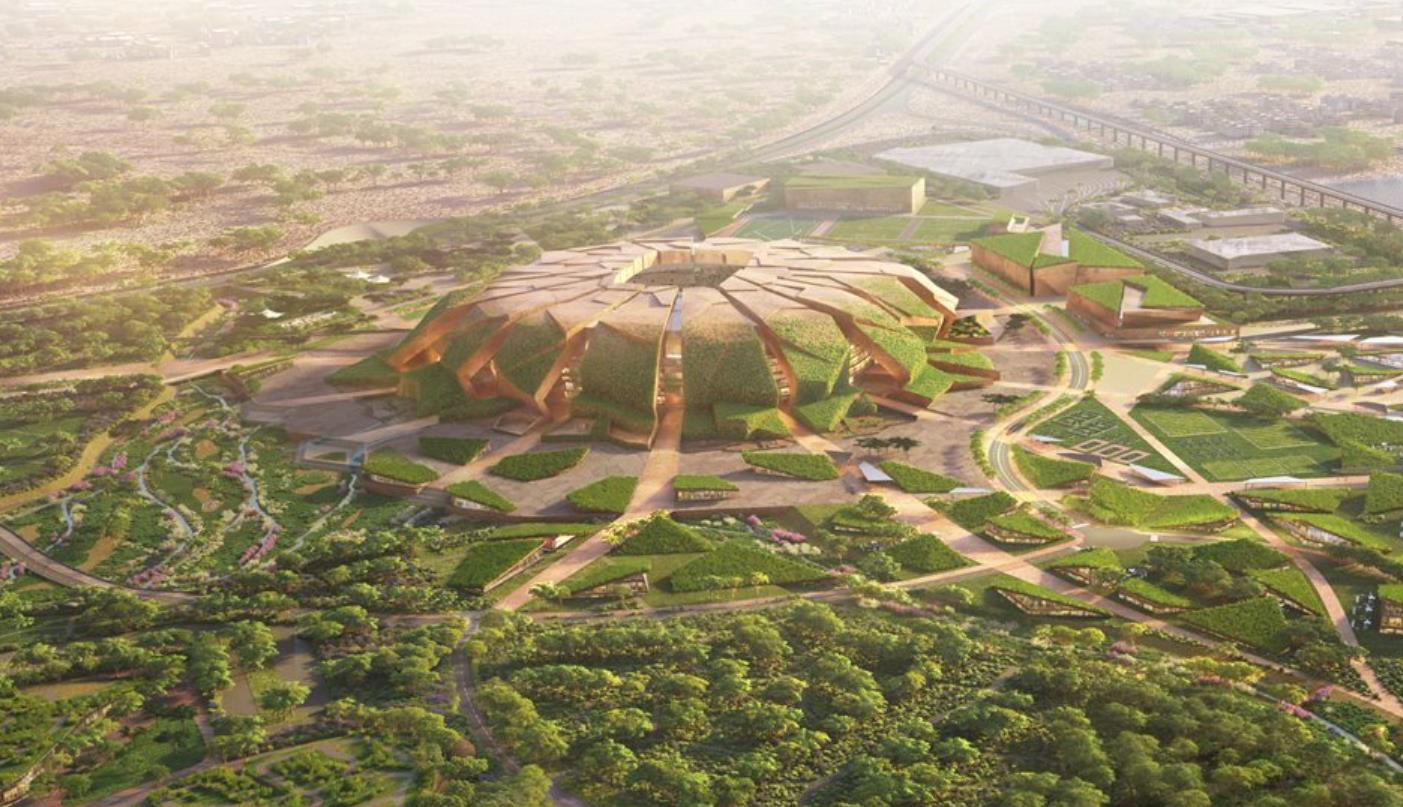
New Murabba Stadium, Riyadh, unknown architect
The New Murabba Stadium will be surrounded by rock-like forms divided by canyons: “Its design replicates the layered overlapping planes and peeling planar texture of the bark of the native acacia tree,” according to the bid placed.
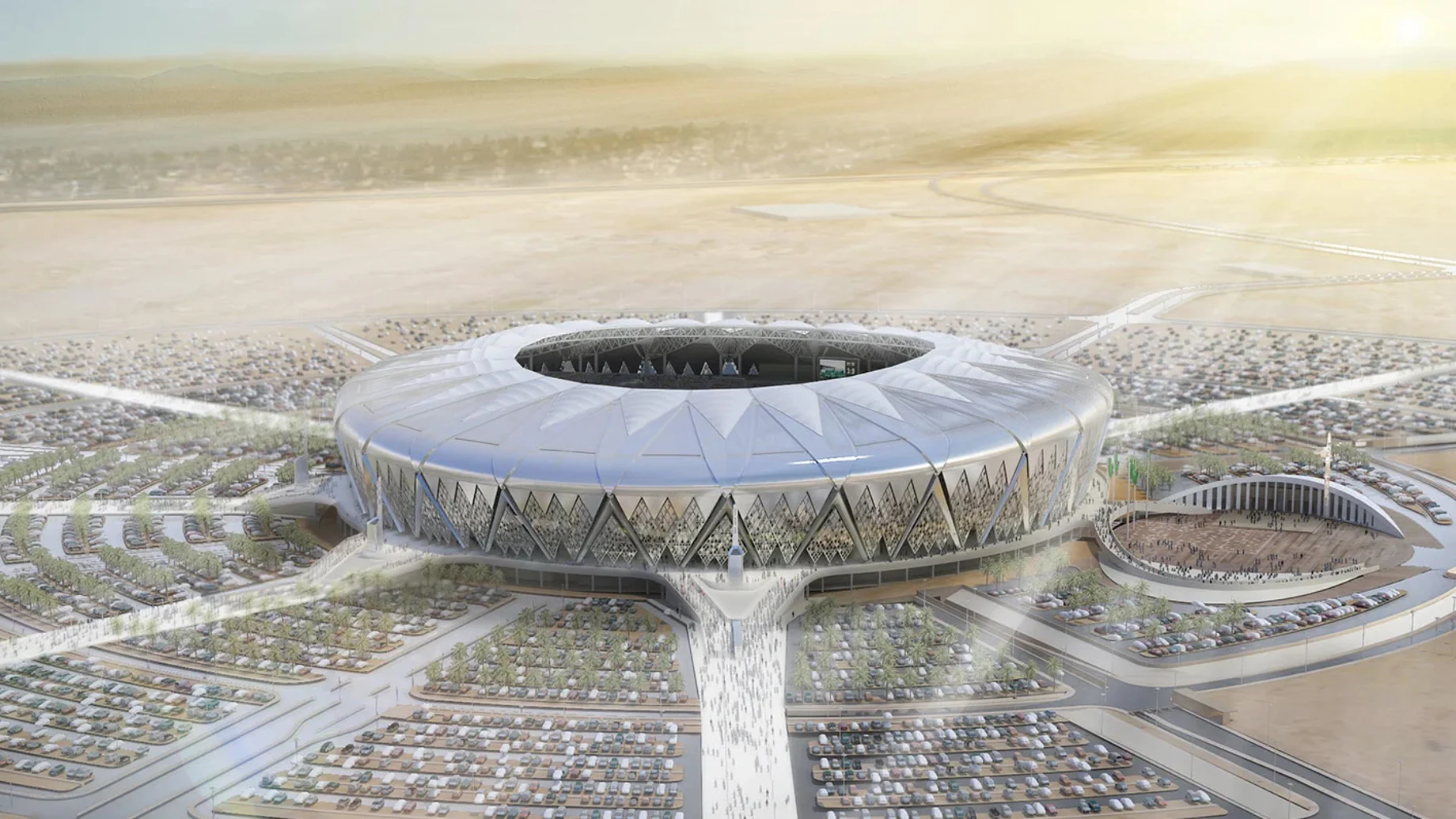
King Salman International Stadium, Riyadh, by Populous
This venue will host the World Cup 2034 final and will be the country’s largest stadium when complete. It is designed by the architecture studio Populous, and will have a capacity of 92,000.
“The stadium will blend into its surrounding topography, with terrain and natural habitat forming part of the stadium’s roof,” said the official submission.
“Aside from its aesthetic appeal, this design will provide effective shading and ventilation tailored to the desert climate.”
Roshn Stadium, Riyadh, ROSHYN Gruop
“The stadium is designed as a dynamic part of the urban fabric, encouraging the community to walk around and through the facility,” announced the bid.
King Fahd Sports City Stadium, Riyadh, by Ian Fraser, John Roberts, Michael KC Cheah
First opened in 1987, the King Fahd Sports City Stadium is covered with a distinctive fabric roof supported on a series of masts. Set in east of Riyadh, it is being refurbished by Populous to increase seating from 58,000 to 70,000.
Prince Mohammed bin Salman Stadium, Riyadh, by Populous
Named after Mohammed bin Salman, the stadium is planned about 20 miles from Riyadh and the cliffside stadium will include attendee stands on three sides with a large, retractable LED wall occupying the other side. There are no sustainability elements supplied.
“The bowl has been designed to optimise the spectator experience, featuring a unique three-sided arrangement to allow for spectacular views out towards the Tuwaiq cliffs,” wrote the official bidders.
Prince Faisal bin Fahd Sports City Stadium, Riyadh, Populous
“The stadium design draws inspiration from the ‘culturally contextualized modernism’ principles of Salmani architecture,” said the bid.
The stadium will include solar panels and locally sourced materials.
South Riyadh Stadium, Riyadh, Populous
Influenced by “Salmani architecture”, the South Riyadh Stadium will be located in the south Riyadh. “The facade blends modernity with the rich architectural language and material palette of the area,” according to the bid.
King Saud University Stadium, Riyadh, by Michael KC Cheah, renovation by Populous
This is one of the two existing stadiums that will be expanded for the World Cup so it can seat 46,000 during the tournament instead of 33,000 currently.
King Abdullah Sports City Stadium, Jeddah, by Arup
This venue was opened in 2014 by Arup and can hold 62,000 people. It will be refurbished for the World Cup: “Saudi Arabia’s King Abdullah Sports City Stadium is an elegant, respectful and versatile complex that combines traditional Islamic architecture with innovative design to form a highly functional, sustainable and flexible building,” said Arup.
Qiddiya Coast Stadium, Jeddah, Populous
This colorful stadium will be built aboutu 30 miles outside Jeddah.
“It is designed as a physical representation of the vibrant relationship between people and water, energy and matter, with its design also evoking the ripple effect of a Mexican wave,” said the bidder.
“Its form undulates; its vibrant color palette is rich and joyful.”
Jeddah Central Development Stadium, Jeddah, by GMP Architecten
This is being built as one of the anchor buildings of the Jeddah Central giga project and will include a 45,000 seat stadium designed by German studio GMP Architecten. The idea is to look like historic structures, though Saudi Arabian historic buildings were essentially palaces and buildings made from mud. See the House of Saud.
“It echoes the traditional architecture of Jeddah’s historic Al Balad district, while embracing technological advancements and innovative building design,” said the bidder.
“It features three tiers, with an outer concourse connected to four surrounding ‘villages’. The stadium bowl is fully covered by a semi-translucent roof, with a retractable inner roof and a 360-degree LED screen.”
King Abdullah Economic City Stadium, Jeddah, unknown architect
Located 60 miles from Jeddah, the King Abdullah Economic City Stadium will form part of a planned new city on the Red Sea Coast. The drum-shaped stadium will have a capacity of 45,000.
Aramco Stadium, Al Khobar, by Foster + Partners and Populous
With a concept by UK studio Foster + Partners and now being designed by Populous, the Aramco Stadium is under construction in Al Khobar.
“The stadium’s architecture celebrates the sea’s dynamic nature and its profound influence on the local community,” said the bid: “Its whirlpool-shaped design mimics overlapping sails and draws on graceful, natural wave motifs, to blend seamlessly with the coastal landscape.”
King Khalid University Stadium, Abha, a renovation by Populous
Located in Abha, the King Khalid University Stadium is stadium number 2 that will be expanded and retrofitted to accommodate a larger crowd.
Abha, UN Habitat, Saudi Arabia
The stadium can hold 12,000 and it will be increased to 45,000 during the World Cup.
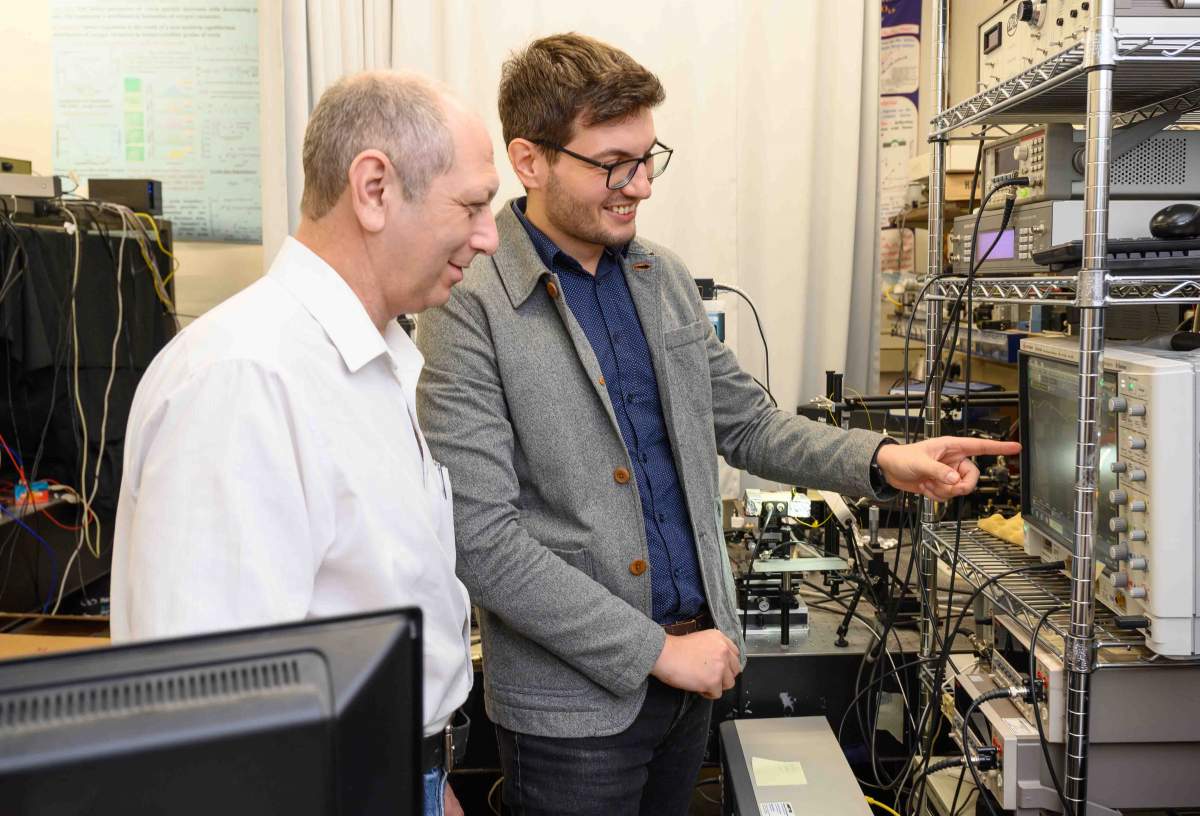
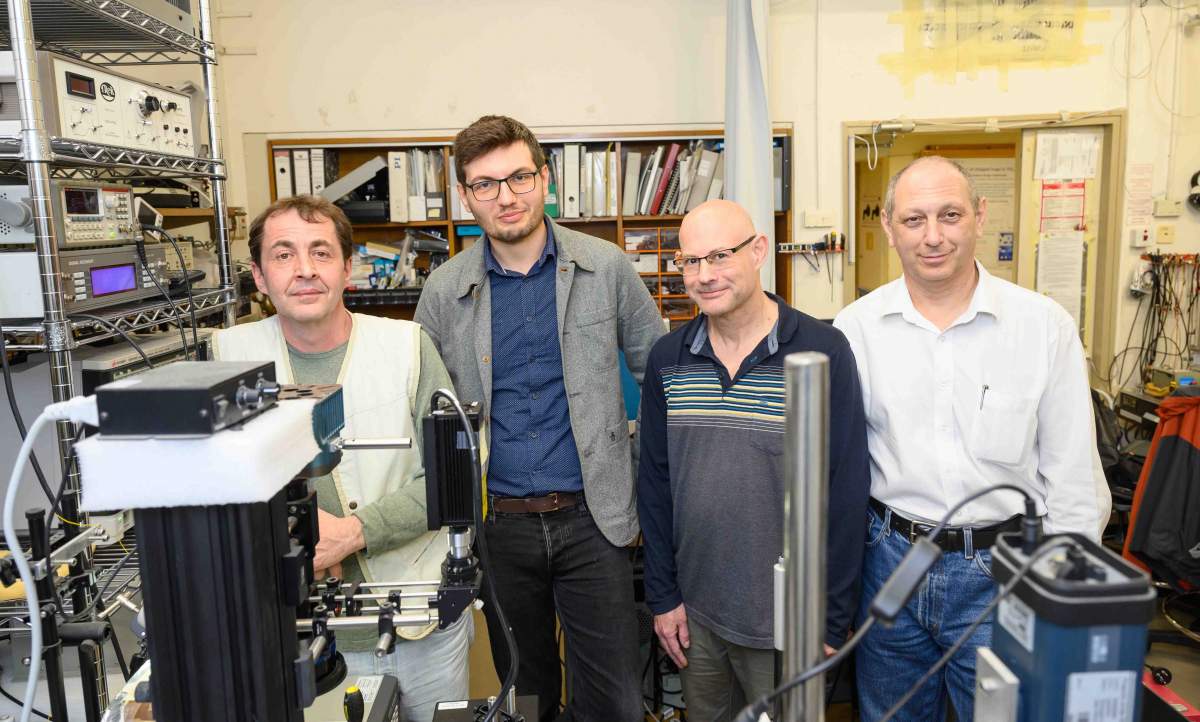
(L to R) Sergey Khodorov, Maxim Varenik, Dr. David Ehre and Prof. Igor Lubomirsky
Piezoelectric materials transform energy of walking, cycling or your car driving over them into energy. But piezoelectric materials require lead. A new piezoelectric ceramic produced in Prof. Igor Lubomirsky’s lab at the Weizmann Institute of Science belongs to a class of materials that are the backbone of many essential technologies but that unfortunately also create an environmental problem because they usually contain lead, which is highly toxic.
The surprising thing about the Weizmann ceramic was that it could perform just as well as other materials in this category while being entirely nontoxic.
The new material falls into a class of substances that become deformed when exposed to an electric field, undergoing strains and stresses that are widely exploited in a slew of devices to produce tiny, precise movements. In cell phones, for example, the slight deformation induced by voltage can set off the charging process or move the lens to create autofocus. In industrial inkjet printers, a plate buckles when voltage is applied, ejecting a controlled amount of ink.
Using platforms inserted within sidewalks Pavegen converts steps into electric power (while also generating data and even rewards)
At present, materials that undergo such deformations – they are known as electrostrictors or piezoelectrics, depending on the underlying mechanism – are a major source of lead pollution. Because electrostrictive and piezoelectric components tend to be too small to be recycled, tons of lead regularly end up in landfills. Even though lead has been phased out from most other applications in the Western world, these materials are so indispensable that their use continues to be permitted.
Previous attempts by scientists around the world to produce lead-free electrostrictive or piezoelectric materials have been only marginally successful: Some are too chemically reactive, others too difficult to make. In contrast, the Weizmann substance – cerium oxide laced with about ten percent zirconium oxide – is inert and simple to manufacture. But perhaps its major potential advantage is that compared to materials currently in use, it can produce the same deformation while having a much lower dielectric constant, which means that it stores less electric charge – that is, it requires less energy to do the same work.
“For about ten years we’d studied something considered utterly useless. Now we’ve suddenly obtained a material with potential engineering applications”
The new ceramic’s source materials are cheap and readily available. Both cerium and zirconium are relatively abundant in Earth’s crust and are mined all over the planet for a variety of industrial applications. Cerium oxide, for example, is commonly used in powdered form to polish lenses and as a catalyst in catalytic converters, devices that reduce harmful emissions in cars.
The ceramic might therefore offer an attractive and environmentally friendly alternative to existing electrostrictive or piezoelectric materials. But when, over a decade ago, Lubomirsky first started the research that would lead to its discovery, practical applications were far from his mind. His team had discovered that under certain circumstances, the mechanical properties of cerium oxide – in pure form and when laced with impurities – didn’t fit the classical picture. The electrostrictive effect was about 100 times stronger than expected according to the predominant theory – still too tiny to be of practical use, but intriguing. The team continued to explore it.
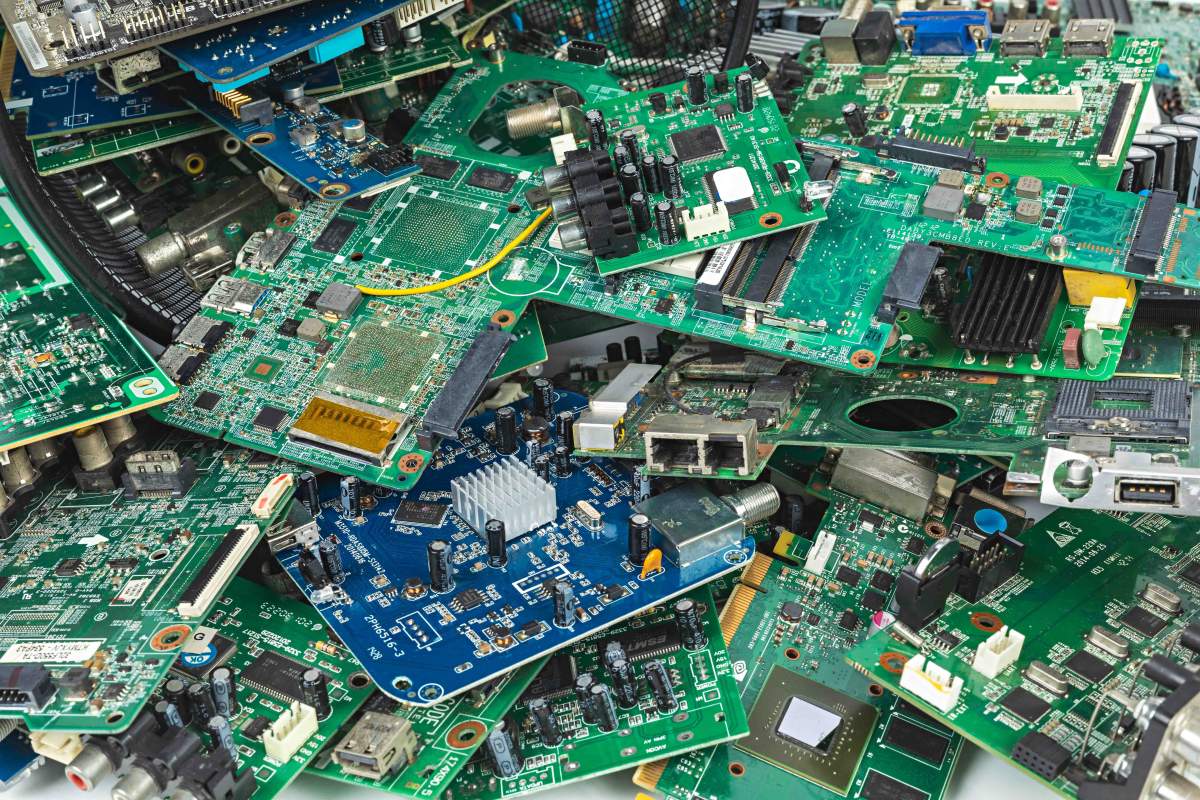
Electronic waste. A major environmental headache
About three years ago, Maxim Varenik, a PhD student in Lubomirsky’s lab, performed an experiment that produced startling results. He introduced trivalent impurities – atoms with a chemical valence of three, that is, having three electrons in their outer orbit – into cerium. When he applied voltage to the resultant substances, he noticed an interesting, regular phenomenon: The smaller the inserted atoms were in size, the greater the electrostriction. Because the increases in electrostriction had occurred along such a neat, straight line, he was curious to continue experimenting with ever smaller atoms. However, he ultimately ran out of trivalent impurities; none of the smaller ones he had already tried could be dissolved in cerium oxide.
Varenik then decided to introduce zirconium, the substance usually used in catalytic converters, even though it has four electrons in its outer orbit rather than three. To his and everyone else’s amazement, the electrostriction of the material he created didn’t move up by a notch, as had happened with the other experimental materials. Rather, it shot up about two hundredfold.
Lubomirsky (left) and Varenik. The desirable deformation
“For about ten years we’d studied something considered utterly useless – we did it for the sake of scientific curiosity,” Lubomirsky says. “Now we’ve suddenly obtained a material with potential engineering applications. The strains and stresses produced within it by voltage are on a par with those observed in the best commercial materials.”
In addition to exploring the properties that might make their ceramic attractive for industrial use, scientists in Lubomirsky’s lab are trying to explain why its electrostrictive performance was so far off the classical charts. “This is not an animal we’ve ever seen in our zoo,” Lubomirsky says.
Ever since discovering this nonclassical electrostriction, Lubomirsky’s team has been studying it in collaboration with Prof. Anatoly Frenkel of Stony Brook University, one of the world’s leading experts on a type of spectroscopy known as EXAFS. Recently, they were joined in this research by the theoretician Prof. Yue Qi of Brown University.
Their task, however, is far from being complete. “We still don’t fully understand what happens in this material,” Lubomirsky says, “but that’s precisely what makes it interesting.”
Looking to invest in ideas that change the world? Consider this one for your impact fund.
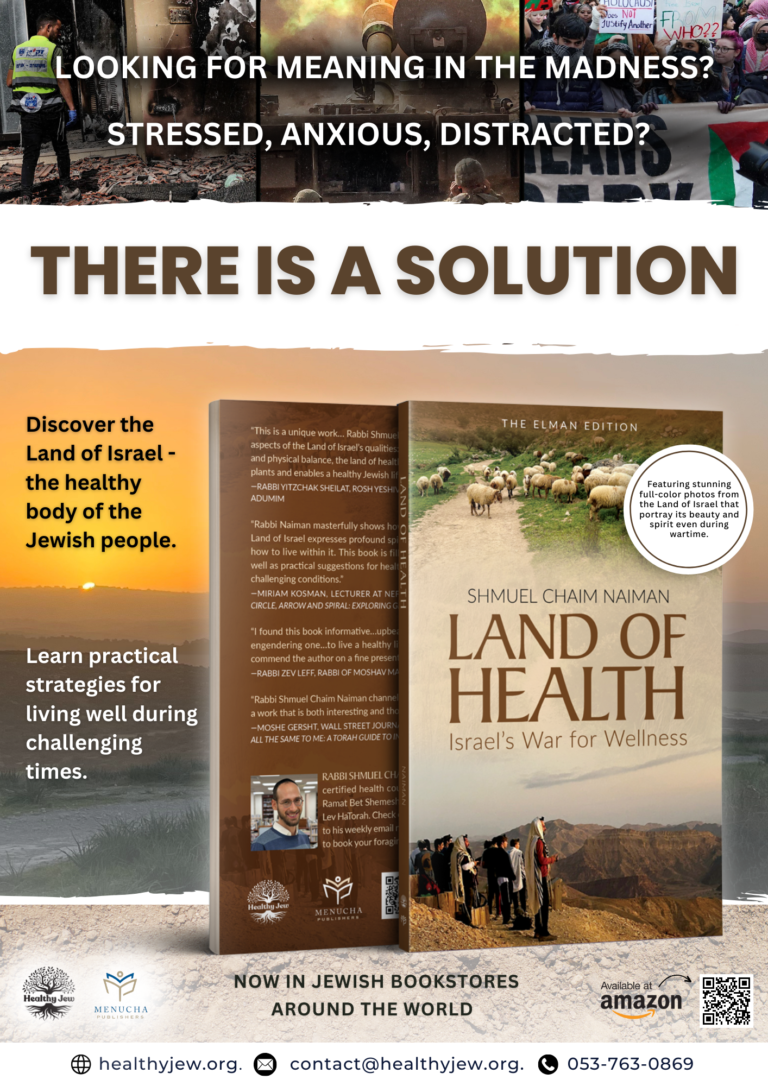
After the dreadful attacks of October 7, 2023, Israel and the Jewish people went to war on three fronts. While the army fights the war of bodies, and government officials and journalists wage the war of minds, every Jew on earth is a soldier in our war for wellness.
We’re all combating fear, distraction, and stress. We’re all looking for meaning inside the madness. More than ever before, Israel needs healthy Jewish people who value and love their land.
Land of Health teaches how to win the war for wellness:
Part One shows how the Land of Israel is the healthy body of the Nation of Israel, and appreciating that holds the solution to our current crisis.
Part Two shares practical strategies for healthy living in challenging times. It covers all areas of life: eating, exercise, emotional health, and, of course, spirituality and faith.
Even after the guns go quiet — hopefully soon — the war for wellness will continue as our emotional and spiritual wounds slowly heal. Although our bodies will again be safe and secure, our disturbed souls will yearn for peace and balance. Land of Health will help us heal, as individuals and as a nation.
“Rabbi Naiman masterfully shows how every aspect of the physical Land of Israel expresses profound spiritual concepts — and teaches how to live within it. This book is filled with intriguing insights as well as practical suggestions for healthy living even under the most challenging conditions.” —Miriam Kosman, senior lecturer at Olami and author of Circle, Arrow and Spiral: Exploring Gender in Judaism
ABOUT THE AUTHOR
Rabbi Shmuel Chaim Naiman is a Torah student, certified health counselor, and foraging guide. He lives in Ramat Bet Shemesh, Israel, where he teaches at Yeshivas Lev HaTorah. Check out healthyjew.org to subscribe to his weekly email newsletter, The Healthy Jew, and to book your foraging walk in Israel. Land of Health is available on Amazon.com, on Menuchapublishers.com, and in your local Jewish bookstore.
If you are running an impact charity or a small impact solar energy business, you need to know all the ins and outs of business in order to make your business work.
To become an entrepreneur, you have to be a risk-taker. In fact, starting a business is a risk in itself. Business owners deal with numerous daily risks, including the possibility of theft, corruption, and even legal challenges. That is why it is essential for any entrepreneur or any person aspiring to own a business to understand how to evaluate business risks. Dealing with a significant risk allows you to get great rewards. However, ignoring the possible impacts of a risk to your business is dangerous.
Identify and Assess the Impact of a Risk
The first thing a business person should do is examine a business’s risks before getting into it. However, the current global competition is so high that one cannot succeed in any business without taking risks. Study the risks, understand them and rank them to know where to start when evaluating. It is wise to assess them to know the level of consequences each brings. This way, you will know which risk is worth taking.
Determine the Risk of Not Taking an Action
Examine the risk thoroughly and know its rewards. Knowing every angle of the action you want to undertake will guide your decision-making. You should also understand your mindset and know what can make you take a particular action. It could be from a point of fear or uncertainty. Understanding how your business will be affected if you do not take the risk is essential. You should consult a business lawyer before deciding to take any risk to legally guide you and tell you the action to take if the impact is severe.
Align the Risk with Your Values
It is crucial to ask yourself whether the risk you are taking aligns with your company or business values. Implementing value-based decision-making enhances your organization’s values and empowers your team. Your employees and customers will be able to see your business the way it is and align the action to its character.
Aim At Reducing the Impact of Failure
Taking a big risk can significantly impact your business positively or negatively. You should minimize the effect of any potential failure. There is a reason why prototypes exist. You should use ethnographic research and consumer testing and continuously interrelate to release a new product or service quickly and in real-time. Don’t create things in the dark to avoid revealing them and discover that no one is interested.
Get Other People’s Opinion
Relying only on your opinion to make a huge decision can cost you. Getting views from different people, including your business counterparts, friends, or lawyers, can be helpful. You might decide to use or not use their ideas, but having an array of information will guide your decison making. Have a board that can advise and help you with risk assessment and decision-making.
Every business, no matter how small or big, must face risks. Entrepreneurs should, therefore, understand the risks of every action by assessing its rewards and impacts. Examine and understand the risk well before taking it. Get legal, professional, and friendly advice. Be equipped with information to know how to deal with all issues the risk comes with.
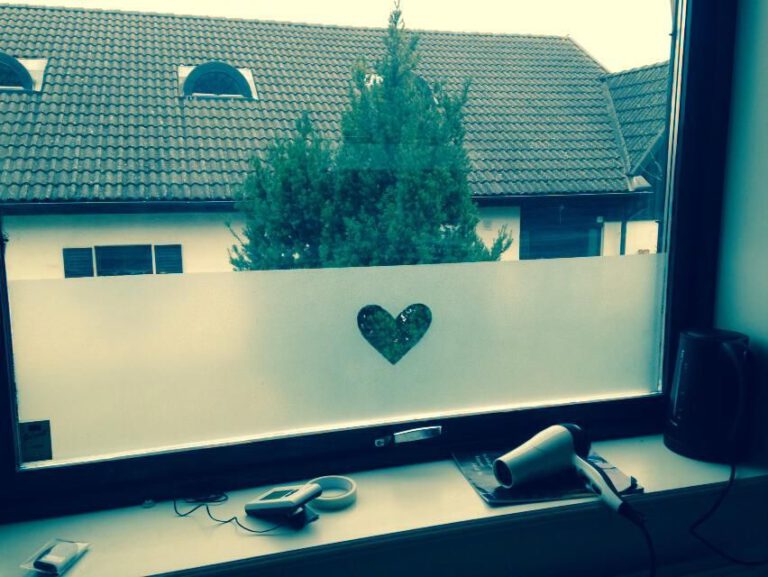
People in the Middle East have understood that privacy and protection from the intense heat outside go hand in hand. The mashrabiya is an ancient Arab invention to passively cool buildings and keep strangers from looking in. But not all of us can invest in architecture additions. Or frosted glass. And when there is a heat way or instant privacy needed, no need to go far. You can use a Scandinavian trick that puts a few coats of yoghurt on your windows to create a fritted or frosted glass appearance.
Make shift curtains, use yoghurt to frost glass.Above and below images via Scandimama
The yoghurt is easy to apply with a small roller brush, it doesn’t smell, it doesn’t attract insects, it doesn’t degrade and it can be washed off simply with a cloth and water once the heatwave (or your privacy issues) are over. It’s a also a cheap and easy solution if you are renting or are allergic to dust from heat blocking curtains.
Buy sugar free Greek yoghurt – the higher the fat content the better. Oak yoghurt works. If you use a lower fat content, the effect will be more opaque.
Map out section of window that you want to frost. You can take out straight lines, heart shapes, or buy stickers or stencils to map out your design.
Above and lower image of taping off windows for yoghurt frost via Reddit
Roll on 2 or 3 coats of yoghurt on the inside of your window. (You can also use the exterior side if you live in an area that doesn’t get extensive rain.) It is possible to dab on the yoghurt with a sponge.
When dry and you have achieved your desired effect, pull away your tape and stencils and voila!
When dry you can scratch out designs as well using a hard piece of plastic like an old credit card.
If you want a more permanent solution, you can use acrylic paint to “frost” the glass but this is harder to remove. The previous owners of the house I bought self-frosted the bathroom windows in my bathroom this way and it is impossible to remove the bad paint job, Go for the yoghurt.
A new study has found that vultures, much like humans, experience changes in movement habits and social relationships as they age. Young vultures frequently move between roosting sites and hang out a lot with their friends. During adolescence, they spend about half their nights at a permanent site at home and the other half at other sites.
In old age, however, vultures scale back on socializing, preferring to “stay home.”
The study followed 142 Eurasian Griffon Vultures (Gyps fulvus) and is among the first to shed light on the behavioral changes in aging animals in the wild.
The researchers utilized a database accumulated over 15 years from GPS devices attached to 142 vultures that tracked them for periods of up to 12 years. The vulture, a social bird, sleeps in roosts on cliffs. By cross-referencing the vultures’ ages with the GPS data on their roosting sites, the researchers discovered that as the vultures aged, they increasingly preferred to stay at the same roosting site.
A vulture in captivity learns to join the flock
The study was led by Marta Acácio at Tel Aviv University and Prof. Noa Pinter-Wollman of the University of California, Los Angeles (UCLA). The findings were published in the prestigious journal PNAS.
“Vultures are a locally endangered species in Israel, with only about 200 individual vultures remaining. They are closely monitored to determine the best possible conservation methods. We thought about what else could be gleaned from the extensive database we have accumulated over the years and agreed it would be interesting to explore how vultures age,” says Spiegel.
“Tracking the same individuals in the wild over many years is often very challenging, but the transmitters we use to monitor the population provided us with a rare opportunity to observe the aging process in vultures specifically and in animals generally.
It turns out that aging vultures behave a bit like humans and are more inclined to stay at home. When they are young, vultures like to explore new sites and frequently move between places; the likelihood that a young vulture will sleep at the same site two nights in a row is low.
When they reach adolescence at the age of five, this behavior stabilizes, and as adults they spend 50 percent of their nights at the same site and the other 50 percent at other sites. When they are old, from the age of 10 onwards, they no longer have the energy to be “out and about,” and return consistently to the same site.
According to Spiegel, these fascinating findings on the aging of birds also have very practical implications for conservation efforts. “This new study can help us better protect vultures’ roosting sites in the wild. Additionally, we have now seen that older vultures have fewer social connections, which can help us to prevent poisoning. The transmitters are connected to a system that sends an alert to the Israel Nature and Parks Authority, and to us by phone, if the vulture is not moving or has landed in a dangerous place, indicating that it may have been poisoned. Unfortunately, this happens frequently.
The danger arises when a vulture descends on a poisoned goat carcass, not knowing that a farmer has poisoned the carcass in order to kill stray dogs. Being social birds, vultures do not come down alone, leading to the risk of dozens of vultures dying at once. Understanding how wide the poisoned vulture’s social circle is will significantly help in mitigating the damage.”
It is important to note that vultures play an important ecological role in the disposing of carcasses. Studies have shown that the extinction of vultures ultimately leads to the loss of human lives, due to the rise of diseases such as rabies. In India, for example, a recently published study revealed that the extinction of vultures due to poisoning resulted in the deaths of half a million people over the course of five years.
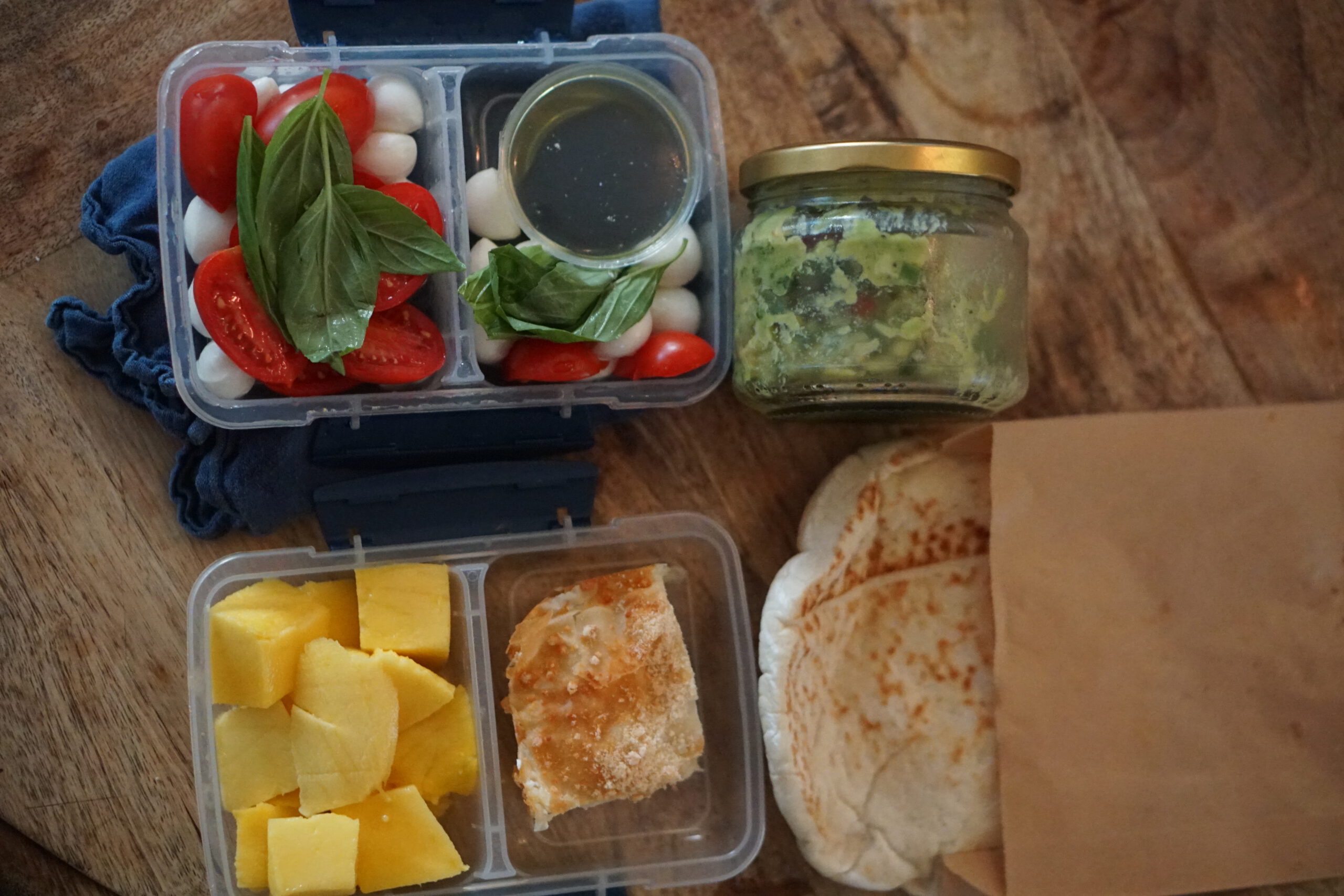
Healthy lunches made for Mediterranean kids. Spinach pie. Mango. Mozarella salad, and avocado salad spread for a pita.
Pack your kid’s lunchbox with wholesome foods to help her gain health, not weight.
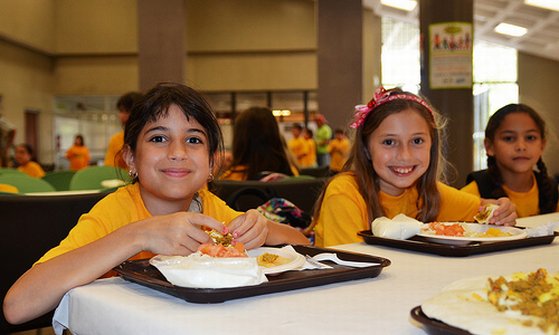
Across the Western world, parents and schools have woken up to the crucial link between the foods a child eats during school hours and his/her health. To control obesity, children are being encouraged to acquire a taste for real foods and to form healthy eating habits. Hopefully, the days of soda and snack machines in school corridors and cafeteria trays loaded with greasy, starchy messes are on their way out.
In the U.S., efforts such as the Farm to School movement integrate food and nutrition education in the classroom. Through their efforts, more American children eat fresh local foods in school cafeterias, and local farmers benefit too. Turning to Europe, we see that, according to the WorldWatch Institute, “Seventy percent of all school cafeteria food in Rome is now organic, with ingredients coming from 400 Italian organic farms.” France, where at lunch children are routinely served 4-5 courses freshly cooked in the school kitchen, has the lowest rate of childhood obesity in Europe.
And what of those of us who live in the Middle East, where the majority of school children take their lunches to school from home? As a mother living in Israel, I’m sad to report that many kids fill up on soy-based or meat-glued chicken “shnitzels” nuked in the microwave a few minutes before running off to school. (See our post on the perils of soy and meat glue here.) The horrible white bread sandwich with a layer of cocoa-flavored margarine known as “chocolate spread” is still the favorite 10:00 am snack.
The solution? Dedicate time to preparing real food for your precious children
It means deciding what “quality time” really means to you. Is an hour spent in front of the TV emptying your mind as valuable as an hour cooking ? If you encourage your child or teenager to help out, you might find you’re having fun together. And your child will like being the one to determine what his lunch foods will be. Even cooking alone, the manual labor (and good smells coming from the pot) soothe and relax.
A wide-mouthed thermos is helpful for keeping home-cooked food and soups warm.
Helpful equipment:
A standard thermos for hot cocoa or soup.
A food thermos to contain hot foods like stews or drier hot foods like rice and beans, or majadra.
2 frozen packs to keep sliced fresh fruit or vegetables, or salads, fresh. Frozen packs also keep sandwiches with fish or chicken cool.
3 light but sturdy containers with tight lids. They should be microwaveable.
TV-dinner style boxes with separated areas inside for different foods.
Nice but not essential:
A small insulated carrying bag.
An insulated bottle container with a shoulder strap, for home-made iced tea or other cold drink.
Just having those thermoses and packs gives you lunch ideas.
The plan
During the school year, I sit down with my teenage daughter once a month or so and we draw up the food plan in two columns. Column A: something satisfying but portable for breakfast, since that’s food she might snatch up as she’s flying out the door to make her bus. The snack foods for the 10:00 o’clock break are interchangeable with the foods in Column A. Lunch foods go to Column B.
I undertake to cook and pack the the food either the night before or in the mornng. She has to put up with my choices, since she dictated the list.
Rather than suggest menus item by item, here are lists of kinds of foods that you can turn out in your kitchen with just a little effort.
Column A: Breakfast and Mid-Morning Snack
Muffins and quick breads of all kinds. As long as they’re whole-wheat and have chunks of fresh fruit or grated vegetables (zucchini, carrots). For a savory muffin, try cheese, with or without oven-dried tomatoes.
Low-sugar cookies or cupcakes. Add dates or other dried fruit. This allows you to reduce the sugar in the recipe.
A variety of favorite whole-grain breads, sliced or ready to fill as sandwiches (like a half-pita or tortilla).
Breakfast sandwich fillings: whatever he/she likes to put on bread in the morning.
A slice of leftover pizza (we’re talking about a teenager here). With slices of whatever raw vegetable is in favor at the time.
Sliced fresh fruit. Sliced is key here. A child might ignore an entire apple or bell pepper, but one sliced, arranged, and kept cool in a box always gets eaten up.
Dried fruit and nuts. Mix a few varieties or pack them individually.
Dairy. Natural yogurt with a dollop of maple syrup or your jam, or chopped nuts and raisins. Natural cheese slices wrapped around cucumber sticks.
Let’s not forget healthy drinks. One glass of natural juice . Cold herbal tea, sweetened or not, as you will. How about plain cool water?
Column B: Lunch
Protein foods give energy; starchy foods put kids to sleep.Pack a minimal amount of carb-heavy foods – enough to satisfy but not act as a soporific.
Eggs, hard-boiled and kept cool in a bag with a frozen pack. Or an omelet. Omelets are handy protein vehicles for chopped vegetables, or to use as wraps. Or chopped up and added to pasta salads or brown rice.
Dairy: a container of low-fat cottage cheese (add a spoon). Put some olives or pickles on the side or in a small bag to go with it.
Whole grains, hot in food thermos or cold with dressing, as a salad. Rice and beans, hot. Quinoa tabbuleh, cold. Lentils.
Pasta and other carb-heavy foods: mix with cold or hot vegetables, leftover meat or fish and pack into the appropriate container.
Vegetables. A mixture of raw vegetable sticks for dipping into choumous or to eat as is. Your child will decide which vegetables. A whole baked potato. A whole small baked sweet potato (add his favorite topping in a small separate container). Leftover stir-fry. Vegetable fritters. Mixed salad with 4 colors of vegetables in it.
Soup or stew left over from dinner, re-heated in the morning and stored in a thermos. (In my kosher kitchen there is a dairy thermos and another for chicken soups.)
Leftover meat or poultry, sliced or chopped and packed into a hot/cold container. Again, sliced or pre-chopped is important. Provide a fork, and your kid will eat. Expect him to pick up an entire drumstick and eat it in front of his friends, and he won’t. Meatballs are good.
Tips:
Choose menus for the next week and cook accordingly. At the end of the month, review the lists with your child and let him/her choose to repeat, or omit, or add whatever healthy foods he wants for the next month.
Cook ahead. Freeze individual portions at least twice a week.
When cooking dinner, keep the next day’s lunch in mind. My daughter doesn’t mind repeating last night’s dinner at lunch, but if she did, I would separate a portion to freeze, thawing it out another day.
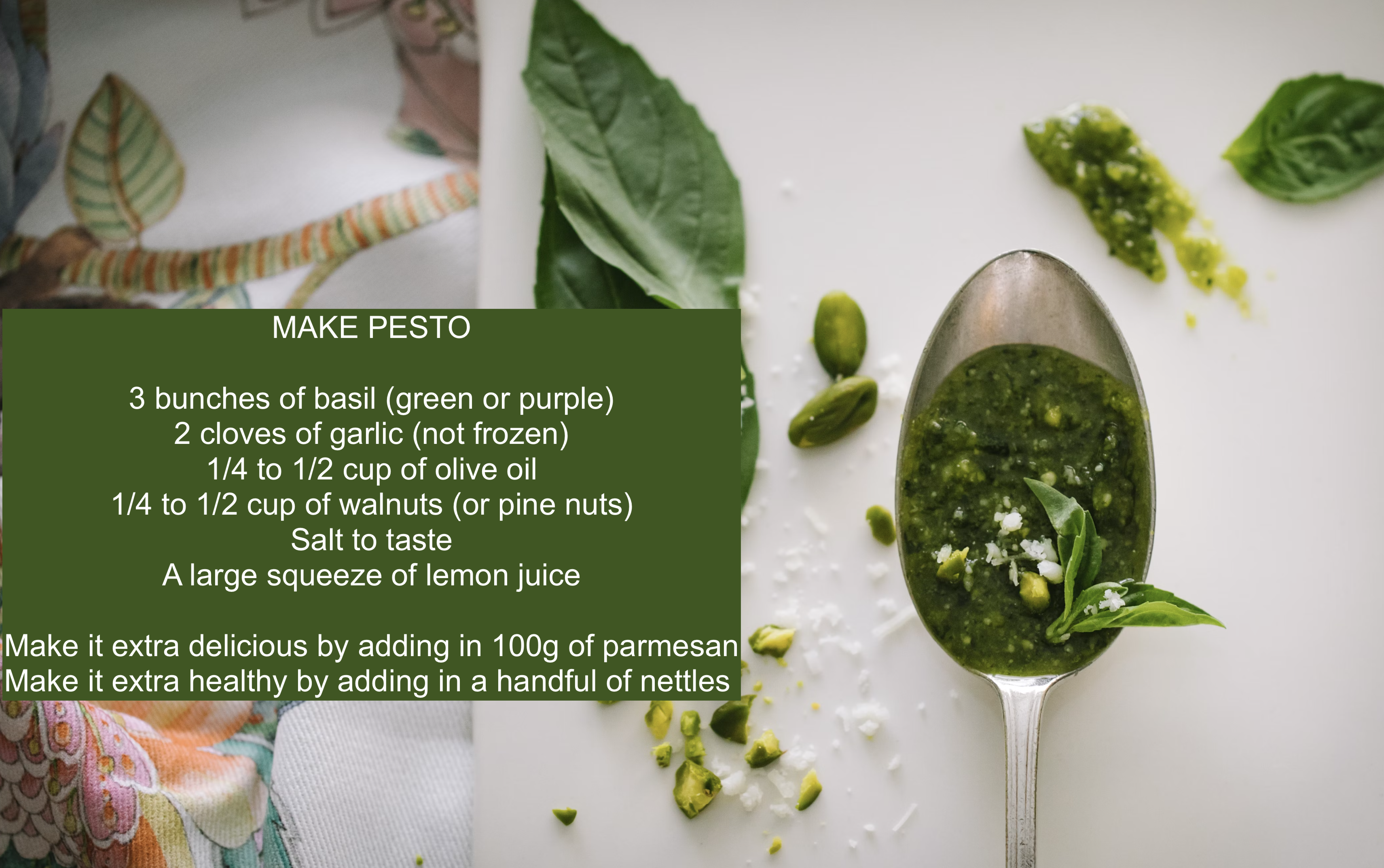
Every once in a while, dedicate time to making two condiments. Pesto, labneh, jam, chutney, salsa, pickles, salad dressing. Anything your child likes that adds relish to his food. Pesto, by the way, freezes well.
Cook and pack foods your child likes, being mindful of quality ingredients. Is he/she going through a phase of only peanut butter sandwiches? My daughter did, at age 6 – three weeks of only PB sandwiches, with an occasional apple or yogurt to make me happy. I made sure the bread was whole wheat and the PB natural and sugar free. She grew out of it.
Still looking for specific recipes? Try some of these on Green Prophet:
A solar PV plant in California. More remote farms are using solar to support agriculture.
The growing demand for sustainable living and farming is no hidden secret in today’s eco-sensitive world. The climate is changing rapidly for the worse.
So is the way we do farming. The food quality around the world is decreasing without limit because of the chemicals and pesticides we use for faster harvesting and production.
That is when and why leading PV systems providers like Soltec are changing the entire ecological and agricultural system of how we utilize renewable sources like sunlight.
With the integration of photovoltaic systems, we can drastically change how we farm and organically harvest the produce. The yield will be much better and healthier for consumers.
Let’s learn about these systems below in detail. The knowledge will help you improve the quality of the produce on any farmland.
Intersection of Agriculture and Solar Power in 2024
Farming processes from irrigation, harvesting, and nurturing plants need sunlight as a constant renewable energy source.
Traditionally, farmers started to use pesticides and other chemically harmful alternatives for better output on the farmland they irrigate. But that has costed us – and the planet – an arm and leg.
Now is the time to know more about the importance of the sun in agriculture. It is the cleanest form of energy, one that is renewable and easily available to us for growing the best of the best produce.
Hence, with a cost-effective solar tracking system, an average farmer can store, process, and utilize solar energy without heavy investments.
What do we mean by Photovoltaic Systems (PV)?
Integrated PV systems fit into the existing electricity systems for tracking, trapping, and helping the farmers utilize solar energy which must be readily available at any time.
The traditional energy storage systems were not usually present on the land. That is not the case with modern PV systems. Farmers can install these adjacent to the farmland and use these solar trackers to trap and track solar energy around the clock.
Components of a vast and usable PV system might include inverters, solar panels, and other items to store, track, and convert solar energy into electricity in seconds.
Types of PV Systems to Know
For better knowledge, let’s not learn about the different types of PV systems you can find on the farmlands.
1. Ground-mounted:
These traditional PV systems were mounted on the ground but not where the crops were grown. These were on the unused lands close to the farms where crops were grown for a significant flow of electricity.
2. Floating Photovoltaic systems:
Find these mounted onto irrigation systems or reservoirs to avoid water evaporation or algae growth.
3. Agrovoltaics:
These are the modernized PV systems that farmers can mount onto the farmlands or directly/indirectly above the crops for a certain amount of sunlight on a set clock. These PV systems improve land efficiency and protect crops from extremely cloudy or dusty conditions, providing them with energy whenever necessary for optimal growth.
Role of PV Systems in Improving Agricultural Efficiency
1. Efficient use of land:
Farmers have now recognized the need to use their lands better and more efficiently. They no longer worry about not receiving the right amount of energy, water, or electricity because of these solar panels and tracking systems.
With the land transforming into a multipurpose field, farmers can utilize it in many ways, lowering the per-yield cost.
2. Reduction in using water during irrigation:
The shade cover provided by floating PV systems, agrovoltaics, or dual-row single-axis systems helps reduce the chances of water evaporation. The influential microclimate created by these panels helps yield more output in terms of the higher produce per acre of farmland.
Floating solar panels near farmland in Turkey
3. Independence from the non-renewable energy sources:
Farmers no longer have to grow extensively, dependent on non-renewable sources for irrigation and harvesting their produce.
Now, their agricultural activities are more oriented towards renewable energies, like solar panels and trackers. These improve their way of farming and let the crops be better for healthier consumption.
4. Help farmers save funds for bigger investments:
The solar trackers and panels are not that costly for farmers in the long run. They can consider these PV systems as a one-time investment.
With the help of these integrated PV systems, they don’t have to go on investing money in non-renewable sources of generating electricity, which already harms the environment more.
Instead, they can save these funds and invest in greener projects or crops. This improves their overall efficiency in producing organic raw materials so that allied and dependent industries can grow greener as well.
5. Generate electricity and solar energy on demand:
Integrated PV systems provide access to large units of electricity at any time. Farmers get the superpower to generate solar energy like the sun pouring the light over the crops even on a cloud or rain day.
This removes the chances of crops going to waste because of unsettling weather. It is highly important to consistently grow farm produce and help the energy market scale with healthier produce.
Frmers have one-click access to produce electricity with these panels. So they can harvest more challenging crops or produce without caring much about the current weather.
The Future of PV Systems in Agriculture
The demand for sustainable and organic farming is only to shoot up in the next decade. This will help the owners and manufacturers of integrated PV systems like Soltec to develop more innovative solutions in the times ahead.
Government policies and bank lending incentives are becoming more supportive of such innovations in the future as the profit margins increase for an average farmer.
Ready to Invest in integrated PV Systems for Better Output from Organic Farming?
We hope you understand the concept of integrated PV systems to improve the overall efficiency of the farmland above. If you think you’re ready to go green and sustainable, this could be your way on the bandwagon.
Invest in PV systems today if you want to have anytime access to untapped solar energy and electricity – a possible way forward for sustainable and organic farming with increased profits.
Increasingly, business owners are concerned about environmental sustainability, and for a variety of reasons, including long-term profitability, compliance, and customer satisfaction. If you have a fleet of vehicles to manage, you’ll know how important it is to control fuel economy and environmental sustainability more broadly.
So what are the best strategies to do it?
Keys to Fleet Vehicle Sustainability
These are some of the best strategies for improving vehicle sustainability within your fleet:
Set specific goals. Your vehicle sustainability strategy isn’t going to make much of an impact unless you have specific goals to aim for. Additionally, these goals will serve as benchmarks for you to gauge your progress. Many businesses attempt to reduce their carbon emissions by a specific amount, or eliminate certain forms of waste, for example. The exact goals you choose don’t particularly matter; what’s important is that you have a specific vision for how you want your environmental sustainability plans to develop.
Make some preliminary reports.Reporting is vital for understanding your goal progress as well. Using appropriate software, this becomes much easier. Figure out which objective sustainability metrics you can reliably track and put them together in a report that you can create on a monthly, or perhaps annual basis. This is going to serve as the foundation for the future of your environmental sustainability strategy.
Audit your current environmental impact. Every business needs to start somewhere, so audit your current environmental impact. How much fuel are you using? How much carbon are you emitting? How much waste are you producing? Once you have your existing metrics, you’ll be in a position to know just how much of an impact your improvements are making.
Invest in efficient vehicles. Some vehicles arenaturally more efficient than others. Small vehicles use less fuel than big vehicles, and electric and hybrid vehicles use even less fossil fuel. Additionally, some vehicles are designed with efficiency in mind, allowing them to use fuel more efficiently and produce fewer emissions. Whenever you need to purchase new vehicles, consider more efficient vehicles to add to your fleet. The only caveat here is that you shouldn’t go out of your way to replace existing vehicles with new ones, as this produces additional waste in most cases.
Maintain and repair when possible. In line with this, maintain and repair your vehicles rather than replacing them, whenever possible. Producing a new vehicle demands significant energy and resource expenditure, so it’s typically the more sustainable choice to repair what you already have, rather than getting something totally new.
Retread, repair, and recycle. Try to keep and make use of materials, rather than throwing them away. For example, you can retread old tires, rather than purchasing brand new ones. You can recycle certain materials, rather than purely disposing of them. Incorporate these measures into your processes so you can reduce waste and improve efficiency.
Optimize routes. Use software or careful planning to optimize your routes. In nearly all transportation situations, there are multiple available routes, but only one “most efficient” route in terms of fuel efficiency. Not only will this reduce emissions, but it should also save you money on fuel.
Hire and train optimal drivers. Hire and train the best drivers you can. Optimal drivers focus on fuel efficient routes and drive their vehicles with care to avoid unnecessary resource expenditure. They also pay attention to potential issues, so they can be handled proactively.
Consider carbon offsets.Carbon offsets are certificates associated with practices designed to reduce the amount of carbon dioxide in the atmosphere. They can be useful in mitigating some of the effects of your operation.
Consider additional efforts. Depending on your goals, you may want to go even further, participating in environmentally responsible habits or donating or volunteering to environmental causes. While this will only indirectly be associated with your fleet, it could look great for your business.
Reaping the Benefits
There are many benefits of pursuing more sustainable fleet vehicle management.
Cost savings. Many environmentally sustainable practices have the incidental benefit of helping you save money. For example, route optimization reduces the amount of fuel your vehicles need.
Regulatory compliance. Following environmental sustainability best practices means ensuring regulatory compliance in many cases, limiting your potential liability.
Future proofing. Adopting environmentally friendly practices now is a way of future proofing your organization, as environmental restrictions and regulations are likely to become even stricter in the future.
Brand reputation. Today’s consumers demand ethical environmental practices, so your sustainability efforts can greatly improve your brand reputation.
Sustainability isn’t a strict requirement for effective fleet vehicle management, at least not yet. But businesses that dedicate themselves to improving sustainability in this area are much more likely to increase their profitability with time.






























 (L to R) Sergey Khodorov, Maxim Varenik, Dr. David Ehre and Prof. Igor Lubomirsky