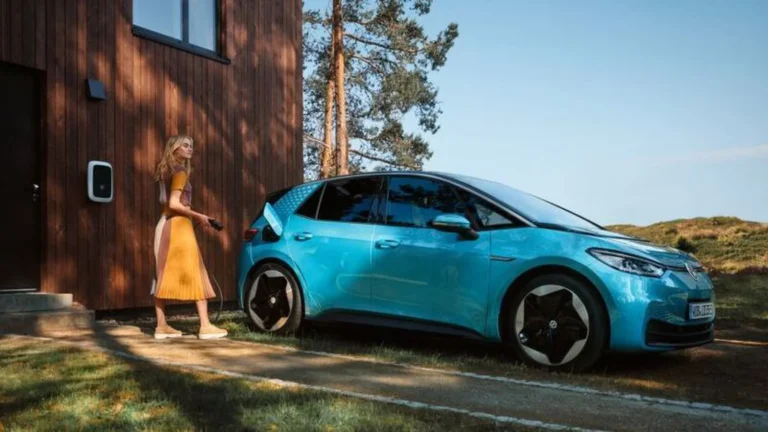
There are over 100 electric vehicle options in Ireland. Volkswagen is one option.
As electric car sales roll out of the UK, TotalEnergies from France and SSE from Scotland, have signed a binding agreement to create a joint venture to establish a new major player in EV charging infrastructure in the UK and Ireland, under the brand “Source”.
The new business partnership will create about 3000 high power charge points throughout Scotland, Ireland, England and Wales, meeting demand from fleet owners and private EV car owners to get a fast charge when they stop for a coffee. Fast charge stations can “refill” a Tesla in about 20 minutes as long as there is no wait for a charge point.
Investors know that Ireland is a great country for tech investment and companies that support them – see Ireland SEO. But in the last year or so its model for attracting international investments has been frayed. Support of EVs could open new models for startup and transportation businesses.
In the latest news charge points are needed in more remote locations but that is not what this business deal will fulfill.
According to the press material issued, Source will deploy up to 3000 high power charge points (of 150 kW and more) grouped in 300 “EV hubs”, targeting what they expect is a 20% market share. The majority of the charging hubs will be in prime locations in urban areas and powered by renewable energy provided by SSE and TotalEnergies.
Several hubs are already under construction in the UK with plans for dozens more, currently in development studies, the company just announced.
“TotalEnergies is proud to contribute to the development of electric mobility to decarbonize transportation in the UK and Irelan,” says Mathieu Soulas, Senior Vice President New Mobilities at TotalEnergies.
“This is a great opportunity to extend our network in Europe and stake out a key position as a reference high-power charging player.
“We want to offer our customers – passenger cars and fleet alike – a nationwide, ultra-fast and reliable charging service that allows them to travel efficiently with complete peace of mind. This development also contributes to our integrated power strategy in the UK, combining renewable and flexible power generation capacity, trading and marketing of low-carbon electricity available 24 hours a day.”
In the UK, Source will provide reliable ultra-fast charging stations now needed since the enforcement into law of the UK Government’s zero vehicle emissions mandate for all new cars and vans. Getting the power supply infrastructure built for EV and fleet owners is one of the biggest challenges facing the decarbonisation of transport. Consider that in countries like Sweden you cannot rent a vehicle that isn’t an EV.
As of this year, China is the country with the most electric cars in the world. In 2021, there were 417 million registered vehicles in China, 319 million of which were passenger cars. Of that, 13.1 million were “new energy vehicles” – those with electric, hybrid or hydrogen fuel cell powertrains.
Ireland plans on putting 1 million electric vehicles on roads by 2030, while building consumer confidence in EV charging. Countries like Canada have declared that all new cars on the road must be electric by 2035. Consumers are in a panic to buy fuel-based cars such as trucks as charging stations are few and far between in northern locations. Even in cities like Toronto, consumers are complaining that they can’t get adequate charges at rental apartments. A charge would take more than 24 hours on a regular outlet.
The partners in the new UK electric car deal with Source, such as SSE actually builds renewable energy power plants such as wind farms.
“SSE is already playing a leading role in decarbonising the UK and Ireland’s power system including building the world’s largest offshore wind farm and transforming electricity networks,” says Neil Kirkby, Managing Director of Enterprise at SSE.
“Now this agreement will help accelerate progress towards a decarbonised transport system too, ensuring the vehicles that keep the economy moving can do so in a more sustainable and efficient way,”
Aaron James, an electrical lineman who lost an eye and much of his face to an electrical accident, is the first person to receive a face transplant that includes a whole eye.
The operation involved several innovative techniques, including 3D-printed guides that helped surgeons fit the donor’s bone to James’s face and a transplanted piece of carotid artery that provides the donated eye with its own blood supply.
The eye responds to light, although researchers don’t believe it will connect to James’s brain well enough to restore his sight. “100/10, made medical history,” James’s daughter posted on TikTok. “Still bald headed, tho.”
Transplants can restore sight, mobility and even reproductive rights. The first womb was transplanted in Turkey more than 10 years ago, giving hope to women who were unable to conceive.
Beard transplants, a cosmetic procedure, are growing more common as Middle Eastern men enjoy wearing beards as a sign of religious devoutness and masculinity.
Success of the recent whole eye and face transplant was reported in the medical journal Jama. While the patient could not exactly “see” the researchers say that there was successful regrowth of blood vessels, meaning:
“The successful revascularization of the transplanted eye achieved in this study may serve as a step towards the goal of globe transplant for restoration of vision.”
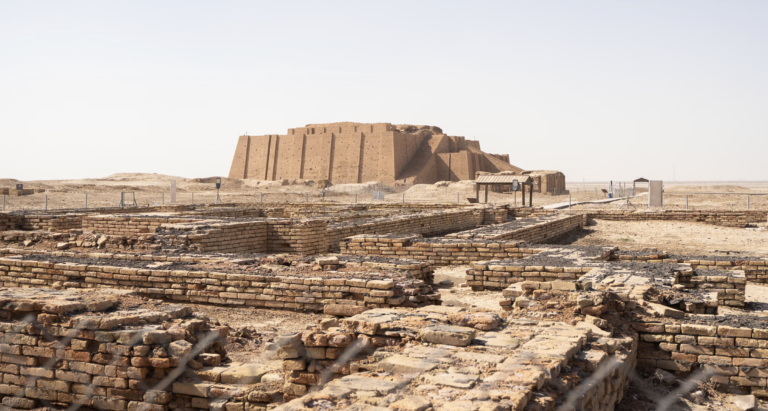
The Ziggurat of Ur, located in the province of UR-Nasiriyah, Dhi Qar, Iraq. Built in the 21st century BC by King Ur-Nammu, the Ziggurat of Ur was used as a temple to worship the moon good “Nannar”. This 4,000 year old piece of archaeological history dates back to the first civilization’s in human history, beginning with the Sumerians.
The Iraqi city of Nasiriyah has clocked the world’s highest temperature in the last day reaching a scorching 48.7°C (119.7°F), according to data from the American Placerville station. The Nasiriyah News Network reported that the Placerville station’s data showed that there are 15 cities worldwide registering extremely high temperatures due to climate change.
Nasiriyah was top of the list, followed by another Iraqi city, Basra, which recorded 48°C (118.4°F).
Already prone to high temperatures, climate change is expected to have a disastrous effect on the Middle East. Syria’s drought 15 years ago led to a violent civil war that has left millions of people refugees –– people who now continue to seek refugee status in countries such as Canada and in Europe.
Iraq, home to the Euphrates River, and the ancestral birthplace of Abraham, has been experiencing more frequent heatwaves in recent years. Neighbors Iran and Kuwait also record record temperatures. A heatwave in Saudi Arabia this year in Mecca turned tragic when more than1,300 died from heat exhaustion –– tour companies took advantage of lax visa requirements, which led to overcrowding making the heat wave intolerable.
A low-energy Mudhif, or Iraq marshland reed hut. Keeps cool passively.
Local authorities have not yet commented on any measures being taken in Iraq to address this extreme weather event or how they will protect people. Iraq is asking people to turn down their air conditioners as not to strain the electricity grid.
TotalEnergies are looking to build a solar power plant in the Basra area.
Iraq’s state-run power company Tavanir reported on August 8, electricity consumption peaked at 79,872 MW – about 10% higher than the same period last year — and that brown and blackouts would face the nation.
One weather station in the south of the country reached a heat index of 82.2°C (180°F) and a dew point of 36.1°C (97°F), which might be the highest such readings ever recorded on Planet Earth. Welcome to our new reality.
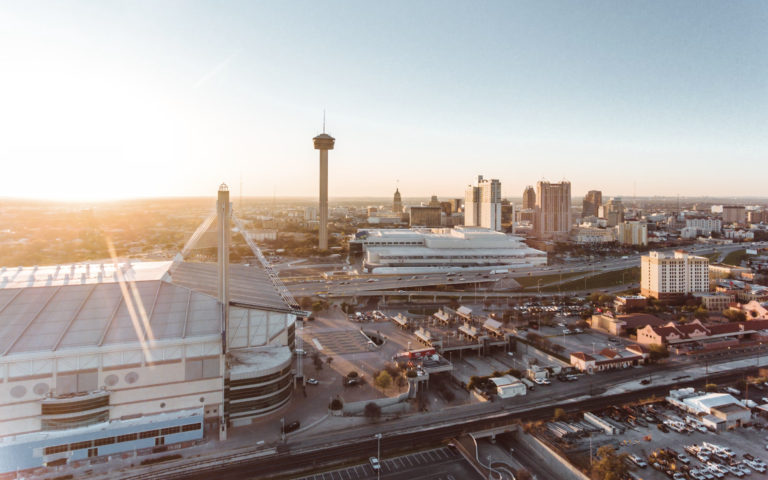
Arava Power’s first US solar photovoltaic facility beginning commerical operation in Uvalde County, Texas. It will power 43,000 homes in the San Antonio area of Texas.
The project marks Arava’s first solar energy project in the US which was developed with Israel’s leading oil and gas retailer Paz Group and funded in partnership with the insurance company Menora Mivtachim at a total cost of $330 million USD.
Project SUNRAY spans an area of approximately 1,200 acres and is leased for a cumulative period of 50 years. It includes over 500,000 solar panels and is expected to produce 515 gigawatt-hours of electricity per year. The result will prevent the emission of 225,000 metric tons of carbon dioxide and provide clean electricity to 43,000 homes in the San Antonio area each year.
The SUNRAY project sells 50% of the generated electricity under a 12-year power purchase agreement, and the remaining half is sold on the electricity market in Texas.
“Project SUNRAY is the result of great partners and collaboration with tremendous institutions from the United States, Israel and globally. For Arava Power Company, this isn’t just about breaking new ground in the United States —it’s about demonstrating the power of our platform from development through asset management over our history and across geographies,” said David Rosenblatt, Co-Founder of Arava Power.
Ketura3 solar field by Arava Power Co in Israel
“Arava Power’s first project in the United States is a testament to our commitment to quality work and represents the growth we are undertaking.”
Rosenblatt co-founded Arava Power in 2008 with Ed Hofland.
Arava Power and Paz Group began developing the SUNRAY project in 2021, after acquiring it from OCI Energy. They completed financial closing in 2023 and as of last month, finished the construction work and received approval for commercial operation.
“We succeeded in developing our first US project under extremely challenging market conditions,” added Ilan Zidkony, CEO of Arava Power “Over the past few years, our team had to contend with regulatory upheavals, an almost unprecedented inflationary environment, and a complex financing landscape. Our company is proud of this achievement and are grateful for the confidence of top-tier partners and financiers.
“The commercial operation of SUNRAY is a key milestone in Arava Power’s U.S. vision, with a portfolio of projects in various stages of development totaling 1.3 gigawatts across the US.”
Morgan Stanley serves as the Tax Equity partner in the project and together with an additional investor made an investment of approximately $150 million.
As we tackle daily challenges and constant digital interruptions, sustaining our cognitive health becomes key to staying on top of our game. This is where natural supplements come into play, not just for a quick fix but a long-term boost. Mind Lab Pro has carved out a niche as a leading choice among these. Crafted with a blend of all-natural ingredients, it’s geared towards enhancing various aspects of cognitive health—think memory, focus, mood, and mental clarity. But Mind Lab Pro isn’t just about boosting your brain; it’s about supporting and nurturing your brain health sustainably, making it a reliable ally in your quest to stay sharp and effective.
The Science of Nootropics
Ever wondered what nootropics are all about? Nootropics are supplements designed and taken to improve cognitive functions like memory, creativity, and focus. They are your brain’s buddies, helping you stay sharp and think clearly, especially when the pressure’s on. They’re not just about giving you a quick jolt of energy like your morning coffee; they aim for a deeper, long-term enhancement of your mental capabilities.
Now, let’s dive into how Mind Lab Pro fits this picture. It’s a powerhouse that targets multiple aspects of brain health to boost cognitive performance. The secret sauce? A carefully researched and selected mix of ingredients that work together to enhance different parts of your brain function. For instance, it includes things like Citicoline and Phosphatidylserine, which help beef up your brain cell membranes and improve nerve signal transmission. Then there’s Bacopa Monnieri, a traditional herb that sharpens memory, and Lion’s Mane Mushroom, great for nerve growth and brain plasticity.
The coolest part? Mind Lab Pro does all this without relying on artificial stimulants, which means you get the cognitive boost without any of the jitters or crashes. It’s equivalent to giving your brain a gym membership that helps it get stronger and more agile over time, ensuring you stay sharp and effective, no matter the challenges.
Key Ingredients in Mind Lab Pro and Their Benefits
Ever peeked inside a supplement like Mind Lab Pro to see what makes it tick? It’s like a superfood salad for your brain. Each ingredient is carefully picked for its benefits and how they all come together to help your noggin stay in tip-top shape. Let’s break down these brain-boosting powerhouses:
Citicoline (Cognizin®):
Imagine a turbo boost for your brain’s power stations. Citicoline ramps up the production of acetylcholine, a vital neurotransmitter for memory and learning. It’s like high-grade oil that keeps your brain’s gears smooth and speedy, enhancing your ability to think quickly and remember more.
Bacopa Monnieri:
This ancient herb is like a shield for your brain. It’s packed with antioxidants that protect your brain cells from free radical damage. Plus, it boosts memory retention and reduces anxiety, making it easier to stay calm and focused even when the pressure piles on.
Lion’s Mane Mushroom:
This isn’t your ordinary mushroom. It’s a natural brain booster that supports the production of nerve growth factors, leading to better neuroplasticity—the brain’s ability to adapt and grow. Think of it as fertilizer for your brain, helping it to stay healthy and resilient as you age.
Phosphatidylserine:
This fatty substance is fundamental for healthy brain cells. It’s essential for the function of neuron membranes, which means it helps your brain cells communicate swiftly and efficiently. Plus, it’s a stress-buster, regulating cortisol levels to keep you cool and collected under fire.
L-Theanine and Caffeine (Suntheanine®):
The dynamic duo of mental clarity. L-Theanine, found in green tea, is calming, while caffeine gives you that well-known energy kick. Together, they help you focus intensely without caffeine’s usual jittery side effects alone. It’s like having the energy to power through your to-do list while being in the zen zone.
Each component in Mind Lab Pro works synergistically to boost your immediate focus and energy and protect and enhance your brain health over the long haul. So, you’re not just getting a quick fix but investing in your brain’s future.
Mind Lab Pro’s Support for Sustainable Cognitive Enhancement
When we talk about boosting our brain power, it’s not just about the short bursts for acing an exam or powering through a late-night project. What about the long haul? That’s where Mind Lab Pro shines with its focus on sustainable cognitive enhancement. It’s all about keeping your brain in peak condition day in and day out without relying on harsh stimulants that leave you crashing later.
Mind Lab Pro’s formula is stimulant-free, which means you avoid the peaks and troughs associated with caffeine or other harsh chemicals. Instead, it supports your brain’s natural processes, enhancing them without overriding your body’s systems. This approach ensures a smooth experience with no jitters or crashes and promotes long-term brain health, which is crucial as we age.
User testimonials and clinical studies are testimony to its effectiveness and safety. Many users report improved focus, memory, and mental clarity that doesn’t taper off as the day progresses. Instead, they feel sharper and more agile in their thoughts and decisions. Clinically, Mind Lab Pro has shown promising results in various studies, underlining its ability to enhance cognitive functions sustainably. These studies highlight significant improvements in memory, mood, and problem-solving abilities. This commitment to safe, long-term brain health improvement makes Mind Lab Pro a standout choice for anyone looking to support their cognitive functions for today and maintain their mental edge well into the future. It’s about nurturing your brain, giving it the nutrients it needs to thrive daily, making Mind Lab Pro a smart choice for sustainable cognitive enhancement.
Lifestyle Factors That Complement the Use of Mind Lab Pro
Although taking a supplement like Mind Lab Pro won’t make your brain grow overnight, it can help. It is essential to combine it with a healthy lifestyle to reap the greatest benefits. Let’s discuss how maximizing those brain benefits can be achieved with a balanced diet, frequent exercise, adequate sleep, and drinking plenty of water.
Balanced Diet: You are what you eat, right? Including plenty of omega-3s, antioxidants, and whole grains in your diet can help support your brain’s health on a cellular level. Think of food as fuel—high-quality fuel keeps your engine running smoother and longer. Incorporate foods like fish, nuts, berries, and leafy greens to support your Mind Lab Pro regimen.
Regular Exercise: Get moving to get smarter! Exercise isn’t just good for your muscles; it also increases blood flow to your brain, which can help keep you sharp. Whether it’s a brisk walk or a full-on gym session, regular physical activity can enhance the effects of Mind Lab Pro by boosting mood and cognitive function.
Adequate Sleep: Never underestimate the power of a good night’s sleep. Sleep is when your brain consolidates memories and repairs itself, so skimping on it can negate the benefits of any cognitive enhancers. Aim for 7-9 hours per night to let your brain (and Mind Lab Pro) do their best work.
Hydration: Water, water everywhere—make sure you drink it! Dehydration can lead to brain fog and a decrease in cognitive performance. Keeping hydrated helps maintain optimal brain function and complements Mind Lab Pro’s effects.
Conclusion
Throughout this article, we’ve unpacked how Mind Lab Pro supports cognitive health with its all-natural, carefully selected ingredients and how it encourages a holistic approach to brain enhancement. Remember, while Mind Lab Pro is a fantastic tool for boosting your cognitive functions, integrating positive lifestyle changes like a balanced diet, regular exercise, adequate sleep, and proper hydration can elevate your mental game. So, consider both the power of dietary supplements and the impact of healthy living for optimal cognitive health and a sustainable lifestyle.
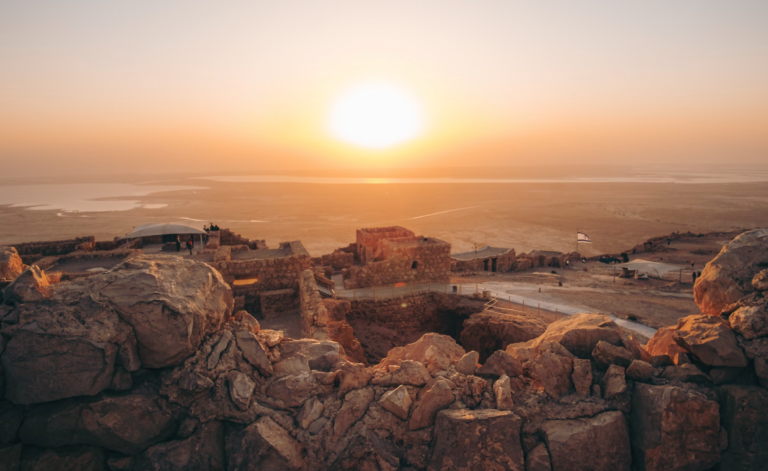
It’s down in the history books of legends. How could the Jews hold onto the fortress of Masada for years without food and water? According to the common myth, the Romans laid siege to the Dead Sea fortress of Masada for three long years. A new survey using advanced technologies indicates that the siege was probably a much quicker affair: more like weeks.
Researchers in Archaeology at Tel Aviv University used a range of modern technologies, including drones, remote sensing, and 3D digital modeling, to generate the first objective, quantified analysis of the Roman siege system at Masada.
Findings indicate that contrary to the widespread myth, the Roman army’s siege of Masada in 73 CE lasted no more than a few weeks.
The study was conducted by Guy Stiebel, together with Hai Ashkenazi to attempt a new understanding of what really happened at Masada. The paper was published in the Journal of Roman Archaeology.
Why the siege against the Jews started?
The First Jewish Revolt against the Romans started in 66 CE after years of political instability. One of the first acts in this war was the seizure of Masada from its Roman garrison by a group of Jewish rebels. At the beginning of the rebellion, the Jewish forces managed to defeat an army led by Cestius Gallus, the governor of Syria.
Masada circumvallation wall and its sections. (Drawing by H. Ashkenazi, Base Map after Netzer Reference Netzer1991, Plan A.)
Later, after suffering heavy losses in the field, and following the arrival in 67 CE of a second expedition led by Vespasian and his son Titus, the local militias usually avoided meeting the Roman forces in the field and took shelter in fortified towns and forts, most of which had been built during previous periods.
This led to a war characterized mainly by Roman siege warfare. Several years of careful Roman advance culminated in the siege of Jerusalem in 70 CE, and though the Romans faced bitter resistance from the city’s defenders, the city was conquered and destroyed within that same year.
About three years later, the Romans followed the remaining rebels to their last stronghold – Masada. The amount of effort invested by the Romans in chasing these last few hundred rebels to their final refuge in the middle of the desert may seem surprising.
Some researchers argue that it was done in order to completely assert Roman rule over the country, to send a message to other potential rebels, and to “restore the impression of Roman might”; others have recently claimed that the Romans’ aim was to protect the valuable Balsam (opobalsamum) perfume production center at the nearby oasis of Ein Gedi.
Masada legend lasted weeks, rather than years
The researchers used drones carrying remote sensors that provided precise, high-resolution measurements of the height, width, and length of all features of the siege system. This data was used to build an accurate 3D digital model, enabling exact calculation of the structures’ volume and how long it took to build them.
Researcher Stiebel says: “We use drones, remote sensing, and aerial photography to collect accurate high-resolution data from Masada and its environs, with special emphasis on three aspects: the water systems, the trails leading to and from the palatial fortress, and the Roman siege system.
“The collected information is used to build 3D digital models that provide us with a clear and precise image of the relevant terrains. In the current study we focused on the siege system, which, thanks to the remote location and desert climate, is the best-preserved Roman siege system in the world.”
Dr. Stiebel adds: “For many years, the prevailing theory that became a modern myth asserted that the Roman siege of Masada was a grueling three-year affair. In recent decades researchers have begun to challenge this notion, for various reasons. In this first-of-its kind study we examined the issue with modern technologies enabling precise objective measurements.”
Reliable estimates are available of the quantity of earth and stones a Roman soldier was able to move in one day, the researchers explain. Ashkenazi says: “We also know that approximately 6,000-8,000 soldiers participated in the siege of Masada. Thus, we were able to objectively calculate how long it took them to build the entire siege system – eight camps and a stone wall surrounding most of the site.
“We found that construction took merely about two weeks. Based on the ancient historical testimony it is clear that once the assault ramp was completed, the Romans launched a brutal attack, ultimately capturing the fortress within a few weeks at the most.
“This leads us to the conclusion that the entire siege of Masada lasted no more than several weeks.”
Says Stiebel: “The narrative of Masada, the Great Jewish Revolt, the siege, and the tragic end as related by Flavius Josephus, have all become part of Israeli DNA and the Zionist ethos, and are well known around the world. The duration of the siege is a major element in this narrative, suggesting that the glorious Roman army found it very difficult to take the fortress and crush its defenders.
“For many years it was assumed that the siege took three long years, but in recent decades researchers have begun to challenge this unfounded belief. In our first-of-its-kind study we used objective measurements and advanced technologies to clarify this issue with the first data-driven scientific answer.
“Based on our findings we argue that the Roman siege of Masada took a few weeks at the most. As empires throughout history have done, the Romans came, saw, and conquered, quickly and brutally quelling the uprising in this remote location.
“Our conclusion, however, detracts nothing from the importance of this historical event, and many baffling questions remain to be investigated.
“For example: Why did the Romans put so much effort into seizing this remote and seemingly unimportant fortress? To answer this and many other intriguing questions we have initiated a vast, innovative project in and around Masada … to ultimately shed new light on the old enigma: What really happened at Masada?”
According to Jewish tradition, all spiritual journeys begin by using our minds to keep their bodies healthy. As Maimonides explains, we become genuine people whenever we consciously focus our bodies’ actions toward a constructive purpose, such that no action is “an act of nothingness” (Introduction to Avos Chapter 5).
Once we’ve left nothingness and joined purposefulness, we’re card-carrying members of humankind: only then can we direct our actions toward wellness and wholeness of body, mind, and spirit. Then we progress to the purpose of all the purposes: knowing and emulating God.
It’s Always in the Body
Even when we’re busy with spiritual work, the body remains at the center of all the action:
When we’re immersed in Torah study, our brain holds our thoughts.
We pray with our mouths.
With our body’s actions, we emulate God’s ways and live according to His instructions: “All my bones will say: ‘No one is like You, God.’” (Psalms 35:10)
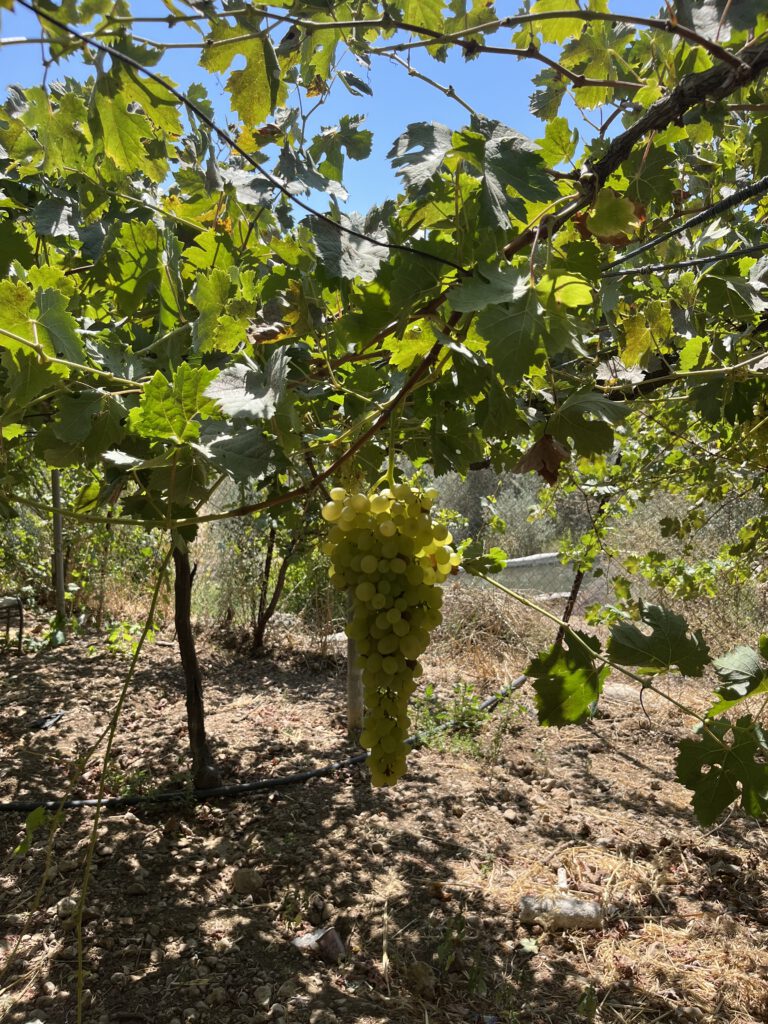
When we live according to God’s will, He blesses us with material prosperity: “I will give the rain of your land in its time… You will gather your grain, grapes, and olives.”(Deuteronomy 11:14)
Our path to God isn’t through the perfect wisdom of the soul but rather through striving to become better in our imperfect bodies.
This path takes us through the Land of Israel, the area of the world that Jewish tradition teaches is the body of the Jewish nation, as I explain in my new book,Land of Health: Israel’s War for Wellness.
As individuals, we find God when we are inside our individual physical bodies.
As a nation, we find God inside our collective body.
Comparing Lives
Let’s explore the parallels between these two lives: individual and national.
Individual Life
We become genuine people when our minds guide our actions toward health and wellness.
Once we’re purposeful people, we progress to seeking spiritual growth.
National Life
Israel’s national mission begins with caring for the Land of Israel: its earth, water, plants, and animals. Listen to King David’s prayer (quoted in the closing line of the Kuzari):
“Get up, have compassion on Zion… Because your servants want its stones, and its earth they seek.”(Psalms 102:14)
Then we find God in Israel by living here with His Torah:
“From Zion, Torah will go out and the word of God [will go out] from Jerusalem.” (Isaiah 2:3)
We appreciate and value our bodies, because they hold our personal “form of God.” We also appreciate and value the Land of Israel, because it holds the spirit of our nation.
The Valley of Elah, where David fought Goliath, viewed from a hilltop city dating back to that era.
How to Care for Israel
Am I suggesting that Jewish national life begins with environmental advocacy for this corner of the Middle East?
Exactly!
But only as the first step of a larger mission.
Cherishing and supporting Israel’s land and stopping there is like caring for our physical health as the final purpose of life.
Again, let’s look at the parallels between individual and national life:
Individual Life
Maimonides notes that living healthily in order to get more pleasure and prestige for more years isn’t very different from mindlessly chasing after unhealthy pleasures and prestige — it’s all the same selfishness. (Introduction to Avos 5; Laws of Character 3)
Therefore, healthy Jewish living aims to achieve a more meaningful purpose: enabling us to know and emulate God’s ways.
National Life
Caring for Israel’s land only to protect its beauty — or to escape antisemitism — isn’t very different from mindlessly building skyscrapers while ignoring their environmental imprint. It’s all the same materialism.
Therefore, the Land of Israel aims to achieve a more meaningful purpose: finding God’s Presence and living in the Land of Israel by God’s word. This is where the Jewish people have observed the Torah for millennia. Their stories are told in its beautiful hills, valleys, rivers, plants, and animals.
A healthy Jewish yearning for the Land of Israel begins with cherishing it — not only because he likes pretty views and interesting history but also because God dwells in those views and history.
This article is an excerpt from the author’s new book, Land of Health: Israel’s War for Wellness, which is now available here on Amazon and in Jewish bookstores all over the world.
About the Author:
Rabbi Shmuel Chaim Naiman is a Torah student, certified health counselor, and foraging guide. He lives in Ramat Bet Shemesh, Israel, where he teaches at Yeshivas Lev HaTorah. Check out healthyjew.org to subscribe to his weekly email newsletter, The Healthy Jew, and to book your foraging walk in Israel. Land of Health is available on Amazon.com and in your local Jewish bookstore.
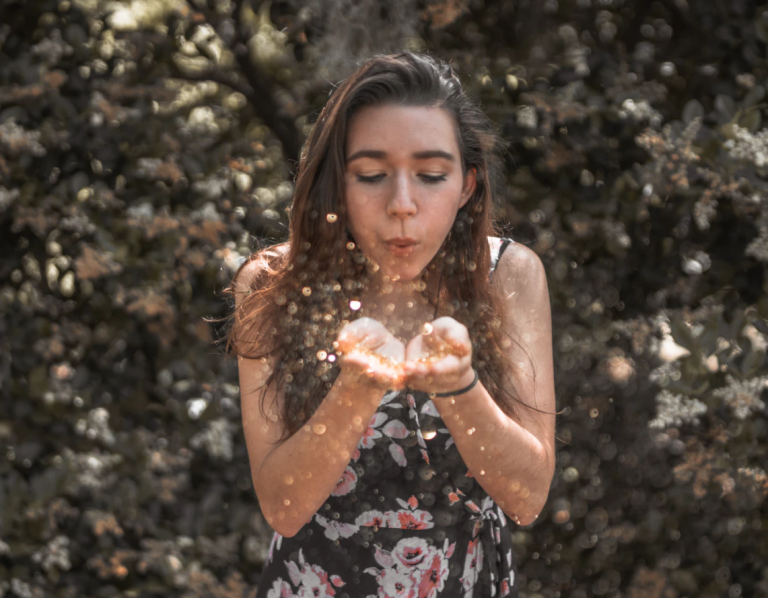
The gold dust bought at Walmart may make your graduation photo pretty. But one blow and it’s forever cycling as microplastics that will get into our lungs.
Girls exposed to certain endocrine-disrupting chemicals (EDCs) may be more likely to start puberty early, according to new research published in Endocrinology, the flagship basic science journal of the Endocrine Society.
EDCs mimic, block or interfere with hormones in the body’s endocrine system.
There has been an alarming trend toward early puberty in girls, suggesting the influence of chemicals in our environment. Early puberty is associated with an increased risk of psychosocial problems, obesity, diabetes, cardiovascular disease, and breast cancer.
“We conducted a comprehensive screen of 10,000 environmental compounds with extensive follow-up studies using human brain cells that control the reproductive axis, and our team identified several substances that may contribute to early puberty in girls,” said study author Natalie Shaw, M.D., M.M.Sc., of the National Institutes of Health’s (NIH) National Institute of Environmental Health Sciences (NIEHS) in Durham, N.C.
Look out for musk ambrette
Musk Ambrette listed as a problematic chemical for endocrine health
Those substances include musk ambrette, which is a fragrance used in some detergents, perfumes, and personal care products, and a group of medications called cholinergic agonists.
“More research is needed to confirm our findings,” noted Shaw. “But the ability of these compounds to stimulate key receptors in the hypothalamus — the gonadotropin-releasing hormone receptor [GnRHR] and the kisspeptin receptor [KISS1R] — raises the possibility that exposure may prematurely activate the reproductive axis in children.”
According to the research team, musk ambrette is potentially concerning because it can be found in personal care products, and some rat studies have suggested it can cross the blood-brain barrier.
Children are less likely to encounter cholinergic agonists in their daily lives.
Canadian and European regulations restrict musk ambrette use because of its potential toxicity, and the U.S. Food and Drug Administration removed the fragrance from its “generally recognized as safe” or GRAS list. Yet it is still available on the market in some personal care products.
“This study suggests that, out of an abundance of caution, it is important for parents to only use personal care products for their children that are federally regulated,” Shaw said.
As part of the study, the research team screened a Tox21 10,000-compound library of licensed pharmaceuticals, environmental chemicals and dietary supplements against a human cell line overexpressing GnRHR or KISS1R. They conducted follow-up analysis using human hypothalamic neurons and zebrafish, finding that musk ambrette increased the number of GnRH neurons and GnRH expression.
“Using human hypothalamic neurons and zebrafish provides an effective model for identifying environmental substances that stimulate the KISS1R and GnRHR,” said co-author Menghang Xia, Ph.D., from the National Center for Advancing Translational Sciences (NCATS) in Bethesda, Md., which is part of NIH. “This study was a multidisciplinary team effort, and it showed that we can efficiently reduce the time and cost of assessing environmental chemicals for their potential effects on human health.”
It developed out of the cannabis and medical marijuana industry, but now hydroponics is a good source of food in Bhutan.
Like millions around the world, Kinley Wangmo and her family were left without a source of income during the COVID-19 pandemic and subsequent lockdowns. Unlike most of the world, this Bhutanese mother found a livelihood solution in hydroponics farming, which involves growing plants in a special nutrient-rich water instead of using soil.
What began as a simple interest soon blossomed into a profound passion. She attended online trainings and saw that this innovative technique was also full of promise for addressing the challenges of food security and land fragmentation in her landlocked Himalayan homeland.
Hydroponics uses less water and is more productive than soil-based agriculture and can be carried out all year round. Though hydroponics can be expensive and difficult to install, all it requires at its most basic level is the plants, water, a container and a source of light.
To save on the cost of importing hydroponics systems, she learned extensively from international experts and customised their approaches for Bhutanese farmers.
Using her previous experience as a contractor, undertaking everything from plumbing to electrical jobs, Kinley, who also currently runs a hardware shop, leveraged her skills and self-taught know-how to build a hydroponics system using the deep flow technique, which catches and recycles water using pipes. The system is low-cost, efficient and made using readily available materials.
It’s also easy to maintain, making it accessible and practical for small-scale farmers in Bhutan’s rugged terrain.
Kinley started Bhutan Hydroponics in a small-scale greenhouse in the Changzamtok area of the capital, Thimphu, back in 2020.
In early 2024, Kinley was one of the 30 recipients of funding support from the Food and Agriculture Organization of the United Nations (FAO) as part of its Peri-urban and Urban Farming project in Bhutan, implemented by the Ministry of Agriculture and Livestock.
The project helped her with land development, equipment and materials for the farm, as well as seeds on a cost-sharing basis, and technical support with installing the greenhouses, garden structures, irrigation systems and digital equipment she needed for the venture.
Her vision is steadily taking shape with the establishment of three spacious greenhouses.
“The main benefit of hydroponics is that it helps plants and vegetables grow faster than traditional soil farming, and it takes up less space,” Kinley explains. “In a greenhouse, we can control everything to make sure the plants grow well.”
Kinley is keen to share her knowledge to help communities in Bhutan become more independent. “The pandemic showed us how important self-sufficiency is.”
She’s been a passionate advocate for increasing the use of hydroponics in the country, offering her expertise in setting up systems and selling her adapted hydroponics system at a cost that’s highly favourable compared with imported equipment.
About one-third of Bhutan’s population faces food insecurity. With shrinking, fragmented land holdings and many working-age adults moving from rural to urban areas, labor-intensive agriculture is becoming increasingly challenging.
The pandemic also showed the reliance of urban areas on food imported from abroad or from rural areas. In this, Bhutan’s Department of Agriculture has been pushing ahead with its strategy to promote urban farming.
Kinley also advocates for self-sufficiency and safe food in urban areas, like the capital in which she lives.
“In urban areas where food security is a pressing issue, I am dedicated to making freshly harvested, nutritious food accessible to everyone. Amidst busy lifestyles and the challenge of accessing quality food, we aim to reduce food waste and promote healthier eating habits,” says Kinley.
Bhutan’s economy relies heavily on agriculture, livestock and forests; this sector supports about 57 percent of the population. Even though the agriculture sector is growing in absolute terms, the share of the national Gross Domestic Product has been steadily decreasing due to rapid growth in other economic sectors.
On top of that, agricultural productivity is being undermined by an array of factors including urbanization and rapid development, crop damage by wild animals, land fragmentation, pests and diseases, rising temperatures and a shortage of agricultural inputs. As a result, Bhutan’s goals of food security and self-sufficiency are becoming harder to achieve.
FAO’s project is addressing these issues by helping to move crop production closer to consumers and meeting growing demand in urban areas while showcasing new technologies for transforming agrifood systems, as well as creating more jobs and income opportunities especially for women and young people.
Now, Kinley employs nine people, mostly single mothers and youth. Her current focus is on growing lettuce, which her team has harvested three times in five months and supplied to chain of hotels in the country. She currently grows two lettuce varieties and plans to cultivate three more types and recruit more staff in the future as her business continues to grow.
“Despite the challenges, I promote technology to inspire young people and women in agriculture because it’s simple,” Kinley says, adding that technology makes agriculture more appealing because it is less physically arduous and cleaner than conventional farming.
Since she expanded her business early this year, she has been selling lettuce and salads in the capital and nearby towns. She says that if she can further expand the business, she would be able to meet the rapidly growing market demand.
With her initiative full of innovative promise, Kinley is making an important contribution to the future of food, inspiring others and forging a new agricultural development model for Bhutan.
On January 1 the first day of the new year this year, I woke up with a very positive attitude, despite microplastics. Although we enjoyed the turn of the year night with friends until quite late, I chose to stick to my diet, not to drink alcohol, not to eat after 8pm, and of course, not to smoke. Having fun, does not require abusing my body, I thought, or putting my health at risk, after all.
So, this morning, I woke up without a hangover. Instead, I had a very positive and optimistic attitude. To the extent that I even went for a swim, despite the sea water cold, but extremely refreshing, temperature. In the clear blue waters, observing the fish and sun reflection on the sea bottom, among other things, I thought, well, about climate change. If climate change is here to stay for the next few decades (depends on us really), I wondered, instead of trying to fight it, why not make it our partner and make the most out of it?
For one thing, the weather is warmer, drier and more moderate. No extreme heat or cold during the year – with the exception of the summers, of course, which are heating up considerably, almost unbearably in many parts of the world. Also, not counting the days that some areas of the planet cope with extreme weather events and catastrophes.
According to National Oceanic and Atmospheric Administration is a Washington, DC global yearly surface temperature has been in the rise since the 1940s and the global average surface temperature has increased by 1 degree Celsius since pre-industrial era (1800 to 1900).
Temperature increases as global emissions of greenhouse gases also increase. According to 2022 Global Climate Report from NOAA National Center for Environmental Information, 2022 was the world’s 6th warmest year on record (1880 to 2022). Further, every month of 2022 ranked among the ten warmest for that month.
Therefore, in general, there is no doubt, that except for extreme weather events that will certainly affect the daily routine of many communities around the planet, in more frequency and intensity, we should expect warm weather and late winters.
With this moderate weather expected, people who travel south to warmer climates, don’t really need to travel anymore, as these areas are now more vulnerable to hurricanes or other extreme weather events due to rising temperatures. These people could choose to stay and enjoy the warm weather at home. That potentially cuts down considerable travel, primarily, air travel. It also brings people closer, as people don’t leave home but make more contacts in the neighborhood, and get to know their neighborhood better.
Cutting down on travel – air or land – may be a considerable intervention to reduce emissions as, according to scientists, they affect the rising temperatures.
According to the US Environmental Protection Agency, 65% of global GHG emissions come from carbon dioxide from burning fossil fuels and industrial processes. Transportation was responsible in 2010 for 15% of global GHG emissions, including road, rail, air and marine transportation. They rely by 95% on petroleum-based fuels. Even electric vehicles that charge from the grid, most of that electricity, in most cities, comes from burning fossil fuels. According to NOAA, in 2022, global average carbon dioxide set a new record high reaching 417.06 parts per million. Nearly 50% higher than the average before the Industrial Revolution.
The moderate weather is also encouraging more physical activity outdoors. More walking and biking for local commute and travel of short distances. No need to take the car. Walking and biking encourages more physical exercise, which pollutes less and builds a healthier body. Being healthier, also means, less visits to the doctors, and less need for medication.
Let’s start placemaking, making cities safer for walking
The benefits are obvious. Once in a routine of physical exercise, then more benefits come. Like, walking longer distances, getting to know your local neighbors and shops, stop and talk to people, get more accustomed to where you live.
Become, what Jane Jacobs used to call, the ‘eyes of the street’. The benefits are again obvious. More people walking the streets, less crime on the streets, more local businesses, less need for travel longer distances. More people on the streets of the neighborhood, more urban furniture and public interventions can take place by the community through Placemaking. Therefore, we can grow better neighborhoods and more resilient communities.
According to the World Health Organization all physical activity counts. It can be done as part of work, sport and leisure or transport (walking, wheeling and cycling), preferably on a daily basis. On the other hand, too much sedentary behavior can be unhealthy.
It increases the risk of heart disease, cancer, and type-2 diabetes. According to the WHO guidelines on physical activity and sedentary behavior, 150 to 300 of physical activity per week and 60-minutes moderate aerobic physical activity per day, offers significant health benefits and mitigate health risks for children, adolescents, adults and older adults. The Guidelines ‘At a Glance’ can be a great handbook to start changing habits this new year.
Moderate weather also cuts down the need for more clothing. Which, reduces our need to shop more, either online or in shops, cutting down on travel emissions for us, and considerable emissions from the production and delivery of products from one end of the globe to another.
Skateboarding in Australia where the weather is always great.
Changing our attitude and habits, will also send a new message to the clothing industry to cut down on (over) production and perhaps focus on quality and endurance of products with less synthetic materials, which also pollute our air and water. Rather than spend more to increase production and then try to sell.
According to a report by the BBC, the fashion industry is responsible for 8-10% of global emissions, as new fashion trends aim for fast fashion, and cheap, mass-produced clothing with new lines being released constantly. GHG emissions are not the only impact of clothing over-production and over-consumption on the planet. Cotton for the fashion industry uses about 2.5% of world’s farmland. Synthetic materials, such as polyester, require up to 342 million barrels of oil annually.
Washing polyester clothes releases microfibers that contribute by more than 30% to global microplastics pollution. Dying of clothes requires 43 million tons of chemicals annually. Clothing production also uses a lot of water. A t-shirt, for example, requires 2,700 litres of water and a pair of jeans 10,000 litres of water. The list goes on.
At work, moderate weather allows people to be outdoors more. To walk, or bike to work. Also, to even open a window at the office – if operable windows are available – increasing natural ventilation and refreshing indoor air. As a result, productivity increases at work, and allows people to leave work on time, and spend more free time outdoors, with family and friends, enjoying the good weather in the neighborhood.
According to the World Green Building Council, staff costs, including salaries and benefits, typically account for about 90% of business operating costs. Therefore, increasing air quality at work may appear a modest improvement in employee health or productivity. However, it can have a significant financial benefit for employers.
Often more, than any other financial savings associated with efficiently designing and operating an office building. Improving indoor air quality (IAQ) through high ventilation rates and low concentrations of CO2 and pollutants, may improve productivity by 8-11%.
At home, more sunshine days means we can solar heat water for showers, without consuming energy. Also, if we have south facing windows, we can passive solar heat the living space from the sun. We can also use the warm outdoor air to refresh and ventilate our home indoor air by opening windows, without the need for a mechanical system and without consuming energy.
Is your hot water warmed by the sun?
Moderate weather also encourages less need for heating, therefore less emissions from burning fossil fuels. Also, moderate weather encourages more outdoor activity. More engagement with the outdoors, may lead perhaps to adopting new habits, such as gardening and growing our own vegetables and managing our organic waste in a composter in our garden. The benefits are obvious, considering the pollution and land appropriation for landfills, the pollution from emissions and particles in the air from garbage truck traffic in our neighborhood streets, not to mention noise and the potential for traffic jams and accidents. Also consider how we contribute in reducing the chemicals harming the rivers and lakes from industrially produced fertilizers (remember ‘The Silent Spring’?). Organic fertilizers will benefit our garden, our neighborhood and our city. And of course, the nearest river or lake or sea.
According to the US Department of Energy solar water heaters can be a cost-effective way to generate hot water for home use. They can be used in any climate and the only fuel they use, sunshine, is free. They also have some smart suggestions about further energy-saving strategies to lower heating bills, if a back-up system is required. As a matter of fact, some hotels are not only heating water for showers from the sun, but also heating pools and heat water for the kitchen, from solar systems.
According to the University of Georgia, a well-tended, fruitful garden can supply a family with a variety of nutritious, healthful fresh vegetables. Gardening can be a rewarding hobby, and a way to improve physical fitness. Fresh garden vegetables can supplement quality fresh, frozen or canned vegetables of bought food at the local market, or supermarket.
A food composter that is rolled by kids as a game
Composting is nature’s way of recycling. Many cities around the world encourage citizens to compost and provide the infrastructure for individual or municipal composting. According to the US Environmental Protection Agency composting is one of the most powerful actions one can take to reduce trash, address climate change, and build healthy soil. By turning food scraps and yard trim into compost, we transform our waste streams into a beneficial, value-added soil amendment and use it to protect the environment and create resilient communities.
Having a composter at home involves minimal effort, equipment, expense, and expertise and can be fun. You benefit by building healthier soil, preventing soil erosion, conserving water, and improving plant growth in your garden and yard. If you wish to compost but you lack the space, it is possible to join local municipal or community composting programs. It is worth finding out and start composting!
A more moderate weather, may also change our psychology, and make us more contemplative and aware of nature around us. Perhaps this will make us also more attuned to the surrounding ecology and more sensitive to our daily routine. To be more balanced, more accommodating to other people, and perhaps running our lives with more intention. Be more present and appreciative of the ‘now’, enjoy, respect, and honor the ‘now’ and the good that it has inherently, even if we are obliged to deal with a crisis or a problem. Because, like the climate crisis, every crisis has its inherent solution built-in its DNA. This is where we need to focus and find the positive in the negative.
Obviously, there is a lot more to be done to address the climate crisis. But, walking on the moon took one first step. Walking the talk, will lead to more appetite for more, and more initiatives will be born. Once we are in the ‘solution’ – rather than the ‘problem’ – mindset, the rest will follow. Once we tackle the low-hanging fruits, it is easy to come up with more solutions. Solutions that do not require investing in expensive and complicated technologies. The solutions are simple, and inherent in us. We don’t need more to solve the crisis.
So, join me in closing this year with the right foot(print) and the right attitude for our lives, our loved-ones and for the planet.
——————–
Elias Messinas a Yale-educated architect, urban planner and author, creator of ECOWEEK and Senior Lecturer at the Design Faculty of HIT, where he teaches sustainable design and coordinates the EU Horizon program SINCERE, which aims to optimize the carbon footprint of cultural heritage buildings, through innovative, sustainable, and cost-effective restoration materials and practices, energy harvesting, ICT tools and socially innovative approaches. www.ecoama.com and www.ecoweek.org
Muslim women learn how to raise bees using the biodynamic method.
Beekeepers are setting up hives in a neighborhood near you, but most will just be part of the conventional system which use the same tools that may have contributed to the decline of bees in the first place. Biodynamic beekeepers are different, using a more nature-centered approach: they oppose moving hives for pollination, mass harvesting honey, and killing and replacing the queen every year. They open the hive when the moon is right, and use natural medicine like chamomile tea to treat the hives.
I first learned about biodynamic beekeeping in Israel from Yossi Oud, who studied the Rudolf Steiner methods of beekeeping via German colleagues.
With 24,000 species of bees in the world, Israel is home to about 1,300 species, compared to a total of 600 species in a country as large as Canada, says Oud, an Israeli beekeeper and teacher who works with biodynamic beekeeping methods. He says Israel is unusually rich in bee species, and this is due in part to the country’s plant diversity. I took a course with him and visited his biodynamic hives on the roof of Tel Aviv’s mall, Dizengoff Center, and at his bee farm outside Jerusalem.
“Israel is the land of milk and honeybees, and a special area and hotspot for animals, plants and bees,” says Oud. “Of the 1,300 species of bees in Israel, 8 of them are social bees,” he tells Green Prophet.
The local bee for the most part, which is the Syrian bee, is extinct, he notes. This is an aggressive bee which has been replaced by an imported Italian bee which is now common in wild hives, urban hives and in commercial hives. The Italian bees were brought to Israel in the 1930s to support the vineyards, he says.
Because there is such a wide diversity of plants in Israel, he stresses, this is reflected by the large range of bee species. It all goes together.
Natural and urban beehives on the roof of Tel Aviv’s Dizengoff Center
What makes the honey bee different from other bees is the honey stomach which creates honey and which is also 95% of their diet, says Oud, noting that people and honeybees have had a strong connection for thousands of years as seen in cave art in France that depicts a kind of bee agriculture. Bees were also domesticated in ancient Egypt.
Honey is a magical elixir. Mystical even. And our love for it goes way back to the earliest signs of advanced civilization, he notes.
Urban beekeepers collecting honeybee honey in Jaffa, Israel. Image by Karin Kloosterman for Green Prophet
Bees and Islam
ystically, all major world religions have a connection to bees, and Islam is no exception: “In the Quran, Chapter 16 is named after the bees” says Oud who is Jewish but who works with Muslim and Christian Palestinians to help them learn the trade of beekeeping in a project called Bees for Peace.
Why is there an entire chapter on the bees in the Quran, The Bee?
Islam and the bees: Be like a bee
Within the chapter, two verses cover the essence of the honeybee:
And your Lord inspired the bee: build homes in mountains and trees, and in (the hives) they build for you.
Then eat from all the fruits, following the design of your Lord, precisely.
The Bee (Arabic: النحل; an-nahl) is the 16th chapter (sūrah) of the Qur’an with 128 verses. It is named after the honey bees mentioned in verse 68, and contains a comparison of the industry and adaptability of honey bees with the industry of man.
An-Nahl, Chapter 16 (verses 68 to 69) talks about a variety of topics, but Allah, according to Muslims, specifically chose the title The Bee to catch the attention of the readers. Bees are said to be Allah’s miracles; the way they function and how they behave, are to be held as an example.
Yossi Oud teaching a biodynamic beekeeping class, Tel Aviv
According to some Islamic traditions, everyone needs a sheep and bees to ensure prosperity for the coming year.
In Judaism, the bee is not kosher but you can eat its honey, which is a rare ruling as you can’t drink milk from a non-kosher animal such as a camel. Deborah (Dvora in Hebrew), who was a prophet, is also associated with bees. Dvora means bee in Hebrew.
In the Bible, honey is mentioned 61 times and its meaning is often linked with prosperity and abundance. In the third chapter of Exodus, when God called Moses to lead the slaves out of Egypt, he called him to lead them to a land that will flow with milk and honey. This is the land of modern day Israel.
In the Song of Songs of the Old Testament (4:11-16): “Your lips, my beloved and (promised) bride, drip honey as the honeycomb; Honey and milk are under your tongue, And the fragrance of your garments is like the fragrance of Lebanon.”
Honey is a ritual food eaten during the Hebrew holiday called Rosh Hashanah, which celebrates the Jewish New Year. “May you have a sweet year,” is a common blessing as people eat apples dipped in honey.
A natural hive made from mud for the bees
What is biodynamic beekeeping?
To further the understanding of biodynamic beekeeping, we are to view the colony as one creature, explains Oud. What does the hive know? For most of us it’s a mystery but we do know that each worker female lives about 6 weeks, there is one queen and a small percentage of male drones.
The biodynamic queen lives for 6 or 7 years, and the worker bee has about 16 jobs, among which is making propolis, the immune system of the hive, which is collected from tree resin, says Oud.
Ayelet at Kibbutz Nir Galim sells beekeeping gear and supplies for urban beekeepers in Israel.
The job of the male drones? While they might look like loafers who can’t even feed themselves, male bees bring genetic diversity from one hive to another on their travels,, says Oud. They mate with the the new emergent queen once a year in the spring when she flies out of the hive, and the rest of the colony follows her in a swarm to establish a new colony.. And that is how bees give birth, according to biodynamic beekeeping. The old queen stays in the hive and raises her new brood after the rest have left.
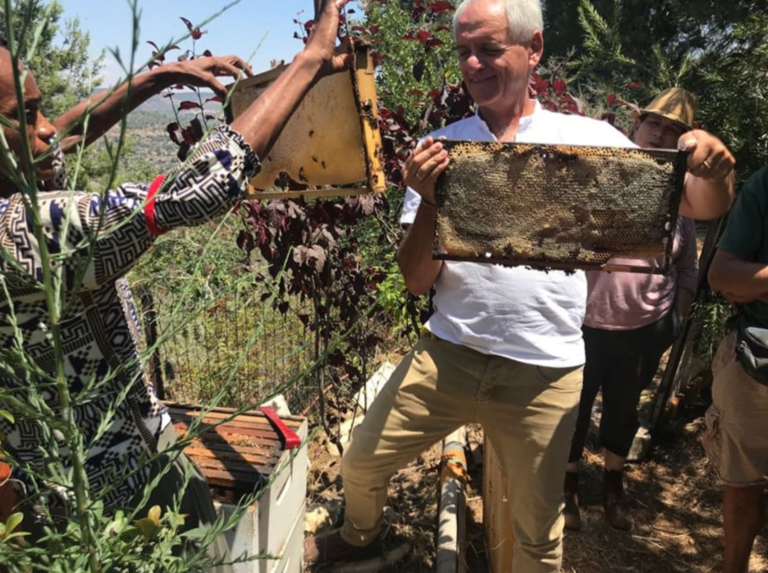
Bees give so much sweetness in life and health as well, but they can be credited for bringing people together in the Middle East when politicians fail. Oud has started a number of educational programs in Israel including Bees for Peace where he teaches Muslim woman how to be urban beekeepers. is your honey real or fake? “When people learn to work for the bees’ welfare, much sensitivity and gentleness is developed, and that could translate into our daily life. In this way the bees teach us to act for society, to live in co-existence, let go of stigmas, and help us get closer to ourselves, others, the land and the world,” says Oud.
Oud started Bees for Peace to join hearts and create cooperation between Christians, Muslims and Jews, Palestinians, Israelis and Jordanians. The initiative helps build bridges through the bio-dynamic bee keeping method in multiple constellations – amongst kids in schools, through courses and activities for adults coming from different sectors and cultures and in diverse joint initiatives.
Biodynamic is a term developed inside the teachings of anthroposophy, developed by the spiritualist and educator Rudolph Steiner from Austria in the early 1900s. There is dozens of Steiner schools in Israel, also known as Waldorf Schools, and Oud comes from that education system as an educator and teacher. There is even a biodynamic farm in Egypt called Sekem.
Bees for Peace emphasizes empowerment of women from “traditional houses” (whether Muslim, religious Jewish or other disempowered populations), who usually don’t go out of the house to work. They learn the art of beekeeping on their rooftop or from their garden and can make a small income from honey, beauty products, or other products derived from the wax of the hive.
The conflict between Israel and the Hezbollah group in Lebanon has made it difficult for women in northern communities to tend their hives. Many hives have died says Oud, and I spoke with one Muslim woman who says she misses her hives like her family. She was staying at a hotel in Nazareth, unable to live in her village in the north as its constantly being bombarded by missiles.
The Marj Ibn Amer Almond project in the Jezreel Valley trained Israeli and Palestinian women to grow bees by the biodynamic method, in order to increase the number of bee hives in the area, to enhance the women’s involvement in the almond agriculture and to increase the almond yield, especially in light of the decreasing numbers of bees in the area and in the world.
The project was carried out by the El-Hukayer organization, an NGO dedicated to socio-economic development within Palestinian society in Israel.
Palestinian beekeepers on a roof in Jerusalem. Honey women, via Haaretz
Tlmei Achva is an educational agricultural farm in the city of Lod, for Muslim-Jewish kids and teenagers, secular and religious, where they work and grow bees together.
There is an urban beekeeping farming project in the city center of Jerusalem.
There is a biodynamic beekeeping course at Ecome center and in the city of Jericho, West Bank. The NGO works to empower Ethiopian women through growing bees and building traditional Ethiopian bee hives.
The Honey Women of East Jerusalem is a project in collaboration with the Sinsila Center and the Mosella Association.
Have a swarm? Call SOS for the Bees. Locals who find a swarm or an unwanted hive should not use poison to kill them.
SOS for the Bees is a volunteer-run group that collects swarms and re-homes hives. In Hebrew, it is Magen D’vorim Adom. You can call Yossi Oud and his team of volunteers will run to collect the bees.
Abu Dhabi’s Barakah Nuclear Energy Plant is lated to produce 40 terawatt-hours of electricity every year now that its fourth and final reactor has started running, announced the state-owned Emirates Nuclear Energy Corporation (ENEC). The reactor was built by Korea.
The nuclear plant will generate 25 percent of the electricity needs of the hot, desert Gulf state, where everyone has their air-conditioning firing at full blast most of the year. The air con needs are nearly the equivalent of New Zealand’s annual consumption, the ENEC said.
The nuclear power plant will power the Abu Dhabi National Oil Company (ADNOC), one of the world’s biggest oil producers, and Emirates Steel and Emirates Global Aluminium, ENEC said.
Barakah, which means “blessing” in Arabic. It started operations in 2020.
Emirati President Sheikh Mohamed bin Zayed Al Nahyan hailed Barakah’s completion as a “significant step on the journey towards net zero”.
“We will continue to prioritise energy security and sustainability for the benefit of our nation and our people today and tomorrow,” he said on X.
According to the International Atomic Energy Agency, the plant “will have to be disassembled at the end of its useful life, in around 60 to 80 years”.
The UAE was built on oil and is one of the largest oil producers in the OPEC cartel.
Last year, it hosted the COP28 UN climate talks which resulted in an agreement to “transition away” from fossil fuels. Not all environmentalists agree that nuclear energy is clean energy die to the risks.
The new discovery from TAU may lead to future practical applications, such as UVB treatments for sexual hormone disorders. The breakthrough opens up for further discoveries in basic science, “As humans, we have no fur, and our skin is thus directly exposed to sunlight. We are only beginning to understand what this exposure does to us, and the key roles it might play in various physiological and behavioral processes. It’s only the tip of the iceberg,” says Prof. Carmit Levy Tel Aviv University who led the study.
Researchers have found that exposure to ultraviolet radiation from sunlight enhances romantic passion in humans. In the study, men and women were exposed to UVB (ultraviolet radiation type B) under controlled conditions, and the findings were unequivocal: increased levels of romantic passion in both genders.
Sun + Skin = Love
The study revealed that exposure to sunlight affects the regulation of the endocrine system responsible for the release of sexual hormones in humans. The discovery may lead to practical applications down the line, such as UVB treatments for sexual hormone disorders.
In animal models, the effect was dramatic: the females’ hormone levels rose significantly, enlarging their ovaries and prolonging their mating season; the attraction between males and females increased; and both were more willing to engage in sexual intercourse.
The researchers repeated the experiment on the animal model, this time removing from the skin a protein called p53, which identifies DNA damage and activates pigmentation during exposure to sunlight as protection against its adverse effects. The removal of the protein eliminated the effect of UVB exposure on the animals’ sexual behavior, convincing the researchers that exposure to radiation through the skin was the cause of the observed hormonal, physiological and behavioral changes, and that the protective system is also responsible for the regulation of sexuality.
Furless Humans and Sun Exposure
In the 32 human subjects of the study, all treated with UVB phototherapy at the Tel Aviv Sourasky (Ichilov) and Assuta Medical Centers, both genders exhibited a rise in romantic passion, and males also noted an increase in levels of aggression.
Similar results were found when the subjects were asked to avoid sunlight for two days, and then tan themselves for approximately 25 minutes. Blood tests revealed that exposure to sunlight resulted in a higher release of hormones like testosterone compared to one day before exposure. A rise in testosterone in males during the summer was also found in analyses of data from the Israeli health maintenance organizations Clalit and Maccabi Health Services.
Prof. Carmit Levy (on the left) & PhD student Roma Parikh.
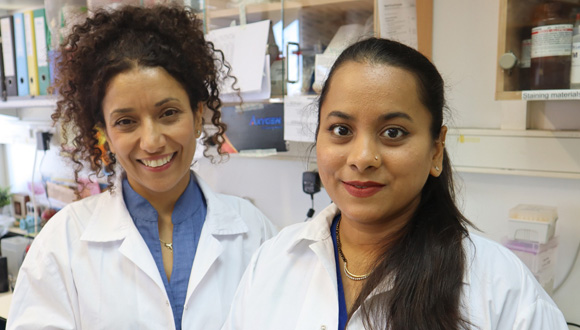
The study was led by PhD student Roma Parikh and Ashchar Sorek from the laboratory of Prof. Levy. UVB phototherapy was administered to the subjects at the Tel Aviv Sourasky (Ichilov) and Assuta Medical Centers. The groundbreaking discovery was published as a cover story in the prestigious scientific journal Cell Reports.
The cost effectiveness of wind farms could be significantly improved by reducing the speed of wind turbines that are clustered together, which could improve their longevity and also reduce noise pollution. A team of researchers from the University of Adelaide led by Dr Rey Chin looked at the operation conditions of wind turbines, investigated those conditions relative to power output and performance, and how turbines interact with each other.
“We have found that the efficiency of wind turbines arranged in wind farms in which turbines are clustered together can be improved by reducing the rotational speed of wind turbines at the front of the group,” said Dr Chin, Senior Lecturer, School of Electrical and Mechanical Engineering, University of Adelaide.
“The power extracted from the wind turbine behind the first is significantly less – up to 30 per cent of the turbine in front of it – because of the effect that the wake has.
“By reducing the rotational speed of the leading turbines, the speed of the ones behind can be increased so that all the turbines in a group spin at the same speed.
Al Marmoom Wind Farm
“This might have a small impact on the total energy generated by wind farms, but this is outweighed by important benefits, some of which are hidden but some, such as reduced noise pollution, are more obvious.”
There are currently 110 wind farms operating across all Australian states and territories of which 31 wind farms, comprising a total of 599 turbines, are more than 15 years old. A wind farm typically has a nominal design life of 20 to 30 years, though some wind farms are now designed for a minimum operating life of 30 years.
Wind turbines cost approximately AUD $7 million each to build and cost around half a million dollars to decommission.
“Up until now, wind turbine technology has been implemented quickly without much consideration for end-of-life planning,” said Dr Chin.
“Wear and tear on a turbine can be significantly reduced by slowing down its rotational speed and will increase its longevity and improve their cost effectiveness.
“Turbines are currently over-designed. By optimising the performance of individual turbines clustered together the design and manufacturing process that goes into making turbines can be simplified and with significant cost savings.”
“Noise pollution is the most significant negative aspect of wind farms and is often cited in opposition to proposed new farms,” said Dr Chin.
“Reducing the noise that farms make by minimising the rotational speed of wind turbines makes this important source of green energy more acceptable for people living nearby.”
The team’s findings will be of great use for the wind farm industry to more carefully plan future farms using more accurate business case analyses.
Valley fever is an emerging fungal disease in the western United States that most often causes flu-like symptoms, but can also cause dangerous or even deadly complications.
By analyzing data on reported cases of Valley fever in California, which have increased dramatically over the last two decades, researchers from University of California San Diego and University of California, Berkeley, have identified seasonal patterns that could help individuals and public health officials better prepare for future surges in Valley fever cases.
The findings also have important implications for how the changing climate can exacerbate the threat of infectious diseases. The findings are published in The Lancet Regional Health – Americas.
The researchers collaborated closely with the California Department of Health (CDPH) to analyze all reported Valley fever cases in California from 2000 to 2021. By comparing these to seasonal climate data, they discovered how the disease cycles seasonally across different California counties and identified how these cycles are influenced by drought periods.
The researchers found that while most cases occur during the period from September to November, there were differences in seasonal patterns and timing between counties and years.
“Most seasonal infectious diseases show a peak in cases every year, so we were surprised to see that there were certain years during which few or no counties had a seasonal peak in Valley fever cases,” said author Alexandra Heaney. “This made us wonder what was driving these differences in seasonality between years, and based on the timing we observed, we hypothesized that drought might be playing a role.”
The researchers found that on average, counties in the San Joaquin Valley and Central Coast regions had the most pronounced seasonal peaks, though the peaks started earlier in San Joaquin Valley.
“This is valuable information to time public health messaging aimed at educating the public about the symptoms of Valley fever and how to protect themselves,” added Heaney.
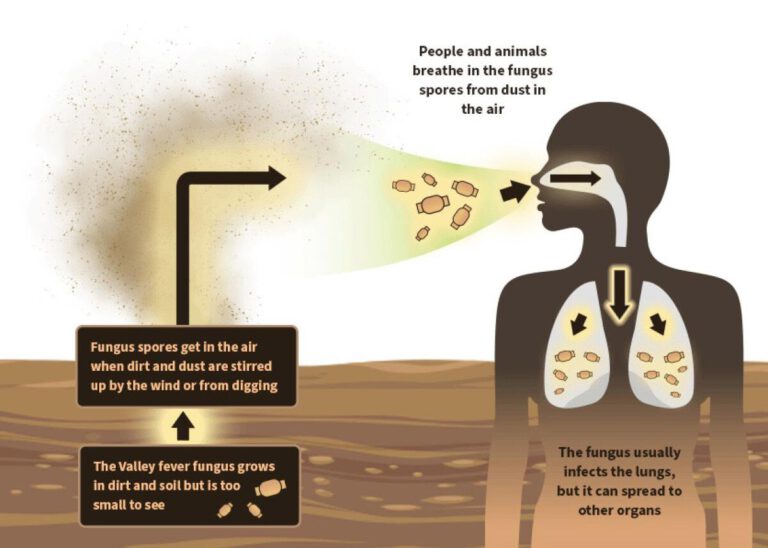
Valley fever is caused by spores from the soil-dwelling Coccidioides fungus. People contract Valley fever by inhaling infectious spores that become aerosolized when the soil is disturbed by wind or human activity. Valley fever is most likely to affect people who are exposed to airborne dust frequently, including those who work outdoors. However, the disease is not contagious.
Valley fever has long been a problem in the American Southwest, but the number of cases has skyrocketed in recent years, tripling from 2014–2018 and again from 2018–2022, according to the CDPH. However, because it is still relatively rare, and because it causes similar symptoms to other respiratory infections, including COVID-19, Valley fever is often misdiagnosed.
When left untreated, the fungus can cause severe damage to the respiratory system and spread to other parts of the body, such as the skin, bones and even the brain, the latter of which can be deadly.
“Knowing when the Valley fever season starts and how intense it will be can help health care practitioners know when they should be on high alert for new cases,” said corresponding author Justin Remais. “This is the first study to pin down exactly when disease risk is highest in all of California’s endemic counties, as well as places where the disease is newly emerging.”
The researchers observed that during drought periods, seasonal peaks in Valley fever cases are less severe. However, when the rains return, these peaks are particularly high. One hypothesis to explain this pattern is that droughts allow heat-resistant Coccidioides spores to outlast their less-hardy competitors. When rains return, the fungus is able to proliferate widely with less competition for moisture and nutrients.
Another hypothesis suggests that the links between Valley fever and drought may be due to drought’s impact on rodents that host the Coccidioides fungus. Because rodent populations decline during droughts, and because dead rodents are thought to be an important source of nutrients for the fungus, it may be able to survive and spread more easily in drought conditions.
“This work is an important example of how infectious diseases are influenced by climate conditions,” said Heaney. “Even though droughts appear to decrease Valley fever cases in the short term, the net effect is an increase in cases over time, particularly as we experience more frequent and severe droughts due to climate change.”
Individuals can help protect themselves against Valley fever during dry and dusty periods by minimizing time outdoors and wearing face coverings that can block dust. The researchers also emphasize the need for more thorough monitoring of the Valley fever fungus, which can be difficult to detect.
The team is now expanding the range of their analyses to include other Valley fever hotspots in the United States.
“Arizona is much dustier than California and has very different climate dynamics, and about two thirds of cases in the United States occur in Arizona, so that’s where we’re looking next,” said Heaney. “Understanding where, when, and in what conditions Valley fever is most prevalent is critical for public health officials, physicians, and the public to take precautions during periods of increased risk.”

























 is your honey real or fake? “When people learn to work for the bees’ welfare, much sensitivity and gentleness is developed, and that could translate into our daily life. In this way the bees teach us to act for society, to live in co-existence, let go of stigmas, and help us get closer to ourselves, others, the land and the world,” says Oud.