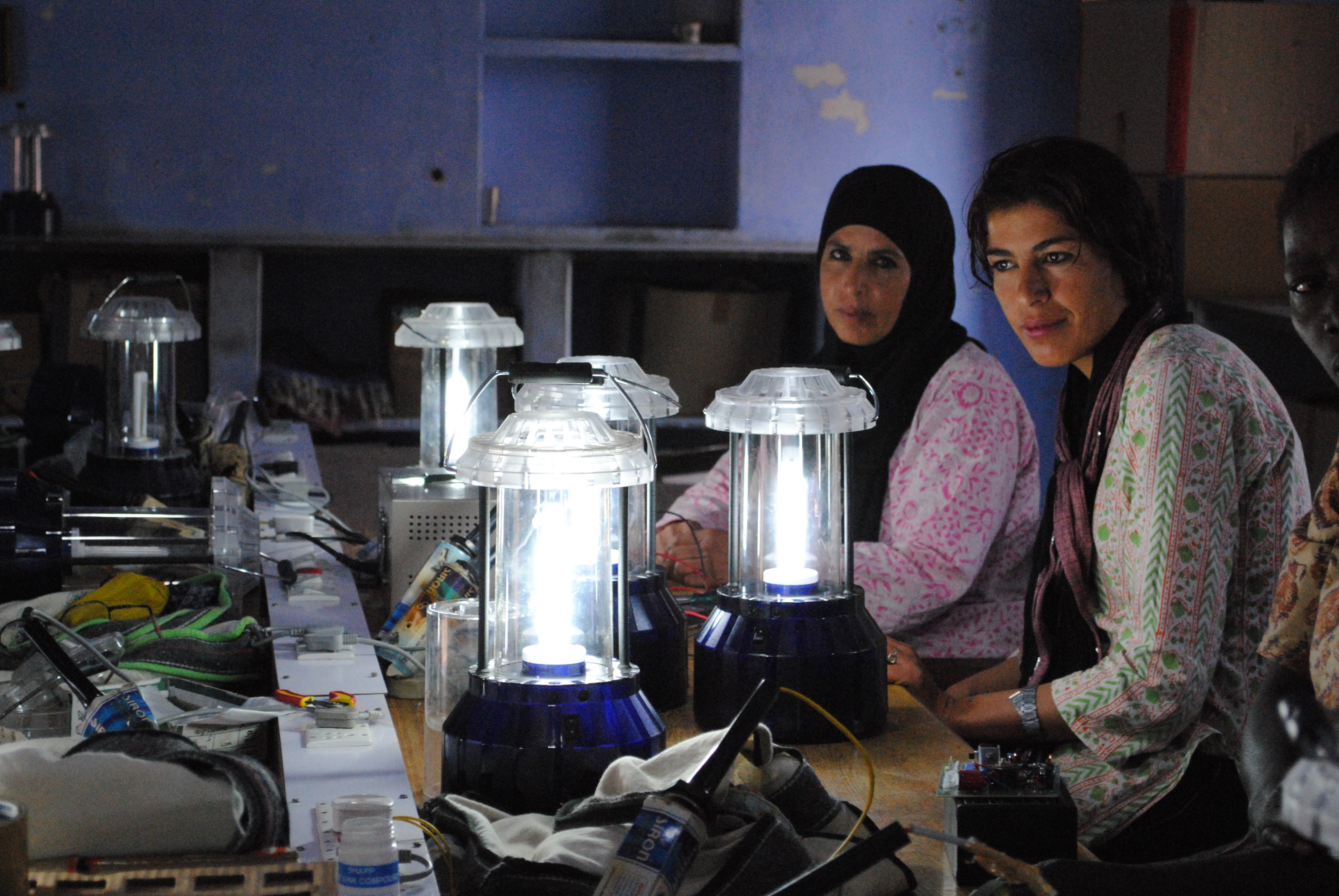
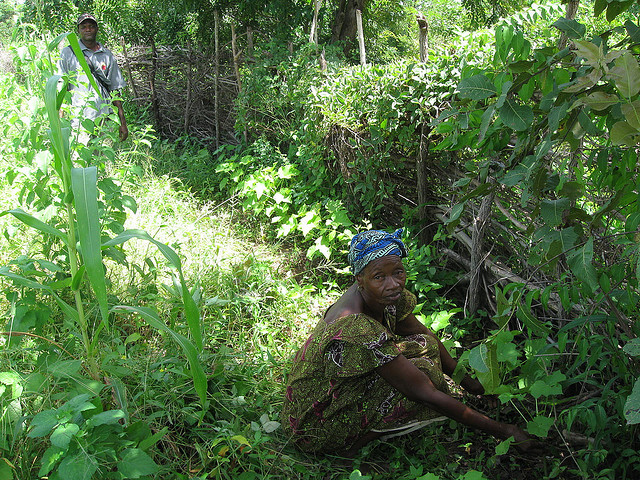
Green Prophet reporter Arwa speaks to Rafi’a Abdul Hamid, a woman from the deserts of Jordan who has been trained as a solar engineer to help bring clean electricity to her poor village
For many living in the harsh and desolate deserts of south Jordan, life without electricity is the norm. Either the infrastructure which provides electricity doesn’t reach them or they simply don’t have the money to afford it. However, all that looks set to change as two women bring to light the advantages of solar energy.
Two Jordanian Bedouin women have recently returned from a six-month course at a unique college in India where they were trained as solar engineers. The two women, who are illiterate and have never been employed, were carefully selected by the elders in the village to attend the course at Barefoot college in India which helps poor rural communities become more sustainable.
Three Jordanian villagers returned this week from training at the Barefoot College in India (Petra photo).
Here’s a heartwarming story published in the Jordan Times yesterday that can distract us for a few moments from the human and environmental catastrophe in Japan: A new grassroots program in Jordan aims to bring solar power to rural areas.
While the Israeli-Palestinian Comet-ME partnership is similarly installing solar and wind technology in impoverished Palestinian villages in the Hebron hills, Jordan’s program is unique in that it will be led by three local residents who received six months of training in solar power technology at the Barefoot College in India, a college that only accepts people from remote areas across the world.
Is now a good time to announce uranium sales to an unstable region like the Middle East?
At a time when many nations are sharply curtailing nuclear power plans in response to the Japanese nuclear crisis, Australia’s government is formalizing the first steps towards selling uranium to the United Arab Emirates, in a deal being negotiated by former Prime Minister Kevin Rudd, who is now Foreign Affairs Minister. Australia provides 20 percent of the world’s uranium supplies for nuclear power, including the plants now in meltdown in Japan – which will now no longer need supplies of uranium.
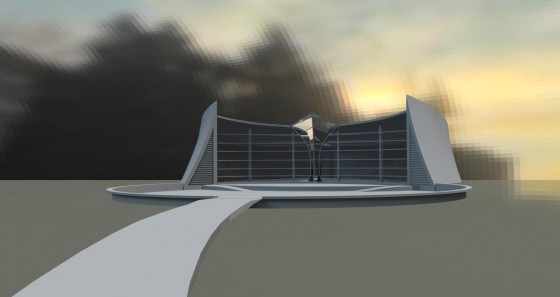
This beautiful temple of light creates a subliminal healing effect for distraught visitors as soon as they enter its doors.
Goodness knows we could use a little healing. Japanese residents are faced with a potential nuclear meltdown, the consequences of which are almost too horrible to imagine. Libyans are experiencing untold suffering as one man struggles to hold on to power, and natural disasters are taking an increasingly high toll everywhere. To understand such seeming senselessness, human beings have historically looked to their gods. But Dodeca Architects, South African designers of the Temple Of Light encourage us to seek our solace elsewhere, from the source of all things. From Nature.
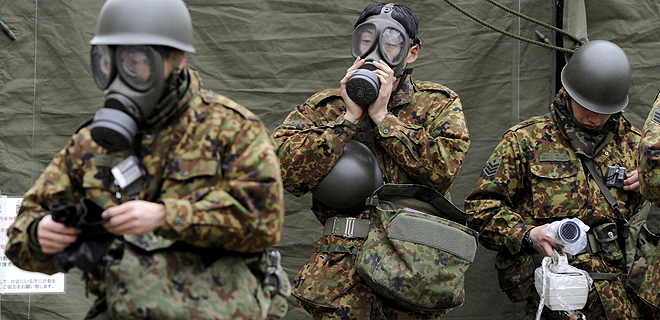
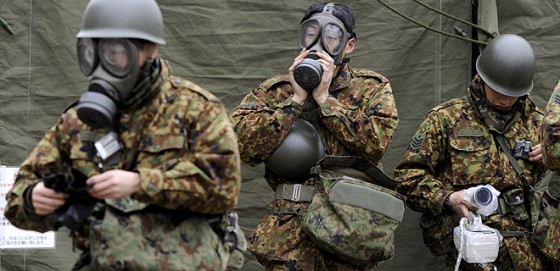
Japanese soldiers prepare for the worst. The China Syndrome? Is the worst yet to come?
Radiation from damaged reactor cores at Japan’s Fukushima Diiachi nuclear power plant now appear to be reaching dangerous proportions according to statements being issued by governmental authorities and assessments being made by nuclear energy safety analysts. Some experts in Israel say the Japanese aren’t disclosing the nature of the exposed radiation due to shame. The nuclear facilities at both the Fukushima Diiachi and Fukushima Diani, were both damaged when a giant earthquake and resulting tsunami tidal waves overflowed the protective barriers and flooded equipment vital in keeping the reactor core fuel rods cool.
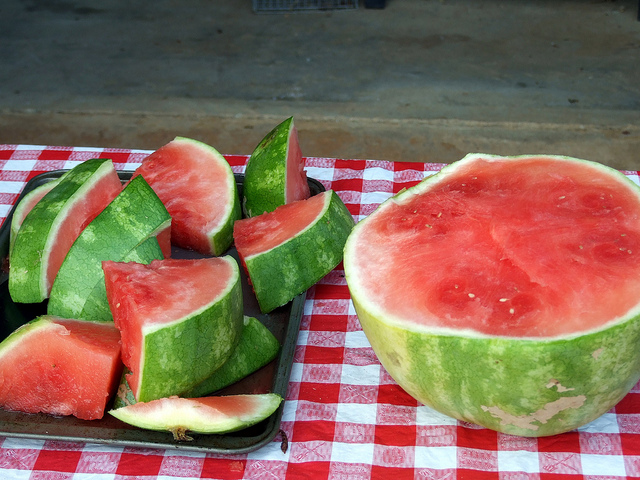
Scientists have discovered incidents of watermelon chlorotic stunt virus (WnCSV) in melons and watermelons in Jordan.
Fewer cold spells are great for pests, but terrible for farmers. Last year, there were higher incidents of bed bugs in the UAE as a result of increasing temperatures and in October, Jordan’s tomato production was hampered by heat and pests. Whether heat is responsible for a recently-discovered infestation of watermelon chlorotic stunt virus (WnCSV) is questionable, but the potential impact on one of Jordan’s top twenty crops could be devastating.
What exactly is in Soup No. 5 or Soup #5, a soup made from bull’s testes or penis. The dish originates from Filipino cuisine. It is believed to have aphrodisiac properties. People around the world eat the penises of bulls, sheep, and goats, without a quiver.
Keeping to the theme of eating all the animal that began with our post on lamb’s testicles, we now present our readers with another idea to get used to. Penis meat is eaten and enjoyed in the Middle East, Latin America, and the Far East as an ordinary meat and as a boost to virility.
Farmer’s home-made sausages may include sheep, goat, or steer penis. Each species’s penis has its own flavor. It stays a little rubbery even after long cooking, though.
Bull Penis Stew Recipe
Bull penis stew could be mushroom soup if you squint
Our researches haven’t turned up the truth about supposed Eastern European penis stew, but there are recipes from Bolivia and China.
The one recipe circulating around the Internet was taken word for word from a small out-of-print collection of Yemenite recipes, Yemenite and Sabra Cookery, by Naomi and Shimon Tzabar. The Bull Penis recipe goes like this:
How to make soup #5
1 pound of penis, ram’s or bull’s
3 tbls. oil
1 large chopped onion
2 garlic cloves, peeled and chopped
1 tsp coriander seeds, crushed
1 tsp salt
freshly ground black pepper
Scald the penis, then drain and clean.
Place the penis in a saucepan, cover with cold water, and bring to a boil.
Remove any scum, then simmer for 10 minutes.
Drain and slice.
Heat the oil in a large skillet.
Add the onion, garlic, and coriander and fry until the onion is golden.
Add the penis slices and fry on both sides for a few minutes.
Stir in the remaining ingredients with a good grinding of pepper, add enough water to cover, and bring to a boil.
Lower the heat, cover, and simmer for about 2 hours, or until tender.
Add a little water from time to time if necessary to prevent burning.
Cleaning urine from the penis
Most Westerners don’t know how to clean penis for cooking. The following video from the National Geographic Society makes that clear: the cook slits it open, removes the urethra, and rinses the meat several times under running water to remove any trace of urine.
Hard to swallow the idea? It’s understandable. A study titled Udders, Penises, and Testicles by Robert Rotenberg and published in the 2008 Ethnology (links to PDF) magazine says why:
“Sexual and lactating organs of animals are both foods and symbols,” Rotenberg writes: “Because the organs are visible when the animal is mating or nursing, their shape is unmistakable, and their symbolic potency clings to them, even after slaughter. Cooking them might mask or magnify these qualities.
“…udders, penises and testicles are difficult to separate from the self and hence persistently problematic as foods. …The similarity renders them as self, instead of as foods.”
True. Every man we’ve spoken to about penis as food has crossed his legs.
Envirosax, wishing to highlight the beauty and eco-friendliness of its designs, recently selected Israeli designer Amit Ayalon to create the above couture piece (composed of a jacket, Victorian corset, back scroll piece, bustle and skirt) out of colorful reusable Envirosax bags.
MADEO does the leg work for you when it comes to tracking down cool gifts for your eco-trendy friends.
You know the scenario: it’s your cool eco-friendly pal’s housewarming/birthday/holiday party/fill-in-the-blank party and you are short one fabulous/original/aesthetic/environmentally-considerate gift. You want something creative yet functional, like a cool hanging wine glass rack or a funky bread slicer, but the stock at your local design store isn’t too eco-friendly and you know that “green” items make your friend that much happier. It’s kind of last-minute, so you don’t have time to wait for an eco-friendly and handmade gift from an Etsy artist to be shipped to you, or wait for an item from a green online store.
You need a brick-and-mortar green design store. If you live in Israel, MADEO (aka Modern and Designed Ecological Objects) makes that easier for you by supplying design stores all over the country with interesting and ecological design products.
The Jatropha plant may produce bio-diesel for cars but, like other biofuels, it also leads to a rise in food prices due to competition for land space
From solid gold biofuel Mercedes in Abu Dhabi to biofuel-producing algae lakes in Iran, it seems that biofuels are destined to play a part in the region’s future development. Now, Jordan has announced that it will be experimenting with planting Jatropha, a tree which produces high-quality biodiesel to be used in standard diesel cars. But are biofuels really the solution to the Mideast’s dependency on gas and oil?
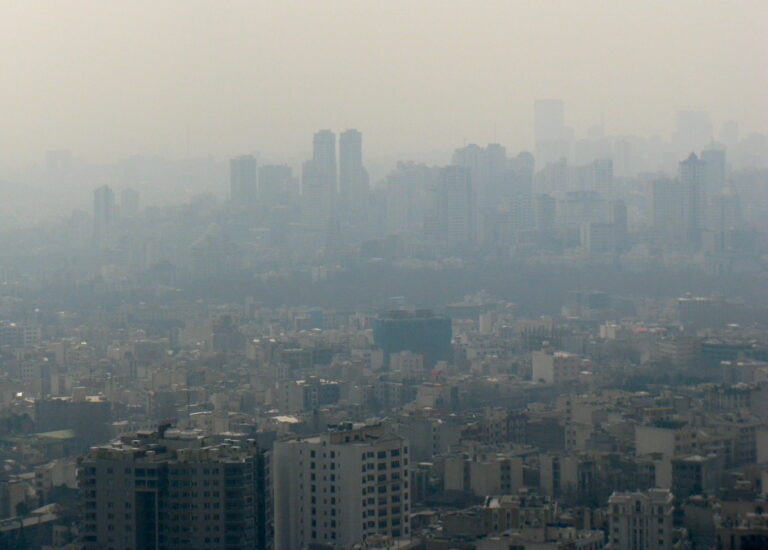
The biggest environmental concerns of the residents of Tehran are air pollution and water quality.
The public awareness of environmental problems is of great importance in today’s societies. It is somehow more important than the governmental privileges. In Iranian society, this awareness is in shadow of political, economic and social issues, which look more substantial to people. In a World Bank report, which were given out in 2007, the environmental awareness of the residents of Tehran were analyzed.
This report was provided three years ago but still can show the reality of the Iranian urban culture. It, as can be predicted, confirms that the first things that are important for people are the issues that directly affects on their lives. Politics is the main one. Also social and culture problems are important but the main factor that adjusts every thing is still politics.
According to the report, environment is not the priority of most of the people. Thirty percent of the respondents of the questionnaires (34 percent men and 29 percent women) think that the political problems are important or very important. This can be compared with the low percentage that was obtained from the same question about economic development, inflation, and environment.
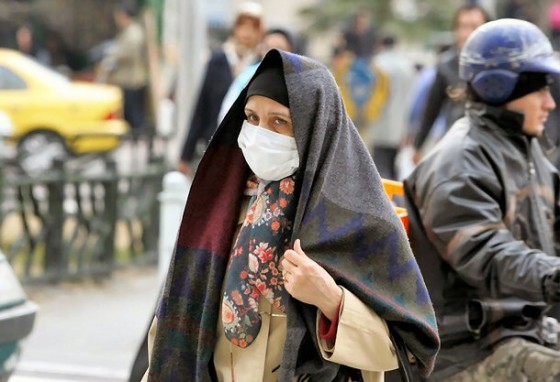
Wearing a facemask against pollution (not Covid) in Tehran
Six percent think that economic development is important or very important (6.4 percent men and 5.3 percent women). Inflation is rated by 6.4 percent (5.8 percent of men and 6.5 percent of women). It seems that the respondents have rated the environmental issues as the least important problem. Only 4 percent have chosen important or very important for the environment (4.4 percent men and 3.3 percent women).
The worst part of the findings is that one third of the respondents (34 percent) believe that the environmental problems are not important at all and 53 percent do not have any opinion.
When the people are questioned more clearly about the problems, it becomes clear that they have some concerns about the environment. Air pollution and water quality are the biggest concerns of them. Some 62.3 percent of men and 61.3 percent of women believe that the water quality is worrying. Also 59.8 percent of men and 60.1 percent of women are worried about the air pollution produced by cars. Similarly the percentages for industrial pollutions are 41.5 for men and 47.1 for women. In the same way, 39.5 percent of men and 41.8 percent of women have declared great worry about the sound pollution.
Similar percentages are obtained from the survey about continuous reduction of green areas, disposal of industrial waste, and household garbage.
Other answers show that people are disappointed of the present situation of the urban environment. For example, just 8.7 percent of men and 10.5 of women strongly agree that “the environmental situation will be better in the future,” while 31.3 percent of men and 26.8 percent of women disagree.
The main bodies in the country that have the ability to improve the People’s responsibility about the environment are the public media, be it governmental or private. The present situation of the effects of the media like newspapers, TV, radio, books, internet, magazines, etc. are analyzed.
Public awareness of environmental problems is of great importance in today’s societies. It is somehow more important than the governmental privileges. In Iranian society, this awareness is in shadow of political, economic and social issues, which look more substantial to people.
In a World Bank report, which were given out in 2007 the environmental awareness of the residents of Tehran were analyzed. This report was provided three years ago but still can show the reality of the Iranian urban culture. It, as can be predicted, confirms that the first things that are important for people are the issues that directly affects on their lives. Politics is the main one. Also social and culture problems are important but the main factor that adjusts every thing is still politics.
According to the report, environment is not the priority of most of the people. 31 percent of the respondents of the questionnaires (34 percent men and 29 percent women) think that the political problems are important or very important. This can be compared with the low percentage that was obtained from the same question about economic development, inflation, and environment. 6 percent think that Economic development is important or very important (6.4 percent men and 5.3 percent women). Inflation is rated by 6.4 percent (5.8 percent of men and 6.5 percent of women). It seems that the respondents have rated the environmental issues as the least important problem. Only 4 percent have chosen important or very important for the environment (4.4 percent men and 3.3 percent women).
The worst part of the findings is that one third of the respondents (34 percent) believe that the environmental problems are not important at all and 53 percent do not have any opinion.
When the people are questioned more clearly about the problems, it becomes clear that they have some concerns about the environment. Air pollution and water quality are the biggest concerns of them. 62.3 percent of men and 61.3 percent of women believe that the water quality is worrying. Also 59.8 percent of men and 60.1 percent of women are worried about the air pollution produced by cars. Similarly the percentages for industrial pollutions are 41.5 for men and 47.1 for women. In the same way, 39.5 percent of men and 41.8 percent of women have declared great worry about the sound pollution.
Similar percentages are obtained from the survey about continuous reduction of green areas, disposal of industrial waste, and household garbage.
Other answers show that people are disappointed of the present situation of the urban environment. For example, just 8.7 percent of men and 10.5 of women strongly agree that “the environmental situation will be better in the future,” while 31.3 percent of men and 26.8 percent of women disagree.
The main bodies in the country that have the ability to improve the People’s responsibility about the environment are the public media, be it governmental or private. The present situation of the effects of the media like newspapers, TV, radio, books, internet, magazines, etc. are analyzed.
By the recent issues like the problems of Orumieh Lake in north-west Iran or the Iranian leopard, people have heard more of such news and have shown to be more conscious of the similar problems.
IBM builds a solar power desalination pilot plant in Saudi Arabia.
News that Saudi Arabia, the world’s largest market for desalination plants, is planning future solar-powered reverse and osmosis projects has been met with general enthusiasm by environmentalists and non-environmentalists alike. However, while politicians in the region play up the significant advantages of modern desalination, a deeper cost-benefit evaluation shows these investments come at a considerable cost.
Internationally-acclaimed dance Ido Tadmor does an enigmatic dance for the Dead Sea at Kalya Beach.(image by Inbal Marmari)
Becoming one of seven natural wonders can have enormous benefits for tourism, though competition is steep. Among the 28 candidates for the present campaign are the Great Barrier Reef, the Galapagos, and the Grand Canyon. Scores of people, even Harley Davidson riders, have shown their support for the Dead Sea campaign, which will be a boon to Israel, Jordan and the Palestinian territories. But there’s more to the campaign than generating money. The founder, Bernard Weber, intended for this global initiative to protect remaining beautiful places, to generate unity and respect. Perhaps more than any other pledge of support, Ido Tadmor’s Dead Sea dance – choreographed by him – does just that.
Saudi Arabia is investing huge sums to diversify its water supply, while at the same time fanning a booming construction industry. Will the latter negate the former?
Desertification, depletion of underground water sources, and lack of perennial rivers or permanent water bodies are among Saudia Arabia’s greatest environmental challenges. In part, these are being met by pouring money into energy-hungry desalination facilities.
With oil reserves overestimated by 40%, and peak oil on the horizon, the Royals are realizing the need to diversify. Construction Week reported that over the next 15 years, the Gulf country will invest $53 billion on water projects, 70% of which will be devoted to sewage and wastewater treatment plants.
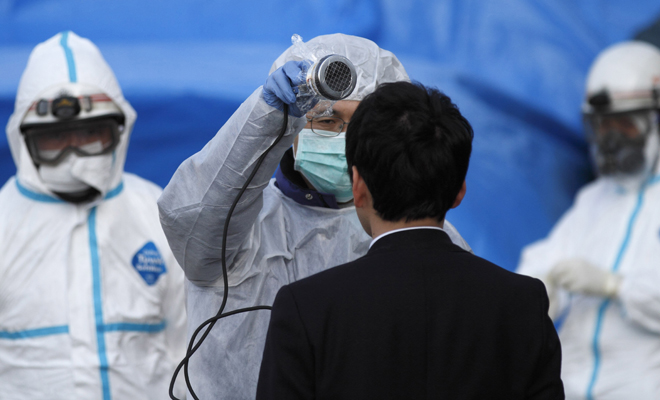
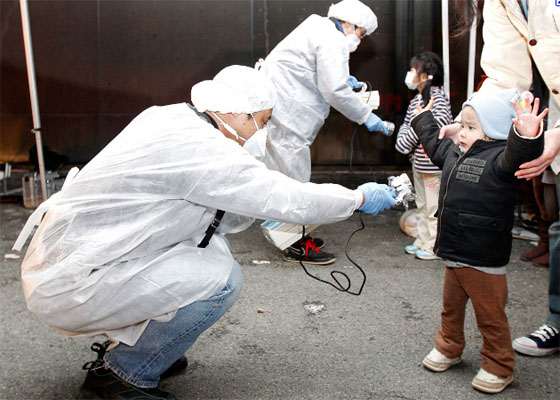
Checking for radiation in Japan. Wouldn’t happen if a solar power plant is damaged.
Japan’s situation involving its damaged nuclear reactors is heading into “critical mass” following more reactor failures from last week’s mega earthquake and subsequent tsunami tidal waves. Worries about this kind nightmarish scenario happening elsewhere, especially in the Middle East has been expressed in many media sources, including an article in the English version of Egypt’s Al Masry.
The environmental dangers of the radiation leakage from the Fukushima Diiachi nuclear plant following the explosion of one of its reactors could be very harmful to the world’s environment. The article quoted Greenpeace as saying that “Japan is in the middle of a nuclear crises with potentially devastating consequences.” But this you’d already know if you have been reading the news. American aid troops in the region are moving away from the nuclear plant after a plume of radiation was detected 100 miles from the reactor core.

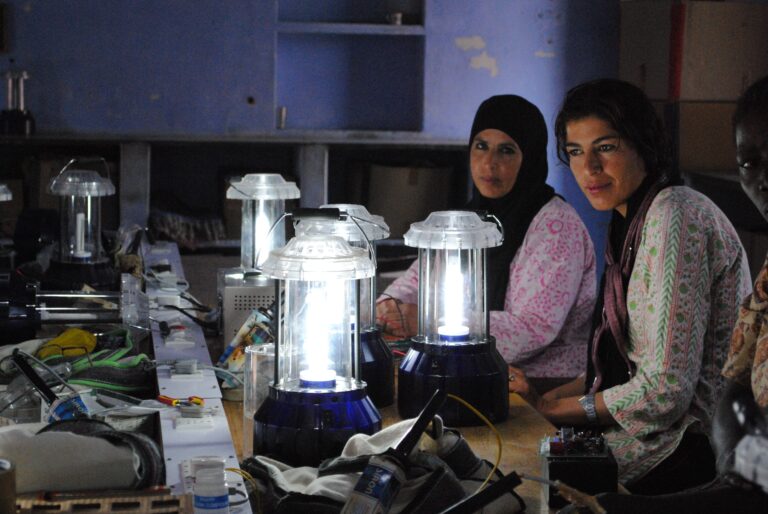
 Green Prophet reporter Arwa speaks to Rafi’a Abdul Hamid, a woman from the deserts of Jordan who has been trained as a solar engineer to help bring clean electricity to her poor village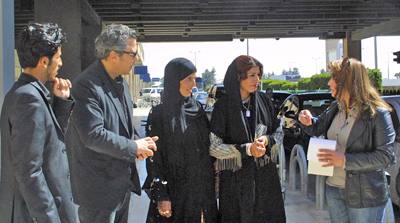








 IBM builds a solar power desalination pilot plant in Saudi Arabia.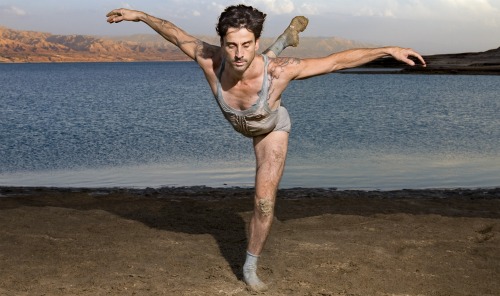
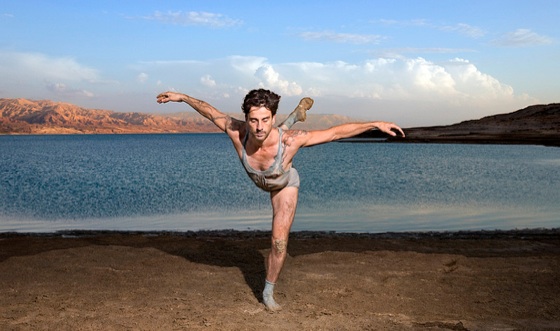 Internationally-acclaimed dance Ido Tadmor does an enigmatic dance for the Dead Sea at Kalya Beach. (image by Inbal Marmari)