Home Blog Page 550

Libyan Violence Dampens Great Man-Made River Project

0

pipe for libya manmade river projectThis pipe was slated for use on Libya’s ambitious Man Made River project.

The Omar Mukhtar Reservoir in Libya’s southern desert is the second largest in the world, and an integral component of the $20 billion Great Man-Made River project (GMMR). Begun in 1984, the mammoth pipeline designed to transport water from the south to Libya’s dry northern cities has experienced huge setbacks as a result of Gaddafi’s power struggle with rebel forces. Despite the recently announced ceasefire, CNN reports continuing violence, which is taking its toll on the Canadian firm Pure Technologies’ bottom line.

Despite Japan, Turkey Goes Ahead With Nuclear Reactors

1

turkey coast akkuyu region seaForty years in the making: Turkey still intent on building the country’s first nuclear reactor on this serene spot on the Mediterranean Coast. Cyprus says the zone falls right on a fault line.

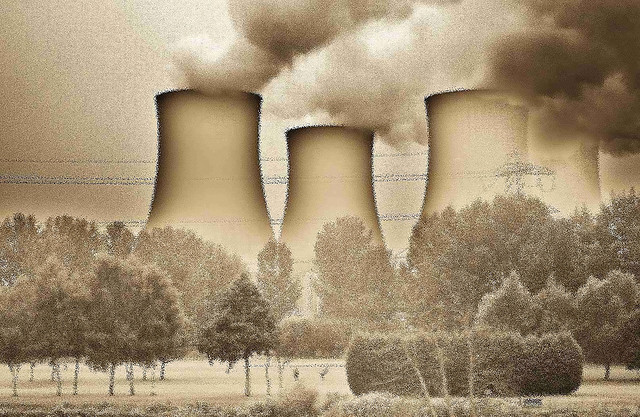
Despite the insanity and the imminent meltdown of Japan’s nuclear facilities now going from bad to worse, countries in the Middle East are announcing their clear intentions to stick with nuclear programs. Earlier this week Israel announced it would continue planning for a nuclear reactor in the Negev Desert, Australia offered uranium to the United Arab Emirates, and now Turkey, the People’s Daily of China reports, is going ahead with the construction of its first nuclear reactor, Turkish Prime Minister Recep Tayyip Erdogan said Tuesday. In fact for Turkey, the sooner, the better he urged.

Bloggers Mourn Four Iranian Parkrangers Shot Dead By Terrorists

3

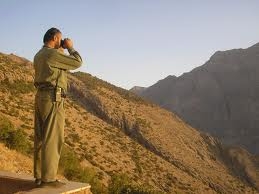
iranian park rangerIn the last 30 years, 110 Iranian park rangers have been killed. Environmental bloggers pay tribute.

Despite certain joint environmental initiatives between its government and that of  Qatar, Iran really needs its nature lovers and advocates. Twenty-seven people die a day as a result of the Tehran’s pollution, its national parks are strewn with rubbish, and iconic natural monuments such as Lake Orumiyeh are in deep trouble.

And yet, park rangers over the decades have been the target of uncalled-for violence. Global Voices report that four men were recently shot dead in a village in Sanandaj in Iran’s Kuridstan. In response, an environmentally-themed website invited bloggers to say their piece.

Flood Victims Get New Cars in Saudi

1

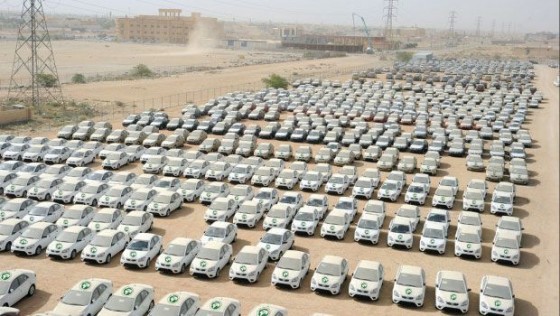
1,000 cars have been donated by the Alwaleed bin Talal Foundation to the recent Jeddah flood victims

Heavy rainfall in Jeddah in Saudi this January led to the deaths of a reported four people and left hundreds more families stranded and distraught as they dealt with the flood. Although the floods in 2010 did not cause the same level of destruction as the 2009 floods which left over 120 dead, many Saudis feel that the city’s flood protection remains inadequate.

So whilst the donation of 1,000 cars will no doubt be valuable to the victims of the floods, what is really needed is clear policy and plan of action to improve Jeddah’s flood defenses.

BrightSource Solar Raises Another $122 Million

0

Israeli Solar energy company BrightSource is the child, but the real father of solar thermal technology.

SEC filings show BrightSource Energy Inc has raised $122.5 million in its fifth round of financing, according to Israel’s Globes.The company says it raised the capital in shares and warrants, as part of a planned $125 million offering. BrightSource Energy is now the California “parent company” of the actual “parent” – BrightSource Industries Ltd –  if you consider parenting from the generative point of view. (Luz Rises Again as BrightSource for California)

Originally, the Israeli inventors developed the solar thermal technology that has now been proven since the eighties in the California desert and is fast becoming the industry standard. The Israeli “child” company is the real father of solar thermal technology, however.

It’s Back to Real Estate Basics for the United Arab Emirates

0

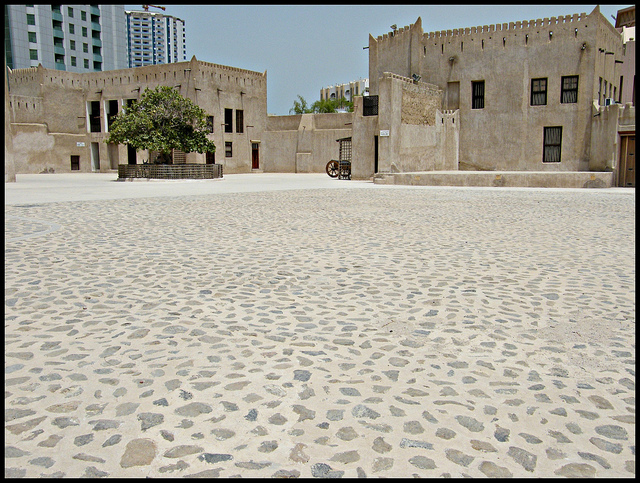
dubai-uae-property-crisis-moderationWith Dubai’s property sector still in crisis, many predict the end for real estate glitz and the start of a more modest UAE

Whilst the Gulf states continue with business as usual by supporting fuel subsides in order to avoid political unrest, there are some areas of luxury in the Gulf which will have to be cut back. In Dubai, the property market struggles means that for now at least, it’s back to basics. Having constantly bemoaned the brash ‘I-can-build-it-higher/bigger/more-expensive/out-of-gold’ madness that the Gulf states seems to suffer from, I am more than happy to see a return to a more modest United Arab Emirate.

Oil Industry Investigates Ormat Success Turning Waste Water into Energy

0


Every barrel of oil co-produces 10 barrels of waste fluids hot enough to make energy

Towards the end of the life of an oil field or a natural gas field, the operating cost of managing the waste water is the main reason why fields are shut down, wells are plugged and abandoned. Oil and gas wells produce a lot of water.

For many well operators, once the water cut becomes too expensive to deal with, they’ll consider shutting the well. But if they can save money by using the water to generate electricity, the equation changes. An Ormat device has shown how that can be done and the US DOE has tallied its output.

Despite Best Intentions, Gulf Countries Can’t Quit CO2

1

carbon emission pollutionThe Gulf countries badly need to cut fuel subsidies in order to drive renewable generation projects, but in the current political climate, that would be suicidal.

The nuclear travesty in Japan has gripped news headlines, while the Middle East political drama has taken back stage. But it is still having huge ramifications in the region. Among the world’s worst polluters, and the biggest suppliers of emissions-causing fuel, the Gulf countries do have great intentions to boost their renewable energy supply. And not for purely altruistic reasons. By eating into their own oil supply, the United Arab Emirates, Kuwait, and Saudi Arabia among others limit the amount of oil that can be used for export. Increasing their renewable energy portfolio, however, depends richly on doing away with oil subsidies. And that, Reuters reports, is seemingly impossible amidst the current unrest.

Mekano Designs Renewable Energy Skyscraper For Cairo’s Filthy Garbage City

1

cairo garbage city skyscraper

Mekano Architects have dreamed up the ultimate solution for Cairo’s filthy Garbage City. Long an eye-sore and public health menace, the area on the outskirts of Egypt’s capital was once a recycling center for the Zabaleen. They sorted through waste and recycled it, and used pigs to devour organic waste. After swine flu emerged, however, the government culled the Zabaleen’s pigs and that waste has since stewed in its own fermenting juices. Mekano aims to put the resulting methane, and the towers of junk, to good, building use.

As Japan Nuclear Plants Meltdown, Israel To Build “Safe” One in the Desert

3

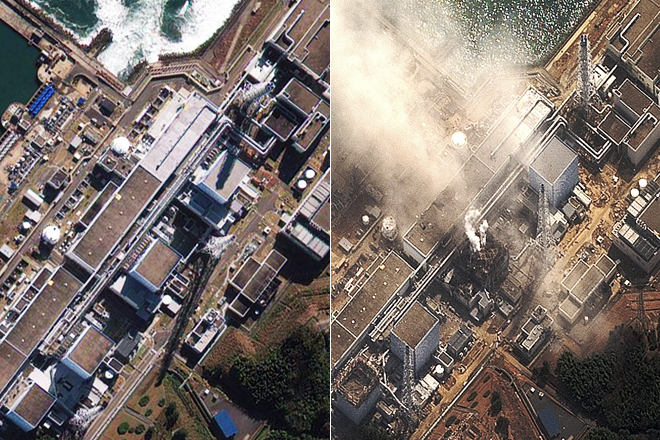
Fukushima Daiichi reactors in Japan before and after the tsunami. Is this worthwhile for Israel or other Middle East countries?

Japan’s damaged nuclear facilities are reaching even more critical radiation leakage levels, and the country’s population is becoming more concerned about the effect of radiation their own environment as well as that outside Japan. Despite this reality, energy spokespersons in other parts of the world still talk in favor of nuclear energy as a “clean and safe” fuel, as compared to fossil fuels like oil and coal.

Al Gore Talks Turkish Climate Policy

0

Turkey has a critical role to play in a clean energy future, says former vice president Al Gore. But when is it going to start taking that role seriously?

The unusual political identity of Turkey — a stable, democratic, Islamic country — serves as inspiration for democratic reformers in the Arab world. Its government is a model of political progressiveness for its neighbors to the east and south. In the same fashion, strong climate and energy policy in Turkey could inspire environmental action as radical as the democratic revolutions currently sweeping the region. That was the message of former U.S. vice president Al Gore at the “Leaders of Change” summit in Istanbul on Monday, according to the Turkish daily Today’s Zaman.

South Korean President Receives Zayed Prize For Global Environmental Leadership

0

South Korean President Zayed Prize

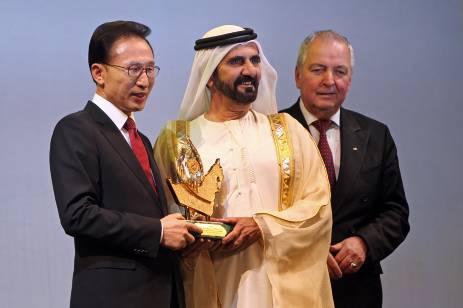
Sheikh Mohammed bin Rashid, VP for UAE & ruler of Dubai, presented South Korean President Lee Myung-bak with the Zayed Environmental Prize.

Named after the late UAE President Sheikh Zayed, the $1 million Zayed Environmental prize is awarded biannually to political leaders, scientists, and activists who are leading the way in sustainable initiatives. Najib Saab, the Editor-in-Chief of the magazine Al-Bia Wal-Tanmia (Environment and Development) received one of the prizes awarded this year for raising the Middle East’s environmental awareness. The top prize went to South Korea’s President for his country’s “Green Growth” initiative.

Time to Pause: Risks of Nuclear in the Volatile Middle East and North Africa Region

0

radiation japan middle east nuclearThe Arab region holds the densest concentration on earth of countries seeking to generate nuclear electricity for the first time. Rola points out the dangers.

Over the last few years, while talk of a nuclear power ‘renaissance’ was spreading globally, Middle Eastern and North African countries have been rushing to jump on the commercial nuclear power bandwagon. As posted in Green Prophet recently, the unfolding Japanese nuclear crisis should serve a warning for a politically volatile region prone to earthquakes and other man-made disasters. Here’s a brief review of how far some of these countries have come in building their first commercial nuclear plants and key issues at stake.

“Jewish Garbage Is Better Than Arab Garbage,” Says 10-Yr Old Palestinian Worker

3

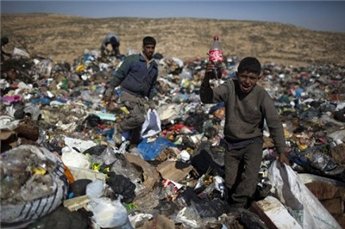
palestinian trash workersThese young boys are sorting out recyclables in order to provide for their families.

Children as young as ten are making a living by sorting through rubbish on the outskirts of the West Bank city Hebron. Following the second intifada in 2000, hundreds of Palestinians previously employed in Israel found themselves without work. By sorting and selling recyclables, often at night, young boys and grown men are able to provide a small amount of money for their families. A recycling initiative of sorts, Maan news agency nonetheless describe an unbearable scene of rotting organic matter and “chemical effluvia.”

Rubbish from neighboring Palestinian towns is brought to this dump, surrounded by cypress-tipped hills and nearby olive groves. Often the trucks come at night, which encourages workers to stay at on site in a makeshift shanty village.

Shacks made from old wood planks and covered with tarpaulin or plastic trash bags are temporary housing for trash workers eager to make a bit of  extra money or reluctant to travel to their home town Yatta. Maan says that the workers sort through vegetable scraps, washing liquid bottles, old clothes, and soda cans.

To cope with the sun and stench, some of the boys wear Kaffiyas over their heads. They pull anything valuable from the dump – wood, aluminum, plastic, steel – and add it to their pile.

One boy told the news agency that they each have their own pile and there are no bosses. Some of the materials are transported to Hebron, where they are consolidated and sold for reuse in Israel and elsewhere.

Clothes that can be washed and reused are kept aside for themselves.

Some of the boys left school and started working in the dump after the main breadwinners were no longer able to provide – either because of an injury, or in one case, death.

One boy told Maan the “Jewish garbage is better than Arab garbage” because it contains more steel. This work fetches up to 30 Shekels or $8 a day.

More on the West Bank:

International Geographers Explore the West Bank In Search of Common Ground

The “Golden Sheep” West Bank Cheese Incident

Powering West Bank Geothermally

MENA countries add revolutionary credentials to eco-tourism

0

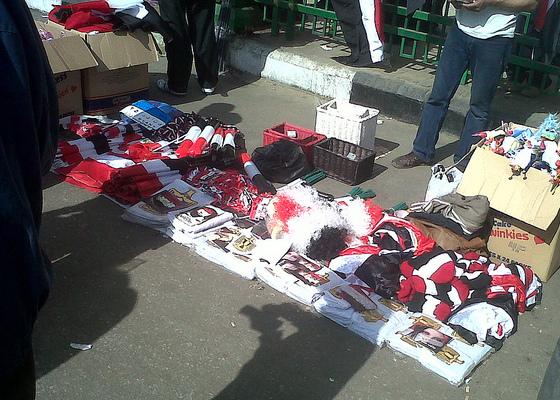
Souvenirs of the recent revolution are already on sale in Tahrir Square

In recent weeks, Green Prophet has reported on concerns for MENA regional eco-tourism after visitor numbers slumped over concerns about safety, and on worries that the conflict in Libya could damage the country’s stunning historical remains.

But plans to promote Middle East and North African countries as eco-tourism destinations seem to be getting back on track – and with a revolutionary twist.

According to reports from this year’s ITB Berlin feature a series of new slogans for Egyptian tourism, including ‘welcome to the country of peaceful revolution’, ‘7,000 years of history and a new era’, ‘Online revolution – made in Egypt’ and ‘Tahrir – a square rocks the world’. The country’s tourism ministry tripled its presence at the Berlin tourism fair, with senior ministerial advisor Hisham Zaazou apparently surviving the fall of Hosni Mubarak to continue driving forward Egypt’s green tourism initiatives.