Walk through almost any Saudi city today and one form dominates residential streets: the detached villa, sitting on its own plot, separated from its neighbors, usually surrounded by a wall and reached by car. It feels thoroughly Saudi. But much of the architectural DNA of the modern Saudi house comes from American suburbia.
EIT Pharma CEO Leen Kawas is advancing lonafarnib for chronic hepatitis D, showing how stalled late-stage drug programs can be revived and carried toward regulatory review.
Smart glasses are changing the economics of eyewear by turning conventional frames into higher-priced technology products. What used to be mainly a sale built around frame design, lenses, prescription needs and brand preference is now also a sale built around cameras, audio, AI features, app support and connected-device setup.
The film itself is about a Special Forces officer, played by Pitt, stranded in the Alaskan wilderness with his combat dog Odin after a plane crash. Odin is played by Uber, a highly trained German shepherd from a military and law-enforcement breeding line.
Walk through almost any Saudi city today and one form dominates residential streets: the detached villa, sitting on its own plot, separated from its neighbors, usually surrounded by a wall and reached by car. It feels thoroughly Saudi. But much of the architectural DNA of the modern Saudi house comes from American suburbia.
EIT Pharma CEO Leen Kawas is advancing lonafarnib for chronic hepatitis D, showing how stalled late-stage drug programs can be revived and carried toward regulatory review.
Smart glasses are changing the economics of eyewear by turning conventional frames into higher-priced technology products. What used to be mainly a sale built around frame design, lenses, prescription needs and brand preference is now also a sale built around cameras, audio, AI features, app support and connected-device setup.
The film itself is about a Special Forces officer, played by Pitt, stranded in the Alaskan wilderness with his combat dog Odin after a plane crash. Odin is played by Uber, a highly trained German shepherd from a military and law-enforcement breeding line.
Walk through almost any Saudi city today and one form dominates residential streets: the detached villa, sitting on its own plot, separated from its neighbors, usually surrounded by a wall and reached by car. It feels thoroughly Saudi. But much of the architectural DNA of the modern Saudi house comes from American suburbia.
EIT Pharma CEO Leen Kawas is advancing lonafarnib for chronic hepatitis D, showing how stalled late-stage drug programs can be revived and carried toward regulatory review.
Smart glasses are changing the economics of eyewear by turning conventional frames into higher-priced technology products. What used to be mainly a sale built around frame design, lenses, prescription needs and brand preference is now also a sale built around cameras, audio, AI features, app support and connected-device setup.
The film itself is about a Special Forces officer, played by Pitt, stranded in the Alaskan wilderness with his combat dog Odin after a plane crash. Odin is played by Uber, a highly trained German shepherd from a military and law-enforcement breeding line.
Walk through almost any Saudi city today and one form dominates residential streets: the detached villa, sitting on its own plot, separated from its neighbors, usually surrounded by a wall and reached by car. It feels thoroughly Saudi. But much of the architectural DNA of the modern Saudi house comes from American suburbia.
EIT Pharma CEO Leen Kawas is advancing lonafarnib for chronic hepatitis D, showing how stalled late-stage drug programs can be revived and carried toward regulatory review.
Smart glasses are changing the economics of eyewear by turning conventional frames into higher-priced technology products. What used to be mainly a sale built around frame design, lenses, prescription needs and brand preference is now also a sale built around cameras, audio, AI features, app support and connected-device setup.
The film itself is about a Special Forces officer, played by Pitt, stranded in the Alaskan wilderness with his combat dog Odin after a plane crash. Odin is played by Uber, a highly trained German shepherd from a military and law-enforcement breeding line.
Walk through almost any Saudi city today and one form dominates residential streets: the detached villa, sitting on its own plot, separated from its neighbors, usually surrounded by a wall and reached by car. It feels thoroughly Saudi. But much of the architectural DNA of the modern Saudi house comes from American suburbia.
EIT Pharma CEO Leen Kawas is advancing lonafarnib for chronic hepatitis D, showing how stalled late-stage drug programs can be revived and carried toward regulatory review.
Smart glasses are changing the economics of eyewear by turning conventional frames into higher-priced technology products. What used to be mainly a sale built around frame design, lenses, prescription needs and brand preference is now also a sale built around cameras, audio, AI features, app support and connected-device setup.
The film itself is about a Special Forces officer, played by Pitt, stranded in the Alaskan wilderness with his combat dog Odin after a plane crash. Odin is played by Uber, a highly trained German shepherd from a military and law-enforcement breeding line.
Walk through almost any Saudi city today and one form dominates residential streets: the detached villa, sitting on its own plot, separated from its neighbors, usually surrounded by a wall and reached by car. It feels thoroughly Saudi. But much of the architectural DNA of the modern Saudi house comes from American suburbia.
EIT Pharma CEO Leen Kawas is advancing lonafarnib for chronic hepatitis D, showing how stalled late-stage drug programs can be revived and carried toward regulatory review.
Smart glasses are changing the economics of eyewear by turning conventional frames into higher-priced technology products. What used to be mainly a sale built around frame design, lenses, prescription needs and brand preference is now also a sale built around cameras, audio, AI features, app support and connected-device setup.
The film itself is about a Special Forces officer, played by Pitt, stranded in the Alaskan wilderness with his combat dog Odin after a plane crash. Odin is played by Uber, a highly trained German shepherd from a military and law-enforcement breeding line.
Walk through almost any Saudi city today and one form dominates residential streets: the detached villa, sitting on its own plot, separated from its neighbors, usually surrounded by a wall and reached by car. It feels thoroughly Saudi. But much of the architectural DNA of the modern Saudi house comes from American suburbia.
EIT Pharma CEO Leen Kawas is advancing lonafarnib for chronic hepatitis D, showing how stalled late-stage drug programs can be revived and carried toward regulatory review.
Smart glasses are changing the economics of eyewear by turning conventional frames into higher-priced technology products. What used to be mainly a sale built around frame design, lenses, prescription needs and brand preference is now also a sale built around cameras, audio, AI features, app support and connected-device setup.
The film itself is about a Special Forces officer, played by Pitt, stranded in the Alaskan wilderness with his combat dog Odin after a plane crash. Odin is played by Uber, a highly trained German shepherd from a military and law-enforcement breeding line.
Walk through almost any Saudi city today and one form dominates residential streets: the detached villa, sitting on its own plot, separated from its neighbors, usually surrounded by a wall and reached by car. It feels thoroughly Saudi. But much of the architectural DNA of the modern Saudi house comes from American suburbia.
EIT Pharma CEO Leen Kawas is advancing lonafarnib for chronic hepatitis D, showing how stalled late-stage drug programs can be revived and carried toward regulatory review.
Smart glasses are changing the economics of eyewear by turning conventional frames into higher-priced technology products. What used to be mainly a sale built around frame design, lenses, prescription needs and brand preference is now also a sale built around cameras, audio, AI features, app support and connected-device setup.
The film itself is about a Special Forces officer, played by Pitt, stranded in the Alaskan wilderness with his combat dog Odin after a plane crash. Odin is played by Uber, a highly trained German shepherd from a military and law-enforcement breeding line.
It is very unusual to find a dinner or breakfast table in Israel that doesn’t include a smattering of meat and/or dairy products to choose from (depending on whether or not the family keeps kosher), which is why the revelation that tens of thousands of Israelis have embraced veganism in the last year is nothing short of revolutionary. Who or what is behind this phenomenon? In short: Gary Yourofsky and “The Best Speech You Will Ever Hear.”
During a charismatic hour-long speech given at Georgia Tech in 2010, the Jewish-American animals rights activist lambasts the murder of billions of animals each year. Thanks to a group of local activists who set up Gary TV and provided Hebrew subtitles, the YouTube video has been viewed 300,000 times in Israel, leaving many who watch it unable to put another animal product in their mouth.
It’s summer’s final lap. The Olympics are over. The school year looms. So put down that beach book and take an end of season vacation to explore space, both inside your head and out of this universe. Do it now. You don’t have to move a muscle. This five minute clip’s been flying around the internet, a sampler of ideologies from astrophysicist Neil deGrasse Tyson, comedians George Carlin and Jim Carrey, neuroanatomist Jill BolteTaylor, and the late Carl Sagan. Not a preacher in the lot, and a few self-proclaimed agnostics, but they sure can spread a message to make an environmentalist shout Amen!
Far from being Paris of the Middle East, traditional red tiled roof and sandstone houses suffocate inside the “other” vision of Beirut
The Lebanese housing market is a bit of a strange phenomenon. A largely unregulated construction market coupled with grandiose projects from ambitious rich gulf state developers and Lebanese expatriates has created a surplus of largely unaffordable houses. The result is that Lebanon is becoming a haphazard dumping site for cement buildings with little regard of the preceding cultural, historic and environmental resources.
Similarly, many believe Beirut has also turned into a mismanaged affair.
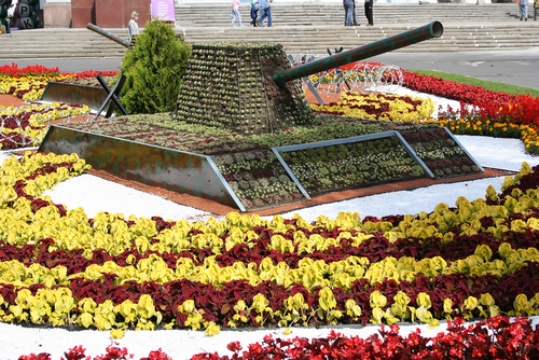
Do tanks and wild flowers mix? Not according to Israel’s nature protection society.
Israel Military Industries (IMI), which for years has had armament factories located close to dense population areas and as such has polluted area groundwater, is now on its way to exposing its environmental footprint even further. The organization is planning to build a large military hardware and armaments factory in an area full of rare and endangered wild plants. Although Israel’s military has tried to reduce its carbon and ecological footprint by trying to “go green” and translate military secrets into clean technology the practice of building large armament factories near major population centers is now going to be expanded by building another armament factory and a housing project in an area near a present one close to the upscale suburban communities of Ramat Hasharon, Herzliya and Hod Hasharon, according to the JPost.
On August 9th an electrical power outage hit people in parts of Cairo. This happened only ten days after India’s massive blackout grew to cover 22 northern states and impacted 600 million people. Both outages snarled traffic, stopped trains and turned off the lights for millions of people. But they also shared a common cause. When an event impacts 9 percent of the world’s population, it is reasonable to look for a root cause.
Local press and environmentalists in Egypt claim that the unofficial garbage workers of Cairo – the Zabaleen – are being sidestepped by President Mohamed Morsi’s Clean Homeland campaign, which resolves to solve the country’s overwhelming garbage issue within 100 days.
This was a dangerous promise to make given that so many of the systems required for effective waste management have long since eroded in the capital (if they ever existed.) Meanwhile, the Zabaleen have been keeping Cairo from being completely buried by waste – all of their own accord – by collecting, recycling and sorting what they can. But the importance of the service they provide has long been overlooked by government.
Try something a little different than plain-old tomato sauce on your pasta. Try tahini!
On my first night CouchSurfing in Haifa, Israel, in the cozy apartment of a young married couple, the three of us sat down, along with a local friend, at the table on the balcony to eat dinner – which, surprisingly, the men had prepared from start to finish, while the wife and I relaxed. There were more surprises to be had.
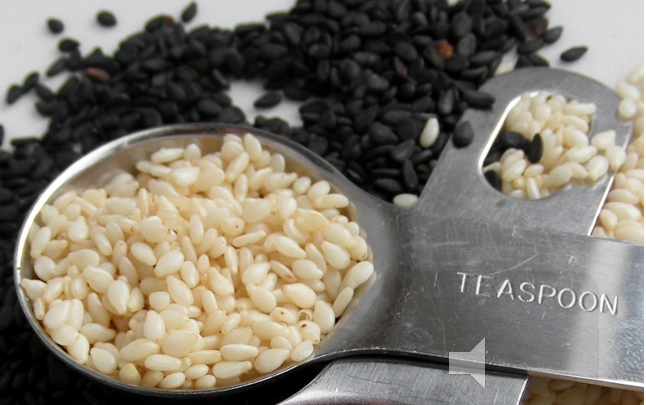
The meal was a nice pasta stir fry. I served myself a portion, and it was delicious, but little did I know that it would get better. The husband whipped out a bottle of organic roasted sesame tahini and started pouring some over his helping. Intrigued, although not expecting to fall in love with the combination, I tried some myself. I proved myself wrong; I fell head-over-heels in love. I love pasta, and I love tahini, so why did I think I wouldn’t love them together? Like strawberries and balsamic vinegar, or watermelon and feta, this unlikely food pairing turned out to be delectable.
I’ve got to start putting more faith in tahini (or some call it tahina); so many people in the Middle East already do! The Israelis love the paste so much that they’ve even made it a topping option at frozen yogurt and ice cream stores, right between the hot fudge and caramel!
Recently, I revisited my wonderful tahini-pasta experience by making some wheat pasta, the healthy alternative to regular pasta I always choose, and adding some tahini sauce. That is pretty much the extent of my culinary prowess, but below is a simple recipe I found on a blog called Cate’s World Kitchen that I think I could handle.
I loved watching Popeye as a kid and still jump at every opportunity to eat spinach to get nice and strong, so this recipe appealed to me most – although with its fun rhyming name, the “Tahini Rotini” recipe I also found came in a close second. (Find that recipe here.)
______________________________________________
Lemon-Tahini Pasta with Spinach
8 ounces dried fusilli pasta
4 tbsp tahini
4 tbsp lemon juice
4 garlic cloves, peeled and chopped
a few pinches salt and pepper
one large bunch spinach, stems removed and chopped
While the pasta is cooking, pulse the tahini, lemon juice, and garlic in a food processor until smooth. After draining the pasta, stir in the spinach, mixing until it wilts. Add the lemony tahini sauce and a few pinches of salt and pepper for good measure…mix well…and enjoy!
Tahini immediately thickens pasta and adds creaminess. Pasta with tahini sauce or paste makes for a heavy, filling meal, but it also provides a great opportunity to exercise eating small portions! Most recipes that combine pasta and tahini, including the one above, are vegan-friendly, easy to make, and very tasty.
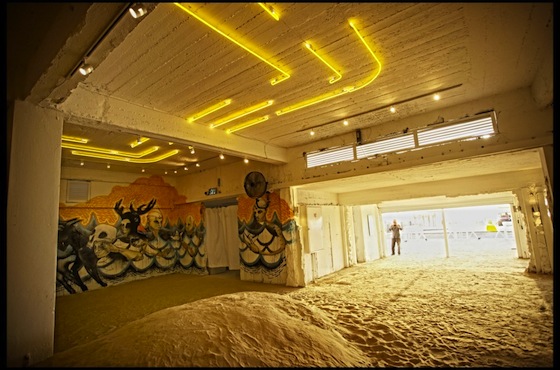
Israel’s Mediterranean city of Bat Yam is pulling itself out of obscurity with one of the most unusual art spaces we’ve seen. Located just south of Tel Aviv – the country’s most well-known seaside city, the Riviera used to be a thumping nightclub in the 1950s and 1960s. Now it’s a very yellow and open industrial-chic art colony and public gallery that features a sea sand floor and some seriously gritty street art.
Rosé wine is gaining global popularity. Did you know that the Middle East with its long history of wine-making is producing some great rosés of its own?
The summer heat is upon us and if you’ve been smart you’re perfecting those non-cook recipes to beat the heat. If you like a glass of wine here and there, a good companion to a cold soup, salad, or Middle East mezze is a summer favorite – rose wine. If you’re a Muslim and don’t drink alcohol look for a non-alcoholic variety to suit your palette. Similarly our Jewish readers will find something to suit their taste in shops that cater to the kosher market. Today we’re going to look at 4 rosé wines made in the Middle East.
Honest By’s “transparent” green fashions leave nothing to hide
Going to the mall or outlet store to buy clothing is not the greenest thing one can do when the truth is known about what materials the clothing is made out of, as well as where and how it is made. Much of this clothing, even top line name brands, is often made in poorer locations such as rural China, Bangladesh, India, and other places where environmentally damaging dyes are used and clothing is sewn together by people working in sweat-shop and even slave labor conditions.
It’s inevitable that even the best of automobiles will eventually find their way to the junkyard, but to Ronen Tinman, that needn’t be a death sentence. Determined to make use of “every ounce” of the materials that went into making BMWs, Citroens, Toyotas and Kawasakis, the Israeli designer relies on his mechanical engineering background to turn even the dinkiest of dented hoods, trunks, wheels, doors and disc brakes into bespoke lamps, chests, hall tables and cabinets.
Summer’s in its last laps: a new school year’s looming. Green up the school day with 10 easy tips
Wherever you live around the world, it’s probably time to start the school year at the end of the summer. Here are some tips to pass on to parents with kids. They’re also good for high-school and college kids to follow.
1. Put the word out on Facebook or Craigslist or Freecycle that you’re in the market for staplers, rulers and scissors: bet you’ll be rained on with a “loaves and fishes” appearance of everyone’s extra office supplies. If you must buy, check out biodegradable pencils and vintage refillable fountain pens.
The patriarchal kingdom of Saudi Arabia creates an all-female city where (the arguably better half) of humanity can work freely, within Islamic guidelines.
Saudi Arabia has an increasingly educated female population, but its ultraconservative interpretation of Wahabi sharia law and rigid tribal customs forbid women from interacting with men. The upshot is chronic female unemployment. An utterly Saudi solution is underway. Why shift cultural mores, when, instead, you can raise up a completely new, self-sustaining city that will be fully devoid of men? The pilot project will go live in 2012 in the Eastern Province city of Hofuf. Smaller “ladies-only” communities will then pop up in capital city Riyadh.
According to scientists from Canada and the Netherlands, the world is depleting underground water reserves faster than they can be replenished
In the Middle East, water shortages are a widely accepted reality which many countries are trying to fight head on. Worldwide, however, the issue is not so pressing with environmental issues such as energy and emissions taking centre stage. Despite this, new research from McGill University in Montreal and Utrecht University in the Netherlands indicates that the world is increasingly dependent on an unsustainable supply of groundwater. They estimate that the world’s ‘water footprint’, which is defined as the area above ground required to sustain groundwater use, is about 3.5 times the actual area of the available aquifers. And this has huge implications not only on water supplies but for food and political security too.
Some of the most fashionable people on the planet, the Lebanese are also very concerned about what people think of them. But the lovely Yasmina Sawma of Tchensol is shaking things up a bit with an intriguing new line of re-purposed accessories. The trained interior architect converts LEGO pieces into chunky earrings and rings, strings stuffed grape leaves together into a bracelet and even chops off the tips of coloring pencils to make bright and cheerful rings.

 It is very unusual to find a dinner or breakfast table in Israel that doesn’t include a smattering of meat and/or dairy products to choose from (depending on whether or not the family keeps kosher), which is why the revelation that tens of thousands of Israelis have embraced veganism in the last year is nothing short of revolutionary. Who or what is behind this phenomenon? In short: Gary Yourofsky and “The Best Speech You Will Ever Hear.”