Home Blog Page 220

Beef Short Ribs In The Slow Cooker

0

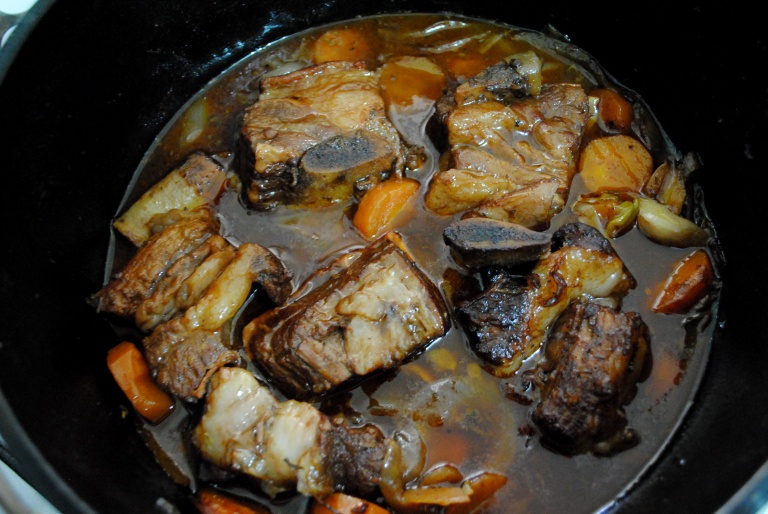
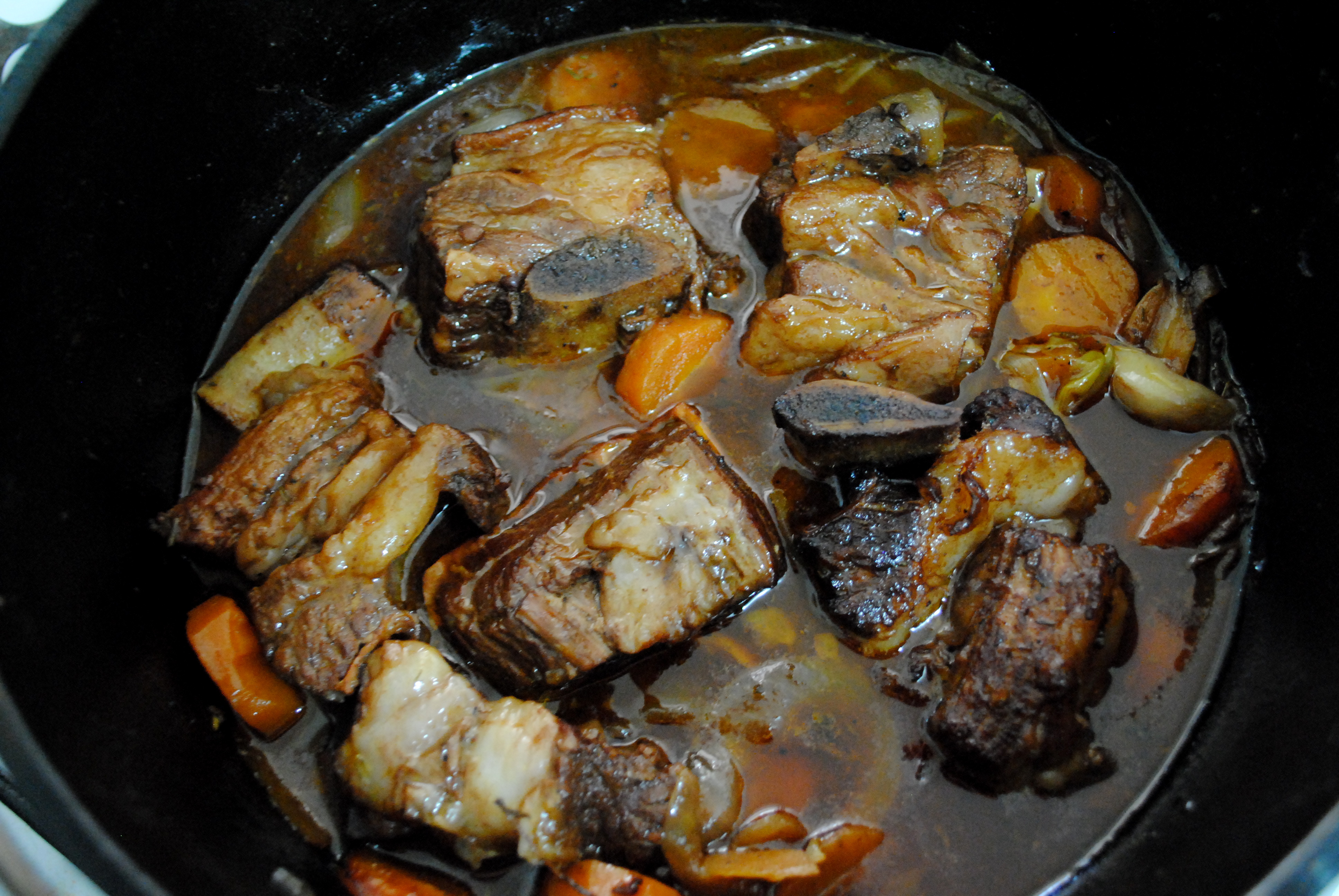
slow cooker beef short ribs

Being vegewarian, I keep meat for holidays and special occasions. Because that’s what vegewarian means – eating mostly sustainable and local vegetarian foods, with meat dishes only once in a while. Here’s one of our typical vegewarian non-meat recipes. With Passover on the way, I’m thinking what sumptuous meat dish to cook.

The problem with “sumptuous” is that it implies other fancy cooking going on at the same time. When I’m moving between stove, sink, and chopping block, and guests are expected and I almost can’t keep track of what’s going on the house – I need a main dish I trust to taste great and not give me much trouble to cook.

That’s when I pull out my slow cooker. In it, beef short ribs sit on the counter top quietly cooking themselves, out of my way and ignored until I lift the top and inhale the delicious, savory odors. This recipe calls for Mediterranean herbs and a touch of sweetness for balance. I like silan, the Middle-Eastern date syrup, but if you don’t have it, a good dark honey works too.

Slow-Cooker Short Ribs
Serves 4
May be increased by half or doubled

Ingredients

1 kg. beef short ribs, most of the fat trimmed away: about 8 pieces
1 tablespoon olive oil
1 large onion
1 teaspoon ground sumac
4 large cloves garlic
4 small-medium tomatoes, or 2 large
1 large carrot, peeled and thickly sliced
1 large bay leaf
1/2 teaspoon dried thyme or a sprig fresh thyme
1/2 tablespoon dry rosemary, or a fresh twig about 1” long
1 tablespoon silan date syrup or honey
1- 1/2 cup vegetable, chicken or beef stock. Or dry red wine.
Salt and pepper to taste

Pat the pieces of beef with a paper towel until dry.

Fry the beef ribs in a large skillet, with the olive oil. Don’t crowd the pieces; you may need to do this in two batches. Turn the pieces over as they caramelize.

About halfway through, add the sliced carrot. Let it caramelize along with the beef.

While the meat is caramelizing, prepare the seasonings. Slice the onion and sprinkle the sumac over it. Peel the garlic, but leave the cloves whole. Slice the tomatoes.

Remove the meat to a plate. Let the fat in the skillet cool down somewhat, then pour most of it away, leaving a tablespoon or so in the skillet.

Heat the leftover fat for a few seconds over medium heat and stir the sumac-seasoned onions in. Cook, stirring, until the onions wilt; about 3 minutes.

Add the tomatoes to the onions. Stir the garlic in. Add the bay leaf. Fry 5 minutes, or until the tomatoes soften. Season the vegetables with salt and pepper.

Pour the vegetables into the slow cooker.

Place the meat over the vegetables in the cooker.

Stir the stock or wine in.

Scatter the thyme over all. Tuck the rosemary in the center.

Season again with salt and pepper to taste.

Cook on high for 5 hours. For meat that almost disintegrates in the mouth, cook the short ribs another 2 hours on low. Enjoy!
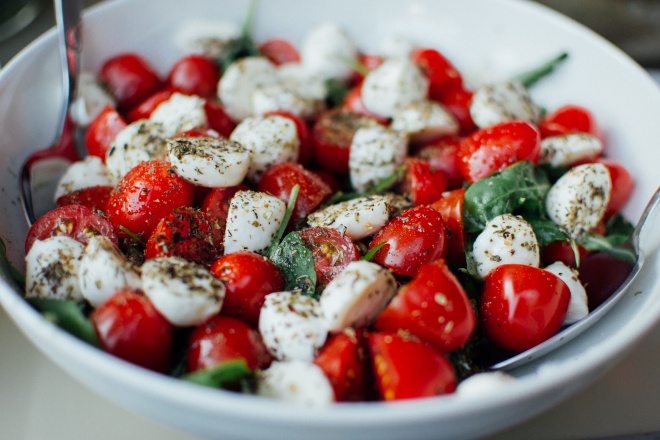
The Mediterranean diet is good for your wallet and health

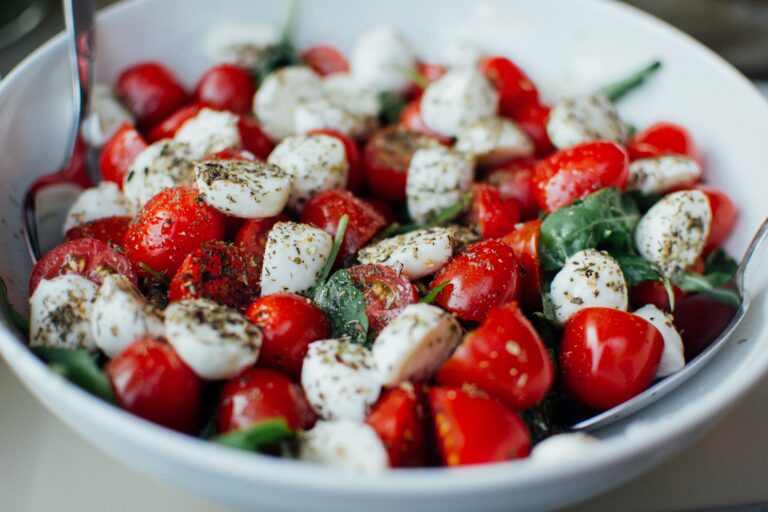
cherry tomato salad

Tired of going broke in the pursuit of healthy eating? It’s easy to assume that eating cleaner and greener means having to spend more money purchasing fresh, organic food. A new study cooks that conclusion, but Green Prophet has been telling you this for years.

Researchers from The Miriam Hospital in Providence, Rhode Island and the Rhode Island Community Food Bank found that folks who followed the Mediterranean Diet saved an annual average of USD$750 over the typical diet prescribed by the U.S. Department of Agriculture (also known as the USDA MyPlate diet).

And if money doesn’t motivate, consider a Green Prophet report that linked the diet to increased virility!

The Mediterranean diet consists largely fruits and vegetables, nuts and beans, fiber-rich whole grains, moderate consumption of fish and red wine, and generous servings of olive oil. The diet is largely plant-based, requiring fewer natural resources than animal production, so it’s relatively light on environmental impact. In 2010, UNESCO recognized it as part of the Intangible Heritage of Humanity.

Lead researcher Mary Flynn, Ph.D., a dietitian at The Miriam Hospital, said in a statement, “It is commonly said that healthy diets are expensive and that it is the fruits and vegetables that make them too expensive. We expected the two diets to be similar in fruit and vegetable content, but our plant-based diet was substantially cheaper, and featured a lot more fruits and vegetables and whole grains.”

The study concluded that these staples are less expensive than traditional red meat based Western-diets that include white bread and pre-packaged snacks.The savings are largely attributed to a reduction in meat. Nutrient-rich olive oil is pricier than vegetable seed oils, but this is offset by increasing consumption of fruits and vegetables on a daily basis, which produced the biggest cost savings in the study.

“Our findings with this study run counter to the general belief that a healthy diet must be expensive,” said Andrew Schiff, CEO of the Rhode Island Community Food Bank and a researcher on the study. “This is really good news for individuals served by the Food Bank – showing that wholesome eating on a tight budget is possible for everyone.”

Need help starting your economical plant-based diet? Start here.

4 Ways To Go Green

0

Currently, being ecologically savvy is growing in importance. How to go green can still be a mystery to some people. Changing our habits isn’t always the easiest and getting started can be the hardest part. Starting simple and incorporating one technique at a time is an easy way to get started and feel empowered to keep going. Look through our suggestions and pick the one that seems to be the simplest change to your everyday life.

Review The Cellphone Situation

Many people don’t factor their cellphone into the ecological concerns and yet they are a concern. People average changing their phone approximately one to two years. A new phone every one or two years creates a lot of phone trash. There are recycling options in most cities that send the phones to programs that benefit the underprivileged citizens and victims of domestic violence. Why people change their phones so frequently are due to a wide variety of reasons. Breaking the phone is the #1 reason and we should take action to protect our phone investments.

Cases, such as the iPhone X cases, are the first step to take when protecting the phone from damage. Secondly, being more mindful of where our phone is. If you drop your phone into a toilet often you can save it by not taking the phone into a restroom. Lastly, you can always opt to work with a green cellular company. While the phone itself won’t quite be ecologically sound, there are other things these companies do. They get involved with finding ways to lower their carbon footprint, donate to a variety of programs to help our lands, and find innovative ways to recycle old phones into something ecologically friendly.

Change Your Driving Habits

Changing your driving habits is very important to lessen our effect on the Earth. Not only do we need to use precious oil and fuel to use our cars, we contribute to the unhealthy air every time we take a drive. You can look to riding a bike to work or to a church service, rather than driving. Not only will you cut down your costs, you can also get in a bit of exercise on your commute. If biking is not an option for you, then we suggest looking to mass transit in your area. The bus or subway system can be far better on your budget and your health. Since not all of us live in cities with buses, the next option would be to carpool to work. Fewer cars and splitting of fuel expense can save you money, time, and lessens the contribution to the air. Additionally, it’s a great way to get to know some people that you may not be that close to.

Minimize Your Electric Use

Electricity is the one thing we don’t think about and yet we have to pay for it. Lessening your electricity use will save you on your power bill and lessen your carbon footprint. You can start with ensuring that lights are turned off when you are not in the room. You can also stop overuse by always shutting your laptop or PC down each night. In the summer, grill your dinner over charcoal rather than cooking on your stove. You reduce the electricity used and lower the odds of overheating your home and increasing the need for the air condition to turn on.

Switch Your Batteries

It’s easy to get caught in the habit of buying batteries every few months. Rather than contributing to a trash pile, buy rechargeable batteries instead! Yes, they do cost more. In the long run, you will save plenty of money by not constantly buying new batteries. If you don’t want to make that switch, please look for ways to recycle the old batteries (of all kinds) so that they aren’t hitting the landfill.

Are you going to kick things off with learning more about green cell phone companies or would you rather start recycling batteries? As we head into spring, you may want to give a lot of thought to taking the bus or starting a carpool with coworkers. Just pick one and build on it.

Get wise to 20 facts on World Water Day

world water day 2018It’s World Water Day, celebrated annually on March 22.  The day is about focusing world attention on the importance of clean water and how we can collectively protect and preserve water quality, and as importantly, quantity.
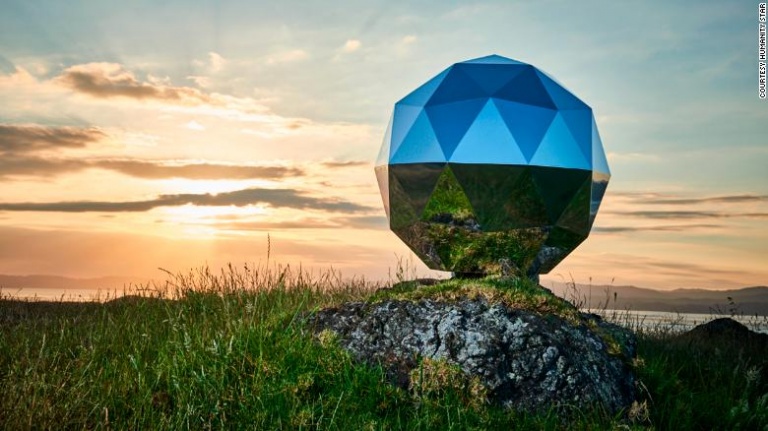
Giant disco ball is plummeting back to Earth

New Zealand satelliteDust off old Donna Summer albums and celebrate the premature return of New Zealand’s giant “disco ball” satellite as it drops down to Earth from outer space.  Just like the Age of Disco, it will completely disintegrate, leaving only groovy memories.

The Humanity Star is a reflective satellite launched in January by Rocket Lab, a private New Zealand company. It was intended to remain in operation for most of this year, instead it will flame out this week. Rocket Lab founder Peter Beck said in a statement, “In the coming days, the Humanity Star will begin its final descent into the Earth’s atmosphere where it will burn up on re-entry, leaving no trace.”

The satellite, which looks like a disco ball, had no specific function, except as a spectacle. (Think of the Tesla roadster shot into space by Elon Musk’s SpaceX last February.)  The Humanity Star is made from carbon fiber and has 65 reflective panels that bounce sunlight back to Earth. The ball spins rapidly as it traverses the night sky, creating a blinking effect.

Think fast! The satellite was meant to encourage people to “think a little differently about their lives, actions and what is important for humanity,” according to a company press release. But according to the satellite’s own tracker, the object is losing altitude at a rate where it is now expected to re-enter Earth’s atmosphere on Thursday.

Richard Easther, an astronomer from Auckland University, said the earlier-than-expected re-entry is likely down to flawed modeling. “I’m guessing that the forecast was based on a regular sized satellite, and an object that is essentially a balloon will feel a lot more drag, more than the regular satellites that are sent up, (which resemble) a hunk of metal,” he told CNN.

New Zealand satelliteBeck, pictured above, said, “My hope was to encourage people to linger looking at the stars and ponder our place in the universe. While the Humanity Star was a brief moment in human history, I hope the conversations and ideas it sparked around the world will continue to be explored.”



Both men mentioned Kiwi pride in that a company from New Zealand, a small, non-military power, was able to successfully complete the launch. Added Easther, “As a New Zealander I’m proud… (to see) homegrown hardware put in orbit.”

This writer is still marveling that TV shows about cake ever became popular.  Now I have to grapple with this new trend of expensive space litter. Thankfully, at least Israeli start-up is working to clean-up space (read more here).

Images courtesy of Humanity Star

Sending the kids to school in India

0
Picking up kids at the Yellow School in India. Would you carpool with Mad Max?

It’s a parent’s fantasy to get away for the winter, no? But not just for a week on a Disney cruise. That kind of holiday actually frightens me. Perhaps because I am a child of the 70s now with children of my own, I was seeking a holiday where I could enjoy myself, and my kids could too. I have a theory that when I am happy, my kids are happy. We all found the answer to our family needs in Goa, India. We decided to stay in a village called Anjuna, because a friend of mine Didi, said it’s the best.

Yes, I know, India has a wildness to it. It’s one of those places where you need vaccination shots, and you need to wash your hands and you can’t drink water from the tap, and yes, the roads are nuts. But think of Goa as “India light”. It’s a great place to enter the eastern wildness and awareness that India offers, but it’s a relatively safe place for children and women alike to settle in for a month or two or more. 

After I heard about the beautiful community in a small beach village called Anjuna, what made the whole trip for 6 weeks irresistible is that my children would be able to go to school there. Some established hippies, then with kids of their own, set up a school in Anjuna, which starts young at pre-school ages, up until Grade 6. It’s called the Holistic Yellow. Taught in English by local Indian and international teachers, you as the parent can have your days free to explore Goa, do yoga, work remotely, sunbathe, or sleep, while your kids enter a small paradise of freedom and fun.

My daughter and her new bestie

The Holistic Yellow School, was founded by Karl John Shenton, a father of 2 boys – now both at the school. He’s studied and learned from many pedagogical systems over the years and has built his own style, where a kind of freedom and wildness prevails. While my 5 and 7 year olds were there for 5 weeks they met friends from all over the world, some speaking 5 languages; they got to swim, go to water parks, discos, played endlessly with glitter and crafts, planned a large dance festival, and most importantly were hugged and loved by the warm staff.

When we entered the children to the school, we told them that they don’t need to learn anything. I’d been homeschooling English, and they go to a slower-paced school in Israel where one of them is just starting to read and do math. We were under no stress for them to learn anything and the Holistic Yellow staff were gracious about that.

The kids felt at home from the first day and couldn’t wait to go to school the next day. While it’s hard to get my boy dressed in the morning in Israel, where we live, in India he was motivated to put on his clothes and his shoes well before the time.

goa,anjuna, yellow school

Another great thing about the school is that there are vegetarian options for my kids who keep a kosher diet. For others, as vegans or vegetarians there is a strong awareness in Goa to other’s eating habits thanks to Hindu influences and a very multi-national community, many of whom are vegetarian.

The Holistic Yellow School won’t break your bank either. It cost us a modest 14,000 rupees a month, about $240 USD per child, making it a great alternative for parents and people who want a real holiday of a month or more to get into the vibe of India. They accept drop ins and cater to the travelling community.

Yellow School parents

Consider that what makes the school so charming and the kids so great is that they are the offspring of the Goa hippies, many from the trance scene that started in the 80s. The kids are world-travelled, balanced, fair and open-minded. Once you experience the Yellow School and visit there you will know exactly what I mean.

danice yellow school anjuna

If you are lucky your children will connect to the others and you will have an instant community where you will meet other parents full of positivity. Not a “normal” one in the crowd. We were invited to birthday parties, disco parties, and unusually good dinner buffets with our new friends.

An after-school playdate. The kids are cooking in their restaurant.

There is no simple way to sum up what the Goa experience is. It’s not Pura Vida like Costa Rica. It’s not Same Same, But Different like Thailand. It’s just amazing for the spirit. Because going to Goa is mostly like going to visit yourself, the version of you that you like in your dreams.

While I love my kids, I also love being my own person and the Holistic Yellow gave me the chance to be that too, on holiday.

New friends that I got to meet because of the Yellow School – my kids were on a playdate at this home in Anjuna.

For more information about the Yellow School in Anjuna, Goa, see their Facebook page. Or talk to Karl here. Check out Sam Rao for homestays in the Anjuna area


Chocolate-Dipped Coconut Macaroons for Passover

0

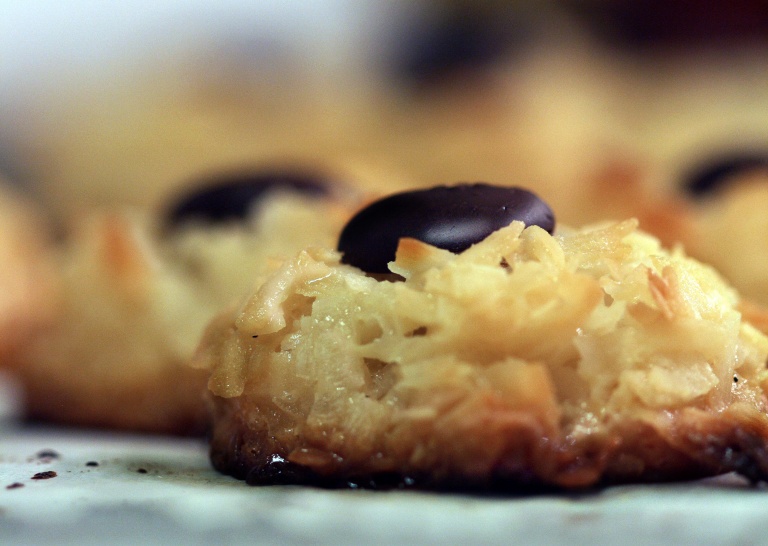
coconut macaroon

Passover is the Jewish festival of freedom from slavery in Egypt and the realization of Jewish national identity. The Jews fled Egypt in such haste that there was no time to let their dough rise to bake waybread. They simply rolled the unrisen dough out and baked it flat. And thus were born matzot, also known as matzahs, eaten every Passover for almost the past 3000 years, instead of bread and in commemoration. Here’s our traditional matzah ball recipe.

To remember the Exodus, Jewish law requires that every household be free of leavened food during the week-long holiday, and even renounce possession of it.

Passover food restrictions extend to all foods and drinks containing or processed with wheat, barley, rye, oats, or spelt or their by-products, and which might have been leavened. In communities that originate in Eastern Europe, Jews also avoid eating pulses and grains.

This doesn’t seem to leave much room for enjoyable eating, and the truth is, Passover is the time of year when Jews eat the most potatoes. But clever cooks always find ways to put delicious foods on the table during the holiday week. Some recipes are even favorites that the family looks forward to eating from year to year.

One such recipe is coconut macaroons, a Passover delicacy that was invented in 1871 by Esther Levy, author of The Jewish Cookery Book, the first Jewish cookbook published in America. Before Levy created coconut macaroons, the sweet was based on almond flour. When coconuts from Florida came into American markets, Levy created a new, coconut-based tradition.

You can substitute any finely-ground nut for the shredded coconut in this recipe. Walnuts, almonds and hazelnuts are typical. But I’m sticking with Esther Levy’s version, because it reminds me of childhood Passovers, when coconut macaroons were a once-a-year treat. This recipe yields macaroons that are all a macaroon should be: light, slightly crisp on the outside and chewy on the inside, melting away almost with a sigh.

Ingredients

3 to 5 cups (180 to 300 grm.) sweetened shredded coconut*
4 large egg whites
½ cup (115 grm.) sugar
1 teaspoon vanilla or almond extract
¼ teaspoon salt

Chocolate Dip
A thin layer of chocolate on each macaroon makes a luxurious Passover cookie.

Ingredient: ⅔ cup (115 grm.) semi-sweet chocolate
Equipment: a small pan set over a larger pan containing boiling water.

Preheat the oven to 350°F (175°C). Line two baking sheets with baking parchment.
Beat the egg whites until they form soft peaks.
Add the sugar gradually and beat until the whites are stiff.
Add the vanilla or almond extract, blend well. Add the salt.
Fold the coconut into the egg white mixture.
With wet hands, or using two spoons, form the macaroons into 1-1/2 inch balls.
Place them 1 inch apart on the parchment paper.
Bake the macaroons for 15 to 20 minutes, or until the bottom edges look golden-brown.
Let the macaroons cool for 5 minutes on the baking sheet, then carefully transfer them to a rack to cool completely.

Melt the chocolate over, not in, the hot water.
Take a macaroon by its bottom and dip the top into the melted chocolate. Place it back on the rack for the chocolate layer to cool and harden.

Store, tightly covered, up to 3 days at room temperature, 7-10 days in the refrigerator, and 1-3 months in the freezer.

Photo of coconut macaroons by Lila Dobbs  via Flickr.

Connecting the Profound: Jewish Passover and the Environment

0

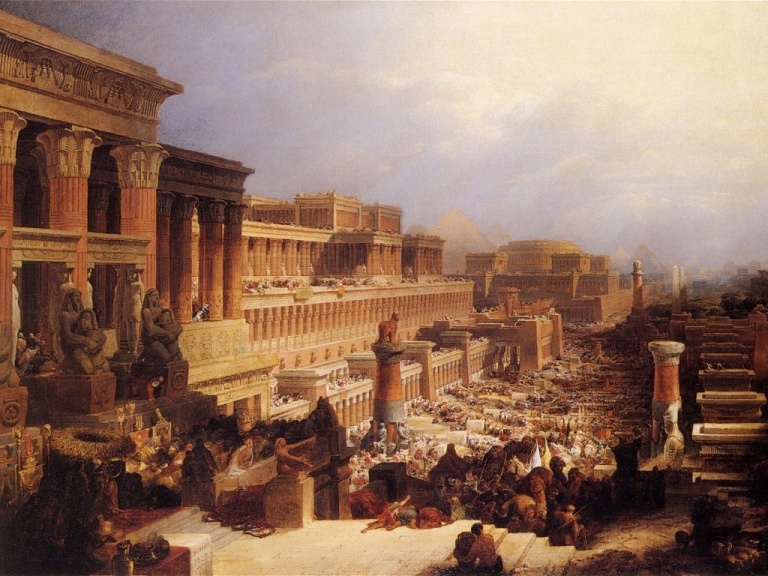
exodus from egypt

Passover 2018 in Israel begins after sunset on the evening of Friday, March 30th, and ends at dusk on Friday, April 6th. Outside of Israel, the holiday ends on Saturday, April 7th, at night.

The holiday marks the time when the Israelities left Egypt as slaves, and entered the land of Israel (Canaan) as free people

Today Jews around the world are working vigorously right now to remove each and every last speck of hametz (leaven) in their homes, and most see it as a time to do some spiritual housecleaning as well.

Green Prophet is always looking to religious sources for answering the complex challenges that the world faces today in the green movement. And here in the Middle East, the time is ripe for an environmental revolution too.

Here Karin revives an interview from 2007, on the green connection to Judaism’s Passover and the environment. The interview is with Rabbi Yehudah Leo Levi, a physicist, rabbi and author who lives in Jerusalem.

Q: How is Passover connected to the environment?

A: The connection between Passover and the environment is somewhat indirect, but extremely profound. According to the Torah (Jewish tradition), one central purpose of the creation of the human being was to complete the development the world God had created in His wisdom.

The human being was put into the wonderful Garden of Eden, not, primarily, to enjoy its delicious fruits, but rather “to serve it and guard it” (Genesis 2:15). Or, in the words of the Midrash: “When God created Adam, he took him to survey all the trees of the Garden of Eden and said to him: ‘See My works, how pleasant and praiseworthy they are… be careful not to spoil and ruin My world. For, if you spoil, there is no one to repair after you” (Qoheleth Rabba 7:13).

In other words, the human being is to be a caretaker, not owner, of the world.

Subsequently mankind forgot this message and turned to paganism, serving the powers of nature instead of their Creator. Thus they travelled on a path of self-destruction. To save humanity, God chose Abraham to become the progenitor of a nation which was to bring God’s message to humanity. That nation was formed on the night of the first Passover for the explicit purpose of teaching mankind what God wants of them, which is primarily the development of the world, physically, socially, and spiritually. Thus, in a sense, Passover commemorates the creation of the mentors, who were to make mankind aware of their duty to care for their environment.

Q: What is the spiritual message of Passover

A: Because of His concern for a faltering humanity, God “created”, on Passover night, a new nation (Israel) to become a “lighthouse” to humanity.

Q: What are some Jewish traditions in general that show the faith is concerned with protecting the environment

A: Judaism commands the preservation of the environment by prohibiting its wasteful utilization.

Even during war, which may occasionally be forced on the Jewish people, they are forbidden to cut down fruit trees – even their enemies’ (Deuteronomy 20:19).

Jewish tradition expands this to forbid unnecessary destruction of all elements of the environment (Maimonides, Melakhim 6:10); even wasteful use of fuel is explicitly forbidden (Babyl. Talmud, Shabbath 67b).

Another interesting example is the concern lest discomfort be caused to the neighbor. Especially sources of excessive smoke, unpleasant odors, dust, and vibrations are forbidden, without the permission of the neighbors (Shulchan ‘Arukh, Choshen Mishpat 155:36). The reader will find there over a hundred paragraphs listing such prohibitions.

A third illustration is the Torah’s concern for proper city-planning. It demands a “green belt,” about a kilometer wide around each city, a belt which may not be used for building. If you need more housing, start a new city. (Cf. Numbers 35 & Rabbi S.R. Hirsch’s commentary to Leviticus 25:34, at length.)

For more reading:

1. Torah & Science – Their Interplay in the World Scheme, Feldheim Publishers, Jerusalem & Nanuet, NY, 2006; chap. 3.
2. Facing Current Challenges – Essays on Judaism, Lambda, Brooklyn, NY, 1998; Essay 36.


Rabbi Levi’s bio:
 I grew up in New York. There I got my academic degrees: B.E.E., M.Sc., Ph.D. (Physics), my Rabbinic ordination and a professorship at City College. In 1970 I moved to Israel to set up the Physics/Electro-Optics Dept. at the Jerusalem College of Technology – the second such department in the world. (I had to write the text-book myself; it was eventually published by Wiley in N.Y.)

Ten years later, I was appointed Rector there. Since my retirement in 1991, I am continuing bi-weekly lectures there, primarily in Judaism. I also give a weekly lecture at the Jerusalem Academy of Jewish Studies.


“Penis facials”made from baby foreskin make Hollywood starlets glow

0

penis facial

Will you try the Hollywood EGF (Epidermal Growth Factor) made from baby foreskins?

Actress Cate Blanchett caused a social media tsunami when she revealed that she and actress Sandra Bullock indulged in an unusual beauty treatment while in New York City. Blanchett, the current face of Giorgio Armani’s new fragrance Si Passione, was in Sydney on a press junket. In an interview with Vogue Australia, she attributed her facial glow to a treatment harvested from men’s…”junk”. 

Related: alloClae gives Brazillian butt lifts from human cadaver fat

Vogue reporter Remy Rippon asked  the actress, “What’s the most outlandish beauty treatment you’ve tried?” to which Blanchett replied, “Sandy [Bullock] and I saw this facialist in New York, Georgia Louise, and she gives what we call the ‘penis facial’ and it’s something — I don’t know what it is, or whether it’s just ’cause it smells a bit like sperm — there’s some enzyme in it, so Sandy refers to it as the ‘penis facial.'”

penis facial sandra bullock

Several fashion and beauty publications picked up the news, amplified by Twitter. Vogue Australia then deleted the quote from the story without any notation that the original story had been edited, although the article could still be viewed on the magazine site via Google search hours later and the interview is reprinted in full on a Cate Blanchett fan site.

Manhattan aesthetician Louise was delighted by the plug for her unusual product, professionally tagged as the Hollywood EGF (Epidermal Growth Factor) Facial. It can be yours for USD$650.

“Sandra Bullock was filming in NYC and came to see me for a deep cleansing and long-lasting facial glow,” Louise told The Hollywood Reporter. “I wanted to give her something that would transform her skin without lasers, so I loaded up her bespoke facial with something that would give her long-lasting results. Within weeks her makeup artist and castmates wanted to know what was the cause of her long-lasting glowing skin….and the Hollywood EGF Facial was born!”

“Foreskin is collected during circumcision and the stem cells are then harvested and extracted through a centrifuge,” said Louise.  “I am always very mindful to explain radical serums and potions that I carry in my back bar, so I always explain that although EGF is derived from newborn baby foreskin, the cells used in my serum were extracted from those original cells, but in fact are new cells cloned in a laboratory.”

Earlier this month, the beauty expert posted a screenshot of an article that recapped the controversy, and adding in some blatant self-promotion. “No babies were used — only clone cell[s] taken years ago!”

She went on to explain that the stem cells were sourced from a Korean stem cell bank.  She claims that FDA-approved stem cells and peptides help regenerate collagen and elastin. The facial includes a cleanse, followed by an intensive TCA peel, micro-needling machine and en electrifying mask to calm the skin, followed by my ‘secret box’ ofEGF (Epidermal Growth Factor) serum.”

Other A-listers who use this salon – but not necessarily indulge in the penis facial – include Emma Stone, Katy Perry, models Linda Evangelista and Karlie Kloss and fashion designer Alexander Wang.

3 Tips to Reducing Your Carbon Footprint That You Might Not Think About

0

All around the world, as attention shifts to global warming, people are looking for ways to go green. It’s not just individuals. Companies like UPS and Amazon have realized the need to change and become more environmentally responsible. For UPS, that involved analyzing how their planes landed at airports. By changing their landing method, they were able to save over a million gallons of fuel per year, reducing nitrous oxide emissions by 34 percent.

Other companies have found other innovative ways to reduce waste. For manufacturers with large industrial processes, there are areas where steel structures undergo impact and abrasion. This can include dump bins and conveyor areas. Rather than let the structures become damaged and force a replacement, the installation of chromium carbide overlay plate allows the parent structure to function with only the lining needing replaced.

For individuals, the quest to go green starts simply enough. There are numerous sites with tips on how you can reduce your carbon footprint and start becoming more eco-friendly. As you become more involved in your quest to go green, you’ll start to wonder what else you can do.

One example is if you are one of the millions of people who have shifted over to an e-reader to indulge your daily reading habit, recycle your books. This will ensure that they don’t end up in a landfill or just take up space in your garage. Here are three more ways that you can go green that you might not have thought about.

  1. Composting – If you’re already separating your recyclables from your non-recyclables, you’ve probably noticed a huge reduction in the amount of trash that you’re sending to landfills. You can make that amount even smaller by composting your organic waste.

Compost is essentially natural fertilizer that you make yourself. Spreading it over your lawn or mixing it in with the soil of your garden will replenish the soil and give your plants a huge nutrient boost. And making it is ridiculously easy. You can make it in something as simple as a 40 gallon Rubbermaid container with a couple of bungie cords and a few holes drilled into its sides, or create a permanent composting station out of brick and concrete.

The basic rule of thumb when creating compost is to add one part green ingredient to two parts brown. The green ingredients come fresh from your kitchen and are rich in nitrogen. Vegetable and fruit scraps and coffee grounds (filter and all) are a great green ingredient. Brown ingredients have more carbon and include crushed egg shells, brown leaves from the fall, wood ash, shredded cardboard, or non-pressure treated sawdust. For more do’s and don’ts when it comes to compost, check out the tips here.

  1. Reusable Is the Name of the Game – Essentially, when it comes to reusability, you want to avoid disposable plastic things. That means one-use water bottles, single-serving plastic takeout containers, and those plastic rings on six-packs of soda. There are also hidden sources of microplastics. These are small bits of plastic that are less than 5mm in diameter. They used to be used as exfoliants in beauty products, but are also caused by the eventual breakdown of larger plastic items.

While some of these things are unavoidable, depending on your consumer habits, making an effort to minimize them can make a huge impact on your carbon footprint. Not only that, you’re also going to help prevent the Great Pacific Garbage Patch from getting larger and keep microplastics out of the food chain.

  1. Energy Savings You Didn’t Think About – The final tip is a way to not only help you be a little greener but also save you money. And that’s to install one-touch power strips wherever you can. The reason behind this is so that you can stop idle power from going to your electronics when you leave or go to bed.

Think of everything that you have plugged into the walls. All of the electronics that are sitting idle, from your computer to cell phone chargers to your PS4 or Xbox One. And even though you turn them off for the night, they are still pulling power. Everything from your printer to your microwave oven is still eating a trickle. For example, your computer’s LCD screen may be in sleep or even turned off, but it’s still pulling an average of 1.13 to 1.38 watts. Your desktop computer can draw up to 21.13 watts if it’s in sleep mode.

Plugging your gear into a surge protector/power strip then, allows you to cut the juice to those hidden drains on your electric bill. Just flick the switch, and you know that nothing is pulling power and sneaking dollars and cents out of your wallet.

Is sex on an airplane legal? In-flight rules revealed!

0

sex on an airplaneGot a secret fantasy to join the Mile High Club?  We hear that plane vibrations and lower oxygen levels can heighten arousal and deliver more intense orgasms. But have you considered the cost of getting caught in the act? Study up!

Whether or not you are arrested for having sex on a plane largely depends on the aircraft that you’re flying with – and what nation it’s registered to. The issue was spotlighted this week when a randy couple were caught having sex on board a Virgin Atlantic flight to Cancun. (To make matters worse, the moment they were caught was in turn caught on video by other passengers.) On landing, the woman was met by Mexican police and taken into custody for  “disruptive” behavior. No word on what happened to her male “partner in crime.”

Who has owned up to tuning into more than an in-flight movie for airborne entertainment?

In 2007, Virgin founder Richard Branson admitted he became a member of the Mile High Club at age 19 en route from London to Los Angeles. A Qantas stewardess claimed she canoodled with British actor Ralph Fiennes in an aircraft toilet headed to India, but the actor refused to comment. Kardashian matriarch Kris Jenner has also admitted to getting frisky on a flight, with then-husband Bruce Jenner.

Sex on a plane could earn you high-fives and smiles from a lenient flight crew, or land you in uncomfortably hot water. It all depends on a number of variable factors:

  • The laws of the country to which the aircraft is registered.
  • The laws of the country from which the aircraft is departing.
  • The laws of any country whose airspace the aircraft passes through.
  • The laws of the country where the aircraft is landing.

A spokesperson from the United Kingdom (UK) Civil Aviation Authority (CAA) told Sun Online Travel, “On board the aircraft, it is the law of the country where the aircraft is registered that applies. People who want to get it on aboard a plane might want to exercise caution – or end up with a fine.”

In the UK, people caught having sex in public could be arrested for the criminal offence of Outraging Public Decency – which could also be applied in an aircraft. It doesn’t matter if your partner is a loving spouse you’ve had for 50 years or if it’s someone you met on the flight that day sitting next to you or from one of the known or best hookup sites. A CAA spokesperson said, “It would be a matter for the police and the Crown Prosecution Service to decide if a prosecution should be brought.” This is because there are no specific aviation laws covering this – the same laws that apply domestically within the UK would also apply on board a UK registered aircraft.

In other words, it’s where the aircraft is registered, not the nation from which the airline hails. In this case, in Great Britain, under section 71 of the Sexual Offences Act 2004, it is illegal to have sex in a toilet which the public has access to. The same rule applies on a UK registered plane, and offenders risk a six-month prison sentence or a £1,000 fine.

economy class travel
Does this put you in the mood?

On Western airlines, over Europe or North America, if the encounter was discreet and only the stewardess noticed, then you’ll likely just be told to stop. At the other end of the scale, you can be detained and charged for causing a disturbance on a plane. If the captain is alerted, you may find authorities waiting for you at your destination. You could face indecent exposure charges, or potentially interfering with the flight crew, which has a maximum sentence of 20 years in prison. 

You could suffer far worse consequences if you dallied on a plane registered to a country with stricter rules regarding public displays of affection, and clear rules regarding sex, such as the United Arab Emirates (UAE), Qatar, and Indonesia. In Saudi Arabia, simply “consorting” with a member of the opposite sex can lead to flogging, lashing, or imprisonment.

In Dubai, the home of Emirates airline, and in Abu Dhabi, home to Etihad airline, kissing in public – even between married couples – is taboo, and punishable by an unpredictable UAE judicial system. Flights on airlines in predominately Islamic countries may file criminal charges based on the nature of the sexual contact. One American man was sent to jail in Dubai for having cannabis in his blood. He used medical marijuana before his flight and was arrested later in Dubai for having traces of it in his body.

So let the flyer beware. Know the country where the aircraft you choose is registered, because the Kyoto Protocol says that registration country’s laws are valid in an airplane. Look to the flag painted on the aircraft’s tail, or better yet, call the airline to verify. Be wary about any kind of monkey business on-flight, and with Covid, travel safe. And carbon offset!

Change your DNA with a trip to outer space!

0

Space DNAAmerican twins Scott (left) and Mark Kelly are the only identical twin astronauts in history, but after Scott spent nearly a year on a space mission, they may not be identical anymore.

In 2016, when Scott Kelly returned to Earth after a 340-day voyage aboard the International Space Station (ISS), he was 2 inches taller than when he left. Doctors verified that his body mass decreased, his gut bacteria were completely different, and — according to preliminary findings from NASA researchers — his genetic code had changed significantly. (Since re-entering Earth, Kelly has shrunk back down to his pre-space-flight height.)

NASA has released a new statement that suggests the physical and mental stresses of Scott Kelly’s year in orbit may have activated hundreds of “space genes” that altered his immune system, bone formation, eyesight and other body functions. Most of these changes reverted to normal following Kelly’s return to Earth, but about 7 percent of the his genetic code remained altered, and the changes appear to be permanent.

“The stresses of space travel…can cause changes in a cell’s biological pathways,” according to the NASA statement. “Such actions can trigger the assembly of new molecules, like a fat or protein, cellular degradation, and can turn genes on and off, which change cellular function.”

Scott’s time aboard the ISS was part of a unique NASA project called the Twins Study, which tracked the long-term effects of space travel on the human body. In March 2015, he joined the ISS to begin what would become the single longest space mission any astronaut has undertaken – most astronauts stay aboard the ISS for up to six months only. Meanwhile, his identical twin brother, Mark (a retired astronaut) remained on Earth as a control subject.

Because identical twins are born with identical DNA, the brothers made ideal subjects for before-and-after comparison, and researchers tested both men before, during and after Scott’s year in space to map specific changes in their and mental health.

NASA concluded that most of Scott’s physical changes proved to be temporary responses to the low-gravity, low-oxygen environment of space, however, genes involved in bone formation, oxygen deprivation, immune system responses and DNA repair remained transformed after his return to Earth. The reason could involve a reaction to an “the stress of space”.

“Oftentimes, when the body encounters something foreign, an immune response is activated,” Christopher Mason, a Twins Study researcher and an associate professor at Weill Cornell Medical College, told Business Insider. “The body thinks there’s a reason to defend itself. We know there are aspects of being in space that are not a pleasant experience, and this is the molecular manifestation of the body responding to that stress.”

Understanding why and how these “space genes” activate will be crucial to planning longer manned space missions. Green Prophet has been keeping you updated on other innovations that are making a Mars mission more of a reality (link here).

More than 200 researchers in 30 states are helping to analyze the Kelly brothers’ various test results, looking for space-induced changes in Scott Kelly’s cognition, metabolism, microbiome and many other physiological processes. NASA views the findings of the Twins Study – which will be published later this year – as a significant stepping stone to a three-year mission to Mars.


Israel’s Winter Pools Are Seasonal Nature Reserves

0

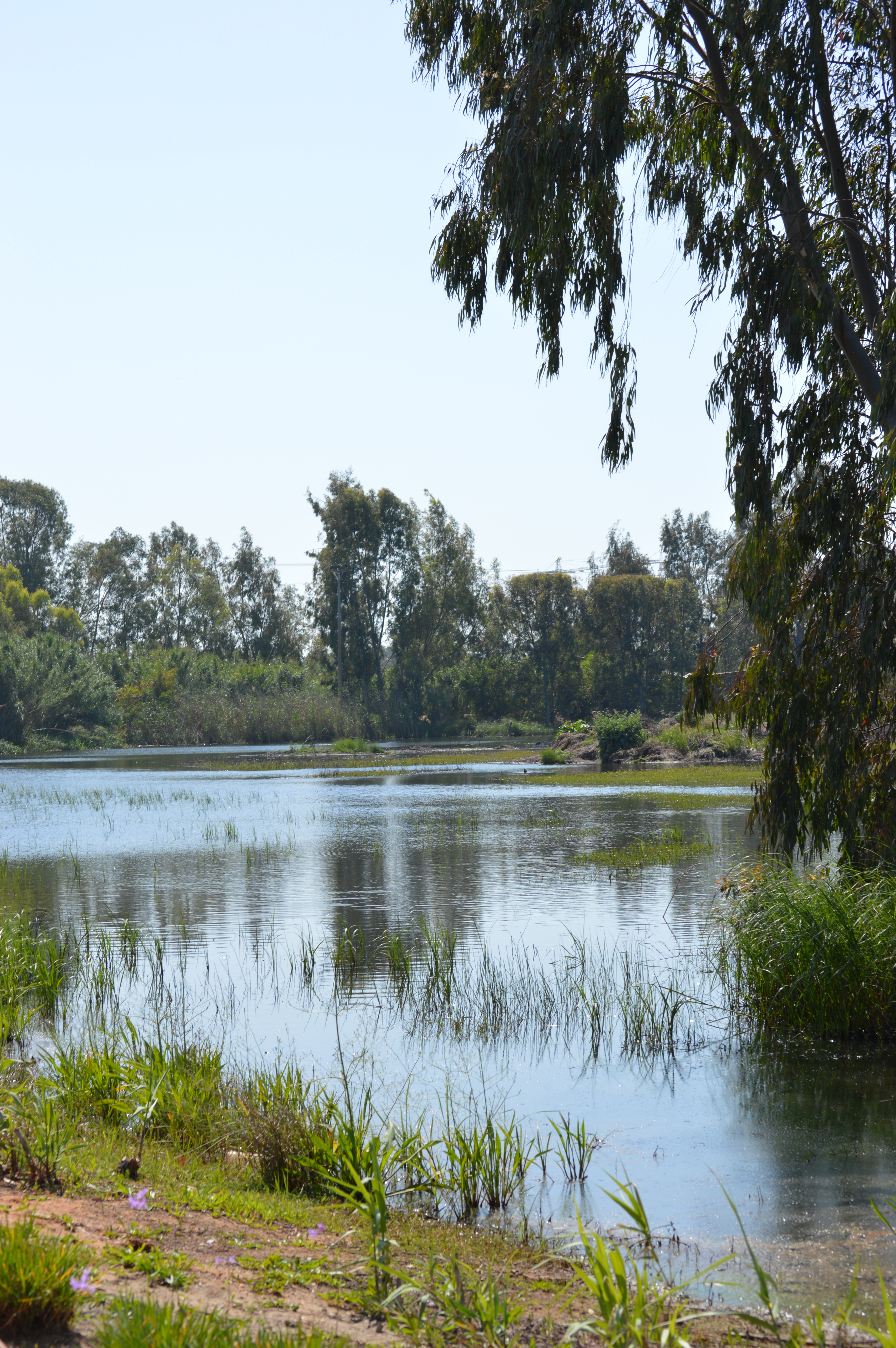
Israel’s winter pools are nature reserves that only last for a season.  Almost all are located on the edges of cities. They’re large, appearing like ponds or even small lakes. You’d never imagine that come summer, they won’t be there anymore. (Read this to discover eco-beaches that don’t go away in Israel.) Over 1500 such bodies of water used to appear spontaneously every winter in Israel. Today, only 5-10% of these pools still exist. About 80% of Israel’s winter pools have been bulldozed over to make way for roads and buildings. Others have dried up permanently because their water sources were deviated or blocked under construction.

The pools form when rain, river overflow and land drainage settle on low-lying fields with clay bottom ground. The hard clay bottom allows the water to remain for several months. These pools are drainage basins that, unlike swamps or ponds, dry up completely in hot summer weather. The land looks like empty fields again, just dry, useless tracks in the landscape. But life is lying dormant on the ground, in eggs, seeds, and hard-shelled “cysts” that the previous generation had deposited in the water. A rich aquatic eco-system bursts into life when fresh water rolls in again.

The rippling pools are beautiful. Reeds and flowering plants fringe the water edges. Tiny crabs crawl through the shallows. Frogs croak in bass voices. Iridescent dragonflies flash green and red wings as they hover and dart. Snails and caterpillars creep among the leaves. Mallard ducks, Ibis, lapwings, Egyptian geese and other migrant birds enjoy the abundant prey and shelter that the reeds and bushes provide. A new food chain springs up, attracting small mammals and migrating birds who come to visit, and stay while the water lasts.Israel winter poolsWalking around the winter pools in Hertzliya’s municipal park with ecologist Eldad Elron, I learned that the dry summer phase is essential to life in the pools. “If the water stayed, it would attract fish that would prey on other life forms,” he says. An unwelcome fish species already exists in the pools: the Gambusia, introduced into the pools by locals who thought thus to control mosquito outbreaks.


Elron says wryly, “Birds, frogs, and other insects eat mosquitoes, not the Gambusia. The fish prey on amphibians, some of which are rare species in danger of extinction. People have also sprayed pesticides into the pools, which did nothing because the mosquitoes grew resistant to the sprays. The mosquito outbreaks grew worse, if anything. And the spray poisoned wildlife.”

In the past, shepherds and farmers used the winter pools to water flocks, and as irrigation. Today, they’re recognized as nature reserves, where rare native plants and endangered species such as the spadefoot toad survive. But not all of Israel’s pools are protected by law. Some have been filled in for construction or to create farm fields. And not only the sites themselves need protection; rivers and streams that contribute to them must be maintained clean and free-flowing as well.

“The wild plants in the pools absorb and filter the water, returning it clean to the acquifers,” says Elron. “Our part is to protect the pools and monitor their ecological health, which reflects the health of the land and water in the area.” As much of a pool’s water is local surface runoff, examining its quality provides a realistic view of the area’s ecological condition.

seasonal pool Israel

The Society for Protection of Nature in Israel works all year to rehabilitates seasonal pools, running campaigns among school kids, youth groups and adults where volunteers uproot invasive plant species and clean trash away from water sources. There are pool rehabilitation programs where a pool has “died.”  (Read about an international effort to rehabilitate the Jordan River here.) The SPNI also runs guided tours and programs that give locals the opportunity to observe the pool creatures close up.

Occasionally, it’s necessary to create a new pool. Workers take dirt from existing healthy pools and place it in the new site to be repopulated. The eggs and seeds naturally present in the dirt hatch and sprout again when the rains come, starting a new life cycle. Usually the object of creating a new pool is to connect two existing ones. Feeding grounds for the water creatures increase, encouraging travel between the older pools; thus genetic diversity increases.

Israel’s winter pools are green sites for nature studies and research.They also provide easy access to quiet, natural surroundings for adults and children who rarely have contact with nature anymore.

Safdie’s Changi Airport will house the world’s tallest indoor waterfall

Safdie architectsThe world’s largest indoor waterfall is under construction in Singapore’s new Jewel Changi Airport extension. Designed by Safdie Architects, the spheroid-shaped dome will be a new luxury lifestyle destination at one of the busiest airports on the planet, featuring 134,000 square meters of facilities including airport services, indoor gardens, shopping and leisure attractions – including a canopy park in the upper levels of the dome.

The Mallows Menu

0

mallows soup

Mallows are at the top of my edible weeds list. Once or twice every year, at late winter, I go out and bring home a big bag full of them. Mallows on their long stems to hang up and dry. Mallow flowers and fruit to sprinkle over salads. Mallow leaves to stuff with rice or chop finely and mix with eggs and breadcrumbs to make patties. My most recent