
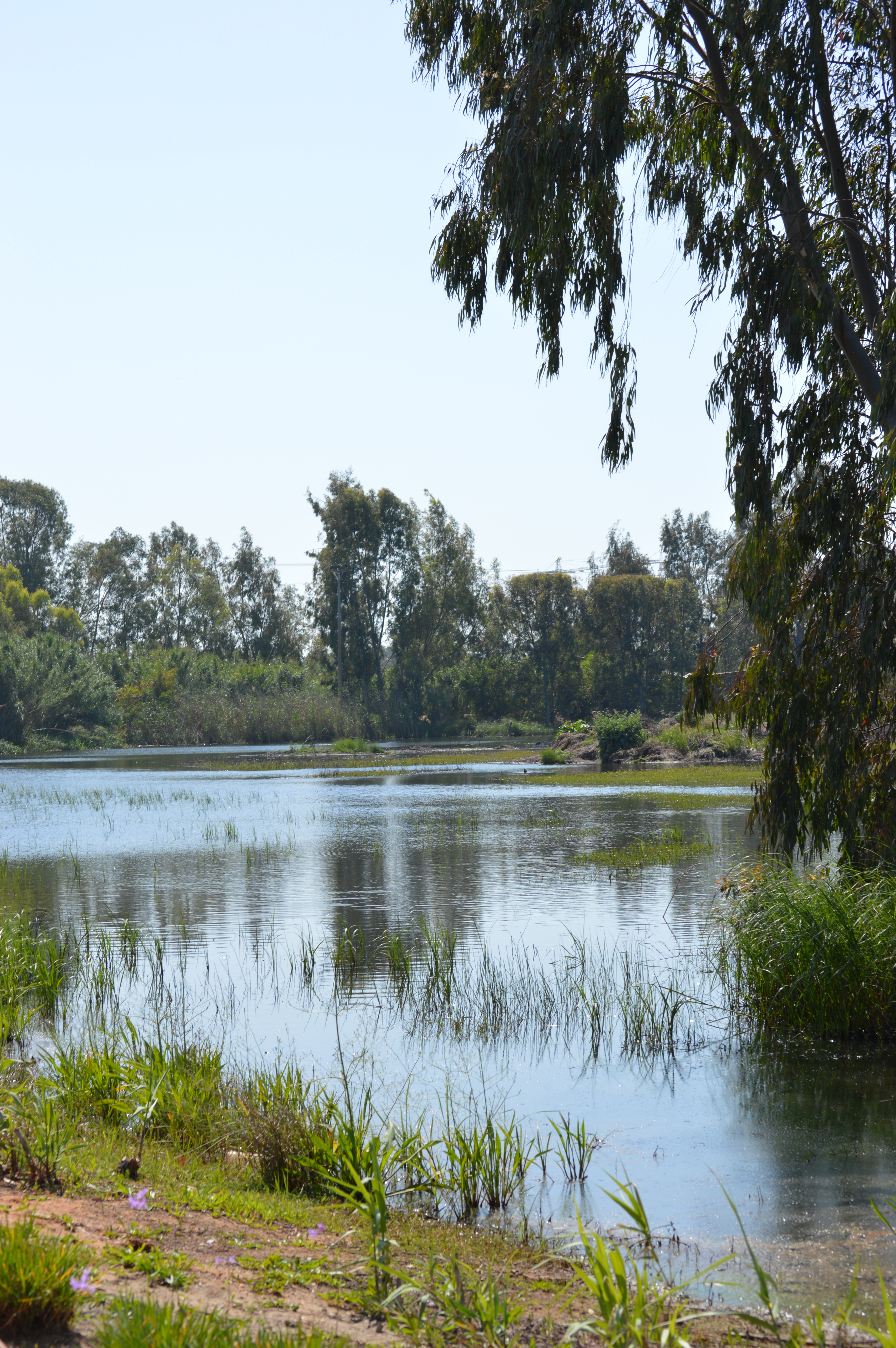
 Israel’s winter pools are nature reserves that only last for a season. Almost all are located on the edges of cities. They’re large, appearing like ponds or even small lakes. You’d never imagine that come summer, they won’t be there anymore. (Read this to discover eco-beaches that don’t go away in Israel.) Over 1500 such bodies of water used to appear spontaneously every winter in Israel. Today, only 5-10% of these pools still exist. About 80% of Israel’s winter pools have been bulldozed over to make way for roads and buildings. Others have dried up permanently because their water sources were deviated or blocked under construction.
The pools form when rain, river overflow and land drainage settle on low-lying fields with clay bottom ground. The hard clay bottom allows the water to remain for several months. These pools are drainage basins that, unlike swamps or ponds, dry up completely in hot summer weather. The land looks like empty fields again, just dry, useless tracks in the landscape. But life is lying dormant on the ground, in eggs, seeds, and hard-shelled “cysts” that the previous generation had deposited in the water. A rich aquatic eco-system bursts into life when fresh water rolls in again.
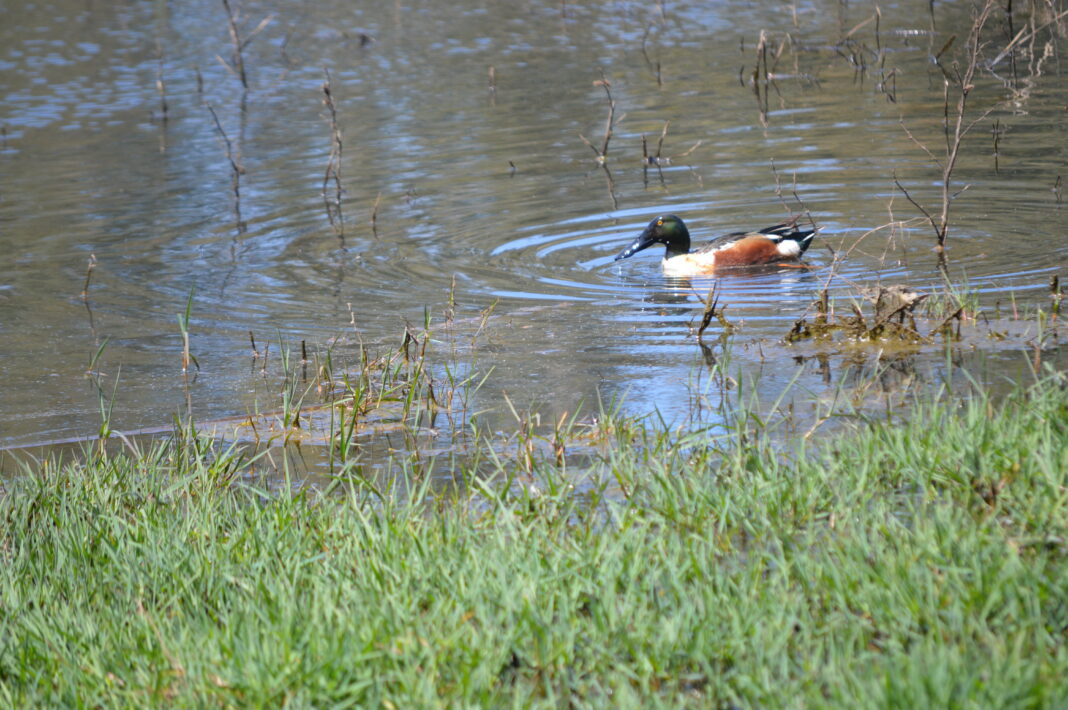
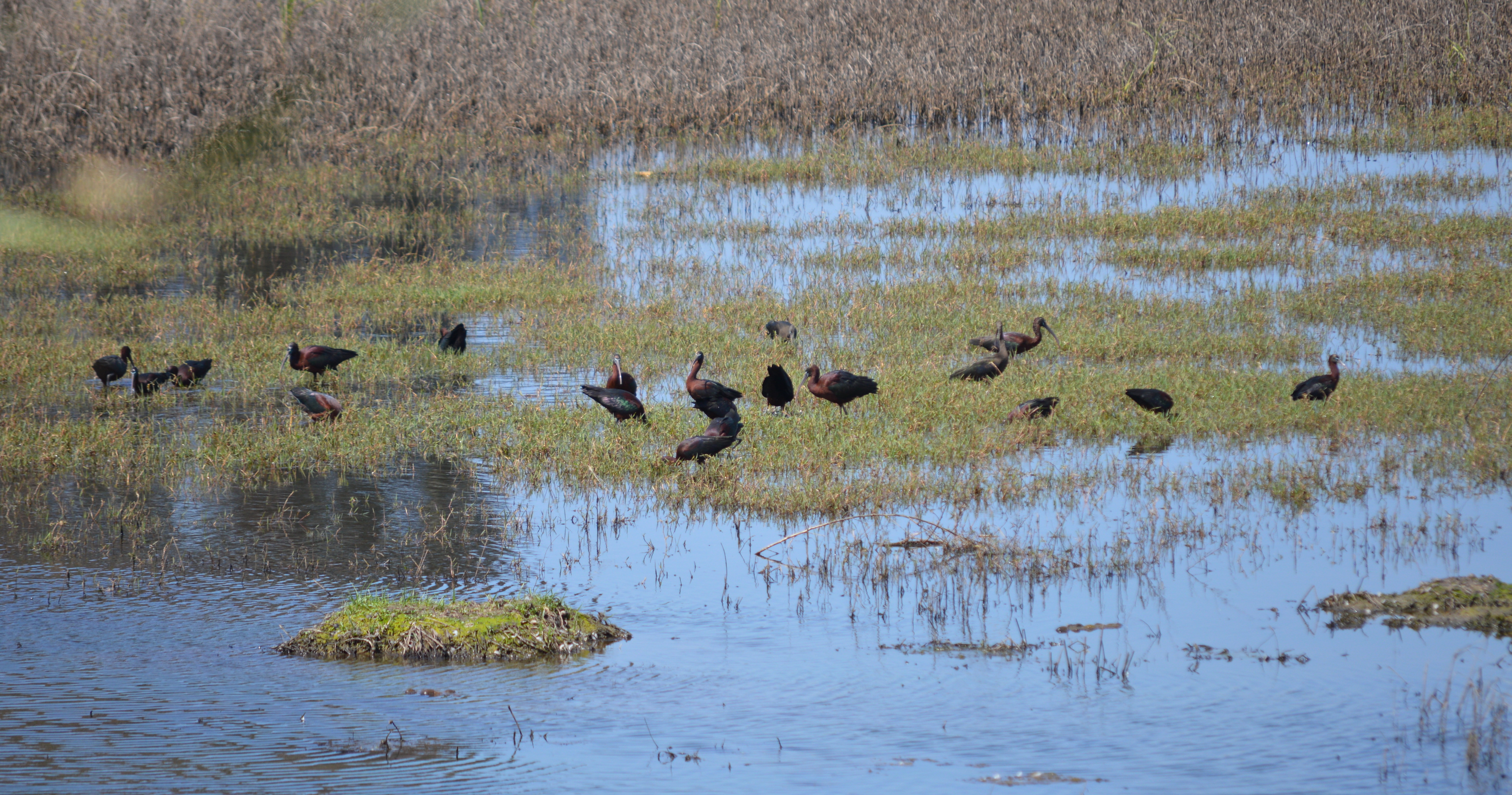
The rippling pools are beautiful. Reeds and flowering plants fringe the water edges. Tiny crabs crawl through the shallows. Frogs croak in bass voices. Iridescent dragonflies flash green and red wings as they hover and dart. Snails and caterpillars creep among the leaves. Mallard ducks, Ibis, lapwings, Egyptian geese and other migrant birds enjoy the abundant prey and shelter that the reeds and bushes provide. A new food chain springs up, attracting small mammals and migrating birds who come to visit, and stay while the water lasts. Walking around the winter pools in Hertzliya’s municipal park with ecologist Eldad Elron, I learned that the dry summer phase is essential to life in the pools. “If the water stayed, it would attract fish that would prey on other life forms,” he says. An unwelcome fish species already exists in the pools: the Gambusia, introduced into the pools by locals who thought thus to control mosquito outbreaks.
Elron says wryly, “Birds, frogs, and other insects eat mosquitoes, not the Gambusia. The fish prey on amphibians, some of which are rare species in danger of extinction. People have also sprayed pesticides into the pools, which did nothing because the mosquitoes grew resistant to the sprays. The mosquito outbreaks grew worse, if anything. And the spray poisoned wildlife.”
In the past, shepherds and farmers used the winter pools to water flocks, and as irrigation. Today, they’re recognized as nature reserves, where rare native plants and endangered species such as the spadefoot toad survive. But not all of Israel’s pools are protected by law. Some have been filled in for construction or to create farm fields. And not only the sites themselves need protection; rivers and streams that contribute to them must be maintained clean and free-flowing as well.
“The wild plants in the pools absorb and filter the water, returning it clean to the acquifers,” says Elron. “Our part is to protect the pools and monitor their ecological health, which reflects the health of the land and water in the area.” As much of a pool’s water is local surface runoff, examining its quality provides a realistic view of the area’s ecological condition.
The Society for Protection of Nature in Israel works all year to rehabilitates seasonal pools, running campaigns among school kids, youth groups and adults where volunteers uproot invasive plant species and clean trash away from water sources. There are pool rehabilitation programs where a pool has “died.” (Read about an international effort to rehabilitate the Jordan River here.) The SPNI also runs guided tours and programs that give locals the opportunity to observe the pool creatures close up.
Occasionally, it’s necessary to create a new pool. Workers take dirt from existing healthy pools and place it in the new site to be repopulated. The eggs and seeds naturally present in the dirt hatch and sprout again when the rains come, starting a new life cycle. Usually the object of creating a new pool is to connect two existing ones. Feeding grounds for the water creatures increase, encouraging travel between the older pools; thus genetic diversity increases.
Israel’s winter pools are green sites for nature studies and research.They also provide easy access to quiet, natural surroundings for adults and children who rarely have contact with nature anymore.