Make Greener Children With A Patch of Dirt

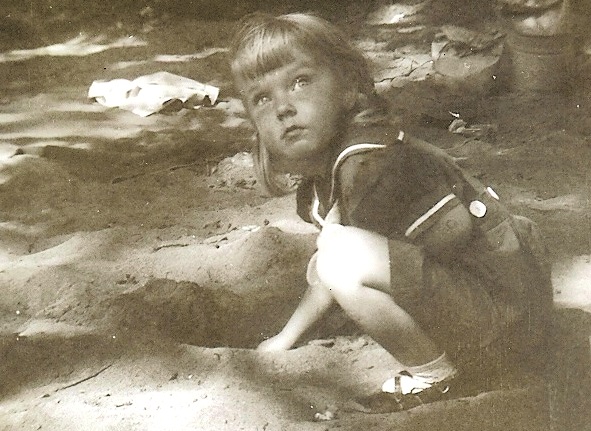
child playing in dirtTeach your child individual responsibility giving them a patch of “earth”.

I am not by nature a whole-wheat, Earth Mother, organic fabric, cloth diaper kind of person. I love to consume and I have a taste for the good life. I would rather wear designer clothes and own a Lexus than grow my hair long, go barefoot, and attend a love-in. In short, an adult hippie, I am not. Not that I do wear designer clothes or own a Lexus. I’m much too thrifty, and er, middle class for that. After all, I’m the child of parents who lived through the Depression. Even if I could afford that kind of lifestyle, I probably wouldn’t live it: I am cautious to the bone, and conserve wherever and whenever possible.

And that’s where the actual subject matter of this piece comes in, which is supposed to be about teaching kids to be better stewards of their planet. When we leave God’s green earth, we have a responsibility to leave it in the same if not better shape for the next generation. A large part of that is providing our children with the tools to maintain and improve the planet.

That’s the legacy we must leave for our grandchildren.

This isn’t the kind of project you place within a time frame. Preserving our resources must be an ongoing effort. One great way to teach your child about the cycle of life—the chain of events that keep the universe in motion—is to give your child a patch of dirt.

Simple Tasks

Whether you choose to present your child with a small corner of your backyard, a 60 cm. section of earth in your garden bed, or a spot in nature close by your home, give your child the responsibility of overseeing the child-sized location. If your child is very young, this may be as simple a task as noting how seasonal changes affect the area, scattering seeds for birds that may be hungry in winter, or planting seeds just to see what happens.

Through these small burdens of care for a single patch of earth, children assume individual responsibility for the state of our environment. They learn that the care of our universe rests on all of us, no matter whether we’re uptight cautious consumers or long-haired Earth Mother types. The greening of the universe begins with knowing that the earth belongs to everyone.

For more on making greener children, read A Mother’s Voice Can Make Greener Children

Varda Epstein is a content writer and editor for CogniBeat where she writes about the issues that affect not only those with learning difficulties, but their families, too.

Image via playingwithpsp

Varda Epstein
Varda Epsteinhttps://www.greenprophet.com/
Varda Epstein is a content writer and editor for CogniBeat: http://www.cognibeat.com/ where she writes about the issues that affect not only those with learning difficulties, but their families, too. She is a third-generation born Pittsburgher who has lived in Israel for the past almost 32 years.

Read More

1 COMMENT
  1. A great article, and reflects what we taught our children about conservation and resource use. Our children don’t throw things on the ground, and they had helped in our garden projects. We started them young about appreciating our world, and all its wonders.

LEAVE A REPLY

Please enter your comment!
Please enter your name here

TRENDING

Abortion Pills, Plan B and Mifepristone and what the new US mail ban means

Abortion pills, often confused with Plan B (the morning-after pill), and historically referred to as RU486 (mifepristone), are part of a broader category of reproductive health medications that women have been using for decades. But they are not the same thing.

Baby teeth read like tree rings paint a picture of toxins in early life

A new study from the Icahn School of Medicine at Mount Sinai in New York offers a striking insight into how the environments we are born into can quietly shape our brains years later. By analyzing naturally shed baby teeth, the ones tucked under pillows for the tooth fairy, researchers have reconstructed a detailed timeline of exposure to environmental metals during pregnancy and early infancy.

Is artificial turf bad for your health?

Artificial turf, the green plastic stuff that is supposed to look like grass, was sold to many home-owners as a clever compromise: a green-looking surface that makes you feel homey, but which needs no mowing. It survives heavy use, and in dry places like Middle East deserts, and in California or Texas, it can replace thirsty lawns. But it is toxic.

Why does eczema so often begin in childhood and how can we prevent it?

The first years of life may represent a critical window when environmental exposures: dust, mold, indoor allergens, pollutants, microplastics, all shape immune trajectories in lasting ways. If scientists can find safe ways to calm this early-life immune pathway, it may be possible to prevent allergic disease before it spreads from the skin to the lungs or gut.

Are vegetarian babies at risk for being shorter than meat eaters?

Are vegetarian babies at risk for growing shorter than kids who eat meat?

How to quiet noise from construction in your office

Streets need to be resurfaced in New York but the humming and grinding noise is unsettling. Noise is environmental pollution. 

EarthX and a blueprint for sustainable investing

Trammell S. Crow, a Dallas-based businessman and father of four, is focusing his efforts on impact investing, and media that focuses on saving the planet through EarthX.

Mining Afghanistan’s Mineral Discoveries Similar to Avatar

Now that American forces in Afghanistan are commemorating the longest period of any war that America has been involved in, including the 1965-73 Vietnam War, the recent discoveries of large and extremely valuable mineral and metal deposits may finally bring to light a reason to continue the presence of US fighting forces in this war torn and backward country.

From Pilot Plant to Global Stage: How Aduro Clean Technologies’ 2026 Expansion Signals a Turning Point for Chemical Recycling Investors Like Yazan Al Homsi

The company's Next Generation Process (NGP) Pilot Plant in London, Ontario, has officially moved into initial operating campaigns, generating the kind of structured, repeatable data that separates laboratory promise from commercial viability.

Nobul’s Regan McGee on Shareholder Value: “Complacency Is the Silent Killer” 

Why the governance framework designed to protect shareholders so...

Should You Invest in the Private Market?

startustartup Unlike public stock exchanges, which offer daily trading, strict...

How to build a 100-year-company

Kongō Gumi is a Japanese construction company, purportedly founded in 578 A.D., making it the world's oldest documented company. What can we learn about building sustainable businesses from them?

How AI Helps SaaS Companies Reduce Repetitive Customer Support Work

SaaS products are designed for large numbers of users with different levels of experience, and also in renewable energy.

Popular Categories