
UAE Plans To Improve Food Security

food-security-dubai-abu-dhabi-uae

It’s no secret that the Gulf states are heavily dependent on foreign farmlands for their food and no more so than the United Arab Emirates which imports 80% of its food products. Most foods you see stocked in the UAE’s supermarkets will have been brought in from elsewhere ready to sell directly to the consumer and only a tiny portion (around 20-25%) are from locally processed foods.

However, the oil-rich nation has realised the dangers of this crippling food dependency (particularly in an unstable economy) and launched plans to establish a government-owned trading house aimed at securing food supplies.

Tackling A Culture of Food Dependence

For many Gulf states such as the UAE, importing their food became the norm after the oil-bonanza of the late 50’s and 60’s which saw a sharp rise in the population but limited growth in the agricultural sector. Following the food crisis of 2007-8 which saw huge rises in the price of food, however, food security became a big issue for the Gulf states which are understandably concerned about their vulnerability.

In fact, the latest report by the UN Food and Agriculture Organisation found that global food security could fall over the next two years if wheat and maize production does not rise substantially in 2011. Therefore, it makes perfect sense to improve food security and Abu Dhabi is developing a strategy which reportedly includes building food silos in Fujairah in the UAE and promoting local fresh produce. Back in October, an agreement was signed between the Farmers Service Centre which is responsible for agriculture and commercial retailers, so that Abu Dhabi residents could buy locally produced food in major outlets.

Securing Clean and Safe Food

It is still unclear whether the recent announcement marks a significant shift away from the traditional focus on securing arable land elsewhere– particularly in African nations such as Sudan- for food supplies rather than developing domestic self-sufficiency. So far, the UAE’s strategy to improving food security has consisted of food and agricultural investments and buying up fertile lands from across the world. Following recent food scares about the safety of imported foods, however, the country has another reason to increase it’s own domestic food production.

Reports emerged that fruit and vegetables imported from India (which supplies 60% of vegetables to the UAE) may have contained traces of banned pesticides with cancer-causing chemicals. Government officials insisted that all imported food was safe and underwent stringent test before allowed in the market. However some consumers are still wary. Speaking to Bikya Masr, one mother from Dubai said, “I am definitely going to try and search out other vegetables and fruits…I just can’t risk it with my family.” By 2030, the population of the Arab world is expected to reach 480 million people and so the time to secure clean and safe food is now.

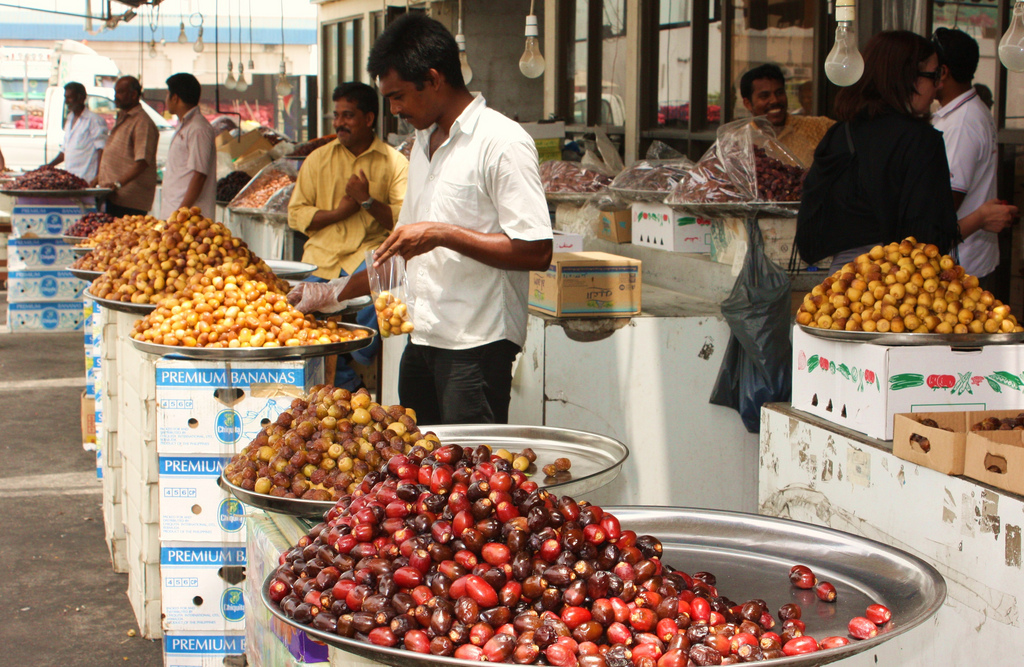
: Image via jemasmith on flickr.

::For More on Food in UAE see:
Missing That Special Herb? Abu Dhabi Pesticide Testing Slows Supply

A Growing Gulf Dependent on Imported Food

Gulf Countries Are Picking From Sudan’s Breadbasket

Arwa Aburawa
Arwa Aburawahttp://www.greenprophet.com
Arwa is a Muslim freelance writer who is interested in everything climate change related and how Islam can inspire more people to care for their planet and take active steps to save it while we can. She is endlessly suspicious of all politicians and their ceaseless meetings, especially as they make normal people believe that they are not part of the solution when they are the ONLY solution. Her Indian auntie is her model eco-warrier, and when Arwa is not busy helping out in the neighborhood alleyway garden, swap shopping or attempting fusion vegetarian dishes- with mixed success, she’d like to add- she can be found sipping on foraged nettle tea.

Read More

2 COMMENTS

LEAVE A REPLY

Please enter your comment!
Please enter your name here

TRENDING

Meet Seramic Materials from Abu Dhabi

Based in Masdar City, Abu Dhabi, Seramic Materials was founded in 2019 by Dr. Nicolas Calvet and Dr. Jean-François Hoffmann, researchers working at the intersection of renewable energy and materials science. The company grew out of the Masdar Institute ecosystem and is supported by clean tech programs like The Catalyst, with early backing of around $150,000 and more than $2 million invested in research and development over time.

OPEC and energy stocks in the UAE – insight from eToro

Energy equities are responding unevenly to the evolving landscape. Companies with direct exposure to UAE production growth and infrastructure are benefiting from increased activity expectations, while global oil majors face a more mixed outlook.

Renewables hit 5,149 GW in 2025 as the world edges away from oil shocks and fossil-fueled conflict

“In the midst of uncertain time, renewable energy remains consistent and steadfast in its expansion,” said Francesco La Camera, IRENA’s Director-General. “A more decentralised energy system, with a growing share of renewables and more market players, is structurally more resilient.”

BM Studios is designing systems, not just buildings in the UAE

Balsam Madi is an architect and systems thinker whose work bridges culture, sustainability, and design intelligence across the Middle East and Europe.

Farm To Table Israel Connects People To The Land

Farm To Table Israel is transforming the traditional dining experience into a hands-on journey.

How to quiet noise from construction in your office

Streets need to be resurfaced in New York but the humming and grinding noise is unsettling. Noise is environmental pollution. 

EarthX and a blueprint for sustainable investing

Trammell S. Crow, a Dallas-based businessman and father of four, is focusing his efforts on impact investing, and media that focuses on saving the planet through EarthX.

Mining Afghanistan’s Mineral Discoveries Similar to Avatar

Now that American forces in Afghanistan are commemorating the longest period of any war that America has been involved in, including the 1965-73 Vietnam War, the recent discoveries of large and extremely valuable mineral and metal deposits may finally bring to light a reason to continue the presence of US fighting forces in this war torn and backward country.

From Pilot Plant to Global Stage: How Aduro Clean Technologies’ 2026 Expansion Signals a Turning Point for Chemical Recycling Investors Like Yazan Al Homsi

The company's Next Generation Process (NGP) Pilot Plant in London, Ontario, has officially moved into initial operating campaigns, generating the kind of structured, repeatable data that separates laboratory promise from commercial viability.

Nobul’s Regan McGee on Shareholder Value: “Complacency Is the Silent Killer” 

Why the governance framework designed to protect shareholders so...

Should You Invest in the Private Market?

startustartup Unlike public stock exchanges, which offer daily trading, strict...

How to build a 100-year-company

Kongō Gumi is a Japanese construction company, purportedly founded in 578 A.D., making it the world's oldest documented company. What can we learn about building sustainable businesses from them?

How AI Helps SaaS Companies Reduce Repetitive Customer Support Work

SaaS products are designed for large numbers of users with different levels of experience, and also in renewable energy.

Popular Categories