


There are plenty of strange things in nature. Beetles navigate by the stars, octopuses have three hearts, some fungi can turn ants into zombies that throw themselves off of cliffs for the fungi to digest. But perhaps no biological mystery is as delightfully absurd to Green Prophet as the wombat’s cube-shaped poop. Yes, cube-shaped.
Not pellet-shaped. Not oval. Actual cubes.
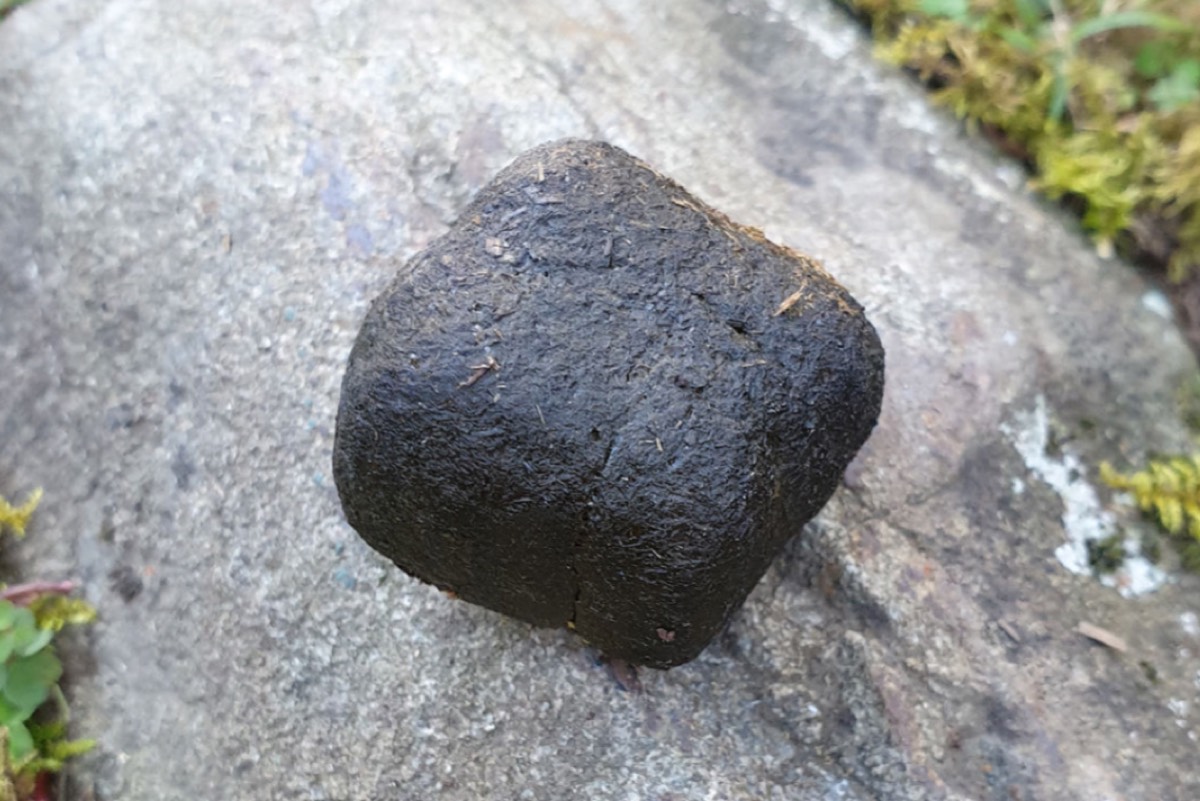
For years scientists wondered how an animal could produce feces that look like they came out of a toy factory. The answer turns out to be a remarkable feat of natural engineering that could even inspire future manufacturing technologies.
The common wombat, a burrowing marsupial native to Australia, produces between 80 and 100 poop cubes every day. Unlike many animals, wombats often leave their droppings on rocks, logs, and elevated surfaces to mark territory. Cubes have one major advantage over round droppings: they don’t roll away.
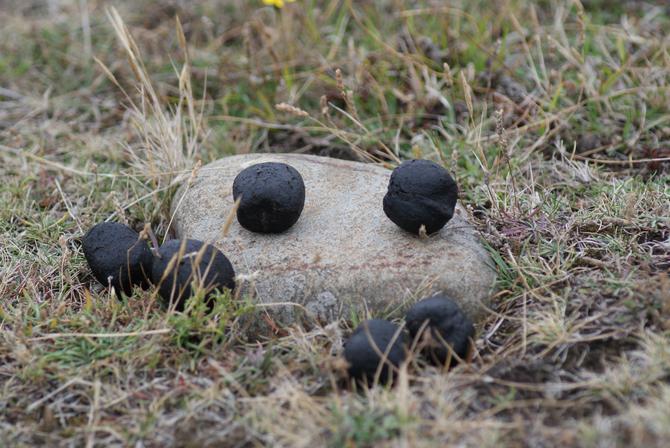
Imagine trying to leave a message for your neighbors if your business kept rolling downhill. LOL
Researchers at the Georgia Institute of Technology finally solved the mystery after examining wombat digestive systems. They discovered that the cubes are not formed at the moment of excretion. Instead, the shaping happens inside the animal’s intestines.
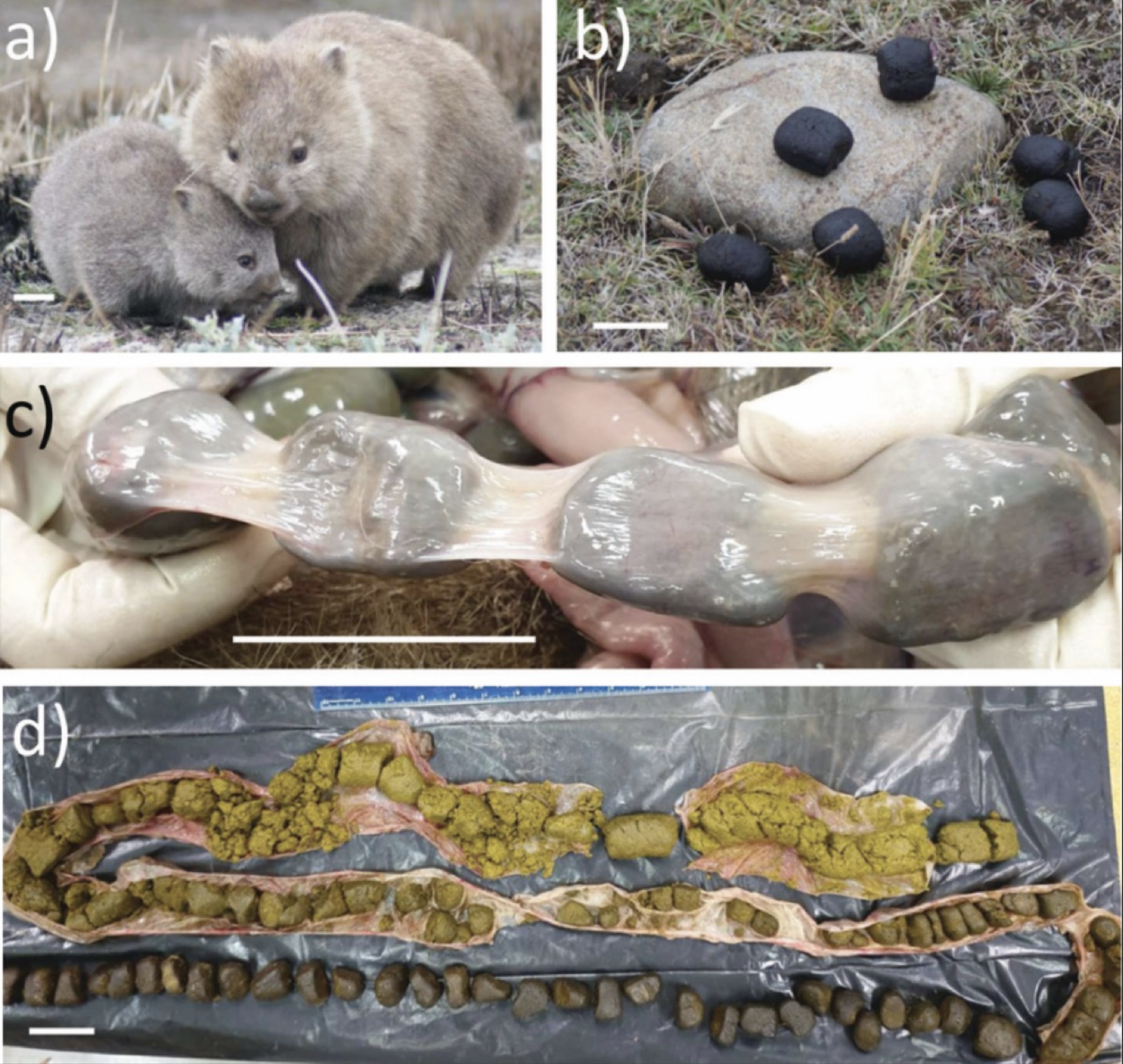
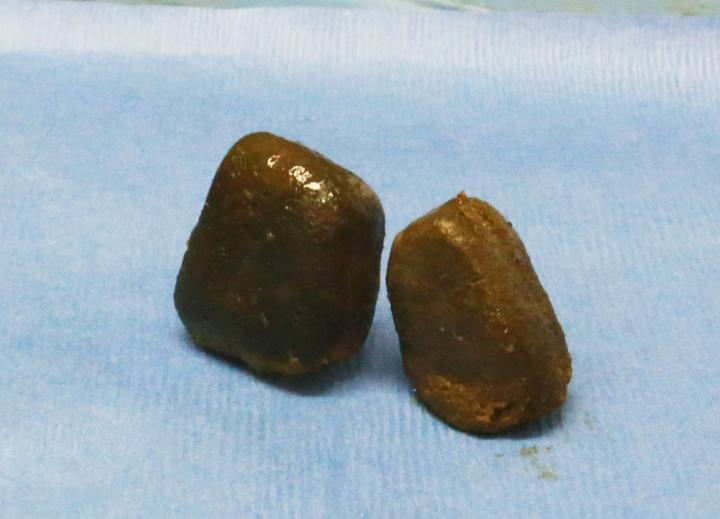
The final section of the wombat intestine has regions with different elasticity. Some parts stretch more than others. As the material dries and moves through the digestive tract, these uneven pressures gradually transform the feces into cubes.
How wombats make cubed poop – a diagram!
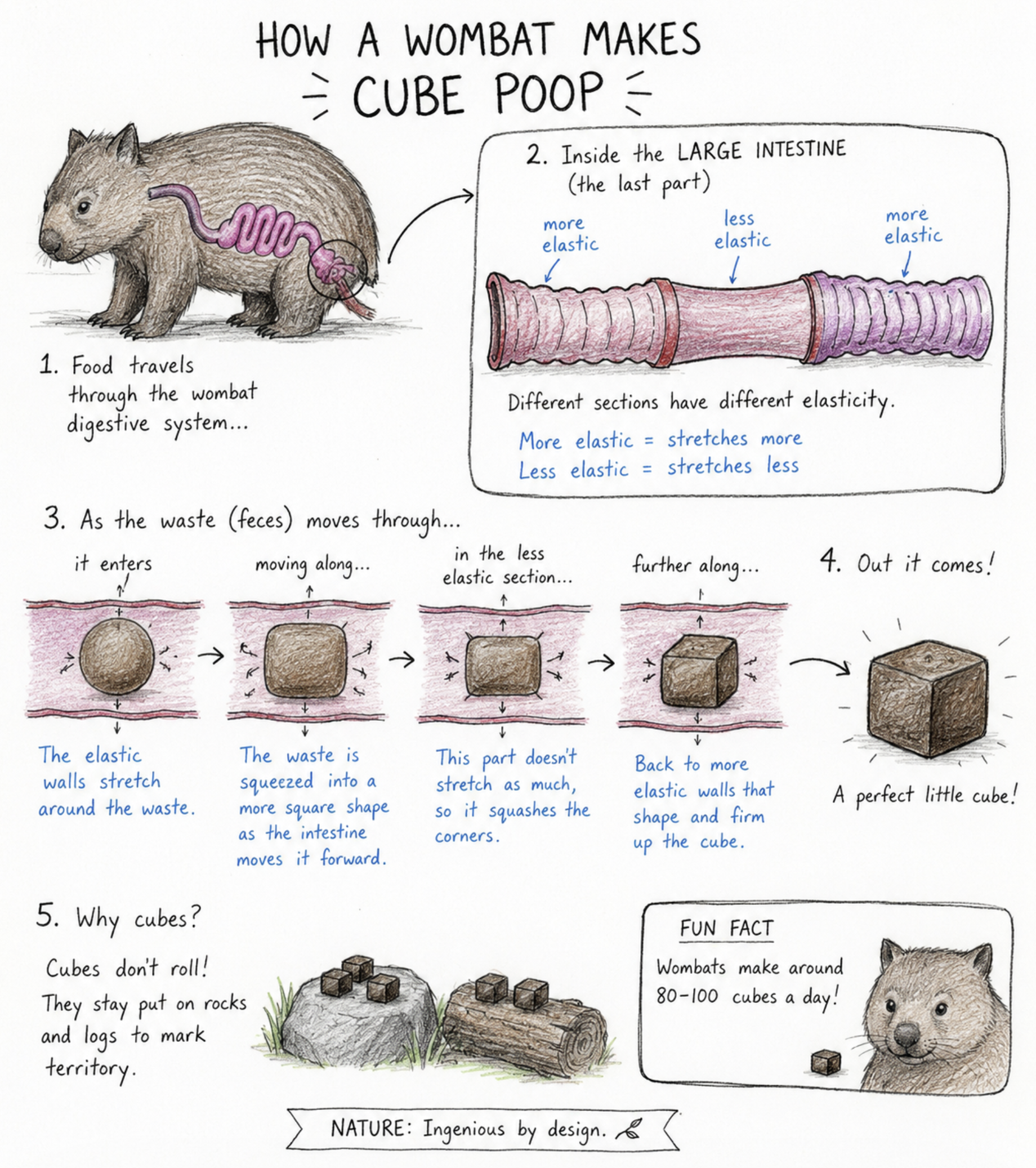
It is the first known example of an animal producing geometric feces through variable intestinal mechanics.
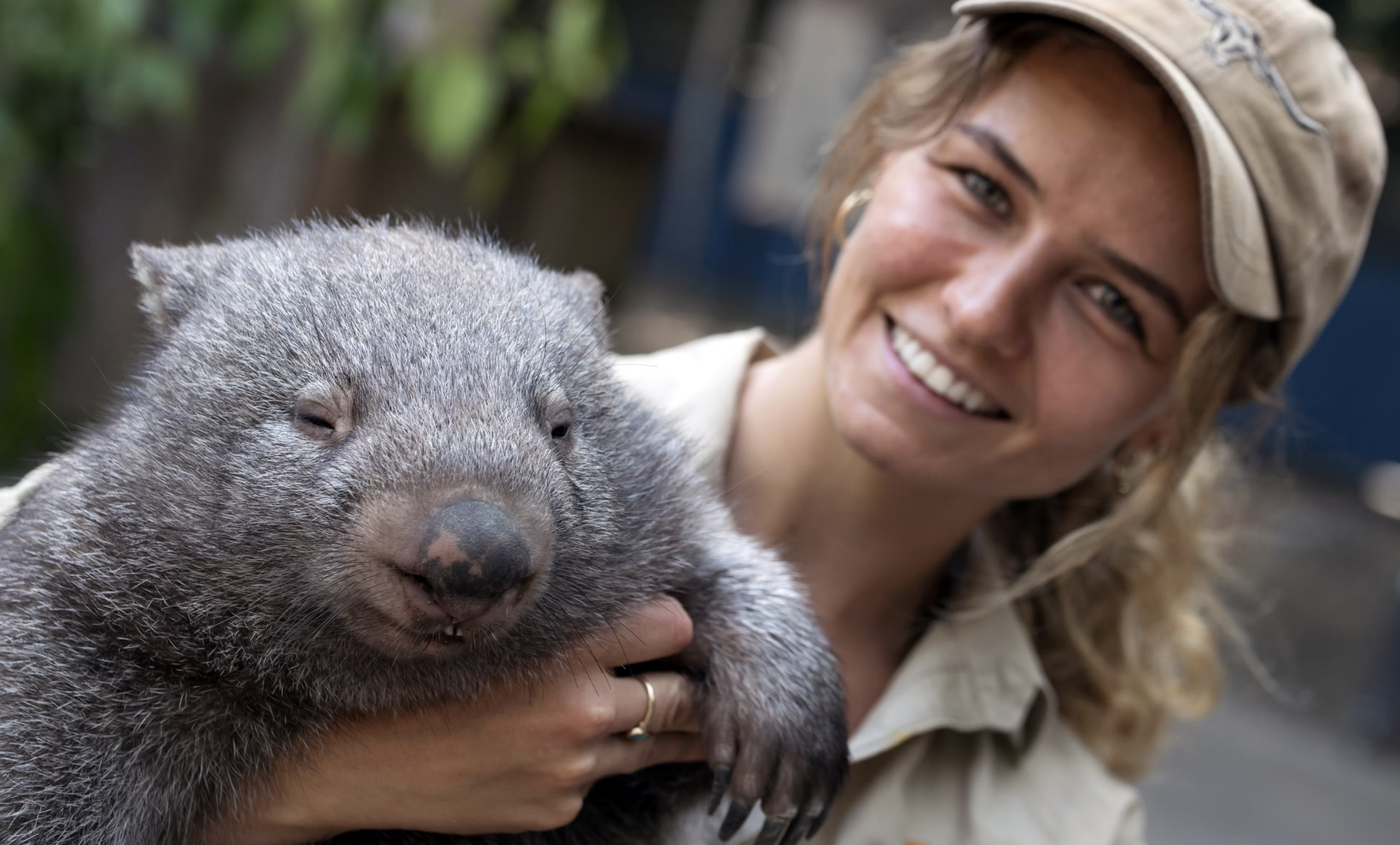
The discovery has fascinated engineers because humans typically manufacture cubes by cutting, molding, or compressing materials from the outside. Wombats create cubes from the inside using nothing but soft tissue and pressure.
Nature figured it out first.
The story also reveals something important about evolution. Cube-shaped poop wasn’t designed to amuse tourists or generate viral social media posts. It evolved because it helps wombats communicate. The cubes stay where they are deposited, creating long-lasting territorial markers in the Australian landscape.


