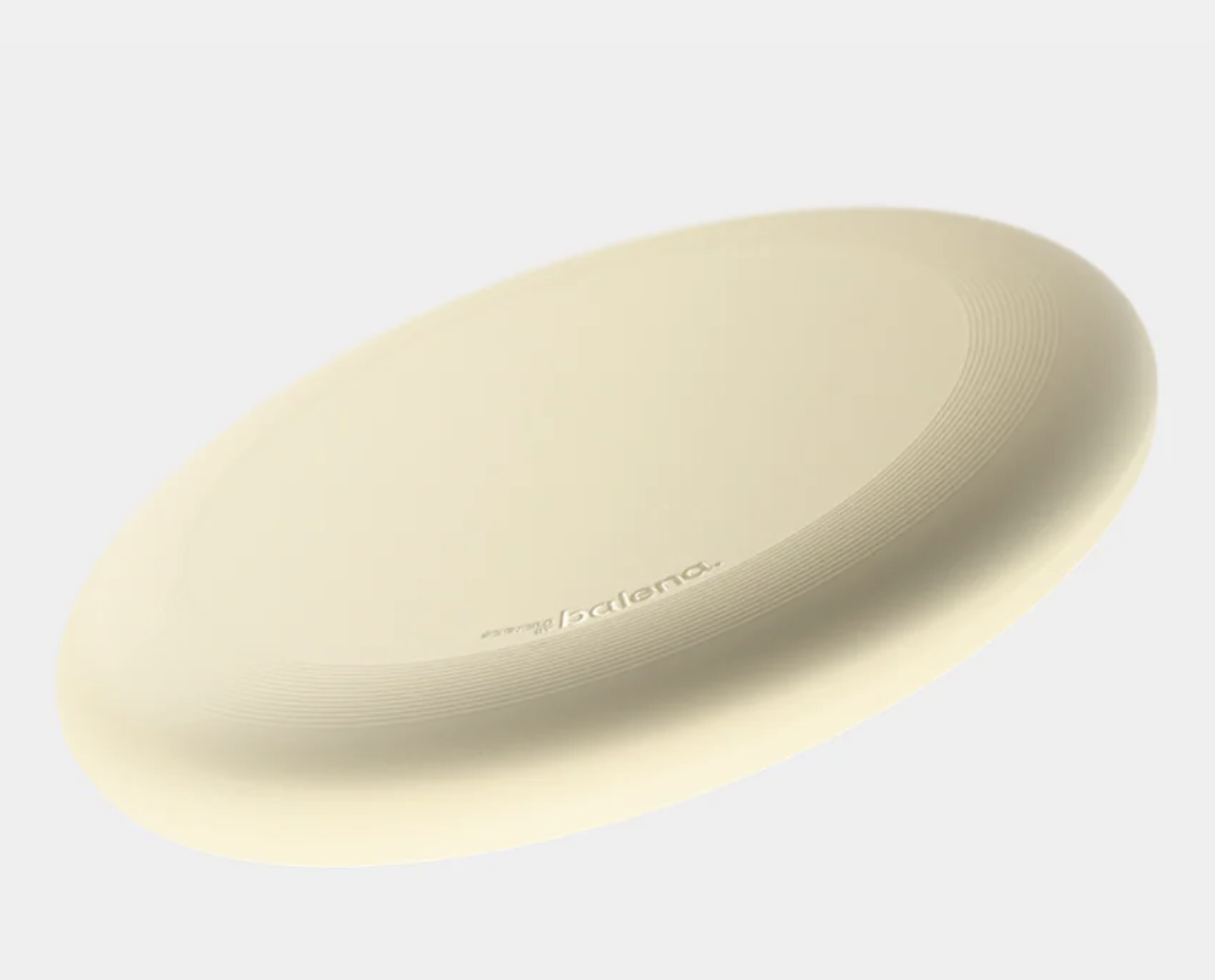
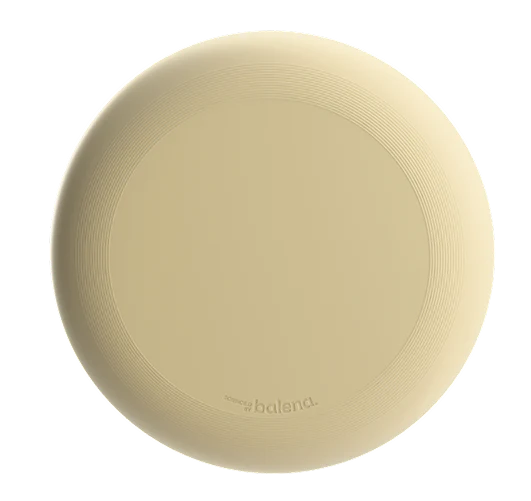
The humble frisbee may not look like a climate solution, but it could become a symbol of where the sports equipment industry is heading next.
Balena and Decathlon Pulse have introduced what they describe as the world’s first frisbee made from bacteria-fermented bioplastic, using Balena’s proprietary BioCir® X material. The launch signals something larger than a novelty sports product: it suggests that sustainable materials are finally becoming durable and scalable enough for mainstream sports equipment. And the best news: if it gets lost at sea it can just become one with the ocean, no damage done.
The global sports equipment market generates enormous amounts of plastic waste. Frisbees, balls, footwear, paddles, protective gear, yoga mats, and fitness accessories are typically made from petroleum-based plastics designed for durability but not for responsible disposal. Millions of sports products are lost outdoors each year, ending up in oceans, parks, lakes, and landfills where they can remain for centuries. Millions of flip-flops have landed on Seychelles islands interrupting turtle breeding grounds.
According to Balena, the brad that has worked with fashion icons like Stella McCartney, new frisbee is designed for impact resistance, long-term use, and responsible breakdown in compost, soil, and marine environments. More importantly, the company says the material is compatible with industrial-scale injection molding, which means it can theoretically move beyond prototypes into mass-market production – like today.
That matters because sustainability in sports has often stalled at the concept stage. Consumers have seen recycled shoes, algae foam sneakers, bamboo skateboards, and biodegradable phone cases, but few products have managed to combine real athletic performance with circular material science at scale. We know a frisbee isn’t much but it’s a start.
The sports industry is beginning to face the same pressure already reshaping fashion, packaging, and automotive manufacturing. Consumers increasingly want sports equipment that reflects environmental values without sacrificing performance. Brands meanwhile are searching for alternatives to fossil-fuel plastics as regulations tighten around waste and emissions. Also microplastics from yoga pants are getting into bodies through sweat. No one wants that.
The frisbee market alone is projected to reach hundreds of millions of dollars globally within the decade. But the bigger opportunity lies in what comes next: running shoes, cleats, shin guards, racket handles, yoga equipment, outdoor recreation gear, and eventually even automotive interiors or consumer electronics built using similar biobased thermoplastics.
For decades, “eco-friendly” products often carried a stigma of being weaker, softer, or impractical. The next generation of sustainable sports equipment is attempting to erase that distinction entirely.

“Breaking into the sports industry with a product that’s both high-performance and fully circular is a proud moment for us at Balena. This frisbee, made from our bacteria-fermented bioplastic, is proof that sustainable materials can go beyond concepts and prototypes, they can play, perform, and inspire” — David Roubach, Founder & CEO, Balena —