
AI data centers are triggering panic, instead of cleantech opportunities

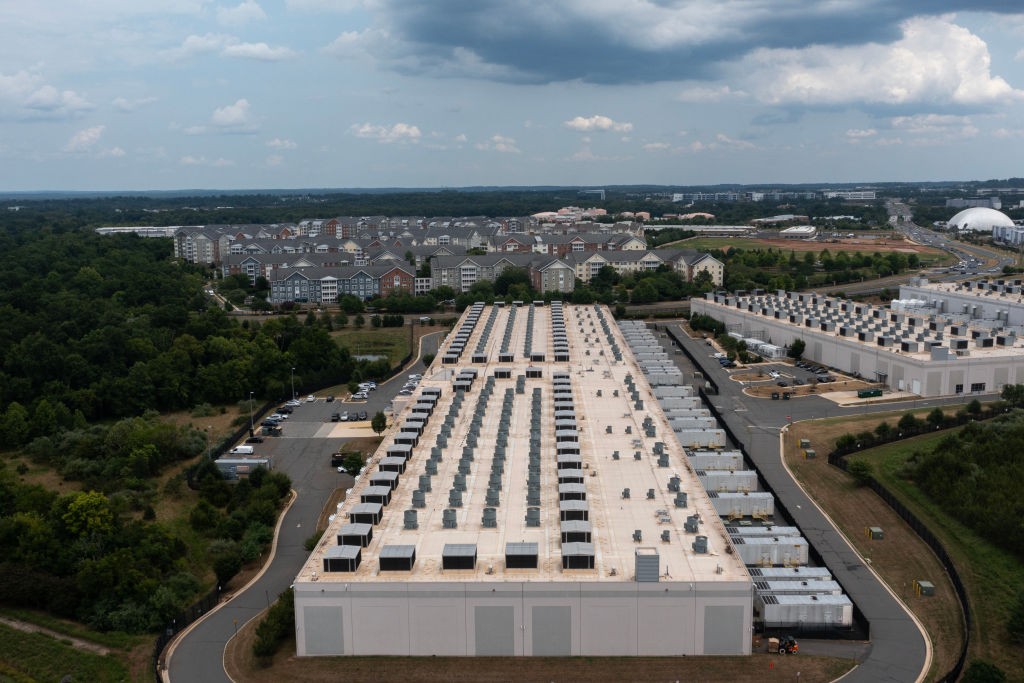
An aerial view shows an Amazon data center last year in Ashburn, Virginia. Maryland officials are trying to balance between opponents of data centers and their environmental and energy demands, and the wholesale acceptance of centers by Virginia, for their jobs and tax revenues.

AI may unintentionally become the economic engine that finally modernizes America’s aging grid. California is experiencing a massive AI data center boom, ranking 3rd in the U.S. with 227 operating centers and 54 more in development as of April 2026, according to Stanford.

AI is triggering a new energy panic in America. Across the US states of California, Virginia, Texas, Arizona, and Georgia, residents are pushing back against the explosive growth of data centers powering artificial intelligence. People are worried about rising electricity bills, water use, backup diesel generators, massive transmission lines, and entire landscapes being transformed into server farms. They worry about the expansion and the business around it and believe that AI data centers will exploit the land, and give back little to the people in the communities.

The energy demand from AI is unlike anything the internet economy has seen before. Goldman Sachs estimates data center electricity demand could rise more than 160% by 2030. Utilities that spent years planning for flat electricity growth are suddenly scrambling to build power generation again. In places like Northern Virginia, now nicknamed “Data Center Alley,” local resistance has become fierce. Residents complain about noise, visual pollution, water consumption, and fears that ordinary households will subsidize the AI boom through higher utility costs.

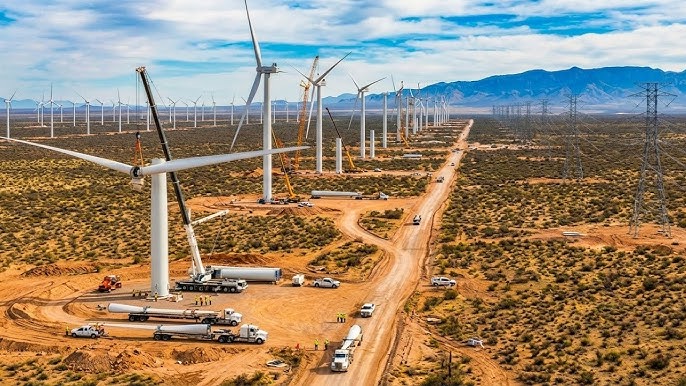
But there’s another side to the story that should be getting attention instead of fear. Renewable energy projects like SunZia — the giant new wind and transmission project connecting New Mexico wind power to California — may show how the AI boom could also accelerate the renewable energy transition.
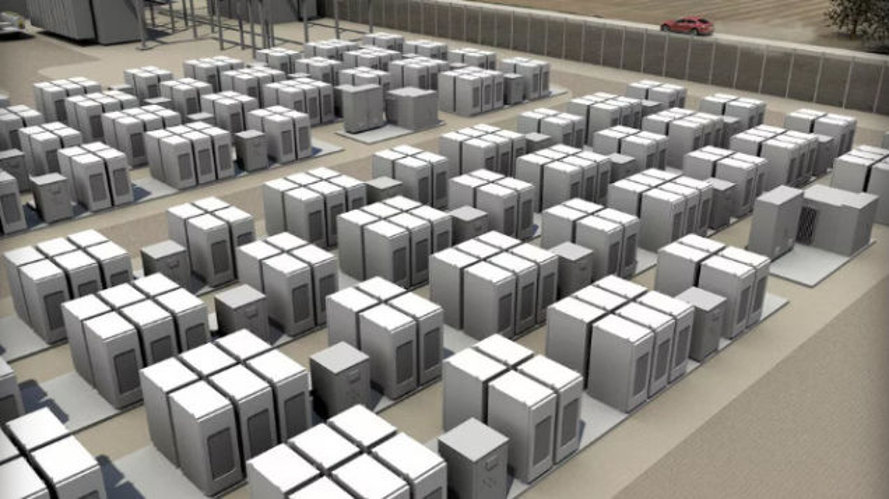
Tesla Powerpacks store energy for grid stability

SunZia is enormous:

  • 3.5 gigawatts of wind energy
  • a 550-mile high-voltage transmission line
  • enough electricity for roughly 3 million people
  • one of the largest renewable infrastructure projects in North American history.

And it’s arriving at exactly the right moment. The question is how does it scale without becoming an out of date boondoggle like the Ivanpah solar energy project? We interviewed Moshe Luz, one of the executives and founders of the company who has ideas up for grabs.

California already produces huge amounts of daytime solar energy, but AI workloads continue around the clock. Solar fades in the evening just as electricity demand rises. So the innovation doesn’t need to come in adding more solar panels, it’s the need for better battery storage and nighttime renewables. Wind, wave, and geothermal might help.

SunZia’s New Mexico wind profile helps solve that problem because wind often strengthens later in the day and overnight. Instead of relying entirely on natural gas plants after sunset, California can increasingly balance its grid using distant wind resources combined with battery storage.

The project is already beginning to send electricity into California while final testing continues. SunZia is not alone.
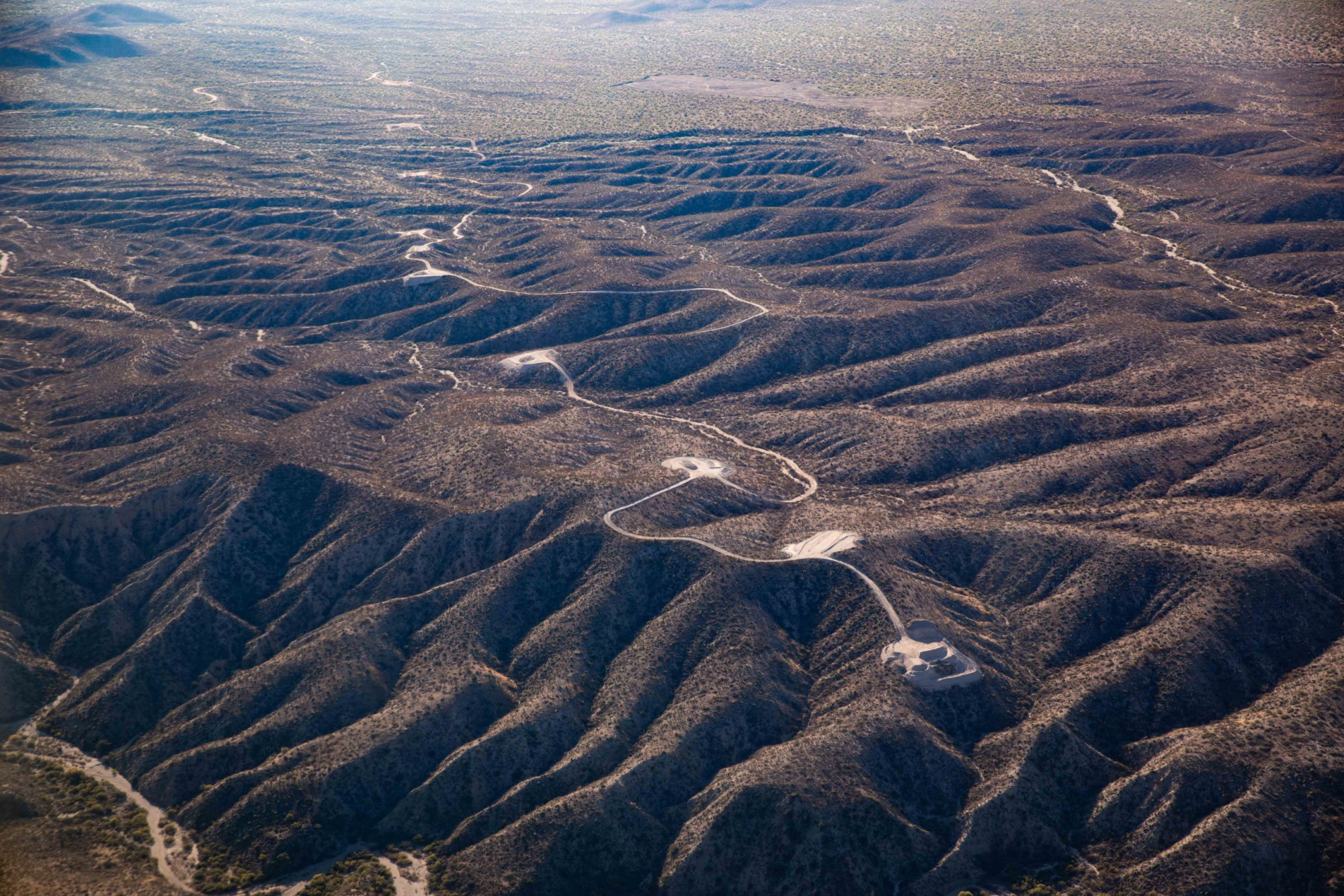
An aerial picture of new access roads and tower pad sites west of the San Pedro River, near Redrock Canyon, Arizona. Alex Binford-Walsh/Archaeology Southwest, with the support of Lighthawk
An aerial picture of new access roads and tower pad sites west of the San Pedro River, near Redrock Canyon, Arizona.
Alex Binford-Walsh/Archaeology Southwest, with the support of Lighthawk

Across the American West, a quiet clean-energy arms race is emerging around AI infrastructure.

In California’s Kern County, the Edwards & Sanborn project combines nearly 900 megawatts of solar with one of the world’s largest battery systems. In Nevada, the Gemini Solar project near Las Vegas pairs utility-scale solar with giant batteries designed to stabilize evening demand.

Texas has become perhaps the most radical experiment of all. Massive wind farms, sprawling solar installations, and grid-scale batteries are now increasingly handling short demand spikes that were once served by gas “peaker” plants. Texas leads America in wind energy, boasting over 30,000 MW of capacity from over 150 wind farms as of 2020, often supplying over 20% of the state’s electricity.

Meanwhile, Google and Microsoft are investing in enhanced geothermal energy projects in Nevada and Utah. Unlike solar and wind, geothermal can run 24 hours a day, making it attractive for AI-driven electricity demand that never sleeps.

Ormat geothermal energy plant
Ormat’s geothermal energy providersa re leading in the world.

The bigger shift underway is that AI may unintentionally become the economic engine that finally modernizes America’s aging grid.

For decades, utilities hesitated to build large transmission systems because electricity demand grew slowly. Now AI companies, cloud providers, and electrification trends are forcing states to rethink energy infrastructure entirely.

Ironically, the same technology many fear could overheat the planet may also become one of the biggest drivers of renewable energy investment in modern history.

There are tradeoffs.

Projects like SunZia still face lawsuits from Indigenous groups who argue transmission corridors damage sacred landscapes and fragile ecosystems. It’s difficult to get ecological assessments across state lines. Renewable energy itself is now colliding with difficult questions about land use, mining prime materials, water, and who benefits from “green growth.”


 

Karin Kloosterman
Karin Kloostermanhttp://www.greenprophet.com
Karin Kloosterman is an award-winning journalist, innovation strategist, and founder of Green Prophet, one of the Middle East’s pioneering sustainability platforms. She has ranked in the Top 10 of Verizon innovation competitions, participated in NASA-linked challenges, and spoken worldwide on climate, food security, and future resilience. With an IoT technology patent, features in Canada’s National Post, and leadership inside teams building next-generation agricultural and planetary systems — including Mars-farming concepts — Karin operates at the intersection of storytelling, science, and systems change. She doesn’t report on the future – she helps design it. Reach out directly to [email protected]

Read More

LEAVE A REPLY

Please enter your comment!
Please enter your name here

TRENDING

24 7 renewable energy: how solar, wind, batteries and AI SaaS replace fossil fuels

A new report from the International Renewable Energy Agency based in Abu Dhabi makes something clear that many in the industry already suspected. When solar and wind are paired with battery storage, they can deliver reliable, round the clock electricity at costs that compete with, and often beat, fossil fuels.

How does Neuralink work?

Current goals are to treat neurological disease like Parkinson’s and restore autonomy to people with severe physical limitations by controlling exoskeletons and prosthetics. There’s also huge potential to improve cognitive abilities such as memory, attention, and languages.

Korean researchers create battery from greenhouse gases

Professor Ji-Soo Jang, in collaboration with Professor Taekwang Yoon of Ajou University and Professor Hansel Kim of Chungbuk National University, has developed a novel energy device that generates electricity during the process of capturing greenhouse gases.

Should You Invest in the Private Market?

startustartup Unlike public stock exchanges, which offer daily trading, strict...

EU startup aiming to generate energy on moon villages

Stepping up to democratize the moon is an EU-funded company, Deep Space Energy, which has just raised more than $1 million USD as a seed fund to help it create energy generators on the moon.

How to quiet noise from construction in your office

Streets need to be resurfaced in New York but the humming and grinding noise is unsettling. Noise is environmental pollution. 

EarthX and a blueprint for sustainable investing

Trammell S. Crow, a Dallas-based businessman and father of four, is focusing his efforts on impact investing, and media that focuses on saving the planet through EarthX.

Mining Afghanistan’s Mineral Discoveries Similar to Avatar

Now that American forces in Afghanistan are commemorating the longest period of any war that America has been involved in, including the 1965-73 Vietnam War, the recent discoveries of large and extremely valuable mineral and metal deposits may finally bring to light a reason to continue the presence of US fighting forces in this war torn and backward country.

From Pilot Plant to Global Stage: How Aduro Clean Technologies’ 2026 Expansion Signals a Turning Point for Chemical Recycling Investors Like Yazan Al Homsi

The company's Next Generation Process (NGP) Pilot Plant in London, Ontario, has officially moved into initial operating campaigns, generating the kind of structured, repeatable data that separates laboratory promise from commercial viability.

Nobul’s Regan McGee on Shareholder Value: “Complacency Is the Silent Killer” 

Why the governance framework designed to protect shareholders so...

Should You Invest in the Private Market?

startustartup Unlike public stock exchanges, which offer daily trading, strict...

How to build a 100-year-company

Kongō Gumi is a Japanese construction company, purportedly founded in 578 A.D., making it the world's oldest documented company. What can we learn about building sustainable businesses from them?

How AI Helps SaaS Companies Reduce Repetitive Customer Support Work

SaaS products are designed for large numbers of users with different levels of experience, and also in renewable energy.

Popular Categories